


You step into the car on a cold Whitby morning, the coffee is hot, the windshield is clear, and then a tire pressure warning light glows on the dash before you've even reached the end of the driveway. That little symbol tends to create the same reaction every time, a mix of irritation, uncertainty, and the question nobody wants before work, do I need to stop now or can this wait until later?
A tire pressure monitoring system, or TPMS, is the car's built-in way of telling you when a tyre needs attention. It isn't a fancy extra, and it isn't there to nag you. It's a federally mandated safety system on modern light vehicles in the U.S., and that regulation helped make TPMS standard across the North American vehicle fleet, which is why it matters so much for Ontario drivers too. A roadside assistance page from Carmedics Autowerks may help if a warning turns into a flat or a no-drive situation, but most TPMS warnings start with something much simpler, like cold air or a tyre that's slowly losing pressure.
Why Your Tire Pressure Light Matters
A Whitby driver usually notices TPMS the same way every season starts to feel different, one cool morning, one glowing dash symbol, and one instinct to hope it's nothing serious. That warning exists for a reason. The tire pressure monitoring system is there to catch underinflation before the tyre gets damaged, before handling changes enough to be felt, and before a small problem turns into a roadside headache.

A lot of drivers still think in terms of an old-fashioned tyre gauge, and that habit is still useful, but TPMS adds a second layer of protection. Manual checks tell you what the pressure is when you look, while the system keeps watch while you drive. In North America, that change became mainstream after the federal response to the TREAD Act, which tied tyre safety to a warning system requirement on light vehicles sold in the U.S. The historical overview from CarID explains how that shift standardized TPMS across the market and shaped the vehicle inventory Canadian shops service every day.
The practical takeaway is simple. A TPMS warning isn't decoration, and it isn't there for the dealership's benefit. It's a prompt to check pressure, look for a leak, or have the system diagnosed if the light doesn't make sense.
Practical rule: if the warning is on, treat it as a real tyre issue until you prove otherwise.
How a Tire Pressure Monitoring System Works
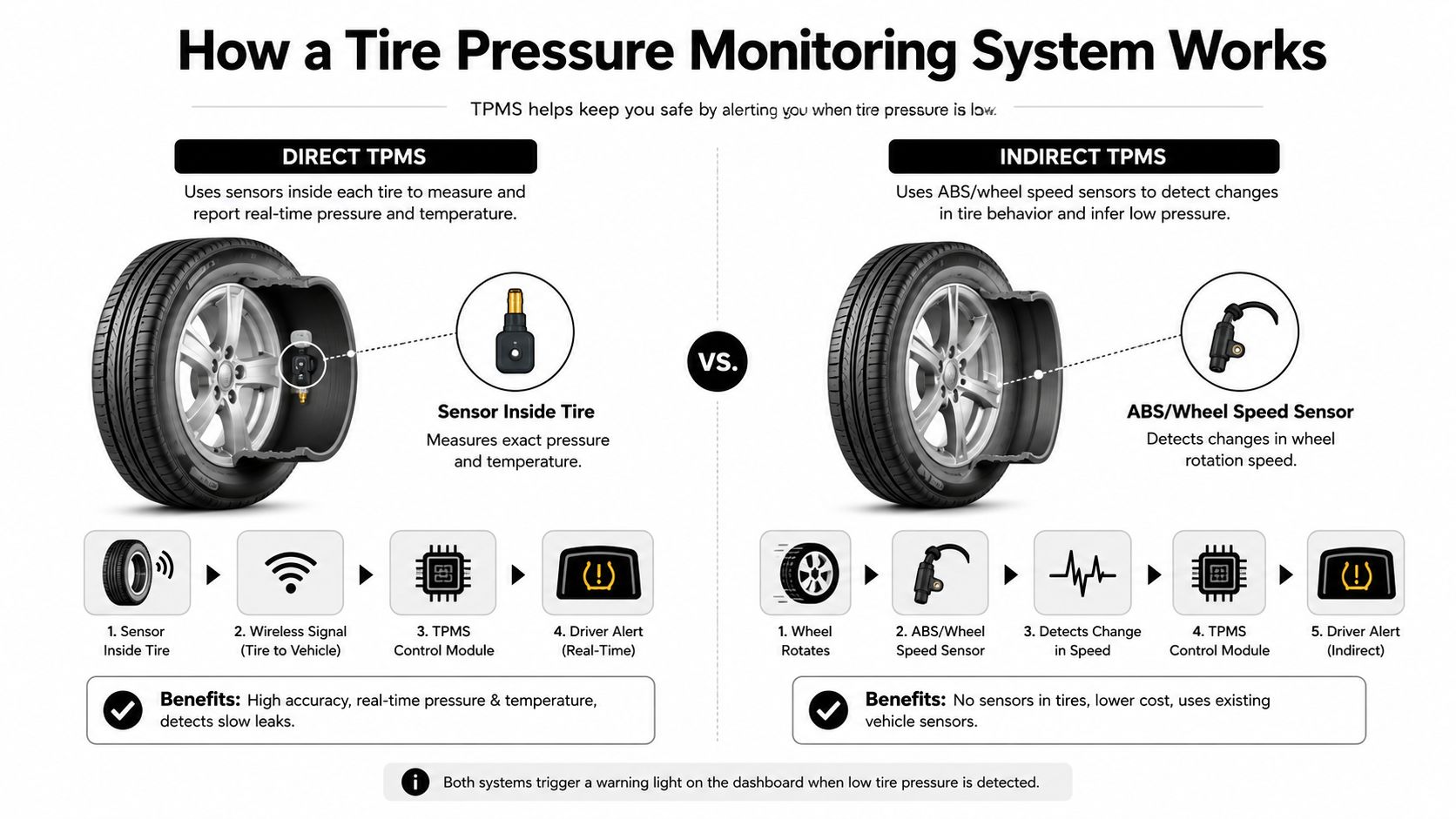
A TPMS can work two different ways, and the difference matters because it changes how you diagnose a warning. Direct TPMS measures the air inside each tyre with a sensor mounted in or near the wheel. Indirect TPMS does not measure air directly, it infers a pressure change from how the wheels rotate.
Direct TPMS
Direct systems are those typically envisioned once the wheel is off the car. A small in-tyre sensor measures actual pressure and temperature, then sends that information wirelessly, commonly in the 315 MHz or 433.92 MHz bands. According to Edmunds, these systems are typically accurate to about ±1 psi or ±1.5 psi as described in their TPMS overview. That level of precision is why direct TPMS can catch a slow leak before you feel anything unusual.
Indirect TPMS
Indirect systems are less literal. They use the ABS wheel-speed data already in the car and look for a tyre that's turning a little differently from the others. A useful analogy is this, direct TPMS is like a thermometer that measures the temperature itself, while indirect TPMS is more like estimating fuel use from distance and driving pattern. It can flag a problem, but it's still an estimate.
Direct sensor modules are built for real weather, too. Technical specifications show operating ranges around -40°C to +125°C, with pressure ranges that support winter cold and hot summer driving in the sensor documentation. That's one reason TPMS keeps working through Ontario seasons rather than giving up when the temperature swings.
Direct systems tell you what the tyre is doing now. Indirect systems tell you when the wheel behaviour looks wrong.
If you're trying to identify your own car, the owner's manual or a service scan will usually tell you which architecture it uses. If you need a deeper fault check, a computer diagnostics appointment can separate a pressure problem from a sensor or module issue quickly.
What the Dashboard Light Is Telling You
The TPMS symbol usually looks like a horseshoe with an exclamation mark in the middle, and that shape is no accident. It's meant to stand out without being confusing. What matters next is whether the light is solid, flashing, or briefly illuminated at startup.
A solid light usually means one or more tyres are underinflated right now. That's the version drivers should take seriously before highway speeds or a long commute. A flashing light usually points to a system fault rather than a simple air-pressure drop, which is why it often calls for diagnosis instead of just adding air.
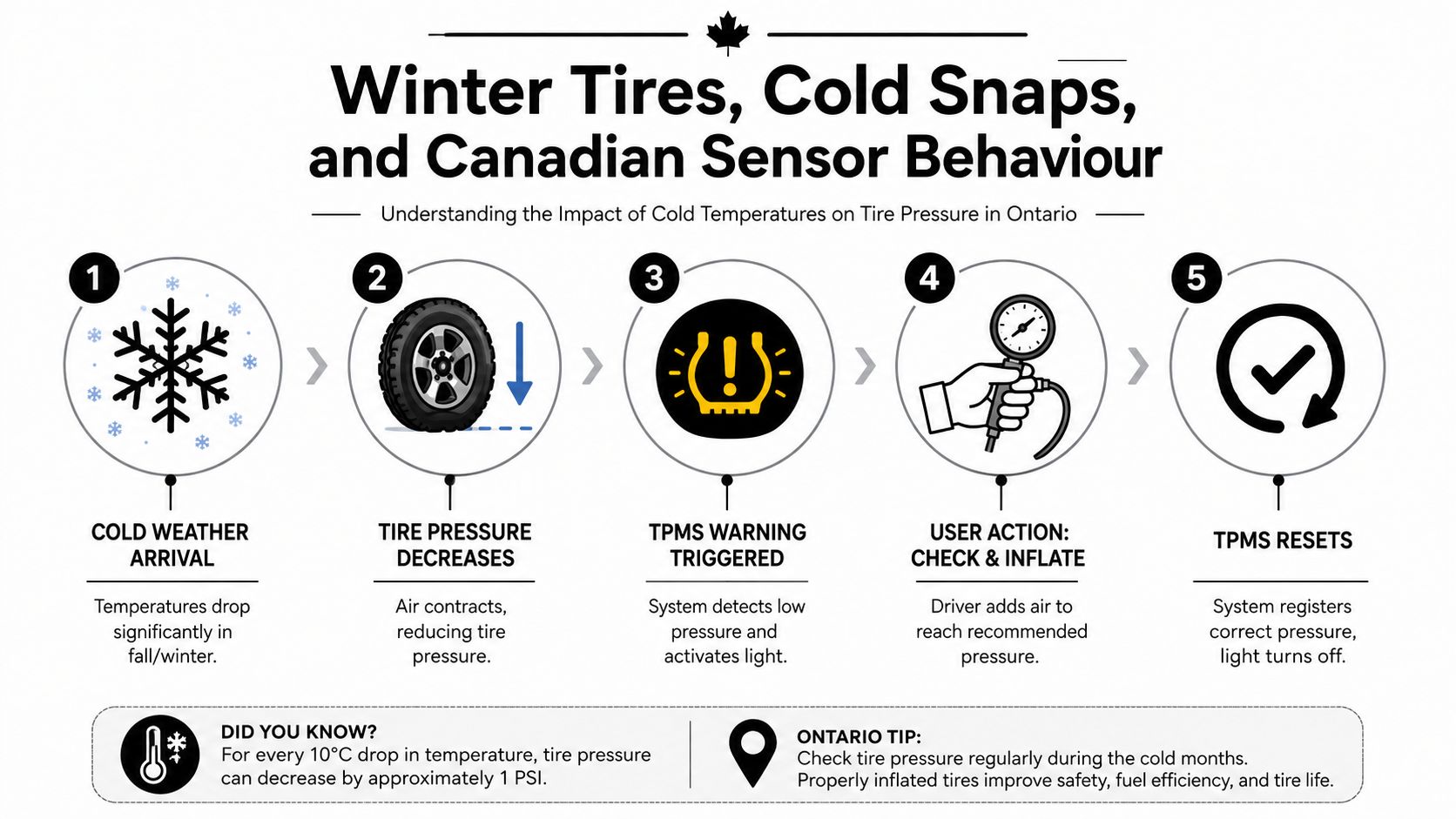
Cold weather can trigger a warning even when nothing is visibly wrong. Air contracts as temperatures fall, so the pressure in the tyre drops along with it. That's one of the main reasons Ontario drivers see the light after a cold snap, especially after the first frosty night of the season.
What the car is trying to tell you
- Light comes on at startup, then goes away: that can be a normal self-check.
- Light stays solid while driving: check tyre pressure and look for a leak.
- Light flashes first, then stays on: that often means a sensor or system fault.
- Light returns after inflation: the system may need a reset, relearn, or scan.
The safest response is calm and specific. Check the pressures against the vehicle placard, correct them, then see whether the warning clears after driving. If it doesn't, the issue may be beyond a basic top-up.
The Safety Story Behind Modern TPMS
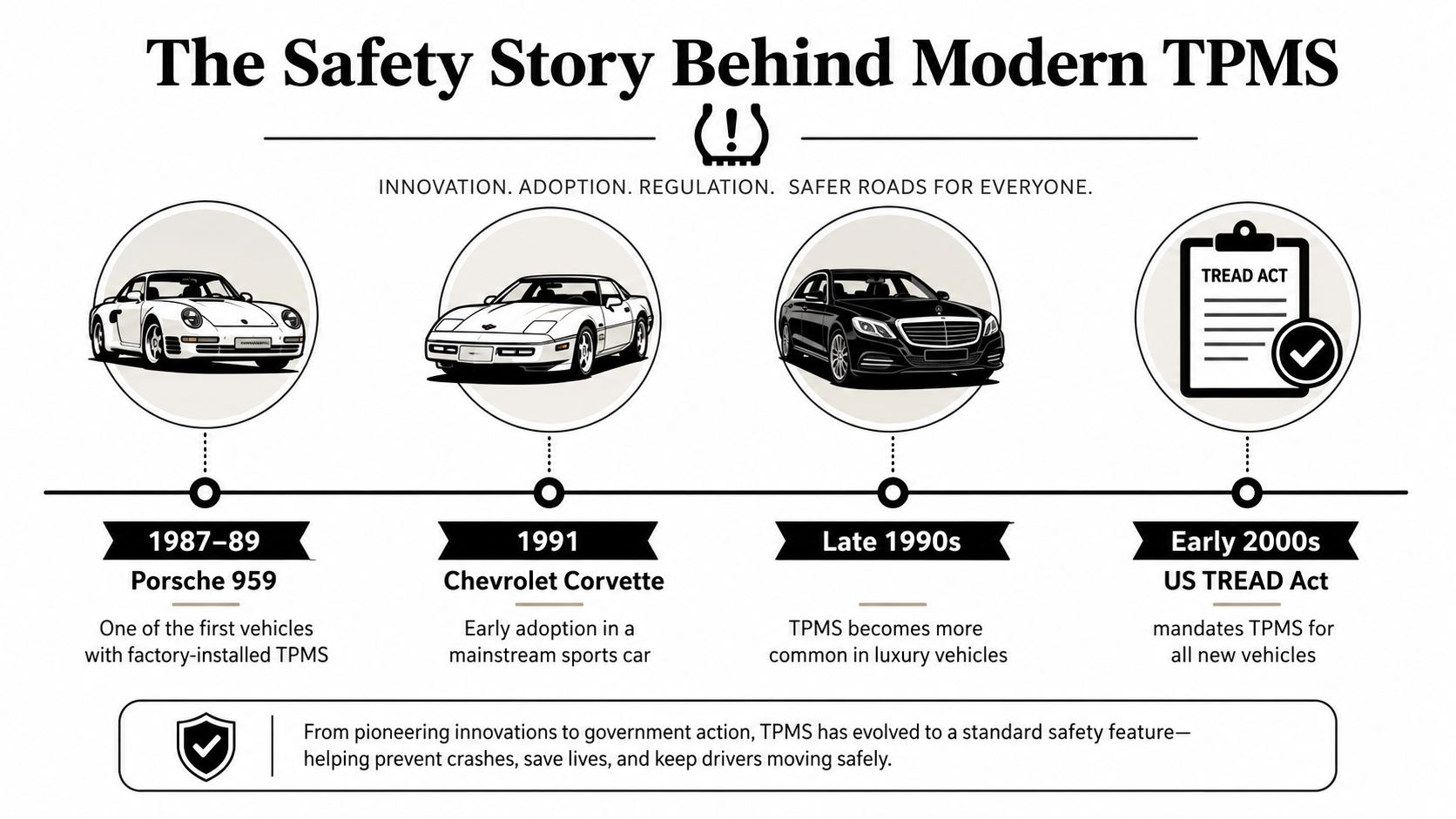
TPMS didn't become common because automakers wanted another dashboard icon. It became common because a serious safety crisis changed the rules. The late-1990s Firestone and Ford Explorer rollover problem is repeatedly cited in the industry record as involving more than 100 deaths, and that pressure helped drive the TREAD Act, signed on November 1, 2000 in the AAA background report.
Early TPMS was limited to specialty vehicles. The 1987 to 1989 Porsche 959 and the 1991 Chevrolet Corvette were among the early factory examples, which tells you how niche the technology once was. After the post-2000 regulatory response, it moved into mainstream production and eventually into the everyday vehicles Ontario shops see now.
The rule's pressure trigger was written around a tyre that's underinflated by 25% or more, which is a bigger gap than many drivers expect. That level of underinflation matters on real roads because it changes how the tyre contacts the pavement, especially on cold, patched, or salted winter surfaces. You feel it as less crisp steering, less confidence in braking, and more wear over time.
For a Whitby driver, the point is not drama. It's prevention. TPMS is part of why modern cars ask for less guesswork and more timely maintenance.
Winter Tires, Cold Snaps, and Canadian Sensor Behaviour
Ontario winter changes tyre pressure in a way that catches people off guard. A cold morning can make a perfectly normal tyre look low enough to trip the warning light, and that's before you even get into the extra variables from winter tyre swaps, wheel changes, and pothole damage. The system is doing its job, but the conditions around it are rougher here than in milder climates.
Why winter swaps confuse the system
Direct TPMS sensors are tied to individual wheels, so a wheel change can require the vehicle to relearn sensor positions. Indirect systems can also need a reset after a rotation because they're comparing wheel-speed patterns, not reading air directly. If the tyres were swapped and the light came back, that doesn't automatically mean the new tyres are bad.
Cold weather adds another layer. As temperatures drop, pressure drops too, and that's often the whole story behind a January warning light. A useful winter prep checklist, including broader cold-weather readiness steps beyond TPMS, is available in The Mobile Buff's essential winter prep checklist.
What to expect after service
- After a winter tyre swap: the car may need a relearn before the light settles.
- After a rotation: a previously quiet system can complain until it recognises each wheel again.
- After a hard pothole hit: the valve stem or sensor can be damaged, even if the tyre still holds air.
- After a cold snap: the fix may be simple inflation, not a parts replacement.
If the warning started right after a tyre change, think relearn first, not failure first.
A service advisor in Whitby will usually separate those possibilities by checking pressures, confirming the sensor IDs, and deciding whether the problem is tyre-related or programming-related. If you're wondering when to make the seasonal switch, the local guidance on when to change tires for winter is a good place to compare timing with your own driveway routine.
Common TPMS Failures and What They Cost
Most TPMS complaints sound different, even if the warning light looks the same on the dash. A light that stays on after inflation points one way, a light that flashes at startup points another, and an intermittent warning after service usually means the car hasn't settled into the new wheel setup yet. The system is useful, but it's not magic, and parts do wear out.
Common TPMS Failures at a Glance
| Symptom | Likely Cause | Typical Fix |
|---|---|---|
| Light stays solid after inflation | Low pressure or slow leak | Check all tyres, repair the leak, verify pressure |
| Light flashes at startup | Sensor or system fault | Scan the system, confirm module or sensor status |
| Warning returns after a tyre swap | Relearn or programming issue | Relearn the wheel positions, rescan if needed |
| Intermittent alerts after years of service | Sensor battery aging, corrosion, or impact damage | Replace the failed sensor or valve component |
Sensor batteries do not last forever, and once they fade, the car can stop receiving a reliable signal. Corroded valve stems can also create trouble, especially after repeated Ontario winters. A curb strike or pothole impact can damage the sensor assembly even when the tyre itself looks fine.
For Whitby drivers, the decision is usually less about panic and more about matching the symptom to the likely fault. If the warning is physical, the fix may be a tyre repair. If the warning is electronic, the car may need a scan, relearn, or sensor replacement. A tire repair appointment in Whitby makes the most sense when the symptom looks like a puncture or leak rather than a system glitch.
Troubleshooting at Home and When to Call Carmedics Autowerks
A few checks in the driveway can rule out the simple stuff quickly. Start by setting every tyre to the pressure listed on the vehicle placard, not the number moulded into the sidewall. Then drive long enough for the system to recheck itself, because many cars need motion before the warning changes state.
If the light stays on, try the relearn or reset procedure in the owner's manual. That step matters after tyre rotations and seasonal wheel swaps, especially on vehicles with direct TPMS. If the light is flashing, or it comes back again after correct inflation, the issue likely needs a scan tool and a technician who can read the sensor data rather than guess at it.
Good rule of thumb: a solid light starts with air pressure. A flashing light starts with diagnosis.
Carmedics Autowerks Inc in Whitby can handle that next step with the same approach you'd want at the counter, clear testing, no drama, and a real answer about whether the issue is a tyre, a sensor, or a relearn problem. Their digital vehicle inspection is a sensible next move when the warning doesn't clear on its own, especially after a recent tyre service.
If your TPMS light is on, or it keeps coming back after a tyre swap, bring the car to Carmedics Autowerks Inc in Whitby and have the system checked properly. They can inspect the tyres, diagnose sensor faults, and confirm whether you need a simple pressure correction, a relearn, or a repair that keeps the car ready for Canadian roads.