

You drop your car off for a routine service, then your phone rings.
The advisor starts listing items. Brake wear. Tire condition. A fluid leak. Maybe a suspension part to keep an eye on. None of it is visible to you, and the estimate can feel bigger than expected. For a lot of drivers, that's the moment trust gets tested.
A digital vehicle inspection changes that conversation. Instead of relying on a verbal summary, you get a report on your phone with photos, notes, and a clear record of what the technician found. You're not guessing what “worn” means. You see it for yourself.
For Ontario drivers, this shift isn't just a shop preference anymore. It lines up with a broader move toward digital inspection records across the province, and that matters if you care about safety, fraud prevention, and having proper documentation tied to your vehicle.
The End of Guesswork in Auto Repair
The old repair experience often came down to one thing. You either trusted the shop, or you didn't.
That doesn't mean paper inspections were always bad. Many honest technicians did careful work for years with clipboards and handwritten notes. The problem was what the customer could verify. If you weren't standing under the hoist, you had to make decisions based on a phone call and a description of parts you couldn't see.
What changed in Ontario
Ontario has now moved fully into a digital inspection era. Ontario officially replaced its legacy Motor Vehicle Inspection Station program with the fully digital DriveON system, which became the exclusive operational standard for light-duty vehicles by January 1, 2025, according to Parsons' coverage of Ontario's DriveON transition.
For drivers, that matters for a simple reason. Digital records are harder to fake, easier to verify, and much clearer to track than a paper certificate passing from hand to hand.
You should never have to approve repairs based on blind trust alone.
If you're bringing in a newer vehicle, a family SUV, or a car you've just bought privately, that added visibility is a real benefit. It means the inspection process is tied to a proper digital trail instead of a loose paper process that leaves more room for confusion.
What a digital vehicle inspection solves
A digital vehicle inspection helps in a few practical ways:
- You see the issue instead of hearing a vague description over the phone.
- You can review it on your own time from work, home, or anywhere else.
- You keep a record that's easier to revisit later when planning maintenance.
- You get more confidence that the recommendation matches the condition.
That's why shops that focus on safe auto repair practices have leaned into digital workflows. The technology isn't there to impress you. It's there to make the repair conversation more honest and easier to follow.
Why this feels different as a customer
A good digital inspection doesn't pressure you. It slows the conversation down in a useful way.
Instead of hearing five repair items in under two minutes, you get a report you can open, enlarge, and review. You can ask better questions because you're looking at the same evidence the technician used. That usually leads to calmer decisions, not rushed ones.
How the Digital Inspection Process Works for You
From the customer side, the process is simpler than typically expected. Your vehicle still gets checked by a trained technician in the shop. The difference is how the findings are documented and how they're shared with you.
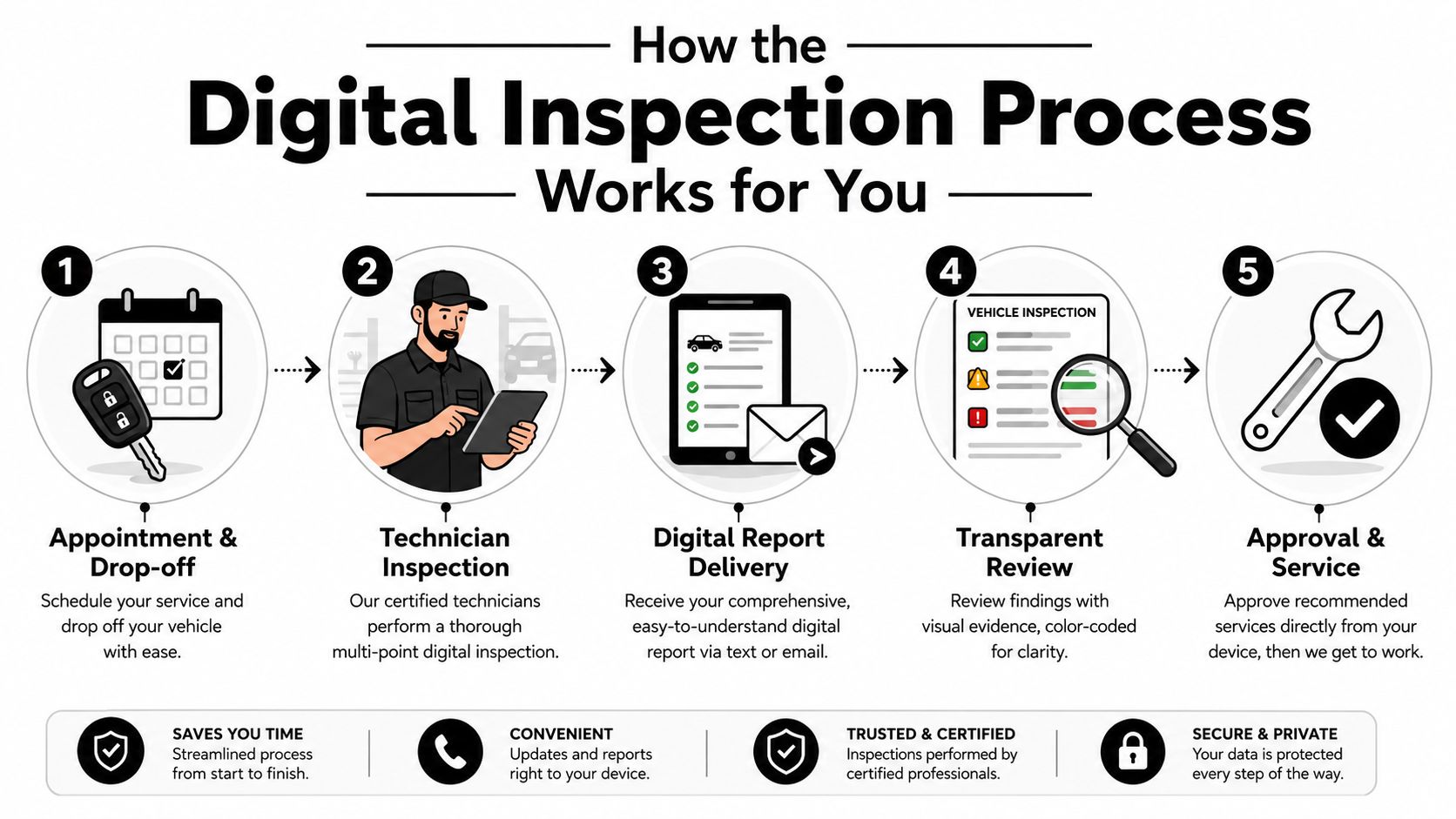
What happens from drop-off to report
Consider it a health report card for your car.
When you arrive for service, the vehicle is checked in and moved into the bay. The technician opens the inspection workflow on a tablet and works through a structured checklist. For Ontario safety inspections under DriveON, technicians use an Android tablet to record inspection results as the physical inspection happens, with data communicated directly to the ministry through the digital system, as outlined on Ontario's DriveON program page.
That detail matters because it means the inspection and the record are connected in real time. It's not a case of checking the car first and filling out paperwork later from memory.
What you actually receive
A modern digital vehicle inspection usually includes:
- A list of checked systems such as brakes, tires, lights, steering, suspension, fluids, and visible safety items.
- Photos or short video clips showing wear, leaks, damage, or normal condition.
- Technician notes written in plain language.
- Priority categories so you can tell what needs attention now and what can be watched.
- A digital approval path that lets you respond without playing phone tag.
If you've ever used an auto inspection station in Whitby, the easiest comparison is this. The inspection itself is still hands-on and physical. The communication is what becomes cleaner, faster, and easier for you to follow.
Practical rule: If a shop recommends work, the report should help you understand both the problem and the urgency.
What the customer experience feels like
Most customers open the report on their phone and go straight to the photos.
That's normal. Photos answer the question that matters most. “Is this real, and how bad is it?” A close-up of a worn brake pad, a cracked bushing, or a fluid seep tells you more in a few seconds than a long explanation over the phone.
From there, the service advisor can walk you through the findings in plain terms. You approve what makes sense, ask about timing on anything that can wait, and move forward without the usual uncertainty.
Key Benefits Transparency Trust and Faster Approvals
The biggest benefit of a digital vehicle inspection isn't the tablet. It's the fact that you and the shop are now looking at the same evidence.
That changes the tone of the whole appointment. The conversation stops sounding like sales pressure and starts sounding like a review of documented condition.
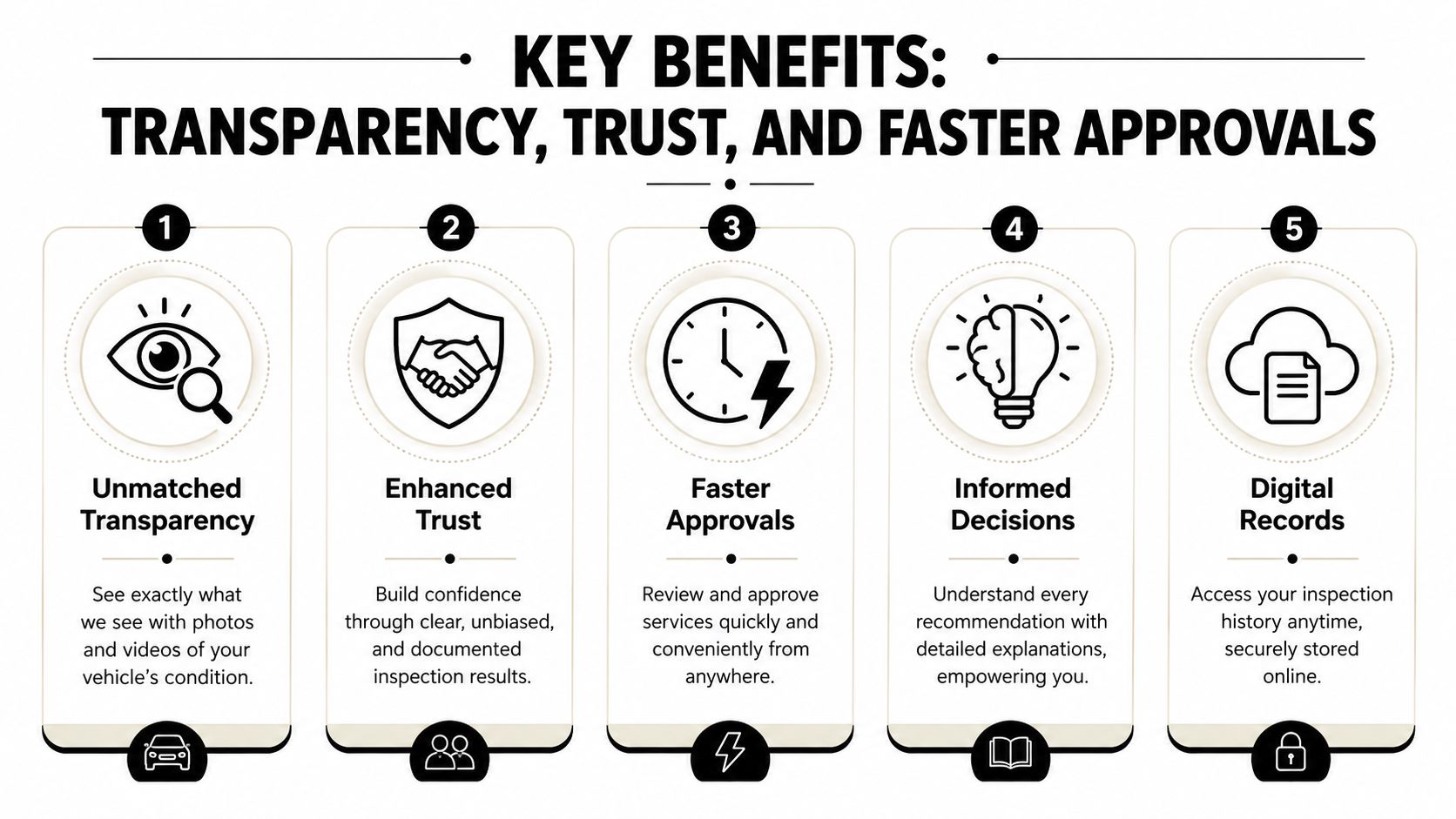
What improves for the driver
Here's where digital inspections tend to help most:
- Transparency: You can see exactly what the technician saw.
- Decision quality: You're more likely to understand why a service is recommended.
- Approval speed: You can respond from your phone instead of waiting for repeated calls.
- Record keeping: Your inspection history is easier to keep and revisit later.
A well-built report also reduces the common problem of customers forgetting what was discussed two weeks later. If you decided to postpone a service, the documentation is still there when you're ready.
Why trust improves
Trust in auto repair usually breaks down when the customer feels cornered.
A digital report gives people room to think. They can zoom in on a photo, compare the urgent items to the monitor items, and ask questions without feeling rushed. That's a much stronger foundation than “we recommend this because we said so.”
When customers can see the condition for themselves, the approval conversation gets easier for both sides.
There's also measurable operational value here. Digital vehicle inspection systems reduce documentation errors by approximately 40% and increase customer approval rates for recommended services by 25 to 30%, according to CM Auto Service's write-up on digital inspections.
Those numbers line up with what many drivers already sense. Better documentation usually leads to fewer misunderstandings.
Faster doesn't mean pushier
Some people hear “faster approvals” and assume that means more pressure. It should mean the opposite.
You're not being rushed into a verbal yes while you're at work. You're getting information in a format that's easier to review. That convenience helps the process move, but the primary advantage is clarity.
| Benefit | What it means for you |
|---|---|
| Visual proof | You can confirm the issue yourself |
| Clear priorities | You know what's urgent and what can wait |
| Easier approvals | You can respond from wherever you are |
| Better records | You can look back at previous findings |
The Carmedics Autowerks Digital Inspection Experience
At a local Whitby shop, the value of digital inspections shows up in the small details. Not flashy ones. Useful ones.
When a technician carries a tablet through the inspection process, the goal isn't to turn the visit into a tech demo. The goal is to build a report that makes sense to the person paying for the work.
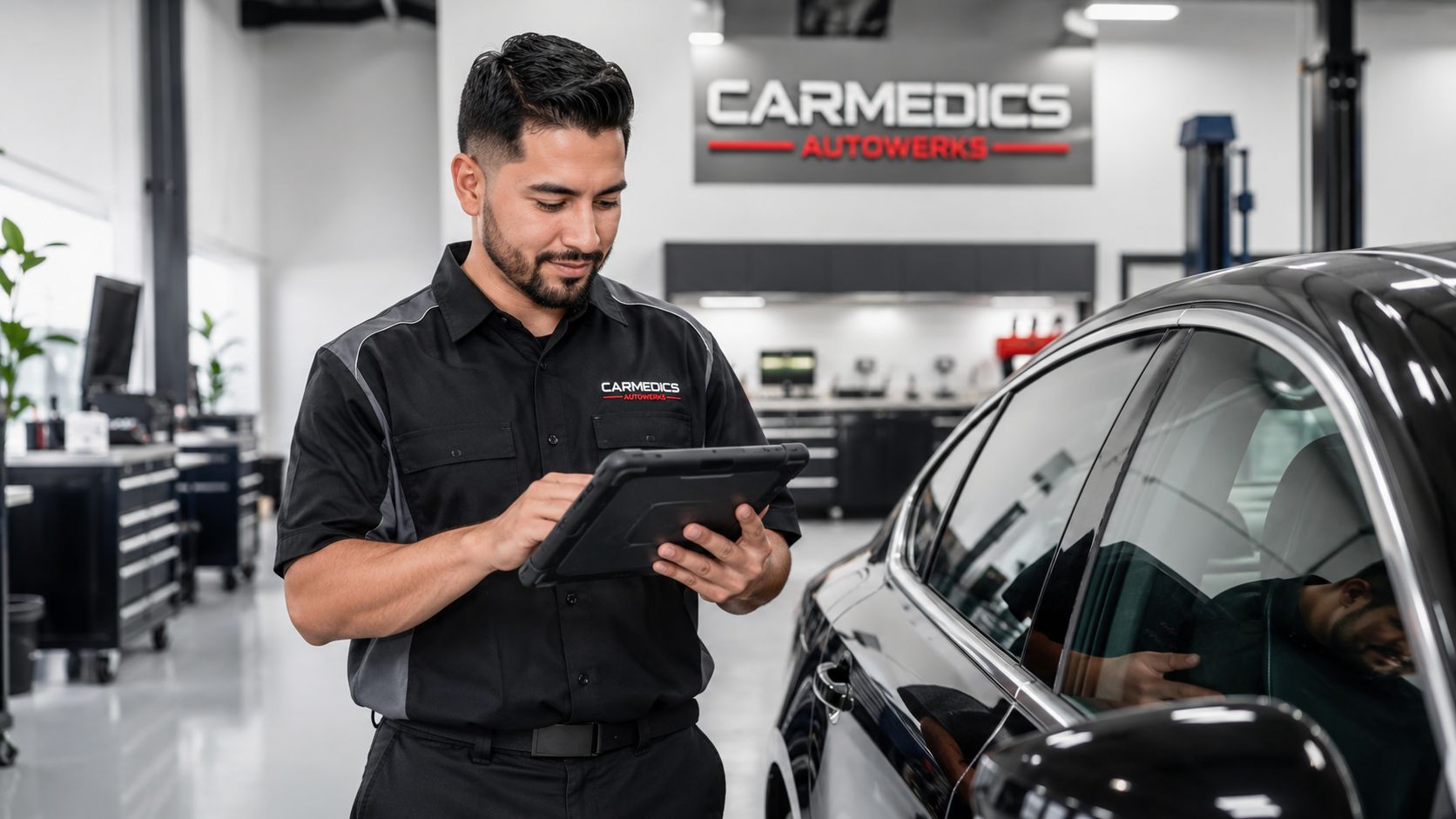
What customers notice first
Most drivers notice three things right away during a well-run digital inspection experience.
First, the notes are usually easier to understand than old handwritten checklists. Second, the photos make the findings feel more concrete. Third, the report gives you a better sense of priority. You can tell the difference between “handle this now” and “plan for this soon.”
That matters whether the vehicle is in for an oil service, a drivability concern, or a more involved repair. It also helps when the owner is busy and can't step away for a long call in the middle of the day.
Where the process helps most
Digital reporting is especially useful in situations like these:
- Routine maintenance visits: Small wear items are easier to monitor over time when you have a visual record.
- Used vehicle concerns: If something feels off after purchase, documented findings help remove doubt.
- Fleet service: Decision-makers who aren't standing in the shop can still review condition clearly.
- Post-collision checks: Visual records help show what was inspected and what needs attention.
For drivers looking for a modern local repair experience, that kind of workflow is part of what people expect from a Whitby automotive shop with a professional service process.
A strong digital inspection report doesn't replace technician judgement. It makes that judgement visible.
What doesn't work
Not every digital inspection is automatically good.
If the photos are blurry, the notes are generic, or every item is marked urgent, the technology won't build confidence. It will just turn old habits into a digital format. The system works best when the technician documents condition carefully and the advisor explains it without overselling.
That's the main trade-off. The software helps, but the quality of the inspection still depends on the people using it.
Understanding Common Findings and Your Next Steps
A digital report is only helpful if you can read it without feeling like you need a translator. Most inspection systems make this easier by using colour-coded categories.
The exact labels can vary by shop, but the idea is usually the same. Good items are separated from monitor items and urgent items, so you can decide what to do first.
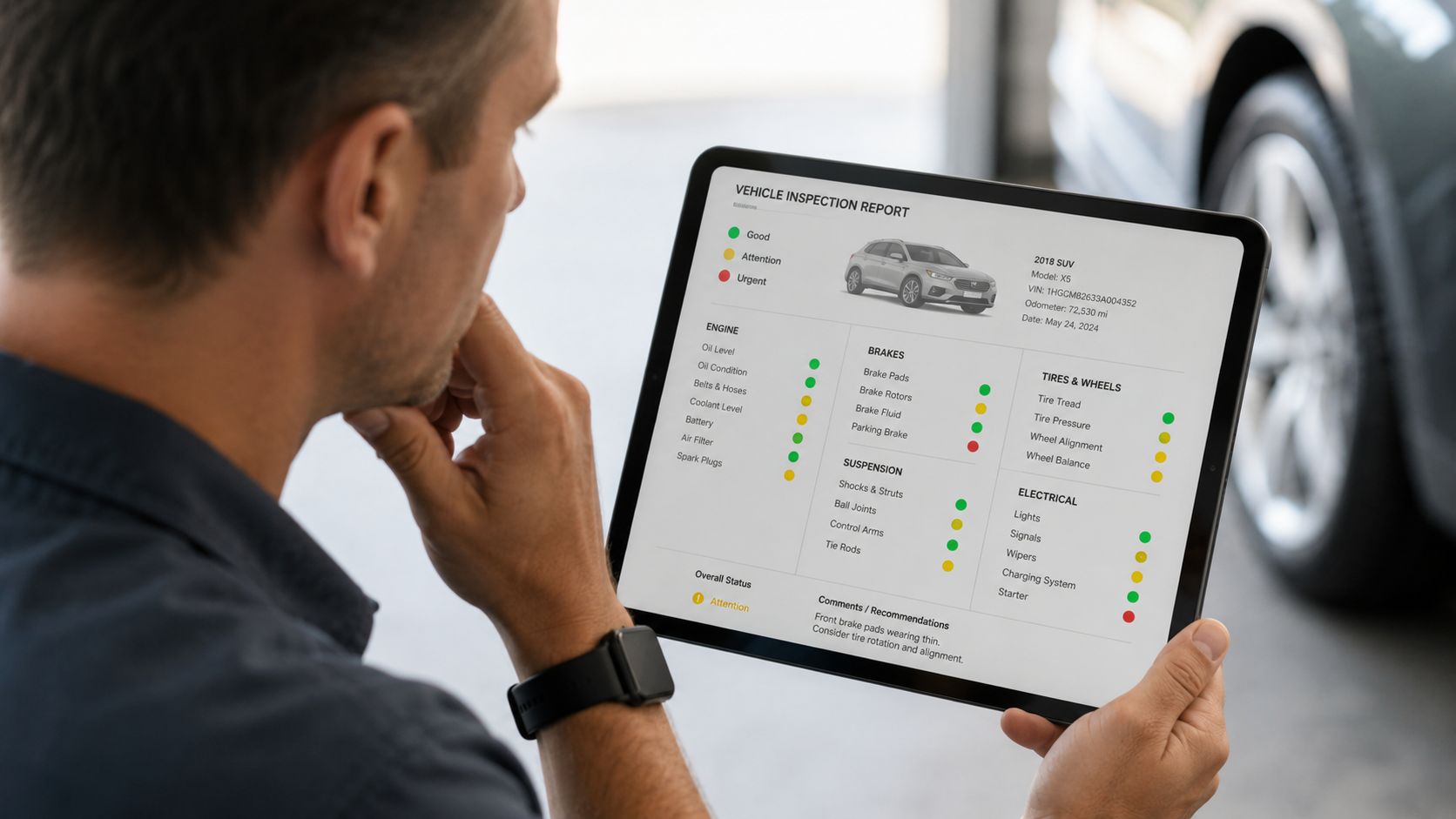
How to read the common colour system
Here's the practical version most drivers can use right away:
- Green: The item inspected looks serviceable at this time.
- Yellow: The part or condition should be watched, planned for, or rechecked at a future visit.
- Red: The issue needs prompt attention because it affects safety, reliability, or the risk of further damage.
A yellow item isn't a scare tactic. It usually means the technician sees wear developing, but not a problem that requires immediate action today. A red item means delaying the repair could create a more serious issue or leave the vehicle unsafe to drive.
Examples that make the report easier to judge
A few common examples help:
| Colour | Typical meaning | Real-world example |
|---|---|---|
| Green | No current action needed | Brake hardware looks serviceable |
| Yellow | Monitor and plan | Tire wear that may need attention before a seasonal change |
| Red | Repair promptly | Brake component wear that affects safe operation |
If something is marked red and you're not sure why, ask for a plain-language explanation. A good advisor should be able to tell you what the part does, what happens if it fails, and whether the vehicle should stay parked.
Why digital reports matter after collision work
This is one area where digital documentation becomes especially valuable for newer vehicles. Owners often want clear proof of what was inspected after an accident, especially when safety systems or visible damage are involved.
For new car owners in Ontario, a key question is whether digital reports satisfy MTO compliance for post-collision documentation. Digital inspection tools can provide the necessary evidence to improve dispute resolution and repair cost accuracy in Ontario collision centres, based on the Ontario Passenger and Light-Duty Vehicle Inspection Standard.
If warning lights, calibration concerns, or damage-related drivability issues are part of the conversation, digital records pair well with computer diagnostics for modern vehicles. One shows what the technician saw. The other helps confirm what the vehicle's systems are reporting.
If you've had collision work done, keep the report. It can be useful later if questions come up about repairs, condition, or claim-related details.
Your Digital Inspection Questions Answered
A lot of Whitby drivers ask the same thing once they see a digital report on their phone. How does this fit with Ontario's DriveON process, what does it cost, and what should they keep for later. Here are the answers we give at the service counter.
Is a digital vehicle inspection the same as an Ontario safety certificate
They serve different purposes.
A digital vehicle inspection is the report we use to show you your car's current condition with photos, notes, and priority ratings. An Ontario Safety Standards Certificate is a regulated inspection completed through the DriveON program for situations like registration, transfer, or putting a vehicle back on the road. If you need the certificate, say that up front so the shop books the right inspection.
How much does an Ontario safety inspection usually cost
Pricing varies by shop, vehicle, and what is included in the appointment. The inspection fee is separate from any repairs needed to pass, so compare those items separately when you're calling around.
If you want a local reference point before you book, our auto inspection cost guide explains what Ontario drivers are usually paying and what can affect the final bill.
How long is a safety inspection valid
Under the current Ontario system, a passed safety inspection is valid for 36 days.
That window is shorter than many people expect. If you are buying, selling, or registering a vehicle in Ontario, try to book close enough to your paperwork date that the certificate does not expire before you can use it.
Can a digital inspection properly assess PPF or window tint
It helps, but photos are only part of the answer.
A digital report can show lifting edges, bubbling, haze, scratches, or poor trim lines. That is useful if you want a record of visible condition. It does not replace a hands-on check for film adhesion, surface texture, or installation quality, especially after an Ontario winter when temperature swings can expose problems that are easy to miss in a photo.
If you have concerns about tint or PPF, ask for both. A visual record in the report and a physical inspection in the bay.
Are digital records worth keeping
Yes. Keep every report.
For Ontario drivers, especially under DriveON-related paperwork or post-repair questions, a saved inspection gives you a dated record of what the vehicle looked like at that visit. That helps if you are tracking wear over time, reviewing recommendations, or sorting out what changed between appointments. We see this help customers make calmer decisions because they are not relying on memory alone.
If you want a clearer repair process in Whitby, Carmedics Autowerks Inc offers inspections with plain-language explanations and digital documentation you can apply.