


You're probably reading this with a screw in the tread, a tire pressure warning on the dash, or a tire that looked fine yesterday and is soft this morning. The first question isn't where to get help. It's whether the tire can be repaired safely, or whether replacing it is the only responsible move.
That distinction matters more than most drivers realise. A proper tire repair isn't just plugging a hole and sending you back onto the 401. It starts with the injury itself, then the tire's internal condition, then the wheel and air system around it. In Whitby, where drivers deal with potholes, highway commuting, winter changeovers, and road debris, that process needs to be disciplined.
Whitby also has a strong local service base. A local industry guide notes that the town had around 55 registered auto repair shops as of early 2025, with a dense mix of general repair facilities and tire-focused providers, which helps explain why tire services are widely available in the area according to this Whitby auto repair overview. That's good for convenience. It also means you should know what separates a proper repair from a quick fix.
Is Your Tire Repairable? The Critical First Assessment
If the damage is in the wrong place, too large, or the tire has been run low, the answer is simple. Replace it. No honest shop should blur that line.
The repair decision starts with three checks. Location, size, and overall condition. Similar to assessing an injury, a small cut in a stable area can often be treated. Damage in a high-stress area, or damage that has spread below the surface, changes the decision completely.
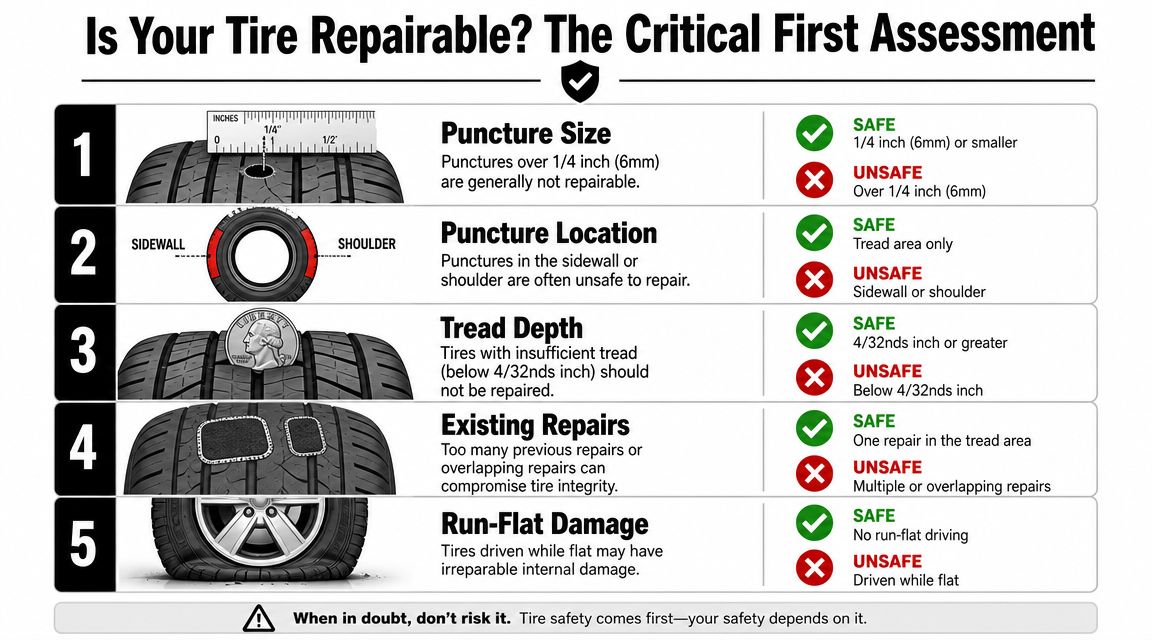
The two hard limits that matter most
According to Midas Whitby's tire service guidance, a puncture is repairable only when it's in the tread area and 1/4 inch or smaller. The same guidance states that sidewall damage, punctures larger than 1/4 inch, and punctures too close to previous repairs aren't repairable.
That rule exists because the sidewall flexes constantly. Every rotation bends it. Every pothole loads it. Every kilometre at highway speed builds heat into it. A sealed hole in that area may still leave the tire structurally weak.
Practical rule: If the puncture is in the sidewall or shoulder, don't ask for a repair. Ask for a safe replacement plan.
What you can check before visiting a shop
You don't need shop equipment to make a useful first assessment. You can look for the signs that tell a technician what to expect.
- Find the injury location: If the object is in the centre tread area, the tire may still be a candidate. If it's near the shoulder or in the sidewall, assume replacement until proven otherwise.
- Don't pull the object out yet: A nail or screw can slow the air loss. Removing it in the driveway often turns a manageable leak into a flat.
- Look for low-pressure damage: If the tire was driven while soft, the inside may already be compromised even if the puncture itself seems minor.
- Check the tread condition: A worn-out tire isn't worth repairing. If you want a quick refresher on how to check tire tread, that guide gives a clear visual explanation.
- Watch for visible distortion: Bulges, splits, exposed cords, or a pinched-looking sidewall mean the casing may be damaged.
A proper shop visit should include more than an outside glance. That's one reason many drivers looking for general auto repair support in Whitby end up asking for a full tire inspection before any repair decision is made.
What often turns a repairable tire into a replacement
The biggest mistake is driving too far on a low tire. Once pressure drops, the casing flexes more than it should. Heat rises fast. The internal structure can bruise, separate, or shred where you can't see it.
If the tire is losing air quickly, stop driving on it. The hole may be repairable, but the damage from driving on it may not be.
That's the part customers don't always see at first. The puncture doesn't decide the job by itself. The tire's condition after the puncture does.
Understanding Tire Repair Methods Plug Patch or Combo
Not every “repair” deserves the name. Some methods are temporary. Some are partial. One is the method professionals rely on when a tire qualifies for repair.
The confusion usually starts with the word plug. Drivers hear it and think all plug repairs are the same. They aren't.
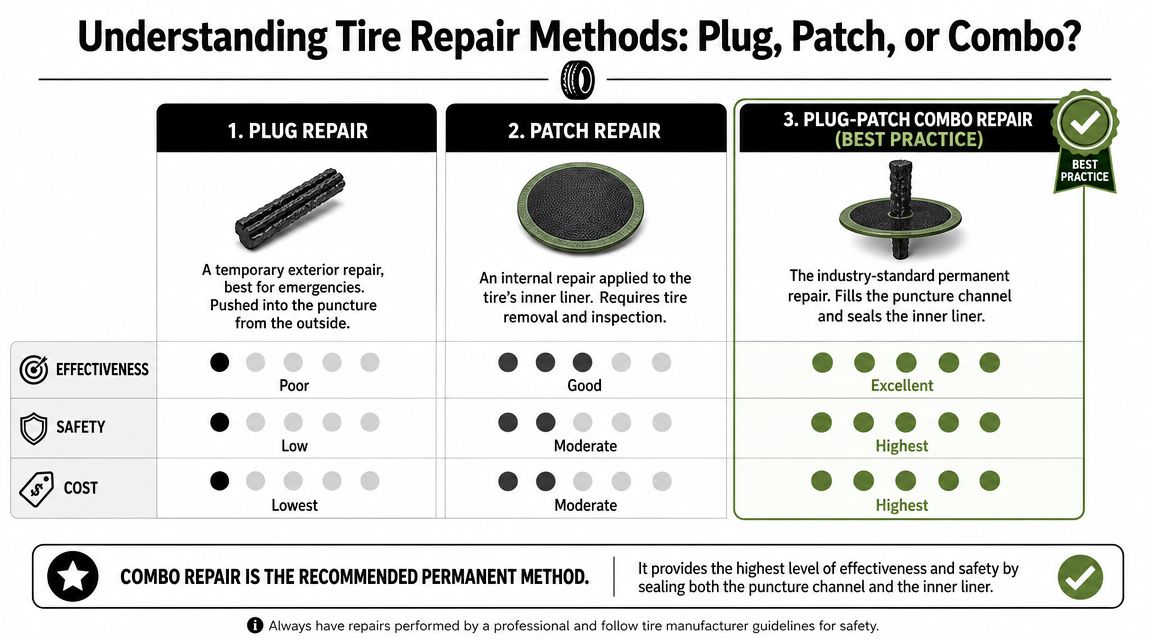
The roadside plug
A string plug goes in from the outside. It's the fastest method and the least complete. It can help in an emergency to get the vehicle off the shoulder and somewhere safer, but it doesn't allow the technician to inspect the inside of the tire.
That's the primary weakness. If nobody dismounts the tire, nobody sees whether the inner liner is damaged, whether moisture has entered the injury path, or whether the tire was run flat.
The internal patch
An internal patch is better because the tire comes off the wheel and the repair is applied from the inside. That allows inspection, which is critical.
But a patch by itself mainly seals the inner liner. It doesn't address the full puncture channel in the same way a combination repair does. In practice, that matters because the path through the tread is where air, moisture, and contamination can keep working their way through.
The plug-patch combination
A plug-patch combo handles both parts of the injury. The stem fills the puncture channel. The patch seals the inner liner. That's why it's considered the proper permanent repair method when the tire meets repairability standards.
Here's the simple comparison:
| Method | What it does well | What it misses | Where it fits |
|---|---|---|---|
| String plug | Fast emergency sealing from outside | No internal inspection, limited long-term confidence | Temporary roadside use |
| Internal patch | Seals inner liner after tire removal | Doesn't stabilise the channel the same way | Better than a plug alone |
| Plug-patch combo | Seals liner and fills injury path | Not suitable for non-repairable damage | Proper in-shop repair |
A plug alone is like closing the surface of a wound without checking what happened underneath.
Why professional shops remove the tire
A proper repair takes longer because the tire has to come off the rim. That isn't wasted labour. It's the only way to inspect the inside carcass, prep the repair area properly, and confirm the injury hasn't spread.
That process also ties into other services drivers often overlook, especially around seasonal changes. If you're already booking a seasonal tire change in Whitby, it's smart to have a punctured or suspect tire assessed at the same time instead of waiting for a bigger failure later.
For tire repair Whitby Ontario drivers can trust, the method matters as much as the diagnosis. A quick outside fix may hold air for a while. That doesn't make it the right repair.
The Carmedics Autowerks Process Your Whitby Tire Experts
A proper tire repair visit should feel straightforward. You arrive with a concern. The wheel comes off. The tire gets inspected inside and out. Then you get a clear answer before any repair goes ahead.
That's how this work should be handled in a serious shop environment.
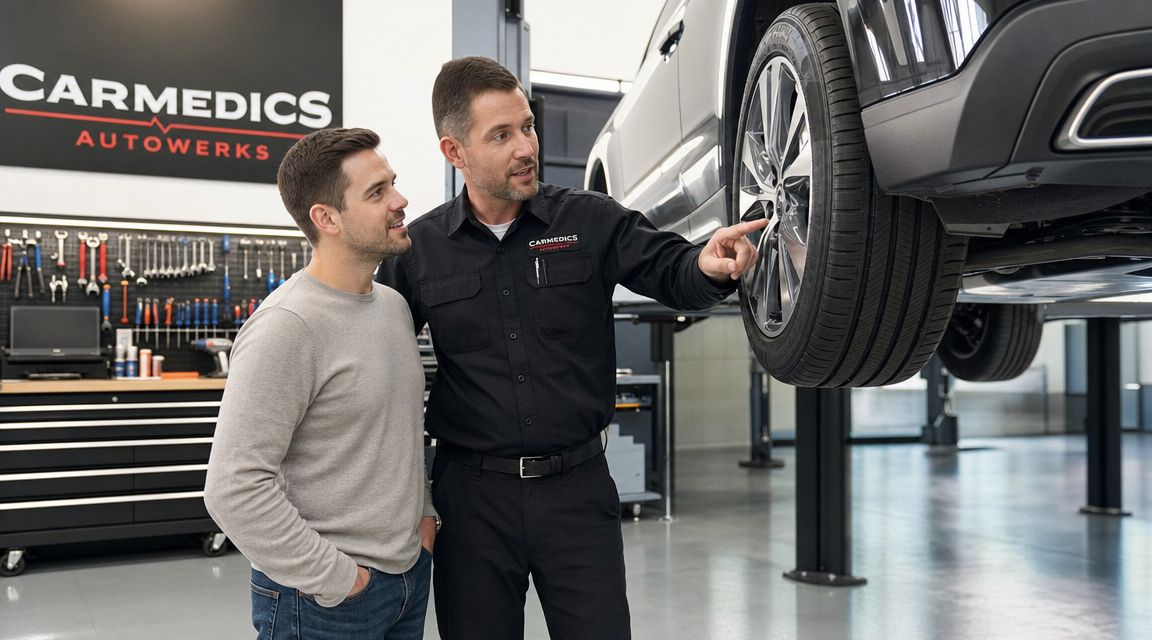
What happens when the vehicle comes in
The first step isn't reaching for a plug kit. It's confirming the complaint. If the tire is visibly low, the tech checks pressure and inspects the tread area, sidewall, and wheel for obvious impact signs or embedded debris.
Then the tire is dismounted. At this stage, the full extent of the damage typically becomes apparent. You can see whether the puncture went through cleanly, whether the inner liner is scuffed, and whether the casing shows signs of being driven underinflated.
According to Mr. Lube's Whitby tire repair page, best practice includes in-depth checks of tire pressure, tread depth, and overall tire health, and extensive tire service also includes installation, rotation, and alignment checks for safe post-repair performance. That's the right mindset. A puncture doesn't happen in isolation from the rest of the tire.
The decision point customers should expect
Once the tire is off, the technician should be able to say one of three things clearly:
- Repair approved: The injury is in the tread, within repair limits, and the casing looks sound.
- Repair declined: The location, size, previous repair pattern, or internal damage makes the tire unsafe to save.
- Wheel or system issue also found: The leak may involve the rim, valve, or pressure monitoring hardware, not just the tread.
A good service counter conversation doesn't hide the reason. If a tire is non-repairable, the explanation should be specific. Sidewall injury. Heat ring inside the casing. Belt damage. Multiple old repairs too close together.
When a shop shows you why a tire can't be repaired, that usually builds more trust than simply saying no.
The actual repair and final checks
If the tire qualifies, the repair area is prepared internally and the plug-patch combination is installed properly. After that, the assembly is re-mounted and inflated to specification.
Then come the steps that separate careful work from rushed work:
- Leak confirmation: The repaired tire gets checked to ensure the air loss is resolved.
- Balance check: A tire that's been removed and reinstalled should be evaluated for smooth operation.
- Condition review: Uneven wear, aging, or impact marks may still affect whether the tire belongs back on the same axle.
- Vehicle recommendation: Some drivers need more than a repair. They need alignment or a broader tire plan.
Drivers who want shop details before booking can review the Whitby location information for Carmedics Autowerks. In practice, the value is in the process, not the promise. Dismount the tire, inspect it properly, repair only what meets standards, and don't shortcut the final checks.
That's how you return a vehicle to the road with confidence instead of hope.
Typical Costs Turnaround Times and Safety Guarantees
The question after “Can it be repaired?” is usually “How long will this take?” Right behind it comes “Why does a proper repair cost more than a quick plug?”
The answer is labour and process. A proper in-shop tire repair takes time because the technician has to remove the wheel, dismount the tire, inspect the inside, complete the repair correctly, reassemble it, and confirm that the tire runs properly afterward. That's very different from pushing material into a hole from the outside.
What affects time in the shop
Turnaround depends on what the inspection reveals. A clean tread puncture with no internal damage is one type of job. A wheel that's bent from a pothole, or a tire that was driven nearly flat, creates a different path.
The service window also changes if the repair turns into additional work such as balancing, alignment review, or tire replacement. That's why serious shops avoid quoting a firm timeline before inspection.
A good way to think about it:
- Simple puncture with no hidden damage: Usually the fastest scenario.
- Unknown leak source: More diagnosis is needed.
- Impact event: The tire, wheel, and suspension may all need attention.
- Busy seasonal periods: Swap season increases wait times across Whitby.
Why the cheapest option often isn't the safe option
A low price usually means one of two things. Either the method is incomplete, or the inspection was minimal.
That doesn't automatically make the shop careless, but it should make you ask questions. Was the tire dismounted? Was the inside inspected? Was the repair done from the inside? Was the wheel checked for related damage?
Shop-floor advice: If a repair sounds too quick to include inspection, it probably skips the part that matters most.
If you're trying to plan around a broader maintenance visit, it helps to understand how inspection and repair labour fit into the bigger picture. This overview of auto inspection cost considerations gives useful context on why thorough diagnosis affects both timing and value.
What a real safety guarantee should mean
A credible repair guarantee isn't just “it holds air today.” It means the shop stands behind the method used and the decision to repair in the first place.
That should include confidence in the workmanship, but it should also include honesty. If the tire didn't qualify for repair, the safest guarantee is refusing the job and recommending replacement. In tire repair Whitby Ontario drivers rely on, the safest answer isn't always the answer people want to hear.
Specialized Tire Services for Fleet and Collision Repair
Passenger-car punctures are only one part of the job. Fleet vehicles and post-collision vehicles need a stricter lens because downtime and hidden damage change the stakes.
A fleet manager doesn't just care whether one tire can be patched. They care whether the vehicle returns to service reliably, whether wear patterns are being tracked, and whether the next roadside failure can be prevented. Collision-related tire work is similar. The tire may still hold air, but the impact that bent the wheel or loaded the suspension can leave damage that isn't visible from across the bay.
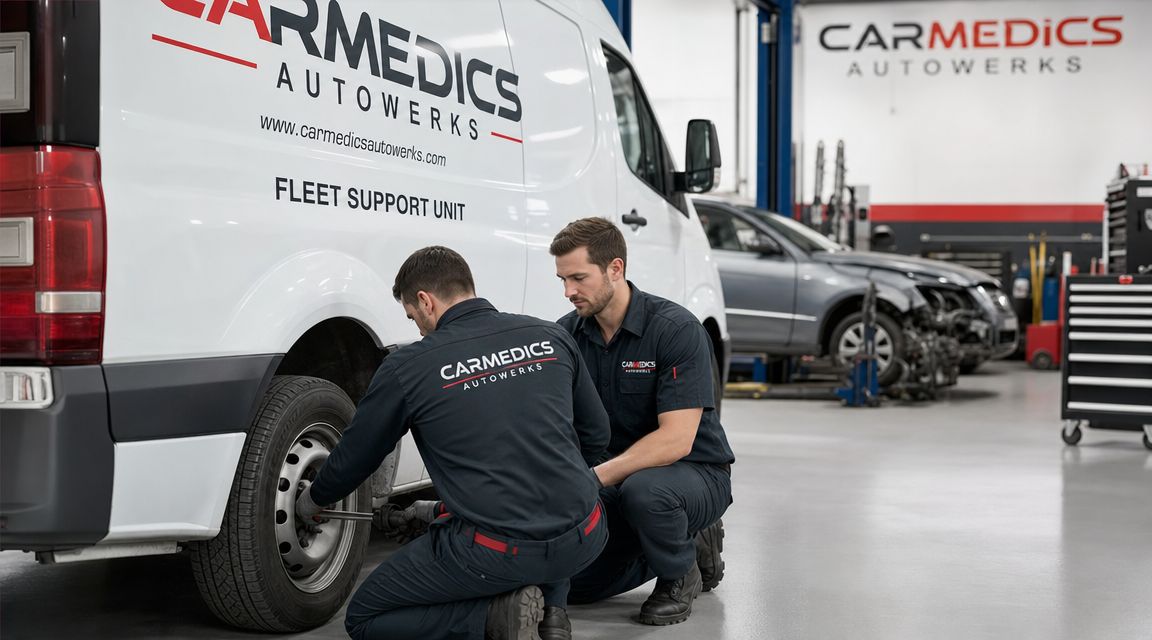
Why fleet work needs a different standard
For fleets, consistency matters as much as speed. One rushed repair can create a comeback, a breakdown, or an avoidable scheduling problem.
A proper fleet tire program should focus on:
- Downtime control: Get the vehicle inspected quickly and make a repair-or-replace decision without guesswork.
- Pattern tracking: Repeated punctures, shoulder wear, or impact damage often point to route conditions or vehicle setup issues.
- Wheel and alignment review: If a van keeps wearing one edge or returns with vibration, the tire isn't the only issue.
- Service records: Fleet operators need documented findings, not just verbal summaries.
That's where a shop offering fleet maintenance support in Whitby can be useful. The tire work ties into the rest of the vehicle's operating condition.
Collision damage changes the inspection
After even a moderate curb strike or road impact, the tire may look saveable at first glance. That's exactly when technicians need to slow down.
Here are the common collision-related concerns:
| Area | What a technician looks for | Why it matters |
|---|---|---|
| Tire casing | Internal bruising, separation signs, sidewall stress | Hidden structural damage can lead to later failure |
| Wheel | Bends, cracks, bead-seat damage | A leaking or distorted rim can mimic a puncture |
| Tread wear | New irregular wear after impact | May indicate alignment or suspension shift |
| Valve and sensor area | Damage around inflation and monitoring hardware | Air loss may not be from the tread at all |
For fleet and collision work, the smart position is simple. Don't isolate the tire from the event that damaged it. Inspect the whole assembly and the surrounding systems, then make the repair decision from there.
Frequently Asked Questions About Tire Repair in Whitby
Drivers usually ask the same practical questions at the counter, especially when they need help quickly. That's where a lot of local tire content falls short. It lists services, but it doesn't answer the decision questions that matter when you're standing beside a damaged vehicle.
One notable local gap is the lack of clear guidance on urgent repair timing, mobile versus in-shop capability, and what each option can handle, as noted on Apollo Grip's Whitby tire services page. Here's the straight answer to the questions that come up most often.
Is mobile tire repair as good as shop repair
Sometimes it's the right first step. It isn't always the right final step.
Mobile service is useful when the vehicle can't be driven safely, when you're stuck at home or work, or when your immediate need is getting the vehicle moving again. But mobile capability has limits. The biggest one is that some repairs and related checks are better handled in a fully equipped shop.
A shop environment is stronger for cases involving:
- Internal tire inspection: The tire usually needs to come off the wheel for a full repair decision.
- Balancing needs: After repair or wheel service, smooth operation matters.
- Alignment concerns: If the puncture came after a pothole strike, steering geometry may also need attention.
- Wheel damage diagnosis: Rim problems can look like tire problems.
Mobile help can be appropriate. It just shouldn't be treated as identical to a complete in-shop repair process.
My TPMS light stayed on after the tire repair. What does that mean
It means the system still sees a problem, or it needs to be checked. That problem could be low pressure in another tire, a sensor issue, or a pressure reading that hasn't stabilised yet after service.
The key point is this. Don't assume the repair failed just because the warning stayed on. And don't assume the light is harmless either. The tire should be rechecked, pressures should be verified at all four corners, and the sensor side of the system should be assessed if the warning remains.
Can I keep driving slowly on a low tire until I have time to deal with it
That's one of the most expensive mistakes drivers make.
A small puncture may start as a repairable tread injury. Continued driving on low pressure can destroy that option by damaging the internal casing. Even if the outside still looks normal, the sidewall may have absorbed heat and flex damage that makes the tire unsafe.
If the tire is visibly low, inflate it only if that can be done safely, then get the vehicle inspected as soon as possible. If it won't hold pressure, don't keep rolling on it.
If you protect the casing, you may save the tire. If you drive on it flat, the decision may already be made for you.
After a repair, is the tire back to normal
It can return to safe service if the tire was repairable and the repair was done properly. But “back to normal” still depends on the tire's age, wear pattern, and the reason it failed in the first place.
A good repair doesn't erase other existing problems. If the tire was already near the end of its useful life, badly worn on one edge, or part of a mismatched set, the puncture repair may solve the air leak without solving the bigger issue.
Should I repair one tire or replace a pair
That depends on tread condition, axle matching, and what vehicle you drive. On many vehicles, especially heavier SUVs and newer models with more demanding tire setups, matching matters more than drivers expect.
If one tire is badly damaged but the mate on the same axle is heavily worn, replacing only one may not be the cleanest answer. That's a judgment call based on what the technician measures and what the vehicle can tolerate safely. The goal isn't just sealing a puncture. It's restoring stable, predictable handling.
For tire repair Whitby Ontario drivers can rely on, the safest advice is usually the least dramatic. Inspect first. Repair only when the tire qualifies. Replace when the structure says it's time.
If your tire has lost pressure, taken a pothole hit, or picked up a puncture and you want a proper inspection before making the wrong call, Carmedics Autowerks Inc offers auto repair, fleet service, and collision-related vehicle support in Whitby. Bring the vehicle in before a small tire issue turns into wheel damage, alignment problems, or a roadside failure.