

You're probably doing what most owners do after a theft scare, a break-in nearby, or the moment you realise your factory key fob isn't much of a security plan. You search car alarm systems near me, open five tabs, and get the same recycled promises: premium brands, expert installation, advanced protection.
That doesn't help much when the essential question is simpler. Who can touch your car's wiring without creating problems you'll live with for years?
A clean alarm install isn't just about the box under the dash. It's about how the installer handles CAN-bus integration, sensor tuning, factory feature retention, remote programming, trim removal, and post-install testing. One careless shortcut can leave you with rattles, battery drain, random warning lights, dead range on the remote, or an alarm that goes off every time a lorry passes.
Why Your Search For 'Car Alarm Systems Near Me' Is Just The Start
Most search results make the same mistake. They sell the product first and barely deal with the practical question of whether that product will meaningfully help in your area.
That's a known gap in local alarm content. One of the clearest observations from existing industry pages is that many listings focus on brands and installation offers, but rarely explain whether an alarm is a deterrent or more of a recovery aid for the way theft happens in a specific city, as noted in this discussion of local alarm search intent. That's why a generic “best alarm” list usually sends people in the wrong direction.
The search result is not the vetting process
If you drive a newer car, SUV, or a modified weekend toy, you're not just buying hardware. You're hiring someone to open panels, access factory wiring, integrate with your vehicle's electronics, and return it without a trace of butchery.
That means your first filter shouldn't be “Who sells Compustar, Viper, or another known brand?” It should be, “Who has the discipline to install it properly?”
A good local shop usually shows that in how they present all of their work, not just alarm work. If a shop can't demonstrate organised, professional automotive service standards across the board, that's a warning sign. A broader look at an automotive service centre near me can tell you a lot about whether the team treats cars carefully or just cycles them through.
Practical rule: The alarm you buy matters. The installer matters more.
What actually protects the car
A siren alone doesn't solve modern theft. In some cases it only announces that something has already gone wrong.
The better approach is to judge alarm options as part of a layered security setup. That includes visible deterrence, intrusion sensing, confirmation back to the owner, and in some cases tracking or smartphone-based alerts. Once you look at it that way, “car alarm systems near me” stops being a shopping query and becomes a hiring decision.
Decoding The Technology 1-Way, 2-Way, and Smart Systems
System type matters because it tells you two things at once. It tells you what protection you are buying, and it tells you how well the shop understands modern vehicle integration.
Any installer can quote a basic alarm. The better test is whether they can explain where each type works, where it falls short, and why one vehicle calls for a different setup than another.
What 1-way systems feel like
A 1-way alarm handles the basics. You arm the car, and the vehicle responds with chirps, flashing lights, or the siren if someone opens a door or triggers the sensor.
For some owners, that is enough. A car parked in a private garage, a driveway close to the house, or a lower-risk daily driver may only need audible deterrence and simple door or impact monitoring.
The trade-off is simple. Once you are out of sight and out of earshot, you have no confirmation that the command went through and no notice if the alarm goes off.
Why 2-way systems earn their price
A 2-way alarm sends confirmation back to the remote. If you lock the car, the remote tells you the car received the command. If the system trips, the remote alerts you instead of leaving you to discover it later.
That sounds like a small upgrade on paper. In real use, it is the point where an alarm starts feeling useful instead of symbolic.
This is also a good filter for the installer. A shop that sells 2-way systems should be able to explain remote range limits in dense areas, how sensor sensitivity is tuned to avoid nuisance triggers, and whether your vehicle needs extra modules for clean integration. If the answer is just brand hype and box features, keep looking.
Where smart and GPS-linked systems fit
A smart system adds phone control, app alerts, and, on some packages, GPS tracking or vehicle location features. These systems make the most sense for vehicles parked on the street, left in condo lots, carrying expensive tools or audio gear, or valuable enough that recovery matters as much as deterrence.
They also expose weak installation work faster than basic systems do. Poorly configured app control, sloppy remote start integration, or badly placed antennas can turn a premium system into a steady source of false alerts and battery complaints.
For that reason, smart alarms are useful as a hiring test. Ask the shop what phone-based features work on your specific vehicle, what functions are limited by factory electronics, and what support looks like after install. The answers will tell you a lot.
If you want to compare beyond the alarm itself, look at how a full anti theft device for car package fits together. That gives you a clearer view of where alarms help, where immobilizers help, and where tracking earns its keep.
Car Alarm System Comparison
| System Type | Key Feature | Typical Range | Relative Cost |
|---|---|---|---|
| 1-Way | Sends commands to the car with local audible and visual response | Vehicle-dependent and environment-dependent | Lower |
| 2-Way | Confirms commands and alerts the remote if triggered | Better day-to-day usability than basic systems, depending on platform and environment | Mid-range |
| Smart / GPS | Smartphone control, live alerts, often tracking options | App-based access instead of relying only on fob range | Higher |
A low-priced system with poor integration gets expensive fast. A cleanly installed mid-tier setup usually serves the owner better than a top-tier package fitted with shortcuts.
How To Find a Car Alarm Installer You Can Actually Trust
A bad alarm install usually does not fail in the bay. It fails a week later, when the car starts honking at 2 a.m., the battery goes flat, or the factory fob stops behaving the way it should.
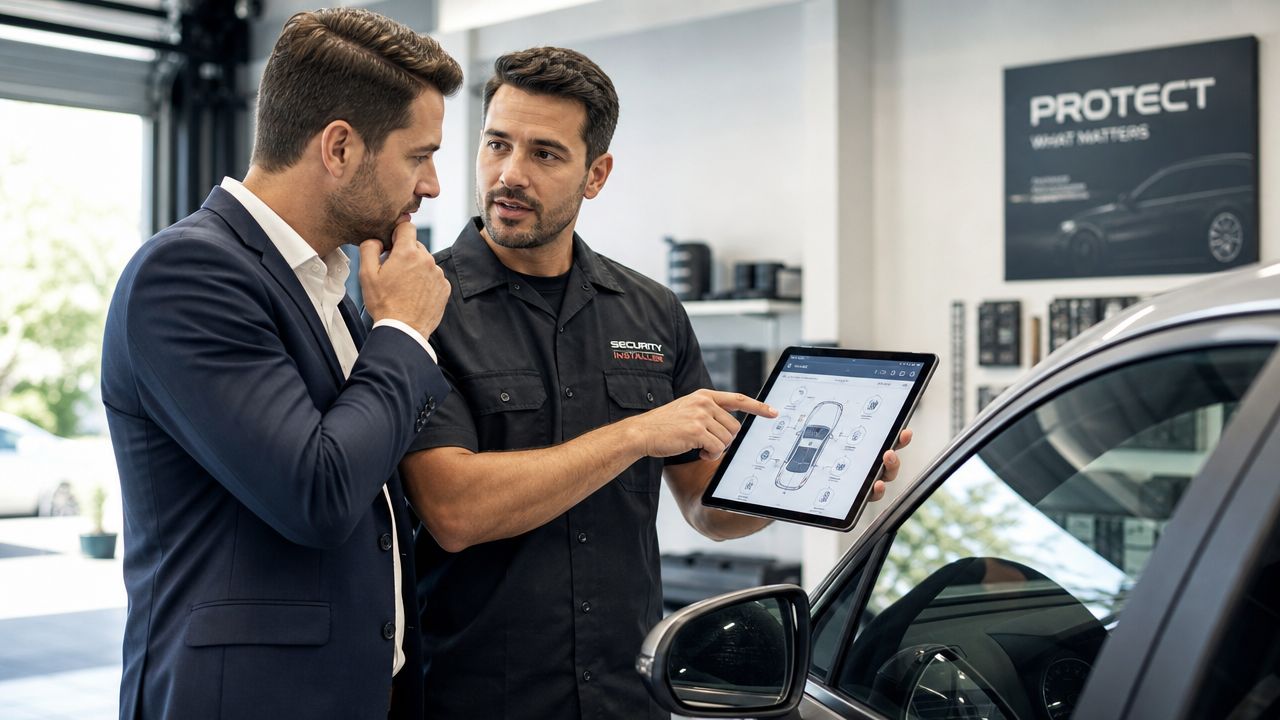
The search term gets you a list of shops. The hard part is sorting out who can integrate a system cleanly on your vehicle, and who is just good at selling boxes.
Start with fitment, not brand logos
Any shop can say it installs alarms. The useful question is whether it can explain what works on your exact car before booking the job.
That answer should cover factory keyless entry, door trigger behavior, immobilizer interaction, remote start limits if you want it, and whether the system needs vehicle-specific modules to behave properly. If the conversation stays vague, expect problems later. On newer vehicles, generic installs are where nuisance alarms, broken convenience functions, and ugly workarounds tend to show up.
A good installer also treats system choice as a clue to labor quality. A basic 1-way unit is one thing. A 2-way or app-based system asks a lot more from the person wiring and configuring it. If a shop pushes premium features but struggles to explain antenna placement, sensor tuning, or factory data integration, that is a warning sign.
Judge the workmanship like you would on any serious electrical job
Good alarm work is mostly hidden. That is the point.
Ask to see real install photos or a vehicle in the shop. Look for tight panel fitment, no chewed-up trim, no exposed modules, and wiring that is secured and routed like it belongs in the car. Sloppy under-dash wiring tells you a lot about what you cannot see. I would rather see a modest mid-range system installed cleanly than an expensive smart alarm fitted with shortcuts.
Shops with broader diagnostic and electrical experience usually handle alarm work better because they understand how accessory electronics interact with the rest of the car. That is one reason I look closely at whether the business also operates like a credible car mechanic and vehicle electrical service shop, not just a counter that sells remotes.
Ask how they handle problems before you ask about price
Every installer says the job will go well. The better one can explain what happens when it does not.
Listen for plain, vehicle-specific answers about retained accessory power, factory disarm logic, hood pin mounting, sensor calibration, parasitic draw checks, and post-install troubleshooting. Those details separate a technician from a parts swapper. They also tell you whether the quote includes setup time or just the fastest possible install.
Price matters, but use it as a vetting tool. If one shop is dramatically cheaper than the others, ask what is being skipped. Sometimes it is support after the sale. Sometimes it is the interface module that keeps factory features working. Sometimes it is the time needed to test every trigger and remote function before delivery.
A practical vetting routine
Use this order:
Confirm they have done your vehicle platform before
Push-to-start imports, domestic trucks, European cars, hybrids, and older analog vehicles all create different install headaches.Ask which alarm type they recommend for your use case
Their answer should connect your habits, parking situation, and vehicle electronics to a 1-way, 2-way, or smart system. If every customer gets the same package, the shop is selling inventory.Get a clear fitment explanation in writing
You want to know what integrates with factory locks, what features are limited, what add-on modules are required, and what the finished system will do day to day.Review real completed jobs
Stock photos are worthless here. Look for real interiors, real vehicles, and clean finish work.Ask who handles warranty and nuisance-alarm follow-up
The answer should be direct. You want adjustment and support, not finger-pointing between the product brand and the installer.
The safest hire is usually the shop that is careful about what it will install, what it will not promise, and how it will support the job after the keys are back in your hand.
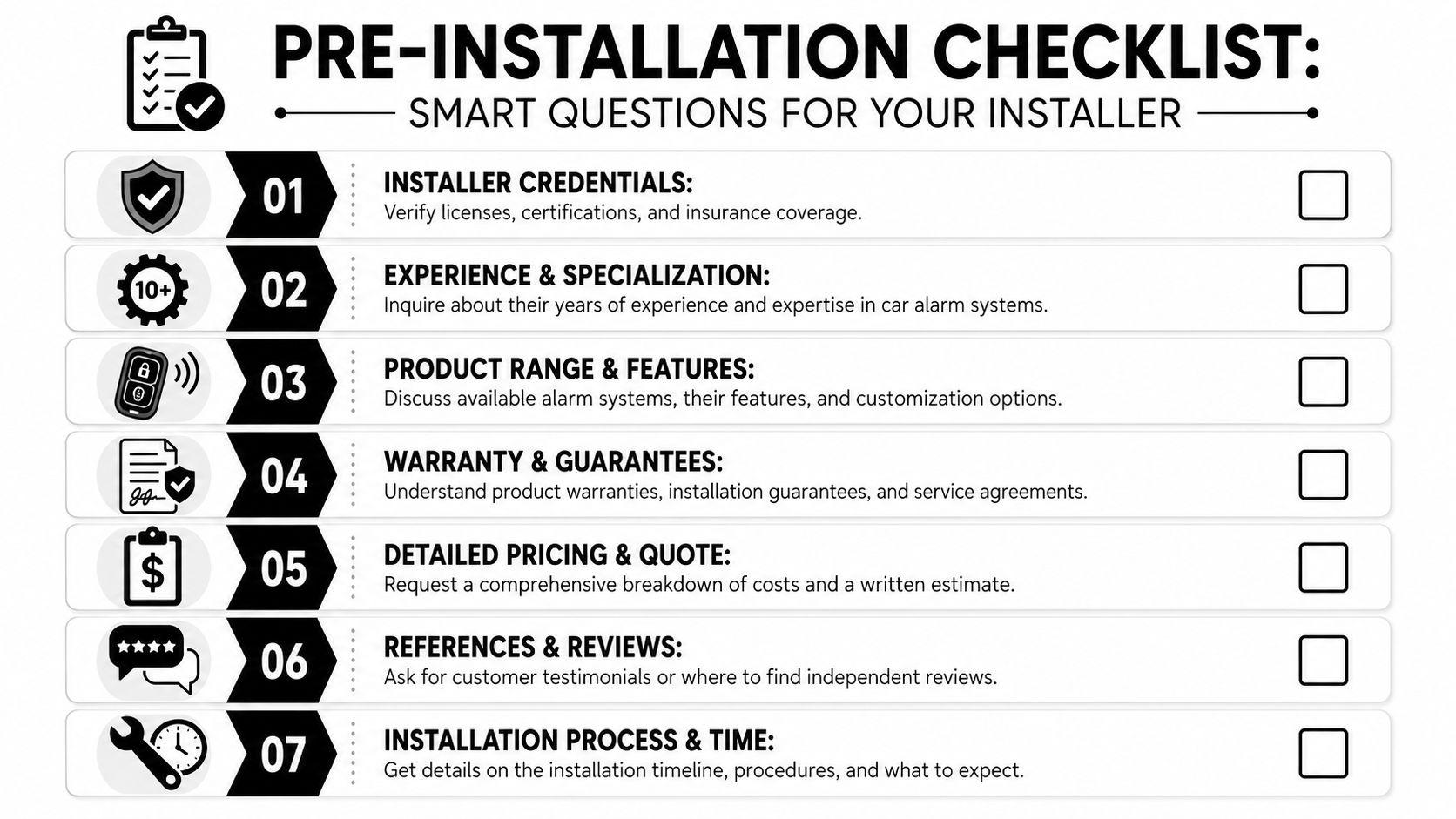
Your Pre-Installation Checklist And Key Questions
The consultation should feel less like a sales pitch and more like a technical interview. You're hiring somebody to modify one of the most electronically dense parts of your life.
Start with the basics, then get more specific. The answers don't need to sound scripted. They do need to sound informed.
The questions that separate pros from box-swappers
Ask these plainly:
How will this system integrate with my vehicle electronics
You want a vehicle-specific answer, not “We do these all the time.”Will factory features still work exactly as intended
Door locks, boot release, factory fob behaviour, keyless entry, remote start logic if applicable.How do you handle shock and motion sensor tuning
Good installers expect this question.What testing do you do before delivery
Every door, bonnet, boot, remote functions, and trigger behaviour should be checked.What happens if I get nuisance alarms after install
You're listening for calibration support, not blame.What warranty covers the labour and what covers the hardware
Get that in writing.
For owners also weighing convenience upgrades, it helps to compare the cost to install autostart and security integration together, because remote start and alarm quality often rise or fall on the same installation standards.
False alarms are not a small annoyance
This is one area where bad setup turns into a public nuisance and a direct cost problem. In San Antonio, police reported responding to more than 62,000 false alarm calls in 2022, which averaged roughly one false alarm every 8 minutes, according to the San Antonio Police alarm response and permit information. That same city also uses escalating false-alarm fees in some categories.
Even if your city handles alarm response differently, the lesson is universal. A badly tuned alarm wastes everybody's time. It also trains owners to ignore real alerts.
What a good answer sounds like
A proper installer should talk about calibration, not just sensitivity. They should mention where sensors are mounted, how they reduce nuisance triggers, and how they teach you to use valet or service mode when needed.
If a shop says, “We just turn the sensor down if it's too sensitive,” keep asking questions. Good tuning is more deliberate than that.
A Local Spotlight Carmedics Autowerks in Whitby
For Whitby and the surrounding Durham Region, a local option that fits the vetting criteria above is Carmedics Autowerks in Whitby. The practical advantage is that the shop's work isn't limited to one narrow accessory category. It also operates in the wider world of vehicle protection and repair, which usually matters when you want alarm work done cleanly on a modern car or SUV.
That broader capability matters more than most buyers realise. A shop that already works across electrical integration, protection upgrades, trim-sensitive work, and late-model vehicles is usually in a better position to install security equipment without the usual side effects. Clean panel handling, tidy routing, and sensible system matching don't happen by accident.
Why local enthusiasts should care
If you're the type who notices panel gaps, listens for interior rattles, and doesn't want cheap add-ons spoiling a new vehicle, installer discipline matters as much as alarm features.
A strong local shop should be able to:
- Explain fitment clearly for your exact vehicle
- Recommend a system tier based on how and where you park
- Support related protection work such as tint or surface protection without treating the car like a disposable appliance
That's the kind of place worth shortlisting when you're looking for car alarm systems near me and you don't want to gamble on a random listing.
After The Install Protecting Your Investment
The handover is where you catch problems while the installer, the tools, and the vehicle are all still in the same place.
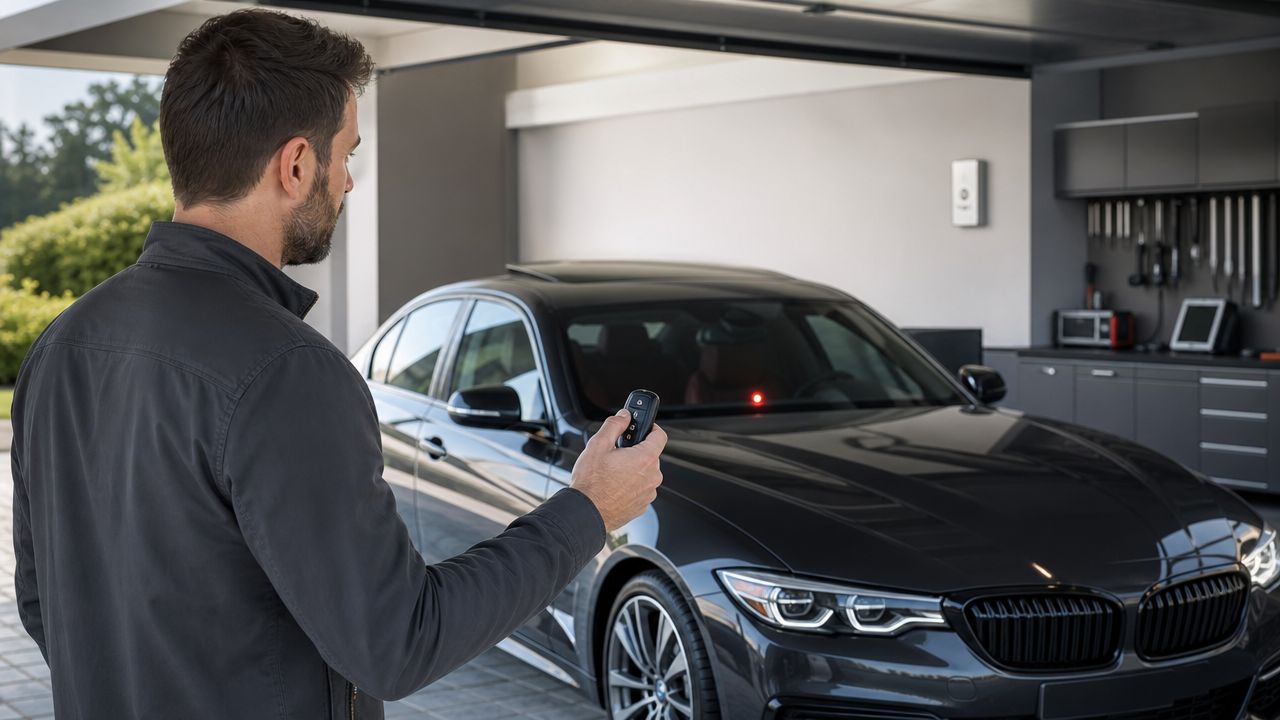
Don't just accept the keys, press lock once, and drive home. A proper post-install check should include the practical stuff you'll rely on every day.
Test every trigger before you leave
California installer guidance is useful here because it treats alarm performance as a real-world calibration issue, not a brochure feature. The recommended method is to map the car's exposure, choose layered protection, and then verify sensitivity calibration and test every trigger after installation. It also notes that over-sensitive shock tuning is a common technical failure, and the fix is post-install calibration, as outlined by Car Stereo Warehouse's alarm installation guidance.
Use that mindset at pickup. Check:
- Door triggers by opening each door separately
- Bonnet and boot triggers if equipped
- Remote lock and disarm confirmation
- Remote range in its operating environment
- Shock or impact response at a sensible level
- Any smartphone alerts or tracking functions if included
Get the owner briefing
A decent installer should show you how to use the system, not just hand over a remote and a leaflet. You should leave knowing how to arm and disarm it, when to use valet mode, what the chirps or flashes mean, and what to do if you need service on the car later.
This is also where many owners overlook the bigger security picture. If theft ever does happen, documentation and prompt reporting matter. For a useful perspective beyond hardware, it's worth reading VekTracer's take on vehicle security, especially on why reporting theft quickly protects both the owner and the vehicle.
A good installation doesn't end at the wiring. It ends when the owner knows how to use the system without guessing.
Keep the paperwork
Keep your invoice, model information, warranty details, and any override or programming instructions in a safe place. If the system ever needs service, battery replacement, troubleshooting, or transfer information for a future owner, you'll be glad you did.
Frequently Asked Questions About Car Alarms
Is an aftermarket alarm worth it if my car already has factory security
The value of an aftermarket alarm depends on the car, where it spends the night, and the theft method you are trying to guard against.
Factory security is often good enough for basic lock and alarm functions. It is not always strong enough if you want better impact sensing, 2-way confirmation, smartphone alerts, or another layer beyond the stock horn and immobilizer. As discussed in Tint World's auto security overview, the better question is not “Do I need an alarm?” It is “What gap does my current setup leave open?”
That question also helps you judge the installer. A good shop will inspect the vehicle, ask how and where you park, and explain what an added system will improve. A weak shop will skip straight to pricing.
Can a badly installed alarm cause problems with the car
Yes. I have seen poor installs cause random battery drain, false triggers, lost door lock functions, and electrical faults that waste hours in diagnosis later.
The issue is usually not the alarm box itself. It is bad wiring, poor module integration, sloppy grounds, or a shop rushing through trim removal and testing. That is why asking how the installer handles your specific vehicle matters more than getting excited about a brand name on the remote.
How long should installation take
Installation time depends on the vehicle and the system. A straightforward alarm on an older car can be fairly quick. A newer vehicle with CAN-bus integration, remote start, or app control takes longer and should take longer.
Fast is not the goal. Clean wiring, proper integration, and full testing are the goal. If a shop promises a surprisingly short turnaround without asking about trim level, factory keyless entry, or add-on modules, treat that as a warning sign.
Will an aftermarket alarm lower my insurance
Maybe. Some insurers care, some do not, and some only care if the system meets a specific standard or includes features such as tracking or immobilization.
Do not buy an alarm on the assumption that it will pay for itself through lower premiums. Buy it because it improves deterrence, alerting, or recovery odds for your situation. If insurance savings matter to you, ask your insurer what documentation they want before you book the install.
If you're in Whitby and want a shop to assess your vehicle properly before recommending security hardware, contact Carmedics Autowerks Inc. Ask for a vehicle-specific consultation, not just a price on a box. That approach helps you avoid nuisance alarms, wiring shortcuts, and upgrades that do not suit the car.