

You drive the new car home, park it a little farther from everyone else, and catch yourself looking back at it twice. Then the significant thought hits. Not the payment, not the fuel bill. The first stone chip.
If you drive in Whitby long enough, that first mark rarely takes long. Highway grit, winter sand, salt, loose gravel from shoulders, dirty slush kicked up by trucks. A fresh front bumper can start looking tired much faster here than most owners expect. That's why the conversation around paint protection film advantages and disadvantages matters more in Ontario than generic online advice suggests.
For the right owner, PPF isn't a vanity add-on. It's a practical way to keep factory paint from getting hammered by normal use. But it's also not magic. It's expensive, installer-dependent, and it has a useful life. If you're deciding whether to protect a new vehicle, a weekend car, or something you plan to keep for years, you need the honest version.
Protecting Your Pride and Joy in Whitby
A lot of drivers start thinking about PPF the same way. The car is new, the paint looks perfect under the dealership lights, and you want to keep it that way. Then a week later you're on the 401, a transport throws up debris, and you hear that sharp little tick against the front end.
That's the moment most owners realise paint damage isn't a theoretical problem. It's daily wear.
In Whitby, the trouble spots are predictable. Front bumpers get peppered. Hoods take direct hits. Mirror caps, rocker panels, and the lower doors collect grime and abrasion. Winter makes it worse because the roads aren't just wet. They're loaded with salt, grit, and road debris that keeps hitting the same high-impact areas.
Most paint damage doesn't come from one dramatic event. It comes from hundreds of ordinary drives.
That's where PPF makes sense. It gives the paint a sacrificial surface, so the film takes the abuse instead of the clear coat. For owners who care about appearance, resale, or avoiding the frustration of seeing a nearly new vehicle age too fast, that changes the ownership experience.
Still, not every car needs full-body coverage, and not every owner will see the same value in it. Some drivers want maximum preservation. Others just want to protect the areas that get blasted first. The right answer depends on how you drive, where you park, and how long you plan to keep the vehicle.
What Exactly Is Paint Protection Film
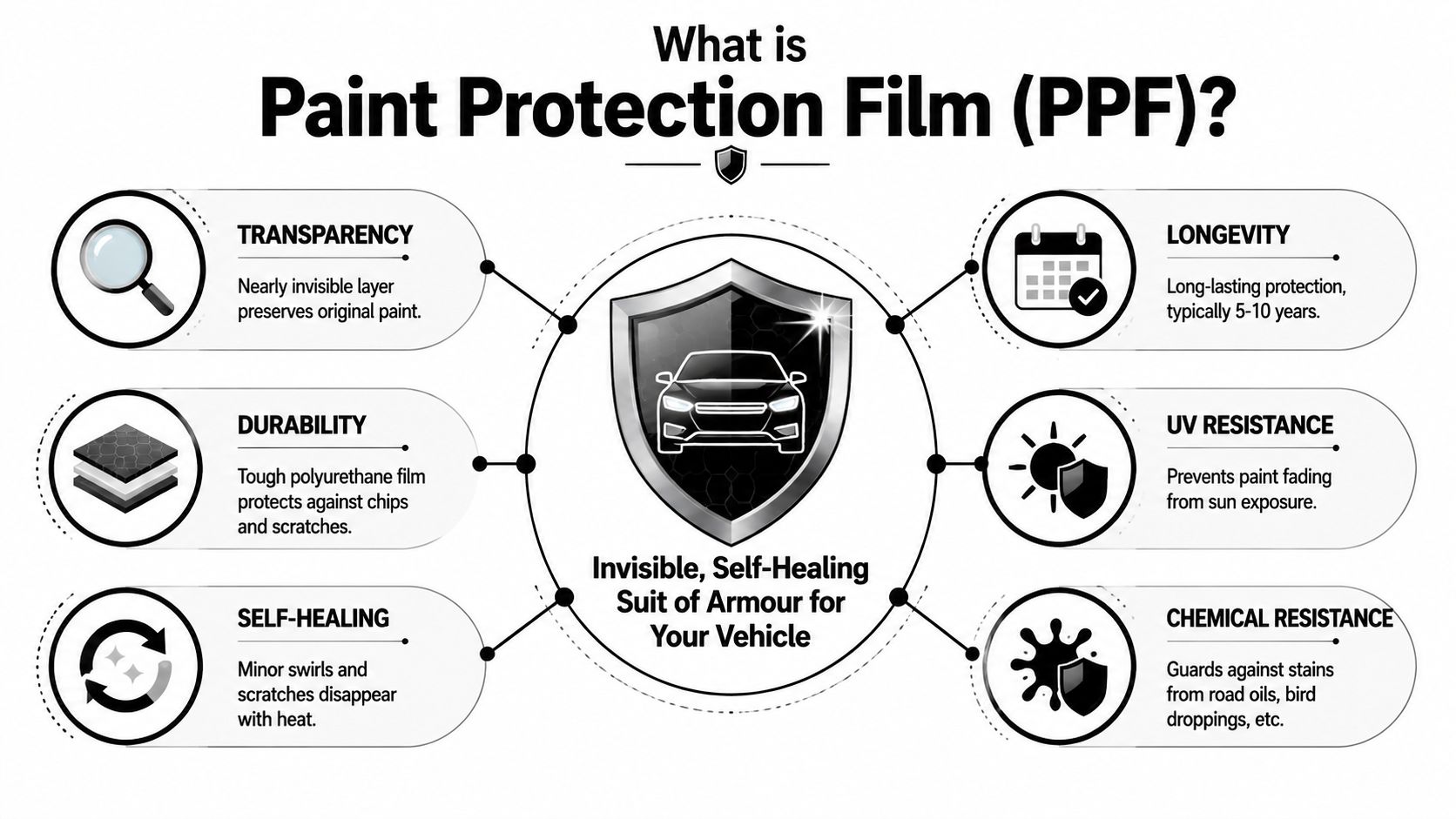
Paint protection film, or PPF, is a transparent urethane film installed over painted surfaces. Think of it as a high-tech, nearly invisible suit of armour for your car. It isn't a wax, and it isn't a liquid coating. It's a physical layer that sits on top of the paint and absorbs abuse before the paint does.
That distinction matters. A coating can help with gloss, water behaviour, and cleanup. PPF is built for impact and surface preservation.
How the film works on the car
A properly installed film is shaped to fit panels like the bumper, hood, fenders, mirrors, rocker panels, and sometimes the full vehicle. Once applied, it acts as the first point of contact for common road abuse.
That includes:
- Stone chips and road grit: The film takes the hit instead of the paint.
- Bug splatter and bird droppings: Contaminants sit on the film, not directly on the clear coat.
- UV exposure: PPF helps reduce fading and oxidation from sun exposure.
- Light surface marring: Minor swirls and shallow marks affect the film first.
If you want to see what that looks like in a real installation context, this guide to professional paint protection film installation gives a useful local reference point.
What self-healing actually means
Self-healing is the feature that people hear about most, and it's also the one most often misunderstood. It doesn't mean the film repairs deep gouges or major damage. It means the upper layer of the film can relax and recover from minor scratches and swirl marks when exposed to heat.
According to Tint Pros Mobile's explanation of PPF technology, elastomeric polymer layers repair minor surface abrasions through thermal activation, which helps maintain the factory paint's integrity and the vehicle's resale value over a standard 10-year warranty period.
In real ownership terms, that means the light wash marring or surface haze that would normally make dark paint look tired can fade away from sun exposure or warmth. The paint underneath stays untouched because the film is doing the work.
Why owners choose it over bare paint
PPF's biggest appeal is simple. You can drive the car without obsessing over every speck of debris. The paint remains original, and the car keeps that cleaner, newer look for longer.
That's the practical heart of it. PPF isn't there to make promises. It's there to take damage so your paint doesn't have to.
The Key Advantages of Installing PPF
The biggest advantage of PPF is simple. It protects the factory finish that gives a vehicle its best long-term appearance and strongest resale story.
Around Whitby, that matters quickly. A few runs on Highway 401, winter sanding on Dundas, and slush thrown up along the lower doors can start marking a new vehicle long before most owners expect it. Once those chips and peppering hit the paint, correction gets harder and touch-ups rarely disappear completely.
It takes the abuse first
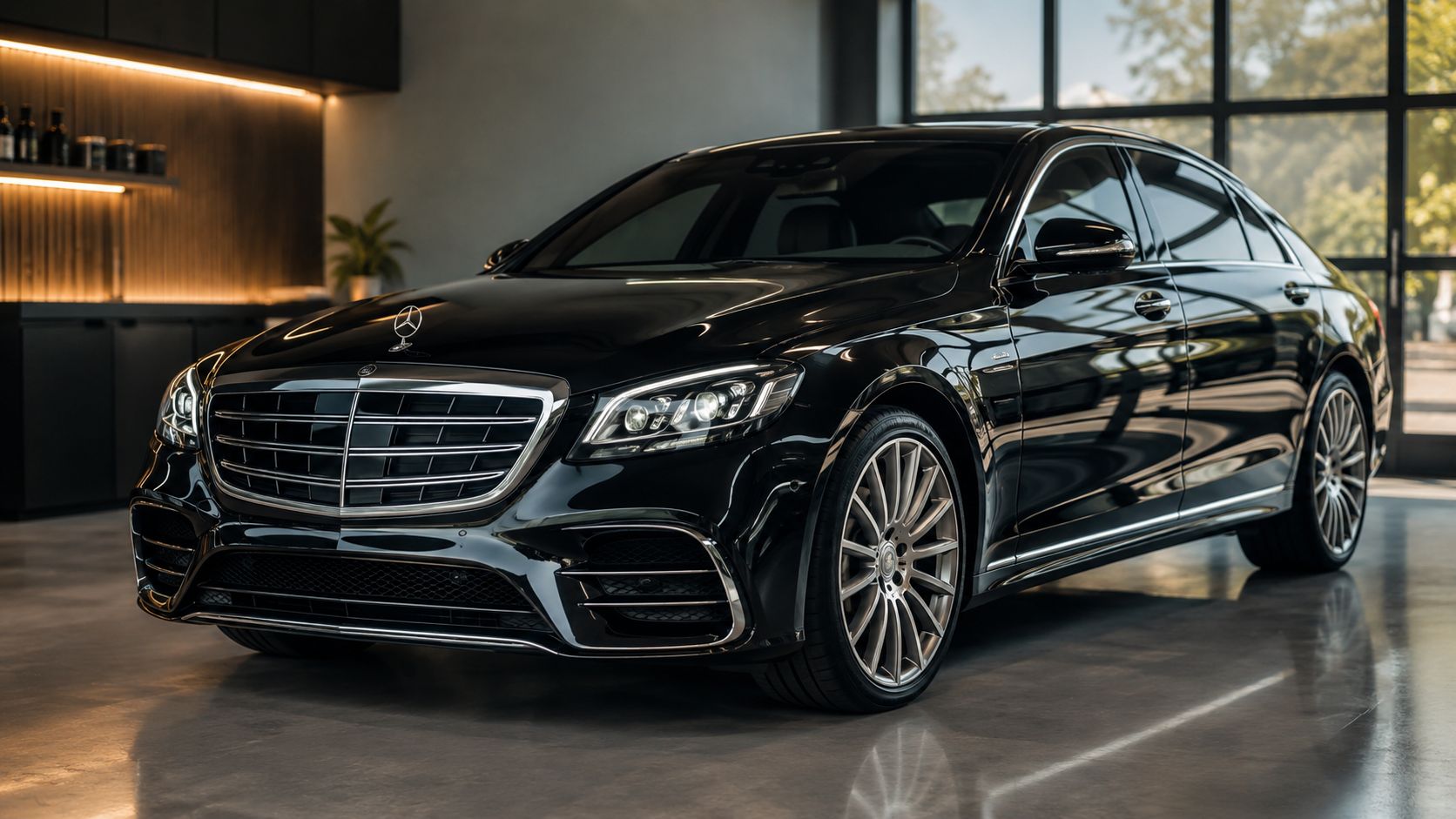
PPF works because it sits between the road and the paint. On a properly protected front end, the film absorbs the light impact from grit, salt, bug residue, and road rash that would otherwise mark the clear coat.
For Whitby and Durham Region drivers, the highest-value areas are usually easy to predict:
- Front bumpers, especially on daily highway-driven vehicles
- Leading hood edges and partial or full hoods, where chip lines start
- Fenders, mirror caps, and A-pillars, which catch debris at speed
- Rocker panels and lower doors, where winter slush and sand grind away at the finish
- Rear wheel arch areas, especially on SUVs and wider-body vehicles
This is why partial coverage often makes sense. You protect the sections that get hit instead of paying for film where the risk is low.
Self-healing helps the car stay cleaner-looking
In day-to-day ownership, self-healing is less about technology and more about appearance. Fine wash marks and light surface scuffs that would sit in clear coat often fade out of the film with heat, so the vehicle keeps a sharper finish between polishing cycles.
Dark paint benefits the most. Black, dark blue, and graphite vehicles show every little mark in Ontario sunlight, especially after a salty winter and a few rushed spring washes. PPF makes those colours easier to live with.
It holds up well against Ontario conditions
Ontario is hard on paint. Salt, brine, freeze-thaw cycles, bug acids in summer, and gritty snowbank spray all work against the front end and lower body. PPF does not stop every form of damage, but it does reduce the routine wear that ages a vehicle faster than expected.
That matters more if the car is parked outside, driven on the 401, or used year-round.
Film quality and installation quality also affect how well that protection ages. Owners who want a realistic view of service life should read this guide on how long paint protection film lasts in Ontario conditions.
It helps preserve original paint for resale
Original paint carries weight with careful buyers. A front end that still looks consistent, without heavy chip touch-ups or repaint work, usually presents better at trade-in and in private sale photos.
I see this most often with newer German cars, performance models, and well-optioned trucks. The owners who protect them early usually avoid the patchwork look that shows up after a few winters. The vehicle looks better cared for.
It changes how you use the car
This is the advantage owners mention after the install. They stop worrying about every normal drive.
A protected vehicle still needs proper washing and common sense, but routine trips through Whitby, Oshawa, and Toronto feel less punishing when the high-impact panels are covered. For many owners, that peace of mind is the part they appreciate most after the first winter.
The Real-World Disadvantages and Limitations
A Whitby driver usually feels the limits of PPF after the first real hit, not during the sales pitch. A chunk of gravel on the 401, a hard brush with packed snow, or years of sun on a daily-driven hood can still leave marks, lift edges, or force a section to be replaced. PPF is strong protection. It is not unlimited protection.
The cost can be hard to justify for every vehicle
This is the first point I discuss with owners because it changes the whole recommendation. PPF is expensive, especially if you want more than a partial front package, and full-body coverage only makes sense when the vehicle value, ownership term, and driving habits support it.
For a new luxury car, performance car, or a truck that spends a lot of time on the highway, the math can work. For an older commuter with existing paint damage, it often does not. In those cases, selective coverage on the front bumper, hood edge, fenders, mirrors, rocker panels, and rear arch impact areas usually makes more sense than wrapping everything.
It has a clear performance ceiling
Good film absorbs a lot of routine abuse. It does not stop every kind of damage.
A sharp stone at speed can still puncture film. A heavy impact can dent the panel underneath. Scrapes against concrete, garage walls, or icy debris can tear the film badly enough that the affected section needs to be removed and redone. Owners should go into PPF expecting reduced damage, not total immunity.
Service life depends heavily on use and care
The common warranty language causes confusion. A film may carry a long manufacturer warranty, but that does not mean it will look perfect for that entire period on a vehicle driven through Ontario winters, road salt, slush, UV exposure, and frequent highway mileage.
Real lifespan depends on film brand, panel location, how the car is washed, and how much abuse the vehicle sees. Front-end sections always age harder than protected door panels or roof sections. Owners who want a local, realistic benchmark should read this guide on how long PPF lasts in Ontario conditions.
You can still see it
This surprises people who were expecting an invisible result. Even well-installed film can show edge lines, relief cuts, or slight texture differences depending on the paint colour, body shape, and coverage plan.
White paint, black paint, and very soft Japanese finishes tend to reveal different things. Partial hood and partial fender installs are the most common source of visible transition lines. Full-panel coverage costs more, but it usually looks cleaner and ages better visually.
Film ages, and Ontario makes that more obvious
Over time, the film itself collects the wear that would have hit the paint. That is the point, but it also means the film can haze slightly, stain from bug residue, pick up contamination along edges, or show discoloration as it gets older.
Lower panels and front bumpers usually tell the story first. Cars that are parked outside year-round in Durham Region tend to show that wear sooner than garage-kept weekend cars.
Poor installation creates expensive headaches
This is the risk owners have the most control over. Bad prep or careless trimming can leave trapped dust, silvering, lifted edges, fingers around curves, misaligned patterns, and in the worst cases, cut marks in the paint.
I would judge the installer before I judged the film brand. A skilled shop plans coverage properly, wraps where it makes sense, explains what will remain visible, and stands behind the work if an edge lifts early. Around Whitby, that local accountability matters more than a flashy online warranty.
PPF vs Ceramic Coating vs Vinyl Wrap
Whitby drivers usually ask this after the first few weeks with a new vehicle. The paint still looks perfect, but Highway 401 debris, winter sand, and tight parking lots start to feel real fast. The right product depends on what you are trying to prevent, not what sounds best on a quote sheet.
These three options serve different jobs.
PPF protects against physical impact. Ceramic coating helps with washing, water behaviour, and resistance to grime. Vinyl wrap changes the look of the vehicle and adds only limited protection compared with film.
Paint protection options compared
| Feature | Paint Protection Film (PPF) | Ceramic Coating | Vinyl Wrap |
|---|---|---|---|
| Primary purpose | Physical barrier for painted surfaces | Easier maintenance and chemical resistance | Colour or finish change |
| Stone chip resistance | Best option of the three | Very limited | Limited compared with PPF |
| Self-healing | Available on many premium films | No | Not a core feature |
| Appearance change | Keeps the original paint look | Keeps and can enhance the original finish | Major styling flexibility |
| Best use case | New vehicles, highway commuters, long-term ownership | Owners who want easier cleaning and gloss | Owners who want a different colour or finish |
| Ontario cost position | Highest upfront cost, especially for full-front or full-body coverage | Lower than PPF | Varies widely by material, finish, and coverage |
Which one actually protects the paint
PPF is the strongest choice if the goal is preserving factory paint from chips, sandblasting on lower panels, and the constant abuse Ontario roads deliver through the year. That is why I recommend it first for new daily drivers, performance cars, trucks that see highway miles, and leased vehicles where paint condition matters at turn-in.
Ceramic coating still does useful work. It makes the surface easier to wash, sheds water better, and helps contaminants release more easily during maintenance. What it does not do is stop a rock strike from marking the paint.
Vinyl wrap sits in a different lane. It is mainly a styling product. It can hide a colour you are tired of, create a satin or matte finish, and protect lightly against minor scuffs, but it is not what I would install for someone worried about front-end chip damage on a Whitby commuter. For a closer look at where each fits, this guide on PPF versus vinyl wrap for Ontario drivers breaks it down clearly.
When each option makes sense
Choose PPF if:
- You want to keep factory paint as original as possible
- You drive the 401, 412, or other debris-heavy routes often
- You plan to keep the vehicle for years and want the front end to age better
- You care more about protection than changing the look
Choose ceramic coating if:
- You want easier washes and less grime sticking to the finish
- You value gloss, slickness, and simpler upkeep
- You already accept that it will not stop stone chips
Choose vinyl wrap if:
- You want a colour change or a custom finish
- You like the idea of refreshing the appearance without repainting
- Style is the main goal, with protection as a secondary benefit
The wrong choice usually comes from mixing up appearance products with impact protection. If you want fewer chips, buy film. If you want easier maintenance, buy a coating. If you want a different look, buy a wrap.
Maximizing Your PPF Investment
If you're going to spend serious money on film, the goal is simple. Get the right coverage, maintain it properly, and make sure the install is done at a high level.
Choose coverage based on how you drive
Not every owner needs full-body PPF. For many vehicles in Whitby, the smartest money goes into the highest-impact areas first. That usually means the front bumper, hood, fenders, mirrors, and rocker panels.
A daily highway commuter needs a different strategy than a garage-kept weekend toy. If the vehicle sees winter use, lower-body protection matters more because slush and grit keep hammering those sections.
Maintain the film like it's part of the finish
PPF isn't maintenance-free. It's durable, but neglect still shows up as contamination, edge buildup, and premature cosmetic wear.
A sensible maintenance routine includes:
- Use safe washing methods: Clean mitts, proper wash technique, and regular rinsing matter.
- Remove contaminants early: Bug residue, bird droppings, and road grime shouldn't sit on the film.
- Watch the edges: Dirt tends to collect where film boundaries are exposed.
- Ask before layering products: Some owners add a coating on top of PPF for easier upkeep. This guide on whether you can put ceramic coating over PPF covers that setup.
The installer matters as much as the product
This is the biggest lever you control. A strong installer plans coverage well, aligns film cleanly, manages edges properly, and avoids the kinds of shortcuts that create visible lines or trapped contamination.
A weak installer can make premium film look average. Worse, poor trimming and careless handling can create paint damage that defeats the whole purpose of protection.
When you're evaluating options, look for signs of process discipline. Clean patterns, tidy edges, consistency around curves, and a shop that understands how Ontario conditions affect wear all matter more than a flashy sales pitch.
Your Local PPF Solution in Whitby Carmedics Autowerks
A Whitby driver can pick up stone chips on Highway 401 within the first few weeks of ownership. This is particularly true here, especially through winter and spring when salt, sand, and road grit keep getting thrown at the front of the vehicle.
For local owners, the PPF decision is less about hype and more about how the car will be used. If the vehicle is new, sees regular highway mileage, or is something you plan to keep for years, film usually makes sense. If it is a short-term lease or a daily driver you are less concerned about cosmetically, partial protection or no film at all may be the better financial call.
Ontario also changes the cost conversation. PPF is not cheap, and local pricing reflects both material quality and labour. Good installation takes time, clean prep, careful patterning, and proper edge work. Cheap quotes often cut corners in the places owners notice later, such as visible lines, lifted edges, trapped debris, or poor coverage on high-impact panels.
That is why shop choice matters so much.
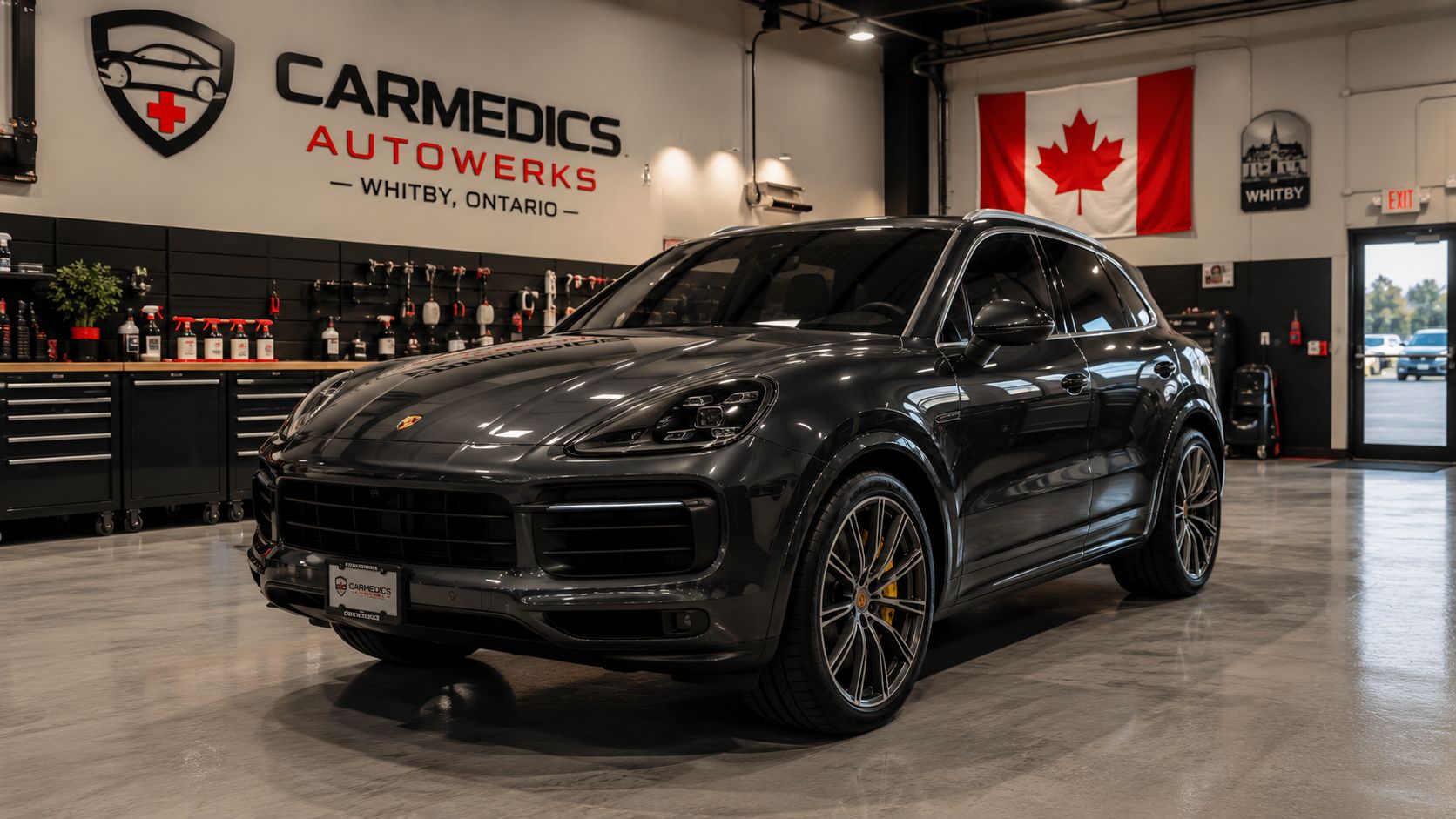
For owners comparing local options, Whitby PPF and tint services at Carmedics Autowerks are worth reviewing because regional experience shows up in the final result. A shop that works on Durham Region vehicles every day understands what Ontario roads do to paint, which panels need priority, and how local drivers balance full-front packages against full-body protection.
Carmedics Autowerks fits the kind of local role many owners need. Not a generic sales pitch. A shop that can assess the vehicle, explain where PPF delivers real value, and recommend coverage based on how you drive in Whitby, Oshawa, Ajax, and the surrounding area.
Frequently Asked Questions About Paint Protection Film
Can PPF go on an older car, or does the vehicle need to be new
It can absolutely go on an older car. New vehicles are ideal because the film preserves clean factory paint from day one, but older vehicles can still benefit if the paint is in solid condition. The key is preparation. If the paint already has chips, scratches, or heavy swirling, those defects usually need correction before installation because the film won't hide them.
Will removing PPF damage the original paint
Proper removal shouldn't damage healthy factory paint. Verified data states that removal after the film's useful life is straightforward and doesn't damage the paint, though you may notice uneven coloration between wrapped and unwrapped panels if the film stayed on for a long time. That's another reason professional installation and removal matter.
How long should I wait before washing after installation
Follow the installer's instructions. Cure time can vary based on film, temperature, and how much moisture remains under the material after install. Washing too soon can interfere with edges and adhesion, so it's always better to wait for the shop's specific guidance than rely on a generic timeline.
Can ceramic coating go over paint protection film
Yes, many owners do that to make maintenance easier. The coating doesn't replace the protective role of PPF. It complements it by improving cleanability and helping the surface stay easier to wash. The order matters, though. Film goes on first, then the coating goes over it.
Is full-body PPF always the best choice
Not always. It's the most complete option, but it isn't the only sensible one. For many Whitby drivers, strategic coverage on the front end and lower impact areas delivers the best balance between protection and budget.
If you want straight advice on whether PPF makes sense for your car, your driving habits, and Ontario road conditions, talk to Carmedics Autowerks Inc. Their Whitby team handles auto protection services including PPF installation, window tinting, collision repair, and general vehicle care for owners who want their cars to stay sharp and well protected.