

Yes, you can and often should apply a ceramic coating over PPF, as long as the film is allowed to cure for 7 to 30 days first. Done properly, this gives you the closest thing to a best-of-both-worlds protection setup: PPF handles impact protection, and ceramic coating adds slickness, easier washing, stronger resistance to contamination, and a cleaner-looking finish.
If you're reading this right after booking a new car, or right after having film installed, you're in the exact moment where this decision matters. Most owners already understand the broad idea. PPF helps stop road rash, while ceramic coating gives you that water-beading, easier-to-maintain surface. The actual question isn't just whether you can put ceramic coating over PPF. It's whether stacking is the right move for your car, your driving habits, and your expectations.
That nuance matters. Some shops treat coating over film as an automatic upsell. A better answer is more strategic. For some owners, stacked protection makes perfect sense. For others, a modern high-quality film may already deliver enough built-in performance that the ceramic top layer becomes optional rather than mandatory.
Your New Car's Ultimate Defence System
A new vehicle starts losing its “perfect” finish the moment it hits the road. The first highway drive brings grit. The first summer brings bug splatter. The first winter brings salt, slush, and harsher wash routines. If you want to keep the paint looking sharp, protection has to be planned, not patched in later.
PPF and ceramic coating aren't competing products. They solve different problems.
PPF is the impact layer. It takes the abuse from stone chips, light abrasion, and road debris. Ceramic coating is the surface layer that improves water behaviour, helps contaminants release more easily, and adds UV and chemical resistance. According to industry guidance on PPF vs ceramic coating in 2026, ceramic coating can be applied over PPF, and installers recommend waiting 7 to 30 days after installation so the film can fully cure.
Why owners combine both
The strongest protection strategy usually isn't full-body everything. It's choosing the right layer for the right threat.
- High-impact areas need film: Front bumper, leading edge of the bonnet, fenders, rocker panels, door edges, and rear bumper ledges take the abuse.
- The whole vehicle benefits from a coating: Film-covered sections and exposed painted panels both become easier to wash and less prone to holding grime.
- Maintenance gets simpler: Owners who drive regularly in mixed Ontario conditions often care as much about easier upkeep as they do about chip protection.
Practical rule: If your priority is preventing physical damage, ceramic coating doesn't replace PPF. It complements it.
This is why the dual-layer approach has become common on higher-end vehicles, performance cars, and daily drivers that see plenty of highway kilometres. The film absorbs impact. The coating helps preserve the surface condition of that film and the surrounding paint.
If you want a broader overview of how different protection options compare, this guide to car paint protection choices is a useful place to sort out what matches your ownership goals.
Owners of premium vehicles in harsher climates often come to the same conclusion. You see similar thinking in markets focused on presentation and resale, such as protecting luxury rentals in Dubai, where appearance, easy maintenance, and surface durability all matter at once.
What this setup really buys you
Stacking isn't magic. It doesn't make film invincible, and it doesn't turn coating into impact armour. What it does is create a more complete system.
You get a sacrificial physical barrier where damage usually happens. On top of that, you get a slicker, easier-to-clean surface that helps reduce how aggressively contamination sticks to the film. For the owner who wants a car to stay cleaner, wash easier, and hold its finish better over time, that's a smart combination.
Understanding How PPF and Ceramic Coatings Work Together
The easiest way to understand this is to think in layers. PPF is armour. Ceramic coating is a surface treatment. One deals with impact. The other deals with what lands and lingers on top.
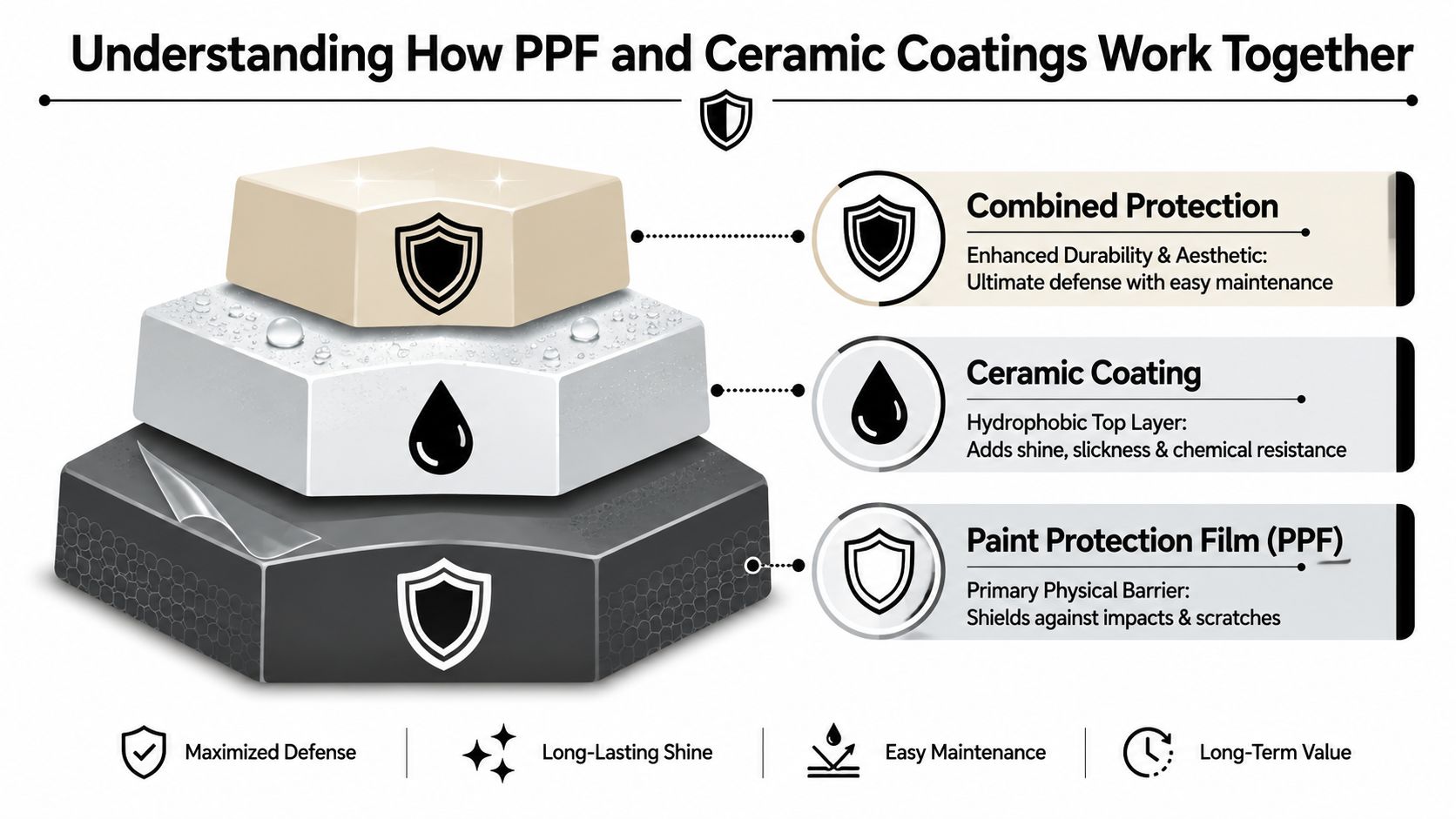
According to 48 Detailing's explanation of ceramic coating over PPF, applying ceramic coating over PPF is a recommended practice known as stacking. In that setup, the PPF acts as the primary barrier against stone chips and road debris, while the ceramic coating adds a secondary shield against bug splatter, bird droppings, industrial fallout, staining, and related environmental contamination.
What PPF does well
PPF is the only one of the two that meaningfully addresses physical impact. If a small stone comes off the tyre of a truck in front of you, that is a film job, not a coating job.
On the car, that matters most in predictable strike zones:
- Front-end surfaces: bumper, partial or full bonnet, fenders, mirror caps
- Lower body areas: rocker panels and rear wheel impact zones
- Touch points: door cups, door edges, luggage load zones
A proper film install gives the paint a sacrificial layer. The whole purpose is to let the film absorb what would otherwise reach the clear coat.
What ceramic coating adds on top
Ceramic coating changes how the outer surface behaves. It doesn't become thick enough to stop a chip, but it does make the top layer slicker and more resistant to chemical contamination.
That means better day-to-day behaviour in areas such as:
| Surface issue | PPF alone | PPF with ceramic on top |
|---|---|---|
| Bug residue | Can stick and mark if left too long | Releases more easily during washing |
| Bird droppings | Still needs prompt removal | Added chemical resistance helps reduce bonding |
| Wash maintenance | Good | Easier drying and less drag during cleaning |
If you want a technical deep dive into this category, ceramic coating for PPF is a useful supplementary reference because it focuses specifically on the top-coat role rather than treating ceramic as a substitute for film.
The cleanest installs happen when each layer is asked to do the job it was built for. Film stops impact. Coating improves the surface above it.
This is also the key distinction in the broader PPF-versus-coating conversation. If you're still weighing those two products at a category level, this comparison of ceramic coating and PPF for paint protection lays out the difference clearly.
Does coating interfere with the film
Applied properly, it shouldn't. The coating sits on the exposed surface of the film. It doesn't replace the film's structure, and it doesn't turn the film into something it's not. It gives the top of that film a slicker, more contamination-resistant finish.
That distinction is where a lot of bad advice starts. Once people confuse surface slickness with physical protection, they either overestimate ceramic coating or underestimate what modern PPF does underneath.
The Correct Way to Apply Ceramic Coating Over PPF
The process matters as much as the products. A good result comes from timing, prep, and application discipline. A rushed job can leave streaking, weak bonding, or a finish that never performs the way it should.
First, let the PPF cure
This is the part owners most often try to shortcut. Freshly installed film needs time for the adhesive to stabilise and for the install to settle properly. If you coat too soon, you risk trapping issues under the top layer or compromising how the two systems work together.
The accepted window is to wait 7 to 30 days after PPF installation before applying ceramic coating, depending on film, environment, and installer process. The point isn't to follow a random calendar. The point is to coat only after the film has properly cured.
Then prepare the surface properly
Coating likes clean, stable surfaces. PPF likes careful handling. That means prep on film has to be thorough but controlled.
A proper prep routine usually includes:
- Gentle wash: Remove loose contamination without aggressive scrubbing.
- Targeted decontamination: Clear the surface of residue that could interfere with bonding.
- Panel wipe: Use an appropriate wipe-down to remove oils, handling residue, or leftover installer contamination.
- Final inspection: Look for trapped moisture, edge issues, or marks that should be corrected before coating.
This is one reason DIY stacking often goes sideways. Owners focus on the bottle of coating and ignore whether the film underneath is ready.
Workshop advice: If the film still shows signs of settling, don't coat it yet. A perfect top layer over an unready base is still a bad job.
If you want to understand the film side before coating even enters the conversation, this overview of paint protection film service and coverage helps clarify where PPF belongs on the vehicle and why those areas are chosen.
Apply the coating with discipline
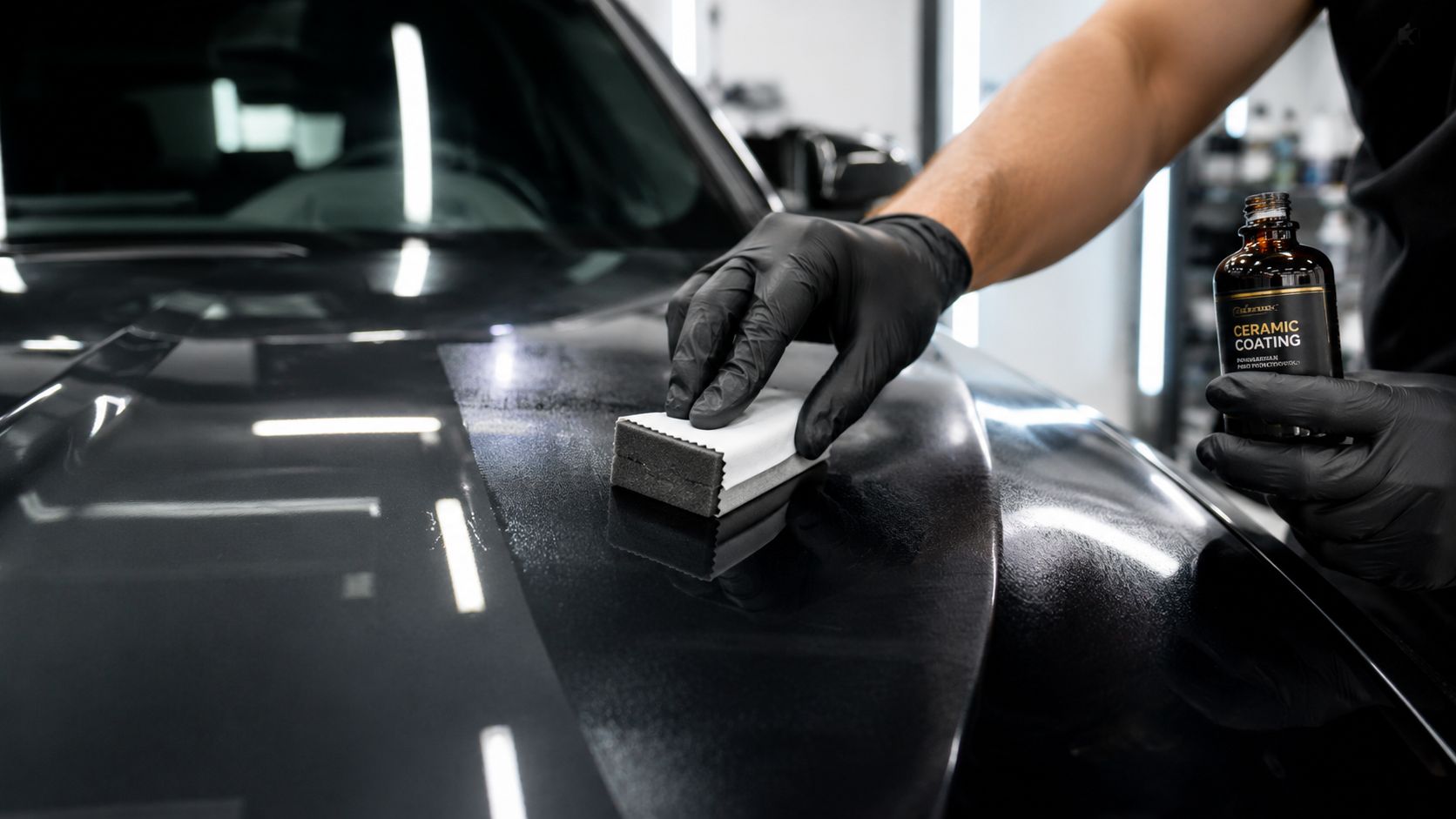
Application needs consistency. According to the stacking application guidance in this demonstration source, two coats over PPF with a 60-second flashing time and a 1-hour interval between layers delivers the intended performance, and a cross-hatch pattern is used to ensure full coverage.
That means the installer isn't just wiping product around. The pattern matters. Coverage matters. Levelling matters.
A careful process looks like this:
- Lay product evenly: Use a controlled cross-hatch motion so the section is fully and uniformly covered.
- Watch the flash: The coating needs enough time to begin flashing, but not so long that it becomes difficult to level cleanly.
- Level and buff cleanly: The residue has to be removed without marring the film or leaving a high spot.
- Repeat for the second layer after the proper interval: Stacking coats without observing timing can create more problems than protection.
Where most mistakes happen
The most common failures aren't dramatic. They're subtle.
- Coating too early: The film hasn't fully cured.
- Poor prep: Oils or residue reduce bonding quality.
- Heavy-handed application: More product doesn't mean more protection.
- Inadequate lighting: Streaks and high spots get missed until the car hits direct sun.
On dark paint and gloss film, those mistakes show up fast. On matte film, the bigger risk is using the wrong product or technique and changing the intended look of the surface.
Why The Order of Application Matters So Much
Owners sometimes ask a logical follow-up. If ceramic coating can go over PPF, can PPF go over ceramic coating?
The practical answer is no. Not if you want the film to stay down and perform properly.
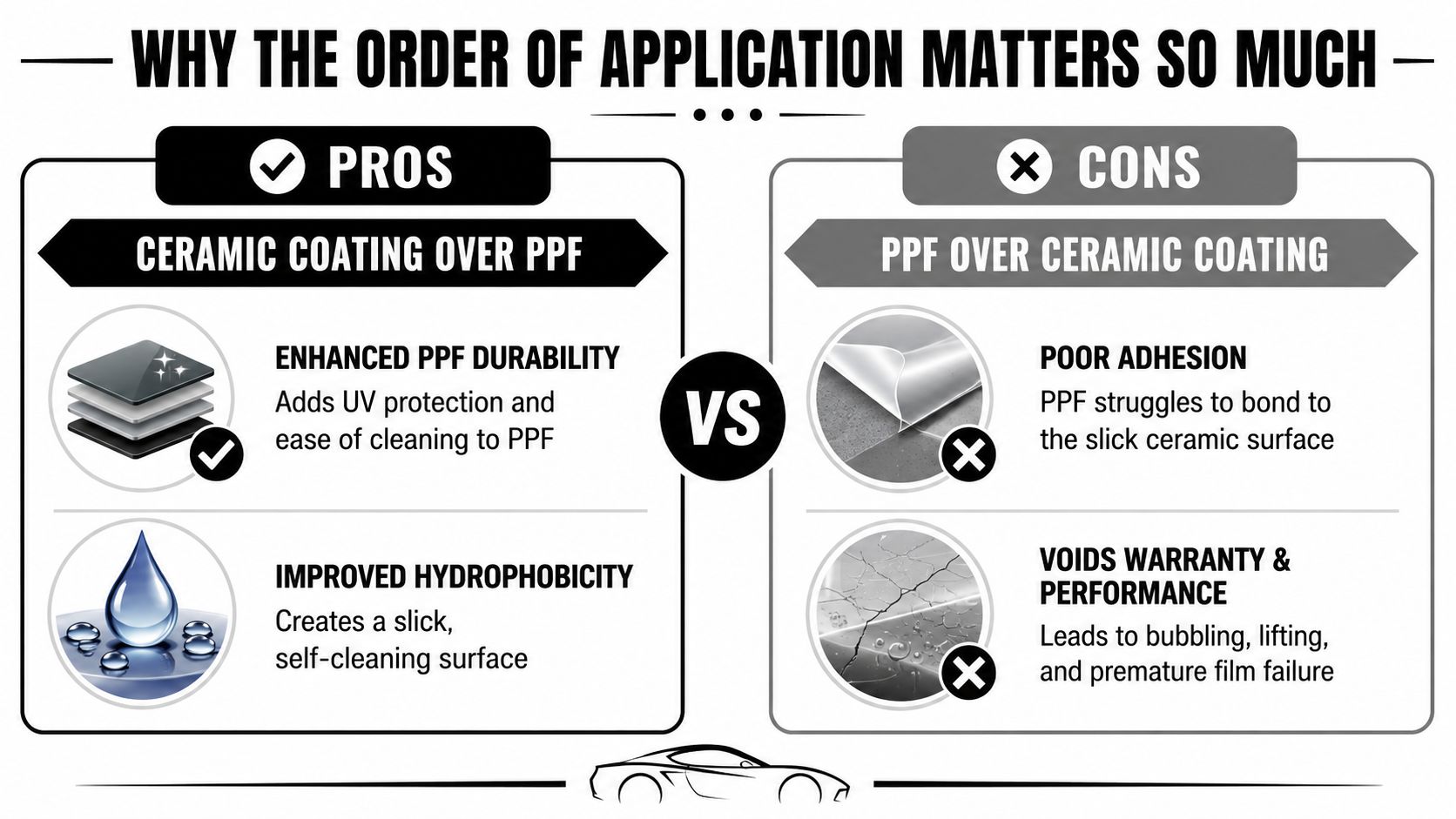
According to Drive Protected's article on putting PPF over ceramic coating, installers strongly discourage the reverse order because the coating creates a hydrophobic, low-surface-energy surface that interferes with adhesive bonding. The result can be edge lifting, bubbling, and peeling.
Why adhesion fails
PPF relies on a secure bond to the surface beneath it. Ceramic coating is designed to be slick and contamination-resistant. Those are excellent traits when it's the outermost layer. They're terrible traits when you expect an adhesive film to anchor on top of it.
The film adhesive needs a surface it can grip consistently. A coated panel is the opposite of that. It repels. It sheds. It reduces the very contact the film needs to stay stable.
What failure looks like in the real world
This isn't just a theoretical chemistry problem. Poor order of operations creates visible installation defects and shortened life from the start.
Typical problems include:
- Edges that won't stay seated
- Bubbles that reappear after install
- Sections that peel during normal washing
- An install that looks fine at delivery and deteriorates soon after
Put simply, the right stack is film first, coating second. Reverse it and you're asking adhesive to bond to a surface built to resist bonding.
The correction is also frustrating. If an owner wants PPF after a coating has already been installed, the proper path usually involves removing or correcting that ceramic layer before the film goes on. That adds labour, risk, and cost, all because the order was wrong from the start.
The only sequence that makes sense
If the goal is physical protection, the sequence is fixed.
PPF goes on the paint first, because it's the only layer that can meaningfully absorb road impact. Ceramic coating goes on after, because it belongs on the exposed outer surface. That sequence respects what each product is built to do.
Is Stacking Ceramic Coating and PPF Always Necessary
At this point, a good installer should slow down and stop selling in absolutes. Stacking is often smart. It isn't automatically necessary.
A lot of modern PPF already has respectable surface behaviour on its own. According to this analysis of ceramic coating over PPF, high-quality modern PPF can maintain inherent hydrophobicity for 3–5 years without ceramic, while ceramic top-coats often degrade in 6–12 months. That doesn't make ceramic useless. It does mean owners should understand what they're buying.
The trade-off most shops skip
Ceramic on top of film gives you a noticeable initial boost in slickness, water behaviour, and surface cleanliness. That's real. But if your only reason for stacking is “I want beading forever,” the expectation is off.
The stronger case for stacking is usually this:
- You want added UV and chemical resistance
- You care about easier routine washing
- You want the film itself to resist staining more effectively
- You don't mind maintaining the top layer over time
If your PPF already has a good top surface and you're disciplined about washing contamination off promptly, PPF alone may already meet your needs.
Stacking vs PPF Alone
| Attribute | PPF Only | PPF + Ceramic Coating (Stacked) |
|---|---|---|
| Rock chip protection | Strong physical protection | Same physical protection from the film |
| Water behaviour | Can be very good on modern film | Strong initial hydrophobic boost |
| Chemical and UV defence | Good, depending on film | Added surface-level defence |
| Maintenance feel | Good | Slicker wash and drying experience |
| Ongoing upkeep | Simpler | Top layer may need maintenance |
Some owners need maximum layering. Others need honest advice. Those aren't always the same thing.
Ultimately, vehicle use matters more than internet consensus. A highway-driven performance sedan that sees bug-heavy summer driving and frequent washes may benefit more from stacking than a weekend car stored indoors. A matte PPF build may also push the decision in a different direction than a gloss black daily driver.
A practical ownership question is how long you expect the film to serve before replacement. If that's part of your planning, this guide on how long PPF lasts is worth reviewing before you decide whether a top-coat fits your timeline and maintenance habits.
When I'd recommend stacking
As a working rule, stacking makes the most sense when the owner wants a cleaner finish, values easier upkeep, and is realistic that the ceramic layer is a maintained top surface rather than a one-time forever solution.
If the owner mainly wants chip protection and already has a quality hydrophobic film, coating over it can still be worthwhile. It just shouldn't be sold as mandatory in every case.
The Carmedics Autowerks Approach to Total Protection
The difference between a proper stacked system and an expensive disappointment usually comes down to process control. Film has to be installed cleanly. Cure time has to be respected. The coating has to suit the surface and be applied with restraint, not rushed for turnaround.
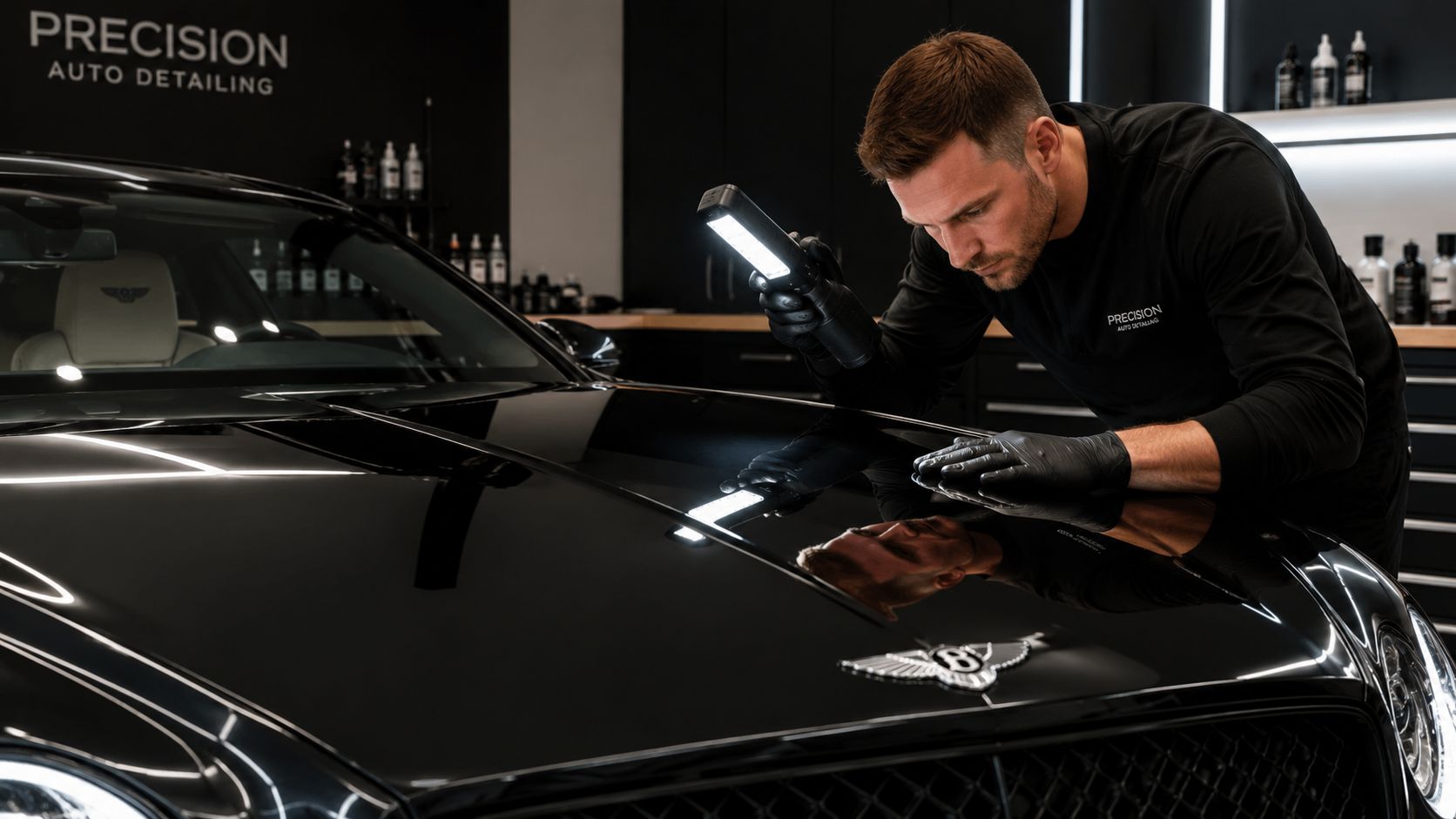
Why DIY often falls short
DIY kits make the job sound straightforward. On a bare panel in ideal conditions, some are manageable. On cured PPF, with varying film finishes, edges, contours, and owner expectations, the margin for error gets smaller.
Common DIY issues include:
- Missed high spots: They look fine indoors and show up outdoors.
- Wrong timing: The film gets coated before it's ready.
- Incompatible expectations: The owner thinks coating will prevent chips, then blames the film setup when it doesn't.
- Uneven coverage on complex panels: Mirrors, bumper curves, and wrapped edges reveal sloppy technique fast.
What a proper shop should do
A good installer shouldn't just ask whether you want coating added. They should ask how you use the car, where you drive it, how often you wash it, and whether your goal is easier maintenance, cosmetic presentation, or long-term preservation.
At Carmedics Autowerks in Whitby, that kind of work typically means deciding between two sensible paths: a high-quality PPF package on the impact zones with no extra top layer, or a stacked setup where ceramic is applied over the film once the cure window has been respected.
That consultative approach matters because the right answer for a garage-kept weekend car isn't automatically the right answer for a black SUV that runs the 401 every day.
What owners should ask before approving the job
Before you book, ask direct questions.
- What curing window do you require before coating the film?
- Is the coating being applied only over the film, or over the full vehicle including exposed painted areas?
- How do you prep the PPF surface before coating?
- What maintenance should I expect after delivery?
If the answers are vague, the workmanship may be too.
The best protection plans are the ones matched to the owner, not the invoice. That's the whole point of asking not only can you put ceramic coating over PPF, but whether you should for your specific car.
If you want a practical recommendation for your vehicle, Carmedics Autowerks Inc can help you decide whether PPF alone is enough or whether a properly timed ceramic top-coat makes sense for your finish, driving conditions, and maintenance goals.