

You pick up the car, walk around it twice, and promise yourself you'll keep it looking exactly like this. Then Ontario starts doing what Ontario does. Highway gravel starts ticking off the front bumper. Winter salt dries into a crust along the lower doors. The first careless brush with a snow brush or grocery bag leaves a mark you didn't plan on.
That's when most owners start comparing PPF vs vinyl wrap and realise they're not choosing between two versions of the same thing. They're choosing between two different jobs. One is built to protect paint. The other is built to change how the car looks.
The confusion is understandable. Both are films. Both sit on top of paint. Both can make a vehicle easier to live with in the right situation. But if you buy vinyl expecting armour, or buy PPF expecting the full design freedom of a wrap, you'll spend real money and still end up disappointed.
For Ontario drivers, this decision matters more than it does in softer climates. Salt, slush, sand, and gravel don't care whether the badge says BMW, Ford, Porsche, or Ram. They hit the same leading edges, rocker panels, mirror caps, and rear arches all winter long.
Protecting Your Investment The Moment You Drive It Home
A lot of owners start this process within the first week of ownership. The car is still spotless. The paint still has that deep, untouched finish. You know the first highway run to Toronto, the first winter commute, or the first cottage trip is going to expose it to the stuff that ruins that fresh-delivery look.
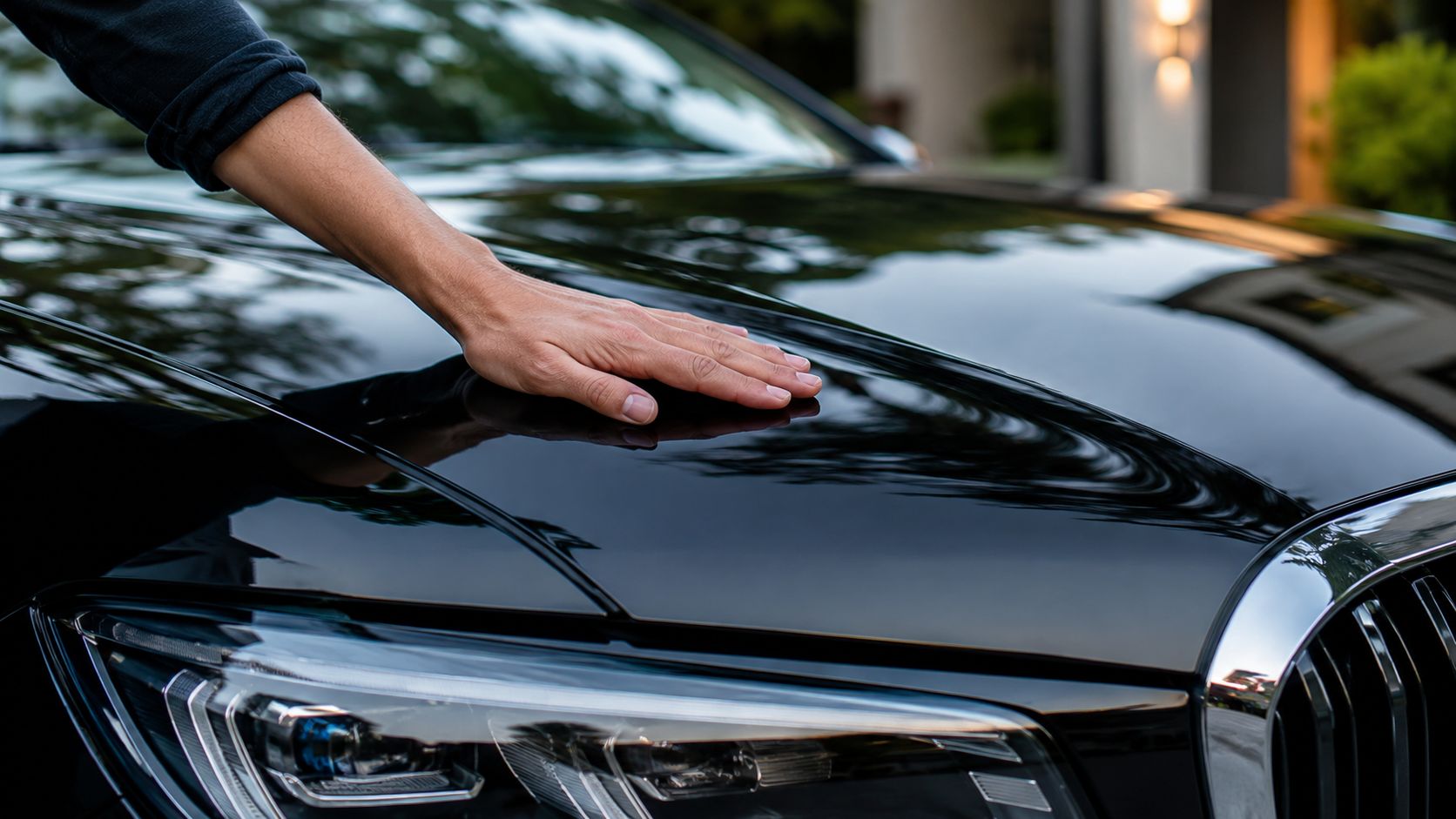
In the shop, the conversation usually comes down to one question. Are you trying to preserve the finish you already paid for, or are you trying to give the vehicle a different identity? If the first answer is yes, you're likely looking at PPF. If the second answer is yes, vinyl wrap starts to make sense.
Here's the practical split early on:
| Option | Best fit | Main purpose | Typical owner mindset |
|---|---|---|---|
| PPF | New cars, performance cars, highway-driven daily drivers | Preserve factory paint | “I want to stop damage before it starts.” |
| Vinyl wrap | Style builds, leased vehicles, short-term visual changes | Change colour or finish | “I want the car to look different.” |
| Coloured PPF | Premium owners who want both in one install | Colour change plus protection | “I want one solution, not two separate jobs.” |
That simple distinction saves people from expensive mistakes. I've seen owners wrap a front end in vinyl and assume it will handle stone impact the way PPF does. It won't. I've also seen people ask for full-body PPF when what they really want is a satin black transformation with visual drama. That's a styling conversation, not a protection-first one.
Practical rule: If road rash is your real concern, choose the product designed to take hits. If appearance is your real concern, choose the product designed to create a new finish.
For Ontario roads, the “what do you need” question matters more than the “what sounds premium” question.
The Science of Paint Protection Film
Paint Protection Film, or PPF, is a sacrificial barrier. It acts as a high-end screen protector for the painted surfaces that take abuse first. The difference is that on a vehicle, that abuse comes from road debris, salt spray, grit kicked up by trucks, and all the little contact points that happen in real ownership.
What PPF is actually built to do
In the Canadian market, the most useful technical dividing line is material and thickness. Vinyl wrap is typically a 2 to 4 mil PVC film, while PPF is commonly 8 to 10 mil TPU, which makes PPF the better choice for absorbing stone-chip and road-debris impacts on highways and winter roads, as outlined in this breakdown of paint protection film versus vinyl wrap.
That thickness matters in real use. On Ontario roads, a thinner cosmetic film may survive as a finish layer, but it isn't engineered to take repeated impact the same way a thicker elastomeric TPU film is. PPF is there to get hit first so your paint doesn't.
If you're comparing installation options, it helps to look at a proper Paint Protection Film service overview and match coverage to how you drive. Someone who commutes on the 401 has different risk points than someone who only takes the car out on clear weekends.
Where PPF makes the biggest difference
The most effective PPF installs aren't random. They protect the areas that get punished first:
- Front bumper and hood edge: Gravel and sand strike these panels constantly.
- Fenders and mirror caps: Turbulence pushes debris into these surfaces.
- Rocker panels: Salt, slush, and road grime hammer the lower body.
- Rear arches: Sticky tyres throw debris backward into the paint.
A good installer treats PPF as a strategy, not just a product. Coverage should reflect the vehicle, the roads, and the owner's tolerance for future paint correction.
PPF makes the most sense when you want the car to keep looking like itself, only with a durable sacrificial layer taking the abuse.
What doesn't work with the wrong expectations
PPF isn't the answer for every goal. If you want a dramatic colour shift, a special texture, or a frequent visual refresh, clear protection film isn't the right tool. It's also not a substitute for correcting bad paint underneath. Film follows the panel. If the surface is compromised, the result won't look premium.
The owners happiest with PPF are usually the ones who understand the job clearly. They're buying defence, not costume.
The Art of the Vinyl Wrap
Vinyl wrap sits in a different category. It's a styling product first. That doesn't make it lesser. It just means you need to judge it by the right standard.
If PPF is armour, vinyl is a custom outfit. It changes the car's presentation. It can make a familiar vehicle look sharper, darker, more aggressive, more understated, or more unusual without committing to repainting.
What vinyl does well
The strongest reason to choose vinyl is design freedom. This is where wraps shine. Gloss, satin, matte, accent panels, roof treatments, stripes, dechroming, motorsport-inspired graphics, and branding details all fit naturally into vinyl work.
In the California market, one useful baseline source describes PPF as roughly 6 to 10 mils and vinyl as 2 to 4 mils, noting that PPF is about three times thicker than vinyl. That same source frames the core distinction well. PPF is protection-first, while vinyl wrap is primarily cosmetic, and it also notes that PPF commonly lasts 5 to 10 years compared with 3 to 5 years for vinyl in typical use, as explained in this guide to clear bra and vinyl wrap differences.
That means vinyl should be chosen because you want a new look, not because you expect serious chip defence.
Where vinyl makes sense for Ontario owners
Vinyl can still be a smart choice here when the goal is visual transformation.
A few common examples:
- Leased vehicles: You want reversible style without repainting.
- Weekend cars: You care more about presence than road-wear resistance.
- Branding or motorsport accents: Windshield banners, stripes, and detail graphics are simple ways to personalise a build. For example, if someone is adding a windscreen accent to a Mopar build, these American-made Dodge SRT banners show the kind of vinyl application that suits a style-first decision.
- Budget-conscious colour changes: You want a fresh exterior identity without stepping into PPF-level spend.
For owners comparing visual restoration and finish work before wrapping, checking with a local auto body shop near me can save headaches. Vinyl looks best over clean, corrected, stable paint.
What vinyl won't do well
Vinyl isn't the film to trust for repeated highway stone impact. It also won't hide poor prep or damaged panels. If paint chips, dents, or scratches are already there, the wrap won't magically erase them.
Choose vinyl when the question is, “How do I want this car to look?” Don't choose vinyl when the question is, “How do I stop the front end from getting blasted?”
That's where many bad purchases start. People buy by appearance, then judge by protection.
Head to Head Comparison by Key Criteria
The cleanest way to compare PPF vs vinyl wrap is by ownership reality. Not theory. Not marketing. Just what matters once the car leaves the bay and starts dealing with Ontario roads.
| Criteria | PPF | Vinyl wrap |
|---|---|---|
| Primary role | Paint preservation | Appearance change |
| Material focus | Thicker impact-absorbing film | Thinner cosmetic film |
| Best for | Daily drivers, new vehicles, highway use | Colour changes, styling, branding |
| Road debris resistance | Stronger | Limited |
| Finish options | Clear, satin, some coloured options | Wide variety of colours and textures |
| Typical ownership goal | Long-term protection | Reversible visual customisation |
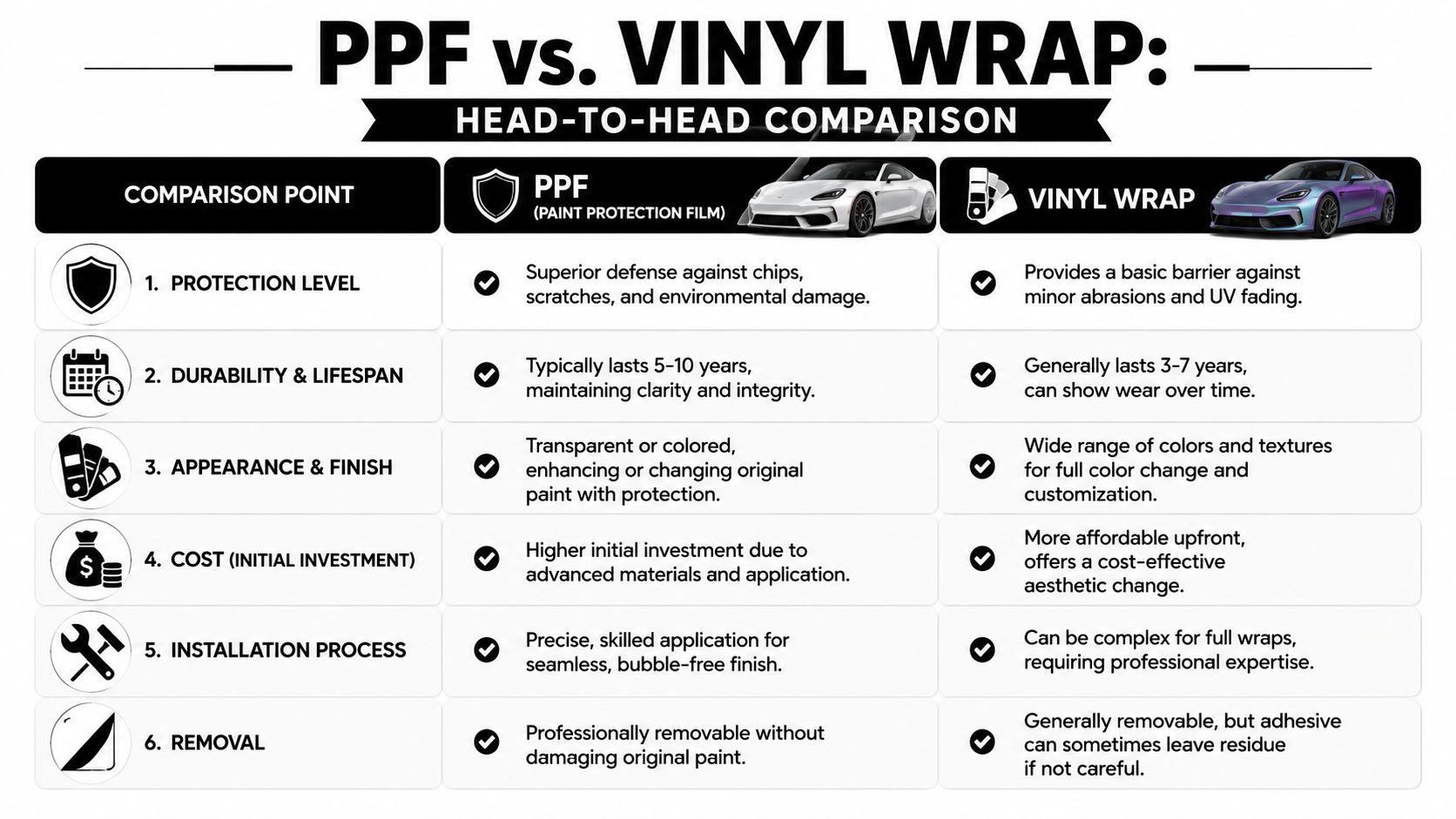
Protection
PPF wins this category without much debate. It's purpose-built to stand between the road and the paint. If you do a lot of highway driving, winter commuting, or rural driving where gravel and sand are constant, this is the category that should carry the most weight in your decision.
Vinyl gives you a surface layer, but not one designed around sacrificial impact absorption. It may help against very light scuffing in everyday handling, but that's not the same thing as proper chip protection.
The biggest mistake in this comparison is treating “film” as one category. It isn't. These products solve different problems.
Durability and service life
Longevity isn't just about how long the material stays on the car. It's about how long it performs the job you paid for.
Pricing guides and installer references commonly place vinyl wraps around $1,000 to $4,000 installed, with full-vehicle PPF often listed at $5,000 to $10,000, and some partial PPF jobs starting around $1,500 to $3,000. Those same references note that PPF can cost roughly 2x to 5x more than vinyl depending on coverage and film type, and that premium PPF can last up to 10 years, as noted in this review of coloured PPF versus vinyl wrap pricing and value.
That price gap reflects job function. One is a multi-year paint preservation investment. The other is a more affordable visual change.
If you want a broader read on appearance protection thinking in another weather-heavy market, this discussion on the best paint protection for Seattle cars is useful because it frames protection choices around climate and ownership habits rather than hype.
Appearance options
Vinyl is the easier winner here. If your priority is colour, finish variety, branding, or a strong custom identity, vinyl gives you more visual freedom. It's the product people choose when they want the car to look significantly different.
PPF, by contrast, traditionally aims to disappear. Even when the install is extensive, the whole point is to preserve what's already there. That's a different kind of satisfaction.
For owners weighing overall best car paint protection, the first fork in the road appears. Protection-first and style-first are separate goals, and the right answer depends on which one matters more to you.
Maintenance and ownership experience
Both products need proper washing habits. Neither one benefits from neglect, dirty brushes, or abrasive automatic wash contact.
PPF tends to suit owners who hate watching the front end deteriorate over time. Vinyl suits owners who enjoy changing the car's personality and accept that cosmetic films have a shorter style cycle. If a panel gets damaged, the repair question becomes one of practicality. Can the specific film be matched cleanly, and does the surrounding finish still look consistent?
Cost and value
Here, buyers often talk past each other.
If one person says vinyl is better because it costs less, and another says PPF is better because it protects more, they can both be right. They're just measuring value differently.
Use this quick lens:
- Choose PPF value if preserving original paint matters.
- Choose vinyl value if changing appearance is the whole point.
- Don't buy the cheaper option if it won't do the job you need.
That last point matters most. Cheap protection that doesn't protect is expensive in the end.
Coloured PPF The Modern Hybrid Solution
Most older comparisons stop at two options. Clear PPF or vinyl wrap. That's no longer the whole conversation.
Coloured PPF has become the category that serious owners ask about when they want protection and a colour change in one install. It sits between the traditional definitions. You're not just preserving factory paint invisibly, and you're not just applying a cosmetic wrap with limited defensive ability.
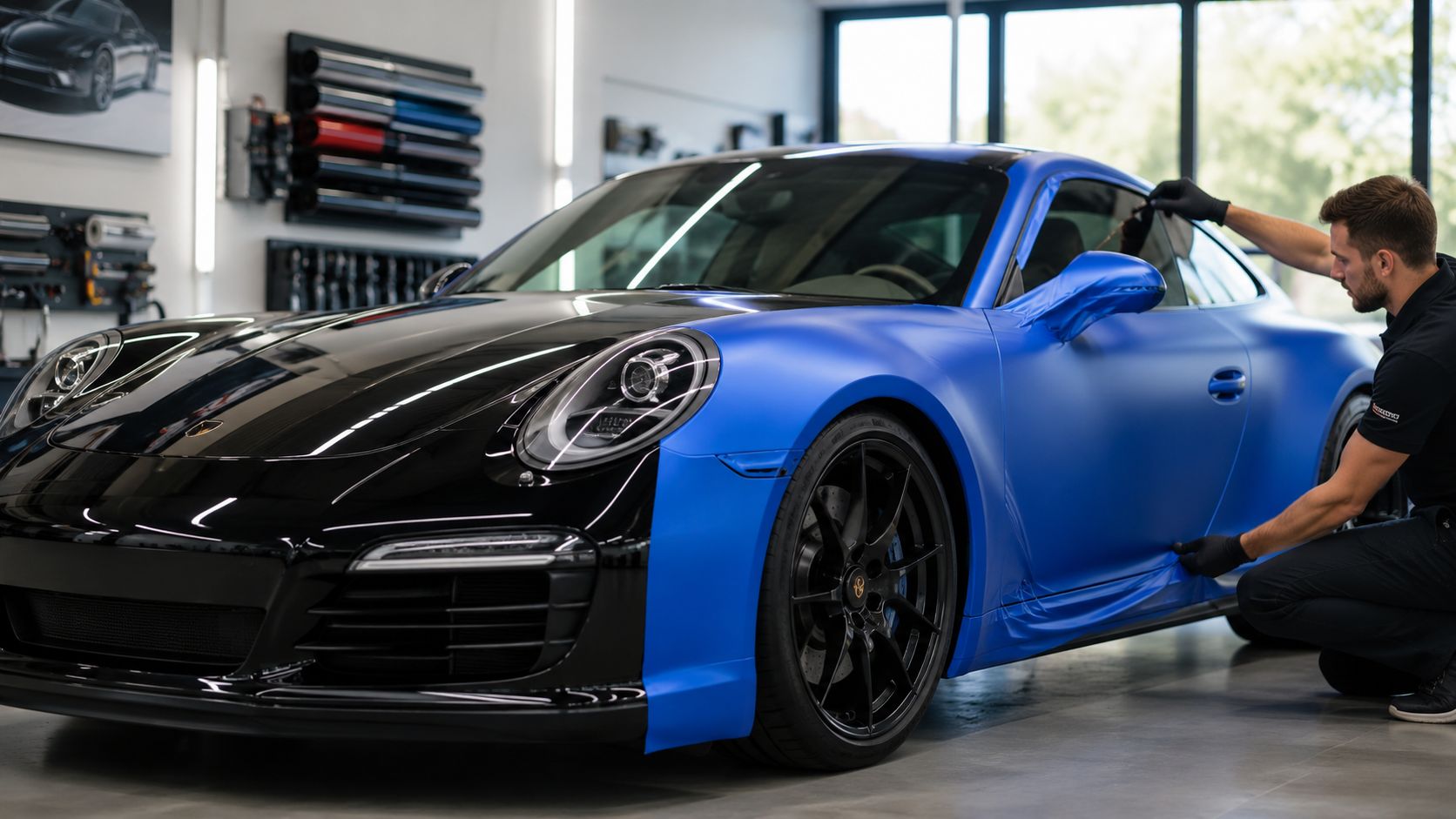
Why this option changes the conversation
Recent installer and manufacturer discussion increasingly treats coloured PPF as a real third category because it combines a pigmented finish with paint-protection performance, rather than forcing buyers into a simple “protection versus styling” choice. The same discussion also points out the trade-off clearly. You're dealing with added thickness, higher material cost, and longer install time, but you may eliminate the need for separate wrap and protection workflows, as explored in this video discussion of coloured PPF as a hybrid option.
That matters for owners who were already considering two stages. First a wrap for colour, then some kind of protection strategy. In the right case, coloured PPF simplifies that.
Who it fits best
Coloured PPF usually makes the most sense for owners who care about both presentation and long-term paint condition.
It's a strong fit for:
- Premium daily drivers: You want a custom finish but still face regular highway debris.
- Performance cars: Front-end damage is common, and you don't want to choose between protection and appearance.
- Long-term owners: You'd rather install once and enjoy the result than layer multiple products and compromises.
If you're trying to understand pricing logic before deciding, a page focused on paint protection film cost helps frame why hybrid film systems sit higher in the market.
Where coloured PPF doesn't fit
It isn't the best answer for every budget. It also isn't the right move if you like changing colours often. In those cases, standard vinyl still has a place because it serves that short-cycle styling goal better.
Coloured PPF is for the owner who's tired of being told they have to choose between a protected car and a personalised car.
That's the practical shift. It's not replacing every wrap job or every clear PPF job. It's filling the gap between them.
Which Is Right for Your Car A Decision Checklist
At this stage, the right choice usually becomes obvious once you stop asking which product is “better” and start asking which product fits your ownership pattern.
The daily commuter in Whitby
If the car sees regular highway mileage, winter slush, and gravel spray, PPF is usually the smarter move. This owner notices front-end wear quickly because the car keeps going through the same abuse every week.
What matters most here is preserving the paint on impact zones. The owner may not care about changing colour at all. They just want the black bumper, white hood, or metallic fender to stay clean-looking longer.
The style-focused owner
If the main goal is presence, stance, or a new look, vinyl wrap is usually the better fit. This is the owner who wants satin, matte, gloss contrast, blackout details, or motorsport-style accents more than they want heavy chip resistance.
This buyer should stay honest about expectations. Vinyl can make the car look dramatically different. It shouldn't be treated like a dedicated defensive layer for harsh road impact.
The owner protecting resale condition
If you're worried about how the paint will present years from now, PPF usually wins. The logic is straightforward. Factory paint condition matters to a lot of buyers, especially on enthusiast vehicles and premium trims.
Choose this route if you keep vehicles clean, notice every chip, and hate the idea of correcting the same vulnerable areas again and again.
The person who wants both
Coloured PPF enters the conversation. If you want visual change and meaningful protection in one solution, it's the strongest hybrid option.
Use this short checklist:
- You care most about stopping chips and road rash: Pick PPF.
- You care most about changing the colour or finish: Pick vinyl wrap.
- If both are important to you, and your budget allows it: Look at coloured PPF.
- You plan to swap styles often: Vinyl stays practical.
- You plan to keep the vehicle and preserve it carefully: PPF usually pays off in satisfaction, even before you think about future value.
The best decisions are rarely emotional in the bay. They're practical. Match the film to the job.
Get Expert Advice at Carmedics Autowerks in Whitby
Ontario driving is hard on paint. That's the baseline reality behind this whole comparison. Salt, sand, gravel, and daily mileage create very different ownership needs than a fair-weather garage queen in a softer climate.
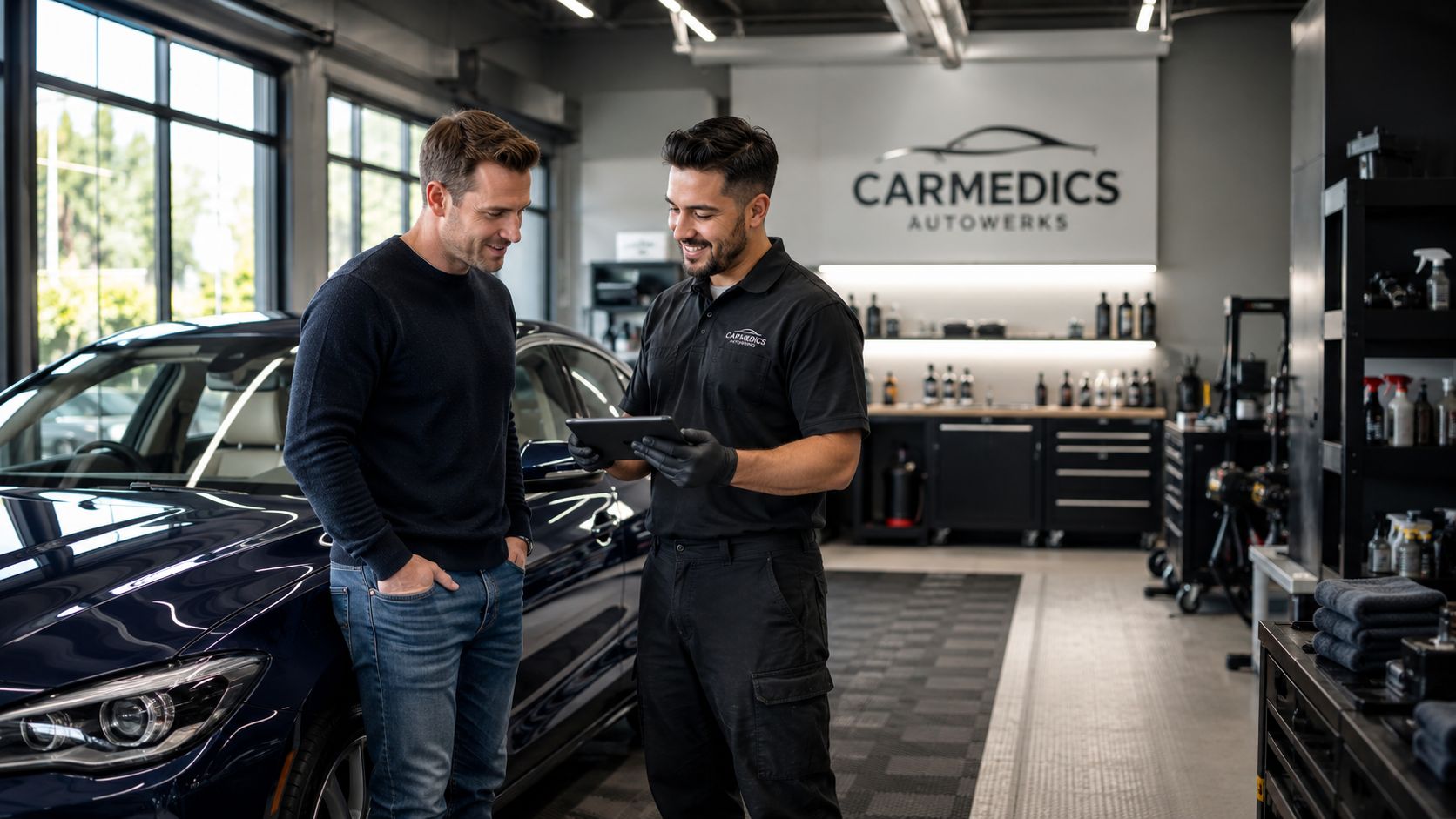
The clean takeaway is simple. PPF is the right answer when protection comes first. Vinyl wrap is the right answer when style comes first. Coloured PPF is the premium middle ground when you want both in one package. Once you understand that, the decision gets much easier.
A proper recommendation should come from looking at the actual vehicle, the condition of the paint, how often it sees the highway, where it's parked, and how long you plan to keep it. Coverage strategy matters just as much as product choice. Full front, high-impact areas, full body, or a hybrid approach all depend on the owner, not just the car.
If you're comparing local options for auto paint protection near me, the smartest next step is a real consultation with someone who understands what Whitby and Durham Region roads do to paint over time.
If you want clear advice on whether your car should get PPF, vinyl wrap, or a coloured PPF setup, book a consultation with Carmedics Autowerks Inc. Their Whitby team handles paint protection, bodywork, and appearance upgrades with the practical perspective Ontario drivers need.