


You usually find out your steering rack is done when the car starts talking back. The wheel doesn't return cleanly. It wanders on the highway. You turn into a parking space and get a clunk, a groan, or that vague loose feeling that tells you something up front isn't right.
That's the point where a lot of owners start searching for a quick answer. New fluid? Tie rod end? Alignment? Sometimes, yes. But when the rack itself is failing, guessing gets expensive fast. A bad call can leave you buying parts you didn't need, or worse, driving a car that no longer steers the way it should.
I've always looked at steering rack replacement as one of those jobs that separates confident DIY work from risky DIY work. It's doable for a skilled person with the right tools, enough space, and the discipline to follow the steps properly. It's also a job where shortcuts come back immediately as leaks, binding, warning lights, or a crooked steering wheel.
Is Your Steering Rack Failing? Key Symptoms to Check
You back out of a parking spot, turn the wheel, and something feels wrong right away. The steering is heavier than usual, it hesitates off centre, or the wheel comes back with a little catch instead of one clean motion. That is often the first real clue.
A failing rack rarely gives you one neat, isolated symptom. It usually shows up as a pattern. The car may drift even after an alignment, the steering may feel different left versus right, or the front tyres may start wearing in a way that keeps coming back. On newer vehicles, rack trouble can also trigger steering angle or assist-related warning lights after replacement if the diagnosis was off or the final calibration gets skipped.
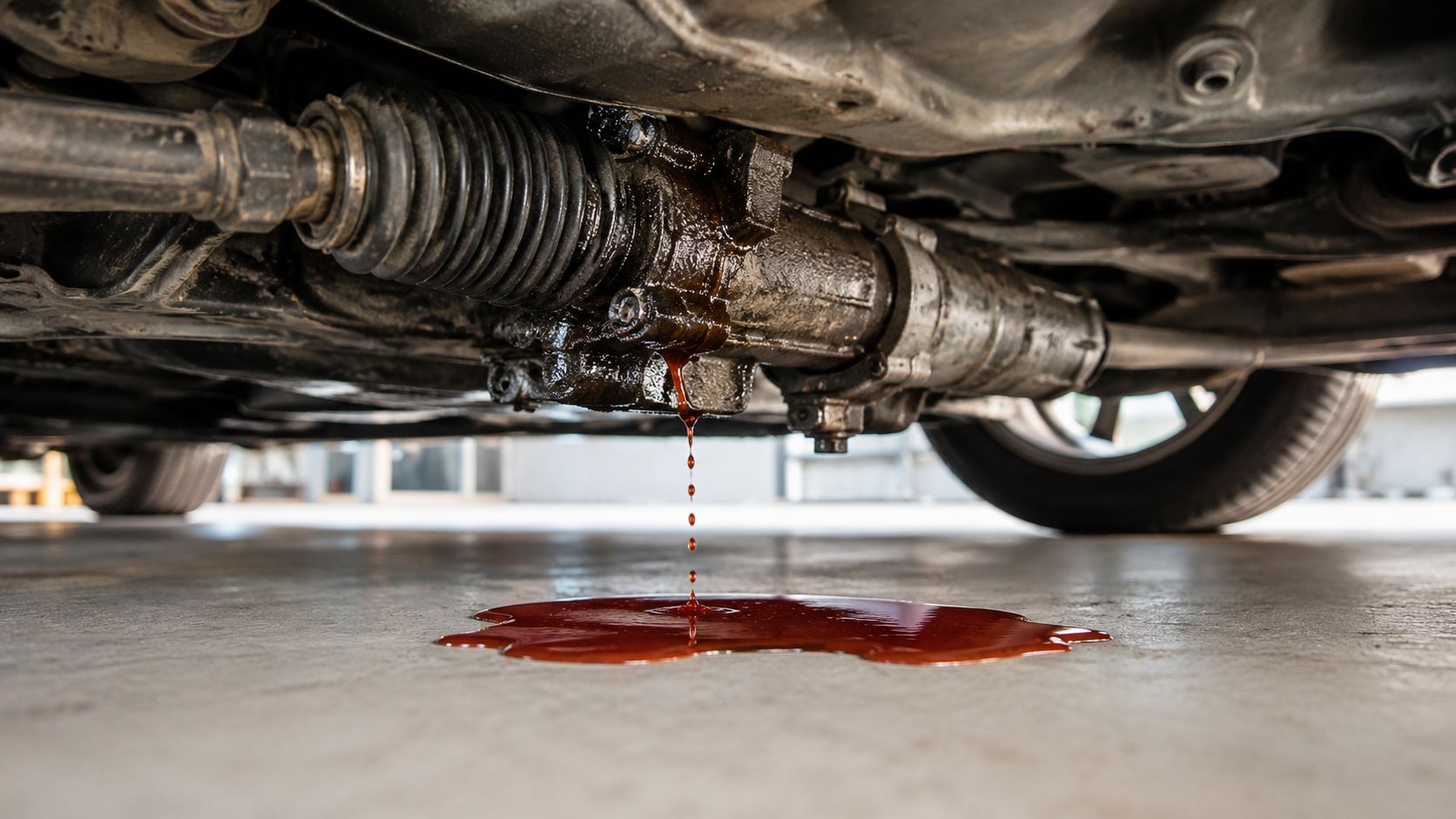
What the car is telling you
These are the symptoms that make me look hard at the rack itself:
- Loose or vague steering near centre. You make a small correction and the car reacts late or inconsistently.
- Fluid leaking around the rack or boots. Wet inner boots, dripping fluid, or a reservoir that keeps dropping points to more than a minor seep.
- Noise during steering input. Groaning can come from low fluid, but clunks and grinding while the wheel is turning need a proper inspection.
- Uneven assist. The wheel may turn easier in one direction than the other, or effort may change halfway through the turn.
- Poor return to centre. After a corner, the wheel does not come back cleanly. That can be mechanical bind inside the rack, not just alignment.
- Recurring alignment problems or odd tyre wear. If toe will not stay put, the rack or inner tie rod assembly may have play.
Rack symptoms overlap with a lot of other front-end faults. Worn tie rods, ball joints, strut mounts, subframe movement, and even bad intermediate shaft joints can mimic a bad rack. Electric power steering systems add another layer. A torque sensor, steering angle sensor, or calibration fault can make the steering feel wrong even when the hard parts are still sound.
Quick checks before you commit
Start with the simple checks that separate a bad rack from a bad guess.
- Check the fluid level and condition on hydraulic systems. Foamy or discoloured fluid means air, contamination, or internal wear.
- Inspect both rack boots. If one boot is swollen or holding fluid, the inner seal has likely failed.
- Watch the input and inner tie rods while someone turns the wheel. Free play, delay, or uneven movement can narrow the fault down fast.
- Raise the front end safely and feel for binding lock to lock. A bad rack often has a rough spot or tight point you can feel.
- Scan for steering-related faults on electronic systems before ordering parts. This matters more than a lot of DIY guides admit.
- Check steering wheel centring and sensor readings after any recent front-end work. A rack can be mechanically fine and still drive poorly if the steering angle value is off.
One symptom on its own does not prove the rack is done. Two or three together usually means you need to stop guessing and inspect it properly. If the wheel binds, assist cuts in and out, or the car does not hold a straight line safely, park it until you know what failed.
If the front end has noise, looseness, or uneven tyre wear beyond the steering rack, a proper suspension repair inspection helps sort rack problems from worn joints, mounts, and other hardware.
Assembling Your Tools and Sourcing the Right Parts
A steering rack replacement usually goes sideways before the first bolt comes out. Not because the mechanic can't turn a wrench, but because the bench isn't ready. Missing line seals, wrong fluid, no tie rod separator, no way to support the car safely. That's how a one-day plan turns into a weekend of frustration.
This is a job where preparation matters more than speed. Lay everything out first. If you have to stop halfway through and hunt for a flare nut wrench or a fresh set of O-rings, you've already made the job harder.
Tools that actually matter
You don't need a dealership bay, but you do need more than a basic socket set.
| Tool | Why it matters |
|---|---|
| Floor jack and jack stands | The car must be lifted and supported safely with room to work underneath |
| Wheel chocks | Stops the vehicle from shifting while raised |
| Drain pan | Catches old power steering fluid cleanly |
| Flare nut wrenches | Helps prevent rounding hydraulic line fittings |
| Tie rod end puller or separator | Gets the outer tie rods loose without beating on everything |
| Ratchet and socket set | For rack mounts, shields, brackets, and related hardware |
| Pry bar | Useful when manoeuvring the rack in and out of tight spaces |
| Paint marker | Lets you mark the steering shaft relationship before separation |
| Torque wrench | Critical on steering and suspension fasteners |
| Safety glasses and gloves | This job drops fluid, dirt, rust, and sharp edges in your face |
If you're working on a vehicle with electronic steering inputs, driver-assistance features, or a steering angle sensor that needs recalibration, scan tool access matters too. That's the part many home mechanics don't plan for.
Choosing the rack
There isn't one right answer for every car. There is a right answer for your budget, how long you plan to keep the vehicle, and how much risk you're willing to accept.
- OEM rack. Usually the safest call for fit and steering feel. It tends to be the least surprising option.
- Quality aftermarket rack. Can work well if the brand has a solid reputation and the unit is complete and correctly machined.
- Remanufactured rack. Often the budget route. Sometimes perfectly serviceable, sometimes the source of leaks, noise, or inconsistent steering feel right out of the box.
The trade-off is simple. Saving money on the rack can cost time if fitment is off, seals are poor, or the steering effort doesn't feel right after installation. That doesn't mean aftermarket or reman is always wrong. It means you need to buy carefully and inspect the unit before it goes in.
Buy the rack you'd want to install once, not the rack you're willing to remove twice.
Part quality matters across the whole repair, not just the rack itself. If you're weighing part grades, this breakdown of OEM vs aftermarket parts is useful background before you order.
Parts to have on hand before you start
Don't open the toolbox until these are in the shop:
- New O-rings or line seals. Reusing old seals is one of the easiest ways to create a leak.
- Fresh power steering fluid. Use the correct type for the vehicle.
- Tie rod hardware if required. Some setups need fresh lock nuts, clips, or cotter pins.
- Replacement boots or clamps. If the originals are torn or damaged, now is the time.
- Alignment plan. Book the alignment in advance if you're not doing that in-house.
The Step-by-Step Steering Rack Replacement Process
A steering rack job can go sideways fast. The mechanical swap is only part of it. The jobs that come back with a crooked wheel, a steering angle warning, or a bind off centre usually went wrong during indexing, centring, or final setup.
Start by getting the vehicle high enough to work safely and to slide the rack out without forcing it. Use level ground, wheel chocks, and proper jack stands at the correct lift points. If the car is only on a floor jack, stop there.
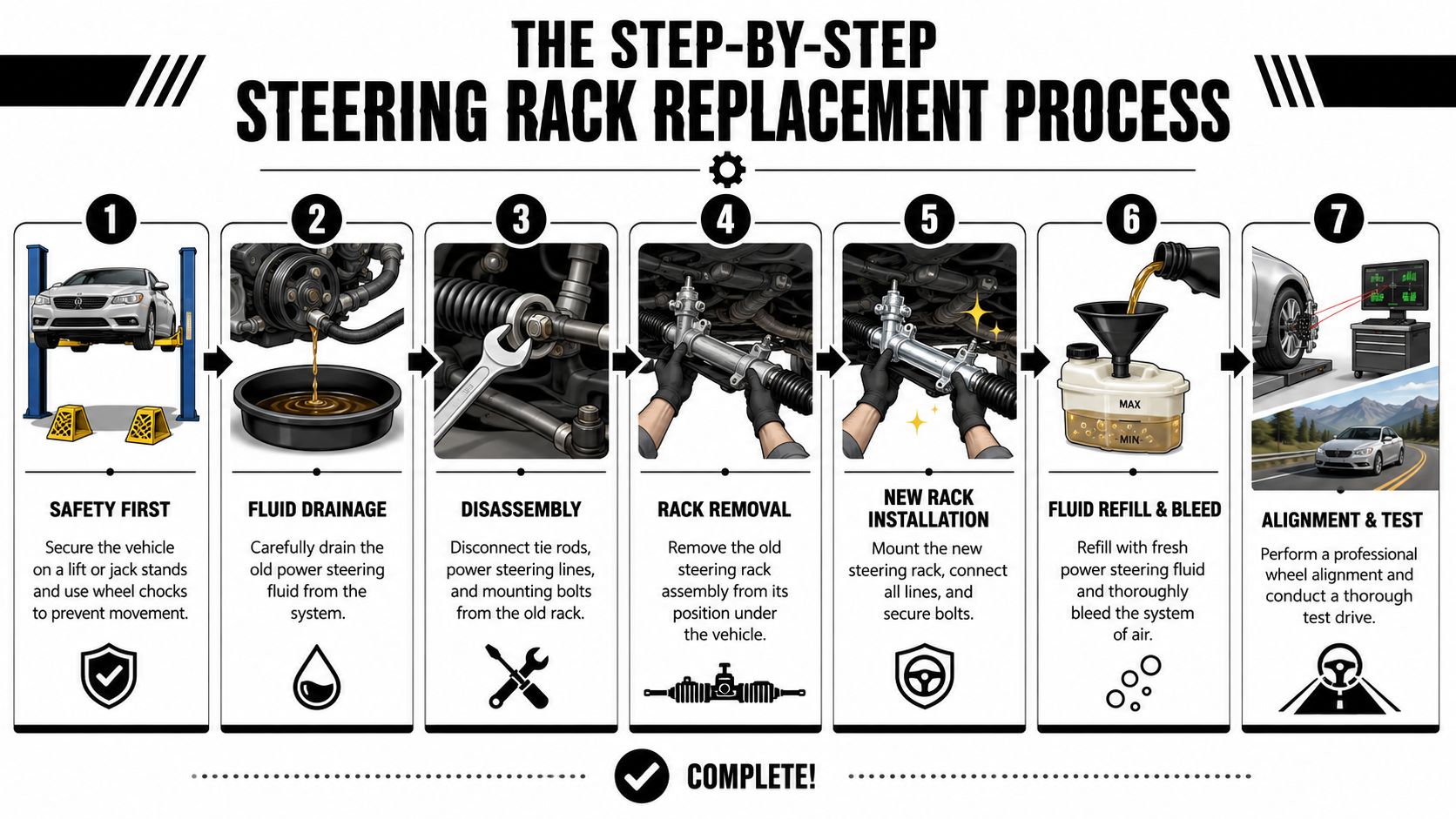
Step 1, lock down the steering wheel and disconnect the battery
Before you undo the intermediate shaft, keep the steering wheel from rotating. A seatbelt through the wheel works in a pinch. A steering wheel holder is better. If the wheel spins freely while the shaft is disconnected, some vehicles can damage the clockspring or lose steering angle indexing.
Disconnect the battery if the vehicle has electronic steering angle sensors, lane keep hardware, or column components nearby. On newer cars, that small step can save you from an avoidable warning light later.
Step 2, drain fluid and clear access
Put a drain pan under the rack area and remove as much old fluid as you can without making a mess. Then get the obstruction parts out of your way. That may mean splash shields, an undertray, braces, heat shields, or, on some vehicles, dropping part of the subframe enough to gain clearance.
Clean the area around the line fittings before you crack anything loose. Grit in an open hydraulic port is the kind of mistake that shows up after reassembly.
Step 3, mark the shaft and check rack centre before removal
Mark the relationship between the steering shaft and the rack input with paint. Make a second reference mark on the steering wheel if you need one. That gives you a baseline when everything goes back together.
Then check where the old rack is sitting before you remove it. If the wheel was straight and the toe was decent before failure, note tie rod thread exposure side to side and count turns if you are transferring ends. Those notes help you get the new unit close enough to move the car safely to an alignment shop.
Step 4, separate tie rods and hydraulic lines carefully
Remove the outer tie rod ends from the knuckles with the right puller. Hammering on the knuckle can damage parts you did not plan to replace.
Disconnect the pressure and return lines with the correct wrench. Cap or plug the ports if you have caps handy. Always discard old line seals and O-rings. Reusing them is one of the easiest ways to create a leak that only shows up once the system builds pressure.
If you are transferring inner or outer tie rod components, match the new assembly to the old one as closely as possible before installation. Measure overall length, or count turns with care. Close is good enough for transport. It is not a substitute for alignment.
Step 5, remove the rack without stressing the input shaft
Unbolt the rack from the subframe or mounts only after the shaft, lines, and tie rods are free. Support it as the last bolts come out. Some units slide out cleanly. Others need to be rotated around the exhaust, sway bar, or frame openings.
This is usually the most awkward part of the job.
Do not hang the rack by a line, pry against the input shaft, or drag the ports across the subframe. If it is fighting you, change the angle and check what is still attached.
Step 6, bench-check and centre the new rack
Set the old and new racks side by side on the floor or bench. Compare mounting ears, port orientation, input shaft size, inner tie rod position, and travel. If one detail looks wrong, stop and sort it out before the new part goes in.
Centre the replacement rack manually before installation. Turn it from lock to lock, count the total travel, then bring it back to the midpoint. Keep it there while reconnecting the shaft. This matters more than many DIY guides admit. If the rack goes in off-centre, you can end up with uneven turning radius, a crooked wheel, stability-control complaints, or a steering angle sensor that needs extra correction work after the mechanical install.
Step 7, install the rack and torque fasteners properly
Lift the new rack into place and start every mounting bolt by hand. Reconnect the steering shaft carefully, making sure your marks line up and the pinch joint seats fully. Then install the hydraulic lines with new seals only.
Torque the rack mounts, shaft fastener, line fittings, and tie rod hardware to the vehicle specification. Guessing here is a bad habit. Too loose causes clunks and movement. Too tight can damage threads or distort sealing surfaces.
Step 8, set a safe baseline and watch for electronic issues
Reinstall or transfer the tie rods so both sides are as even as possible. The goal is a safe baseline, not a perfect alignment in the driveway. Once the wheels are back on, turn lock to lock by hand before starting the engine. Feel for a tight spot, hard stop before full lock, boot twist, line interference, or a shaft joint that is not seated correctly.
On vehicles with electronic stability control, active steering, or a steering angle sensor, expect the final setup to go beyond bolts and fluid. If the wheel is off-centre after installation, the sensor may read incorrectly even if the car is mechanically close. That can trigger traction or stability warnings and can affect how the vehicle tracks. After the rack is installed, book a proper wheel alignment and balancing service and be prepared for steering angle sensor calibration if the vehicle requires it.
What works in the shop
- Locking the steering wheel before separating the shaft
- Paint-marking the shaft and input relationship
- Centred rack installation before final shaft connection
- New O-rings and line seals every time
- Checking for binding by hand before engine start
- Treating warning lights as a setup problem to diagnose, not something to ignore
What causes comebacks
- Letting the wheel rotate with the shaft disconnected
- Installing the rack one spline off
- Reusing old seals
- Setting tie rods by eye and calling it good
- Skipping the hand-turn binding check
- Assuming alignment alone will correct an off-centre rack
A skilled DIYer can do this job with the right tools, room to work, and the discipline to measure and mark everything. If the subframe has to move, corrosion is heavy, the shaft coupling is seized, or the vehicle needs post-install electronic calibration you cannot perform, that is the point to hand it to a shop like Carmedics Autowerks.
Crucial Final Steps Bleeding the System and Wheel Alignment
The rack is bolted in, the lines are tight, and the car looks ready. This is the point where a lot of jobs go sideways. Poor bleeding leaves you with pump noise and inconsistent assist. Skipping the final setup can leave you with a steering wheel that sits crooked, a car that wanders, or warning lights that show up after the test drive.
Bleed the hydraulic system properly
Treat bleeding as part of the repair, not cleanup. With the front wheels off the ground and the engine off, fill the reservoir to the correct level and turn the wheel slowly from lock to lock several times. Pause and let the air rise out of the fluid. Top up again and repeat until the fluid stays clear and the level stops dropping.
Then start the engine and do the same slow sweep again. Do not hold the wheel hard against the stops. That only heats the fluid and stresses the pump. If the reservoir foams, shut it down and let it settle before continuing.
I always watch the return fluid closely here. Fresh fluid with tiny champagne bubbles can clear up. Thick foam or fluid that looks whipped means there is still air in the system or the pump is drawing air from a loose fitting or bad seal.
What to watch during bleeding
Use your eyes, ears, and hands.
- Foamy, cloudy, or tan fluid means air is still in the system.
- Whining or growling from the pump usually means the fluid is aerated or the level is low.
- A dropping fluid level is normal at first while air purges out, but it must stabilize.
- Wet line fittings or seepage at the rack ports point to a sealing issue that needs to be fixed before road testing.
- A tight spot or uneven effort through the wheel can mean binding, a mispositioned intermediate shaft, or an internal rack problem.
If the steering does not feel smooth with the front end still in the air, do not assume alignment will fix it later.
Wheel alignment and steering angle setup
Any time the rack comes out, toe changes. Sometimes the wheel ends up off-centre even when the tie rods were measured carefully on the bench. That is enough to scrub a new set of tires and, on many newer vehicles, confuse the steering angle sensor.
That electronic side gets missed in a lot of DIY writeups. The mechanical install can be fine and the car can still come back with traction control, stability control, or steering warning lights because the steering angle sensor no longer agrees with the wheel position. Some vehicles relearn on their own after a proper alignment and road test. Others need a scan tool calibration procedure.
Before the car goes back into regular use, book a proper wheel alignment and balancing service and confirm whether your vehicle needs steering angle sensor calibration. If the wheel is off-centre, the rack feels tight off centre, or warning lights stay on after alignment, stop there. That is the point to get a shop involved before a bad setup turns into tire wear, a comeback, or a steering problem you can feel in every lane change.
Costs Timelines and Expert-Level Pitfalls
This is the part most guides handle badly. They either make steering rack replacement sound like a simple afternoon job, or they bury the hard bits under generic advice. The trade-off isn't merely parts versus labour. It's parts, labour, tool access, downtime, rework risk, and whether you can finish the job with the car driving straight and warning-light-free.
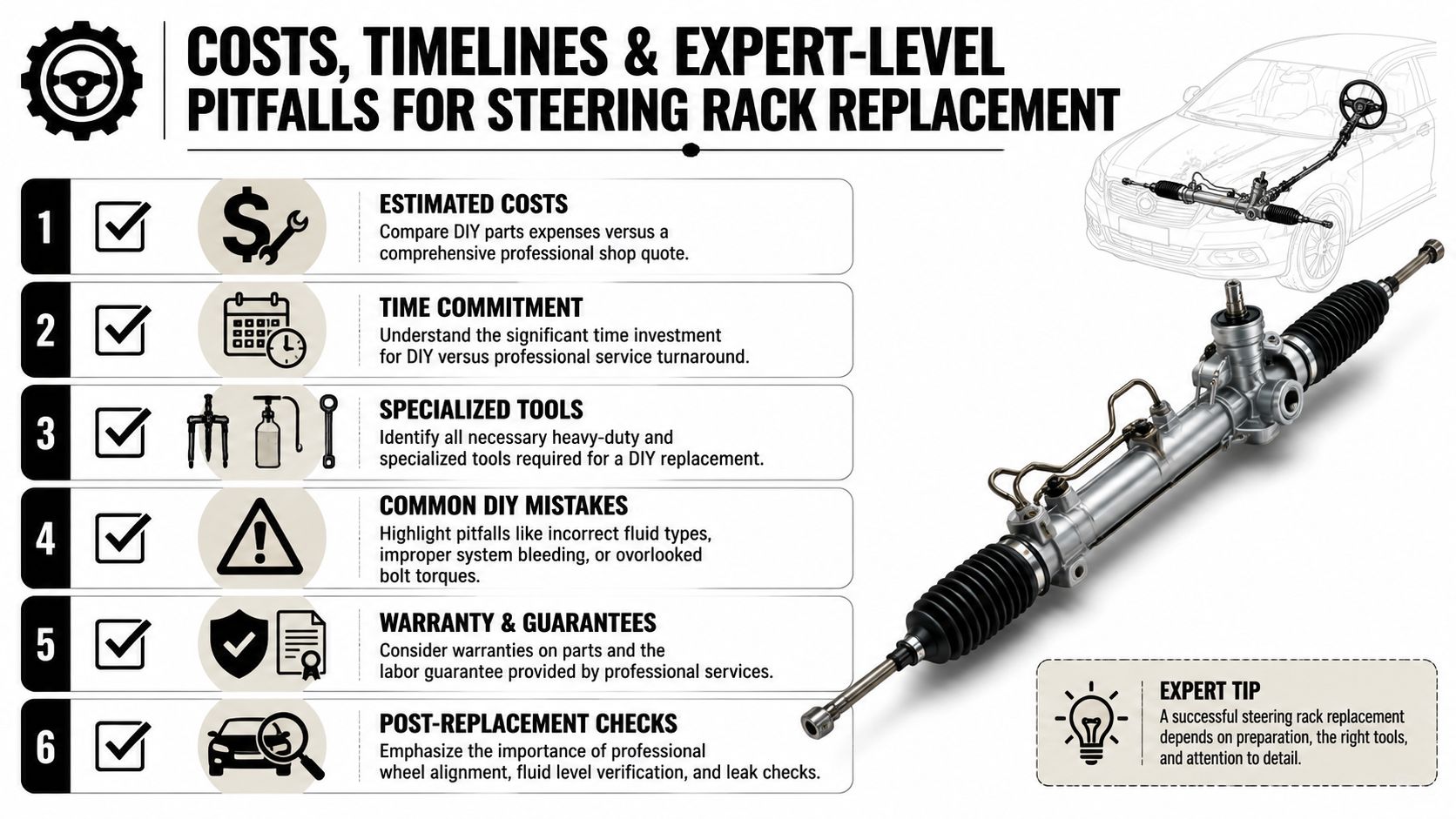
The real cost isn't only the rack
If you're doing this yourself, you're paying for more than the assembly. You may need fluid, seals, a tie rod separator, line wrenches, and access to alignment afterward. If something goes wrong, your cheap rack can become an expensive rack very quickly.
A shop bill usually looks higher at first glance, but it bundles in the value most DIY calculations ignore: proper diagnosis, installation accountability, post-repair inspection, and the ability to deal with problems immediately if the new unit leaks, binds, or sets faults.
Time goes sideways on this job
Even experienced people lose time on seized hardware, cramped access, line routing, or wrestling the old rack out past surrounding components. Then there's cleanup, bleeding, checking for leaks, and getting the alignment done.
That's why I tell people to judge this repair by workflow complexity, not by the number of bolts. The rack itself may only be held by a handful of key fasteners. Accessing it cleanly and reassembling it correctly is the significant work.
Pitfall number one, steering angle sensor and wheel centring
This is the issue many DIY guides barely mention. A recurring gap in public discussions is post-replacement steering-angle-sensor calibration and steering-wheel centring. Owners regularly report warning lights staying on or steering angle readings staying wrong after the mechanical swap, which suggests that the core challenge often begins after the rack is physically installed (discussion of post-replacement sensor issues and centring).
On newer vehicles, a wheel that's even slightly off-centre can trigger system complaints. You may have replaced the rack correctly and still end up with stability or power steering warnings if the electronic side isn't reset properly.
Pitfall number two, binding after installation
A second under-explained problem is binding or tight steering after replacement. This can happen even when the part is new and the fasteners are tight. Small changes in rack position, steering shaft angle, or installation clocking can create a steering feel that's wrong from the first turn of the wheel.
Here's a clean checklist of the mistakes that cause the most grief:
- Old seals reused. They often seep once pressure returns.
- Tie rods set by eye. That leaves the car miles out on toe until alignment.
- Rack not centred before install. You end up with uneven steering travel.
- Bleeding rushed. Air stays in the system and the fluid foams.
- Electronics ignored. The mechanical repair is done, but the dash says otherwise.
A new rack doesn't guarantee good steering. Installation geometry and electronic reset matter just as much.
If you're deciding whether this is a home-garage job or one better left to a shop, a full auto repair evaluation should include those hidden post-install steps, not just the part swap itself.
When to Trust the Pros at Carmedics Autowerks
You finish the rack install, start the car, and the steering wheel sits crooked with a warning light on. That is the point where a good DIY job can turn into a safety problem.
There is no shame in handing this repair over. Steering work has very little margin for error, and the hard part is often not the rack swap itself. It is confirming the rack was the fault, getting the new unit centred before installation, protecting the lines and seals, and finishing the job with the alignment and electronic reset some newer vehicles require.
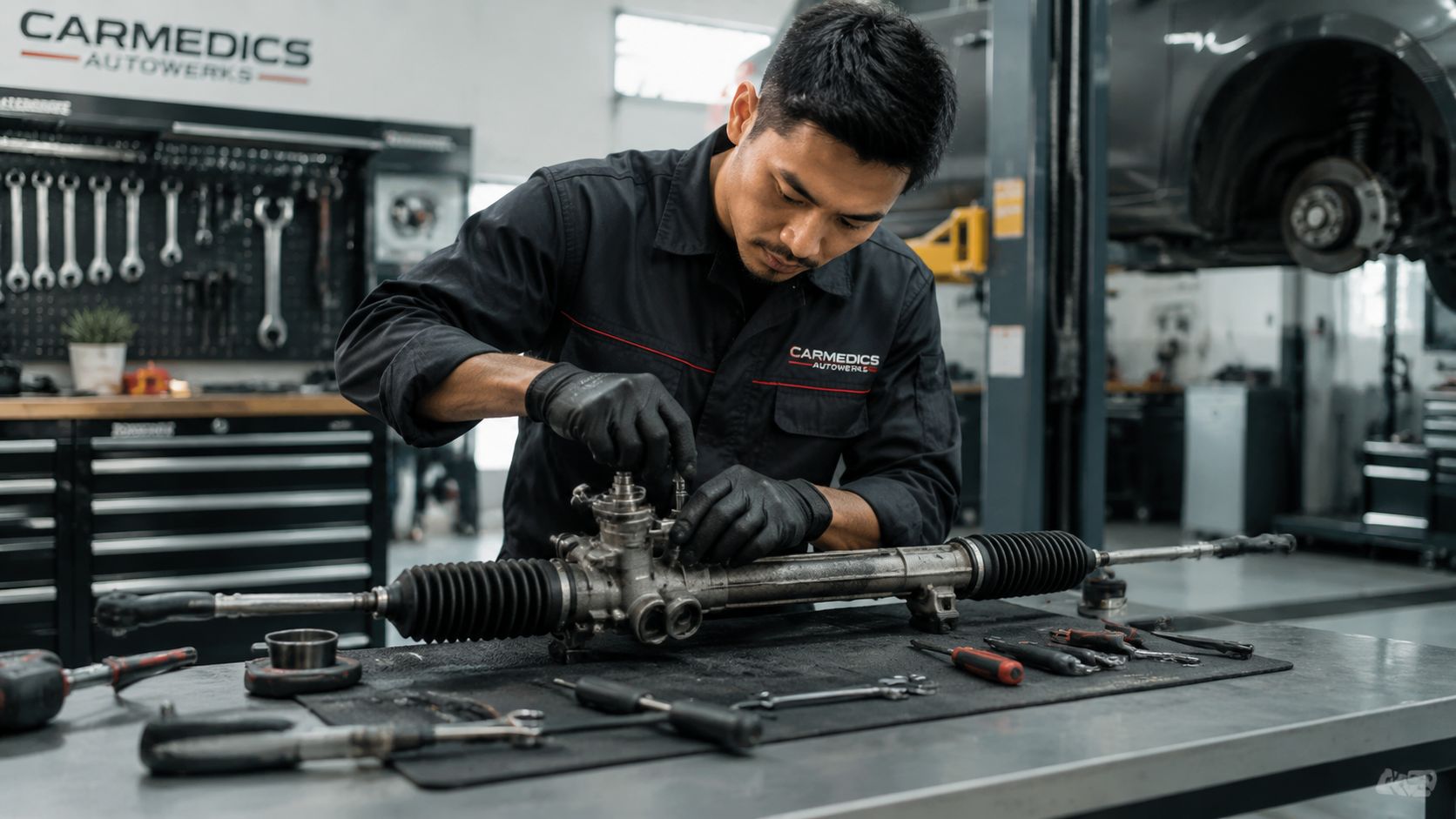
Call a shop if any of these apply. The subframe has to be lowered and you do not have a safe way to support it. The hydraulic fittings are seized and starting to round off. The steering shaft coupling will not line up cleanly. The vehicle has EPS, lane-keep features, or a steering angle sensor that needs calibration after the rack is installed.
That last point catches a lot of people. I have seen cars leave a driveway with a new rack, then come right back with stability control lights, poor return-to-centre, or a wheel that is off by a few degrees. The mechanical work can be solid and the car still will not drive right until the sensor values are checked and reset properly.
A proper shop brings the tools and the process. Diagnosis first. Then installation checks, wheel-centre verification, alignment, road test, and scan-tool work if the vehicle calls for it. If there is binding, a pull, or a warning light after the install, that gets addressed before the car goes back to the owner.
If you want the job handled start to finish, book with Carmedics Autowerks in Whitby for steering and post-repair calibration work. That is the right call when you want the wheel straight, the system dry, and no surprises on the test drive.
If your vehicle is showing signs of rack failure, do not keep driving it and hope it settles down. Carmedics Autowerks Inc can inspect the steering system, confirm whether the rack is the problem, and handle the repair, alignment, and final checks so the car goes back on the road safely.