


You're sitting at a light on Dundas, inching forward in summer traffic, A/C on, kids in the back, and then you notice the temperature gauge creeping higher than normal. Maybe the warning light comes on. Maybe you catch that sweet hot-coolant smell. In the worst cases, you see steam.
That's the moment most drivers go from mildly concerned to properly stressed.
An overheating engine feels sudden, but it usually isn't random. The cooling system has normally been losing ground for a while. A hose has been seeping. Coolant has dropped. The radiator isn't shedding heat the way it should. Or the car is fine at speed, then starts running hot only at idle because airflow through the front of the vehicle is restricted.
In Whitby and across the GTA, that pattern shows up a lot in warm weather. Summer conditions already push the cooling system harder. Environment and Climate Change Canada's climate normals for the Whitby and Toronto area show regular summer highs in the mid-20s °C, and the region's heat warnings are built around sustained daytime and nighttime heat. Those conditions matter because they raise under-hood temperatures and shrink the cooling system's safety margin. Severe overheating can push engine temperature to about 260 °F, or about 127 °C, according to Cenex's engine overheating guidance.
That sounds dramatic because it is. But overheating problems are understandable once you know what each part is supposed to do.
That Sinking Feeling When the Temperature Gauge Climbs
The first sign is often small. The gauge sits a little higher than usual. The cabin air from the vents doesn't feel quite as cold. The engine fan seems louder. Then traffic slows again, and the needle starts moving toward the hot zone.
That's a classic Whitby summer breakdown story. Not because every car is faulty, but because heat, idling, A/C use, and stop-start driving stack stress on top of stress. A cooling system that seems fine on a cool morning commute can struggle in afternoon traffic when the whole engine bay is heat-soaked.
What drivers usually notice first
One doesn't typically start by saying, “My water pump failed.” They say:
- The gauge went up in traffic: It stayed normal on the highway, then climbed at lights or in a drive-through.
- There was steam or a hot smell: Steam gets attention fast, but smells often show up before visible vapour.
- The car felt off: Less power, roughness, or a sense that the engine was working harder than normal.
Those details matter because they point to different engine overheating causes. A car that overheats only at idle tells a different story from one that overheats at highway speed.
Don't ignore a gauge that only spikes once in a while. Intermittent overheating is often the warning stage before a full roadside failure.
Why this catches people off guard
Engines always run hot. That's normal. The problem starts when the system can't move that heat away fast enough. Consider a kettle on a burner. If the heat going in stays constant but heat escaping drops, temperature climbs fast.
That's why a vehicle can feel completely fine until one more demand gets added. Turn on the A/C. Hit a long red light. Get stuck behind slow traffic with poor airflow to the radiator. Suddenly the cooling system falls behind.
If you're dealing with that right now, don't guess. The pattern of when it overheats is one of the best clues you have.
How Your Car's Cooling System Actually Works
A cooling system is basically a closed heat-transfer loop. The easiest way to understand it is to compare it to hot water heating in a house. Heat is created in one place, carried by fluid, released somewhere else, and sent back around to do the job again.
Your engine creates intense heat every time fuel burns inside the cylinders. If that heat stayed trapped in the metal, the engine would destroy itself. So the cooling system's job is simple in theory. Pick up heat from the engine, carry it to the radiator, dump that heat into the air, then repeat.
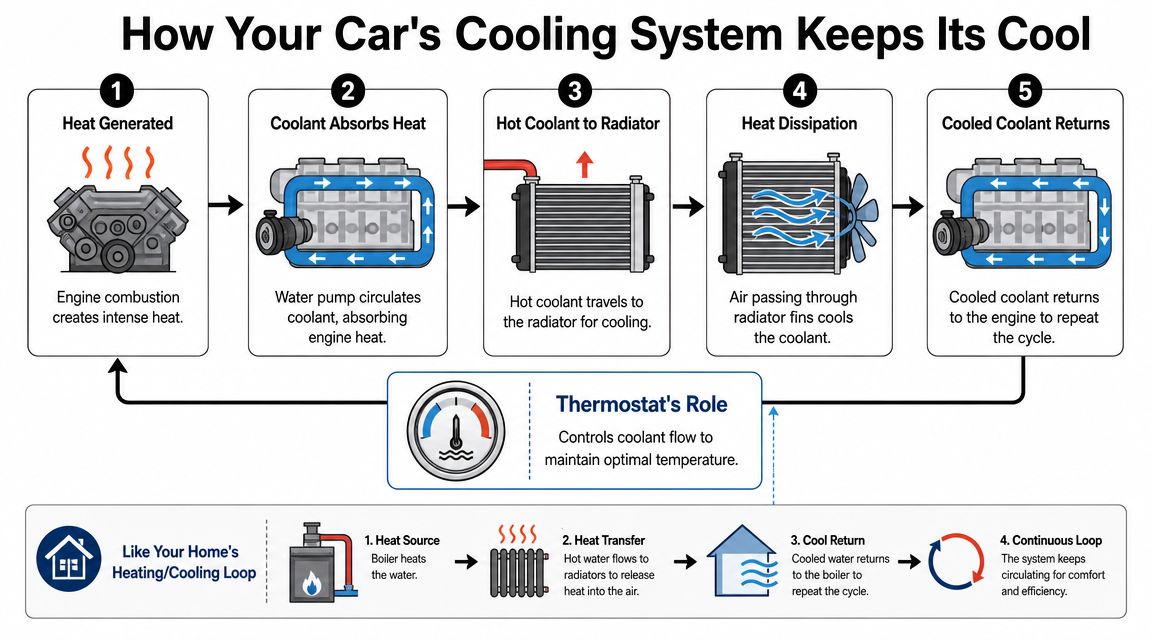
The parts and what each one does
Here's the basic loop:
- The engine generates heat: Combustion creates the heat that has to be controlled.
- Coolant absorbs that heat: Coolant flows through passages in the engine block and cylinder head.
- The water pump keeps it moving: Without circulation, heat just sits in the engine.
- The thermostat regulates flow: It stays closed when the engine is cold, then opens as the engine warms up.
- The radiator sheds the heat: Air passing through the radiator fins cools the hot coolant.
- The fan helps at low speed: When the car isn't moving fast enough for natural airflow, the fan pulls air through the radiator.
Why airflow matters as much as fluid
Many drivers focus only on coolant, but cooling depends on two things working together. Coolant has to carry heat, and air has to pull that heat out of the radiator. If either side fails, temperature rises.
That's why a blocked radiator face, weak fan, or debris trapped in front of the cooling stack can cause trouble even when the coolant level looks acceptable.
Practical rule: Coolant moves the heat. Air removes it. If one half of that partnership fails, the engine runs hot.
If you've ever had a shop perform proper engine diagnostics in Whitby, this is why they don't stop at checking the reservoir. They look at circulation, fan operation, thermostat behaviour, leaks, and airflow path together.
Why the thermostat gets so much attention
The thermostat is a gatekeeper. When the engine is cold, it restricts coolant flow so the engine warms up properly. Once operating temperature is reached, it opens and lets coolant circulate through the radiator.
If it sticks closed, hot coolant can't reach the radiator the way it should. If it sticks open, the engine may warm up poorly and behave oddly. Either condition tells you the system has lost control of temperature.
A healthy cooling system is balanced. It doesn't just have the right parts. It has the right flow, pressure, and airflow at the same time.
The Most Common Engine Overheating Causes
A lot of overheating complaints in Whitby follow the same pattern. The car is fine on a cooler morning run, then the gauge starts creeping up on Highway 401 traffic, or while idling through a backed-up stretch with the A/C on. In the shop, that usually points to one of a handful of common faults. The engine is making normal heat. The cooling system is failing to carry it away fast enough.
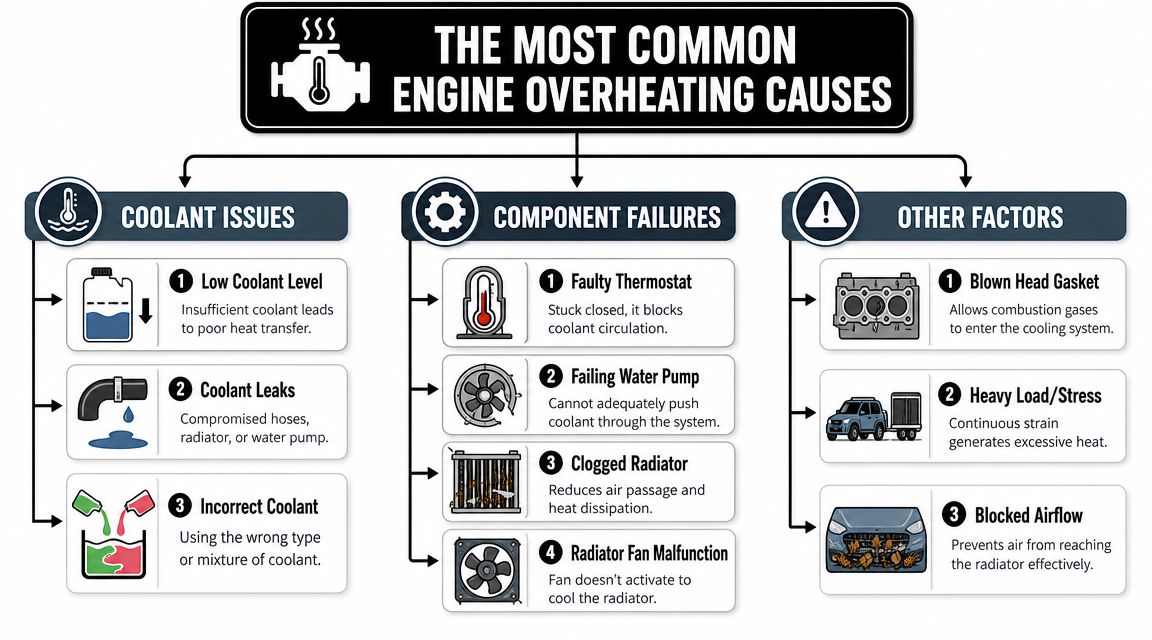
Low coolant and coolant leaks
Low coolant is still the first thing to check. If the system is short on coolant, it cannot move enough heat out of the engine and into the radiator. Even a small leak can turn into a real overheating problem once the system is hot and under pressure, as described in NAPA AUTOPRO's overheating guide.
The bigger issue is not just fluid loss. Pressure drops too. That lowers the coolant's boiling point and gives the system less room for error in summer heat, long idling, and stop-and-go GTA traffic.
Common leak points include:
- Hoses and clamps: Rubber hardens with age and starts seeping around connections.
- Radiator seams or core: Dried coolant residue often shows up before a visible drip.
- Water pump area: A failing pump may leak from the weep hole before circulation gets much worse.
- Head gasket area: More serious, and usually paired with rough running, white exhaust, or coolant loss with no obvious external leak.
Thermostat faults
A stuck thermostat can cause overheating fast. If it sticks closed, coolant stays trapped in the engine instead of circulating through the radiator. The gauge climbs quickly because the system has lost its main path for shedding heat.
A thermostat stuck open is a different problem. It may not cause a classic overheat right away, but it can lead to unstable temperatures and poor warm-up. AAA's explanation of overheating causes notes that coolant flow patterns through the radiator hose can help point to whether the thermostat is stuck open or closed.
Water pump failure and fan problems
The water pump handles circulation. If the impeller is worn, loose, or damaged, coolant may still be present but not moving well enough to control temperature. That can fool drivers because the reservoir does not always look empty.
Fan problems are one of the most common causes I see in traffic-related overheating. At road speed, outside air helps push heat through the radiator. At idle in Whitby summer traffic, the fan has to do most of that work, especially with the A/C running.
That symptom pattern matters:
| Symptom pattern | Likely direction |
|---|---|
| Runs hot in traffic, better on highway | Fan problem or weak airflow through the radiator |
| Runs hot all the time | Coolant loss, thermostat, pump, or a major restriction |
| Sudden rapid overheating | Leak, pressure loss, or thermostat stuck closed |
Radiator problems and maintenance gaps
Radiators usually fail in two ways. They leak, or they lose efficiency. Internal buildup can slow coolant flow. Corrosion and scale reduce heat transfer. Bent fins, dirt, and debris on the outside make it harder for air to pass through.
Engine oil plays a part too. Oil reduces friction and carries some heat away from internal engine parts, so low oil or overdue service can add heat stress to an engine that is already close to the edge. If your service intervals have been stretched, why regular oil changes are necessary goes beyond keeping the oil clean.
A lot of overheating causes are not single dramatic failures. They are smaller problems stacking up. An older hose, a weak fan, a partially restricted radiator, and low oil might all seem manageable on their own. Then you hit a hot afternoon, sit in traffic near the GTA, and the margin disappears.
Less Obvious Reasons Your Engine Is Overheating
Some overheating complaints fool people because the obvious checks seem fine. Coolant is present. No giant puddle under the car. The gauge only climbs in traffic. Then the vehicle cools down once it gets moving again.
That's where the less obvious faults start to matter.
Blocked airflow at the front of the car
This is one of the most overlooked causes, especially in urban Ontario driving. Debris between the grille, A/C condenser, and radiator can reduce heat rejection even when coolant level is normal, and that matters most in stop-and-go traffic and with A/C use, as highlighted in this discussion of airflow blockage and overheating risk.
Leaves, road grit, cottonwood fluff, and bent fins don't look dramatic, but they choke the radiator's ability to shed heat, much like trying to cool your house with the furnace filter packed solid. The system still runs. It just can't breathe properly.
Why idle overheating is a clue
If the car overheats at idle but settles down on the highway, the airflow side deserves serious attention. At speed, ram air helps cover up weakness. At idle, the fan and open airflow path have to do almost all the work.
Check the pattern:
- Only overheats with A/C on in traffic: The cooling stack and fan operation move higher on the suspect list.
- Runs normal at road speed: Natural airflow may be masking a restricted radiator face or weak fan performance.
- Gets hot after long idle periods: Heat soak and poor airflow often combine.
That's also why basic maintenance can miss it. A quick look at the coolant bottle won't show debris trapped between the condenser and radiator.
Other subtle causes mechanics watch for
A few other issues can complicate diagnosis:
- Wrong fluid choices: Incorrect coolant or poor mixture can reduce system performance. The system may still work, just not well.
- Heavy load: Towing, climbing, or constant A/C use adds heat demand. A marginal system may fail only under those conditions.
- Head gasket trouble: Combustion gases entering the cooling system can upset pressure and temperature control.
- Sensor or electrical faults: Sometimes the engine is hot. Sometimes the fan isn't being commanded properly because of an electrical issue.
If your vehicle also has drivability concerns, rough running, or fuel-delivery complaints, broader maintenance matters too. Related issues can show up together, which is one reason periodic fuel injection service can be part of keeping an older engine running cleanly and predictably.
A car that overheats only in traffic is often telling you something very specific. Don't treat it like a mystery when the symptom pattern already narrows the field.
Your First Response What to Do When Your Car Overheats
When the gauge climbs, the goal isn't heroics. It's damage control and safety.
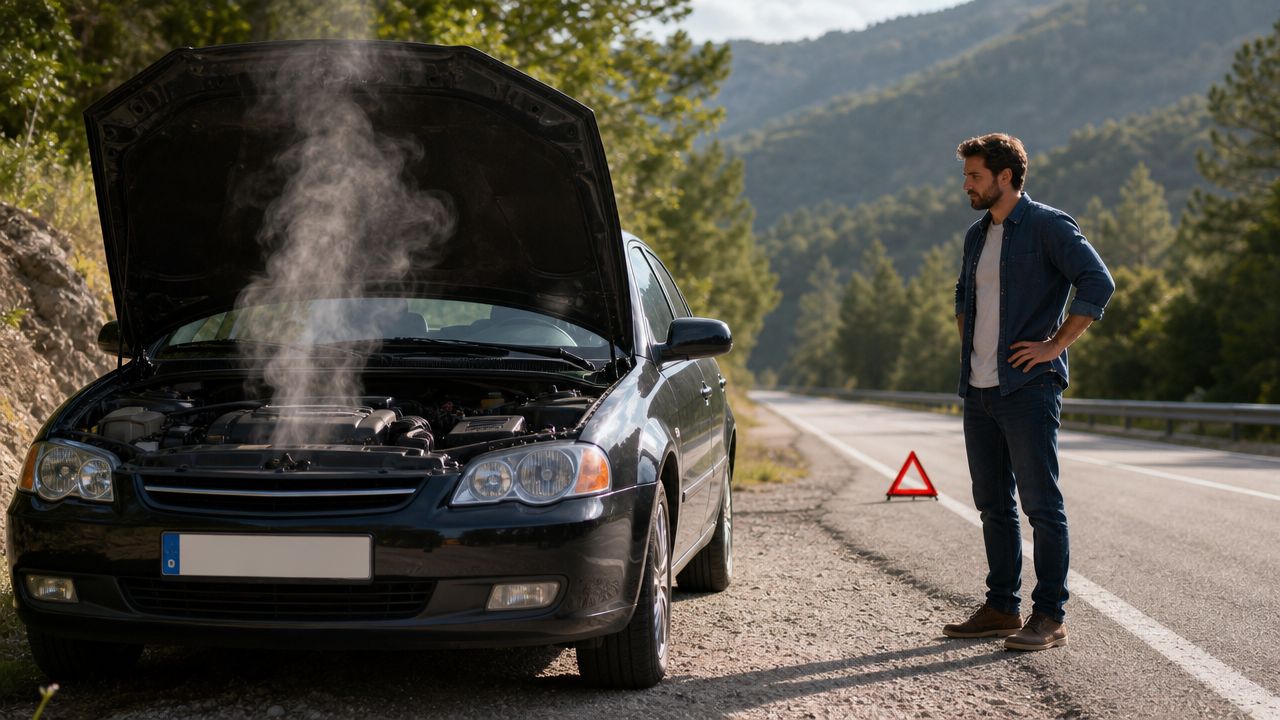
Pull over safely and shut it down
If you see the temperature warning or the gauge heading into the hot zone, get out of traffic as soon as it's safe. Don't keep driving to “see if it clears up.” That gamble gets expensive fast.
Once stopped:
- Turn on your hazard lights: Make yourself visible.
- Shut the engine off: Stop adding heat.
- Let it cool: Give it time before inspecting anything.
If you're dealing with a warning light at the same time, a page on what an engine light on can mean may help you understand why overheating and warning indicators sometimes appear together.
What not to do
The biggest mistake is opening the radiator cap while the engine is hot. The system is pressurised. Hot coolant can erupt and cause serious burns.
Don't pour cold water onto a hot engine. Don't keep revving it. Don't assume steam means “it's probably fine.”
Never remove a hot radiator cap. Wait until the system has cooled fully.
What you can check once it cools
After the engine has cooled down enough to inspect safely, look for simple clues:
- Puddles under the vehicle: Coolant leaks often leave visible fluid beneath the front end.
- Coolant level in the reservoir: If it's low, that matters, but it doesn't explain why it went low.
- Wet hoses or crusty residue: Dried coolant often leaves staining around a leak point.
- Obvious fan or belt issues: If something looks loose, broken, or disconnected, stop there and arrange help.
Know when to stop diagnosing roadside
A roadside check is for gathering clues, not completing repairs in a parking lot. If the car overheated badly, if you saw steam, or if it heats up again after cooling, don't continue driving it around Whitby hoping for the best.
That's the point to tow it and have the cooling system tested properly.
Prevention and When to Visit a Whitby Professional
A lot of overheating problems start weeks before the breakdown. The gauge runs a little higher on Taunton in stop and go traffic. The AC feels warmer at long lights. The car is fine on Highway 401, then starts creeping hot once traffic stacks up near the GTA. That pattern matters.
In Whitby, I pay close attention to overheating that shows up at idle or low speed. Highway airflow can hide a weak cooling fan, packed debris in the grille, or blockage between the condenser and radiator. Then the car sits in summer traffic with the AC on, airflow drops, and the temperature climbs fast.
Maintenance habits that prevent bigger repairs
Cooling systems reward routine attention. Skip it, and small wear turns into expensive heat damage.
- Check the coolant level once the engine is cold: If the reservoir keeps dropping, there is a reason. Topping it up is not the repair.
- Watch for changes in traffic behaviour: A car that only runs hot in lineups, drive-thrus, or long lights often has an airflow or fan problem.
- Look at hoses and connections: Swelling, cracks, wet spots, and dried coolant residue are early warning signs.
- Keep the cooling stack clear: Leaves, dirt, road grit, and cottonwood fluff can restrict airflow through the grille, condenser, and radiator.
- Stay on top of oil changes: Engine oil carries heat away from internal parts. Old oil does that job poorly.
- Follow a service schedule instead of guessing: A proper preventive maintenance plan for vehicles helps catch cooling issues before they turn into roadside failures.
One practical point gets missed all the time. If the vehicle overheats only in traffic, do not assume the radiator is bad just because the coolant is full. Air still has to move through the front of the vehicle. A cooling system works like a home radiator with a fan beside it. Good heat transfer depends on both fluid flow and air flow.
When a professional diagnosis is the right call
Basic checks at home can tell you something is wrong. They usually cannot tell you exactly why.
A shop can pressure-test the system, confirm whether the fans switch on at the correct temperature, check for restricted airflow between components, test thermostat operation, and look for signs of internal engine trouble. That matters because overheating repairs are full of trade-offs. Replacing a thermostat is straightforward on some engines and labour-heavy on others. A fan issue may be the motor, the relay, the wiring, the control module, or a sensor feeding bad information.
Book it in if you notice any of these:
- The engine overheats more than once
- The temperature rises mainly at idle or in traffic
- Coolant keeps dropping with no obvious puddle
- Steam, sweet smell, or white smoke from the exhaust
- Milky oil or oily residue in the coolant
- The heater blows cold while the engine is running hot
- The vehicle is older and cooling system parts have never been renewed
Older vehicles deserve extra caution. Hoses harden, plastic tanks crack, fan motors weaken, and radiators collect internal and external restriction over time. On a ten year old vehicle, one failed part often means the rest of the system is not far behind.
Typical repairs you might be looking at
Cost depends on access, parts quality, and whether the overheating stopped before engine damage started. Honest estimates come after testing, not before.
| Repair Job | What It Fixes | Estimated Cost Range (CAD) |
|---|---|---|
| Coolant leak repair | Restores coolant volume and pressure | Varies by leak location and parts required |
| Thermostat replacement | Restores correct coolant flow control | Varies by vehicle and labour access |
| Radiator replacement | Fixes leaking or restricted radiator performance | Varies by radiator type and installation complexity |
| Cooling fan repair | Restores airflow at idle and low speed | Varies by fan assembly and electrical diagnosis |
| Water pump replacement | Restores coolant circulation | Varies by engine layout and related component removal |
| Head gasket repair | Addresses internal pressure and coolant loss issues | Typically one of the more expensive overheating repairs |
Good diagnosis saves money. Guessing and swapping parts usually costs more than testing the system properly once.
Frequently Asked Questions About Engine Overheating
Can I add water instead of coolant in an emergency
If you're stuck and the system is cool enough to inspect safely, water may help as a short-term emergency measure. It isn't the proper long-term fill. The system is designed for the correct coolant, not plain water, and the root cause still needs to be found.
How far can I safely drive an overheating car
If the gauge is in the hot zone or steam is coming out, the safe distance is effectively none. Pull over and shut it down. Driving an overheating engine can turn a manageable repair into major engine damage.
Why does my car only overheat in traffic
That usually points toward airflow or fan-related engine overheating causes. At highway speed, air is forced through the radiator. In traffic, the vehicle depends much more on fan operation and an unobstructed airflow path through the grille, condenser, and radiator.
If the coolant is full, can the car still overheat
Yes. Coolant level is only one part of the system. A stuck thermostat, weak water pump, blocked radiator, failed fan, or restricted airflow can all cause overheating even when the reservoir doesn't look empty.
Is overheating always a sign of a bad head gasket
No. A head gasket is one possible cause, but it isn't the first assumption. Most overheating complaints start with simpler faults like low coolant, leaks, thermostat issues, fan problems, or blocked airflow.
If your vehicle is running hot in Whitby traffic, losing coolant, or overheating at idle with the A/C on, Carmedics Autowerks Inc can inspect the cooling system, pinpoint the fault, and help you avoid bigger engine damage.