

You know the feeling. You pick up a new car, park a little farther from the next vehicle, and take the long way home just to keep driving it. Then the practical side kicks in. A gravel spray on the 401. Salt mist in January. A shopping cart in a tight plaza lot. That perfect finish suddenly feels exposed.
For drivers in Whitby and across Durham Region, that concern isn’t paranoia. It’s just experience. Our roads are hard on paint, especially if you commute, own a darker vehicle, or care enough to notice every chip on the front bumper. Paint protection film installation solves that problem when it’s done properly. Not as a generic add-on, but as a fitted barrier built around how and where you drive.
The Unmatched Feeling of a New Car and How to Keep It
The first week with a new vehicle is different. You notice the depth in the paint under gas station lights. You walk around it one extra time before going inside. Even a routine drive through Whitby feels better when the bonnet, bumper, and mirrors are still untouched.
Then real life starts working against that finish.
One run down Highway 401 behind a transport truck can leave the front end feeling vulnerable. A winter morning in Durham means salt residue, slush, and grit collecting where the paint takes the most abuse. Summer isn’t gentle either. Bug splatter, tree sap, and careless contact in parking lots all leave their mark faster than most owners expect.
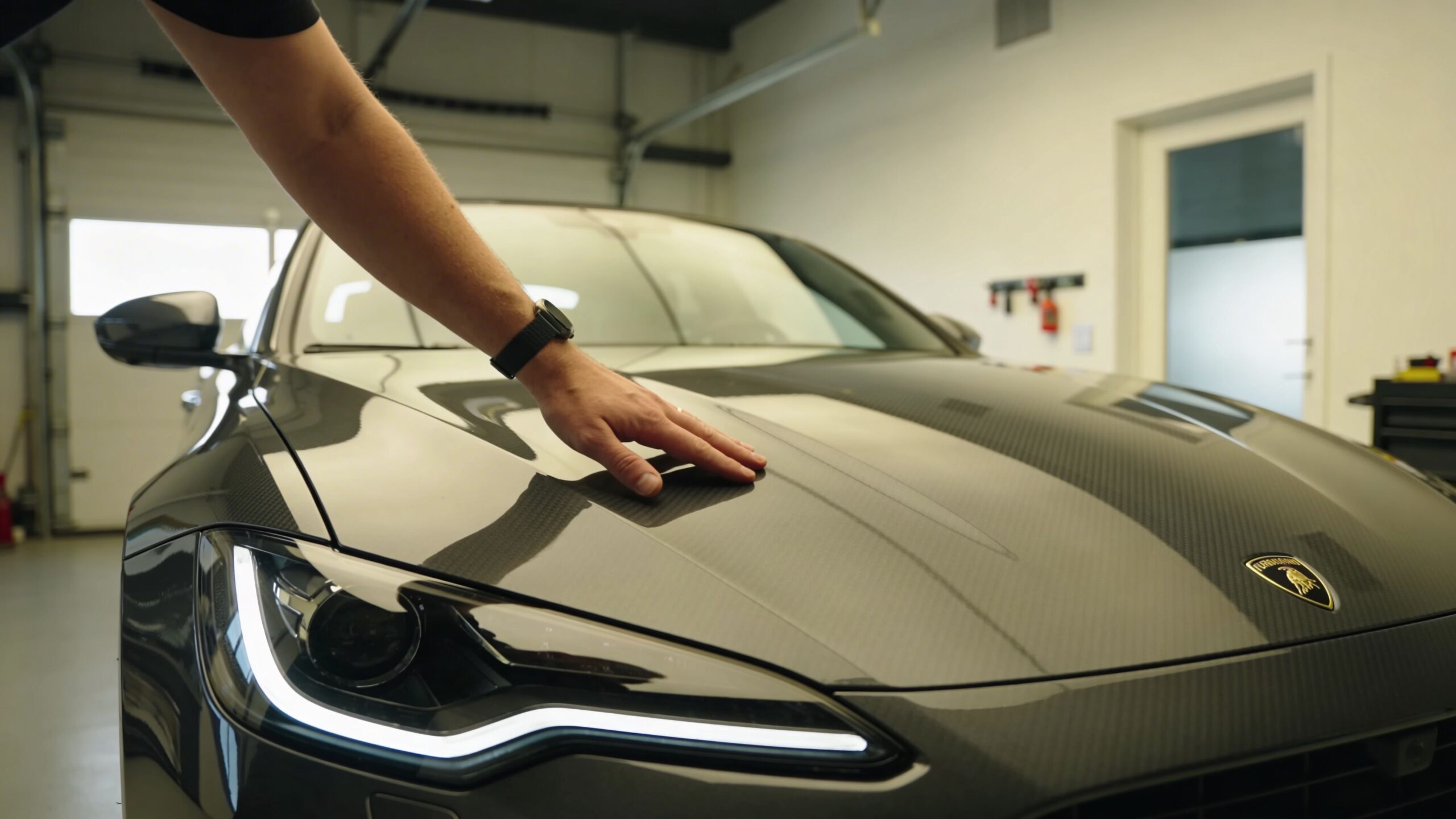
That’s why owners who care about keeping a vehicle looking fresh usually stop thinking in terms of touch-ups and start thinking in terms of prevention. Paint protection film isn’t there to make old paint look acceptable. It’s there to keep good paint from becoming a repair project.
What owners are really trying to preserve
Owners aren’t buying film because they like accessories. They’re trying to keep three things intact:
- The front end finish that takes the first hit from stones, grit, and road wash
- The sharp look of the paint on high-contact areas like door cups, edges, and loading zones
- The satisfaction of ownership that disappears once chips and scuffs start multiplying
A clean, well-installed film should disappear into the vehicle. You should notice the protection, not the product.
If you already think about long-term surface care, the mindset isn’t much different from using a quality sealant for a lasting shine on equipment that faces water, sun, and contamination. The principle is the same. Exposed surfaces last longer when you protect them before damage becomes visible.
For Whitby drivers comparing options, this overview of local paint protection film installation services is a useful starting point. The right package depends less on trends and more on where your vehicle gets hit hardest.
Understanding Modern Paint Protection Film Technology
Many call PPF a clear sticker. That undersells it.
A modern paint protection film is closer to a self-healing screen protector for your car, except it has to conform to compound curves, survive road impact, and stay optically clean on large painted panels. It needs to stretch without distorting, bond without trapping contamination, and resist weather without turning dull.
Why TPU changed the standard
The material that dominates the current market is Thermoplastic Polyurethane, or TPU. In 2023, TPU films held 82.74% market share because of their self-healing properties, UV resistance, and protection against stone chips and scratches, according to Grand View Research’s U.S. paint protection film market report.
That matters because material choice changes what the film can do on the vehicle.
Older-style films could protect to a point, but they were less forgiving and less refined. Modern TPU is the reason owners now expect high clarity, better stain resistance, and the ability to recover from light surface marring with heat.
What the film is doing on the car
Think about the front bumper of an SUV. It isn’t a flat surface. It has curves, recesses, body lines, sensors, and edges exposed to direct impact. A good film has to do several jobs at once:
- Absorb impact energy from small road debris before it reaches the paint
- Resist UV exposure so the covered area doesn’t age poorly
- Maintain gloss and clarity so the panel still looks like paint, not plastic
- Recover from minor marks through self-healing behaviour in the top layer
A poor film can look acceptable on day one and disappointing later. It can haze, stain, or show edge issues more easily. That’s why the film itself matters just as much as the installer.
Self-healing isn’t magic
The term sounds exaggerated, but the concept is straightforward. On premium TPU film, the upper surface can relax and reduce the appearance of light marks when exposed to warmth. That doesn’t mean deep cuts vanish. It means the small wash-induced lines and superficial marring that would normally build up on exposed paint are less likely to stay visible.
Practical rule: PPF protects against damage. It doesn’t make a vehicle invincible. The right expectation is preserved paint, not zero wear under every condition.
Why the technology still depends on installation
Even the best TPU won’t perform properly if it’s stretched badly, installed on contaminated paint, or trimmed carelessly around edges. Film technology and install quality are tied together. One without the other is wasted money.
If you want a broader look at how different protection methods compare, this guide on car paint protection options helps separate film, coatings, and traditional surface treatments by what they accomplish.
The True Benefits of PPF for Whitby and Durham Region Drivers
Whitby drivers don’t need a generic pitch about “environmental protection.” They need protection that makes sense for local conditions.
The front end of a vehicle in Durham Region sees a specific kind of punishment. Highway driving means stone strikes from transport traffic. Winter means salt, brine, sand, and slush. Daily use means door edge contact, loading scratches, and debris worked into lower panels by dirty road spray. That combination is exactly where paint protection film installation earns its value.
Why Ontario conditions change the conversation
Ontario’s winter road treatment is a major factor. The province applies over 1.2 million tonnes of road salt annually, and Durham Region reports 15% higher corrosion claims than the national average, as discussed in this piece on questions to ask a professional PPF installer. The same source notes that films without hydrophobic topcoats can see lifespan reduced by 20% to 30% in salted regions.
That local reality changes what “good enough” looks like.
A basic approach that might hold up in a milder climate can struggle here if the prep is poor or the film choice isn’t suited to winter contamination. Salt creeps into edges. Dirty meltwater sits in seams. Lower doors and rear quarters collect abrasive grime for months.
Where Whitby drivers see the benefit
The best PPF results usually show up in the places owners complain about most after a year of driving:
- Front bumper and bonnet edge for highway debris on the 401 and 412
- Mirror caps and A-pillars for wind-driven grit
- Rocker panels and lower doors where slush and salt blast the paint
- Rear wheel impact areas where debris gets thrown backward
- Door cups and cargo ledges for repeated contact damage
The value isn’t theoretical. It’s visible every time the protected panel still looks fresh while the unprotected one beside it starts showing wear.
PPF is especially useful on certain vehicles
Not every owner needs the same coverage. In Whitby, film tends to make the most sense when the vehicle falls into one of these groups:
| Vehicle type | Why PPF fits |
|---|---|
| New SUV or truck | Large front surfaces take repeated chip damage on highway commutes |
| Dark-coloured daily driver | Chips, swirls, and salt staining show sooner |
| Performance or luxury vehicle | Owners usually care more about preserving original finish |
| Leased or resale-conscious vehicle | Cleaner paint helps the vehicle present better later |
Salt doesn’t just make a car dirty. It turns every winter drive into a grinding paste on exposed paint.
What works locally and what doesn’t
What works is targeted protection based on use. A commuter vehicle that spends most of its time on fast roads needs a strong front-end strategy. A family SUV that sees constant loading and weekend road trips often benefits from extra protection on high-contact areas.
What doesn’t work is treating PPF like a one-size-fits-all cosmetic extra. In Durham, it’s closer to preventative maintenance for the finish. The owners who appreciate it most are usually the ones who’ve already paid for stone chip touch-ups once and don’t want to repeat the lesson.
A Look Inside the Professional PPF Installation Process
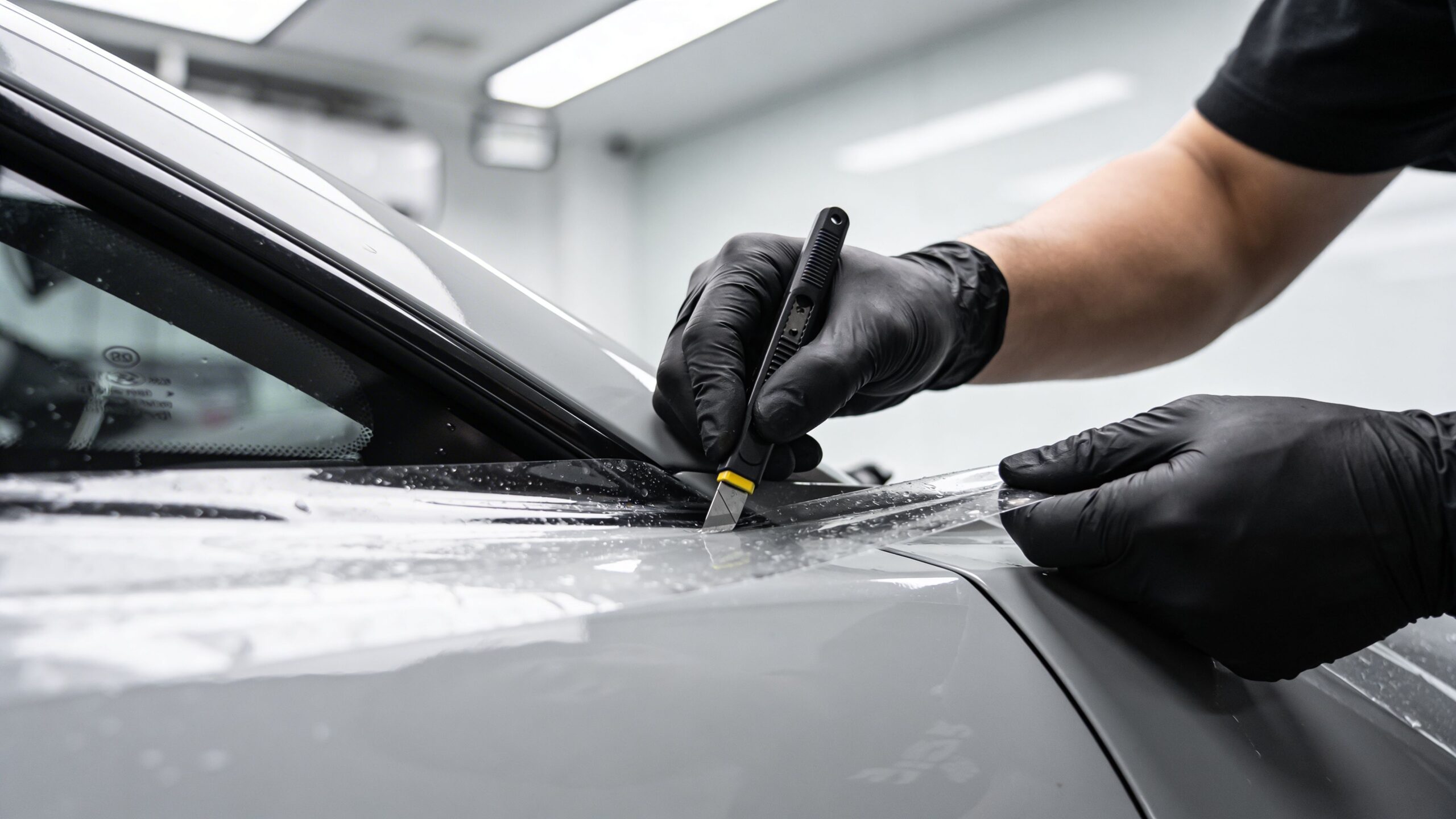
A lot of people only see the finished result. They see a glossy bonnet, a wrapped edge, and a clean bumper. They don’t see the hours spent controlling contamination, aligning patterns, and working film into shape without stressing it.
That hidden part is what separates a durable installation from one that starts lifting, silvering, or showing dirt lines around edges.
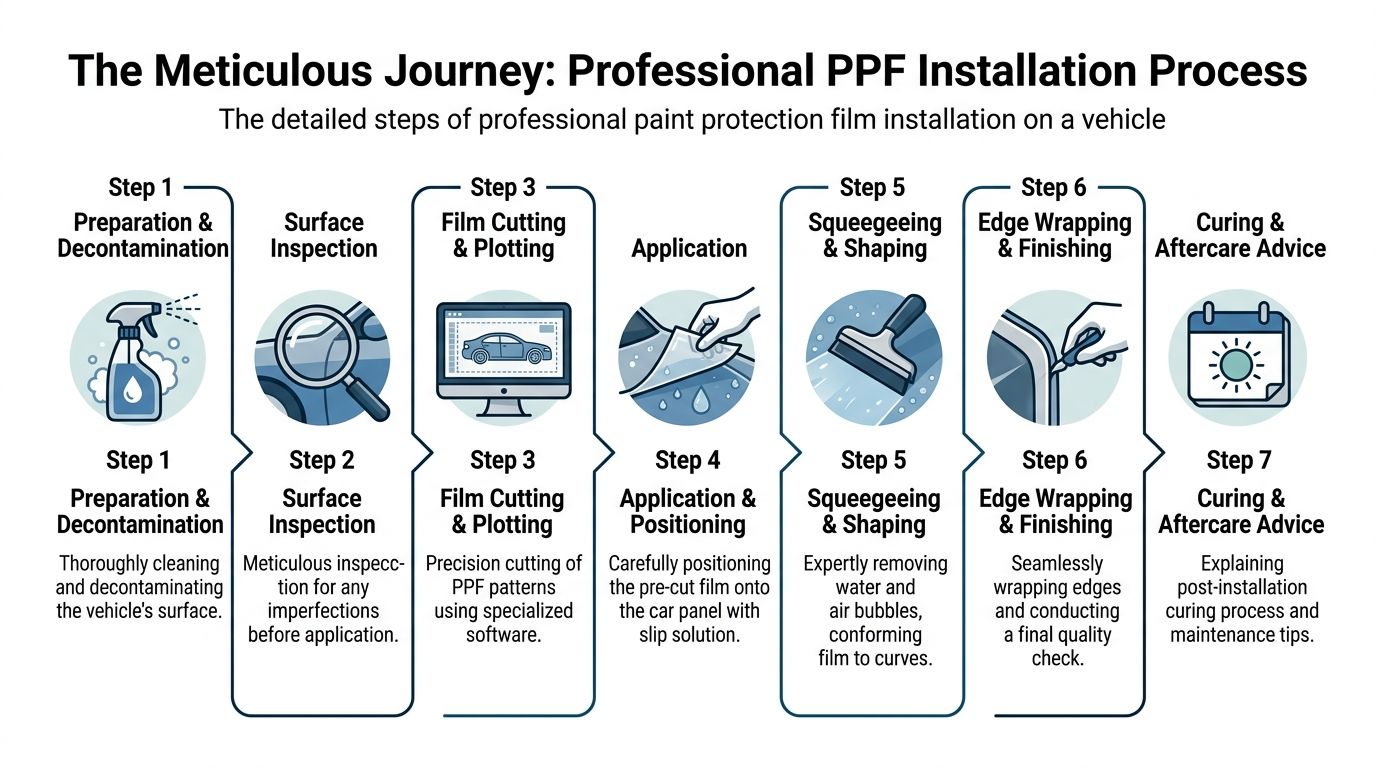
Step one is cleaning beyond what most owners expect
A normal wash isn’t enough for paint protection film installation. The paint has to be stripped of the contamination you can see and the contamination you can’t.
That means road film, wax residue, bonded fallout, bug remains, oil traces, and grime hidden in seams all have to be dealt with before film touches the panel. If that contamination stays behind, the adhesive bonds over it. Then the installer is fighting visible defects from the start.
On a vehicle that has seen an Ontario winter, this prep matters even more. Salt and grime collect around panel gaps, badges, trim edges, and lower body lines. If they bleed out during install, they can ruin an otherwise clean panel.
The environment for installation matters more than many realize
Film shouldn’t be installed in a casual bay with changing temperatures and airborne dust. Adhesive behaviour changes with temperature, and that directly affects tack, positioning, and final bond.
According to the 3M paint protection film installation guideline, optimal installation temperature is between +21°C and +26°C, and below that range adhesive tackiness can drop by up to 40%, increasing the risk of incomplete bonding and edge lifting.
That’s why proper shops control the space before the first panel is laid.
Pattern cutting is where precision starts
Modern installs usually begin with digital patterns cut to the exact vehicle panel. This removes a lot of risk compared with hand-cutting directly on the car. The fit is more predictable, and the installer can focus on alignment and finish instead of improvising every shape at the paint surface.
For a local example, the Whitby facility page shows the kind of controlled environment and service mix that matters when film work is done alongside other appearance protection services.
A good pattern still needs judgement. Some panels benefit from edge wrapping. Some need slight adjustments based on trim tolerance or previous paint work. Software helps, but the technician still decides how the film will sit and where tension can cause future problems.
Slip solution, tack solution, and hand pressure
This is the part most DIY videos make look simpler than it is.
The panel is prepared, the film is released onto a wet surface, and the installer uses a slip solution to position it. Then selected anchor points are set with tack solution. From there, the squeegee work begins. Water has to be pushed out evenly, film tension has to be managed, and curves have to be shaped without over-stretching.
A skilled technician reads the film constantly during this stage:
- Where is tension building
- Which edge needs locking first
- Whether the curve should be heated or allowed to relax naturally
- Whether trapped moisture is cosmetic or a sign of poor seating
The best installs are usually quiet. There’s no fighting the material. The technician has already planned where the film wants to move.
If you’ve ever watched someone install window privacy film like a pro, the broad concept will feel familiar. Surface prep, solution control, alignment, and squeegee technique matter there too. The difference is that automotive film has to handle far sharper curves, exposed edges, and much harsher use.
Edge work decides how invisible the install looks
Customers typically focus on the main panel. Installers focus on the edges.
That’s where weak work shows up first. A rough edge, an exposed line in the wrong place, trapped contamination near trim, or tension left on a corner will all become more obvious with time. Good edge wrapping makes the film harder to see and harder for dirt to invade.
This is also why rushed installs can look fine on delivery and disappointing later. Many failures don’t begin in the centre of the panel. They begin where the film terminates.
Final inspection and curing
Once the film is set, the vehicle still isn’t finished. Moisture pockets need to be assessed. Edges need rechecking. Complex panels need to be inspected under proper light. Then the car needs time to cure.
Owners sometimes expect immediate perfection, but fresh film goes through a settling phase. Minor moisture haze can clear as the adhesive finishes bonding. What matters is whether the installer has left the panel clean, aligned, and tension-free so the cure happens properly.
PPF Coverage Options and Typical Investment Costs
Coverage should match how you drive, what you drive, and how picky you are about visible wear. The mistake is assuming every vehicle needs a full wrap, or that a small package automatically gives the best value.
For some Whitby drivers, a targeted front package is the smart answer. For others, partial coverage can create an obvious line on a panel they inspect every weekend. The right decision depends on your habits and your tolerance for risk.
The common package types
The market usually starts with a partial front kit and scales upward. Professional PPF installation can range from $500 for a partial front kit to over $8,000 for full vehicle coverage, and material costs alone can account for 18% of the total price, according to Nova One Advisor’s U.S. paint protection film market report.
That wide range makes sense once you understand the labour difference. More coverage means more prep, more film, more wrapped edges, more complex panels, and more time spent finishing details.
PPF Coverage Options Compared
| Package | Areas Covered | Best For | Typical Investment Range |
|---|---|---|---|
| Partial front | Usually the highest-impact portion of the front end, such as parts of the bonnet, bumper, and fenders | Owners who want basic chip defence at the lowest entry point | From $500 |
| Full front | Front-facing painted areas commonly exposed to debris, typically including full bonnet, full fenders, bumper, and mirrors | Highway commuters, new SUV owners, and drivers who hate visible cut lines | Higher than partial front, varies by vehicle and pattern complexity |
| Track pack or high-impact add-ons | Selected extra zones such as rocker panels, rear wheel impact areas, A-pillars, or luggage strip | Drivers who know exactly where their vehicle gets marked up | Added on top of a front package |
| Full vehicle coverage | Painted exterior panels across the vehicle | High-value vehicles, long-term owners, and anyone who wants broad protection | Over $8,000 |
How to decide without overbuying
A few simple questions usually narrow it down quickly:
- Mostly highway driving usually points toward a full front, because that’s where damage accumulates fastest.
- City driving with frequent parking lot use may justify film on doors, cups, and loading areas even if you skip a full wrap.
- A dark or soft-looking paint finish often benefits from more coverage because small defects show sooner.
- A weekend vehicle may not need full-body film unless the owner wants the highest level of preservation.
Where people regret cutting corners
The most common regret isn’t buying too much coverage. It’s buying a package that leaves the most vulnerable section exposed, or choosing partial coverage on a vehicle where the cut line would always bother them.
If you stare at your bonnet every time you wash the car, choose the package that won’t leave you second-guessing the visible edge.
It’s also worth remembering that price reflects more than square footage. Complex bumpers, sensor-heavy front ends, and difficult body lines all increase the effort needed for a clean result. On many modern vehicles, the labour is what separates a tidy installation from a frustrating one.
For local budgeting and package detail, this guide to PPF pricing is useful because it frames the decision around coverage level instead of vague estimates.
How to Choose a Reputable PPF Installer in Whitby
A good installer doesn’t just sell film. They control variables.
That includes the bay temperature, the prep standard, the pattern quality, the trimming method, the edge finish, and the honesty of the recommendation. If any one of those is weak, the customer usually sees the problem later, not at drop-off.
Start with the questions that reveal process
A polished Instagram page won’t tell you much. The useful questions are the ones that expose how the shop operates day to day.
Ask things like:
- What film brand and line are you installing on my vehicle
- Do you use pre-cut digital patterns, bulk install, or a mix of both
- How do you handle wrapped edges on panels like bonnets and and fenders
- What does your prep process include before film touches the paint
- How do you manage dust and contamination in the installation bay
- Have you worked on this specific model before
An experienced shop should answer those cleanly, without becoming defensive or vague.
Ask about cutting technology
This matters more on newer body styles with sharper shapes and tighter tolerances. As of 2025, updated AI-driven precision cutting software can reduce installation time by 25% and decrease the risk of edge lift, according to Garvin Auto’s article on questions to ask before getting PPF installed.
That doesn’t mean every manual technique is bad. It means a serious shop should be able to explain when digital precision helps and when a technician still needs to make judgement calls by hand.
Look for these green flags in person
If you visit the shop, trust what you see.
A reputable installer usually shows a few consistent habits:
| Sign in the shop | Why it matters |
|---|---|
| Organised work area | Film work suffers when tools, liners, and towels are handled carelessly |
| Controlled bay conditions | Dust, drafts, and cold temperatures create avoidable problems |
| Clean lighting and inspection angles | Defects are easier to catch before delivery |
| Willingness to discuss limitations | Honest installers explain what film can’t hide, especially existing paint damage |
What should make you cautious
Some red flags are subtle. Others aren’t.
Be careful if a shop:
- Avoids showing edges up close
- Promises every install will look absolutely perfect on every panel
- Can’t explain the difference between a visible moisture pocket and an actual defect
- Pushes the largest package without asking how you use the vehicle
- Treats prep as a throwaway step
A trustworthy installer talks as much about preparation and limitations as they do about the finished shine.
The right shop feels methodical
The best fit for a discerning owner usually isn’t the fastest-talking one. It’s the shop that answers specifically, inspects the vehicle properly, and makes clear recommendations based on the model, paint condition, and driving pattern.
That methodical approach is what keeps PPF from becoming a cosmetic gamble. In Whitby, where weather and road conditions are hard on exposed paint, that matters more than slick sales language.
Maintaining Your PPF for a Decade of Protection
Once the film is installed, the next win comes from not disturbing it too early.
Fresh PPF needs time to settle and cure. During that period, avoid unnecessary touching, aggressive washing, and any attempt to “fix” small moisture pockets yourself. A film can look nearly finished right away while still bonding underneath.
The first stage after installation
Right after install, the smartest approach is patience.
Leave the film alone unless your installer tells you otherwise. Don’t pick at edges. Don’t press on hazy spots. Don’t assume every small visual change needs correction. Fresh film often improves as it cures.
Safe washing habits
After the curing window, gentle cleaning keeps the film looking clear and the edges cleaner for longer.
Use habits like these:
- Wash with a pH-neutral car shampoo rather than harsh cleaners
- Use soft wash media that won’t grind dirt across the surface
- Rinse thoroughly in winter so salt doesn’t sit around edges and seams
- Dry carefully with clean microfiber towels or filtered air
Automatic brush washes are the option most likely to work against the finish. Even when they don’t damage the film directly, they can abuse edges and create needless surface marking.
What to avoid
A few maintenance mistakes shorten film life faster than people expect:
- Pressure washing too closely at an edge
- Using abrasive compounds on film
- Letting bug remains or heavy contamination bake on
- Ignoring dirty lower panels through winter
Keep the surface clean, and pay attention to the edges. Most long-term problems start where contamination is allowed to sit.
Think in terms of inspection, not just washing
Check the film occasionally in direct light. Look at leading edges, mirror caps, lower rocker areas, and the front bumper. Early attention to contamination or edge issues is always easier than neglect.
If you’re comparing expected service life and what affects it over time, this article on how long PPF lasts gives useful context.
If you want paint protection film installation handled with the kind of care Whitby roads demand, Carmedics Autowerks Inc offers PPF, window tinting, fleet maintenance, collision repair, and related vehicle protection services for cars and SUVs in Durham Region. The sensible next step is to have the vehicle inspected, talk through where it sees damage, and choose coverage that fits how you drive.