


You bought the car. The paint still looks fresh, the interior still smells new, and now the windows look too bare. Most owners get to this point and want the same thing: a cleaner profile, less glare, more comfort, and some protection for the cabin.
That is where DIY tinting starts to look tempting.
It can be satisfying work if you respect the process. It can also turn into a long Saturday of contaminated glass, creased film, ragged edges, and a rear window that looks fine straight on but terrible in sunlight. The difference is rarely effort alone. It is preparation, film choice, legal awareness, and knowing when a job has crossed the line from doable to expensive.
Your Guide to a Perfect Tint Job
A good tint job does not happen because someone bought film online and watched two videos. It happens because the glass was cleaned properly, the film was chosen for the use case, and the installer understood how the window shape, seals, and local law affect the result.
Ontario adds one more layer. You are not just learning how to tint windows for looks. You are doing it under rules that matter on the road. If you are in Whitby or anywhere around the GTA, start by understanding window tinting rules in Ontario before you even choose a shade.
Two paths are in front of you:
- DIY done properly: You use decent tools, work in a controlled space, measure carefully, and accept that the rear glass may test your patience.
- DIY done casually: You cut on the car, trap dust in the film, overheat corners, and realise too late that “dark enough to look good” is not the same as legal.
The hard truth is simple. Side windows on a straightforward car are a fair DIY challenge. A curved rear windshield, frameless glass, or expensive new SUV is where a lot of home installs go sideways.
Tip: If the vehicle is new and you care about factory-clean edges, do not judge the job from six feet away. Judge it from the driver’s seat, in sun, with the window half down and back up.
The goal is not just dark glass. The goal is film that sits flat, cures clean, stays legal, and still looks right months later.
Gathering Your Tools and Choosing the Right Film
A lot of DIY tint jobs are lost before the film ever touches glass. The owner bought bargain film, grabbed a household spray bottle, and assumed careful hands would make up the difference. They do not.
Cheap tools create expensive mistakes. A weak sprayer leaves dry patches. A dull blade snags at the edge and drags the liner. A stiff card meant for vinyl can crease film or leave marks that never fully disappear. If you want factory-clean results, start with tools made for tinting.
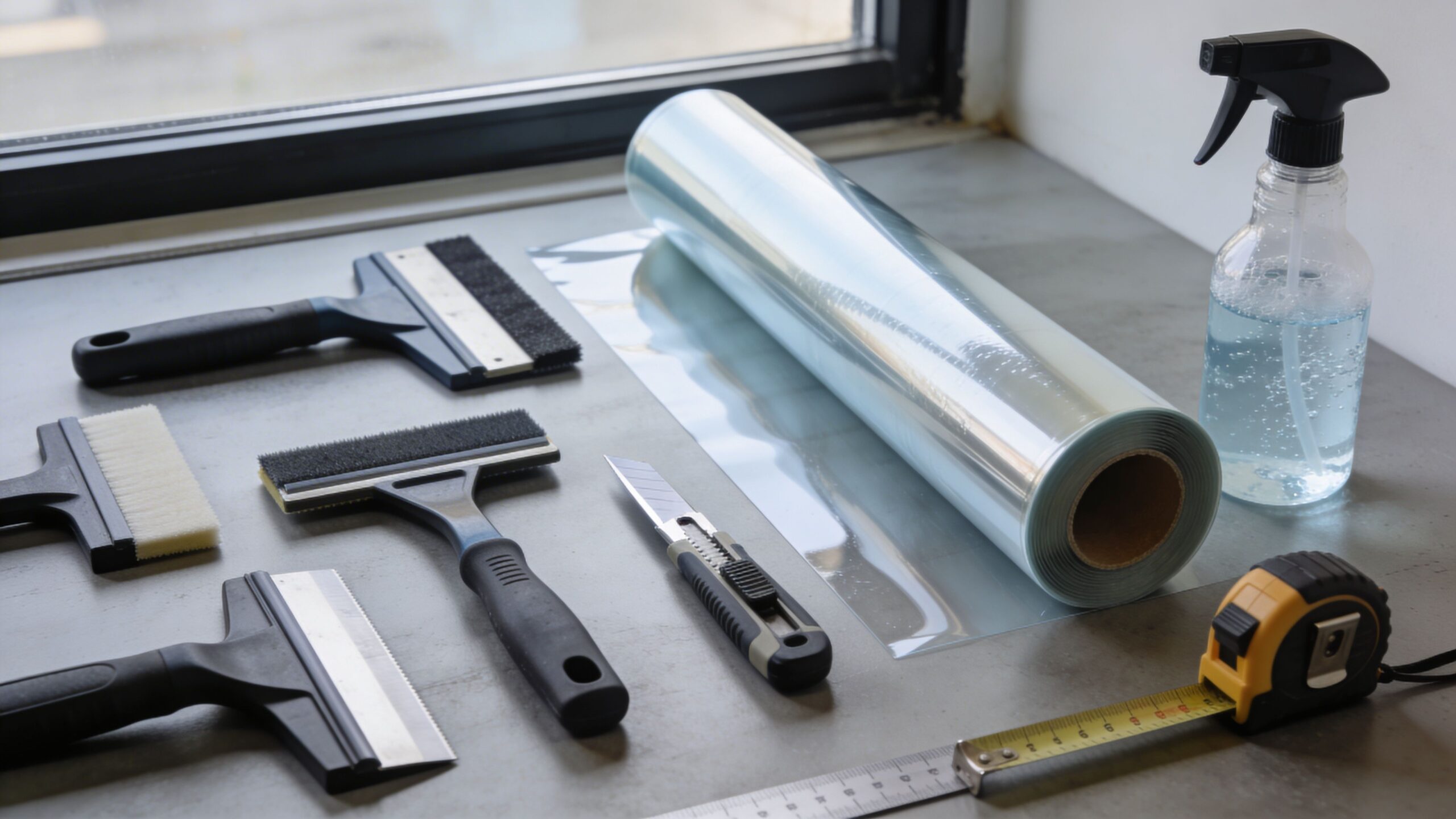
The toolkit that matters
You do not need a van full of gear. You do need the tools that control slip, pressure, heat, and clean cutting.
| Item | Professional Choice | Why It Matters |
|---|---|---|
| Spray bottle | Pressurised spray bottle with clean slip solution | Gives even coverage so the film stays movable during positioning |
| Squeegee | Hard card plus a softer finishing squeegee | One pushes out bulk water, the other works edges without scratching film |
| Knife | Stainless snap-off or detail knife with fresh blades | Sharp blades trim cleanly. Old blades tear film and snag at tight corners |
| Cloths | Lint-free microfibre towels | Household towels shed fibres that show up under the film |
| Heat gun | Variable heat gun | Needed for shrinking curved rear glass and settling stubborn fingers |
| Glass prep tools | Scraper, scrub pad, and detailing towel | Removes residue and debris that the eye misses |
| Film handling aid | Peel board or clean sheet glass | Helps control the adhesive side during transfer |
| Measuring tool | VLT meter | Useful if you want to check light transmission instead of guessing by appearance |
One extra item belongs on the bench even though most DIY guides skip it. A proper glass-cleaning setup. Dirty towels and the wrong cleaner can leave residue that fights adhesion, so it helps to review the best way to clean glass for a flawless finish before you start building your kit.
Film choice decides more than colour
New installers obsess over shade percentage. Installers who have ruined a few sheets care more about how the film handles, how clear it looks from the driver’s seat, and how well it survives summer.
Dyed film is the budget entry point. It gives the darker look people want, but it usually has the weakest heat rejection and the shortest visual lifespan. Purple fade, haziness, and a flat-looking finish are common complaints on cheaper dyed products.
Carbon film is a sensible middle ground. It looks better, stays more colour-stable, and usually handles better on the glass than bargain dyed film. For a daily driver where budget still matters, carbon is often the point where value starts to make sense.
Ceramic film costs more for a reason. The International Window Film Association explains that quality automotive film can reject heat, filter UV, and improve comfort without relying on very dark shade levels (IWFA automotive films overview). That matters in Ontario, where plenty of drivers want heat control but still need to stay on the right side of legal visibility.
The other trade-off is install difficulty. Better film usually shrinks cleaner, has better optical clarity, and is less likely to crease from a small handling mistake. Bad film can make a decent installer look sloppy.
Match the film to the car and the risk
If the car is older and you are learning, a decent carbon film is usually the smarter starting point. It is less painful to waste if a door window goes wrong, and it still gives a respectable result.
If the car is new, expensive, or fitted with a steep rear windshield, cheap film is false economy. One bad shrink session, one cut too close to a defroster line, or one contaminated install can cost more than the money you thought you saved. That is the point where I tell people to slow down and compare automotive window tint film options before ordering the darkest roll they can find.
Ontario law should shape the choice too. Film type and shade are not just style decisions. They affect visible light transmission, night driving visibility, and whether the finished job draws police attention. If you are guessing on darkness by eye, you are taking a risk you do not need to take.
What I would buy
For a long-term daily driver, I would choose ceramic if the budget allows it. It gives the best mix of clarity, comfort, and long-term performance.
For a first DIY attempt on a less valuable vehicle, I would choose a quality carbon film and keep the shade conservative. It is easier to live with, easier to learn on, and less likely to leave you with a car that looks good only from twenty feet away.
The hard truth is simple. Good tint starts with film that behaves properly and tools that do not fight you. If either one is subpar, your technique has to be perfect to compensate. For most first-timers, it will not be.
Preparing Your Windows for a Flawless Finish
You can buy decent film, decent tools, and still end up with a tint job that looks terrible by sunset. The usual cause is not the squeegee pass. It is the prep.
I see the same pattern all the time. A car owner wipes the glass until it looks clear, sprays the film, gets the panel on, and then wonders why there are specks, fingers, or lifting corners baked into the finish. Tint does not hide dirt. It magnifies it.
Prep decides whether the install has a chance
Clean-looking glass is not clean enough for tint. The contamination that ruins an install is usually the stuff you barely notice on dry glass. Fine lint, grit in the top seal, old adhesive near the edges, silicone residue from interior dressings, even the dust sitting on the parcel shelf behind the rear window.
That is why experienced installers treat prep like part of the install, not a quick chore before the interesting part starts.
Start with the work area, not the window
A windy driveway is a bad place to learn. Dust keeps landing on wet glass, the film picks it up, and now you are trying to decide whether to live with a defect or peel the piece off and start over.
Set yourself up properly first:
- Work indoors if possible. A garage is far better than open air.
- Get the cabin clean. Vacuum the seats, dash, rear deck, and door tops before you spray anything.
- Use clean microfibres only. Old towels and shop rags shed lint.
- Keep your hands clean. Adhesive picks up skin oil fast, especially on the final handling pass.
Temperature matters too. Cold glass slows everything down and can make the film feel stiff. Direct sun does the opposite and dries your slip solution too quickly. Moderate conditions give you more control, which is what beginners usually lack.
Clean the glass in the right order
Rushing the cleaning sequence creates edge contamination, and edge contamination is what makes a DIY job look amateur.
Use this order:
- Wash the vehicle first. Dirt trapped around the frames and weatherstripping will run onto the glass once it gets wet.
- Lower the side windows slightly. Clean the top edge of the glass before you do anything else.
- Spray with an ammonia-free cleaner or your install solution. Harsh cleaners can create other problems inside the car.
- Scrape bonded contamination carefully. A fresh razor works on standard glass, but use common sense around rear defroster lines and never get careless near edges.
- Wipe and squeegee the glass repeatedly. One wipe is rarely enough.
- Finish dry, then inspect from multiple angles. A low side angle shows debris that disappears head-on.
If you want a good outside reference on cleaning technique, this guide on the best way to clean glass for a flawless finish matches the standard that good tint work demands.
The spots that cause trouble
The centre of the glass is usually fine. The trouble is around the perimeter.
Pay close attention to these areas:
- Top seals and upper corners. Debris drops from there as soon as the glass moves.
- Felt channels inside the door. They hold years of dust and feed it straight onto fresh film.
- Bottom edges of roll-down windows. Road grime and old residue collect there.
- Rear glass around defroster lines. Dirt sits along the lines and catches your eye once the tint cures.
This is also where Ontario reality matters. If you are trying to stay within legal tint limits and avoid attention from police, a clean install matters almost as much as the shade itself. Dirt at the edges, silvering, and peeling corners make any tint look cheap and suspicious. Sloppy work gets noticed.
Old film changes the job completely
If the car already has failing tint, do not install over the remains of the old adhesive. That shortcut always comes back to bite you. The new film will sit unevenly, edges will not bond properly, and any contamination left behind will show through.
Strip the old material properly first. If you need the process, use this guide on removing auto window film properly before you even think about cutting new film.
One honest warning. Rear windows with stubborn glue or delicate defroster lines are where many DIY jobs go sideways. If the car is valuable, the rear glass is steep, or the old film is baked on hard, paying a pro can be cheaper than replacing damaged lines or wasting a full roll.
Check the glass one last time
After the main cleaning, wet the glass again and squeegee it dry. Water exposes contamination that dry glass hides. If you still see specks, stop and fix them now.
That extra ten minutes is the difference between a finish you are proud of and one you keep explaining away.
Cutting and Applying the Window Film
This is often the stage people envision when they search how to tint windows. It is also where impatience does the most damage.
The film needs to be cut cleanly, transferred without contamination, positioned without folding onto itself, and squeegeed in a sequence that moves water and air with purpose. If you rush any of that, the rest of the job becomes repair work.
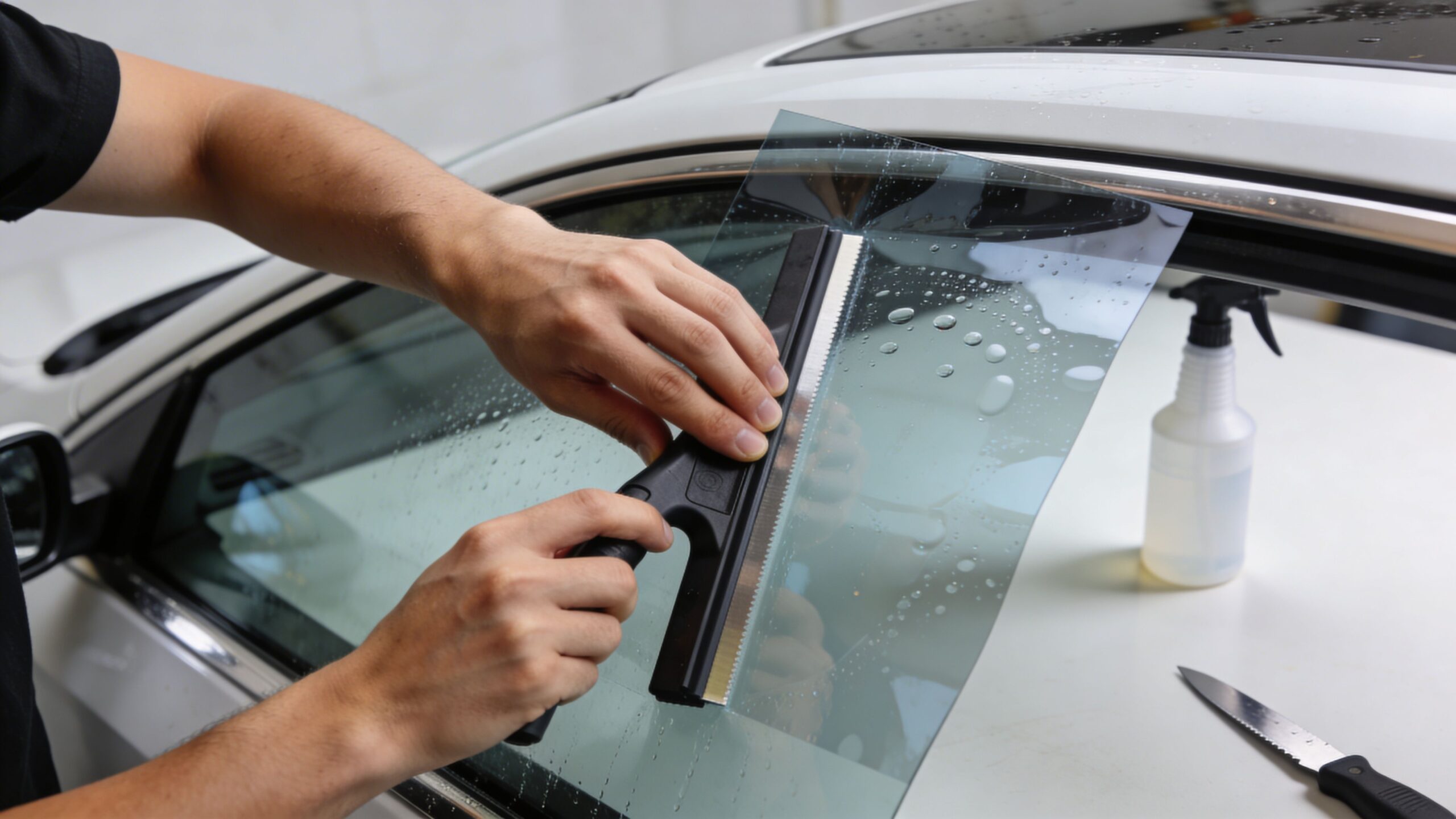
Start with the outside pattern
Most installers shape the film on the outside of the glass first, then move it to the inside for the final install. The outside glass acts as a clean forming surface.
For flat or mildly curved side windows, the process is straightforward:
- Spray the outside glass so the film sits in place.
- Lay the film with the liner side oriented correctly for transfer.
- Oversize the piece enough to handle it without touching the final trimmed edge.
- Trim to shape with control, not speed.
Some DIYers prefer a paper template. That can work on side glass if you are careful. On more complex glass, especially rear windows, direct shrinking on the outside is usually more accurate.
Mix a proper slip solution
You need enough slip to position the film, but not so much that the adhesive floats forever. A balanced install solution lets the film move when you need it to and lock down when you start squeegeeing.
The rule is simple. If the film grabs instantly, you do not have enough lubrication. If it skates around and never beds down, you used too much soap or too much liquid.
Use clean water. Keep the bottle clean. Dirty solution is just another way to install contamination.
Side windows first if you are learning
If this is your first attempt, start on a rear side window. It is usually more forgiving than the front roll-down glass or the rear windshield.
A practical sequence looks like this:
- Clean the inside glass again just before install.
- Wet the adhesive side of the film as the liner comes off.
- Wet the inside glass.
- Transfer the film gently. Do not let the adhesive side fold onto itself.
- Position the film with even top and side alignment.
- Tack the centre lightly.
- Squeegee outward in controlled passes.
- Finish edges last.
The biggest beginner mistake is trying to force all the water out in one go. That usually shifts the film, creates creases, or leaves fingers near the edge.
Use the H-pattern instead of random swipes
A proper squeegee pattern keeps the film stable.
Start by setting a centre line and then create an H-pattern. That gives the film structure before you chase out the rest of the moisture. Once the centre is stable, work from the middle toward the edges in overlapping passes.
Why this works:
- It locks the film before full pressure is applied
- It prevents the top edge from wandering
- It reduces trapped pockets in the corners
- It gives you a repeatable system instead of guesswork
Keep the squeegee angle consistent. Let the tool do the work. Pressing harder does not fix poor direction.
Roll-down glass needs extra discipline
Front door glass is where many DIY jobs stop looking professional.
The challenge is not just the film. It is the top edge and the seal. To get a clean result, the film often needs to sit just below the edge in a way that looks flush once the window is up. Too high and the film catches. Too low and you get an obvious light gap.
A few rules help:
- Use fresh blades: Top-edge trimming punishes dull knives immediately.
- Do not contaminate the lower channel: Debris from the seal gets pulled under the film when the window moves.
- Keep fingers off the adhesive: Corner prints are easy to leave and impossible to hide.
Rear windshield is where pros earn their keep
A curved rear window is not just a bigger side window. It is a different job.
Flat film does not naturally sit on compound curves. It forms fingers. Those fingers have to be shrunk with heat in a controlled way, or they turn into creases that stay visible forever.
Here is the practical version of rear glass shrinking:
- Lay the film on the outside of the rear glass with slip solution.
- Anchor the centre section.
- Observe where the fingers rise.
- Use the heat gun with movement, not fixed heat on one spot.
- Shrink the fingers gradually toward the glass.
- Repeat until the film lies flat enough to transfer inside.
Too much heat too quickly distorts the film. Too little control leaves stubborn fingers that come back during install.
Tip: If the rear windshield has strong compound curves and you have never shrunk film before, this is the point where hiring a pro often costs less than re-buying material.
Wet handling beats dry handling
Dry handling causes static, dust attraction, and premature sticking. Keep the film and glass wet enough to control them. Professionals are not soaking everything by accident. They are reducing friction and buying positioning time.
That said, flooded panels and dripping interiors create their own problems. Protect the trim. Work neatly. If water gets into switches, speakers, or door trim, that is on the installer.
Know what good application feels like
A correct install has a rhythm to it:
- The film slides but does not skate uncontrollably
- The centre tacks cleanly
- The squeegee pushes water in defined channels
- The top edge settles without chatter
- The corners tighten rather than bunch
A bad install feels nervous. The film catches unexpectedly, the edge keeps lifting, the squeegee leaves trails, and every correction creates a new issue.
When to stop and reset
Not every mistake should be “worked through”.
Pull the film and reset if:
- You trapped visible debris in the main viewing area
- The film folded onto itself and left a hard crease
- Alignment is off enough that trimming will look uneven
- The glass dried too much and the film grabbed in the wrong place
Trying to save bad placement usually makes the final job look worse. One of the hardest skills in tinting is knowing when the correct move is to stop forcing it.
Practical honesty on DIY success
A patient owner can absolutely tint some windows at home. Plenty do.
But there is a reason shop installs look calmer. Professionals rely on controlled environments, better film handling habits, and tools that remove guesswork. At Carmedics Autowerks Inc, for example, window tinting is one of the services offered for vehicles in Whitby, alongside other appearance and protection work. That kind of shop setup matters most when the glass is curved, the vehicle is new, or the owner wants factory-level edge work rather than “good enough from across the lot”.
Trimming Finishing and Fixing Common Mistakes
The film is on. That does not mean the job is finished.
The last part is what separates an acceptable install from one that looks deliberate. Trimming, edge finishing, and troubleshooting decide whether the film stays down, looks clean, and survives daily use.
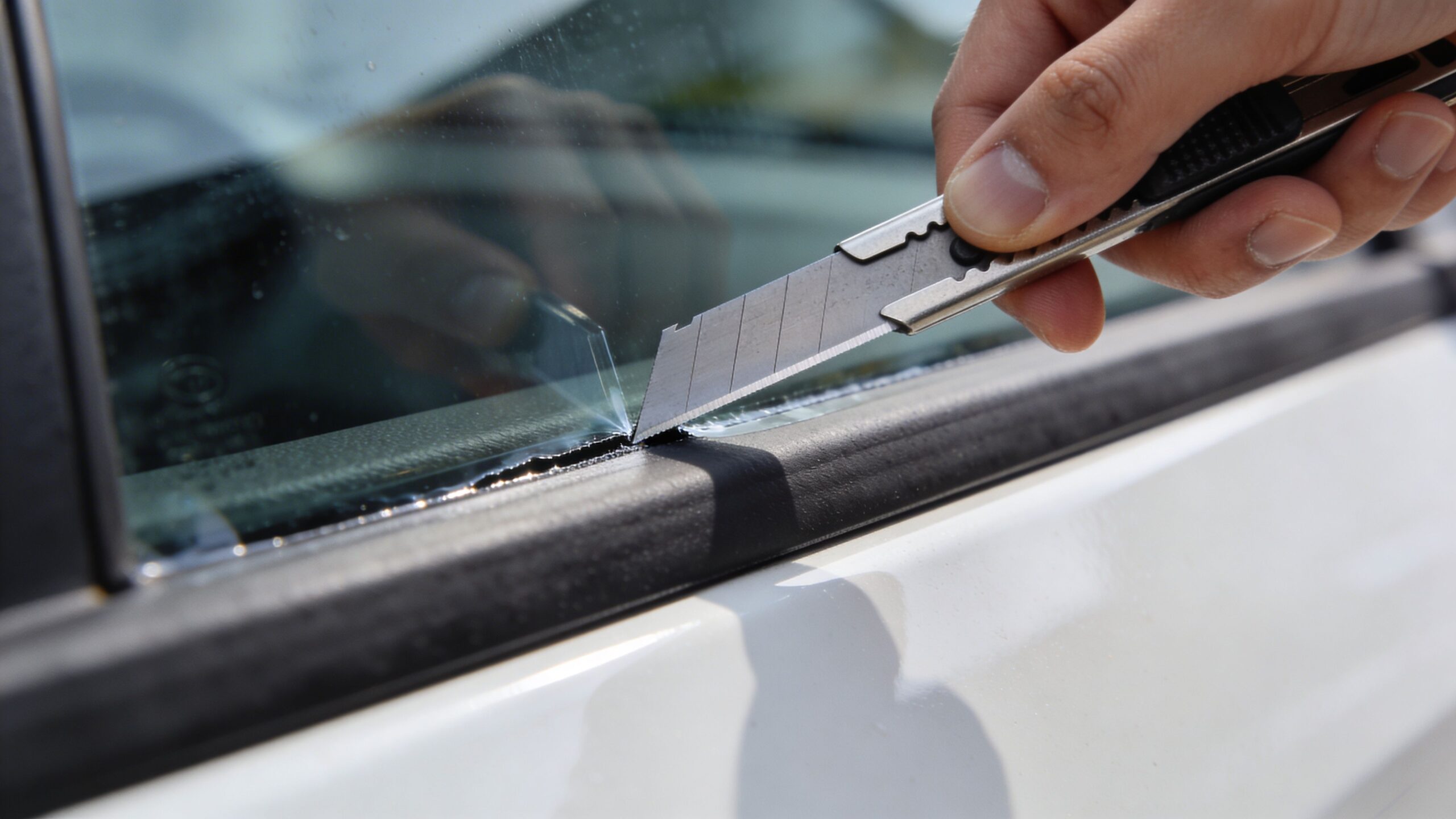
Trim for a factory look
Your blade needs to be fresh. Not “still usable”. Fresh.
A proper trim follows the seal with confidence and leaves either a micro-gap or a nearly flush finish that looks intentional. Jagged cuts happen when the blade drags, the hand hesitates, or the film shifts because it was never fully set.
After trimming:
- Squeegee the edges again
- Wipe away expelled moisture
- Check corners from inside and outside
- Raise and lower side glass carefully only after the film has settled enough to avoid edge disturbance
What bubbles mean and when to leave them alone
Not all bubbles are the same.
Water pockets often look milky or soft. Small ones may settle as the film cures.
Air bubbles have sharper edges and usually point to poor squeegee technique or contamination.
Debris bumps look tiny and stubborn because they are tiny and stubborn. If a speck is under the film, it will not cure away.
The right response depends on the defect:
- Small moisture haze: Leave it alone initially
- Obvious trapped dirt: Accept that the film may need to come off
- Large edge pocket: Rework immediately before the adhesive sets further
Creases are usually game over
A hard crease is not a bubble. It is damage.
Sometimes a light finger on an unshrunk area can be corrected with heat and technique. A sharp line caused by folded film usually stays visible no matter what you do after. This is why film handling matters so much during transfer.
Low-angle haze is real
One of the most misunderstood complaints is low-angle haze. This is the cloudy look some films show when you view the glass from a shallow angle.
According to Tint Academy, haze in budget dyed or metallic films can sit around 5 to 10%, while high-quality nano-ceramic films can reduce that to less than 1%. In climates like Whitby’s, with humid summers and freeze-thaw cycles, that haze can worsen twice as fast over the film’s lifespan (tintacademy.store).
That matters because many owners blame the installer for a problem that originates from film quality. Good technique helps, but it cannot turn cheap film into optically clean film.
A quick troubleshooting list
- Edges lifting: Usually contamination, poor final squeegee work, or trimming too close in a stressed area
- Silvering near dots or matrix borders: Common on tricky glass edges where the surface is uneven
- Cloudy look after install: Could be normal moisture haze, or it could be poor film quality
- Visible light gap at the top edge: Trimming or alignment issue
- Dust specks everywhere: Workspace problem as much as a cleaning problem
If the film is badly installed or old and failing, full removal is often smarter than patching. This guide on tinted window film removal is useful if you need to strip a failed DIY attempt before starting over.
Key takeaway: If the defect is in the adhesive layer, trapped under the film, or baked into the material quality, no amount of rubbing from the outside will fix it.
DIY vs Professional The Final Verdict and Ontario Law
A lot of DIY tint articles stop at technique. That is not enough in Ontario.
You can install film neatly and still end up with an hideous front window. You can buy a premium film and still fail because the final Visible Light Transmission, or VLT, is wrong once the film sits on factory glass. That is why legal knowledge matters just as much as hand skill.
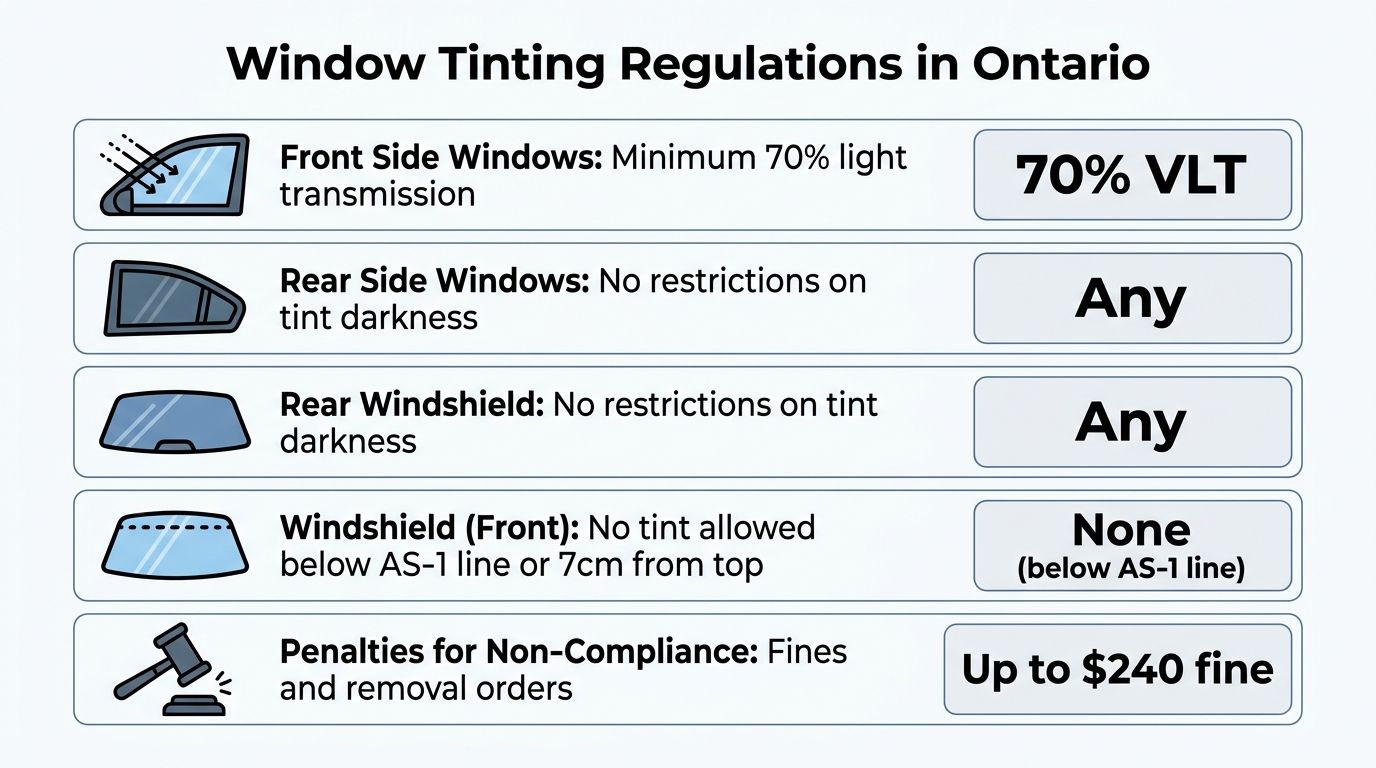
What Ontario law means for your car
In Ontario, front side windows must allow at least 70% VLT, and fines for violations range from $85 to $500. Provincial police data also shows about 12,500 tint violation tickets were issued between 2018 and 2023, with 28% concentrated in Durham Region (carmedicsautowerks.com).
That local concentration matters if you drive in Whitby and the surrounding area. Enforcement is not theoretical.
The practical issue is this: factory glass already has its own VLT. Once you apply film, the final result is darker than the film box alone suggests. If you do not account for that, you can break the law without meaning to.
For a closer breakdown of compliant levels, legal window tint percentage in Ontario is worth checking before you buy film.
When DIY makes sense
DIY is reasonable when:
- You have a controlled workspace
- The vehicle has simpler side glass
- You are willing to practise on less critical windows first
- You understand the legal limit before choosing film
For some owners, that process is part of the fun. If you enjoy careful work, can accept a learning curve, and are not gambling with an expensive new vehicle, it can be a worthwhile project.
When a professional is the smarter decision
A pro install is usually the smarter move when any of these apply:
- The rear windshield has strong curves
- You want clean top edges on roll-down glass
- The car is new and you will notice every defect
- You do not own the proper tools
- You are unsure how to confirm legal VLT on the front windows
This is the part many owners miss. DIY is not just film cost. It is film plus tools, plus waste, plus time, plus the cost of redoing bad pieces, plus the risk of legal trouble if the front glass ends up too dark.
That does not mean every owner should avoid DIY. It means you should be honest about the standard you expect. If your benchmark is “good enough in the driveway,” DIY may satisfy you. If your benchmark is “looks factory, tests legal, and stays clean through the seasons,” professional installation often delivers better value.
The blunt verdict is simple. Learn how to tint windows so you understand the craft. Then decide whether your car is the right place to practise it.
If you want a tint job that is clean, legal, and matched to Ontario driving conditions, Carmedics Autowerks Inc offers window tinting services in Whitby for cars and SUVs, along with PPF, collision repair, and general auto care. If you are weighing DIY against a professional finish, a proper assessment of your vehicle’s glass, film choice, and legal VLT target is the right place to start.