

You’ve just bought the car you’ve wanted for a while. Maybe it’s a new SUV, a sport sedan, or a pickup you plan to keep spotless. Then real Whitby driving starts. A week on the 401, a few trips across Durham, one stretch of winter slush, and you’re already scanning the front bumper for chips and the cabin for sun fade.
That’s where most owners start looking for a PPF and tint shop Whitby drivers can confidently trust. Not just a place that makes the car look better on pickup day, but a shop that understands what local roads, salt, glare, and daily commuting do to a vehicle over time.
Paint Protection Film and window tint solve different problems. One protects your paint from impact and surface abuse. The other protects the cabin, improves comfort, and cuts glare. When they’re chosen well and installed properly, they work together like a good winter tyre setup and an all-wheel-drive system. Different jobs, better result.
Your Definitive Guide to Vehicle Protection in Whitby
If you drive in Whitby, vehicle protection isn’t a vanity project. It’s practical ownership. The roads around Durham can be hard on paint, especially if you spend time on the 401 or 407 where loose debris gets kicked up constantly. Add Ontario winters, road salt, slush, and freeze-thaw cycles, and even a well-kept vehicle can age faster than it should.
Most drivers who start researching protection are trying to answer three questions. What works. What’s worth paying for. What won’t create problems later.
The two upgrades that matter most
For modern daily drivers and enthusiast-owned vehicles, two upgrades come up again and again:
- Paint Protection Film: A clear exterior film applied to painted panels to help defend against chips, light scratches, bug splatter, and grime.
- Window tint: A film applied to glass to reduce glare, improve privacy, help with cabin comfort, and shield the interior from UV exposure.
They’re often lumped together because the same shops install both, but they do very different jobs.
Good protection should disappear into daily driving. You shouldn’t have to think about it every time a truck throws grit at your bumper or the summer sun bakes your dashboard.
Why local context changes the decision
Advice written for a dry climate or a low-traffic area doesn’t always translate well here. Whitby drivers deal with long highway runs, messy winters, bright snow glare, and road spray that seems to stick to everything. That changes what matters.
A proper local decision means looking at film quality, installation method, legal tint limits in Ontario, and one detail many shops barely discuss: how PPF and tint interact on the same vehicle when sequencing and fitment matter.
Understanding Paint Protection Film Your Car's Invisible Armour
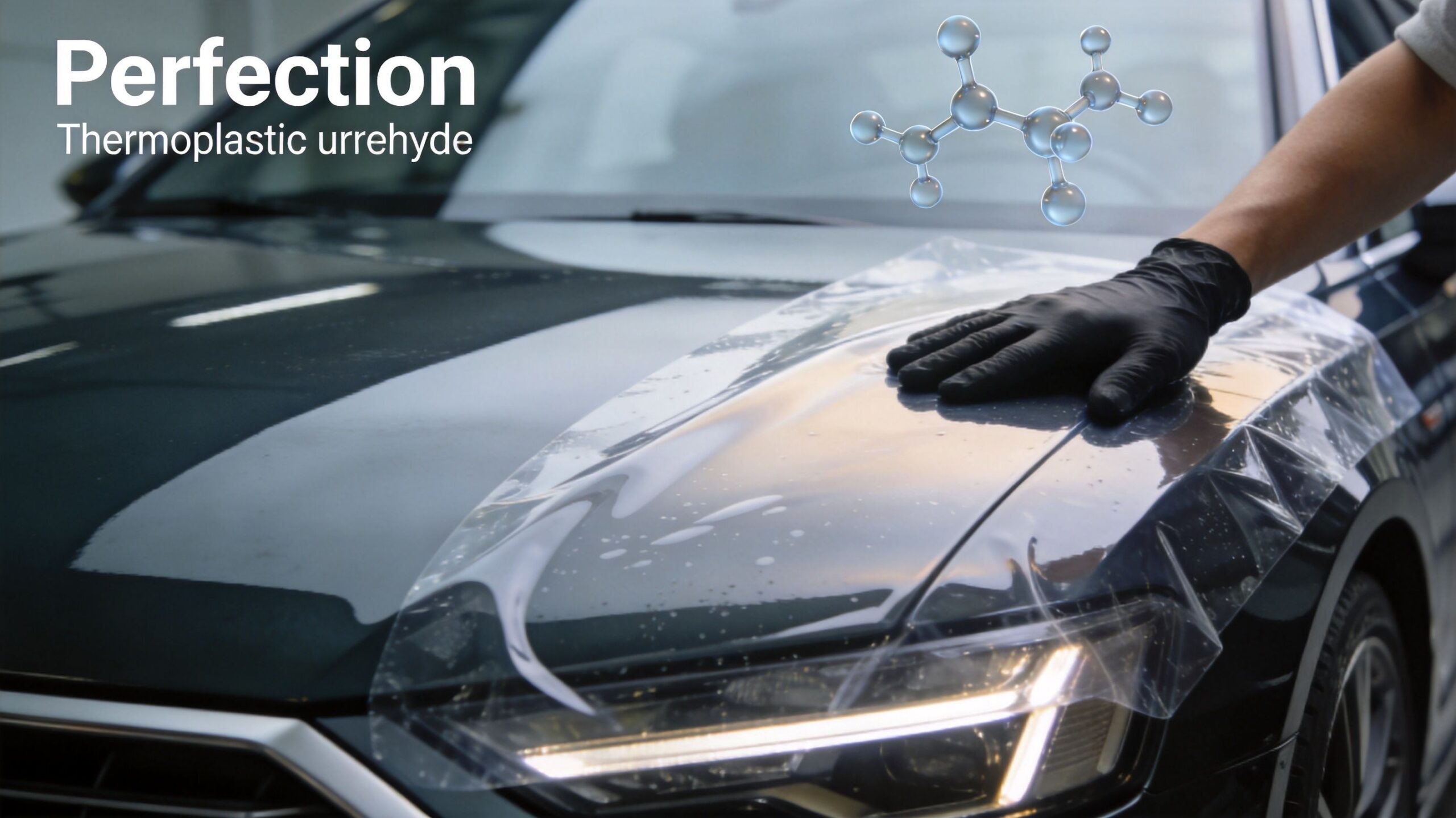
The easiest way to understand Paint Protection Film, or PPF, is to think of it like a premium screen protector for your paint. It’s clear, it sits on top of the finish, and it takes the abuse so the factory paint doesn’t have to.
What PPF is and what it actually does
Most premium PPF is a thermoplastic urethane film. That sounds technical, but the idea is simple. It’s a flexible, transparent barrier designed to absorb minor impacts and surface wear before those marks reach the paint.
That matters most on the high-hit areas:
- Front bumper
- Leading edge of the bonnet
- Fenders
- Mirror caps
- Rocker panels
- Behind door handles
- Loading ledges on SUVs
If you’ve ever seen a brand-new front bumper covered in tiny pinhead chips after one winter, you already understand why people install it.
Why Whitby drivers care about front-end protection
Around Whitby, the biggest enemy usually isn’t some dramatic accident. It’s repeated small impacts. Sand, salt, gravel, and road debris build damage one hit at a time. According to Carmedics Autowerks in Whitby, the shop has applied advanced PPF to over 450 vehicles, and clients have reported an estimated 89% reduction in new paint chip damage in local driving conditions common around highways like the 401 and 407.
That kind of result lines up with what owners notice in real life. The front of the car stays cleaner and less battered.
The damage PPF is meant to handle
PPF isn’t magic, and it won’t make the car invincible. But it’s very good at dealing with the type of wear that slowly ruins the look of a newer vehicle.
| Common issue | How PPF helps |
|---|---|
| Stone chips | Takes the hit before the paint does |
| Light scratches | Reduces direct contact with the painted surface |
| Bug splatter | Makes cleanup easier and helps limit staining |
| Bird droppings | Adds a sacrificial layer above the clear coat |
| Road grime | Limits direct abrasion during washing |
Practical rule: If a panel gets blasted by airflow or debris first, that’s usually the panel worth protecting first.
What people mean by self-healing
This is the part that confuses a lot of owners. When installers say modern film is self-healing, they don’t mean torn film repairs itself like science fiction. They mean light surface marring in the top layer can relax and become less visible with warmth.
Think about a faint wash mark in a soft top layer. Heat from the sun or warm water can help that surface smooth back out. It’s one of the reasons a good film keeps looking tidy after normal use.
Why factory paint matters so much
A repaint can look decent. It can also miss the exact texture, depth, or finish of the original factory surface. PPF helps preserve what came on the vehicle from new. For enthusiasts, that matters for appearance. For owners thinking long term, it matters for resale confidence too.
Computer-cut installation also makes a difference. A good installer uses software-cut patterns rather than trimming blindly on the vehicle, which helps achieve a cleaner fit with less risk and a more integrated finish.
Exploring Window Tint More Than Just a Darker Look
A lot of people still think tint is mostly about style. It isn’t. The look is part of it, sure, but modern window film is really a comfort and protection product.
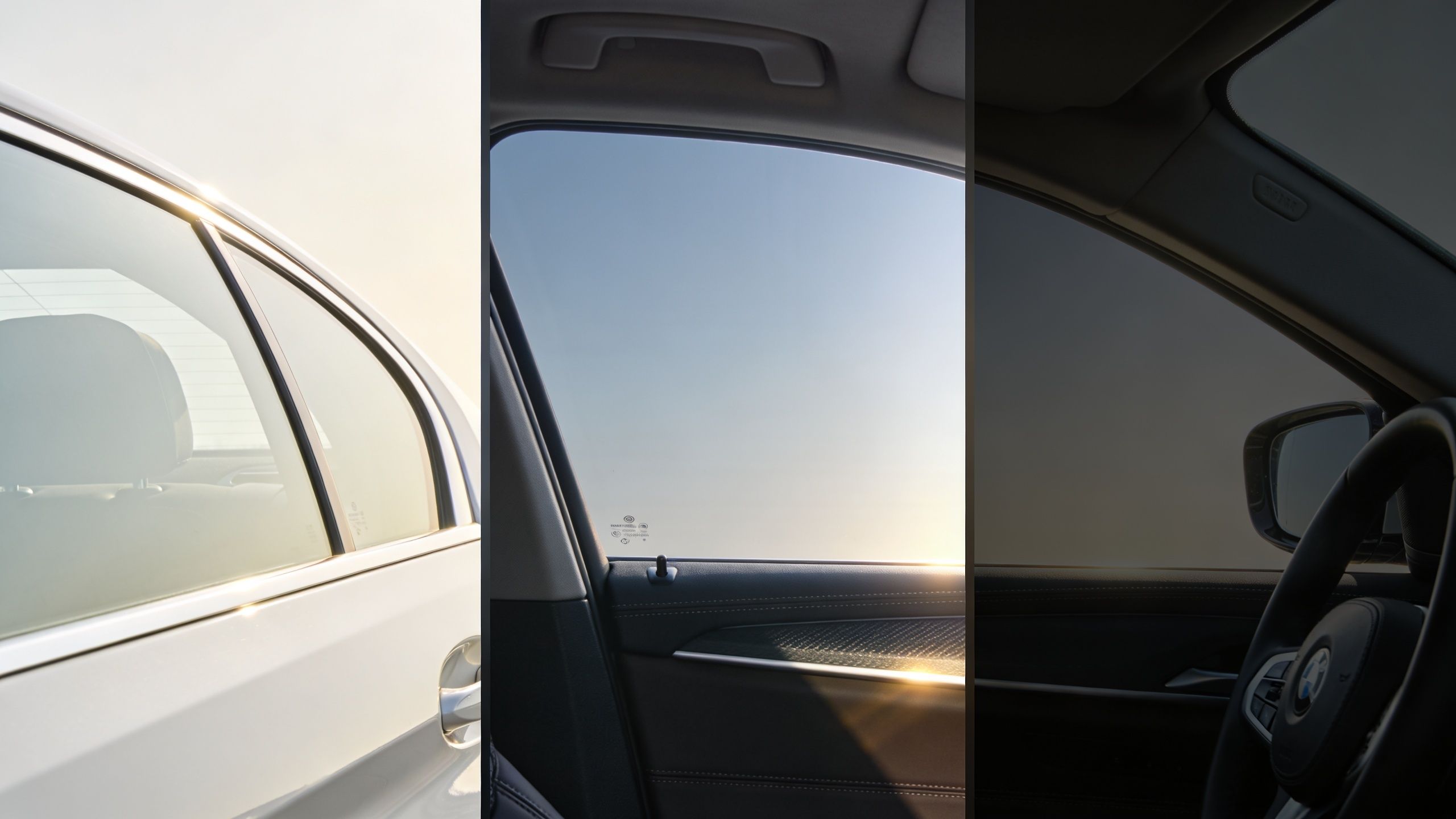
On a hot day in Whitby, you notice tint the moment you open the door. The cabin feels less harsh. The steering wheel and seats are easier to live with. On bright winter mornings, glare is less fatiguing. That’s why serious owners don’t treat tint as an afterthought.
For a useful breakdown of film shades and what they look like on real vehicles, this guide to levels of window tinting is a practical starting point.
The main types of tint film
Not all tint is built the same. If you only compare darkness, you miss the part that affects long-term satisfaction.
Dyed film
Dyed film is usually the entry-level option. It creates a darker appearance and can improve privacy, but it’s generally chosen more for looks than top-tier performance.
It can still make sense for some owners. Just be aware that lower-end dyed films tend to be the first place where people see fading or a less refined finish over time.
Carbon film
Carbon film sits in the middle. It usually offers a more premium appearance and better overall performance than basic dyed film. Many owners like it because it gives a clean look without stepping into the highest-cost category.
It’s a sensible middle-ground choice for someone who wants more than cosmetics but isn’t chasing the most advanced film construction available.
Ceramic film
Ceramic tint is what many enthusiasts and daily drivers end up wanting once they understand the difference. It’s built for performance, especially when heat rejection and cabin comfort matter.
The big point is this: you don’t always need the darkest film to get a better driving experience. A higher-grade ceramic film can make the cabin feel noticeably more manageable while keeping visibility more comfortable than an overly dark, low-grade tint.
Why tint matters beyond appearance
A good tint package can improve several parts of day-to-day driving:
- Heat control: Helps reduce that parked-in-the-sun oven effect.
- UV protection: High-quality films can help protect occupants and interior materials.
- Glare reduction: Useful during sunrise, sunset, wet-road reflections, and winter brightness.
- Privacy: Keeps valuables and cabin contents less visible.
- Security feel: A less visible interior tends to attract less casual attention.
On a commuter vehicle, tint changes how the car feels every single day. That’s why owners who were unsure at first often say they’d never go without it again.
The practical side for families and enthusiasts
If you’ve got leather seats, a dark dashboard, or a vehicle that spends time parked outside, tint helps preserve the cabin environment. If you’re an enthusiast, it also finishes the look of the car properly.
What confuses buyers is that darkness and performance aren’t the same thing. A film can look dramatic but offer less refined performance than a higher-quality product with a more measured shade. That’s why film type matters more than people expect.
PPF vs Window Tint A Head-to-Head Comparison
The most common misunderstanding is that owners think they have to choose between PPF and tint. You don’t. They aren’t rivals. They protect different parts of the vehicle from different problems.
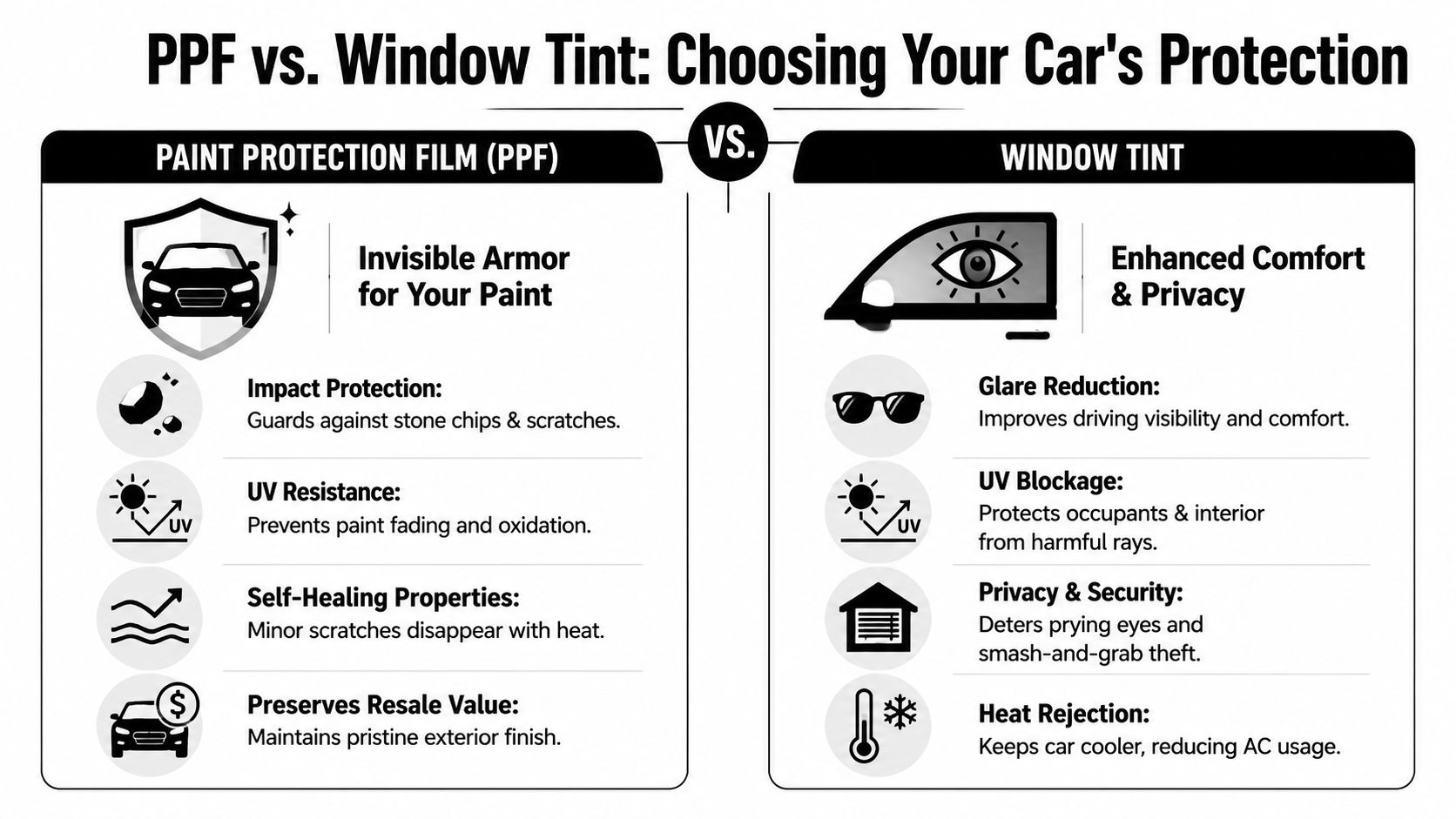
One protects painted panels from physical abuse. The other manages light, heat, glare, privacy, and interior wear through the glass. When people search for a PPF and tint shop Whitby locals use for both, what they usually want is one place that understands the full protection plan, not two separate products sold in isolation.
PPF vs Window Tint at a Glance
| Feature | Paint Protection Film (PPF) | Window Tint |
|---|---|---|
| Primary job | Protects painted surfaces from chips and surface damage | Improves cabin comfort, glare control, privacy, and UV shielding |
| Installed on | Exterior painted panels | Vehicle glass |
| Material | Clear urethane film | Window film in dyed, carbon, or ceramic variants |
| Main concern solved | Impact and abrasion | Solar load and visibility comfort |
| Best for | Front-end preservation, high-wear areas, resale-minded owners | Daily comfort, cabin protection, privacy, cleaner appearance |
| Visible result | Usually near-invisible when done well | Intentional shaded appearance |
When PPF makes the biggest difference
PPF tends to matter most for owners who:
- Drive highways often
- Own a newer vehicle with soft or dark paint
- Want to preserve factory finish quality
- Notice every chip on the front bumper
- Plan to keep the car looking sharp for years
If that sounds like you, PPF is less of a cosmetic splurge and more of a wear-management tool.
When tint is the smarter first step
Tint often rises to the top when you care about what happens inside the vehicle while you drive it.
That could mean:
- battling summer cabin heat,
- reducing glare on long commutes,
- keeping the interior from getting hammered by sun,
- or wanting more privacy without changing the vehicle’s core finish.
Tint affects your driving experience immediately. PPF often shows its value over time.
Why many owners end up doing both
A simple example helps. Say you own a new black SUV in Whitby. The front bumper, bonnet edge, and mirrors get pelted with highway debris. At the same time, the cabin bakes in summer and the rear seats take direct sunlight on family trips.
PPF solves the first problem. Tint solves the second.
Think of PPF as protecting what hits the car, and tint as managing what passes through it.
A practical buying mindset
If budget means you can’t do everything at once, prioritise based on how you use the vehicle.
| Driver priority | Better first move |
|---|---|
| Highway stone-chip anxiety | PPF on high-impact areas |
| Hot cabin and strong glare | Quality window tint |
| New luxury vehicle | Plan both, with proper sequencing |
| Lease or short-term ownership | Often tint first, selective PPF second |
That last point matters. You don’t need a full-vehicle wrap to benefit from PPF. Likewise, you don’t need the darkest tint to improve comfort. Good choices come from matching the solution to the problem, not maxing out every option.
Navigating Ontario's Window Tint Laws in Whitby
Many tint jobs go wrong due to a common issue. The film may look good, but if it isn’t legal, the owner ends up paying twice. Once for the installation, then again to remove or replace it.
Ontario rules matter because front glass gets the most scrutiny. Rear glass is treated differently. The windshield is its own category. If you want the clean look without future hassle, legal planning needs to happen before film touches the glass.
A local reference that walks through this in more detail is this guide on Ontario’s legal window tint percentage.
The practical Ontario rules drivers need to know
For Whitby drivers, the safest broad reading is:
- Front side windows: Need to remain light enough to comply with Ontario requirements.
- Rear side windows: More flexibility usually applies.
- Rear windshield: Typically more flexible as well, provided the vehicle has functional side mirrors.
- Front windshield: Tint is generally limited to a narrow strip at the top.
The confusion usually starts with the front pair. Owners see a film listed by shade and assume that number alone decides legality. It doesn’t.
Why the finished window matters
The law cares about the completed glass, not just the film roll. That means factory glass and aftermarket film work together as one final result.
That’s where people get caught. A film that sounds light on paper can still push the finished front window too dark once it’s layered over factory glass.
The right question isn’t “What shade film did I buy?” It’s “What does my front window read after installation?”
Common mistakes Whitby drivers make
The mistakes are usually predictable:
- Choosing based on appearance alone
- Copying a friend’s setup from a different vehicle
- Assuming factory-tinted-looking glass leaves room for more tint
- Treating front and rear windows the same
A smart tint shop checks the starting point, then recommends a film that suits both the vehicle and Ontario compliance.
Why law and safety overlap
This isn’t only about avoiding trouble. Ontario weather makes visibility important. Wet roads at night, early winter darkness, snow glare, and low sun can all make overly dark front windows feel worse than they looked in the bay.
That’s why the cleanest setup for most drivers is straightforward. Keep the front legal and usable. Use premium film. Build the darker aesthetic and extra privacy further back if your vehicle and intended setup allow it.
The Professional Installation and Advanced Considerations
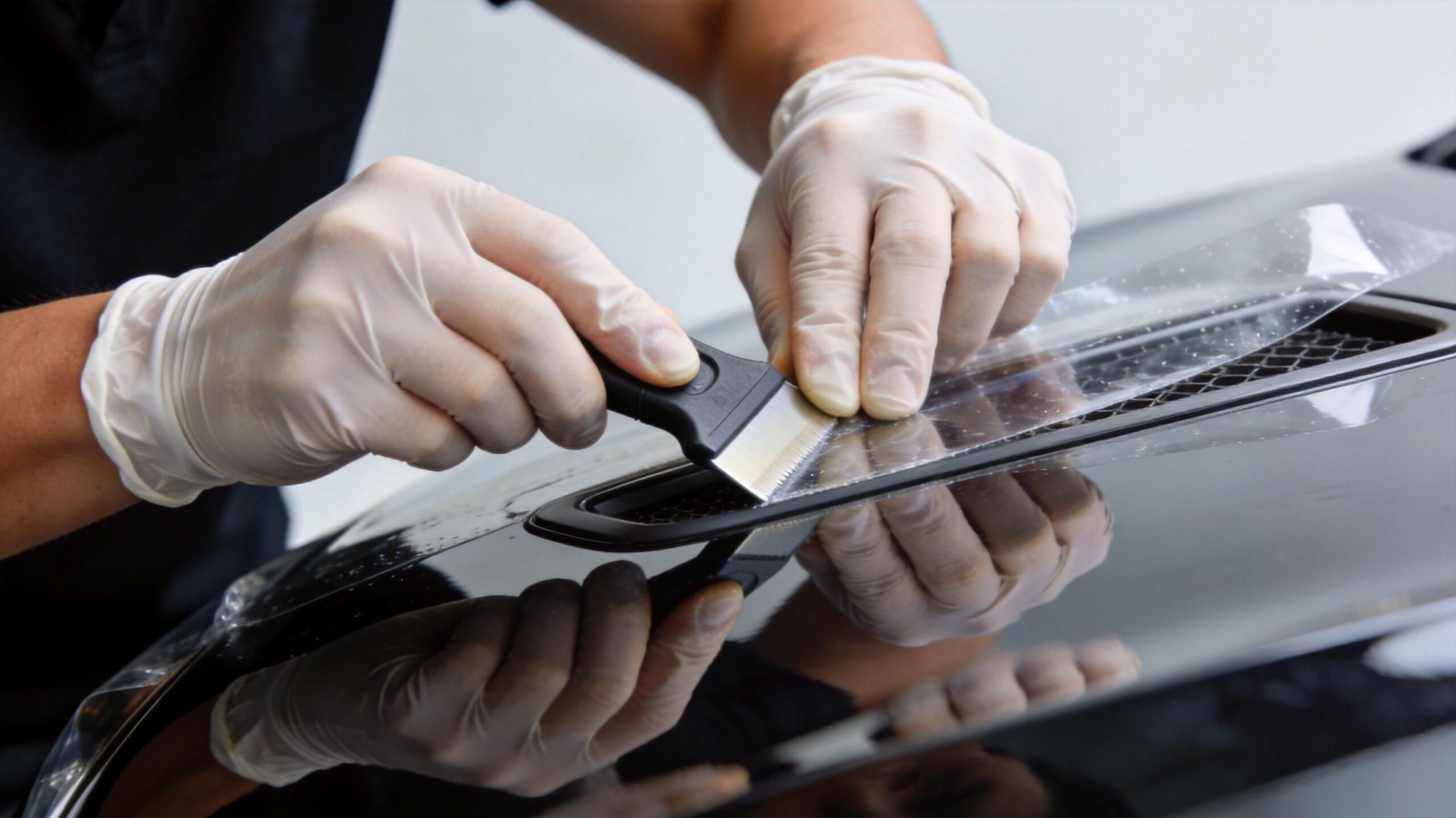
A lot of owners focus on the finished look and never think about the process. Fair enough. But with film work, process is the product. Most long-term problems come from prep, trimming, contamination, or poor sequencing.
What professional prep looks like
Before film goes on, the surface has to be right. For PPF, that means a full wash, decontamination, and attention to the paint itself. Dirt left under film doesn’t disappear later. It gets trapped there.
For tint, the same principle applies to the glass. Any contamination, lint, or residue can show up once the film cures.
A proper installation usually includes:
- Deep cleaning: Not just a quick wash. The surface needs to be free of road film, wax residue, and bonded contaminants.
- Controlled cutting method: Computer-cut patterns are preferred because they improve consistency and reduce the risk of cutting directly on the vehicle.
- Indoor environment: Dust, wind, and random debris are the enemy of clean film work.
- Edge management: Film edges matter more than is often appreciated. That’s where poor work often shows first.
Why computer-cut patterns matter
Hand-cutting has a place in skilled hands, but computer-cut software raises the consistency of the job. It helps produce repeatable patterns, tighter fitment, and cleaner finishing around complex panels and glass shapes.
That’s especially useful on modern vehicles with sensors, trim variation, and tighter tolerances. Precision is not a luxury here. It directly affects the final look.
The advanced issue many shops barely explain
If you own a luxury or performance vehicle and plan to combine both services, installation order matters. This is one of the most overlooked details in the PPF and tint conversation.
According to this technical discussion on combined film installation sequencing, some high-performance window films contain metallic particles that can interfere with XPEL PPF application sequences. It also notes that many shops don’t explain whether computer-cut tint templates account for PPF-wrapped edges, which can leave protective gaps if sequencing and template planning aren’t handled properly.
Why sequencing changes the outcome
On a high-end vehicle, the question isn’t just “Can you do both?” It’s “In what order, with which films, and how are the edges planned?”
Here’s why that matters:
- Wrapped PPF edges affect trim lines
- Tint templates need to account for those edges
- Certain film combinations may need a specific order
- Optical finish and adhesive behaviour can be affected by sequence
If a shop can’t clearly explain how they handle PPF-wrapped edges, tint templates, and film compatibility, that’s a warning sign for detail-focused owners.
One practical example in the local market is that Carmedics Autowerks uses the integrated XPEL ecosystem for combined PPF and tint installations, which is relevant because compatibility and sequencing are easier to manage when the system is planned together rather than mixed casually across unrelated products.
Investment Upkeep Costs Warranty and Maintenance
The cost question matters, but there’s a trap here. Owners often compare only the invoice total and ignore the quality of the film, the preparation, the fitment, and the aftercare. That’s how cheap jobs end up expensive.
Because precise package pricing varies by vehicle, coverage area, and film choice, the smartest way to think about cost is by scope, not just by a headline number.
What changes the final price
For PPF, cost usually moves based on how much of the vehicle you protect:
- High-impact package: Front bumper, bonnet edge, mirrors, and similar areas
- Extended front package: More front-end coverage for highway drivers
- Full vehicle coverage: Chosen by owners who want total protection
For tint, pricing typically depends on:
- Number of windows
- Film type
- Vehicle shape
- Complexity of the rear glass
Ceramic films usually sit higher than dyed films because they’re performance products, not just appearance products.
What a good warranty should cover
A strong film warranty should deal with manufacturing or installation-related defects, not vague promises.
For both PPF and tint, ask about coverage for:
- Peeling
- Bubbling
- Discolouration
- Premature failure
- Adhesion issues
What you want is plain language. If the warranty can’t be explained clearly in conversation, that’s not a great sign.
Maintenance that protects the investment
Good film doesn’t mean no maintenance. It means the maintenance needs to be sensible.
Here are the basics:
- Wash gently: Use proper wash methods and avoid unnecessary abrasion.
- Don’t rush cure time: Fresh tint and PPF need time to settle and cure.
- Watch harsh chemicals: Aggressive cleaners can shorten the life or appearance of film.
- Inspect edges occasionally: Early attention to a small issue is better than waiting.
For owners comparing long-term value, this overview of how long PPF lasts is useful because lifespan depends heavily on film quality, environment, and upkeep.
The real budget mindset
The best way to budget for protection is to think in replacement costs and avoided frustration, not just install cost.
A chipped bumper, stained bonnet edge, faded interior trim, or a poorly removed cheap tint job all cost time and money later. Better film and better installation often feel expensive only until you compare them with repaint work, re-tinting, or the annoyance of living with visible defects.
Why Whitby Drivers Choose Carmedics Autowerks
When owners in Durham look for a shop that handles protection work seriously, they usually want three things. Local road knowledge, clean installation methods, and enough real-world experience to deal with daily drivers and enthusiast cars properly.
That local experience matters more than many people think. A shop working in Whitby sees the same winter grime, the same 401 and 407 stone-chip patterns, and the same owner concerns about preserving a newer vehicle against Ontario wear.
What stands out in the local data
According to Carmedics Autowerks in Whitby, the shop has applied advanced PPF to over 450 vehicles in the Durham Region, with clients reporting an estimated 89% reduction in new paint chip damage. The same local page notes a 7.2% rise in appointments for protective films and tints in the Durham Region, reflecting stronger demand from owners focused on long-term preservation.
Those numbers are useful because they’re tied directly to the driving conditions Whitby owners already know. Highway debris, winter salt, slush, and repeated seasonal exposure all push people toward protection earlier than they used to.
Why the details matter to enthusiasts
The same local profile highlights a process many owners care about: computer-cut templates and a controlled environment for cleaner, smoother installation. That matters because film quality isn’t only about the product. It’s also about how invisible the result looks once it’s on the car.
For a middle-aged enthusiast or a careful new-car owner, that’s the difference between “I know film is installed there” and “the car just looks factory-fresh.”
Signs a protection shop understands local ownership
A worthwhile shop usually gets the small things right:
- It understands Durham commuting patterns
- It plans around winter use
- It treats fit and finish as part of the protection
- It doesn’t treat tint and PPF as isolated upsells
- It can talk clearly about product choice, installation order, and maintenance
The best protection work doesn’t scream for attention. It just helps the vehicle age better than the one parked beside it.
What that means for a Whitby owner
If your goal is to keep a newer vehicle looking sharp without changing its character, a well-executed PPF and tint plan does exactly that. It preserves, rather than transforms.
That’s why many owners don’t start by asking for the most expensive package. They start by asking the right questions. Which panels get hit most. Which tint film suits daily driving. How the edges are handled. What cure time looks like. Whether the shop understands local conditions or is just selling film.
Frequently Asked Questions About PPF and Tint
Can PPF go over small scratches?
Sometimes, but it depends on the scratch. PPF is clear, so it can hide only very minor surface imperfections. If the scratch is noticeable now, film usually won’t make it disappear. Good prep and honest expectations matter.
How long should I wait before washing the car after installation?
Follow the installer’s aftercare instructions exactly. Fresh film needs time to settle and cure. Rushing to wash the vehicle, especially with pressure around edges, is one of the easiest ways to create avoidable problems.
Can window tint be removed later?
Yes. Tint can be removed, but clean removal is its own skill. Older or lower-grade films often leave adhesive behind, and rear windows need extra care because of defroster lines.
Will PPF change the look of my paint?
A quality gloss film should be close to invisible when installed properly. The main visual change is that the paint tends to stay in better condition because the film takes the abuse first.
Is darker tint always better?
No. Darker and better are not the same thing. Better usually means the right balance of comfort, visibility, legal compliance, and film quality.
Should I do PPF or tint first?
That depends on the vehicle, the films chosen, and how the installer handles sequencing. On some vehicles, especially luxury or performance models, order matters more than owners expect.
If you want practical guidance on protecting a new car or upgrading a daily driver for Durham roads, Carmedics Autowerks Inc offers PPF, window tinting, and related vehicle protection services in Whitby for cars and SUVs.