


You walk out in the morning, coffee in hand, and there it is. A dark spot under the car. If you're asking why is my car leaking oil, your mind usually goes to the same place fast: Is this serious? Can I still drive it? Is this going to turn into an expensive repair?
That reaction is normal. Most drivers don't notice an oil leak when it starts. They notice the stain on the driveway, the smell at a stoplight, or a warning light that shows up at the worst possible time. Around Whitby, winter makes that even more common. A car can seem fine through autumn, then the cold hits, seals stiffen up, and a small seep turns into a real leak.
The good news is that many oil leaks come from parts that are small, known, and repairable. The key is finding the source before low oil level causes bigger trouble. Start with the fluid itself, then narrow down where it's coming from, and then decide whether it's safe to monitor or needs immediate attention.
That Sinking Feeling A Dark Spot on Your Driveway
A lot of oil leak visits start the same way. Someone backs out of the driveway, sees a stain that wasn't there yesterday, and wonders if the engine is failing. Usually, it isn't that dramatic. But it does deserve attention.
Oil leaks often begin with ordinary wear. Rubber seals age. Gaskets shrink. A drain plug doesn't seat quite right after service. On newer turbocharged vehicles, especially the VW and Audi models common around Whitby, winter temperature swings can expose weak seals and plastic components that were holding on well enough in milder weather.
The tricky part is that the puddle doesn't always tell you the full story. Oil can drip from one area, travel along a splash shield or subframe, and land somewhere completely different. That's why guessing from the ground alone often leads people in the wrong direction.
Oil leaks are usually easier and cheaper to deal with when they're small and fresh. Once oil starts coating the underside of the engine, diagnosis gets slower and the repair bill often follows.
If you've found a dark spot, don't panic. Confirm the fluid first. Then check the oil level before driving any distance. That simple step tells you whether you're dealing with a nuisance leak or something that needs immediate repair.
First Things First Is It Really Oil?
Not every puddle under a car is engine oil. That matters, because the next step depends on what fluid you're seeing. Engine oil feels slippery and heavier than water, and it usually ranges from amber to dark brown or black depending on how long it's been in service.
Start with a clean sample if you can. Slide a piece of cardboard or white paper under the suspected area overnight. In the morning, you'll get a better look at colour, spread, and location.
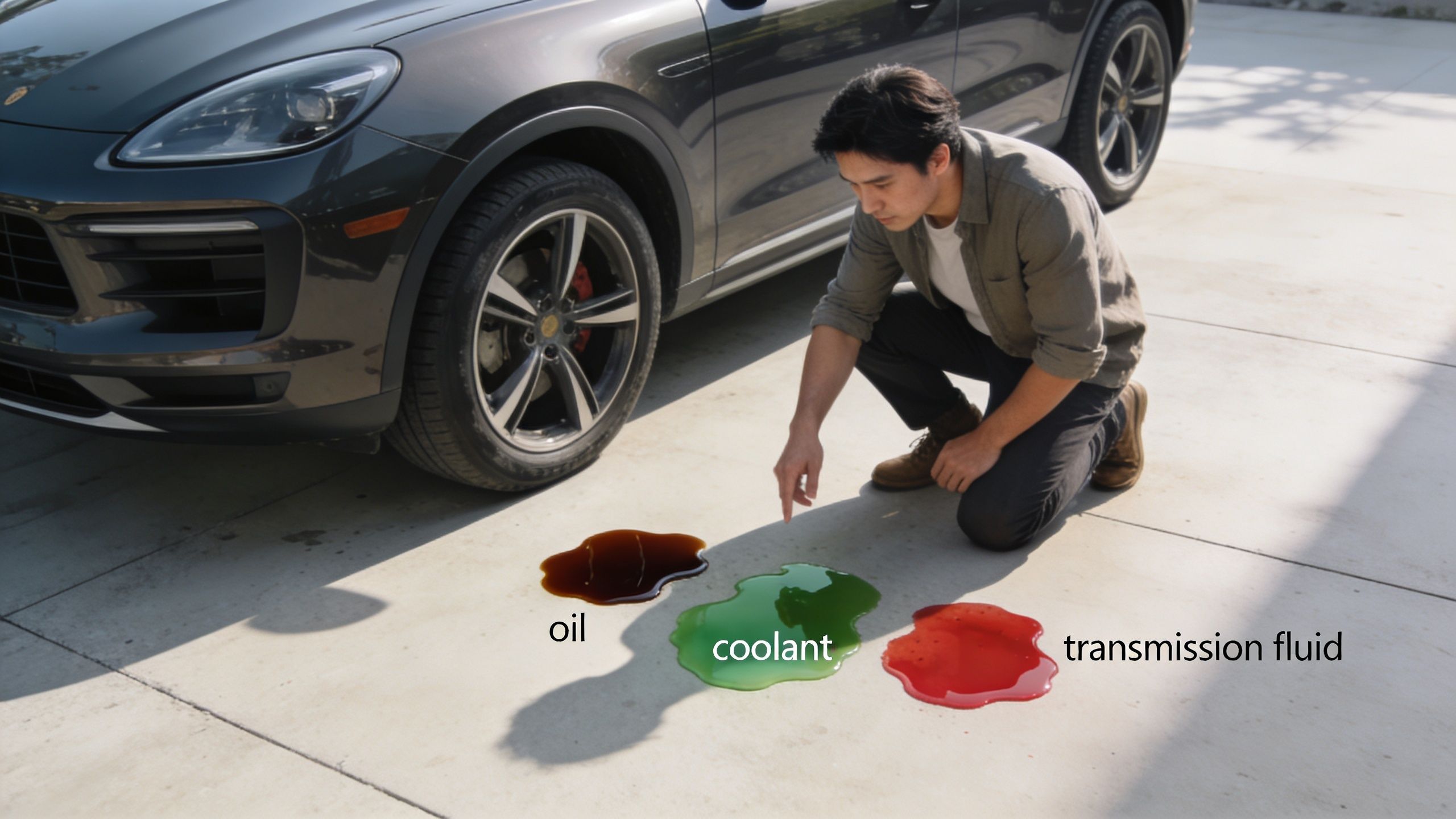
What engine oil usually looks like
Fresh oil is honey-coloured. Used oil gets darker with heat and mileage. If you rub a drop between your fingers, it feels slick and a bit thick. It also has that familiar oily smell, different from coolant or fuel.
A few other fluids can fool people:
- Transmission fluid often looks reddish or pinkish, though some newer fluids vary in shade.
- Coolant is usually brighter in colour and thinner. It can appear green, pink, or orange.
- Brake fluid tends to be lighter and slick, but leaks usually show near wheels or below the master cylinder area.
- Condensation from the A/C is just clear water and harmless.
If you're not sure whether you're seeing engine oil or transmission fluid, it helps to understand the difference before you book repairs. This guide on how to check transmission fluid can help you compare what you're seeing.
Use smell and location together
Colour helps, but location is often just as useful. A leak near the middle-front of the engine bay is more likely to be engine oil. Fluid closer to the transmission case may point elsewhere. A sweet smell suggests coolant. A burnt smell, especially after driving, often means oil is landing on a hot engine or exhaust component.
Quick check: If the fluid is dark, slick, and leaves a greasy stain that doesn't evaporate, treat it like oil until proven otherwise.
Once you know it's oil, the next question is where it's escaping from.
The Top Reasons Your Car Is Leaking Oil
Most oil leaks come from a handful of places. The engine is full of sealed joints, threaded fittings, and rubber parts. When one of them hardens, cracks, loosens, or gets damaged, oil finds a way out.
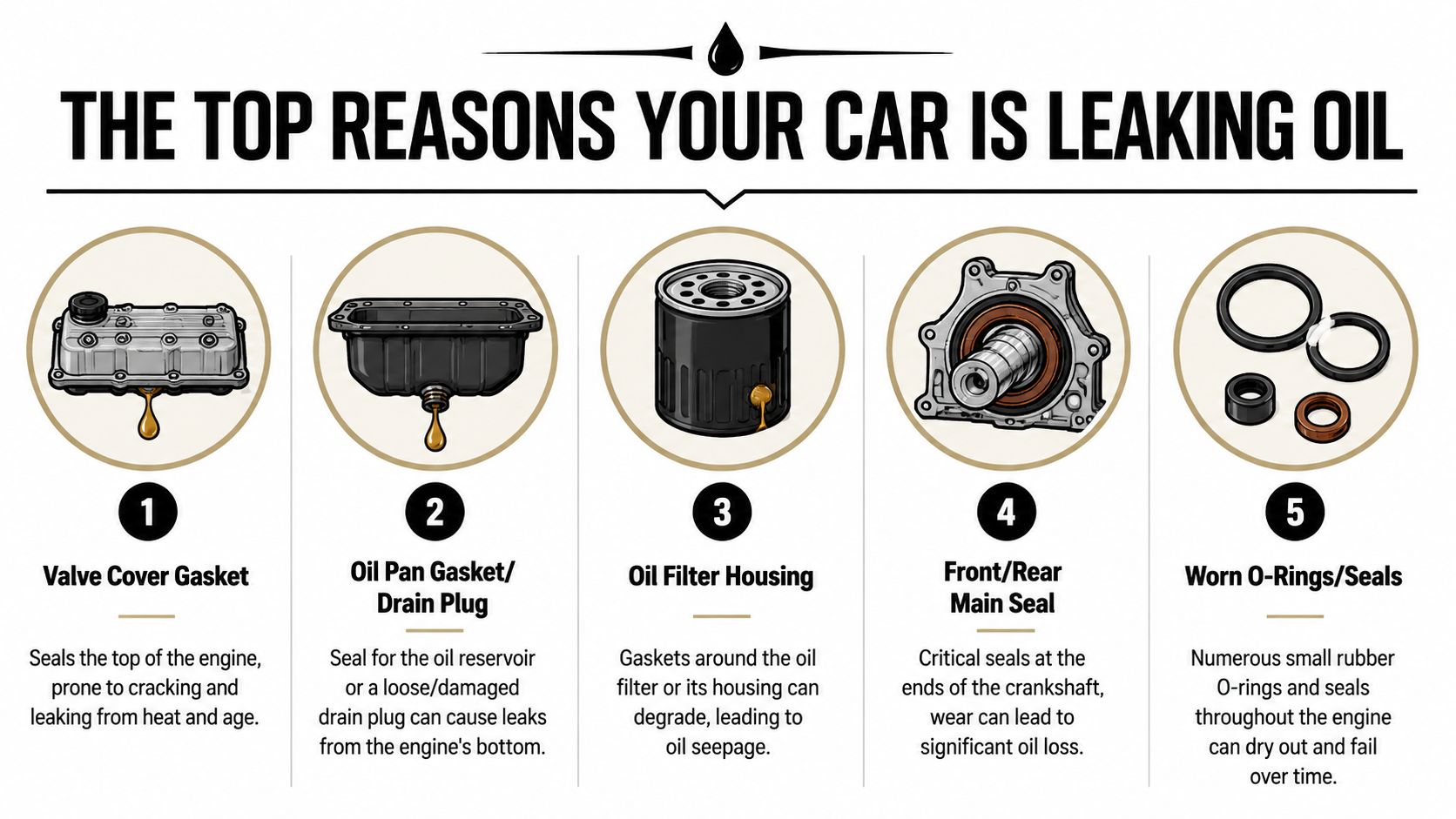
Valve cover gasket trouble in Ontario winters
Think of a valve cover gasket like the rubber seal on a coffee thermos. Its job is simple. Keep oil in, keep dirt out. It seals the top of the engine where oil is splashing around the valvetrain.
In the Greater Toronto Area, degraded valve cover gaskets account for 35 to 40% of external oil leaks in vehicles over 100,000 km, and Ontario's winter temperature swings are a major reason those seals crack and lose flexibility, often causing a burning smell when oil drips onto the hot exhaust manifold, as noted by Hall Honda's valve cover gasket overview.
This is one of the most common leaks I'd expect on an older daily driver in Whitby. You may smell burning oil before you ever see a puddle. That's because the oil can drip onto hot metal and cook off before enough reaches the ground.
Drain plug and oil pan issues after service
The bottom of the engine is another common trouble spot. The oil pan stores the engine oil, and the drain plug seals the opening used during oil changes. If the plug is loose, cross-threaded, or fitted with a worn washer, it can leak right after service. The pan gasket can also seep with age.
False confidence often catches people. They assume a recent oil change means the area must be fine. In reality, a leak that starts right after service often points straight back to the drain area.
Oil filter housing and smaller seals
Oil filters and oil filter housings use seals too. If the filter gasket double-stacks, the housing gasket hardens, or the cap is installed incorrectly, oil will seep or drip. Smaller O-rings throughout the engine can also fail. These leaks often start as a wet film rather than a dramatic drip.
The problem is visibility. On many modern engines, covers and shields hide the leak path. What starts as a damp corner around a housing can spread everywhere after highway driving.
Turbocharged engines and winter-specific leak patterns
Generic guides often miss this part. Whitby winters are hard on turbo engines. The cold start, the heat build-up, then the cool-down after parking creates stress that older naturally aspirated engines didn't always show in the same way.
Turbocharged vehicles can develop leaks from seals and plastic oil-related components that only show themselves under certain conditions. A driver may report, “It only leaks after I park it,” or “It started after winter.” That pattern matters. On some VW and Audi setups, the leak isn't obvious with a quick glance from above because underbody covers catch the fluid and shift where it drips.
A leak that appears only after a cold start and short trip can still be real. The engine warms, pressure changes, oil thins out, and then the drip shows up after you shut the car off.
Main seals and oil pans after impact
Front and rear main seals sit where the crankshaft exits the engine. These are more involved repairs because access is tight. When they leak, the underside of the engine and transmission bell housing can get oily fast.
Oil pans also take abuse from winter roads. Ice chunks, road debris, or a poor jack placement can bend the sealing surface or crack the pan. That kind of leak usually shows up lower down and leaves a more direct drip pattern.
Common oil leak sources and repair estimates
| Source | Symptom | Urgency | Estimated Repair Cost (CAD) |
|---|---|---|---|
| Valve cover gasket | Burning oil smell, oil on top or side of engine | Soon | Varies by vehicle and access |
| Oil pan gasket or drain plug | Drips under engine after parking, worse after oil change | Prompt | Varies by damage and whether threads are affected |
| Oil filter housing or filter seal | Fresh oil around filter area, messy underside | Soon | Varies by housing design |
| Front or rear main seal | Heavy underside oiling, leak between engine and transmission area | High | Labour-intensive, vehicle-dependent |
| Small O-rings and seals | Light seepage that gradually spreads | Moderate | Usually lower parts cost, diagnosis matters |
If the leak source isn't obvious, a proper engine repair assessment usually starts with cleaning the area and tracing the fresh oil, not replacing parts on a guess.
How to Safely Inspect for an Oil Leak at Home
You can do a basic inspection yourself if you stay safe and keep expectations realistic. The goal isn't to perform the repair on the driveway. The goal is to gather useful clues without putting yourself under an unsafe vehicle or misdiagnosing the issue.
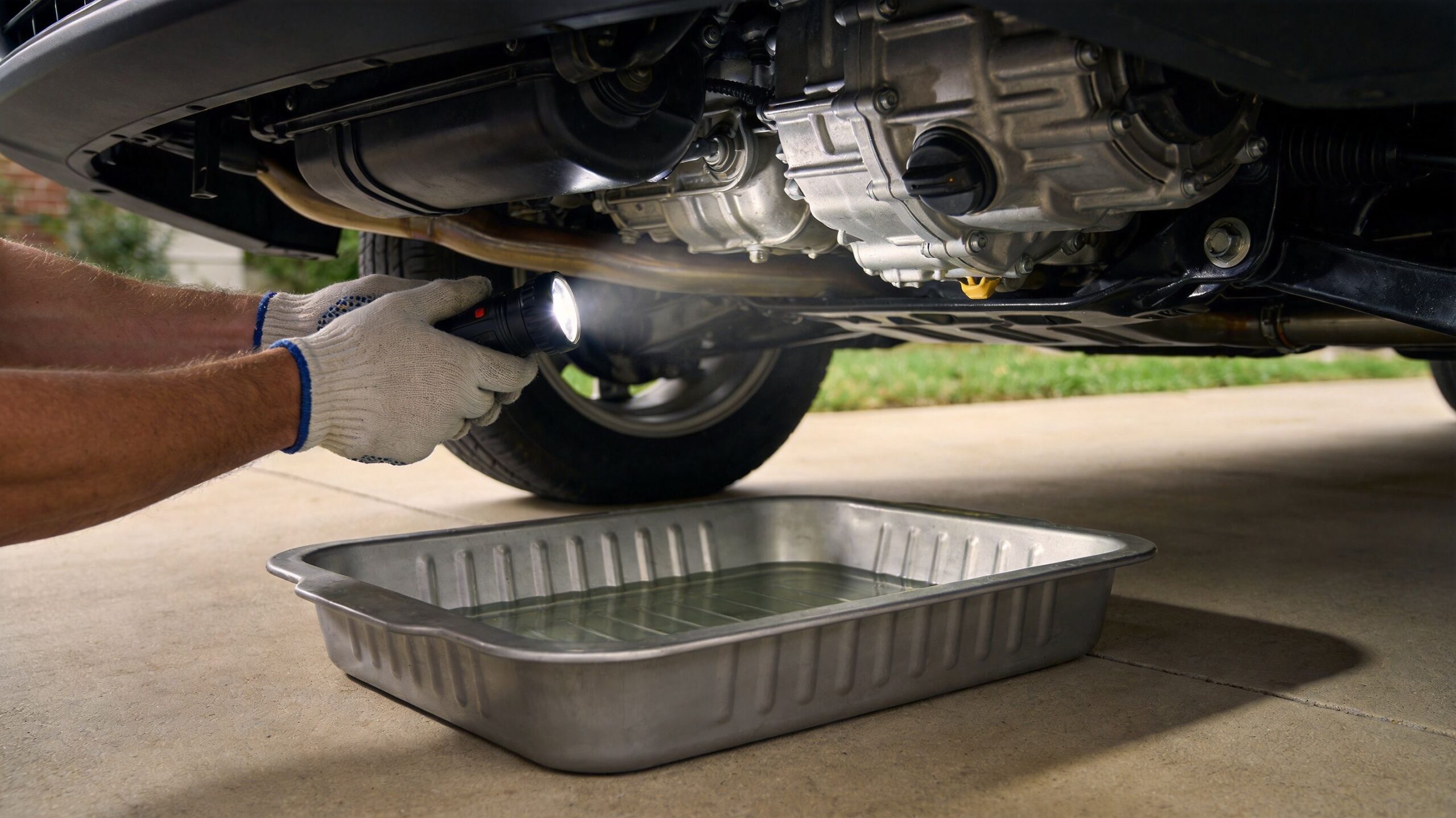
Start with a cool engine
Let the engine cool fully. Oil leaks often happen near hot components, and touching a warm exhaust shield or manifold by accident is an easy way to get burned. Park on level ground and set the parking brake.
Then check the dipstick. If the oil level is low, that tells you the leak may be active enough to affect safe driving. If it's below the safe range, top it up before moving the car any farther than necessary.
Work from top to bottom
Open the bonnet and use a flashlight. Start high, then move lower. Oil runs downward, so the highest wet point often indicates the source.
Look at these areas first:
- Valve cover perimeter for wetness or baked-on grime
- Oil filter and housing area for fresh oil
- Front of engine for oil thrown around by a pulley or belt
- Oil pan edge and drain plug for active drips
- Splash shields for oil collecting and then dripping later
If you had an oil change recently, pay close attention to the drain plug and the area around the oil pan. Loose or improperly installed oil drain plugs contribute to 25% of post-oil-change leaks in Ontario, and a plug under-torqued by 10 Nm can allow up to half a litre of oil to seep out per day, according to Tires Plus on common oil leak causes.
Clean, then recheck
A dirty engine lies. Old oil makes everything look like the source. Wipe one suspicious area clean with a rag, then drive a short distance and inspect again. Fresh oil usually reveals the path.
Practical rule: Don't spray the entire engine bay with degreaser and hope for the best. Clean small target areas so you can see what comes back first.
This method is especially useful around the valve cover, oil filter housing, and drain plug. If the leak returns right at the cleaned seam or fitting, you've narrowed it down.
Know when to stop
Don't crawl under a vehicle supported only by a jack. Don't tighten fasteners blindly. Overtightening a drain plug or valve cover bolt can turn a simple leak into stripped threads or a cracked component.
If the leak started after maintenance, this article on why an oil change is necessary is also a good reminder that correct service matters just as much as regular service.
The Hidden Dangers of Ignoring an Oil Leak
Some leaks stay small for a while. That's what makes them easy to dismiss. The risk is that oil level doesn't have to drop to zero before damage starts. Engines rely on a steady film of oil to protect moving metal parts. Once that protection falls off, wear increases quickly.
The second danger is heat. Oil that leaks onto hot exhaust components can smoke and smell bad, but the bigger concern is obvious. Anything flammable near a hot surface deserves immediate attention. Even when it doesn't ignite, the smoke alone tells you oil is reaching places it shouldn't.
Damage spreads beyond the leak itself
Oil softens rubber parts. Belts, hoses, and mounts don't like being soaked in it. One failed gasket can create a chain of secondary repairs if the leak keeps spreading across the engine bay or underside.
It can also make diagnosis harder later. A small, clear leak path is easier to trace than an engine covered in grime and road dirt. Once everything is oily, labour goes up because the technician has to clean first, then retest.
Safety and cleanup matter too
A driveway stain is one thing. Oil on a tyre, suspension part, or brake component is another. Any fluid contamination near those areas should be treated seriously.
Then there's the environmental side. Even a modest leak leaves a mess on pavement, in parking lots, and on roads. It's not just bad for the car. It's something you'll keep cleaning up until the source is fixed.
If your oil warning light comes on and you know the engine is leaking, stop and check the level before continuing. Driving blind is how a repairable leak turns into an engine replacement discussion.
If you're seeing repeat drips, burning smell, or a falling oil level, proper engine diagnostics in Whitby is the sensible next step.
Professional Repairs and What to Expect at the Shop
A good oil leak repair starts with diagnosis, not parts replacement. That sounds obvious, but plenty of leaks get misdiagnosed because oil travels. The wet spot you can see often isn't the place where the leak begins.
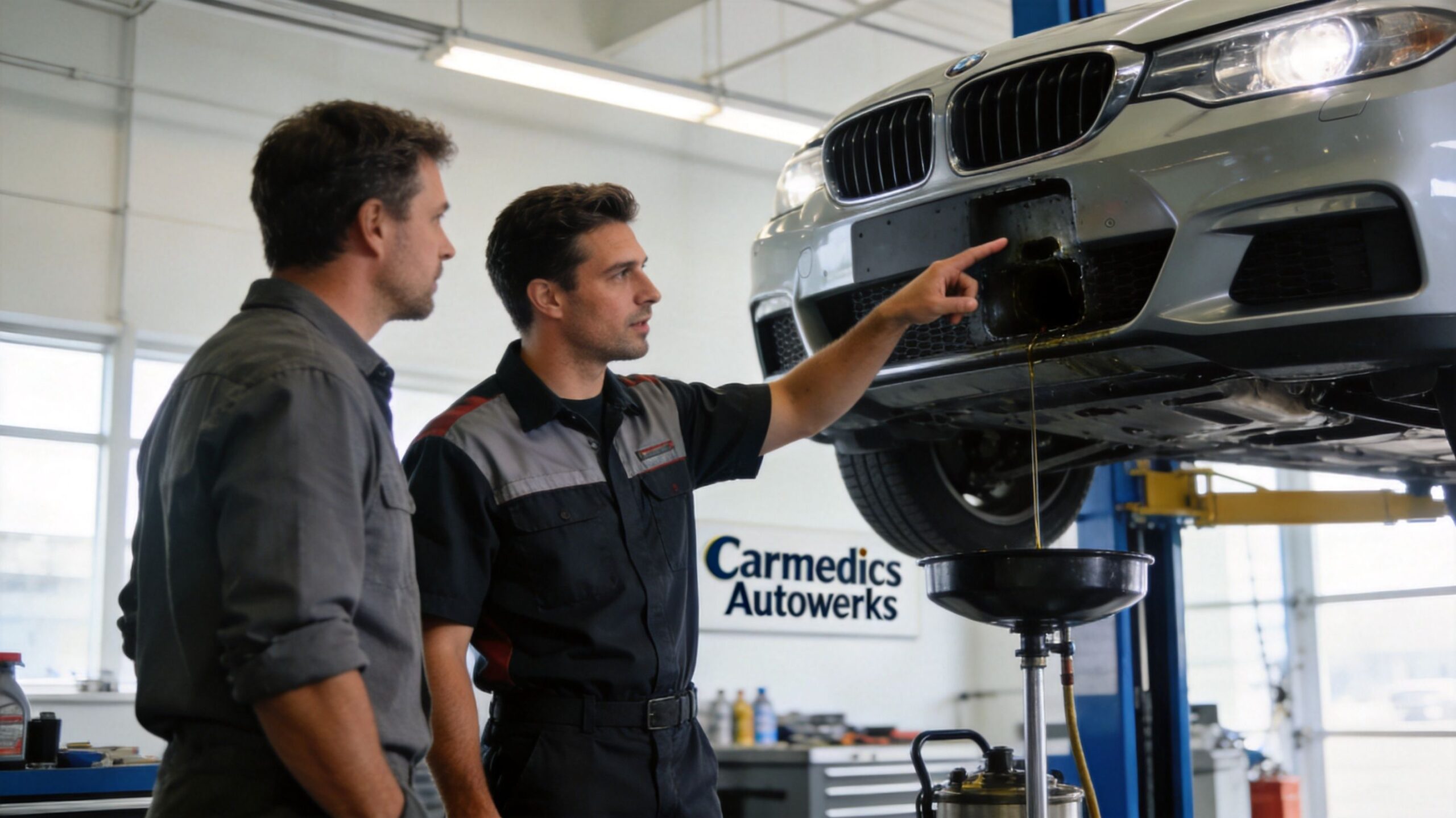
How a technician usually tracks it down
The first step is usually visual inspection. If the engine is dirty, the shop may clean the suspect area so fresh oil can be traced properly. On harder cases, UV dye and a blacklight make the source much easier to pinpoint. That approach is especially useful when the leak only appears after driving or when multiple areas are already oily.
A proper diagnosis also looks at context. Did the leak begin after an oil change? Does it happen only when parked? Does the vehicle have a turbocharger and lots of underbody shielding? Those details change where an experienced tech looks first.
What the repair may involve
Common repairs include:
- Replacing a valve cover gasket when the top of the engine is seeping
- Resealing an oil filter housing if the leak starts around the filter mount
- Replacing a crush washer or drain plug when the oil pan area leaks after service
- Repairing damaged threads if a plug has been overtightened
- Replacing a larger seal when oil is escaping from deeper in the engine
What doesn't work well is throwing stop-leak additives at every problem. Those products may slow a minor seep in some cases, but they don't fix a torn gasket, a loose drain plug, or a cracked housing. For many modern engines, especially turbo models, they're a poor substitute for proper repair.
Communication matters as much as the wrench work
A decent shop should tell you three things clearly: where the leak is, how serious it is, and what happens if you wait. That's not just customer service. It's part of good diagnosis. Shops that focus on optimizing auto shop customer service tend to explain repair decisions better, which helps drivers approve the right work instead of guessing.
If you want a local option, Carmedics Autowerks' mechanic services include leak diagnosis, hands-on inspection, and repair planning based on the actual source rather than the puddle location alone.
Your Next Steps for a Leak-Free Drive in Whitby
When someone asks why is my car leaking oil, the answer is rarely “the whole engine is done.” It's usually a seal, gasket, plug, housing, or crack that needs to be found properly. The smart order is simple. Identify the fluid. Inspect safely. Act before the oil level drops too far.
Whitby drivers have one extra factor to respect. Ontario winters are tough on seals, especially in turbocharged vehicles that cycle through sharp temperature changes. If your car starts leaking after a cold stretch, don't assume it will sort itself out when the weather changes.
Prevention helps. Keep up with oil changes, use the correct parts, and have fresh leaks looked at while the source is still obvious. If you care about keeping the rest of the vehicle in top condition too, it also makes sense to think beyond the engine bay. For enthusiasts and owners of newer vehicles, services like paint protection film can help protect the finish from road debris and day-to-day wear while mechanical issues are being sorted.
Frequently Asked Questions About Oil Leaks
Is dark oil always a bad sign?
Not by itself. Engine oil naturally darkens with use. Dark oil on the ground still means you need to find the source, but the colour alone doesn't tell you whether the engine is healthy or failing. What matters more is where it's leaking from, how fast it's leaking, and whether the dipstick level is dropping.
Can cold weather actually cause an oil leak?
Yes. Cold weather can stiffen older rubber seals and expose weak gaskets. In this area, that matters because winter temperature swings are hard on parts that expand and contract over and over. Turbocharged engines can be especially tricky because heat and pressure changes happen quickly, and some leaks only show after the vehicle is parked.
Is it safe to drive if my car is leaking oil?
Sometimes for a very short distance, but don't assume it's fine. Check the oil level first. If the dipstick is low, if you smell burning oil, or if there's active dripping, treat it as urgent. A small seep you monitor closely is one thing. A leak that leaves fresh spots every time you park is another.
Why does it smell like burning oil but I don't see much on the ground?
That usually means the oil is landing on a hot surface and burning off before it reaches the pavement. Valve cover gasket leaks often behave this way because the oil can drip onto exhaust components.
Can new hybrids leak oil too?
Yes, and the source can be less obvious than on a conventional gas engine. Leaks on new hybrids and EVs can be confusing. Some hybrid SUVs, popular in Whitby, can experience leaks from thermal management systems or integrated electric oil pumps. A 2025 Transport Canada bulletin noted rising issues of coolant-oil mixing in newer hybrids, which is why diagnosis matters more than assumptions in these vehicles.
Should I use an engine stop-leak product?
It depends on the leak, but I wouldn't rely on it as a repair plan. Additives don't fix loose hardware, damaged threads, cracked plastic, or a gasket that's physically failed. They can also muddy the waters when a shop is trying to diagnose the source cleanly.
If you've found oil on the driveway, smelled burning oil, or noticed your level dropping, Carmedics Autowerks Inc can inspect the source, diagnose the leak path, and handle repairs such as gasket and seal replacement or drain plug issues before they turn into larger engine problems.