

Paint protection film usually lasts 5 to 10 years, and premium films with careful care can stretch to 10 to 12 years. In California-level sun, though, the upper end depends heavily on film quality and maintenance, so most owners see results closer to the lower end if the car lives outside.
You've probably had this moment already. The car looks perfect after a detail, the front end is wrapped, and the key question is whether that clear layer will still look clean and protect the paint years from now, or whether yellowing and edge lift will show up first.
What Paint Protection Film Is and the Realistic Lifespan Range
A freshly protected car can make you feel like you've bought time itself. The paint has that deep gloss, the front bumper looks untouched, and the film is invisible enough that you start asking the right question, how long does paint protection film last before it stops looking as good as it does on day one?
Paint protection film, or PPF, is a clear urethane layer bonded to painted panels to absorb impact, reduce abrasion, and shield the finish from the stuff that ruins a perfect car faster than most owners expect. That includes road grit, bug splatter, bird droppings, and the kind of fine surface damage that shows up first on high-impact panels. The realistic planning range is still 5 to 10 years in ordinary use, with a properly installed, high-quality film often lasting 7 to 10 years and premium systems sometimes carrying warranties up to 12 years. One California-focused source also advises planning replacement around the 8 to 10-year mark to avoid visible aging like yellowing or edge lift, which matches what many owners see over time [CarMedics AutoWerks lifespan guide].
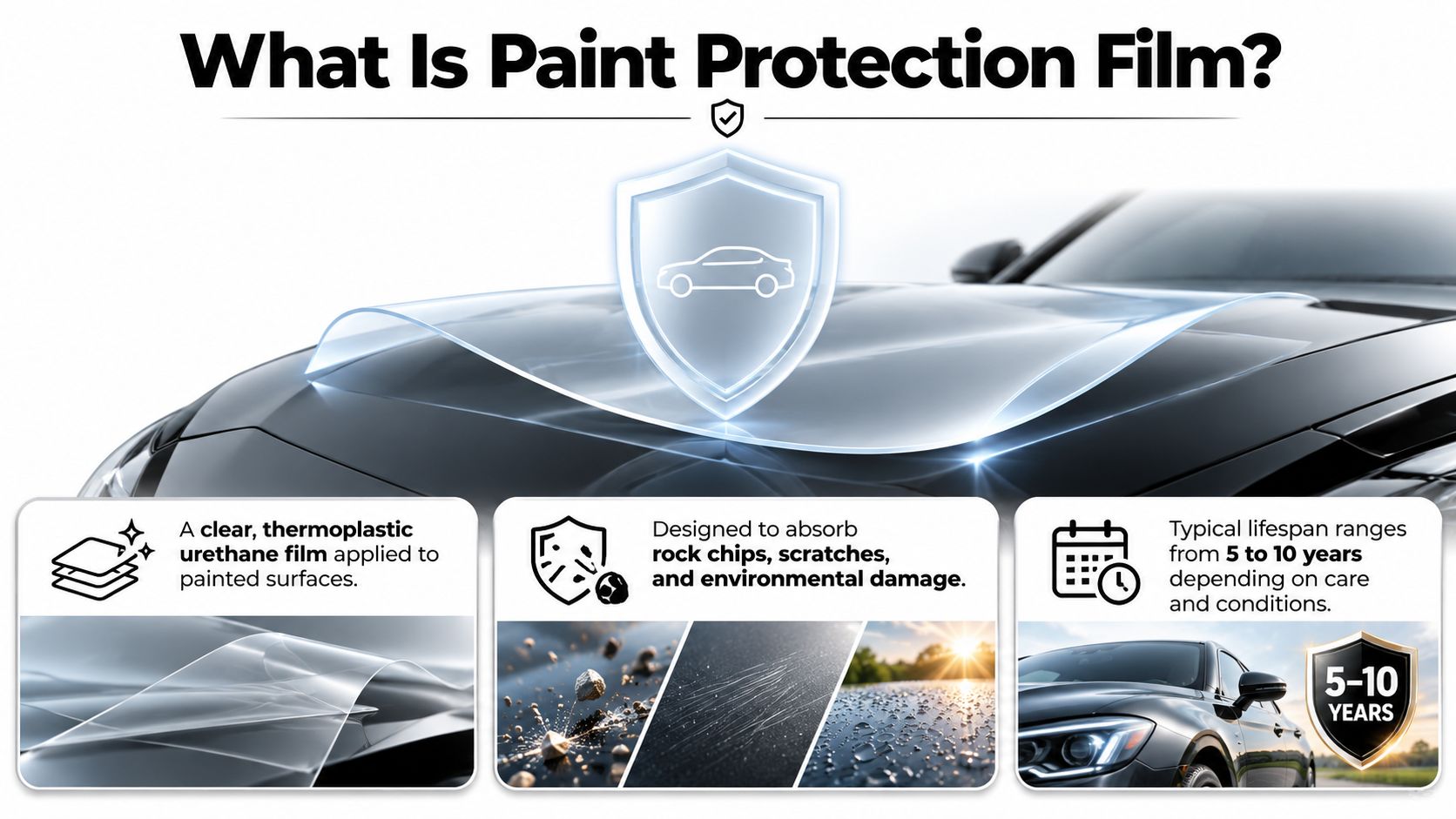
What that range means in practice
A film doesn't “expire” on a single date. It moves through a usable window where the surface stays clear, the edges stay sealed, and the film still does the job you paid for. Once yellowing, haze, or lifting starts showing, the film may still be on the car, but it isn't performing like fresh PPF anymore.
Practical rule: if the film is still clear, bonded, and easy to wash, it's probably still earning its keep. Once it starts changing the way the car looks, it's telling you the clock is moving toward replacement.
Typical PPF lifespan by scenario
| Scenario | Typical Lifespan | Why It Lands Here |
|---|---|---|
| Garage-kept car with careful washing | Higher end of the normal range | Less UV load and less contamination on the surface |
| Daily driver with outdoor parking | Mid-range | More heat, sun, and environmental exposure |
| Hard-used car with frequent brush washes | Lower end of the normal range | Faster wear on the topcoat and edges |
| Premium film with excellent care | Toward the upper end | Better materials and better maintenance habits |
If you want a baseline on coverage and installation before comparing durability, the shop's overview of paint protection film options is a useful place to start.
The Two Clocks That Decide How Long Your Film Lasts
Many vehicle owners focus solely on a single timeline. They visualize the day of installation and measure the duration from that point onward. This perspective overlooks a second, equally important timeline.
Shelf age before installation
The first clock is storage age. A technical data sheet for 3M Scotchgard Pro Series 200 gloss lists an 18-month shelf life from manufacture in unopened original packaging, which matters because film can age before an installer ever lays it on the hood [3M technical data sheet]. Older inventory can be harder to trust because the product's useful life starts getting consumed before it touches the car.
That's why two shops can sell a film with the same label and produce very different outcomes. One shop might rotate stock properly and install fresh material. Another might sit on old rolls, then apply them months later and expect the customer never to notice the difference.
In-service durability after install
The second clock starts once the film is on the panel. From that point, durability depends on how the film was handled before install, how the car is driven, and what kind of maintenance it gets. A certified installer who uses fresh inventory, keeps edges clean, and avoids contamination gives the film a much better starting point.
Ask about the roll date, not just the brand name. A premium label doesn't help much if the stock has already spent too long sitting around.
A good installation also matters when owners later ask about adding layers over the film. If you're considering protection on top of PPF, the compatibility question is different from lifespan, and it's worth understanding the fit before adding extra products. The note on ceramic coating over PPF is useful context for that decision.
The plain takeaway is simple. Storage age and in-service wear are separate problems, and the best-looking installs usually start with fresh film that hasn't already aged on the shelf.
Climate, UV, and Habits That Move Lifespan Up or Down
California-type sun changes the conversation fast. Heat and UV are the biggest stressors because they push the adhesive, topcoat, and surface clarity harder than most other conditions, and that's where the visible ageing starts first.
What pushes film toward early wear
Intense sun can accelerate yellowing, hazing, and edge stress. Once the topcoat begins to lose clarity, the panel can look dull even if the paint underneath is still fine. Outdoor parking makes that worse because the film keeps cycling through heat and light all day.
Road contamination is the next problem. Bug acids, bird droppings, and embedded grit don't just sit harmlessly on the surface. Left alone, they can attack the film's finish, stain the top layer, and make seams more vulnerable to lifting. The same goes for frequent brush-wash use, which drags dirt across the film and can shorten the life of the surface much faster than careful hand washing.
Daily driver reality: a garaged car with sensible washing habits usually looks healthier much longer than a commuter that lives in the sun and goes through automatic brushes.
What helps the film stay clear longer
Careful owners slow the ageing process rather than fighting it after the fact. That means avoiding harsh chemicals, rinsing off contamination quickly, and keeping an eye on the edges where early failure usually starts. Mileage matters, but it's not the main story. Two cars can rack up similar miles, and the one that lives outside in hard sun will usually age faster than the one that's protected from constant exposure.
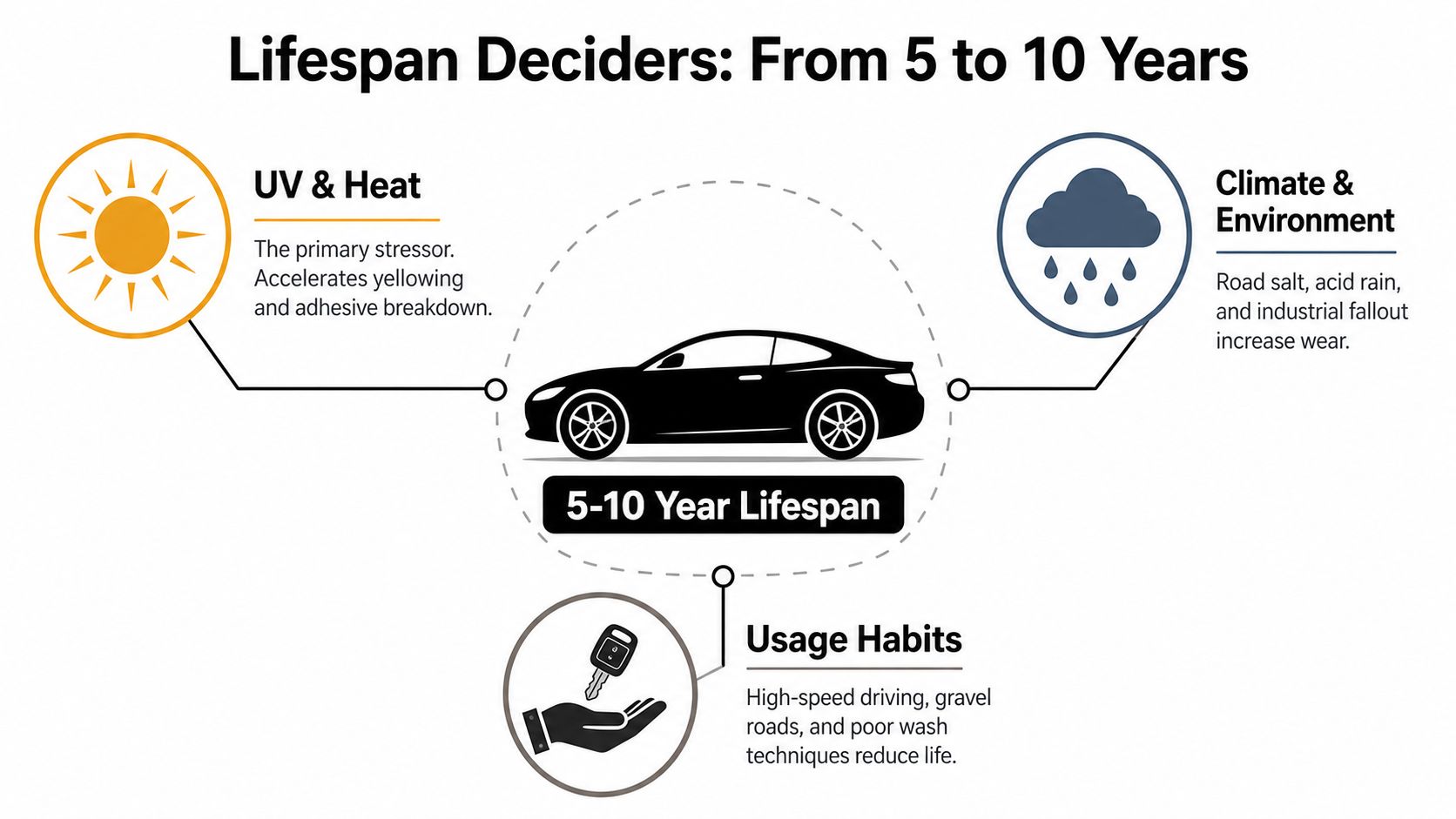
The visible result of each stressor
- UV and heat: more chance of yellowing, hazing, and adhesive fatigue.
- Contamination: more staining, etched spots, and dullness on the topcoat.
- Poor wash habits: more swirl marks, edge abrasion, and premature wear.
- Garage storage and gentle cleaning: better clarity, better gloss, and slower ageing.
If you've ever wondered why a car can look “fine” at a glance but feel less crisp under bright sun, the answer is usually in those small changes to the film surface. For a deeper look at what sun exposure does to finishes in general, the guide on what causes car paint to fade is a helpful parallel.
Comparing PPF Types and What Each One Promises You
Not every clear film ages the same way. Two installs can look almost identical on delivery day, then separate quickly once the car sees sun, washing, and road abuse.
Premium film versus economy film
At the top end, premium TPU self-healing films usually hold gloss better and resist visible wear longer. The self-healing part is what owners notice, small swirl marks and light surface scratches can relax when the film warms up, so the surface stays cleaner-looking between washes. That doesn't mean the film can't age, only that it starts with a stronger advantage.
Mid-tier films are often a sensible middle ground. They protect well, but they may not carry the same long-term clarity, stain resistance, or warranty window as the best systems. Entry-level films can look sharp on day one, but they often show ageing sooner, especially in high-UV environments.
What the owner sees, not the chemistry
The differences show up in gloss retention, stain resistance, and yellowing risk. Thicker, better-built films usually feel more forgiving in everyday use because they're better equipped to absorb abuse without looking tired so quickly. That's the core trade-off, you're choosing how long the car should stay visually fresh, not just whether the panel gets a clear layer.
| Film tier | What you usually notice | Best fit |
|---|---|---|
| Premium TPU self-healing | Stronger gloss, better surface recovery, slower ageing | New cars, long ownership, harsher sun |
| Mid-tier urethane | Solid protection, balanced value | Drivers who want good coverage without top-tier pricing |
| Entry-level film | Fine at first, less durable over time | Shorter ownership or lighter exposure |
If you're comparing clear film to cosmetic wrap products, the difference is more than appearance. The PPF versus vinyl wrap comparison helps separate protection goals from styling goals.
The decision lens is simple. Keep the car longer, park it outside more often, or expose it to harsher conditions, and the higher tier usually makes more sense. If the car sees gentle use and you're mainly protecting resale appearance for a shorter ownership window, a mid-tier product may be enough.
Maintenance Habits That Maximise PPF Life
PPF doesn't ask for a complicated care routine, but it does punish neglect. The way you wash and inspect the film has a bigger effect on lifespan than most owners realise.
A practical wash routine
- Use pH-neutral soap. Harsh cleaners can shorten the life of the topcoat and dull the finish.
- Wash gently. A two-bucket method reduces the chance of dragging grit across the film.
- Dry with soft microfibre. Rough towels leave marks and can wear the surface faster.
- Skip automated brush washes. They're one of the quickest ways to build swirls and scuff the film.
- Remove bug splatter, sap, and bird droppings quickly. The longer they sit, the more they can stain or etch.
That routine sounds basic because it is. The film is doing the heavy lifting. Your job is to stop avoidable damage from grinding away at the top layer.
The fastest way to shorten film life is to clean it like a cheap plastic trim piece. Treat it like a finish, because that's what everyone sees.
Add protection without overcomplicating it
A PPF-safe sealant can help the film shed water and grime more easily. It won't make old film new again, but it can reduce the kind of contamination that leads to dullness and stubborn staining. If you're already serious about long-term vehicle care, the discipline is similar to maintaining your golf cart batteries, because steady routines beat occasional rescue work every time.
If you want a cleaner washing workflow, the shop's guide on PPF-safe car washing is worth keeping handy.
What to inspect every few months
- Edges and seams: look for any lift, dirt intrusion, or corners starting to separate.
- High-impact panels: check hoods, bumpers, mirrors, and rocker areas for chips that may have hit through the film.
- Surface clarity: watch for haze, embedded staining, or gloss loss that doesn't rinse away.
I've seen owners keep film looking excellent for years because they caught small edge issues early and cleaned contamination before it had time to set. That habit does more for lifespan than a lot of expensive but careless care products.
Visible Signs That Mean It Is Time to Replace PPF
A film doesn't need to fall off completely before it's time to replace it. The better question is whether it still looks like a protective layer or whether it has become the thing making the car look tired.
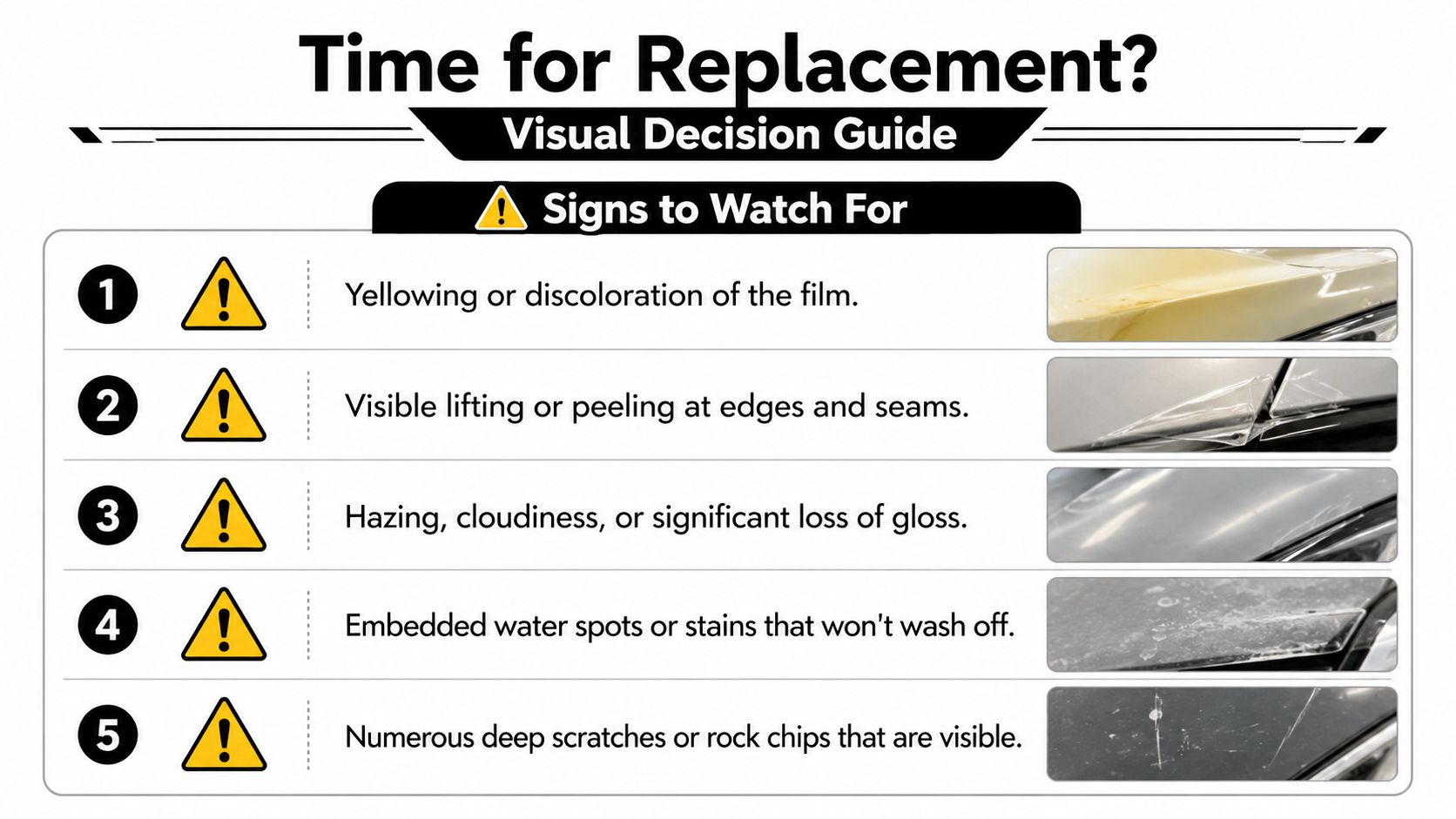
The signs that matter most
Yellowing is the clearest ageing cue. On lighter cars, it stands out even more because the film stops blending into the paint. Edge lift is another big one, because once the edges start opening up, dirt, moisture, and road grime can get underneath.
Hazing or cloudiness usually means the film has lost some of its original clarity. Some light surface dullness can be corrected with proper care, but a significant loss of gloss is a different problem. Water-spot etching is another marker, especially when the spots won't wash off and start looking like permanent damage. Cracking or peeling at seams usually tells you the film is past its best period.
Replacement versus repair
Some issues are maintenance, some are replacement. Light haze, if caught early, may respond to a safe polish or proper cleaning method. Yellowing, severe edge lift, and cracking are different. Those signs point to adhesive failure or ageing that won't be fixed by another wash.
Decision rule: if the film no longer looks clear and bonded, or it's visibly changing the car's appearance, replacement is usually the honest answer.
For resale-conscious owners, that rule matters more than a generic year count. A car can still technically have PPF on it and yet look worse because the film is old, stained, and starting to lift. At that point, the job of protecting the finish and preserving appearance has already slipped.
Warranty Expectations and Whitby Installation Support
A warranty sounds reassuring, but it isn't a promise that the film will look perfect for the entire period under every condition. Most coverage language is tied to specific failure modes, not every mark or bit of ageing you might notice in daily use.
What warranties usually cover
| Warranty Item | Usually Covered | Common Exclusions |
|---|---|---|
| Yellowing | Manufacturing-related discolouration | Neglect, harsh chemicals, environmental staining |
| Cracking | Premature film failure | Damage from impact or misuse |
| Hazing | Defects tied to the film | Abrasion, poor washing, contamination |
| Adhesion failure | Delamination or abnormal lift | Improper care, unapproved installation conditions |
| Appearance changes from wear | Sometimes limited or excluded | Normal ageing, road abuse, wash damage |
That's why documentation matters. A certified shop that records install dates, batch numbers, and care recommendations gives you a much stronger footing if a claim ever comes up. If you want another example of why product support and wear patterns matter in everyday use, the article on why your opener might be dying shows the same basic principle, age alone doesn't tell the whole story, condition and maintenance do.
Carmedics Autowerks in Whitby, Ontario installs paint protection film as part of its broader auto protection work, alongside window tinting and collision repair. For local drivers, that means one place can handle the install, the documentation, and the follow-up questions that matter when warranty language gets specific.
What to confirm before you book
- Ask which film is being installed.
- Ask how warranty claims are documented.
- Ask what maintenance routine keeps coverage in good standing.
- Ask how replacement is handled if the film starts to yellow or lift early.
- Ask for a realistic lifespan estimate based on where the car is parked and how it's washed.
A good installer won't sell you fantasy mileage. They'll tell you what the film can do, what it can't, and what kind of care it needs to stay clear for as long as possible.
If you want PPF installed with the kind of care that matches how long it should last, Carmedics Autowerks Inc can help with paint protection film, window tinting, and collision repair from their Whitby shop. Visit Carmedics Autowerks Inc to talk through your vehicle, your driving habits, and the kind of protection that makes sense for the way you use your car.