

You wash the car, dry it properly, step back, and something feels off. The paint is clean, but it doesn't look alive anymore. The gloss is flatter, the colour has lost some depth, and the hood or roof usually looks older than the doors.
That's a familiar sight in Whitby. A vehicle sits in summer sun, runs up and down the 401, gets hit with winter salt spray, then goes through freeze and thaw for months. By the time most owners notice fading, the damage has already started in the protective top layer of the paint.
Why Your Car's Shine Doesn't Last Forever
A lot of owners think fading starts when the paint changes colour. It usually starts earlier than that. The first clue is often after a wash, when the surface is clean but the finish still looks tired.
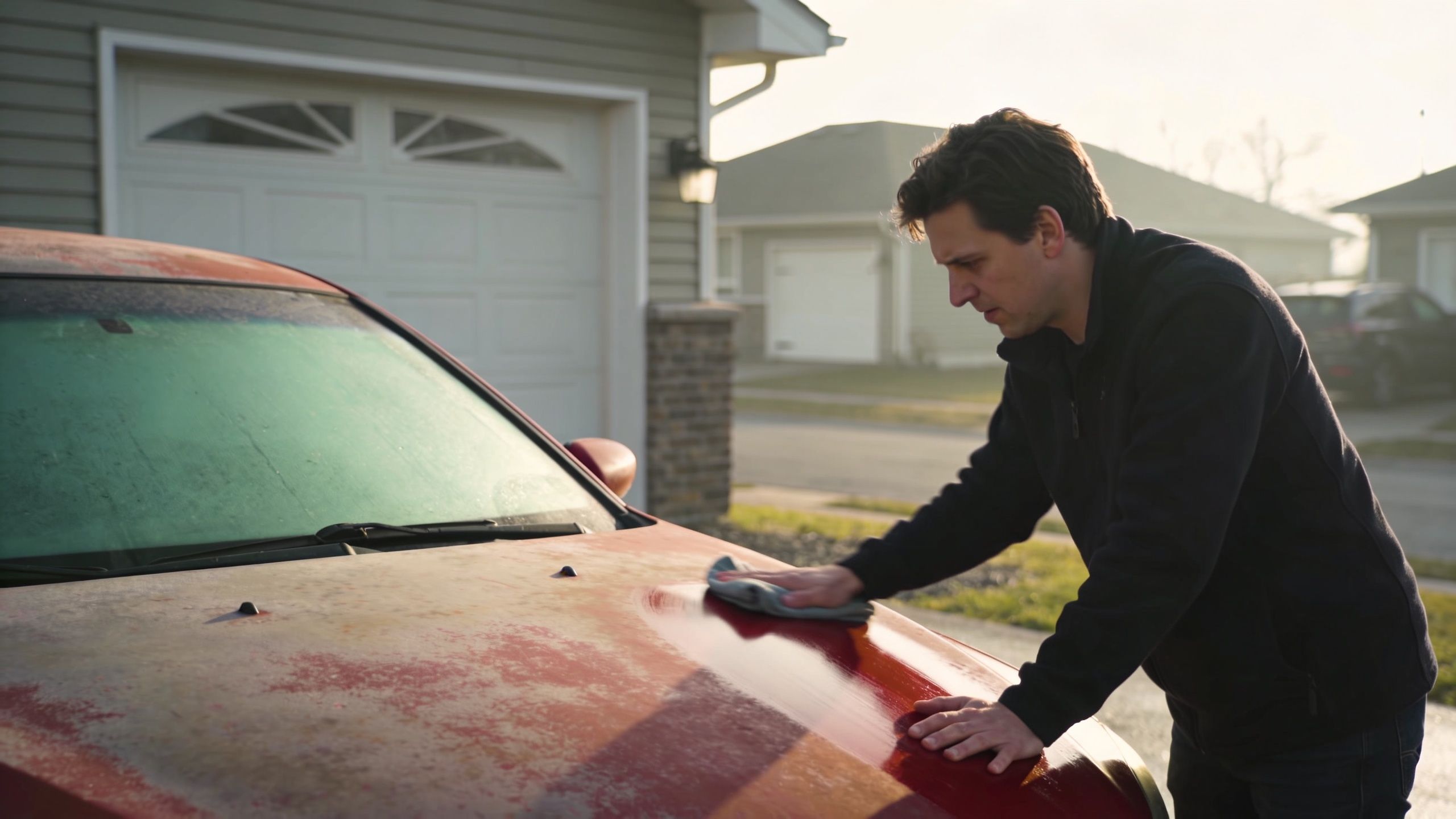
In Durham Region, that loss of shine isn't random. Local exposure adds up. Summer sun beats on the hood in a driveway or parking lot, winter road spray coats the lower panels, and each season attacks the finish differently. That's why a car can be mechanically solid and still start looking worn before the owner expects it.
Why Whitby cars age differently
Whitby drivers deal with a rough combination of bright summer exposure and corrosive winter conditions. Paint fade here isn't only about looks either. Once the protective surface starts breaking down, the finish becomes more vulnerable to oxidation, etching, staining, and long-term failure.
For darker vehicles, this usually shows up fast. Black, red, and deep blue paints tend to make every change more obvious. If you own one of those colours, even choosing the right maintenance product matters. A guide on wax choices for black cars shows how much finish care changes the look of dark paint.
A clean car and a protected car aren't the same thing. Washing reveals the condition of the paint. It doesn't restore the protection that weather has stripped away.
Why fading matters beyond appearance
When enthusiasts ask what causes car paint to fade, they're usually asking about colour loss. In practice, fading is part of a bigger problem. It means the paint system is losing its ability to defend itself.
That matters because once the upper layer weakens, routine contamination becomes more harmful. Sun hits harder. Bird droppings stain faster. Salt sticks longer. What starts as dullness can turn into oxidation, patchiness, and eventually clear coat failure if it's ignored.
How Automotive Paint Protects Your Vehicle
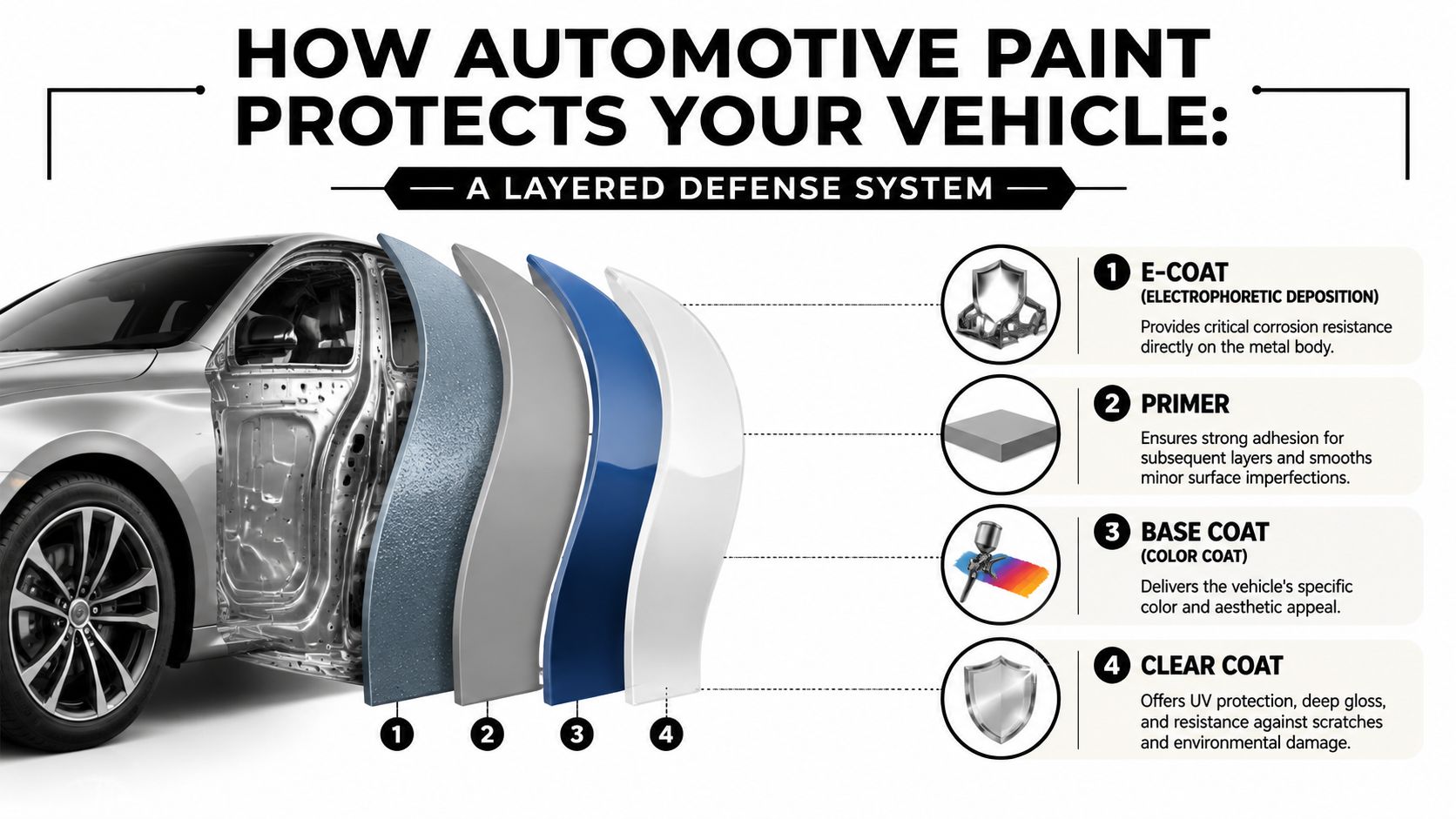
Many vehicle owners view paint as a single layer. It is a complex system where each layer serves a distinct purpose. The easiest way to visualize this structure is by comparing it to clothing.
The lower layer is your base protection against the body itself. Then comes the colour. On top sits the outer shell that takes the abuse from sun, weather, washing, and contamination.
The layers that do the work
Consider it this way:
- E-coat protects the metal body against corrosion at the foundation level.
- Primer helps the next layers bond properly and smooths minor surface imperfections.
- Base coat provides the actual vehicle colour.
- Clear coat is the transparent protective skin that adds gloss and absorbs the daily abuse.
The clearest explanation of the modern system comes from this breakdown of automotive paint layers and clear coat degradation, which notes that modern automotive paint systems consist of primer, basecoat, and clear coat, and that fading typically starts in the clear coat first. That same source explains the basic chemistry: UV breaks down polymer bonds in the clear coat and heat speeds oxidation, which is why neglected paint starts looking dull and chalky instead of glossy.
Why the clear coat matters most
If the primer is your base layer and the base coat is the sweater, the clear coat is the waterproof jacket. It takes the hit first so the colour underneath lasts longer.
That's why many faded vehicles still have colour left, but no richness or gloss. The upper layer has become thin, dry, oxidised, or etched. Once that happens, polishing may help if the damage is light, but no wax can rebuild missing clear coat.
Practical rule: If the surface looks flat but still feels smooth, you may be dealing with early oxidation. If it looks patchy, rough, or starts peeling, the clear coat may already be failing.
Why understanding the structure helps
Knowing the layer order changes how you care for the car. You stop chasing shine with random products and start protecting the layer that needs help.
It also explains why poor wash habits do real damage. Aggressive brushes, dirty mitts, harsh detergents, and neglected contaminants don't usually destroy colour directly. They wear down the protective top layer until fading speeds up.
The Unseen Damage From Sun and Heat
A Whitby car can come out of winter looking fine, then lose noticeable gloss by the end of summer. Park it outside through a few Ontario seasons, and the hood and roof usually show the story first.
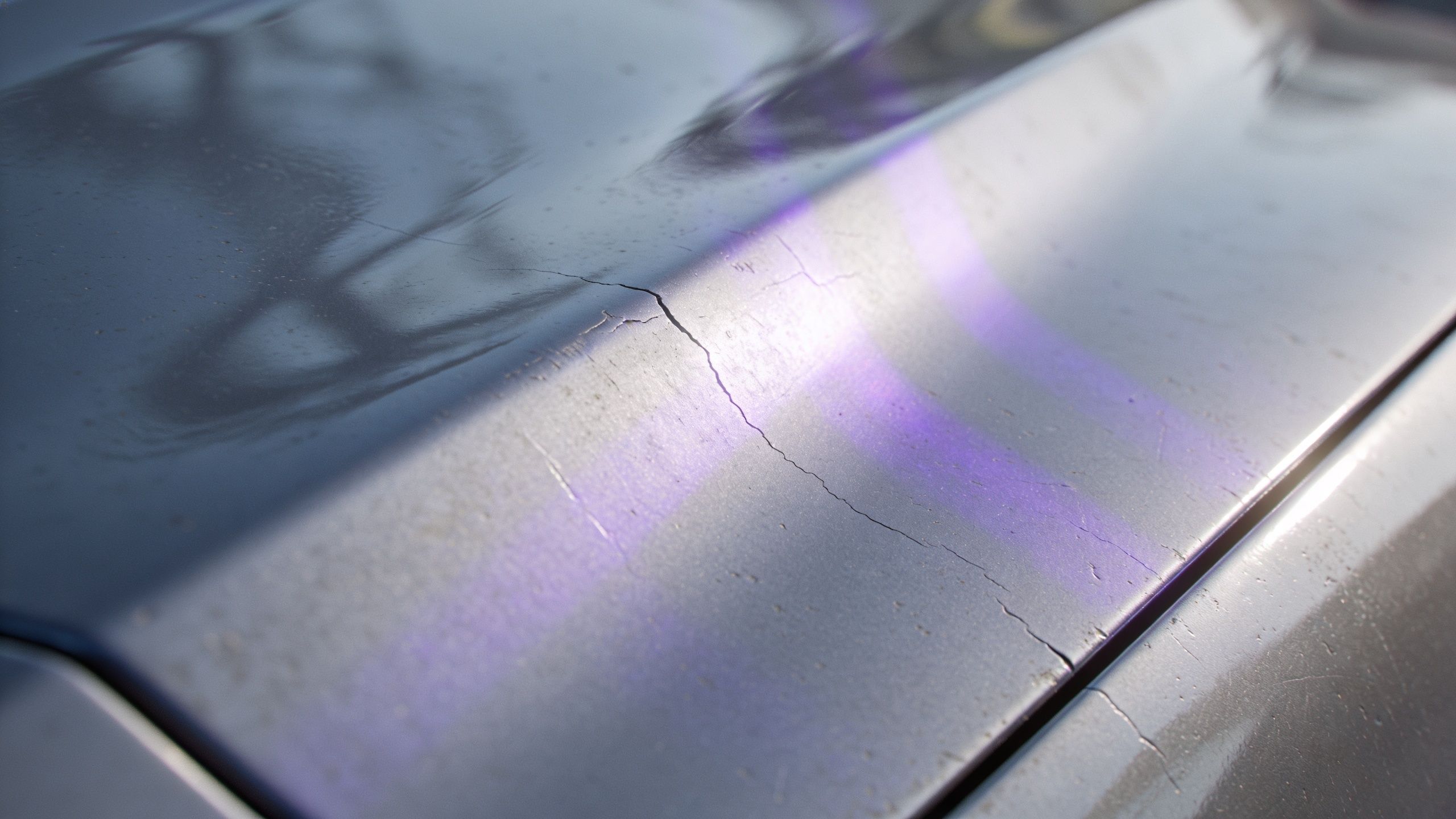
Around the GTA, long summer daylight, high UV days, and repeated heat soak put outdoor-stored vehicles at a clear disadvantage. In the shop, that pattern shows up constantly on vehicles that live in driveways instead of garages. The top surfaces fade first, then the finish starts looking flatter even after a proper wash.
What UV actually does to paint
UV exposure breaks down the resins in the clear coat a little at a time. The change is gradual, which is why owners often miss it until the paint stops reflecting cleanly and starts looking dry under direct sun.
Horizontal panels take the hardest hit because they face the sun for hours. Roofs, hoods, and trunk lids usually fade before doors and quarter panels. On darker colours, the effect is easier to see because black, red, and deep blue panels build more surface heat and show oxidation sooner.
Ontario makes this worse. Summer UV is strong enough to stress paint, then winter leaves salt residue and contamination behind that sit on the same weakened surface. The seasons work together. A clear coat softened by heat and UV is less forgiving once the next round of washing, grime, and winter fallout arrives.
Heat speeds up what UV starts
Heat does not have to blister paint to shorten its life. Repeated expansion and contraction is enough to dry out the upper surface and speed oxidation, especially on vehicles parked in open lots, south-facing driveways, or unshaded condo parking areas.
That matters more now with EVs. Many electric vehicles spend regular charging time sitting still in full sun, and some models keep more heat around the front section and upper panels than owners expect. In practical terms, that can mean more stress on the hood and roof over the long term, especially during Ontario heat waves.
I see the trade-off often. EV owners love the lower maintenance, but paint exposure can be harsher if the car charges outdoors every day. For high-exposure vehicles, how long PPF lasts matters because film gives those hot, sun-facing panels a sacrificial layer that polishing cannot replace once the clear coat has already thinned.
Heat and sun rarely ruin paint all at once. They wear it down in cycles, one hot day and one parked afternoon at a time.
Chemical Warfare on Your Car's Finish
A Whitby car can come out of winter looking fine from ten feet away, then show dull lower doors, etched spots on the hood, and rough paint by the first hot week of June. That is not random wear. It is chemical exposure working on a surface that Ontario weather keeps stressing from both directions.
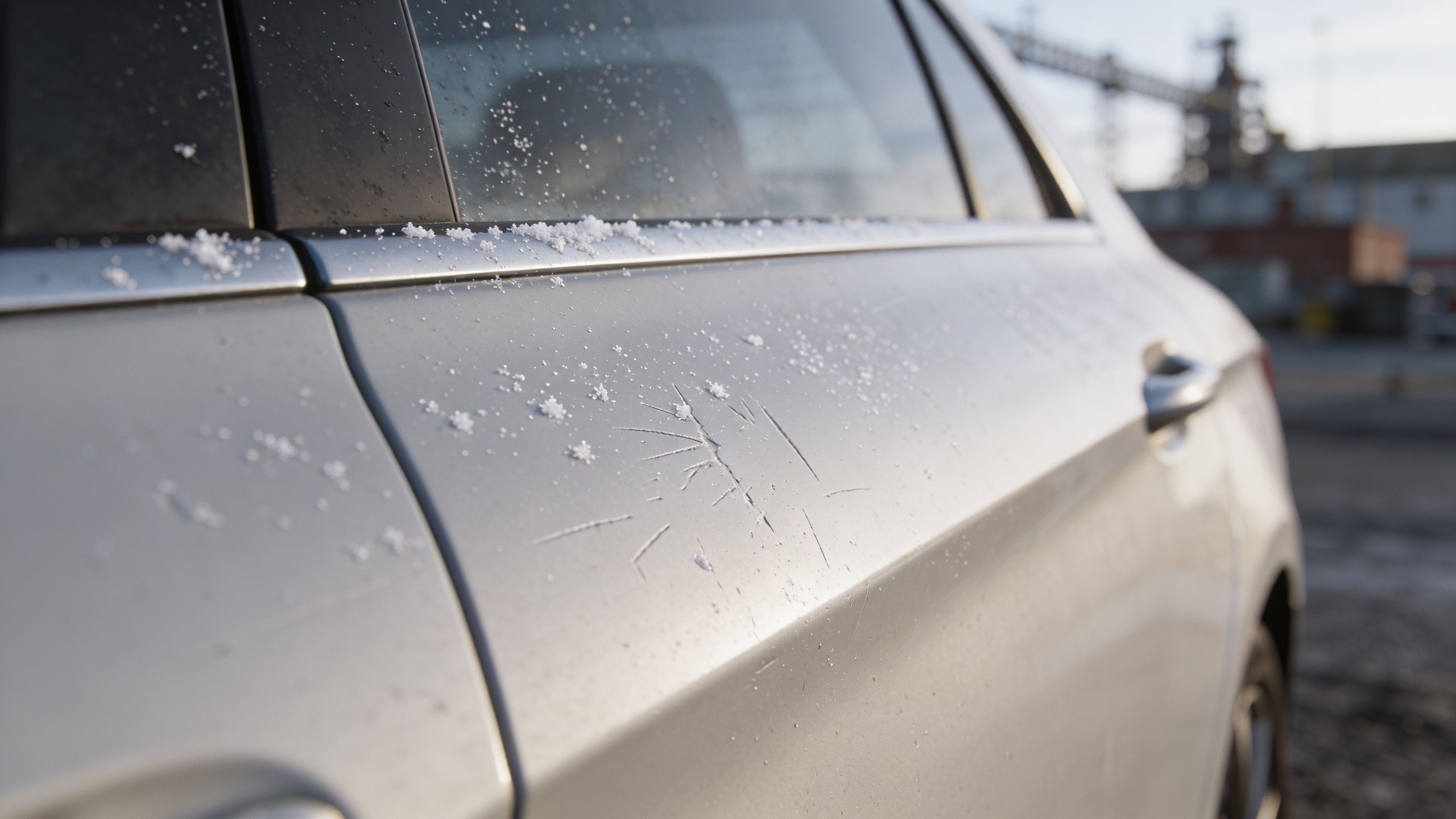
Sun starts the weakening. Road salt, traffic film, bird droppings, sap, and industrial fallout often finish the job. In this part of Ontario, that combination is what catches owners off guard. Summer beats on the horizontal panels, then winter packs corrosive residue into the lower body, wheel arches, and seams. The clear coat never gets much time to recover.
Why winter is brutal on lower panels
Southern Ontario roads are hard on paint because salt rarely stays dry. It turns into a dirty brine that clings to rocker panels, bumpers, wheel arches, and the lower half of the doors. Add freeze-thaw cycles, slush spray, and abrasive grit, and that residue stays active far longer than people expect.
Once that film sits on chipped or swirled paint, it gets a foothold. I see it most on daily drivers that use the 401, park outside, and get washed only when the weather feels tolerable. By then, the contamination has already been ground into the finish by spray, wiping, and repeated drying.
EVs add another wrinkle. Many are heavier, they throw more road spray down the sides, and they often spend long stretches parked outdoors while charging. The result is familiar in the shop. More contamination on the lower body in winter, more exposed time in summer, and faster cosmetic ageing on cars that otherwise need very little mechanical attention.
The contaminants that etch fast
Warm-weather contamination is a different problem. Heat softens the surface enough that acidic or sticky material bonds faster and comes off harder.
The usual offenders are straightforward:
- Bird droppings leave concentrated acidic waste that can mark a hot panel quickly.
- Tree sap hardens as it sits and often needs proper solvent-based removal, not scraping or aggressive rubbing.
- Industrial fallout and acid rain residue settle into the paint and slowly reduce gloss.
- Road film carries old salt, grime, oil, and airborne debris across the lower sections of the vehicle.
Quick removal matters. Gentle removal matters more.
A soaked microfiber, the right cleaner, and patience usually prevent a small contaminant spot from turning into a correction job. A dry towel and pressure usually turn it into one. If marks remain after safe cleaning, a shop that handles automotive paint repair in Whitby can tell you whether you are looking at surface contamination, etching, or actual clear coat failure.
What works and what doesn't
Effective care is simple, but it has to be consistent. Wash often enough to remove salt film before it builds up. Use a pH-neutral car shampoo, clean microfiber wash media, and proper drying towels. During winter, pay extra attention to the lower body and behind the wheels. During summer, remove droppings, sap, and bug residue the same day if you can.
The methods that cause trouble are predictable. Household degreasers strip protection. Automatic brush washes grind grit across already contaminated paint. Letting the car sit dirty for weeks gives chemicals more time on the surface, especially after mild winter days when salt slurry stays wet.
That seasonal trade-off is real in Whitby. Summer exposure usually ages the hood, roof, and upper panels first. Winter chemistry usually beats up the lower body first. Together, they create the uneven fading pattern a lot of Ontario vehicles develop years before the owner expects it.
How to Spot the Early Signs of Fading
The best time to deal with fading is before it becomes obvious from across the street. Early damage is easier to correct and far easier to protect.
Early-stage signs
Look at the car in direct daylight after a proper wash. Not under a gas station canopy. Not at night. Real daylight tells the truth.
Early fading usually shows up as:
- A flatter shine that doesn't have the same crisp reflection it used to
- Mild haziness on the hood, roof, or boot lid
- Reduced depth in the colour, especially on black, red, and dark blue finishes
- Uneven gloss where horizontal panels look older than the sides
- A slightly rougher feel after washing, even when the surface appears clean
At this stage, the clear coat is often still present but tired. That means correction and protection may still be realistic without major refinishing. If you're unsure whether you're seeing oxidation, scratches, or actual paint failure, a shop that handles automotive paint repair in Whitby can separate cosmetic defects from structural coating failure.
Advanced signs
Once the problem goes beyond dullness, the options narrow. Advanced fade looks different and feels different.
Watch for these:
- Chalky residue that transfers lightly when the surface is touched or polished
- Clear coat peeling that looks a bit like sunburnt skin lifting from the panel
- Patchiness or strong colour change across one panel
- Edges around damaged areas where the finish no longer looks uniform
- Persistent dull spots that don't improve after decontamination or polishing attempts
If polishing improves gloss only for a short time, the paint may not be dirty. It may be running out of healthy clear coat to work with.
A quick self-check
Stand at the front corner of the car and look across the hood toward the windshield. Then move to the side and compare the door reflections to the roof. If the top surfaces look greyer, flatter, or milkier, that usually points to sun and heat damage rather than simple dirt.
A Proactive Defence Your Paint Protection Strategy
Park a car outside through a Whitby summer, then run it through an Ontario winter, and the finish takes two very different hits. UV and heat dry out the upper panels. Salt spray, brine, and repeated washing wear on the lower sections. On a daily driver, that cycle is what shortens the life of the clear coat.
The best protection plan accounts for both seasons. It also needs to match how the vehicle is used, because a garage-kept weekend car and a year-round Highway 401 commuter do not need the same setup.
Start with proper washing
Good protection starts with low-friction washing. If the wash process adds swirls, drags grit across the surface, or strips off whatever protection is there, the finish loses ground every time it gets cleaned.
Use methods that reduce contact damage and chemical stress:
- Two-bucket washing keeps more grit out of the wash mitt.
- pH-neutral shampoo cleans without the harsher effect of dish soap or household cleaners.
- Quality microfiber mitts and drying towels reduce marring compared with cheap sponges, brushes, or old bath towels.
- Prompt contaminant removal helps more than occasional aggressive scrubbing.
In winter, rinsing the underbody, wheel arches, rocker panels, and lower doors matters just as much as washing the paint itself. Ontario road salt does not just make a car look dirty. It sits in seams, dries on surfaces, and keeps attacking until it is removed.
Waxes and sealants still make sense
Wax is still useful for owners who like regular upkeep. It adds gloss, leaves a sacrificial layer on the surface, and gives water less chance to sit flat on the paint. Sealants usually last longer and make more sense for many daily drivers.
The trade-off is durability. Wax and basic sealants need reapplication, especially on cars that live outside, go through touchless washes, or see frequent winter cleaning. They help with weathering and contamination, but they will not stop stone chips, salt blasting behind the wheels, or the abrasion that comes with real road use.
Ceramic coating versus PPF
Ceramic coating and paint protection film solve different problems, and owners often mix them up.
A ceramic coating adds a harder-wearing sacrificial layer over the clear coat. It helps with chemical resistance, easier washing, and keeping grime from bonding as tightly. That is useful in Durham Region, where summer bug residue, tree sap, and winter brine all spend time on the paint. It does not stop impact damage.
Paint Protection Film, or PPF, protects against physical wear on the areas that take the most abuse. Front bumpers, hoods, mirror caps, rocker panels, rear arches, and loading edges are common targets. On a Whitby daily driver, especially one doing highway mileage, that physical barrier often gives the biggest real-world benefit.
Some owners combine both. PPF goes on the impact zones, and ceramic coating goes over exposed painted areas for easier cleaning and better chemical resistance. That tends to be the most balanced setup for a car that sees both Ontario sun and Ontario winter roads.
One more point that generic paint-care guides often miss. EVs can need this same discussion sooner, not later. Many electric vehicles spend more time parked outdoors at public chargers, and their smooth front ends still collect heavy road film on the lower panels. The paint itself does not fade because it is electric, but usage patterns can increase UV exposure, contamination dwell time, and wash frequency.
Choosing your paint protection
| Method | Protection Level | Durability | Best For |
|---|---|---|---|
| Proper hand washing | Foundational | Ongoing habit | Every vehicle |
| Wax | Basic | Short-term | Owners who enjoy frequent upkeep |
| Sealant | Moderate | Longer than wax | Daily drivers needing simple protection |
| Ceramic coating | High against contamination and easier maintenance | Long-term with maintenance | Owners who want gloss and easier cleaning |
| PPF | Highest against physical wear on covered areas | Long-term | New cars, dark paint, highway driving, front-end protection |
What suits which owner
If the car is stored indoors, driven occasionally, and washed properly, a sealant or ceramic coating may be enough.
If it is a year-round Whitby daily that sits outside, sees winter salt, or spends hours at a curbside charger or GO station lot, stronger protection makes more sense. In those cases, I usually recommend treating the front impact areas as a separate problem from the rest of the body. For owners comparing options in one place, this guide to the best car paint protection choices is useful because it breaks the decision down by vehicle use, not marketing claims.
Match the protection to the car's real life. That is how you keep gloss longer and avoid paying for the wrong product twice.
When Professional Intervention Is The Answer
Some paint problems respond well to maintenance. Others need machine correction, film installation, or refinishing. Knowing the difference saves time and prevents expensive mistakes.
When correction makes sense
If the paint is dull, lightly oxidised, swirled, or marked by shallow surface defects, professional paint correction can often restore a surprising amount of gloss. That process uses controlled machine polishing to level defects within the clear coat and refine the finish.
This is usually the right move when:
- The paint still has intact clear coat
- The finish looks tired but not peeled
- Light oxidation is visible on upper panels
- Previous washing has left swirls and haze
A good correction doesn't just make the car shiny. It creates a proper base for wax, ceramic coating, or film.
When protection should be installed professionally
Ceramic coating and PPF both rely heavily on prep. If the surface isn't corrected and decontaminated first, the protection locks defects underneath. If the installation is poor, edges lift, contamination gets trapped, or the finish never looks right.
That's why many owners choose professional application even when they're comfortable washing and maintaining the car themselves. Film alignment, stretch control, edge wrapping, and clean panel prep matter.
When the paint is beyond correction
Some finishes won't polish back because there's nothing healthy left to work with. If the clear coat is peeling, the base coat is exposed, or the panel has severe failure, correction won't fix it. At that point, refinishing or repainting becomes the proper repair.
That matters after years of neglect, but it also matters after collision damage or poor previous paintwork. If you've reached the stage where the finish needs restoration rather than maintenance, looking into local auto paint protection and restoration options is the practical next step.
Paint fade isn't one problem. It's the result of UV, heat, salt, acidic contamination, and time all working on the same surface. The right solution depends on which stage your paint is in right now.
If your vehicle is losing gloss, showing early fade, or needs a proper long-term protection plan for Whitby conditions, Carmedics Autowerks Inc can help with paint protection film, ceramic coating, collision repair, and finish restoration designed for how your car is driven and stored.