


You pick up your car after a windshield replacement or a light front-end repair. The glass looks perfect. The paint is sorted. Then someone says you still need ADAS calibration, and suddenly it sounds like the repair isn't finished.
That confusion is common. The car feels drivable, there may not be a warning light on, and nothing seems obviously wrong. But on a modern vehicle, “good enough” alignment of a camera or radar sensor isn't good enough at all. The systems that watch lane markings, track vehicles ahead, and help with emergency braking rely on exact positioning.
That matters in Whitby and across Durham Region, where there are more vehicles on the road. Whitby had a population of 138,501 in the 2021 Census, living in 46,460 occupied private dwellings, and the town recorded 7.9% population growth from 2016 to 2021, according to Whitby's 2021 Census profile. More people means more commuting, more windshield replacements, more collision repairs, and more late-model vehicles with safety systems that need proper recalibration after repair work.
If you've searched for ADAS calibration near me, you're already asking the right question. The critical issue isn't just where to get it done. It's whether the shop understands that calibration is a safety procedure tied to OEM repair requirements, not an optional add-on.
Your Modern Car's Unseen Safety Net
A lot of drivers first hear about ADAS only after a repair. They come in expecting glass work, body work, or a bumper replacement. They don't expect a discussion about camera angles, target placement, scan tools, and manufacturer procedures.
That's because ADAS works in the background when everything is right. Lane-keeping assist nudges when needed. Forward collision alerts trigger when they should. Automatic emergency braking stands by without demanding attention. It's an unseen safety net until something changes the sensor's relationship to the vehicle.
Why a small repair can create a big safety problem
A modern vehicle doesn't “see” the road the way a driver does. It interprets the road through a set of cameras and sensors mounted to specific points on the body and glass. If that position changes, even slightly, the software can still operate while reading the environment incorrectly.
Practical rule: If a repair touched the windshield, bumper area, ride height, alignment, or a mounted sensor, assume calibration needs to be verified.
That's where many owners get caught out. The car leaves the shop looking finished, but the digital safety layer may no longer be aimed where the manufacturer intended. For enthusiasts who care about how a car performs, this is the same principle as steering geometry or suspension setup. A small deviation changes behaviour.
Why this matters more for Whitby drivers
Whitby isn't isolated driving. It's commuter traffic, highway merges, stop-and-go conditions, and long daily use. A vehicle that relies on camera and radar input needs those systems to react the way the manufacturer designed them to react, especially in the kind of mixed driving people do between Durham Region and Toronto.
The search for ADAS calibration near me isn't about convenience alone. It's about finding a shop that treats your vehicle's driver-assistance systems with the same seriousness you'd expect for brakes, steering, or structural repair.
What Is ADAS Calibration
A vehicle can come out of a repair looking perfect and still have a safety system aimed wrong. That is the problem ADAS calibration solves.
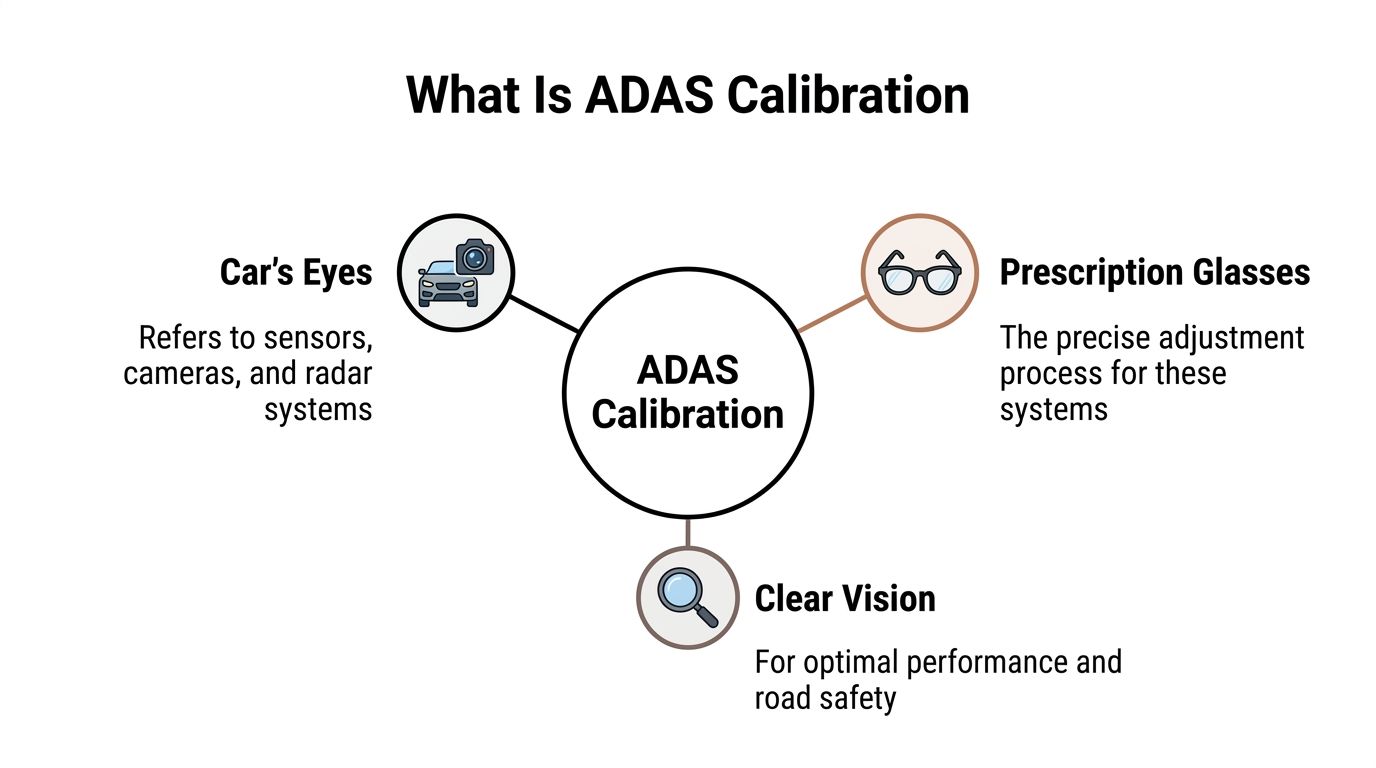
ADAS calibration is the manufacturer-specified process of measuring, aligning, and verifying the cameras, radar units, and related sensors that support features like lane keeping, forward collision warning, adaptive cruise control, and automatic emergency braking. The goal is simple. Make sure those systems read the road from the exact position and angle the OEM intended.
The systems involved
ADAS works as a package, not as one isolated part. A forward-facing camera may track lane markings and traffic signs. A radar sensor in the bumper or grille may measure closing distance to the vehicle ahead. Some models also use side sensors, surround-view cameras, or windshield-mounted modules that depend on precise mounting geometry.
That geometry is the whole job. The sensor has to be positioned correctly relative to the vehicle centerline, ride height, thrust angle, and body structure. A few millimeters at the mount or a slight change in angle can affect how the system identifies a lane edge, judges following distance, or decides when to warn the driver.
For drivers adding or servicing camera-based equipment, the same rule applies. Work involving auto camera installation has to respect factory mounting position, viewing angle, and integration with the vehicle.
Static and dynamic calibration
Manufacturers generally call for one of two calibration methods, and many vehicles require a specific sequence rather than a shop choosing whichever is easier.
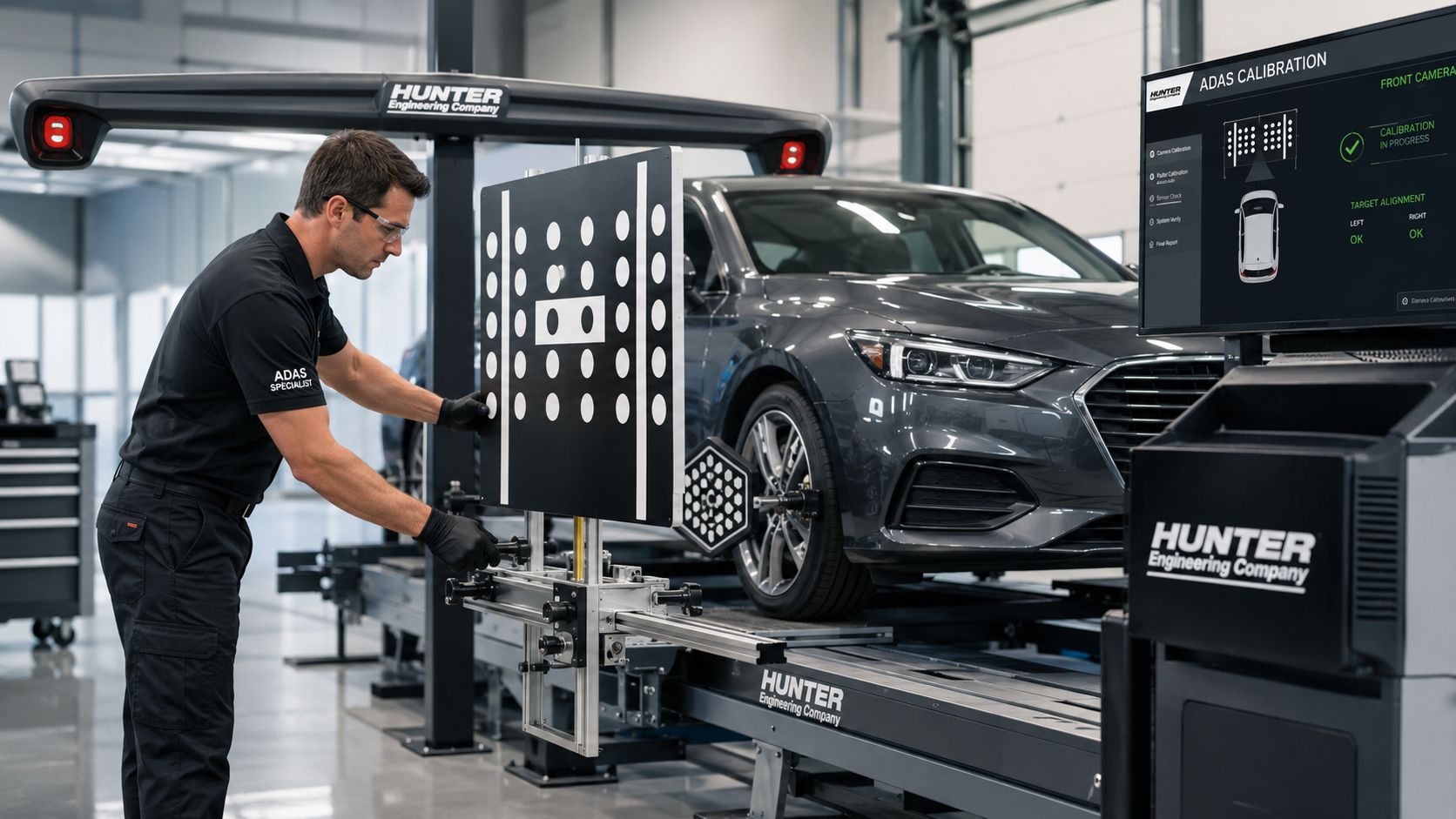
Static calibration is performed inside the shop with the vehicle parked on a level surface. The technician sets tire pressures, confirms ride height and alignment-related conditions, centers the steering wheel, and places OEM-specified targets at measured distances and heights. Scan tools and aiming equipment are then used to complete the procedure. Nissan explains that ADAS camera and radar systems may require static calibration with special tools and target boards after repair or replacement, depending on the model and system, in its Nissan Collision Repair Position Statement on ADAS calibration.
Dynamic calibration is completed during a road test under conditions listed by the manufacturer. That usually means proper road markings, stable speeds, and no active faults that would interrupt the learn process. Dynamic procedures sound simple, but they still depend on the vehicle being mechanically correct before the drive starts.
At Carmedics Autowerks, the practical trade-off is straightforward. Static calibration gives the technician a controlled environment. Dynamic calibration verifies operation in real driving conditions. The vehicle manufacturer decides which method is required.
Proper ADAS calibration is an OEM procedure tied to safety system performance. It is not a generic reset and it is not a best guess.
What calibration is not
Calibration is not clearing codes and sending the car out. It is not a quick road test after windshield or bumper work. It is not lining up a sensor by eye because the warning light stayed off.
For a Whitby or Durham Region driver, that distinction matters. A qualified shop follows service information, uses the right equipment, and documents the result. A shop that skips those steps can return a vehicle with driver-assistance features that appear normal but respond later, earlier, or incorrectly when the driver needs them most.
When Is ADAS Calibration Absolutely Required
The short answer is simple. If the manufacturer calls for it, it's required.
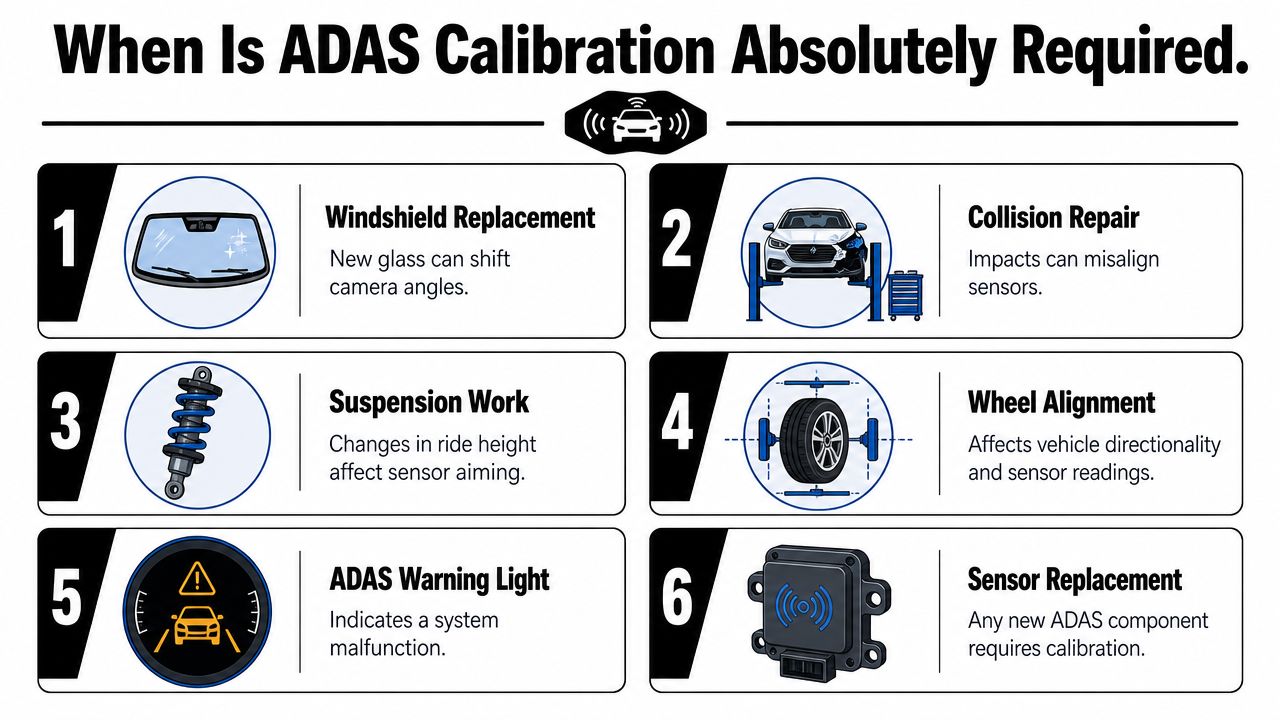
The longer answer is where people get into trouble, because many of the triggers don't seem dramatic. A cracked windshield. A bumper repair that looks minor. Suspension work that changed ride height. An alignment after replacing worn parts. Any of those can alter the relationship between the sensor and the road.
Windshield replacement is the clearest example
In Ontario, post-windshield replacement calibration is not a cosmetic extra. The forward-facing camera has a tolerance deviation of less than 0.5 degrees, and exceeding that can cause the system to misinterpret road geometry. The same source states that this can lead to a 30 to 40% reduction in detection accuracy for pedestrians and obstacles at speeds above 50 km/h, as outlined by Ontario ADAS recalibration guidance after windshield replacement.
That's why glass work and calibration go together. If the camera sits on the glass, replacing the glass changes the mounting relationship. That has to be verified.
If your vehicle has camera hardware attached to or viewed through the windshield, and you've booked auto glass service in Oshawa and the surrounding area, calibration should be part of the repair conversation, not an afterthought.
Other common triggers drivers overlook
Some calibration requirements are obvious. Others aren't.
- Collision repair: Even a relatively light hit can shift bumper-mounted radar or front camera alignment.
- Suspension work: Changes in ride height affect how the vehicle points its sensors relative to the road.
- Wheel alignment: Steering geometry and vehicle tracking influence systems that depend on centreline accuracy.
- Sensor replacement or removal: If the component came off, its original position must be re-established.
- ADAS warning lights or odd behaviour: False alerts, delayed warnings, or inconsistent lane support all justify inspection.
Why this gets missed in the real world
A study discussed by adasThink found that ADAS recalibrations are routinely missed in collision repair and windshield replacement scenarios, and that OEMs determine calibration requirements by VIN-specific service information and position statements, not just by general estimating systems, according to the GlassBYTEs report on the adasThink study.
That's a major point. You can't assume that two vehicles from the same brand need the same procedure. The shop has to look up the exact requirements for the exact vehicle.
If a shop can't tell you how it confirms OEM procedures for your VIN, that's a problem before the car even enters the bay.
For owners, that's the safety issue behind the phrase ADAS calibration near me. You're not just looking for a nearby address. You're looking for a provider that won't skip the step that many shops still overlook.
The In-Shop Calibration Process Explained
A professional in-shop calibration looks more like a controlled measurement procedure than a traditional mechanical repair. That's because it depends on setup conditions as much as it depends on tools.
Step one starts before the target comes out
The vehicle gets checked as it sits. Tyre condition, ride height issues, warning lights, and prior damage all matter. Then the technician performs a pre-scan to see what modules are reporting and whether there are faults that would block calibration.
Proper computer diagnostics for your car matters. A calibration done without a complete scan can miss fault codes, communication issues, or system conditions that make the result unreliable.
The environment has to be controlled
Static calibration needs space in front of the car, consistent lighting, and a surface that meets the procedure. The targets aren't placed by eye. They're measured to the vehicle based on OEM requirements, then adjusted for height, angle, and centreline.
Some shops underestimate how strict this is. The adasThink findings noted earlier pointed to a real industry gap, where recalibrations are often missed because many shops lack proper equipment or don't research OEM requirements per VIN.
That's also why “we have a scan tool” doesn't answer the question. The scan tool is only one part. The physical setup is just as important.
What the technician actually does
A typical in-shop process often includes work like this:
- Pre-scan the vehicle to identify faults and confirm system readiness.
- Verify the setup conditions so tyre pressures, suspension condition, and ride height aren't compromising the process.
- Position the calibration frame or target according to the manufacturer's measurements.
- Run the calibration routine through the diagnostic platform for the camera, radar, or related module.
- Perform a post-scan and confirm whether the procedure completed successfully.
A clean result should be documented. If there's no record of pre-scan and post-scan status, ask how the shop verified completion.
Why in-shop work often produces the most reliable result
Shops that handle this correctly treat calibration like a measured repair operation. They don't improvise target placement. They don't substitute a generic routine for a vehicle-specific one. They don't assume one successful brand procedure applies to the next vehicle.
For the owner, this transparency matters. If you know what the process should look like, it becomes easier to separate a true ADAS service from a box-ticking exercise.
In-Shop Versus Mobile ADAS Calibration
A Whitby driver gets a windshield replaced, the lane camera sits behind the glass, and the car leaves with no warning lights on. On the road home, the safety systems may still be out of spec. That is the fundamental difference in this decision. ADAS calibration is not about convenience first. It is about whether the vehicle can be set up and verified the way the manufacturer requires.
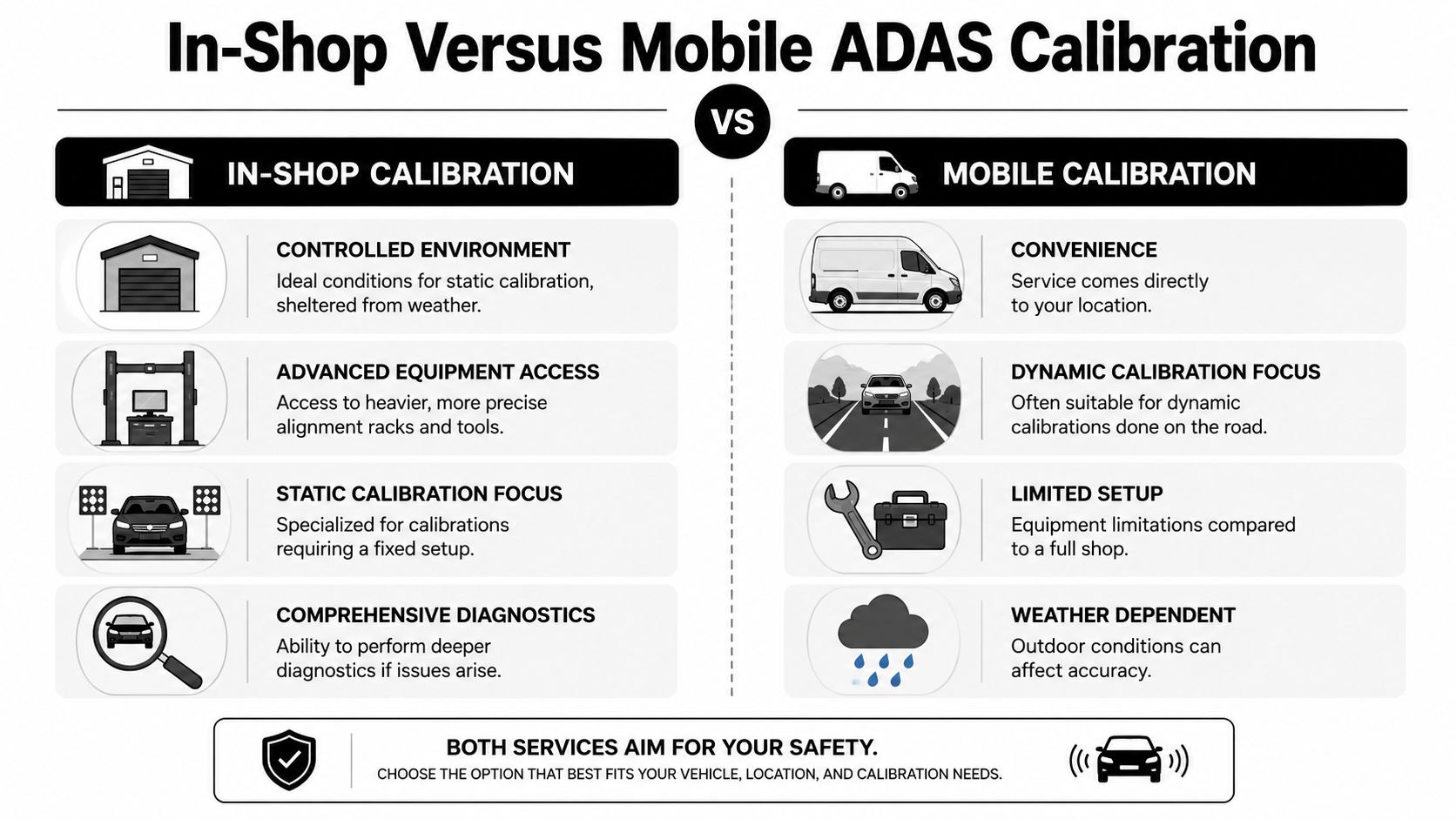
Mobile service can be the right call for some jobs. If the vehicle needs a dynamic calibration and the provider can meet the OEM road-test conditions, on-site service may be reasonable. It can also help when a vehicle should not be driven far before checks are completed.
Static calibration raises the bar. Camera and radar targets have to be placed with tight measurements on a level surface, with stable lighting and enough clear space to control the setup. A sloped driveway, crowded lot, or changing weather can turn an acceptable-looking job into a bad one. The vehicle may pass a basic scan and still have an aiming error that affects braking, lane keeping, or forward collision warnings.
That is why many post-collision calibrations belong in a controlled facility, especially when sensor replacement, body repair, suspension work, or glass replacement are part of the repair path. In those cases, calibration should be treated as one step in the full repair process, not as an add-on performed wherever the vehicle happens to be parked. A proper collision repair and calibration workflow in Whitby gives the technician a better chance of meeting OEM procedure from start to finish.
Here is the practical trade-off:
| Service type | Better fit | Main limitation |
|---|---|---|
| In-shop calibration | Static procedures, vehicles needing measured setup, repairs tied to collision or structural work | Less convenient and may require towing or scheduling |
| Mobile calibration | Select dynamic procedures, limited-mobility situations, vehicles that can be safely tested under the required conditions | Harder to control floor level, space, weather, and lighting |
Drivers should ask direct questions before agreeing to either option:
- Does my vehicle need static, dynamic, or both: The answer should come from OEM service information for the exact vehicle.
- Can you meet the setup requirements: Floor level, target distance, lighting, fuel level, ride height, and tire condition can all matter.
- What do you provide after the job: A serious shop should be able to show scan results and calibration completion records.
- What happens if calibration fails: The right answer is diagnosis and correction, not repeated attempts until the tool finally responds.
For ADAS calibration near me, the safer choice is the one that matches the procedure and the environment. If a shop cannot explain how it controls the variables, it has not earned the job.
Finding a Qualified ADAS Expert in Whitby
A Whitby driver picks up a vehicle after glass or collision work, sees no warning lights, and assumes the safety systems are ready to protect them. That assumption can be wrong. A camera or radar can be out of spec even when the dash looks normal, and that changes how features like lane keeping, forward collision warning, and automatic emergency braking react on the road.
The right shop treats ADAS calibration as a safety procedure tied to OEM repair standards. That means checking the exact service information for the vehicle, confirming whether calibration is required, and documenting the result. If a shop cannot explain that process clearly, keep looking.
What to ask before you book
Ask direct questions and listen for direct answers.
- How do you confirm calibration requirements for my exact vehicle: The answer should reference OEM service information, not shop habit or a general database alone.
- Can you document pre-scan, post-scan, and calibration results: You should be able to see what faults were present, what was corrected, and whether calibration completed properly.
- Who performs the work and what equipment is used: Training matters. So do the correct targets, scan tools, battery support, and a controlled setup area.
- What happens if the system will not calibrate: A qualified technician diagnoses ride height, alignment, damaged brackets, aiming issues, or module faults before trying again.
- How do you handle liability and road safety after repairs: A serious shop understands that a missed calibration is not a small paperwork issue. It can affect stopping distance, warnings, and camera judgment.
Cost matters, but so does the reason behind the quote
ADAS calibration pricing in Ontario varies by vehicle, sensor type, and whether the procedure calls for static setup, a road test, or both. The expense arises from time, equipment, floor space, subscriptions to service information, and technician training.
A very low quote should raise questions. It may mean the shop is quoting a scan instead of a calibration, skipping documentation, or attempting a procedure without the setup conditions the manufacturer requires. That is a poor trade if the system involved helps prevent a front-end collision.
What quality service looks like locally
For Whitby and Durham Region drivers, a qualified ADAS shop should be able to show a repeatable process, not just promise that it is "all taken care of." Good work looks methodical. The vehicle is inspected, scanned, checked against OEM procedure, calibrated under the required conditions, then verified with records the customer can review.
Carmedics Autowerks Inc is one local option that performs ADAS calibration as part of proper repair completion using vehicle-specific procedures, scan tools, and calibration equipment. That matters because OEM compliance is the standard, especially after windshield replacement, suspension work, wheel alignment issues, collision damage, or any repair that can change sensor position.
If you are comparing facilities, use the same checklist at each one. This guide on how to choose a repair shop that follows a clear process is a useful place to start. The same principle applies to ADAS work. Clear procedure, correct setup, and documented results tell you more than a low price or a quick promise.
The best answer to "adas calibration near me" is the shop that treats your driver-assistance systems like the safety equipment they are. In this work, close enough is not good enough.