You've got the claim number, a tow truck receipt, and a car that suddenly feels different even before it's repaired. For a lot of Whitby drivers, this is the moment where the stress shifts. The collision is over, but important decisions start now.
If you care about your vehicle, especially a newer Audi, BMW, Lexus, Tesla, Porsche, or a well-kept truck or SUV with cameras, radar, parking sensors, and protective film, picking a collision repair shop isn't a paperwork task. It's the point where you either protect the car properly or spend months chasing paint mismatch, warning lights, wind noise, poor panel fit, and diminished resale confidence.
After the Accident Your First Crucial Decisions
The first quiet hour after an accident is often the hardest. Adrenaline drops, the scene clears, and then the practical questions hit all at once. Where is the car going? Should you just use the shop someone mentions on the phone? Do you wait for insurance? Do you have to decide immediately?
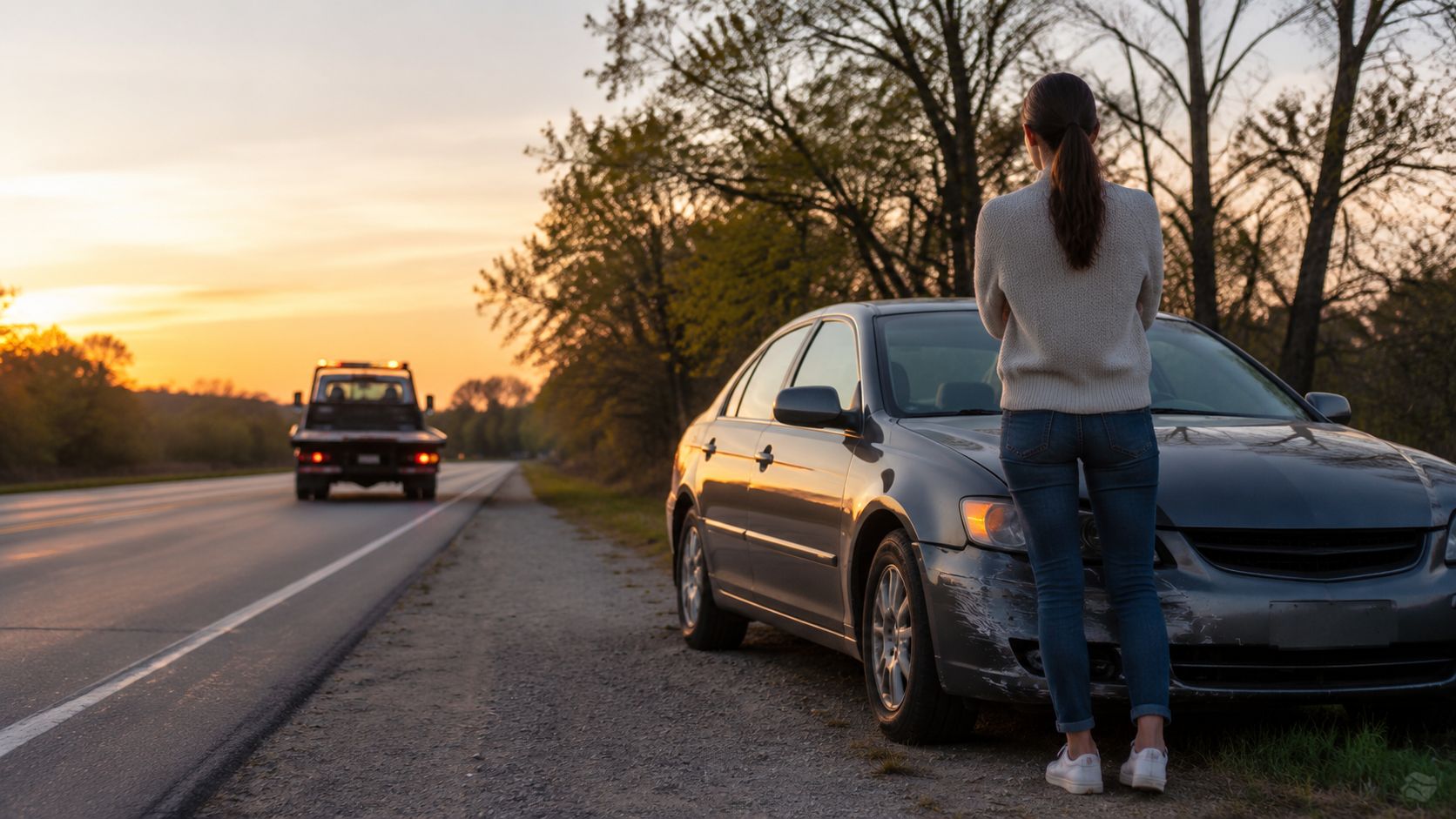
Most drivers I speak with make the same mistake at this stage. They treat repair choice like an admin detail instead of a long-term vehicle decision. That approach made more sense years ago, when repairs were more straightforward. It doesn't work nearly as well on modern vehicles.
Don't confuse urgency with pressure
You need to act, but you don't need to rush into the wrong shop.
A helpful general primer on the immediate post-crash basics is this guide to critical steps after a Philly crash. It's location-specific on the legal side, but the practical order of operations still holds up well. Secure the scene, document what you can, exchange information, and then make your repair decisions with a clear head.
In Canada, the collision repair market was valued at $4.3 billion in 2024, and the industry has gone through significant consolidation, with fewer independent operators over time even as revenue has grown (Canadian collision repair market trends). That matters to a Whitby vehicle owner because it means the difference between shops is no longer just convenience or price. Remaining shops are often handling more complex, higher-value repairs.
Practical rule: The best first decision after a collision is not “Who can take it today?” It's “Who can return the car safely, correctly, and with documentation that makes sense?”
Think beyond the visible damage
A cracked bumper cover may look minor. On many current vehicles, that same impact area can involve parking sensors, blind-spot hardware, mounting tabs, grille shutters, undertrays, wheel liners, radar brackets, and camera alignment concerns. You might also have hidden damage behind the cover, or damage that affects how the hood, fender, headlamp, or door sits once reassembled.
That's why your first call should be to a shop that can explain process, parts, diagnostics, and insurer communication clearly. If you're trying to understand how claims and repair approval fit together, this overview of insurance collision repair guidance is worth reading before you authorise anything.
What to decide first
In the first day, focus on only three things:
- Where the vehicle is stored: Storage fees and logistics can start complicating matters quickly.
- Who writes the initial repair plan: A weak first estimate often leads to avoidable delays.
- Whether the shop understands your specific vehicle: Newer cars, enthusiast cars, luxury cars, EVs, and aluminium-bodied vehicles need a different level of attention.
The smartest owners don't chase the fastest promise. They look for the right hands first.
Finding and Vetting Potential Shops in Whitby
A search for a collision repair shop will give you a long list. Most of them will say they do quality work. Some do. Some do acceptable work on basic jobs. A few are built for the level of repair a modern enthusiast vehicle needs.
Start with capabilities, not slogans
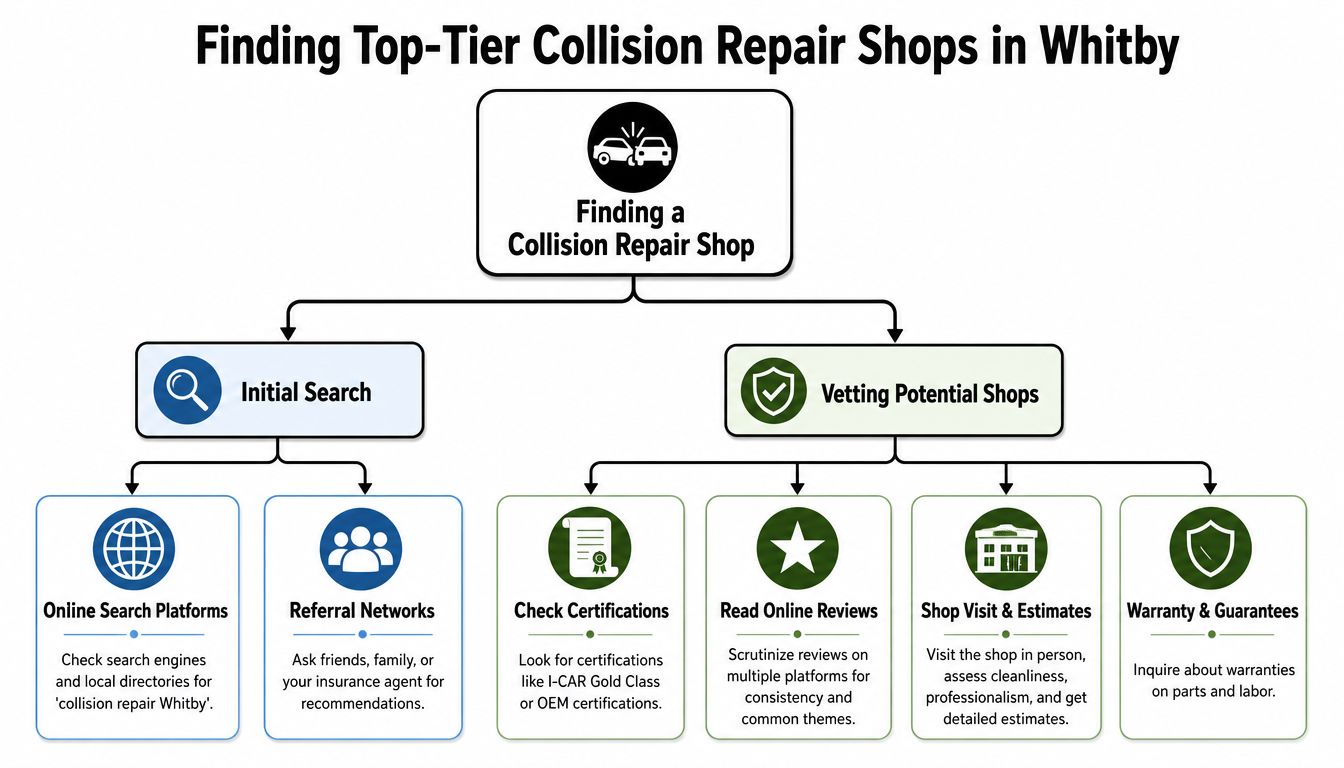
In Ontario, top-tier shops follow a mandatory process that includes pre-repair diagnostic scanning and post-repair calibration of safety systems, and I-CAR Gold Class is recognised as the industry benchmark for technology and training (Ontario collision repair process and training benchmark). If a shop can't speak comfortably about scans, calibrations, repair procedures, and ongoing training, that's a warning sign.
A badge alone isn't enough, though. Ask what the credential changes in the repair process. A good shop should be able to explain, in plain language, how training affects structural work, refinish procedures, sensor setup, and final verification.
Build a shortlist the right way
Don't aim for ten options. Aim for two or three serious candidates.
Use this sequence:
Search locally with intent
Look for collision-focused facilities, not just general repair shops that also “do body work.” A dedicated Whitby collision centre option should clearly describe the type of repairs it handles.Check certification depth
I-CAR Gold Class matters. OEM certifications matter too, especially for newer German, Japanese, and EV platforms. If you own a brand with strict repair procedures, ask whether the shop follows manufacturer documentation and whether sublet operations are used for scanning or calibration.Read reviews like an adult, not like an algorithm
Ignore vague praise. Look for specifics. Did customers mention communication? Paint match? Delivery condition? A warning light issue that got resolved properly? Insurance coordination? Those details tell you more than star counts.Call and listen carefully
The first phone call reveals a lot. If the person answering can only talk about booking dates and “free estimates,” keep looking. If they ask what vehicle you drive, where the impact was, whether safety systems were involved, and whether the vehicle has PPF or special finishes, you're talking to a more serious operation.
Ask better questions
Here are questions that separate a polished front desk from a properly organised repair process:
“Will you perform pre-repair and post-repair scans?”
If the answer is vague, that's a problem.“How do you handle ADAS calibration?”
You want a direct answer, not “we'll see if it needs it.”“Do you document repair procedures and parts selection?”
Good shops document. Weak shops improvise.“How do you handle paint match and blending?”
Anyone can say “factory finish.” Ask how they get there.“What happens if hidden damage is found?”
Supplements happen. The issue isn't whether they occur. The issue is how well the shop manages them.
A clean facility doesn't guarantee a great repair, but a disorganised one usually tells the truth.
Specialist vehicles need specialist conversations
This is especially true if your vehicle falls outside ordinary commuter-car repairs. Owners of RVs, large SUVs, and specialty vehicles often have to think about repair scale, body material, and parts access differently. Even if you don't own an RV, a page on RV accident repair services is a useful reminder that not every body structure, panel type, or repair path is interchangeable.
A proper shortlist should leave you with shops that can explain process confidently, not just sell reassurance.
Decoding Estimates and Navigating Insurance
Two estimates can describe the same damage and still look completely different. That doesn't always mean one shop is dishonest. It often means one shop is writing for appearance, while the other is writing for repair completeness.
Many owners fall into a common trap. The lower estimate feels efficient. The insurer's preferred path feels easy. Then the bumper comes off, hidden damage appears, parts choices get murky, and the timeline stretches because the first version of the repair was never complete enough to begin with.
Why estimates vary so much
Recent industry data shows diagnostic scans appear on 87.7% of all repair estimates, and total loss frequency reached a record 22.8%, underscoring how complex modern repairs have become (collision repair complexity data for 2025). In practical terms, that means a proper initial estimate has to account for more than visible sheet metal and paint.
A better estimate usually includes attention to:
- Diagnostic operations: pre-scan, post-scan, fault verification
- Disassembly logic: labour to access hidden damage
- One-time-use items: clips, retainers, fasteners, seals
- Refinish steps: blending adjacent panels when needed
- Calibration considerations: especially after impact to front, rear, mirrors, windscreen, suspension, or body structure
A thin estimate can look cheaper because it omits work that will surface later as a supplement.
Parts decisions change the result
A lot of arguments over repair cost are really arguments over parts strategy. You'll generally hear three categories discussed: OEM, aftermarket, and reconditioned. Each comes with trade-offs in fit, finish, availability, price, and insurer acceptance.
If you want a grounded explanation of the trade-offs, this guide on OEM versus aftermarket parts is a useful starting point.
Here's the practical view from the shop floor:
| Part type | What it can affect | Where owners get caught |
|---|---|---|
| OEM | Fit, material consistency, mounting precision, resale confidence | Higher cost or delays if supply is tight |
| Aftermarket | Price and availability | Variable fit, extra labour, inconsistent finish |
| Reconditioned | Cost savings on some components | Cosmetic imperfections or limited suitability |
Insurance isn't the same as repair leadership
Your insurer manages the claim. That doesn't mean the insurer should dictate every technical decision.
A Direct Repair Program can make the admin side smoother. It can also create pressure toward speed, network compliance, or pre-set assumptions on parts and labour. Sometimes that's fine. Sometimes it isn't. The key is to stay involved and ask direct questions when the shop and the insurer don't initially agree.
Use this short checklist when you review an estimate with your adjuster:
- Ask what is included now versus expected as a supplement
- Clarify the part type for each major replacement item
- Request an explanation for any deleted operation
- Confirm whether scans and calibrations are written in
- Ask who is responsible for documenting final safety-system verification
The cheapest repair path often becomes the most frustrating one when it has to be corrected in stages.
A strong collision repair shop doesn't just write a number. It builds a repair plan that can survive teardown, insurer review, and final delivery.
What a High-Quality Repair Looks and Feels Like
The best repair doesn't announce itself. You don't notice a colour shift at the edge of the door. You don't hear wind around the glass. The steering wheel stays centred. The parking sensors behave normally. The bonnet, lamps, trim, and bumper lines all sit like they belong together.
That's the standard worth paying attention to.
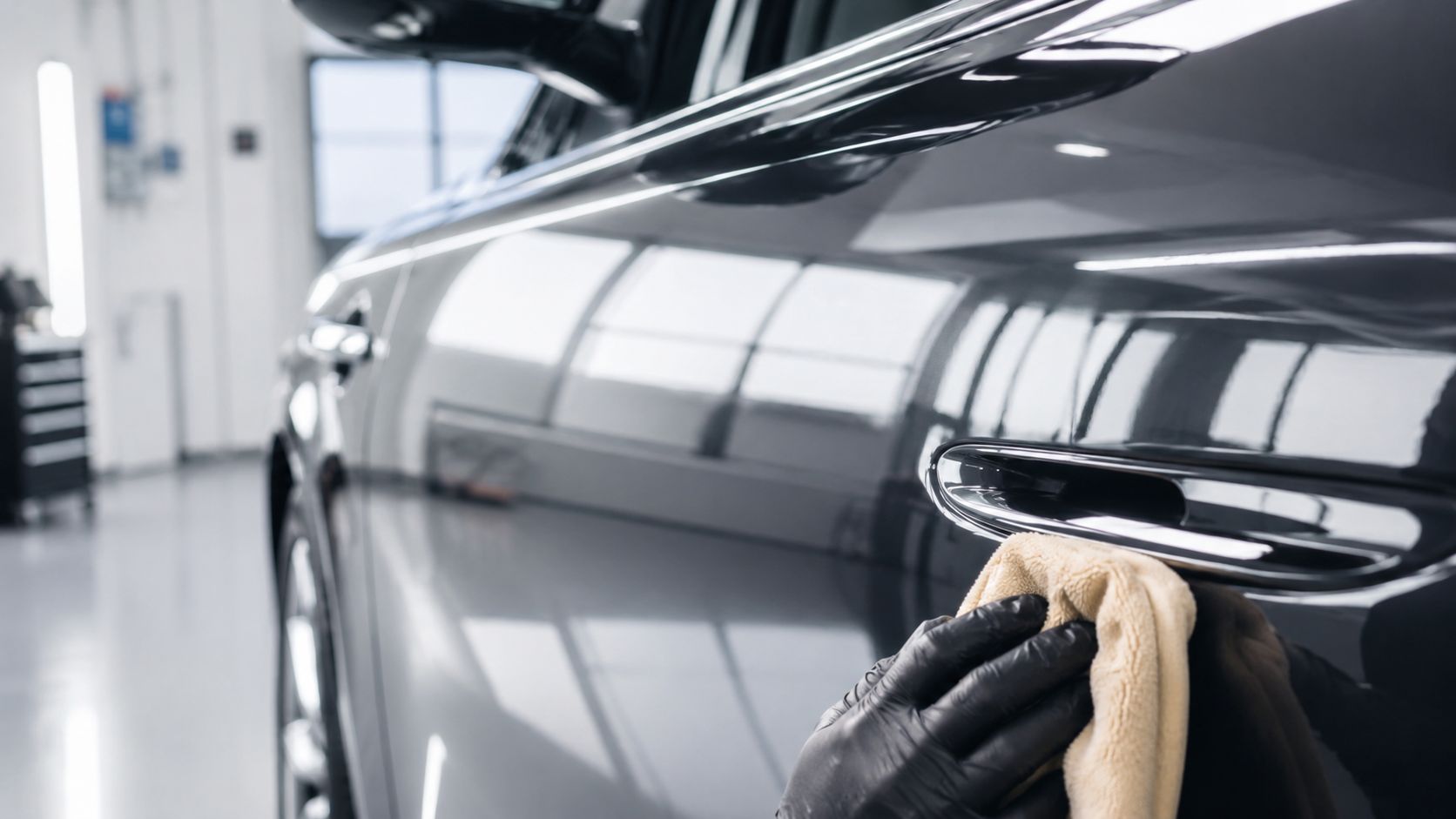
Paint tells the truth fast
Enthusiast owners usually spot poor paint before anyone else does. They'll catch a metallic flop that looks different in shade, a quarter panel that carries heavier texture than the door beside it, or a tape line buried where there shouldn't be one.
A quality refinish should get the basics right:
- Colour match in different light: indoor light, daylight, overcast light
- Texture consistency: not glass-flat on one panel and coarse on the next
- No obvious overspray: especially on mouldings, jambs, liners, or trim edges
- Proper blending where needed: not a hard visual stop that gives the repair away
- Clean finishing details: badges straight, clips seated, edges polished properly
Poor repairs often look acceptable at pickup and worse a week later when the car is washed in bright sun.
ADAS calibration is not a box-ticking exercise
Modern vehicles depend on accurate positioning of cameras, radar units, ultrasonic sensors, and related control systems. If any of those components were disturbed, removed, replaced, or affected by surrounding structural movement, calibration matters.
That's why drivers should understand what ADAS calibration involves before collecting the car. A vehicle can look cosmetically repaired and still have safety systems that don't perform as intended.
If the impact area touched a sensor zone, a bracket, a bumper structure, a mirror, or the windscreen area, calibration deserves a real conversation.
A careful shop should be able to tell you whether the calibration was static, dynamic, or both, and what conditions had to be met for it to be completed correctly.
Modern materials change the repair path
Newer vehicles aren't just steel shells with plastic covers attached. More of them use mixed-material construction, including aluminium-intensive panels and structures. Many also package electronics densely behind cosmetic surfaces.
Industry reporting notes that 34% of collision shops reported increased difficulty sourcing OEM parts for new models in 2025, and that's one reason modern-material experience matters so much (OEM parts sourcing and modern vehicle repair challenges). If a shop struggles with part availability and lacks confidence around aluminium or electronics, the repair can drift quickly from “delayed” to “compromised.”
That affects more than timing. It affects long-term value retention because the repair record, panel integrity, and fit quality all matter when knowledgeable buyers inspect the car later.
PPF restoration matters more than many shops admit
If your car had paint protection film before the accident, don't treat film replacement as an afterthought. A repaired bumper or fender without restored film protection changes how the front end ages, especially on a car that's otherwise meticulously kept.
Ask direct questions:
- Was the damaged film removed without affecting adjacent edges?
- Will the repaired panel cure fully before new film is applied?
- Will the replacement film match the surrounding gloss level and edge finish?
- If only one panel is rewrapped, will the transitions be visible?
PPF is part of the final finish on many enthusiast-owned vehicles. Ignoring it leaves the repair looking incomplete, even if the paint underneath is sound.
Quality also has a feel
A proper repair feels sorted. Doors close with the right effort. Trim doesn't buzz. Road noise doesn't change. The wheel tracks straight. The steering doesn't feel oddly light or off-centre. Warning lights stay off. Cameras and parking aids behave normally.
If you want a broad refresher on the craft behind body repairs, this overview of auto body repair fundamentals lays out the bigger picture well.
The point isn't perfection in a romantic sense. It's restoring the car so that both the visible finish and the hidden systems work as they should.
Your Pre-Pickup Inspection The Ultimate Checklist
When the shop says the vehicle is ready, don't arrive rushed, sign blindly, and leave. Give yourself daylight if possible. Bring your glasses if you wear them. Put the phone away for a few minutes and inspect the car with intent.
Walk around the vehicle slowly
Start outside and stay methodical. Don't stare only at the repaired panel. Compare panel to panel.
Look for these points first:
- Paint match: View the repair from multiple angles, not just head-on.
- Panel gaps: Check bonnet, boot, doors, lamps, bumper corners, and fuel door alignment.
- Trim fit: Make sure mouldings, wheel-arch pieces, grilles, and badges sit evenly.
- Glass and lamps: Confirm they're clean, secure, and free of fresh marks.
- Tyres and wheels: Check for scuffs, damaged finish, or mismatched wheel weights if the area was involved.
Then check the electronics and cabin
Before you drive off, sit in the car with the engine running and let the systems wake up fully.
Test the items owners often miss:
- Warning lights: None should remain unexpectedly illuminated.
- Parking sensors and cameras: Engage reverse and verify image quality and alerts.
- Power features: Windows, mirrors, locks, seat memory, and tailgate operation.
- Climate and infotainment controls: Make sure everything still responds normally.
- Interior condition: No grease on trim, no damaged sill covers, no new rattles from loose fasteners.
If the repair involved impact areas near cameras or radar, ask to review the paperwork related to calibration before you leave.
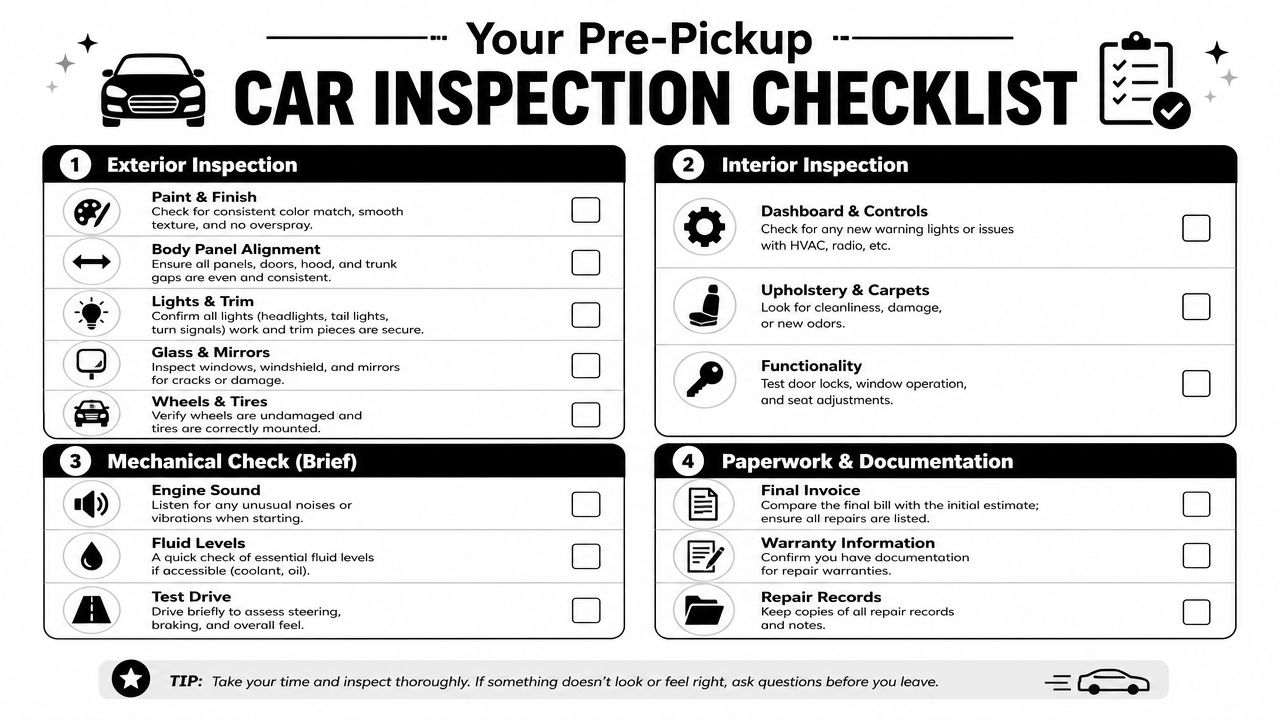
Use a written checklist
A simple checklist keeps emotion out of the final review.
| Area | Check Point | Status (Pass/Fail) |
|---|---|---|
| Exterior | Colour match and paint texture are consistent | |
| Exterior | Panel gaps are even across repaired area | |
| Exterior | No overspray on trim, glass, or liners | |
| Exterior | Lamps, reflectors, grilles, and mouldings are secure | |
| Interior | No warning lights on the dash | |
| Interior | Windows, locks, mirrors, and seats operate properly | |
| Mechanical | Steering feels centred on short drive | |
| Mechanical | Braking and road feel are normal | |
| Documentation | Final invoice matches explained work performed | |
| Documentation | Warranty and repair records provided |
Don't leave without the paperwork
You want more than keys and a verbal “you're all set.”
Ask for:
- Final invoice details: enough to understand what was replaced, repaired, painted, and calibrated
- Warranty information: parts, labour, paint, and any separate supplier coverage
- Calibration or scan documentation: especially on modern vehicles
- Any care instructions: for fresh paint, curing periods, or film application timing
A good pickup isn't rushed. The shop should be willing to walk the car with you and answer questions panel by panel.
If something feels off, mention it before leaving. Small concerns are much easier to correct when the vehicle is still on site and the repair team can inspect it immediately.
Frequently Asked Questions About Collision Repair
Will non-OEM parts void my new-car warranty
That question gets answered poorly all the time. The short answer is that the issue is rarely that simple. Part origin, repair quality, documentation, and manufacturer standards all matter. Confusion is common. One reason is that in California, shops are required to disclose part origins, yet only 42% reportedly do so consistently, which shows how easily owners can be left unclear about what's being installed (part-origin disclosure and warranty confusion).
What matters most is transparency. Ask what part is being used, why it was chosen, and whether it affects fit, corrosion protection, electronics integration, or certification requirements.
Do I have to use the insurance company's preferred shop
No driver should assume “preferred” means “best for my specific vehicle.” It may mean the shop is part of an insurer's network. That can help with admin. It doesn't automatically answer the technical questions that matter for a newer or enthusiast-owned vehicle.
What if the insurer's estimate is lower than the shop's
That happens often. It doesn't automatically mean the shop is overcharging. It may mean the insurer wrote from visible damage while the shop wrote from a more complete repair process. Ask both sides to explain the difference line by line.
How do I know the ADAS systems were handled properly
Don't settle for “we checked it.” Ask what was scanned, what was calibrated, whether any components were replaced or removed, and what final documentation exists. If the answer sounds fuzzy, keep asking.
Should I worry about resale value after a repair
If the repair is poor, yes. If the repair is well documented, structurally sound, visually correct, and completed with proper procedures, you're in a far better position. Serious buyers notice repair quality quickly.
If you want a collision repair shop in Whitby that understands modern vehicles, careful repairs, and finish details that matter to owners who know their cars, Carmedics Autowerks Inc is worth a conversation. From collision repair to paint protection film and appearance-focused finishing, the team works with the kind of care that helps drivers protect both safety and pride of ownership.