


You're idling in traffic on a hot afternoon, the A/C is working hard, and the temperature needle starts creeping higher than you'd like. That's the moment most drivers realise cooling-system maintenance isn't a background task, it's the thing standing between a normal commute and a roadside breakdown. In California, that pressure is even more real because the state regularly sees intense summer heat, and the California Office of Environmental Health Hazard Assessment says climate change has already increased the frequency and intensity of extreme heat events across the state. In that kind of environment, radiator flush benefits aren't abstract, they're about keeping heat moving out of the engine before the system runs out of margin.
Why Your Cooling System Deserves More Attention
A lot of car owners obsess over tyres, paint, wheels, and power, then ignore the fluid that keeps the engine alive. That's backwards. When coolant gets old, it doesn't just “wear out”, it loses the additives that help it resist corrosion and carry heat away cleanly, and the system starts accumulating the kind of rust and sediment that restrict flow and raise temperature under load. In California, that matters in stop-and-go traffic, towing, mountain climbs, and any inland commute where the ambient heat piles onto the engine's own heat output.
The practical risk isn't small. Overheating is rarely just one bad gauge reading. It's the start of warped heads, blown gaskets, and a repair bill nobody wants to explain to themselves. If you want a plain-language breakdown of the usual causes, the engine overheating causes guide is a useful companion read.
Practical rule: if your driving routinely combines heat, traffic, and hills, the cooling system deserves the same seriousness you'd give brakes or tyres.
For enthusiasts, this is especially annoying because the rest of the car can be spotless and still be one neglected fluid away from trouble. A radiator flush isn't glamour work, but it protects the expensive parts you can't see, including the radiator, water pump, heater core, and the engine itself. That's why the smartest owners treat it as preventive maintenance, not a cosmetic fluid service.
What a Radiator Flush Does
A proper radiator flush moves coolant through the radiator, engine block, and heater core so the system sheds old fluid, loosened sediment, and the contamination that a simple drain often leaves behind. A quick drain-and-fill only removes part of the old coolant. That leaves stale fluid in the passages, and that leftover fluid is where rust, scale, and debris keep doing damage.
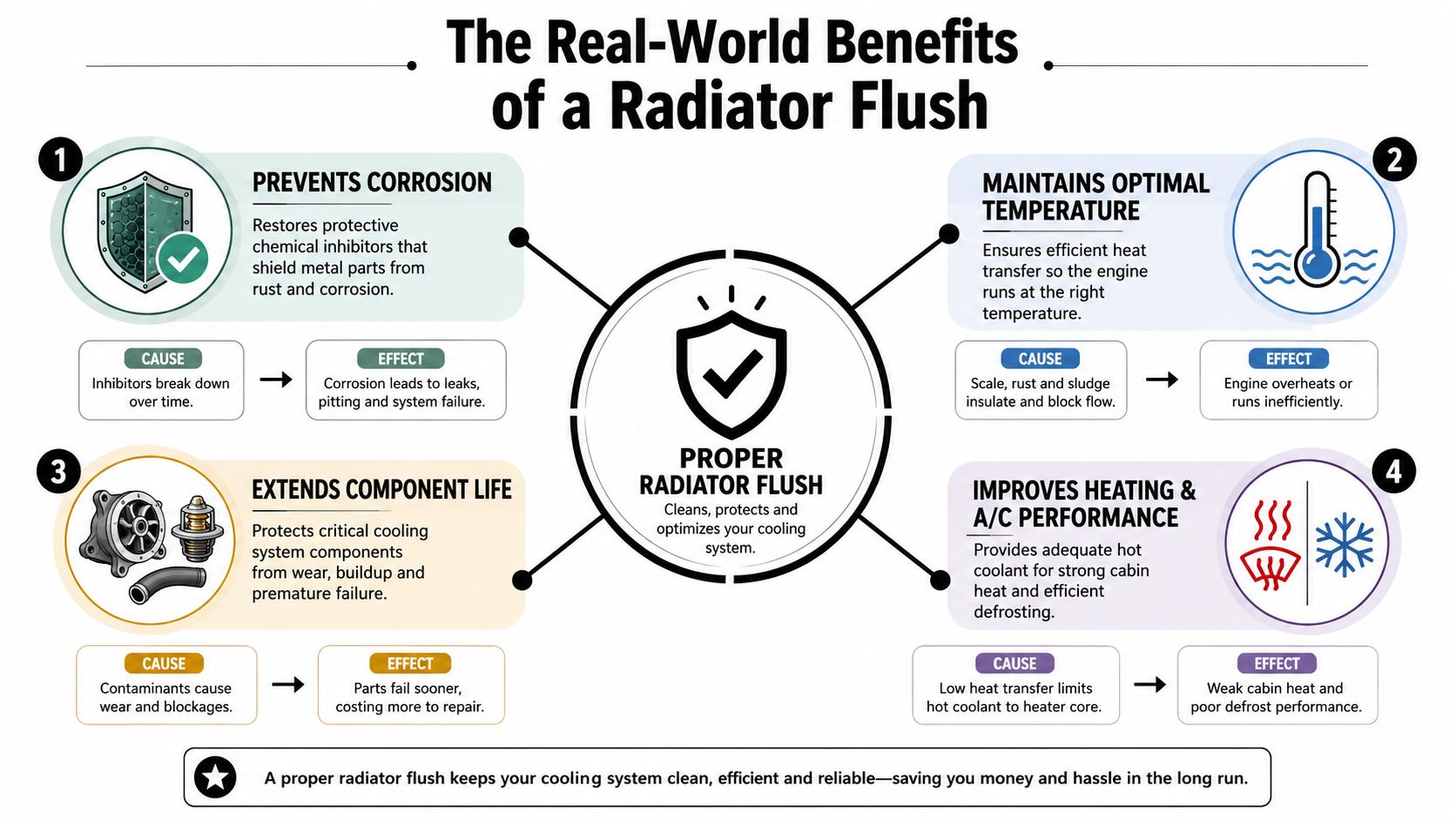
House plumbing is a fair comparison. Emptying one fixture does not clean the lines, and cooling-system service works the same way. A flush clears the circuit so fresh coolant can circulate without fighting old contamination, and that restores the corrosion inhibitors and the correct water-to-coolant balance that help protect aluminium, steel, solder, and water-pump parts while the engine is under thermal load.
The mechanical part that gets missed
Coolant is working chemistry, not just coloured liquid. The additive package has a limited life, and once it breaks down, the fluid loses its ability to protect the system and starts contributing to wear instead of preventing it. That is why a cooling-system service should be timed with care, because flushing too early can waste service life, while waiting too long lets deposits and degraded additives stay in the system while heat cycles keep hammering seals, passages, and gaskets.
If you want a simple comparison with another maintenance topic, the fuel injector cleaner guide is a good example of how a service helps when a specific deposit-control problem exists, and becomes unnecessary when the system does not need it. The same idea applies here. A flush is about cleaning and rebalancing the cooling circuit, not chasing a magic performance gain.
The parts also depend on one another more than many owners realize. The thermostat replacement overview shows how closely the thermostat, coolant flow, and temperature control are linked. A clean cooling system will not fix a failed thermostat, but it can keep debris and degraded coolant from making a healthy thermostat look like the problem.
Practical Benefits of a Radiator Flush
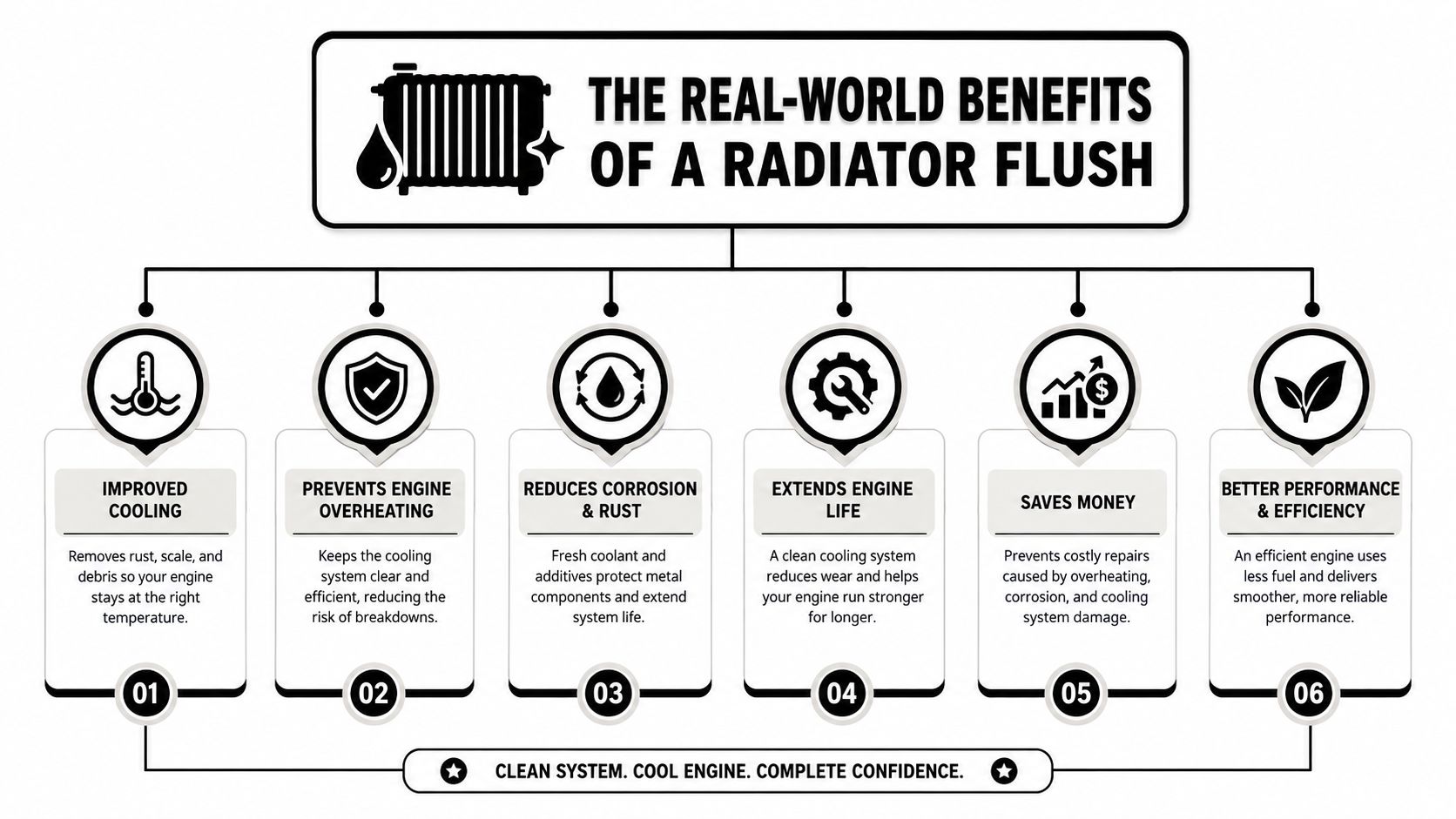
A flush pays off most when the cooling system is being asked to hold steady under real load. A clean system gives the engine a better chance of keeping its target temperature during hot weather, long climbs, idling in traffic, or any stretch of driving where airflow drops and heat builds fast. That is the trade-off owners often miss. Flush too early and you may be replacing coolant that still has useful life left. Wait too long and the same fluid can stop protecting parts, while thermal stress keeps working on seals, gaskets, and passages.
Corrosion control and component protection
Fresh coolant restores the anti-corrosive and lubricating additive package that helps protect the water pump seal and the heater-core passages. Once coolant ages, the additives that fight corrosion and reduce internal wear start losing strength. Rust, scale, and sediment can then circulate through the system, and that abrasive contamination is what shortens seal life, clogs narrow passages, and makes small problems grow into larger ones. That is the practical value of the service, it clears out the contamination and puts the protective chemistry back where it belongs.
Heat transfer that stays consistent
A flushed system moves heat more predictably because coolant can travel through open passages instead of trying to push through scale and sludge. That matters on engines that see towing, mountain grades, or long idle periods, where heat rejection has to stay stable for more than a few minutes at a time. A radiator flush does not add cooling capacity on its own. It helps the system use the capacity it already has, which is often the difference between stable temperatures and a gauge that starts creeping up when the engine is working hard.
A radiator flush doesn't “overcool” an engine, it restores the system's ability to shed heat the way it was designed to.
Longer life for the parts around the coolant
The radiator, pump, hoses, and heater core all live with the same fluid. When that fluid carries debris or has lost its protective additives, each part takes more abuse from corrosion, mineral buildup, and restricted flow. A fresh flush helps slow that wear, which can mean fewer leaks, less pump noise, and a lower chance of the kind of partial blockage that shows up as an unexplained temperature swing. I also point owners to routine cooling-system checks as part of preventive maintenance for vehicles, because small maintenance decisions tend to decide how long these parts stay healthy.
Cabin heat that actually works
The heater core sits in the same circuit, so poor coolant condition often shows up there first. If its passages start loading up with debris, cabin heat can get weak, slow to arrive, or uneven from one drive to the next. That does not always mean the engine is overheating. It often means the coolant has aged enough to restrict flow through the smaller parts of the system. A flush can bring that heat output back in line, which is one of the few comfort-related benefits drivers notice right away.
For a related example of how fluid maintenance protects a different system, the baseboard heater bleeding guide shows the same basic idea, trapped air and contamination reduce heat transfer and make the system work harder than it should.
DIY Radiator Flush vs Professional Service
You can flush a radiator at home if you've got the right setup and the discipline to do it properly. That means the correct coolant chemistry, a way to bleed air out of the system, and enough patience to avoid rushing the refill. Miss one of those details, and the job can go from “maintenance” to “new problem”.
The biggest DIY risk is not the wrenching, it's the chemistry and the bleeding. Modern engines often use aluminium components and coolant formulas that are not interchangeable, so using the wrong fluid can create compatibility issues. An incomplete bleed can leave air pockets that create hot spots, and hot spots are exactly the sort of thing that make an engine run worse in traffic or on a climb.
For a professional service, the advantage is control. A shop has pressurised flush equipment, the ability to match fluid correctly, and a better shot at getting the air out cleanly. You also get a cleaner process for disposal, which matters because old coolant is toxic and shouldn't be poured out casually.
DIY vs Professional Radiator Flush Comparison
| Factor | DIY Flush | Professional Service |
|---|---|---|
| Equipment | Basic tools, drain pan, hose, funnel | Flush machine, lifting equipment, service tools |
| Coolant matching | Depends on owner knowledge | Set by technician procedure |
| Bleeding risk | Higher if the system traps air | Lower when done correctly |
| Time and mess | More hands-on and messy | Faster and more contained |
| Outcome quality | Good only if the process is precise | More consistent on complex systems |
The owner's skill level matters here. A mechanically confident enthusiast can absolutely do a radiator flush at home, but modern cooling systems are less forgiving than older cars. If you want a service performed by a trained technician, the certified auto mechanic page is a reminder of what proper diagnostic and service discipline looks like.
Common Myths and Misconceptions About Radiator Flushes
The most common mistake is assuming more flushing is always better. It isn't. An unnecessary flush can create trouble if it's done with the wrong fluid, the wrong concentration, or sloppy bleeding procedure. That's why a good service decision should follow the vehicle's condition and schedule, not a blanket rule someone picked up from a forum.
Another misconception is that you only need a flush when the coolant looks dirty. That's too late to be a reliable strategy. Additive depletion isn't always visible, and coolant can look acceptable while its protective chemistry is already fading. By the time the reservoir looks visibly contaminated, the system may already be dealing with rust or clogged passages.
Good maintenance is timed to condition, not just appearance.
The third myth is that all coolants are interchangeable. They aren't. Modern engines often need a specific chemistry package, and mixing the wrong types can lead to compatibility problems that affect corrosion control and flow. That's one reason a flush can help when the system is due, but can hurt when it's done carelessly.
The useful way to think about it is trade-off, not superstition. Flush too early, and you may spend money on unnecessary service. Flush too late, and you let contamination and additive breakdown keep building until the system starts giving you warning signs. The right answer lives in the middle, where service is tied to coolant condition, manufacturer schedule, and how hard the car works.
For a practical note on heating systems that need bleeding in a different context, the baseboard heater bleeding guide shows the same basic truth in another system. Air and trapped flow are never your friends.
Signs You Need a Flush and Recommended Intervals
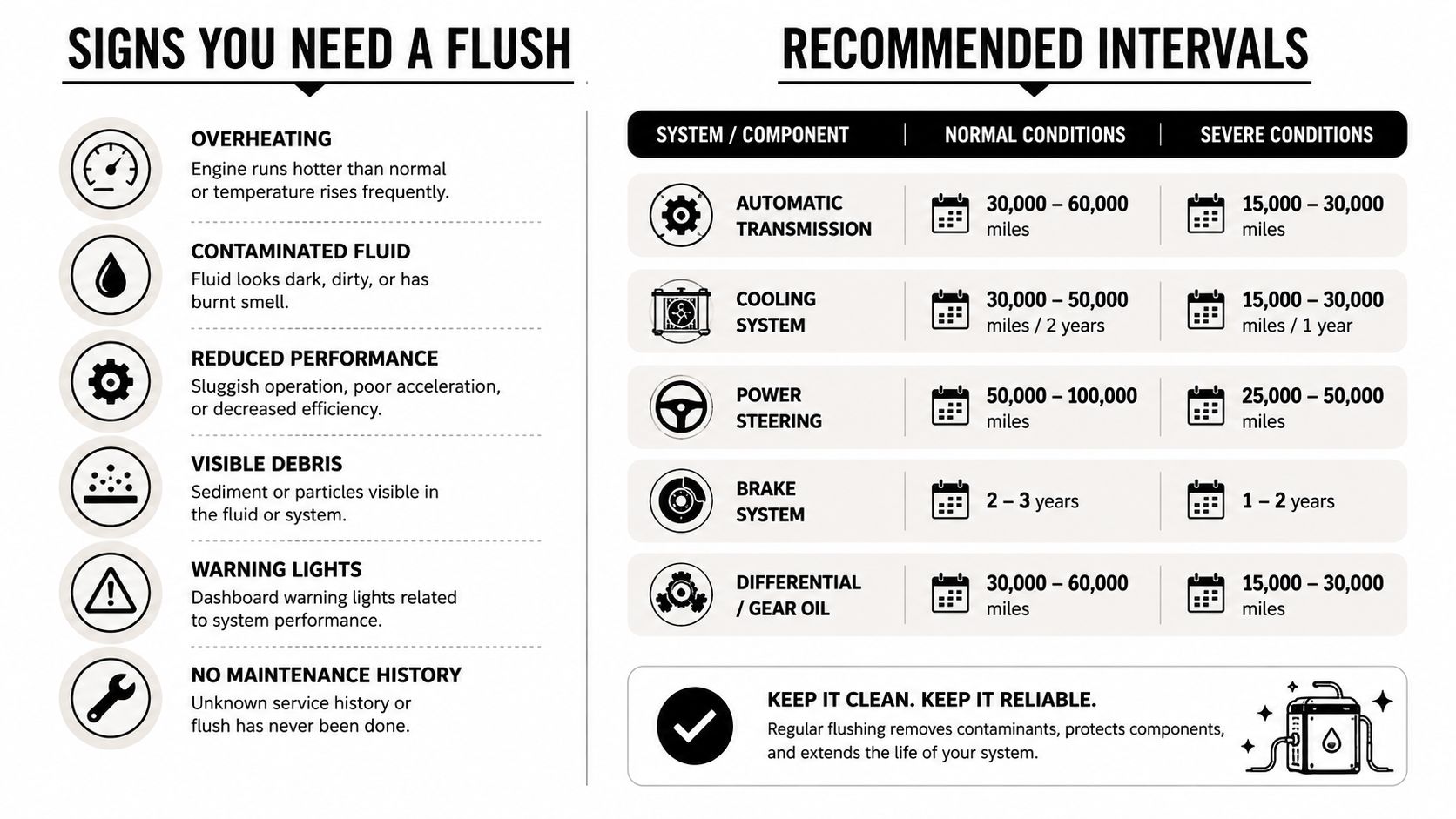
A coolant flush should start with what the car is telling you. If the fluid in the reservoir looks discoloured, murky, or sludgy, that's a warning sign. If you notice a sweet smell inside or outside the car, see sediment in the overflow tank, or deal with repeated overheating, the system deserves a closer look.
What to check first
- Coolant colour and clarity: Healthy coolant should look clean and translucent, not brown, cloudy, or gritty.
- Smell around the car: A sweet coolant smell can point to a leak or evaporating fluid somewhere in the system.
- Temperature behaviour: If the engine runs hotter than normal, or the warning light comes on, don't guess at the cause.
- Reservoir debris: Visible sediment in the overflow bottle usually means the system has been shedding rust or scale.
How timing really works
The general rule from coolant-service guidance is every 30,000 miles or every 3 to 5 years, while some manufacturers now extend intervals further depending on coolant type and vehicle design. That interval is a baseline, not a promise. In California, dense urban driving and hot corridors can accelerate additive depletion and deposit formation, especially for older vehicles or anything that sees severe service.
The smartest way to decide is to combine three things, the coolant condition you can inspect, the interval in the owner's manual, and the demands of the driving environment. If you need a place to keep those checks organised, the vehicle maintenance log is a sensible habit to adopt.
A clean record matters because radiator flush benefits show up best when the service happens before failure, not after the system starts cooking itself.
Protect Your Engine with Carmedics Autowerks
Cooling-system work pays off when it's done correctly. The wrong fluid, a poor bleed, or a rushed flush can cancel out the whole job, while the right service keeps the engine protected in the conditions that are hardest on it. For drivers who want reliable cars and SUVs, professional execution matters because coolant chemistry and airflow management are not areas where guesswork ages well.
Carmedics Autowerks Inc in Whitby, Ontario, brings that kind of care to vehicle maintenance, with a focus on quality service and long-term peace of mind. If your car's cooling system is due for attention, don't wait for the gauge to make the decision for you.
If you want your cooling system checked by a team that understands preventive maintenance and real-world driving stress, visit Carmedics Autowerks Inc and book your next service. They can help you stay ahead of overheating, keep the right fluid in the system, and protect the engine before a small cooling issue becomes a major repair.