

The most repeated advice about EV ownership is also the least helpful: “You won't need maintenance anymore.”
That's only half true. You won't be booking oil changes, spark plug replacements, or transmission fluid services. But your vehicle still needs attention, and in Canada that attention shifts toward tires, brake fluid, battery cooling, charging habits, and software-aware diagnostics. Ignore those areas and an EV can become expensive, inconvenient, and frustrating in ways new owners don't expect.
Good electric vehicle maintenance isn't about doing less. It's about doing the right things at the right time.
The Great Myth of No EV Maintenance
The biggest mistake new EV owners make is expecting maintenance to disappear. Oil changes are gone, yes, but the work has shifted, not vanished. In Ontario and across Canada, that shift catches people off guard because the parts that need attention are different from the ones they are used to watching.
Lower running costs are real. A maintenance-free vehicle is not. The owners who have the fewest surprises are usually the ones who stop asking, “What service did I leave behind?” and start asking, “What still wears out, degrades, corrodes, or gets stressed in this climate?”
What actually changes
An EV removes a lot of engine-related service, but it still depends on tires, brakes, suspension, cooling circuits, charging equipment, and software that can flag problems before a part fails. In Canadian conditions, that matters more than many buyers expect. Extra vehicle weight can wear tires faster. Road salt works on brake and suspension hardware all winter. Freeze-thaw cycles, potholes, and deep cold put real stress on components that have nothing to do with gasoline.
I see one pattern often. Owners skip routine inspections because the car feels quiet, smooth, and trouble-free. Then the first issue shows up in a place they were not watching, such as uneven tire wear, contaminated brake fluid, a charging fault, or a cooling system concern that should have been caught earlier.
Practical rule: Treat an EV like a vehicle with fewer routine services, not like a vehicle that never needs one.
The better mental model
A better way to look at EV ownership is this: the powertrain asks for less regular service, while the supporting systems ask for more awareness. Battery coolant health, tire condition, underbody corrosion, cabin filtration, brake service intervals, and charger condition all deserve a place on the maintenance calendar.
That is why a preventive vehicle maintenance routine still makes sense with an EV. Good maintenance protects the systems that Canadian weather tends to punish first. It also helps a technician catch small issues before they affect range, charging reliability, tire life, or winter drivability.
Your EV's Core Systems A Maintenance Overview
Quiet drivetrains hide a lot. That is why EV owners can miss the parts that still need regular attention, especially through Ontario winters and shoulder seasons.
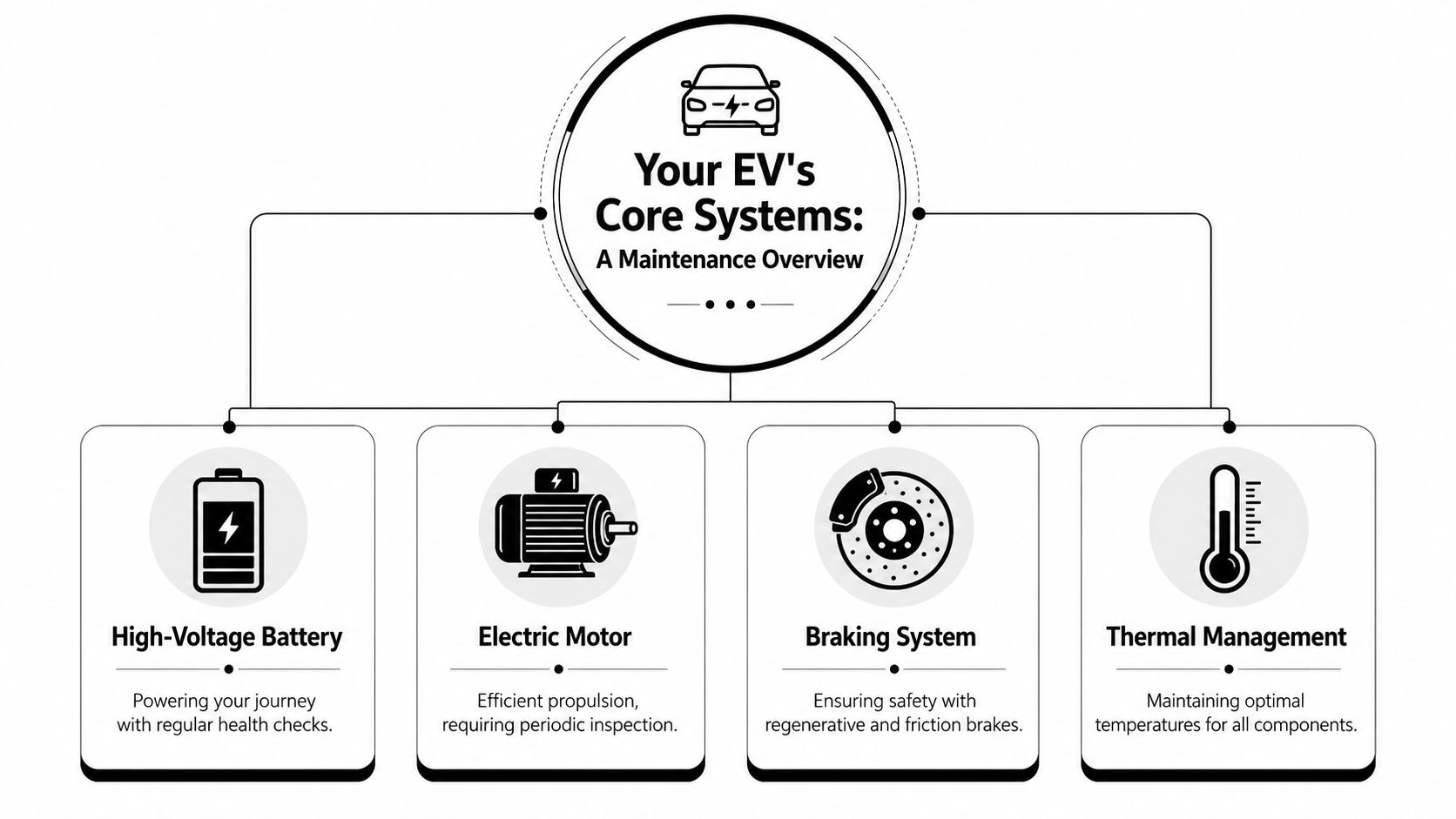
High-voltage battery and charging
The battery pack usually does not need routine hands-on service from the owner. The habits around it matter more. Repeated DC fast charging, frequent charging to 100 percent when it is not needed, and ignoring charging fault messages all add stress over time.
In Ontario, battery care is less about desert heat and more about temperature swings and charging routines that fit the season. A vehicle that sits in a warm garage, then heads onto a sub-zero road, asks a lot from its thermal controls and battery management system. The practical approach is simple. Use Level 2 charging for regular use when possible, reserve fast charging for trips or genuine need, keep the charge port clean, and follow the manufacturer's guidance on daily charge limits instead of treating full charge as the default.
Braking system
Regenerative braking reduces pad wear, but it does not stop brake fluid from aging or brake hardware from corroding. In Canadian winter conditions, road salt and long periods of light friction brake use can leave calipers, sliders, and backing plates in worse shape than some owners expect.
According to the Alternative Fuels Data Center EV maintenance guidance, regenerative braking lowers brake pad wear, while brake fluid and cooling system checks still remain part of normal EV service. That lines up with what shows up in the shop. Pads may look fine, but the fluid can be contaminated and the hardware can start sticking if the system is not inspected on schedule.
A brake service on an EV is often about condition, movement, and corrosion control, not just pad thickness.
Tires and suspension
Canadian EV ownership gets expensive if it is ignored. EVs are heavier than many comparable gas vehicles, and they deliver torque instantly. Add cold temperatures, potholes, frost-heaved roads, and winter tire swaps, and tire wear can accelerate quickly.
I tell owners to treat tire wear as an early warning system. Shoulder wear can point to alignment problems. Feathering can point to suspension wear. A drop in range, a new hum, or a steering wheel that no longer sits straight often starts here, not in the battery. In Southern Ontario, one hard pothole season can be enough to knock alignment out and shorten the life of an otherwise good set of tires.
Thermal management
The cooling system is one of the most overlooked parts of EV maintenance. It protects battery temperature, power electronics, and sometimes the drive unit. If coolant condition drops, a pump weakens, or a small leak starts, the vehicle may reduce charging speed or performance long before a major fault appears.
Canadian weather puts this system under real stress. Rapid changes between a heated garage, a freezing driveway, highway driving, and fast charging create constant expansion and contraction in hoses, seals, and connectors. That is why periodic inspection matters. Owners do not need to open high-voltage components, but they should take warning lights, coolant smells, wet spots, or sudden charging changes seriously and book service early.
Why calibration and electronics still matter
Modern EVs depend on cameras, radar, sensors, and control modules for driver assistance, charging functions, and vehicle safety. A windshield replacement, front-end repair, alignment change, or even suspension work can affect how those systems read the road. Owners should understand how ADAS calibration works after repairs or alignment changes, because this is precision work. It is not a guess-and-go service.
The EV Owner's Toolkit DIY Checks and Schedules
The best owner-maintained EVs usually follow a simple routine. Not complicated. Just consistent.
Most of the useful checks don't require tools beyond a tire gauge, good lighting, washer fluid, and the discipline to look at the vehicle before a small issue becomes a shop visit.
What to check regularly
Start with the parts that see the most wear and the items you interact with often.
- Tire pressure: Check it regularly, especially during temperature swings. EVs are sensitive to pressure changes because weight and rolling resistance affect both handling and range.
- Tread condition: Look for uneven wear, shoulder wear, or feathering that may point to alignment or suspension issues.
- Charging port condition: Keep the port clean and dry. Check for debris, corrosion, or a damaged door seal.
- Washer fluid and wiper blades: Winter grime and salt make visibility maintenance essential.
- Coolant reservoir visibility check: Don't open anything you're not trained to service, but do look for obvious low levels, contamination, leaks, or warning messages.
- Brake feel: If the pedal feels soft, inconsistent, or unusual, book service. Don't assume regen is masking normal brake behaviour.
Seasonal habits that pay off
Canadian ownership changes the rhythm of electric vehicle maintenance. A good routine usually follows the weather.
In winter, pay close attention to tire pressure, charging cable condition, and salt buildup around wheel areas and brake components. In spring, look for pothole-related alignment changes. In summer, pay attention to charging heat, cooling-system warnings, and any sudden change in charging performance.
A quick monthly walk-around catches more problems than most owners expect.
DIY vs. professional EV maintenance schedule
| Maintenance Task | Recommended Frequency | Service Type |
|---|---|---|
| Tire pressure check | Monthly and during temperature swings | DIY |
| Tread and visible tire wear inspection | Monthly | DIY |
| Washer fluid top-up | As needed | DIY |
| Wiper blade inspection | Seasonal | DIY |
| Charging port visual inspection | Monthly | DIY |
| Coolant reservoir visual check | Monthly | DIY |
| Brake fluid replacement | Every three years | Professional |
| Battery cooling system integrity check | Regular scheduled service | Professional |
| Software-related diagnostics and warning light investigation | When alerts appear or during service | Professional |
| High-voltage system inspection | Scheduled service or as needed | Professional |
If you want the routine to stick, keep a vehicle maintenance log. It helps you spot trends such as recurring pressure loss in one tire, changing tread wear, or warnings that appear after certain charging conditions.
What not to do yourself
Skip anything involving high-voltage components, sealed battery systems, brake fluid service, or coolant-system intervention unless you're properly trained and equipped. EVs are approachable for basic ownership checks, but some work belongs in a professional shop for safety reasons alone.
Professional EV Service Explained Why Expertise Matters
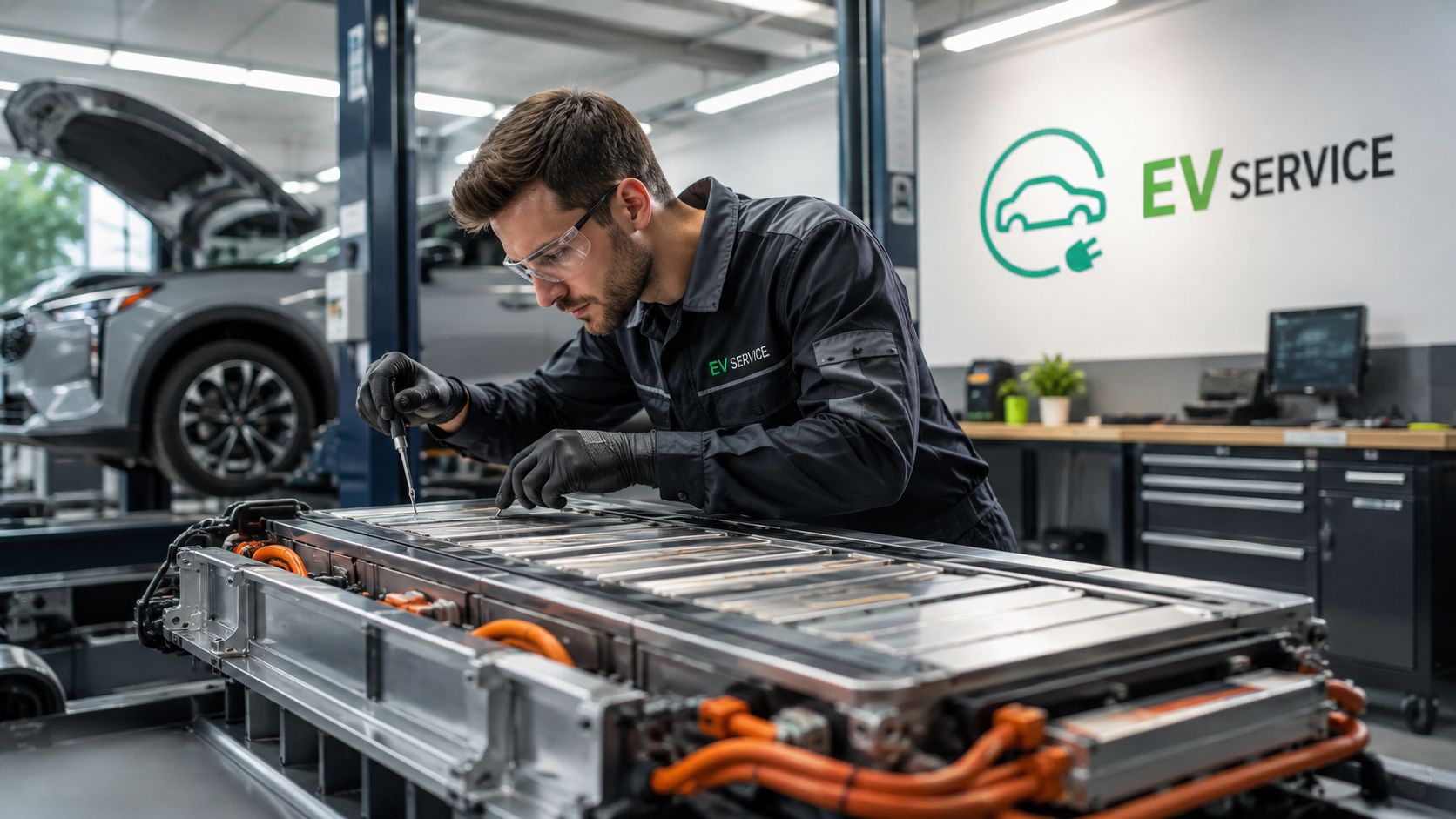
A proper EV service visit doesn't look like an old-fashioned oil-change appointment. The technician isn't focused on engine wear items that don't exist. The value is in inspection, validation, and diagnostics.
That matters more than many owners realise, especially once the vehicle is outside the honeymoon phase and starts asking for real maintenance decisions.
What a shop should be checking
A qualified shop should be looking beyond obvious wear. That means checking for stored fault codes, reviewing warning histories, inspecting cooling-system condition, confirming brake fluid service intervals, evaluating tire wear patterns, and verifying that software-related issues aren't being mistaken for hardware failures.
An experienced technician also knows the difference between a harmless owner concern and an early sign of trouble. A slight change in charging speed, a new cooling fan behaviour, or a recurring warning light can mean very different things depending on the model and its service history.
Why independent repair can be difficult in Canada
There's another layer that owners usually don't see until something complex happens. In Canada, no legislation mandates automakers to share EV diagnostic data and repair documentation with third-party mechanics, and independent shops must work through a voluntary 2009 agreement and pay for access, as reported by CBC's coverage of EV repair access in Canada.
That creates a real service gap. Some independent shops are excellent with mechanical work but may not have model-specific access, equipment, or EV diagnostic capability. Others invest heavily in training, subscriptions, tools, and safety procedures. Owners need to know the difference.
The right shop isn't just willing to work on an EV. It can prove it has the tools and access to diagnose one properly.
What expertise looks like in practice
If you're choosing a shop for electric vehicle maintenance, ask practical questions.
- Training: Does the technician have EV-specific safety and diagnostic experience?
- Diagnostic capability: Can the shop perform manufacturer-level scans and interpret EV fault data?
- Brake and coolant knowledge: Does the shop understand that EV brake fluid and thermal systems still require scheduled attention?
- Post-repair awareness: If the car has driver-assist features, can the shop identify when calibration or electronic checks are needed?
A good certified auto mechanic won't oversell EV complexity, but won't trivialise it either. That balance matters. The best service experience is usually calm, methodical, and specific.
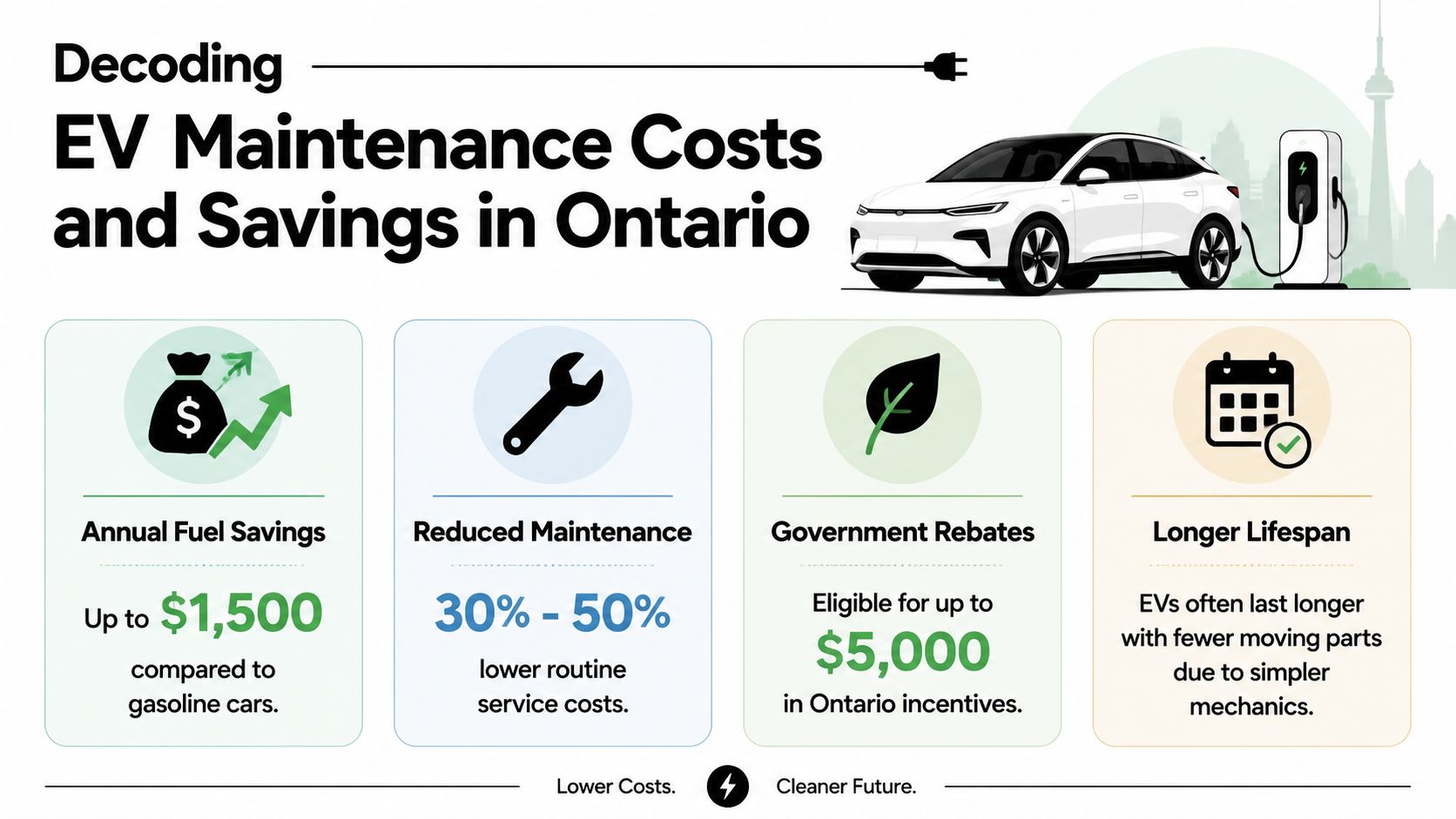
Decoding EV Maintenance Costs and Savings in Ontario
The cheapest EV to maintain is not the one that gets ignored. It is the one that skips engine service but stays on top of the items EVs still wear out in Ontario.
That distinction matters because the savings are real, but they are easy to misunderstand. EV owners usually spend less on routine maintenance over time because there is no oil service, no spark plugs, and fewer moving parts to fail. The catch is that the remaining items matter more than many drivers expect, especially in a province where winter tires are standard, roads break up after freeze thaw cycles, and cold weather puts extra stress on tires, brakes, and thermal systems.
Where those savings usually show up
The biggest savings come from deleting engine-related service from the ownership equation. Annual EV service visits in Ontario are usually built around inspections, tire rotations, cabin filters, brake checks, and cooling-system review. That is a lighter list than what most gas vehicles need.
Ontario drivers still need to budget realistically, though. Tire costs can climb fast if the vehicle is heavy, the driver uses full torque often, or the car spends every winter hitting potholes and rough pavement. A separate winter and summer tire setup is often the smart move here, but it adds cost upfront and makes regular rotations and alignment checks more important.
What owners still pay for
A well-kept EV still has recurring maintenance costs, just in different places:
- Tires: Often the biggest wear item, especially with Ontario winters, rough spring roads, and the added weight of an EV.
- Brake fluid service: Time matters more than pad wear. Moisture contamination does not care how little the friction brakes are used.
- Cooling-system maintenance: Battery and power electronics depend on stable temperatures, and coolant condition matters in hot summers and cold snaps alike.
- Diagnostics: Charging faults, warning messages, and intermittent electrical issues usually need professional computer diagnostics for modern vehicles rather than guesswork.
A useful outside perspective appears according to Punk Ride LLC, which correctly frames EV ownership costs around the work you avoid and the work you still need to plan for.
That is the practical way to budget for an EV in Ontario. Count on lower routine maintenance overall. Leave room for tires, seasonal service, fluid checks, and the occasional diagnostic visit. Owners who do that usually keep the cost advantage intact, and they avoid the expensive surprises that come from believing the no-maintenance myth.
Troubleshooting Common EV Issues and Your Whitby Service Solution
The trouble with EV ownership is not that the cars are fragile. It is that quiet, smooth operation can hide small problems until they become expensive ones. In Whitby and across Ontario, I see the same pattern. Owners watch battery range closely, but tire wear, coolant health, and warning messages often get pushed aside.
Fast tire wear is one of the most common surprises
EVs are hard on tires in ways many new owners do not expect. Higher vehicle weight, instant torque, winter temperature swings, and rough spring pavement all work against tread life. As noted in Fleet Mobility's analysis of the EV maintenance myth, tire wear is one of the routine maintenance realities owners need to plan for.
If the tread seems to be disappearing quickly, start with the basics before assuming something major is wrong. Check inflation pressures cold. Look at wear across the full tread surface. Pay attention to how the vehicle tracks on a straight road, because a slight pull or crooked steering wheel often points to alignment issues.
These signs are worth acting on early:
- Outer-edge wear: Often linked to alignment problems or heavy cornering loads.
- Centre wear: Common with overinflation.
- Feathered tread blocks: Usually a sign of alignment or suspension wear.
- More road noise than usual: Often shows up before the wear looks severe.
Coolant and brake fluid problems are easy to overlook
Canadian weather is tough on fluids, and EV owners do not always hear much about that during the buying stage. Battery and power electronics cooling systems need proper fluid condition to control temperature in summer heat and winter cold. Brake fluid also ages with time and moisture exposure, even if regenerative braking reduces pad use.
A few warning signs deserve attention right away:
- Unexplained warnings: Especially for electrical, charging, or thermal systems.
- Charging changes: Slower charging, interrupted sessions, or repeated charging faults.
- New smells or visible residue: Around the front compartment or underbody.
- Brake feel changes: A soft pedal, inconsistent response, or anything that feels different from normal.
Repeated alerts are not something to clear and ignore. If the same message comes back, the car is usually seeing a pattern.
When a warning light means book a diagnostic visit
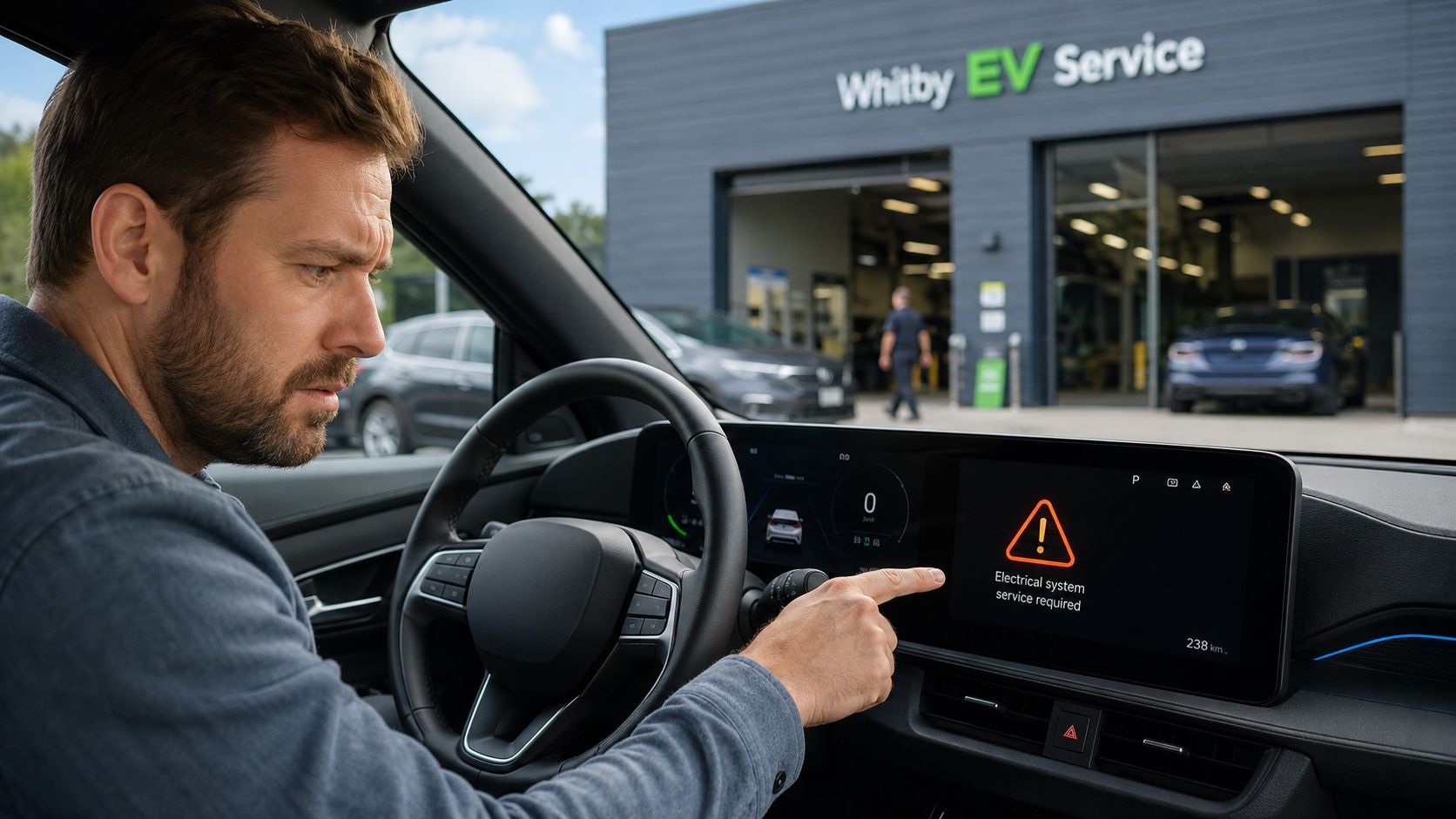
Some issues are easy owner checks. Others need proper testing. An electrical system warning, charging fault, brake message, or thermal management alert usually calls for computer diagnostics for modern vehicles so the fault can be traced instead of guessed at.
That matters even more with intermittent problems. A warning that appears once a week can still point to a charging issue, a sensor fault, or a cooling-system problem that will get worse under load or in extreme temperatures.
A practical local answer for Whitby drivers
Good EV service is still good vehicle service. The shop needs to look at the whole car. Tires, suspension, brake fluid, cooling-system condition, and warning-light diagnosis all affect reliability, especially in Ontario driving conditions.
This is the point many EV articles gloss over. Skipping oil changes does not mean skipping maintenance. The better approach is simple. Catch wear early, stay ahead of fluid service, and get professional help when the car shows a warning you cannot verify with a basic check.
If your EV needs experienced attention in Whitby, Carmedics Autowerks Inc offers professional auto repair and maintenance support for modern vehicles, including the kind of inspection, diagnostics, and preventive care that help EV owners avoid small issues turning into bigger ones. If you want clear advice, practical service, and a shop that understands how today's vehicles need to be maintained, they're a solid local option.