


Rotate your tires every 10,000 km or every six months as a solid starting point. That baseline works for most vehicles in Canada, but the right tire rotation schedule changes with your drivetrain, how you drive, and how quickly your tires are wearing.
A lot of drivers start thinking about rotation only when something feels slightly off. Maybe the steering wheel has picked up a faint vibration. Maybe the car doesn't feel as planted in a fast on-ramp as it did a few months ago. Or maybe you've bought a newer vehicle and you're trying to avoid the expensive habit of replacing tires sooner than necessary.
That's the right instinct.
Tires are one of the few parts on your vehicle that affect handling, braking feel, road noise, ride quality, and replacement cost all at once. Ignore them and the car slowly stops feeling right. Stay ahead of them and the vehicle keeps the balanced, predictable feel you paid for in the first place.
A proper tire rotation schedule isn't just a maintenance box to tick. It's a way to protect the investment sitting in your driveway. It helps spread wear more evenly across all four corners, which gives you more usable life from the set and helps preserve the way the vehicle turns, tracks, and puts power down.
If you're not sure when your last rotation happened, keeping a simple vehicle maintenance log makes this easy. The drivers who stay organised usually catch tire issues before those issues become expensive.
Your Introduction to Smart Tire Maintenance
The basic rule is simple. Most vehicles in Canada should follow a tire rotation schedule of every 10,000 km, and many drivers also use the six-month mark so it doesn't get forgotten.
That sounds straightforward, but real-world driving is never one-size-fits-all. A front-wheel-drive commuter car used for stop-and-go errands in Whitby won't wear tires the same way as an all-wheel-drive SUV that sees highway runs, winter slush, and cottage trips. A performance coupe driven hard out of corners won't treat its tires like a family sedan either.
What tire rotation is actually doing
Rotation means moving the tires to different positions on the vehicle so one pair doesn't carry the same workload all the time. Tires don't wear evenly on their own. Steering, braking, acceleration, road crown, alignment condition, and load all change how each corner of the car uses tread.
If you leave each tire in one position too long, you usually end up with two problems:
- One axle wears out first, which pushes you toward replacing tires sooner than expected.
- The vehicle feels less consistent, especially during cornering, wet braking, and higher-speed lane changes.
Why this matters financially
A lot of owners think of rotation as a small service and tire replacement as a separate problem. They're connected.
When one pair wears much faster than the others, you lose usable tread you've already paid for. In the shop, that usually shows up as a customer saying, “These two are done, but the other two still look fine.” That's exactly the kind of uneven wear pattern a disciplined schedule is meant to prevent.
A good tire rotation schedule protects two things at once. The lifespan of the tire set and the way the car feels from behind the wheel.
There's also the safety side. As tread wears unevenly, traction becomes less predictable. You may not notice it in dry weather at city speeds, but you'll notice it when the pavement is soaked, the road is cold, or you need the car to respond quickly.
Why a Tire Rotation Schedule Is Non-Negotiable
Think about a pair of sneakers. If you always lean harder on one heel, that shoe wears out in a pattern the other one doesn't. Tires do the same thing, just with more weight, more heat, and far higher consequences when wear gets ignored.

Michelin Canada recommends rotating tires every 8,000 to 12,000 kilometres or every other oil change for vehicles in Ontario, which is aimed at even tread wear and longer tire life under normal driving conditions, while still putting the vehicle maker's own schedule first for the final call (Michelin Canada tire rotation guidance).
The money side of uneven wear
Tire wear never stays “just a little uneven” for long. Once a pattern starts, it usually becomes more obvious with every month of driving.
Here's what that costs you in practice:
- Shorter useful life from the set: If one axle does most of the work for too long, that pair can force an early replacement decision.
- Less value from premium tires: Better tires only pay off if you use their tread evenly across the full set.
- More avoidable add-on work: Uneven wear often leads drivers to chase vibrations or noise that could have been caught earlier during routine service.
The performance side drivers feel first
Drivers who pay attention to their cars usually notice performance loss before they notice visible tread problems. The vehicle may still be safe to drive, but it no longer feels balanced.
Common signs include:
- Turn-in feels duller: The car doesn't respond as cleanly when you first steer into a corner.
- Braking feel changes: Grip can feel less even, especially on wet roads.
- Road noise grows: Irregular tread patterns often make themselves heard before they become obvious to the eye.
Practical rule: Tire rotation isn't an upsell. It's basic preventive maintenance, just like fluid service or alignment checks, because it helps stop a small wear pattern from turning into an expensive tire problem.
If you already treat maintenance as investment protection, this fits the same mindset as regular preventive maintenance for vehicles. The work is simple. The value comes from doing it before the tires tell you they've been neglected.
Your Vehicles Ideal Rotation Pattern and Frequency
The right tire rotation schedule depends first on how the vehicle puts power to the ground. Drivetrain matters because each layout asks different tires to handle different jobs. Some tires steer, some carry more drive force, some do both, and those jobs shape the wear pattern.
This is the part many owners skip. They know rotation matters, but they don't realise that how the tires are moved matters too.
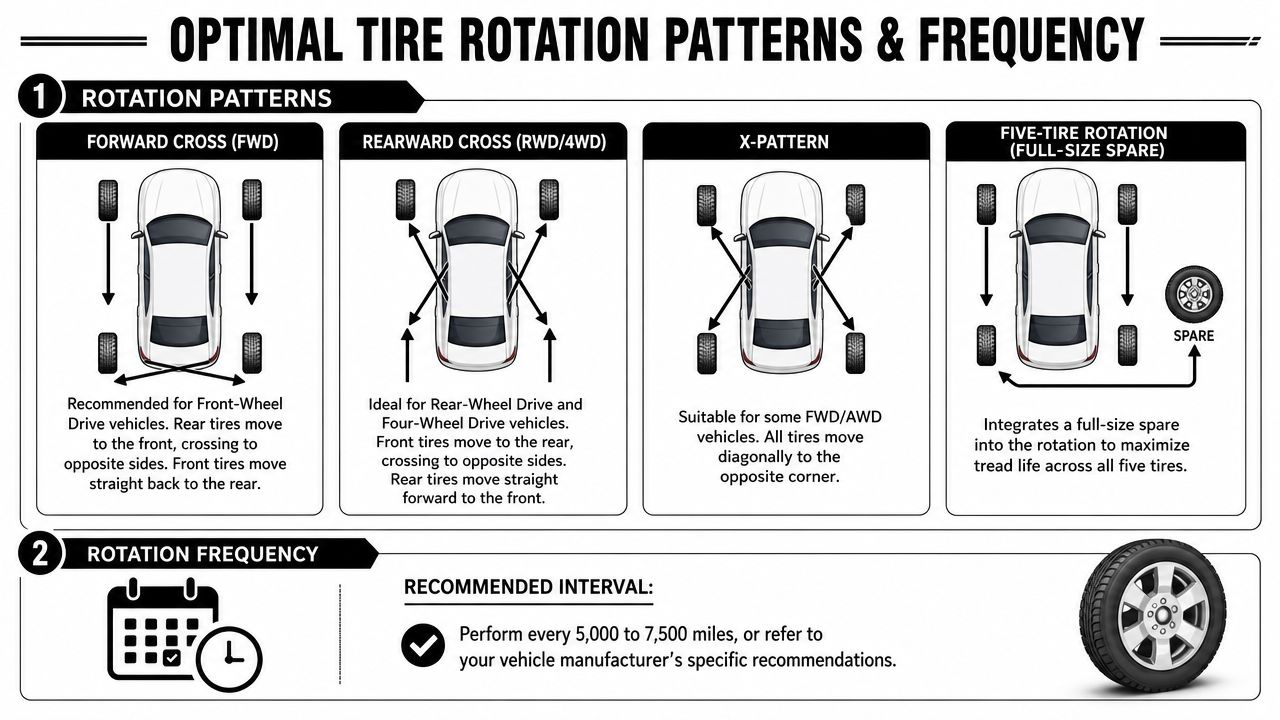
According to Hankook's Canadian tire guide, the standard schedule for most vehicles in Canada is every 10,000 kilometres, and that interval is especially important for front-wheel-drive vehicles because they make up over 60% of passenger cars in Ontario and their front tires wear 30% faster than the rears (Hankook Tire Canada service guide).
Front-wheel drive
On a front-wheel-drive car, the front tires do a heavy share of the work. They steer, they handle much of the braking load, and they put power down. That's why the front pair usually wears faster.
A common pattern is the forward cross:
- Rear tires move to the front, crossing to the opposite sides.
- Front tires move straight back to the rear.
This pattern helps spread the more aggressive front-axle wear across the whole set. If you own a compact sedan, hatchback, or many crossovers, this is often the setup you're dealing with.
Rear-wheel drive and four-wheel drive
Rear-wheel-drive and traditional four-wheel-drive vehicles wear differently because the rear axle handles the drive load more directly. Steering is still up front, but acceleration loads the rear tires harder.
A common pattern here is the rearward cross:
- Front tires move to the rear, crossing to the opposite sides.
- Rear tires move straight forward to the front.
This works well for many trucks, performance cars, and body-on-frame SUVs.
All-wheel drive needs more attention
All-wheel-drive vehicles can be less forgiving about tire maintenance because all four tires are part of a more complex drivetrain relationship. If wear gets uneven corner to corner, you can end up with more than just handling changes.
For owners swapping between winter and summer setups, a scheduled seasonal tire change is a smart time to review tread wear and confirm whether your current pattern still makes sense.
If you don't know your ideal pattern, check the owner's manual before moving anything. Manufacturer guidance beats generic advice every time, especially on newer vehicles with sensitive AWD systems.
Two exceptions that change everything
Not every vehicle can use the common cross-pattern approaches.
| Vehicle setup | What changes |
|---|---|
| Directional tires | These are designed to roll in one direction only, so they're typically moved front to back on the same side. |
| Staggered fitment | If the front and rear tires are different sizes, you usually can't rotate front to rear at all. |
That matters for performance-oriented cars in particular. Owners often assume they're following a proper tire rotation schedule when, in reality, the tire design limits what can be done. In those cases, your best protection is regular inspection, proper inflation, alignment checks, and replacing tires before one end of the vehicle falls too far behind the other.
Factors That Change Your Standard Rotation Schedule
A 10,000 km interval is a strong starting point. It isn't a law of physics.
Real driving changes the schedule. Some vehicles can stay comfortably near the standard interval. Others need attention sooner because of how they're built or how they're driven.
Driving style changes tire wear fast
Bridgestone advises shorter intervals of 3,000 to 5,000 miles (4,800 to 8,000 km) for high-torque vehicles such as electric SUVs and performance coupes because hard acceleration and cornering create uneven wear more quickly (Bridgestone tire rotation guidance).
That lines up with what performance-minded owners already feel in the seat. A car driven aggressively usually starts to lose its clean, even contact patch sooner. The tread blocks get worked harder. The tires heat cycle more. The result isn't just faster wear. The steering can feel less crisp and the chassis less settled.
City driving and rough conditions matter
Short trips, parking-lot steering, stop-and-go traffic, potholes, and winter road surfaces all add stress. A highway commuter may rack up kilometres steadily with relatively smooth wear. A city-driven vehicle can cover fewer kilometres while still punishing the front tires and shoulders.
That's why two vehicles with the same odometer reading can need completely different service timing.
A shorter schedule often makes sense if your driving looks like this:
- Frequent short trips: The car rarely sees long, steady highway runs.
- Urban turning and braking: Tight corners, constant stops, and repeated low-speed steering load the front tires hard.
- Heavy loads or towing: Extra weight changes how the tires carry and distribute force.
- Rough seasonal roads: Potholes and winter damage can worsen wear patterns quickly.
Mechanical condition can override mileage
Sometimes the issue isn't the schedule. It's the car.
If alignment is off, or if wheel balance or suspension condition has changed, a normal interval may not be enough to keep the wear pattern under control. Rotation helps distribute wear, but it can't correct the root cause. A tire that's already feathering or cupping needs diagnosis, not just a new position on the vehicle.
If the steering feels off-centre, the car drifts, or you've picked up a vibration, it makes sense to pair tire service with a check of wheel alignment and balancing.
Mileage is only one trigger. If the car is talking to you through vibration, pull, or visible shoulder wear, listen to that before you listen to the odometer.
Spotting Uneven Wear and When to Call a Professional
You don't need a hoist to catch tire problems early. A careful walk-around tells you a lot if you know what to look for.
Start with the obvious. Turn the steering wheel to expose more tread on the front tires. Look across the full width of the tread, not just the outer edge. Then run your palm gently across the surface. Uneven texture often shows up before it looks dramatic.
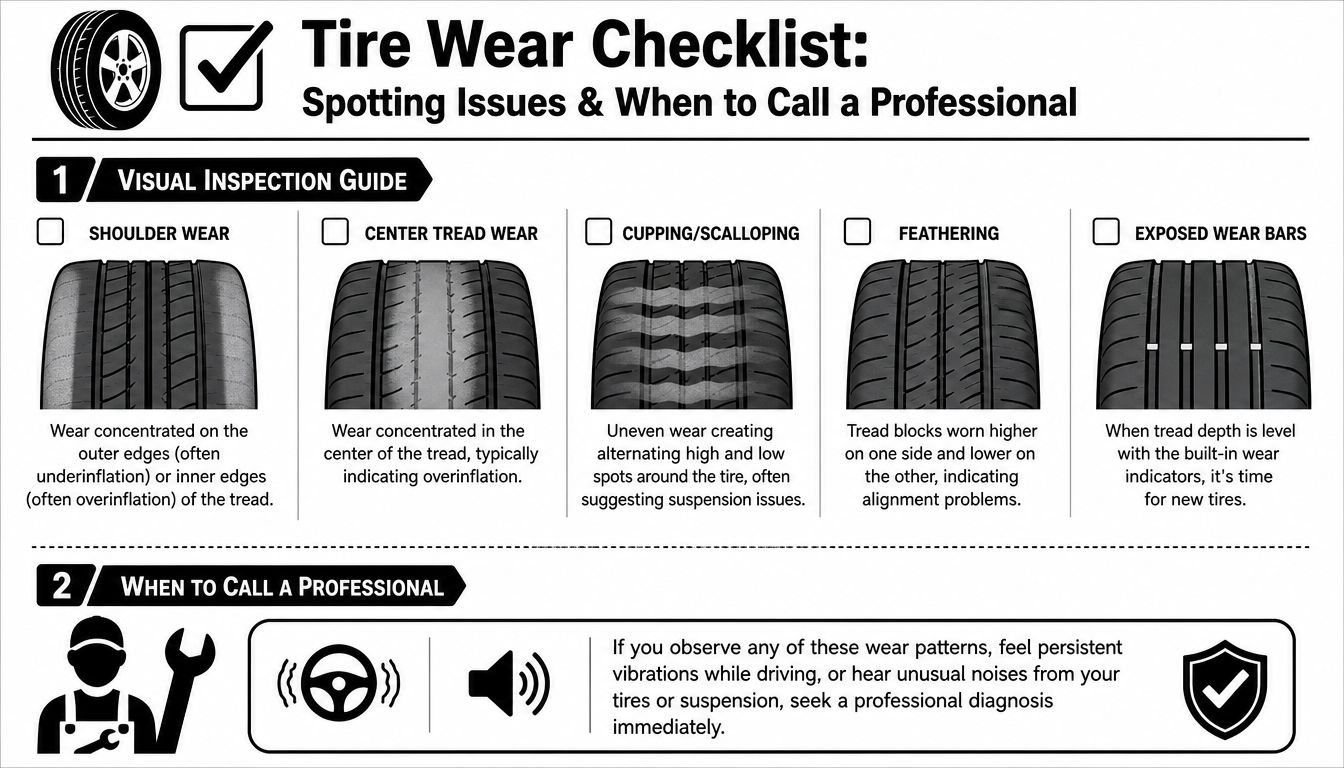
Consumer Reports notes that proper tire rotation helps maintain at least 90% of original tire tread depth for longer, which reduces hydroplaning risk by 35% in wet conditions (Consumer Reports tire maintenance and safety guide).
Wear patterns worth catching early
Here's a quick way to read what your tires may be telling you:
- Shoulder wear: Excess wear on the inner or outer edge can point to inflation or alignment issues.
- Centre wear: The middle of the tread wearing faster often suggests inflation isn't where it should be.
- Cupping or scalloping: A patchy high-low pattern often points toward suspension or balance problems.
- Feathering: Tread blocks feel sharp one way and smoother the other. That usually suggests alignment trouble.
When DIY inspection stops being enough
You can inspect. You can track wear. You can even spot the early signs of trouble. But proper service still matters because tire work is more than swapping corners.
A professional rotation should include:
- Correct torque on the wheel fasteners: That matters for brake rotor health and wheel security.
- Balancing when needed: If the car has a vibration complaint, moving the tires without addressing balance can leave the actual problem in place.
- An experienced eye on the full system: Tires often reveal problems in alignment, suspension, or steering before those faults are obvious elsewhere.
For Whitby drivers, Carmedics Autowerks' tire repair service is one local option for rotation, inspection, and diagnosing the wear patterns that a simple driveway check can't fully confirm.
Uneven tire wear is rarely random. The pattern usually points to a cause, and catching that cause early is what saves the tire.
Common Questions About Tire Rotation and Maintenance
Some tire questions come up in almost every shop conversation. Here are the straight answers.

Should brand new tires be rotated
Yes. New tires start wearing from day one. Rotation isn't something you wait on until the tread looks visibly different. The goal is to prevent a wear imbalance from developing in the first place.
Can tire rotation be done during an oil change
Usually, yes. That's one of the easiest ways to stay consistent with your tire rotation schedule. Many owners remember oil service more easily than stand-alone tire maintenance, so bundling the two helps keep the intervals from slipping.
If the car feels fine, can you skip it
That's where people get into trouble. Tires often wear unevenly long before the vehicle feels dramatically worse. By the time the steering feels odd or the road noise gets obvious, the wear pattern may already be established.
How much should a tire rotation cost
Pricing varies by shop, wheel type, and whether balancing or inspection is included. The better question is whether skipping it makes sense financially. In most cases, a routine rotation is far cheaper than replacing a set early because one axle did all the work.
Do winter and summer tires change the schedule
They can. Seasonal swaps are a natural time to inspect tread, check for odd wear, and decide whether your usage pattern calls for a shorter interval than the standard recommendation.
If your vehicle has picked up a vibration, the handling feels uneven, or you prefer a tire rotation schedule that matches how you drive, Carmedics Autowerks Inc in Whitby handles tire service, inspections, and general vehicle maintenance for cars and SUVs. A proper rotation at the right interval is one of the easiest ways to protect tire life, preserve road feel, and avoid paying for wear you didn't need to create.