

You know the moment. You pull away from a light in Whitby, turn the radio down, and there it is. A clunk over bumps. A squeal when you brake. A hum that wasn't there last week. Your first thought usually isn't technical. It's financial.
Most drivers don't panic because of the sound itself. They panic because they don't yet know whether it's a loose heat shield, a worn wheel bearing, or the kind of repair that blows up the month's budget. That's why affordable auto repair matters so much. Not as a slogan, but as a practical way to keep a vehicle safe and reliable without paying for the wrong fix, the wrong parts, or the wrong shop.
In Whitby, where a lot of people rely on their vehicle every day for commuting, family errands, and weekend driving, getting value out of a repair matters just as much as getting the car back on the road. Cheap and affordable are not the same thing. A cheap repair can fail early, cause a second issue, or leave you arguing over the final invoice. Affordable auto repair means you understand what you're approving, why it's needed, and what kind of result you should expect.
That Dreaded Sound and the Search for Affordable Repair
A common pattern plays out in the shop world. A driver hears something new, puts it off for a few days, asks a friend, searches online, and then starts bracing for bad news before anyone has even inspected the car. That reaction makes sense. Repair costs have climbed, and people feel it.
J.D. Power's 2024 Canada Customer Service Index found that the average cost of a visit to an independent shop rose 4.2% to $273, while dealership visits increased 7.6% to $465. That gap is one reason many drivers start with an independent shop when they're trying to control costs without gambling on workmanship.
Still, the first decision shouldn't be, “Where's the cheapest place?” It should be, “What am I hearing, and who's going to diagnose it properly?”
Start with the symptom, not the fear
A brake squeal under light pedal pressure points you in one direction. A knock over potholes points somewhere else. A grinding noise that changes with speed can be very different from a ticking noise that follows engine RPM. Good diagnosis starts with the conditions.
Before you book an appointment, write down:
- When it happens: Cold start, highway speed, turning, braking, idling
- What it sounds like: Squeal, clunk, grind, hum, rattle
- Whether it changed suddenly: Overnight changes often matter
- Any warning lights: A sound plus a dash light changes the priority
That short list helps a technician narrow things down faster. Faster diagnosis often means less wasted labour.
Don't walk into a shop saying, “I think it needs brakes” unless you know it does. Tell them what the car is doing. Let the inspection prove the cause.
Affordable starts with a clear process
If you're trying to find a trustworthy place to begin, this guide on how to find the best car repair shop near me is a useful starting point because it pushes you to look at process and communication, not just price.
The sound in your car might turn out to be minor. It might not. Either way, the smartest move is to replace panic with method. That's how drivers avoid paying for guesses.
The Best Repair Is One You Never Needed
A Whitby driver skips a small coolant leak in February because the car still runs fine. By July, that same car is on a hook after overheating on the 401. That is how affordable repair turns into expensive repair.
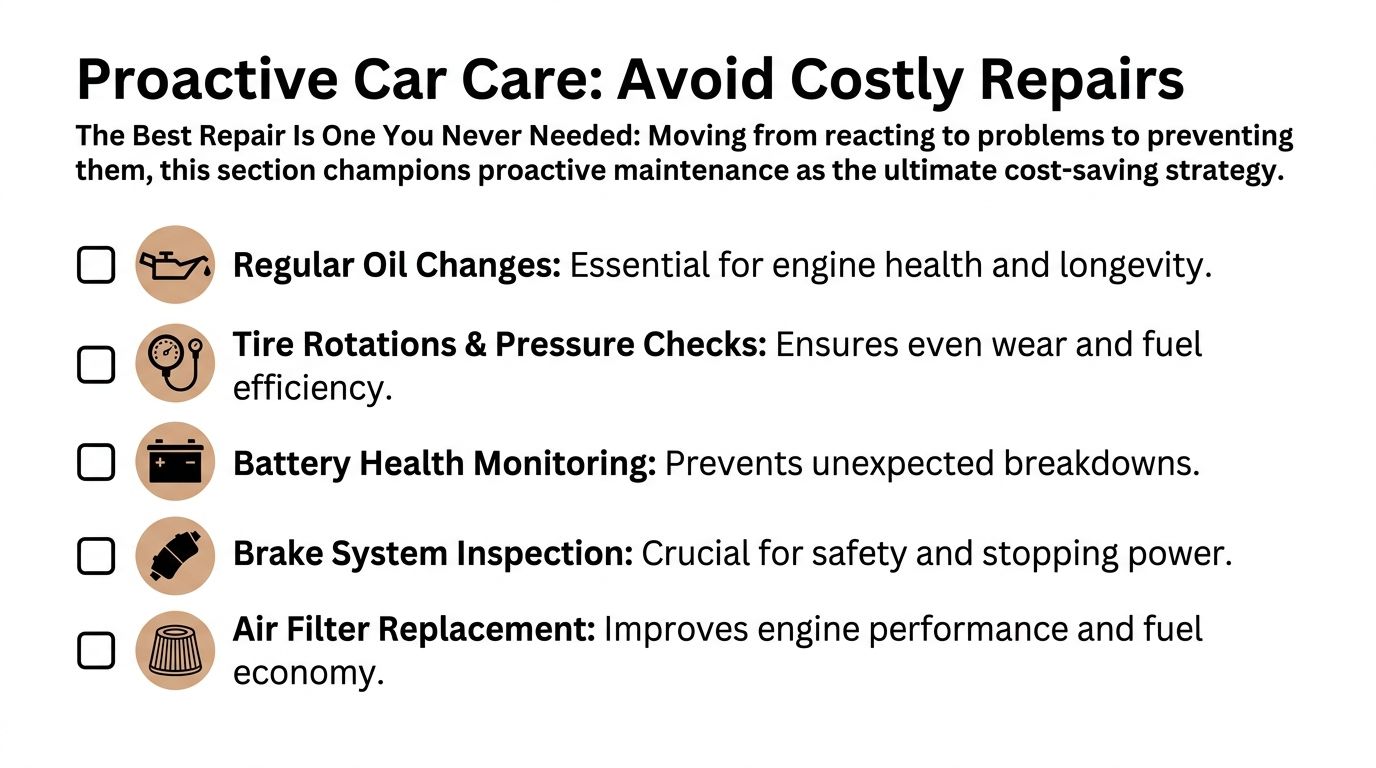
Preventive maintenance is where drivers keep the most money in their pocket. In the shop, I see the same pattern over and over. The painful invoices usually start with something routine that got pushed off too long, especially fluids, tires, and small leaks that seemed harmless at the time.
Coolant is cheap. Engines are not.
A lot of owners stay on top of oil changes and forget the cooling system until the gauge climbs. In Ontario, that is a risky habit. Cold winters, summer traffic, road salt, and stop and go driving all put stress on hoses, clamps, radiators, and the coolant itself.
The basic rule is simple. Use the coolant type the vehicle calls for, keep the system full, and deal with leaks early. The Government of Canada's vehicle safety guidance also tells drivers to check fluid levels regularly, including coolant, as part of routine maintenance: Motor vehicle maintenance and repair safety.
What I tell customers in Whitby is this:
Unknown service history means inspect it now
If you bought the car used and have no record of coolant service, do not assume it is fine.Topping up repeatedly is a warning sign
Coolant does not get “used up” like fuel. If the level keeps dropping, there is a leak or another fault.Contaminated coolant needs attention
Rust colour, sludge, or oily film can point to corrosion or internal engine problems.
One overheating event can do real damage. On many modern engines, the repair bill climbs fast once heat gets involved.
Ignored tires drain money
Tires affect more than tread life. They change fuel use, braking distance, ride quality, and how quickly suspension parts wear. In a place like Whitby, where drivers deal with potholes, curb hits, and big temperature swings, tire maintenance saves money in ways people do not notice until the car starts pulling or vibrating.
Transport Canada recommends checking tire pressure at least once a month and before long trips, and it explains why proper inflation matters for safety and wear: Tires. That advice lines up with what works in the bay every day.
A simple routine catches a lot:
Check pressure with a real gauge
Do it when the tires are cold, especially after big temperature drops.Rotate on schedule
Front wheel drive vehicles chew through front tires faster. Rotation helps you get full value from all four.Watch the wear pattern
Inner edge wear often points to alignment issues. Cupping can suggest weak shocks or struts.Do not ignore new vibration or pulling
After one hard pothole hit, I would rather inspect it early than sell you two tires and suspension work later.
That is not fussy maintenance. It is basic cost control.
Build a maintenance record that protects your wallet
Good habits matter, but paperwork matters too. In Ontario, clear written records make it easier to approve the right work, question the wrong work, and track what was already done. That becomes even more useful later under the province's repair rules if there is a dispute over authorization or billing.
Keep your invoices. Ask what is due next based on time and mileage, not just what is urgent today. If you want a practical starting point, this guide to preventive maintenance for vehicles lays out the basics in a way drivers can follow.
The best value usually comes from boring visits. A coolant service. A tire rotation. A small leak caught early. Those jobs are a lot easier to live with than a major repair you could have avoided.
Choosing Your Repair Partner in Whitby
Where you take your car matters as much as what's wrong with it. A strong shop can save you money with accurate diagnosis, realistic parts advice, and repairs that hold up. A weak one can burn through your budget with guesswork, poor communication, and repeat visits.
Independent shop or dealership
In Ontario, the labour-rate gap is real. Statistics Canada reporting cited for this industry context shows independent repair shops typically charge $140 to $210 per hour, while dealership service centres average $220 to $290+ per hour. That means independent shops can be 30% to 50% cheaper.
That doesn't mean dealerships are wrong. They can make sense for certain warranty work, highly brand-specific diagnostics, or software-related concerns on newer vehicles. But for many common repairs and maintenance jobs, a capable independent shop is often the better value.
What to look for in a Whitby shop
Price matters. Trust matters more. Start with a short list and vet each place the same way.
Clear communication
The shop should explain the complaint, the inspection findings, and the next step in plain language.Written estimates before work
If the front counter gets vague when you ask for a written quote, that's a warning sign.Reasonable parts discussion
A good shop should tell you whether they recommend OEM, aftermarket, or reconditioned parts and why.Consistent reviews
Don't just look at star ratings. Read for patterns. Are people praising diagnosis, honesty, and follow-through?Clean workflow
A spotless floor isn't the point. An organised operation usually reflects organised repair orders and better accountability.
Test the relationship before you need a big repair
One of the best ways to choose a repair partner is to start small. Book routine maintenance, a brake inspection, or a drivability concern that isn't a full breakdown. Watch how they handle approvals, timelines, and explanations.
A reliable shop should be able to tell you three things without dancing around the answer:
- What the issue is
- What needs doing now
- What can wait
That last one matters. Shops that can separate urgent from non-urgent work usually think long-term.
A trustworthy mechanic doesn't try to win every dollar today. They try to become the place you return to next time.
If you're comparing local options, reviewing a Whitby car mechanic page can help you see how a shop presents its capabilities and service approach before you ever book in.
How to Decode Estimates and Choose Your Parts
A repair estimate shouldn't feel like a foreign document. Once you understand the line items, you stop being a passive customer and start making informed decisions.
Read the estimate from top to bottom
Most repair orders include the same core categories, even if the layout changes by shop.
Concern or complaint
This is your description of the issue. It should reflect what you reported.Inspection or diagnostics
This is the time spent identifying the fault, not fixing it. Diagnosis has value. Replacing parts without proving the cause usually costs more in the end.Labour
Labour covers the technician's time for the repair itself. It may be listed as hours, operations, or job-based labour.Parts
This section should identify what's being replaced. Ask whether the parts are OEM, aftermarket, or reconditioned.Shop supplies or related materials
These are the small consumables used during the repair. Ask if anything is unclear.Taxes and totals
Review the final approved amount before work begins.
The line items that deserve questions
Not every estimate needs a debate, but some should trigger a conversation.
Ask questions if:
The diagnosis is thin
“Replace front suspension parts” is too vague. Which parts, and what failed?The parts description is generic
“Brake parts” isn't enough. Pads? Rotors? Hardware? Sensors?The labour seems disconnected from the complaint
If the labour line is broad, ask what operations are included.A recommended add-on appears without context
Maintenance upsells aren't automatically wrong, but they should be explained.
A good shop won't get defensive when you ask for clarity. They'll welcome it.
OEM and aftermarket are not the same decision on every car
The parts conversation is where a lot of drivers either overspend or underspend. There isn't one right answer for every repair.
Here's a straightforward comparison.
| Attribute | OEM Parts | Aftermarket Parts |
|---|---|---|
| Fit and design | Built to the vehicle maker's specification | Varies by brand and supplier |
| Consistency | Usually predictable in fitment and finish | Can range from excellent to poor |
| Price | Often higher | Often more budget-friendly |
| Best use case | Brand-specific systems, newer vehicles, sensitive components | Older daily drivers, routine wear items, cost-conscious repairs when quality is verified |
| Buyer caution | Higher cost doesn't always mean necessary | Cheap versions can create noise, fitment issues, or shorter lifespan |
If you want a plain-language consumer explanation from outside the shop world, the Total Loss Northwest guide on repair parts is worth reading because it frames the OEM versus aftermarket choice in practical terms rather than treating one as universally better.
A simple decision framework
Use the vehicle, the system, and your ownership plan to guide the choice.
For safety and precision-sensitive repairs
Brakes, steering components, and certain suspension parts deserve extra care in part selection. On a newer vehicle, many owners prefer OEM or a top-tier aftermarket brand with a strong track record. The reason is simple. You're protecting drivability, safety, and predictable fit.
For older daily drivers
On an older commuter car, high-quality aftermarket parts often make excellent sense. If the vehicle is out of warranty and you're trying to balance longevity with a sensible budget, reputable aftermarket can be the sweet spot.
For cosmetic or non-critical repairs
Used or reconditioned parts can be reasonable for some non-safety-related items, depending on condition and source. The key is disclosure. You should know exactly what's being installed.
Saving money on parts only works if the part solves the problem once.
If you want a more detailed breakdown of where each option tends to make sense, this guide on OEM vs aftermarket parts is a helpful reference.
The best estimate is not the shortest one or the cheapest one. It's the one you can understand, question, and approve with confidence.
Know Your Rights as an Ontario Driver
You drop your car off for what sounds like a straightforward repair, then the phone rings at 3 p.m. The price has climbed, the explanation is fuzzy, and you are being asked to approve more work on the spot. That is exactly when Ontario's repair rules matter.
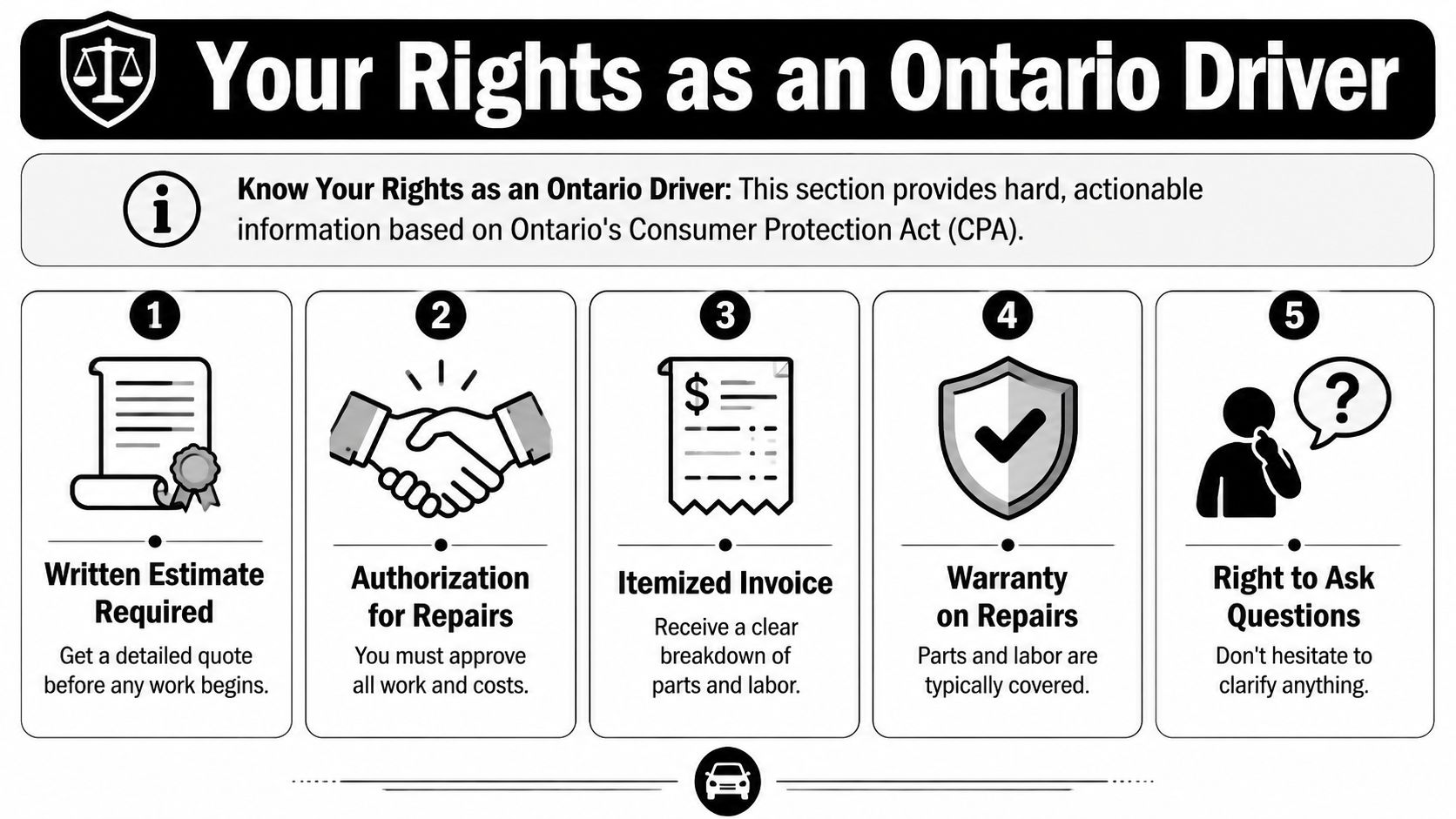
In Whitby, I see the same pattern over and over. Drivers focus hard on the quote, but true protection is in the paper trail and the approval process. Under Ontario consumer law, a shop cannot go past the estimate by more than a limited amount without your consent, and repair contracts are covered by rules set out by the province under the Consumer Protection Act, 2002 and related guidance from Consumer Protection Ontario. Those rules are there to control two common problems. Unexpected charges and disputes over what you authorized.
The practical move is simple. Slow the job down for a minute before the wrenching starts.
What to do before you approve anything
Get a written estimate
A verbal number at the front desk is not much use later. The written estimate should identify the work, the parts, and the expected price.Ask how approvals will be handled
If more problems are found, tell the shop you want a phone call or text before extra work begins. Good shops in Durham Region do this as a normal part of business.Make sure the invoice matches the authorization
If the final bill is higher, there should be a clear record showing when you approved the change.Keep your paperwork
Invoice, estimate, mileage, and dates all matter if the repair fails or a billing dispute starts.
A lot of drivers are surprised to learn that warranty protection also matters here. Ontario requires certain minimum warranties on qualifying repair work, which gives you a basis to return if the same repair does not hold up. That does not mean every new symptom is free. If a ten-year-old Whitby commuter comes in with worn front-end parts and the shop repairs one failed component, a different worn component can still fail later. The key is whether the failed part and the labour tied to that repair fall within the warranty terms shown on your invoice.
If a bill or repair does not look right
Start calmly and get specific. Ask the service advisor to show you where you approved the added cost. Ask which part failed, when it was installed, and what warranty applies to that line item. Vague arguments waste time. Exact questions get answers.
If the explanation still does not add up, put the concern in writing and keep a copy. Ontario drivers can also review complaint options through OMVIC's consumer complaint information, which is useful if the issue involves dealer-related service or repair concerns. Independent shops are common in Whitby, so it also helps to know whether you are dealing with a dealership, a franchise operation, or a local independent, because the complaint path can differ.
One more point that saves people money. If the repair is tied to collision damage, vandalism, or another insured loss, sort out responsibility before authorizing customer-pay work. This guide to car repair insurance coverage and claim situations can help you figure out what may belong on an insurance file and what is likely your bill.
Affordable repair includes legal protection. A fair estimate, clear approval, and proper records usually settle problems before they turn into expensive ones.
The True Meaning of Affordable Auto Repair
Affordable auto repair has nothing to do with chasing the lowest quote in town. Instead, the goal is the lowest total cost of ownership. That means fewer repeat failures, fewer surprise invoices, and fewer cases where a small issue turns into major damage because it sat too long.
The biggest trap is delay. Cost pressure causes people to postpone work they already know the car needs. That choice can be understandable, but it isn't always economical. Research cited for California drivers found that 60% postpone repairs due to cost, and 43% of those delays lead to secondary failures costing 2 to 5 times more. The same source says drivers using independent shops without certified technicians faced 38% higher repeat failure rates within 12 months, according to Auto Repair Transformation.
Whitby isn't California, and local conditions and rules are different. But the core lesson applies anywhere. Deferring a necessary repair or choosing a shop only because it's cheapest can become the most expensive path.
Value comes from stacking smart decisions
Affordable auto repair usually looks like this in practice:
- You maintain the car before wear turns into failure
- You choose a shop that diagnoses before replacing parts
- You understand the estimate and ask about part quality
- You know your legal protections before authorising work
That combination saves money better than bargain hunting ever will.
Cheap repairs often carry hidden costs
A low quote can hide weak parts, incomplete labour, or a rushed diagnosis. If the noise comes back, the light returns, or the new part exposes the old underlying problem, you haven't saved anything. You've just spread one repair over two invoices.
That's why drivers should think beyond the upfront number. If you've ever wondered whether it's worth fixing a charging problem now or stretching it a little longer, reviewing a realistic alternator repair cost breakdown can help frame the risk of waiting versus repairing.
Affordable auto repair means paying for work that makes sense, lasts, and protects the rest of the vehicle. That's the kind of value that keeps a car dependable without draining the budget.
If you want help from a local team that understands how Whitby drivers balance reliability, cost, and long-term vehicle care, Carmedics Autowerks Inc offers professional repair and maintenance services for cars and SUVs. Whether you need a proper diagnosis, routine service, or advice on the most sensible repair path for your budget, their team can help you make a confident decision.