


You've just come back to your car in a Whitby shopping centre and spotted a sharp dent in the door. Maybe a cart rolled into it. Maybe another driver opened a door too hard. After a hailstorm, you may find several shallow marks across the hood and roof instead. The frustration is immediate, especially when you're left wondering whether to call a body shop, a mobile technician, or your insurer.
The good news is that dent repair is a specialised trade, not a guessing game. The right solution depends on the metal, the paint, the panel access, and the way your insurance deductible compares with the repair estimate. Ontario has about 9,300 people working in collision repair, refinishing, glass work, and damage estimation, and the province had 3,565 car body shop businesses in 2026, with an estimated $3.0 billion market size and 11,660 employees, according to Ontario Labour Market Information.
The Moment You Notice the Dent and What Comes Next
A Whitby driver usually discovers a dent at the worst possible time. You're carrying groceries, finishing a shift, or clearing ice from the windshield, and the body line on your car suddenly looks wrong. The damage may be small, but the decision that follows feels larger: leave it alone, pay for a repair, or start an insurance claim.
Start by taking clear photos in daylight. Photograph the full vehicle, the damaged panel, the surrounding paint, and any scrape or crack. Don't polish, push, or heat the dent before a technician examines it. A quick DIY attempt can turn a straightforward repair into a panel and paint problem.
Practical rule: A dent is easier to assess when the technician can see the original damage, including the paint condition and the shape of the crease.
Most minor dents fall into one of two repair paths. Paintless dent repair, often called PDR, reshapes suitable metal without disturbing the factory finish. Conventional body repair uses preparation, filler, and refinishing when the impact has broken the paint, sharply folded the metal, or damaged the panel beyond what PDR can correct.
That distinction matters more than the search result you click. A business ranking for “dent removal near me” may specialise in quick cosmetic work, while a full collision facility can assess structural concerns, paint damage, and insurance documentation in the same visit. Carmedics Autowerks' auto body repair guide is a useful starting point for understanding where dent removal fits within broader vehicle bodywork.
By the time you request an estimate, you should be trying to answer four questions: Can the original paint stay intact? Is the panel accessible from behind? What method will produce the cleanest result? Will the repair cost less than your deductible? Those answers will keep you from paying for unnecessary refinishing or filing a claim that doesn't make financial sense.
What Dent Repair Actually Is and How Technicians Work
Dent repair isn't a matter of pushing metal until it looks flatter. A technician studies the dent's crown, edges, body lines, paint surface, and access points before choosing a method. The aim is to restore the panel without creating a visible high spot, stretched area, or distorted reflection.
Paintless dent repair preserves the factory finish
Paintless dent repair works from the underside of the panel. A technician uses specialised rods, picks, and hand tools to gradually move the metal back into its original position while reading the reflection from a dedicated inspection light. The process is controlled and incremental, more like easing tension out of a panel than forcing it into shape.
According to Dent Doctor Canada's explanation of PDR, the method removes many door dings and hail dents by pushing the metal back from underneath, preserving the factory finish and avoiding filler, sanding, and repainting. That makes it a strong choice for a door ding, a shallow hail depression, or a minor crease where the paint remains unbroken and the technician can reach the rear of the panel.
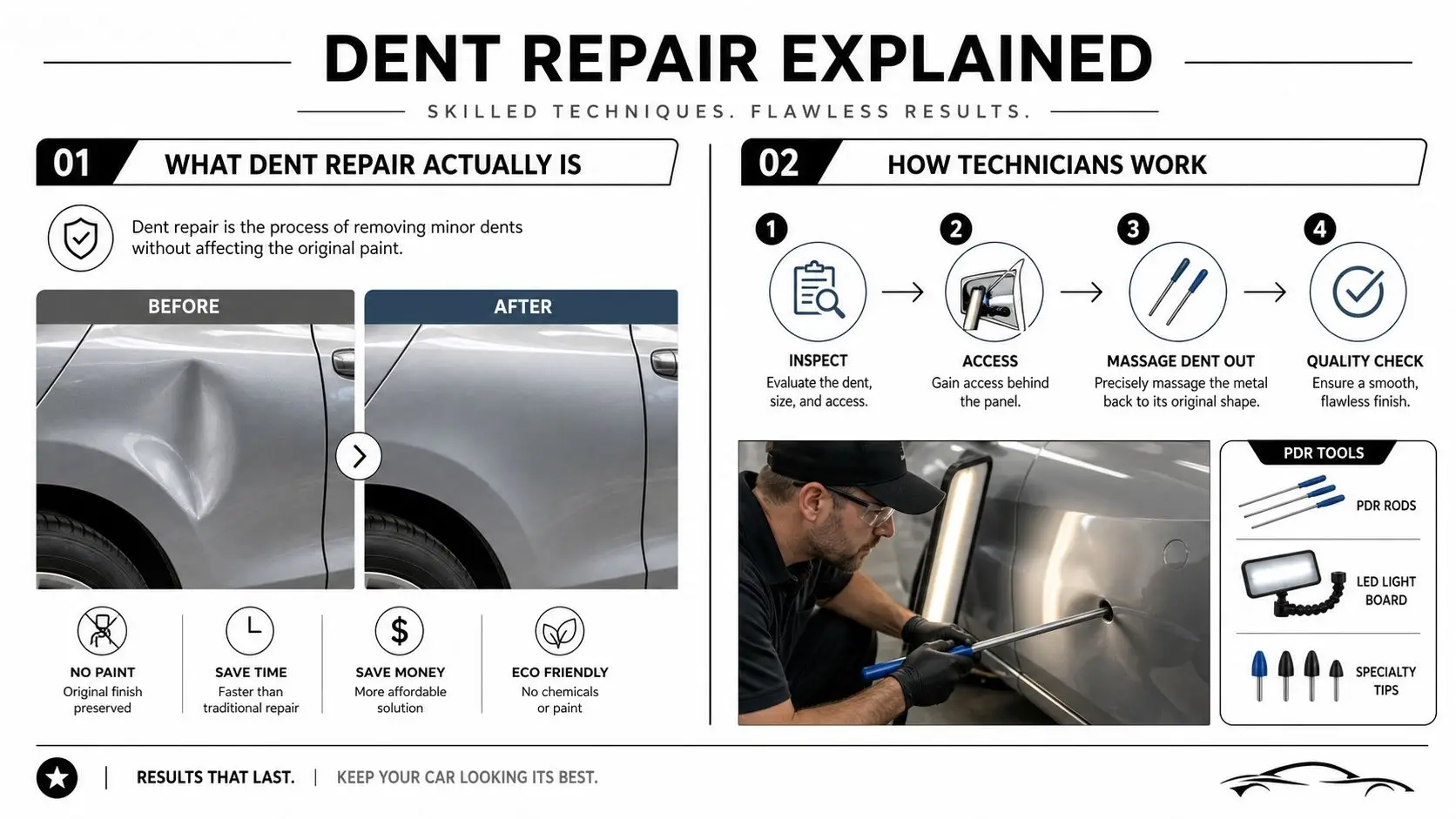
Think of PDR as precise metal reshaping. The technician doesn't cover the defect. They work the panel until the light reflection becomes consistent again.
Conventional repair handles broken paint and difficult damage
Traditional repair becomes necessary when the impact has cracked or chipped the paint, produced a severe crease, stretched the metal, or left the technician without usable backside access. The technician may need to straighten the panel, sand the surface, apply body filler, prime it, match the colour, and refinish the affected area.
That approach is more invasive, but it isn't inferior when the damage calls for it. A sharply folded door edge, a dent with exposed metal, or collision damage around a bumper and quarter panel shouldn't be forced into a PDR solution just because it appears cheaper.
Use this quick assessment before booking:
- Paint intact: PDR may be suitable.
- Shallow door ding or hail mark: PDR is often the first method worth assessing.
- Sharp crease across a body line: The technician must inspect the metal carefully.
- Cracked paint or exposed metal: Expect conventional refinishing to be considered.
- Blocked panel access: The shop may need another repair approach.
The trustworthy answer isn't always the cheapest method. It's the method that restores the panel properly and leaves the rest of the vehicle untouched.
Real Price Ranges Whitby Drivers Can Expect in 2026
A $100 door ding and a $2,000 folded panel are not the same repair, even if both appear in a quick phone photo. In Whitby, the labour, panel construction, paint condition, and access behind the damage determine the price. Use the ranges below for budgeting, not as a substitute for an inspection.
| Dent Type | Repair Method | Typical 2026 Price (CAD) | Best Paid How |
|---|---|---|---|
| Small door ding | PDR | $75 to $150 each | Usually out of pocket |
| Multiple hail dents across panels | PDR where suitable | $300 to $800 | Compare with deductible for comprehensive coverage |
| Major crease or damaged panel | Conventional repair | $1,000 to $2,500+ | Insurance may be appropriate, depending on coverage and deductible |
These are practical planning ranges, not verified provincial price statistics. The final estimate depends on panel access, dent depth, metal stretch, paint condition, the number of affected panels, and whether refinishing is required. A shop should inspect the vehicle before promising a fixed amount.
The deductible decision comes first
Ontario guidance says hail damage is generally covered through optional coverage for broad physical damage, specified perils, or all-perils protection. Liability-only insurance doesn't cover hail damage, as explained in Ontario hail-damage insurance guidance.
Start with the arithmetic. If the estimate falls below your deductible for collision coverage, filing a claim can still leave you paying the repair yourself. A small dent usually makes more sense as an out-of-pocket repair. Widespread hail damage deserves a written comparison of the total estimate, your deductible, and the possible effect of opening a claim.
A written estimate also protects you if the shop finds more damage after disassembly. Ontario repair guidance says a shop generally cannot charge more than an authorised estimate by over 10%. Ask what approval process applies before any additional work begins.
Parts can affect conventional repair costs as well. Understanding whether replacement components are serial production end-use auto parts, rather than prototypes, helps clarify what the repair requires when a panel or related component must be replaced.
For damage beyond a simple ding, get a Whitby collision centre assessment before deciding how to pay. Use the written figure, your deductible, and the repair method to make the call, not a guess based on a search-page result.
What Happens During the Actual Repair Visit
A professional dent-repair visit should feel organised from the first conversation. You shouldn't be handed a vague verbal figure, rushed into signing paperwork, or told to contact your insurer before anyone has examined the damage.
The inspection sets the repair direction
At intake, the technician should photograph the vehicle and record the affected panel. They'll inspect the paint, the dent's depth, nearby body lines, trim, sensors, and access points. If the damage came from a collision, they should also look beyond the obvious mark for misalignment or related damage.
The shop then explains the repair method. Ask directly:
- Method: Is this a PDR repair or conventional bodywork?
- Paint: Is the original finish intact?
- Access: Can the technician reach the back of the panel?
- Estimate: What does the written price include?
- Changes: How will the shop handle additional damage?
A proper digital inspection helps create a shared record of the vehicle's condition. Carmedics Autowerks explains its digital vehicle inspection process for drivers who want documented findings rather than a rushed verbal assessment.
The repair timeline depends on the method
A small, accessible PDR repair may be completed during one visit. Conventional repair usually takes longer because the shop may need to straighten, prepare, refinish, and cure the panel before reassembly. Parts availability, paint matching, hidden damage, and insurer approval can all affect the pickup time.
A reputable shop will tell you what it knows and update you when the plan changes. Ask whether you'll need a loaner, whether the vehicle can remain safely parked overnight, and who will contact you if the technician finds damage that wasn't visible at intake.
Pickup is a quality-control appointment
Before accepting the vehicle, inspect the panel outside or under strong shop lighting. Look along the body line, compare the reflection with the adjacent panel, and check gaps around doors, lamps, trim, and the hood or hatch. Confirm that the paint colour and gloss are consistent from different angles.
Don't judge a repair only from a quick glance in a dim workshop. A careful final check protects you and gives the shop a fair opportunity to correct a genuine issue before you drive away.
How to Choose a Trustworthy Whitby Dent Repair Shop
The closest shop isn't automatically the right shop. Search results can put a quick-cash dent service beside an established collision facility, but the two may not offer the same inspection standards, documentation, or repair backup.
What a credible shop should show you
Start with transparency. A trustworthy technician will explain why PDR does or doesn't suit the panel, identify paint damage, and provide a written estimate that separates labour, materials, parts, and refinishing where applicable.
Look for these signals:
- Visible credentials: The shop can explain its training, certifications, and technical experience.
- Written workmanship warranty: The terms are clear, including what the warranty covers and where exclusions apply.
- Method explanation: The technician shows you the damage and explains the proposed repair instead of using jargon to end the conversation.
- Documented estimate: You receive the scope in writing before authorising work.
- Refinishing discipline: The shop discusses colour matching, preparation, and paint quality when conventional repair is required.
- Local customer feedback: Reviews describe actual communication and repair outcomes, not just vague praise.
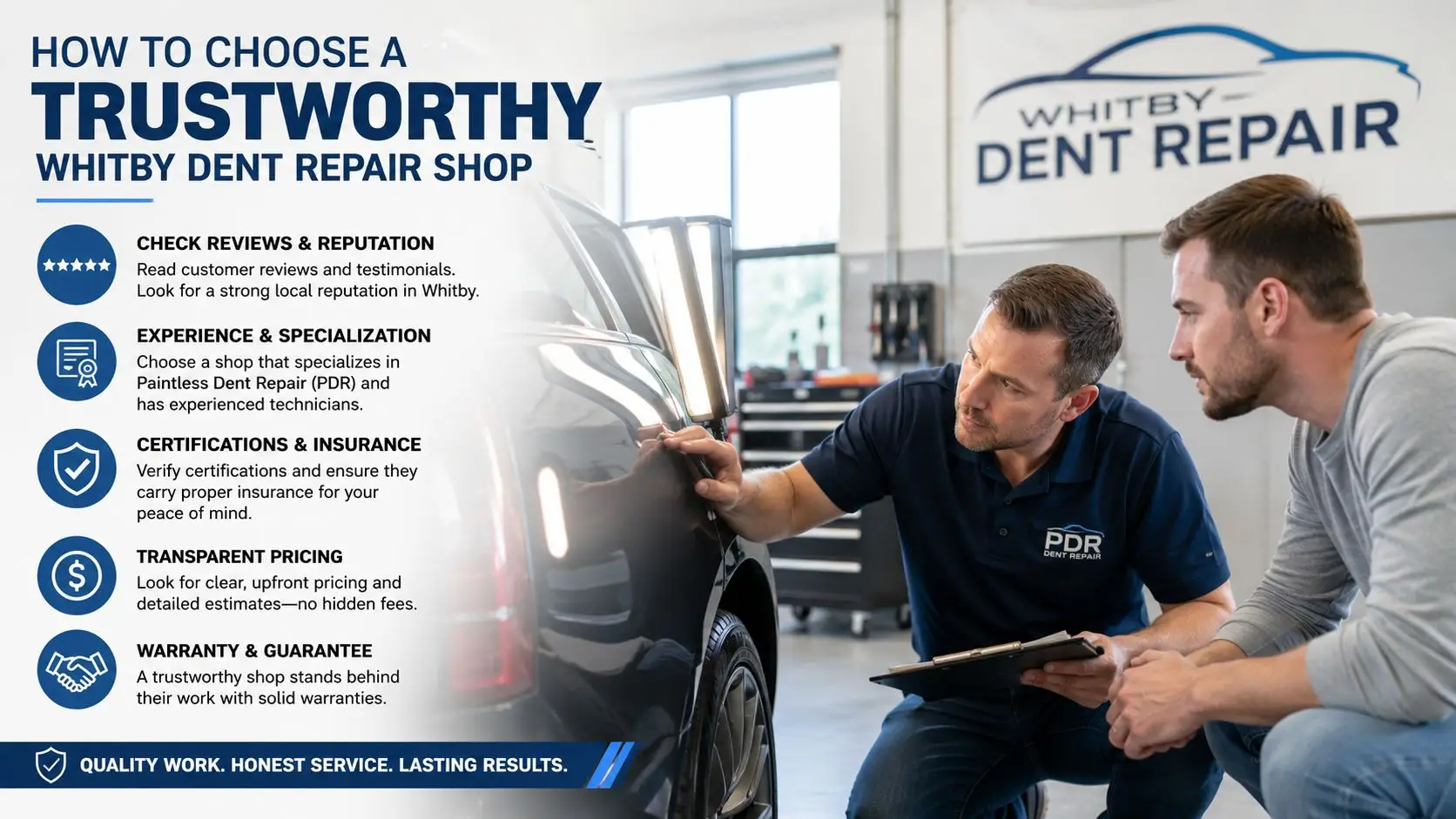
Red flags deserve a hard no
Be cautious if a shop pushes you to file an insurance claim before giving you an inspection. The same applies to cash-only discounts, pressure to authorise work immediately, or promises that every dent can be repaired without paint.
A technician who refuses to walk you through the damage is asking for trust without earning it. A quick dent chain may be perfectly capable of simple PDR, but complex hail damage, cracked paint, and collision-related dents should go to a facility that can manage the entire repair rather than passing difficult work elsewhere.
For a broader local search, use the Whitby auto body shop guide as one reference, then compare estimates, explanations, and warranty terms yourself.
Why Ignoring a Small Dent Can Cost You Later
A small dent isn't always only cosmetic. On a steel panel, damaged paint can expose the surface to moisture and create an opening for corrosion. A shallow mark with intact paint is a different situation, but you won't know which category applies until someone inspects it closely.
The appearance also affects how buyers read the vehicle. Several unrepaired dents can suggest neglect, even when the engine, suspension, and interior are well maintained. If you plan to sell or trade the car, visible body damage gives the next buyer a reason to question its history and negotiate harder.
Hail damage creates an insurance follow-up
The bigger issue for Ontario drivers is what happens after the next storm. TD Insurance's hail coverage guidance says insurers may restrict hail coverage when existing hail damage remains unrepaired. Coverage may be restored after the owner provides proof that the repairs are complete.
That means an unrepaired dent can become part of a future claim conversation. Your optional specified-perils coverage may protect against a later event, but the insurer may need to separate old damage from new damage before approving anything. Keep your estimate, invoice, repair photos, and insurer correspondence together.
Insurance reality: Leaving hail damage untouched can complicate the next claim, even if the dents still look minor.
Rust prevention deserves attention as well. Wash road salt from the affected area, avoid covering a damaged panel with a temporary cosmetic product, and ask a technician whether the paint has broken. Carmedics Autowerks' guide on how to prevent rust on a car offers practical maintenance guidance, but it won't replace an inspection when metal or paint is visibly damaged.
Repairing a small dent promptly isn't always financially urgent. It is often strategically sensible when it protects the finish, keeps the vehicle presentable, and prevents an unresolved hail history from complicating the next insurance decision.
Why Carmedics Autowerks Is Built for This Kind of Work
Dent repair sits between cosmetic care and collision repair. That's why a full-service Whitby facility can be a better fit than a provider that only handles quick dings. If the technician finds broken paint, a bent edge, damaged trim, or related collision damage, the vehicle stays within a repair process that can address the wider problem.
Carmedics Autowerks Inc offers general auto repairs, fleet maintenance, window tinting, paint protection film, and collision repair in Whitby. That range matters for owners who care about keeping a newer vehicle presentable after the dent is removed. A repair can restore the panel, while properly selected protection work can help preserve vulnerable painted surfaces afterward.
The shop's role should still be judged by the same standards discussed above. Ask for the method, the written scope, the expected timing, and the warranty terms. A responsible facility won't recommend paint, replacement parts, or an insurance claim solely because those options produce a larger invoice.

For a new vehicle, preserving the original finish where possible is particularly important. For an older daily driver, a practical PDR repair or targeted conventional repair may be the right answer. The shop should match the work to the vehicle, the damage, and your budget, not sell you a standard package.
Whitby Drivers' Most Common Dent Repair Questions
Does Ontario insurance cover dent repair?
Coverage depends on the cause of damage and your policy. Hail is generally handled through optional specified-perils or all-perils coverage that includes hail. Liability-only insurance does not cover hail damage. Collision-related damage may be treated differently, so read the policy and speak with your insurer before authorising work.
Start with the deductible. If the estimate falls below that amount, paying directly usually makes more sense. If hail damaged several panels, get a complete estimate and compare the total with the deductible before filing a claim. The claim can affect your record, and an unrepaired panel may create follow-up problems if corrosion or paint failure develops.
How long does dent repair take?
A straightforward PDR job can often be completed in one visit, depending on the panel and number of dents. Conventional repair takes longer because preparation, refinishing, curing, parts, and quality checks add work. Ask for a realistic completion window based on the repair method, not just the dent's visible size.
Is mobile dent repair safe for major damage?
Mobile PDR suits an accessible dent with intact paint. It is a poor choice when the paint is cracked, the panel has a sharp fold, sensors are involved, or collision damage extends beyond the dent. Major damage belongs in a properly equipped shop, where the technician can inspect the panel and finish the vehicle correctly.
Where should I take a dented vehicle in Whitby?
Choose a shop that inspects the panel, explains PDR versus conventional repair, documents the condition, and provides a written estimate. Searching for “dent removal near me” is only the starting point. Distance should not outweigh the technician's method, scope, and willingness to explain the deductible decision.
Carmedics Autowerks Inc provides Whitby drivers with vehicle inspections, dent and collision repair assessments, and related protection services such as paint protection film. Bring clear photos or the vehicle to Carmedics Autowerks Inc, request a written recommendation, and judge the repair by the damage, method, and deductible together.