


Most minor automotive upholstery damage, including small tears, surface stains, and single-panel wear, can be repaired in 1–3 days by a Whitby shop for roughly $150–$450, while full seat replacements run $600–$1,500+. If winter salt has marked the bolster or a child's car seat has scuffed the vinyl, repair is usually the sensible first move, provided the damage hasn't reached a seam, foam support, or safety system.
You notice it on the drive to work. Coffee has soaked into the passenger seat, your child's booster has rubbed a shiny patch into the back cushion, or road salt has dried into a pale ring along the driver's bolster. The car still runs perfectly, but every time you open the door, the interior tells you the vehicle is being neglected.
That's where upholstery repair earns its place. Treat it like maintenance, not decoration. A loose seam can become a torn panel, damaged foam can make a seat uncomfortable and uneven, and an incorrect repair around a side-airbag seam can create a safety problem.
This guide gives you the practical decision path: can the damage be fixed, how long will the work take, what should it cost, and when should you trust a Whitby shop instead of attempting the job at home?
Quick reference for common upholstery repairs
| Repair Type | Typical Cost | Typical Turnaround |
|---|---|---|
| Small tear, stain, or isolated panel wear | $150–$450 | 1–3 days |
| Full seat replacement | $600–$1,500+ | Varies by parts and labour |
| Foam, seam, or bolster repair | Quoted after inspection | Varies by damage |
| Headliner repair or replacement | Quoted after inspection | Varies by material and removal |
Those figures are practical planning ranges, not a substitute for an inspection. The final price depends on the material, the location of the damage, access to matching stock, and whether the seat contains heating elements or a side airbag.
If your interior is otherwise in good shape, fix the isolated defect early. You might also find that protecting the cabin from sun and heat, including through professional window tinting, helps reduce future wear on seats, trim, and dashboards.
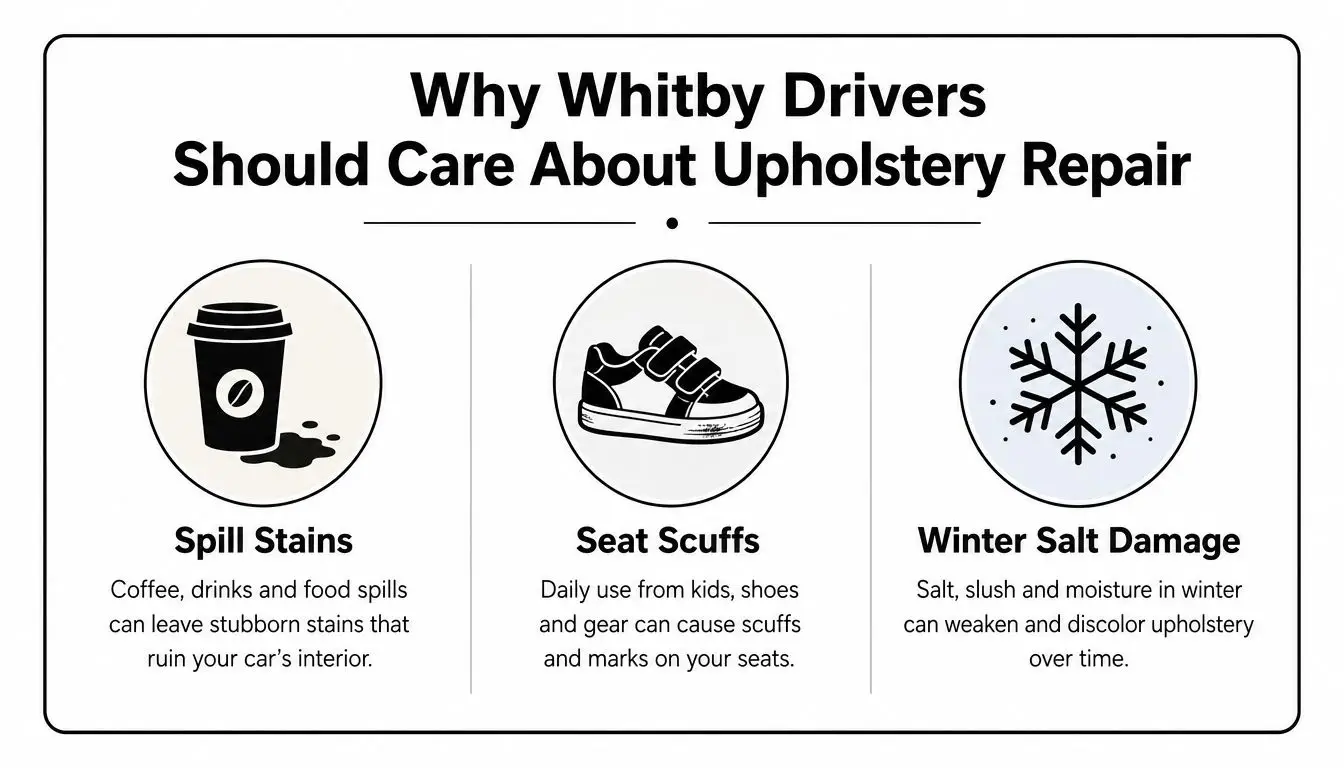
Why Whitby Drivers Should Care About Upholstery Repair
Automotive upholstery repair matters in Whitby because drivers use their interiors hard. Daily commuting, children climbing across back seats, wet winter clothing, road salt, and repeated entry through the same driver's door all concentrate wear in predictable places. The outside of the vehicle may look presentable while the driver's bolster is splitting and the seat cushion is losing support.
Ontario has a real repair workforce behind this service. Approximately 1,400 people worked as upholsterers in Ontario in May 2021, and 56% worked in the broader repair and maintenance sector, NAICS 811, according to Ontario's Job Bank occupational outlook. That doesn't mean every upholsterer handles vehicle interiors, but it does show that upholstery repair belongs to an established service economy rather than a disappearing hobby.
You've got four questions to answer before booking:
- Can it be fixed? Local tears, stains, loose seams, and worn panels often can.
- How long will it take? Minor work may fit within a short shop visit, while material matching and foam work take longer.
- What will it cost? A targeted repair is usually far less disruptive than replacing an entire seat.
- Can the shop protect the vehicle's safety systems? Airbag seams, heated-seat wiring, and seat sensors require proper handling.
Practical rule: If the damage is isolated and the seat still feels structurally sound, ask for a repair estimate before considering replacement.
A shop should inspect more than the visible mark. It should check the surrounding stitching, foam compression, backing material, and any equipment under the cover. That inspection is what separates a durable repair from a patch that merely hides the problem for a short while.
What Auto Upholstery Repair Actually Covers
Automotive upholstery repair restores the materials and support systems inside a vehicle. It can involve leather, vinyl, cloth, foam, batting, thread, carpet, headliner fabric, and the panels that hold those materials in place. Cleaning and recolouring are only two parts of the trade.
Think of a seat as a layered sandwich. The outer cover is the bread you see. Foam and batting form the filling, while the frame, suspension, heating elements, sensors, and airbag components sit underneath. A skilled technician identifies which layer failed instead of treating every problem as a surface blemish.
The interior has separate repair zones
Seats receive the most attention because occupants slide across bolsters, press into seams, and load the foam repeatedly. A technician might restitch a split seam, replace one side panel, rebuild collapsed foam, or replace the entire cover.
Headliners are a different job. The fabric can separate from its backing and sag across the roof, often requiring careful removal, adhesive work, or replacement of the fabric and backing assembly.
Door panels and armrests commonly develop shiny wear, peeling vinyl, loose inserts, or damaged stitching. Carpet and floor coverings need different cleaning and replacement techniques because they handle grit, moisture, and salt. Steering wheels and shift boots also require material-specific work, especially where texture and hand contact matter.
Material choice deserves more thought than matching the original colour. Use a resource such as these premium upholstery material tips to understand how fibre, backing, texture, and expected use affect the result. In a vehicle, the correct material must also suit friction, temperature changes, cleaning, and the shape of the panel.
A shop that offers professional odour removal service can address smells separately, but odour treatment won't repair torn material or collapsed foam. Tell the technician every symptom, including dampness, staining, odour, and changes in seat comfort.
The Five Problems Whitby Drivers Bring In Most Often
Most interior jobs fall into a few recognisable patterns. Classifying yours correctly helps you give the shop useful information and prevents a cosmetic fix from being applied to a structural problem.
Small tears
Keys, belt buckles, tools, and child-seat hardware can cut vinyl or cloth. A small tear in the centre of an otherwise healthy panel is usually a localised cosmetic repair. A technician may stabilize the backing, blend a patch, or replace the affected panel.
Location changes the decision. A tear near a stitched side-airbag seam isn't just a visual defect. The technician must preserve the intended deployment path and use materials and stitching appropriate to that seat.
Burns
Cigarette burns and heat damage often remove the material completely and damage the foam below. A tiny surface mark may respond to a controlled repair, but a deep burn usually needs a patch with supported backing or a panel section replaced.
Don't fill a burn with a soft adhesive and expect it to behave like factory material. Heat, friction, and repeated flexing will expose a weak repair quickly.
Set-in stains
Coffee, dye transfer from dark jeans, sunscreen, grease, and winter road salt all behave differently. Cleaning can remove contamination when the dye and fibres remain intact. It can't restore colour that has permanently changed or replace a finish worn away by scrubbing.
Salt deserves prompt attention. It can leave a crusty residue and encourage owners to use aggressive cleaners that dry leather or discolour fabric. Blot spills first, then let a shop assess any remaining colour loss.
Sagging or wrinkled covers
A wrinkled seat cover may indicate stretched material, broken fasteners, or foam breakdown. If the cushion feels flat or uneven, replacing only the cover is the wrong call. The technician needs to correct the support underneath before installing new material.
Failed seams
Driver's-side bolsters and headrest posts experience concentrated stress. When thread breaks but the material remains sound, restitching may solve the problem. When the edge has torn away or the panel has thinned, sewing the same hole again won't restore the missing strength.
A seam failure tells you where the stress is concentrated. It doesn't always tell you that the seam is the only thing that needs repair.
Repair Methods and When Each One Is the Right Call
The right method depends on the size, location, and depth of the damage. A tidy patch can be excellent on a small isolated defect and completely wrong on a bolster that has already worn thin across its entire contact area.
Patching suits a small hole or tear where the surrounding material still has good colour, texture, and strength. The technician supports the damaged area from behind and blends the repair into the original surface.
Panel replacement is better when one section has widespread wear but the rest of the seat remains sound. Replacing the driver's bolster panel, for example, avoids paying for a complete seat cover when only one high-contact area has failed.
Full reupholstery makes sense when multiple panels are cracked, faded, or stretched, or when you want to change the interior material throughout. It also gives the technician a chance to inspect and rebuild the layers underneath.
Leather dyeing and recolouring can refresh faded or mismatched surfaces, but colour treatment won't rebuild a torn seam or restore missing leather. For owners comparing finishes, the same principle applies to leather goods. This worn leather bag care guide offers useful background on cleaning, conditioning, and restoration choices.
Foam and batting replacement addresses a cushion that has collapsed, tilted, or lost its original support. Headliner replacement handles sagging roof fabric, while seam restitching works when the material edge remains strong enough to hold new thread.
Which repair method fits which problem
| Damage Type | Best-Fit Method | Longevity Expectation |
|---|---|---|
| Small isolated tear | Supported patch or local repair | Good when surrounding material is sound |
| Worn driver bolster | Panel replacement | Better than patching worn material |
| Collapsed cushion | Foam and batting replacement | Durable when the underlying support is sound |
| Faded but intact leather | Cleaning and recolouring | Depends on preparation and ongoing care |
| Split seam with intact edges | Professional restitching | Strong when stress and alignment are corrected |
| Sagging headliner | Headliner repair or replacement | Depends on backing and adhesive condition |
The rule is simple: localised damage gets a localised fix, while widespread wear needs panel or full reupholstery. If you're unsure whether the visible defect is limited to the cover, show the shop photographs of the entire seat and a close-up of the damage.
DIY Versus a Professional Whitby Shop
A careful owner can handle minor maintenance and a few low-risk repairs. Mild leather cleaning, a small vinyl patch on a non-critical trim panel, or a headliner edge that has just started to release may be manageable with the correct product and restrained technique.
The danger starts when the repair involves load, heat, wiring, or safety equipment. Leather seam work belongs on a professional bench. So does access to a heated-seat element, structural foam, or a seat with a side airbag. Cutting, gluing, or stitching without knowing what sits beneath the cover can create a failure that only appears when the seat is stressed.
DIY kits commonly cost $30–$80, while a professional repair commonly falls around $150–$450. That difference looks attractive until a poor colour match, stiff adhesive, uneven patch, or damaged cover forces a technician to remove the failed work before starting again.
Use this decision rule
- Keep it at home: Mild surface cleaning, prompt spill blotting, and a small patch on an unpowered trim panel.
- Book a shop: Any leather seam, heated-seat access, structural foam issue, or side-airbag seat.
- Stop and inspect: Damage larger than a deck of cards, a tear running along stitching, or material that has become brittle around the defect.
- Don't gamble: If you can't identify what lies beneath the cover, don't cut into it.
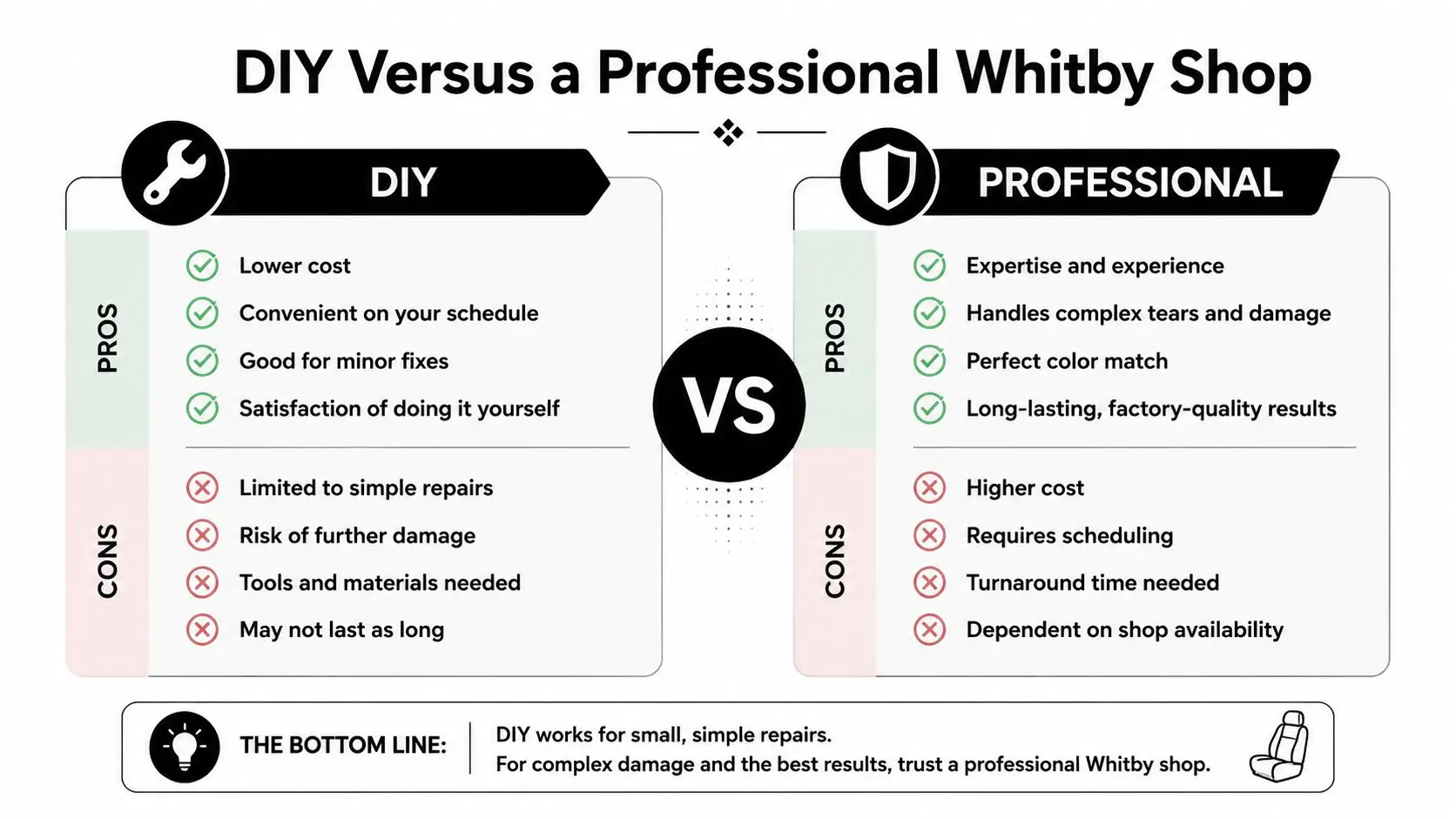
A professional shop should explain the repair method before taking the vehicle. If the technician only says “we'll glue it” without discussing the backing, seam location, foam condition, and material match, keep looking. Guidance on choosing the best auto repair shop near you applies here too. Ask what the technician will remove, what will be replaced, and how the finished repair will be checked.
What Happens When You Drop Your Car at a Whitby Shop
Take a torn driver's bolster on a newer SUV. You arrive with the tear photographed from close range and from across the seat. A good shop records the vehicle's condition, confirms whether the seat has a side airbag or heating, and gives you a written estimate that separates labour, material, and any foam work.
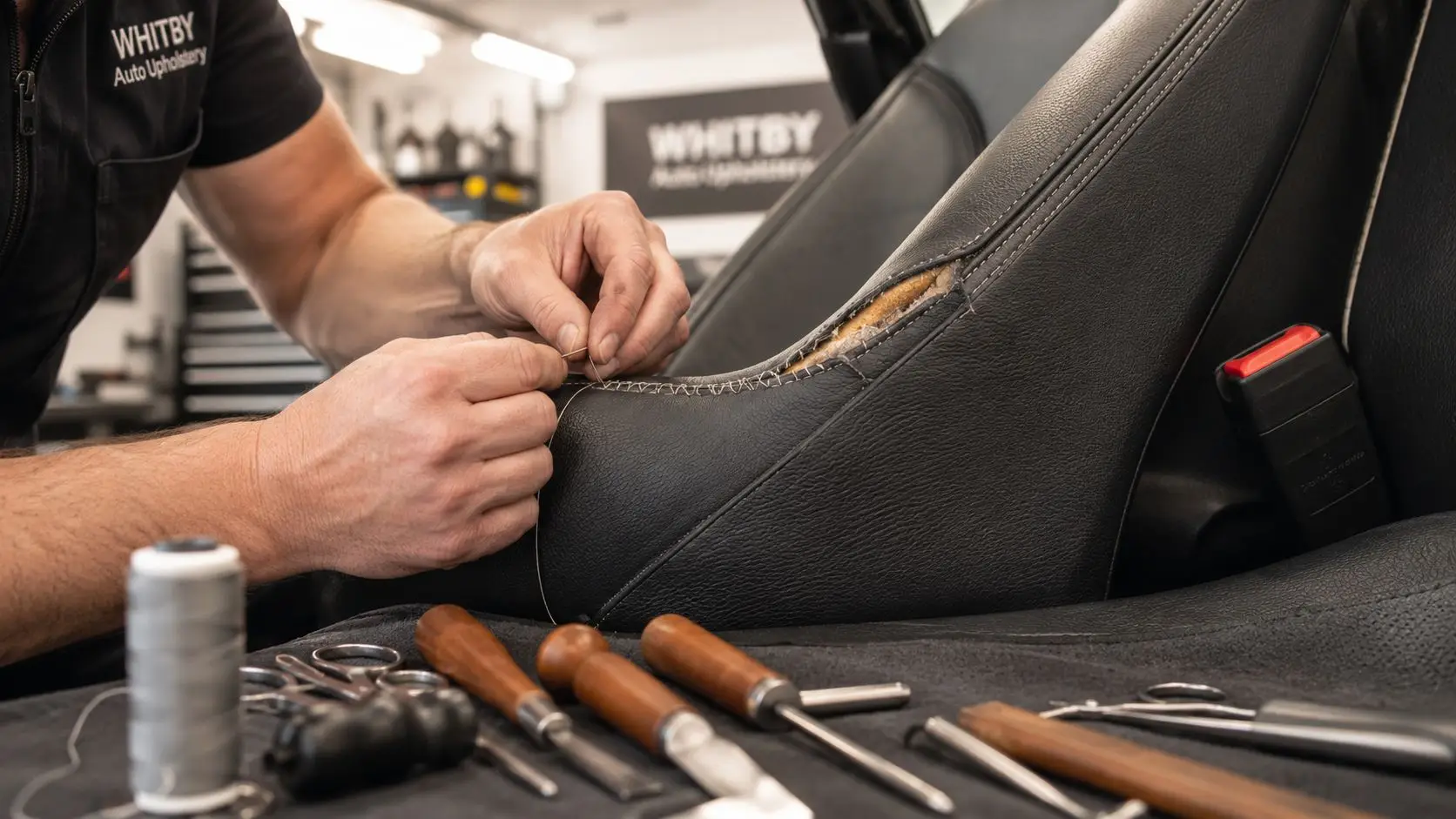
The technician then examines the damage from the top and underside. They check whether the vinyl or leather has stretched, whether the foam has collapsed, and whether the tear follows a factory seam. That assessment determines whether the job needs restitching, a replacement bolster panel, or more extensive reupholstery.
Material selection is part of the repair
Matching factory material isn't always the best answer. The original panel may have failed because it receives constant friction, so a shop might offer a more durable automotive fabric or vinyl with a similar grain and colour. Ask to see samples in daylight, because interior lighting can hide a mismatch.
Abrasion ratings help make that choice less subjective. Industry guidelines commonly place woven upholstery intended for low-traffic use at 15,000 Wyzenbeek double rubs or 20,000 Martindale cycles, and high-traffic or public-space use at 30,000 double rubs or 40,000 Martindale cycles, as outlined in ACT performance guidelines. These benchmarks don't guarantee a vehicle fabric will last, but they provide a useful comparison when repeated contact is the cause of wear.
The shop should document the chosen material, any barrier or backing used, and the treatment of airbag and heated-seat components. California has a compliance-critical rule for applicable upholstered items manufactured, imported, or reupholstered on or after June 25, 2021, requiring compliance with the smolder-resistance method in Technical Bulletin 117-2013, as explained by the U.S. Consumer Product Safety Commission upholstered-furniture FAQ. A vehicle repair involving cover, foam, barrier, or decking changes should be assessed with the applicable safety requirements in mind.
After the repair, the technician checks alignment, stitching, surface tension, colour, and seat operation. Before pickup, ask for the workmanship warranty in writing. The warranty should identify what the shop covers and exclude damage caused by new cuts, spills, misuse, or unrelated vehicle faults.
A digital vehicle inspection can also help document the surrounding cabin condition, particularly when the upholstery issue appears alongside trim, seat, or interior hardware concerns.
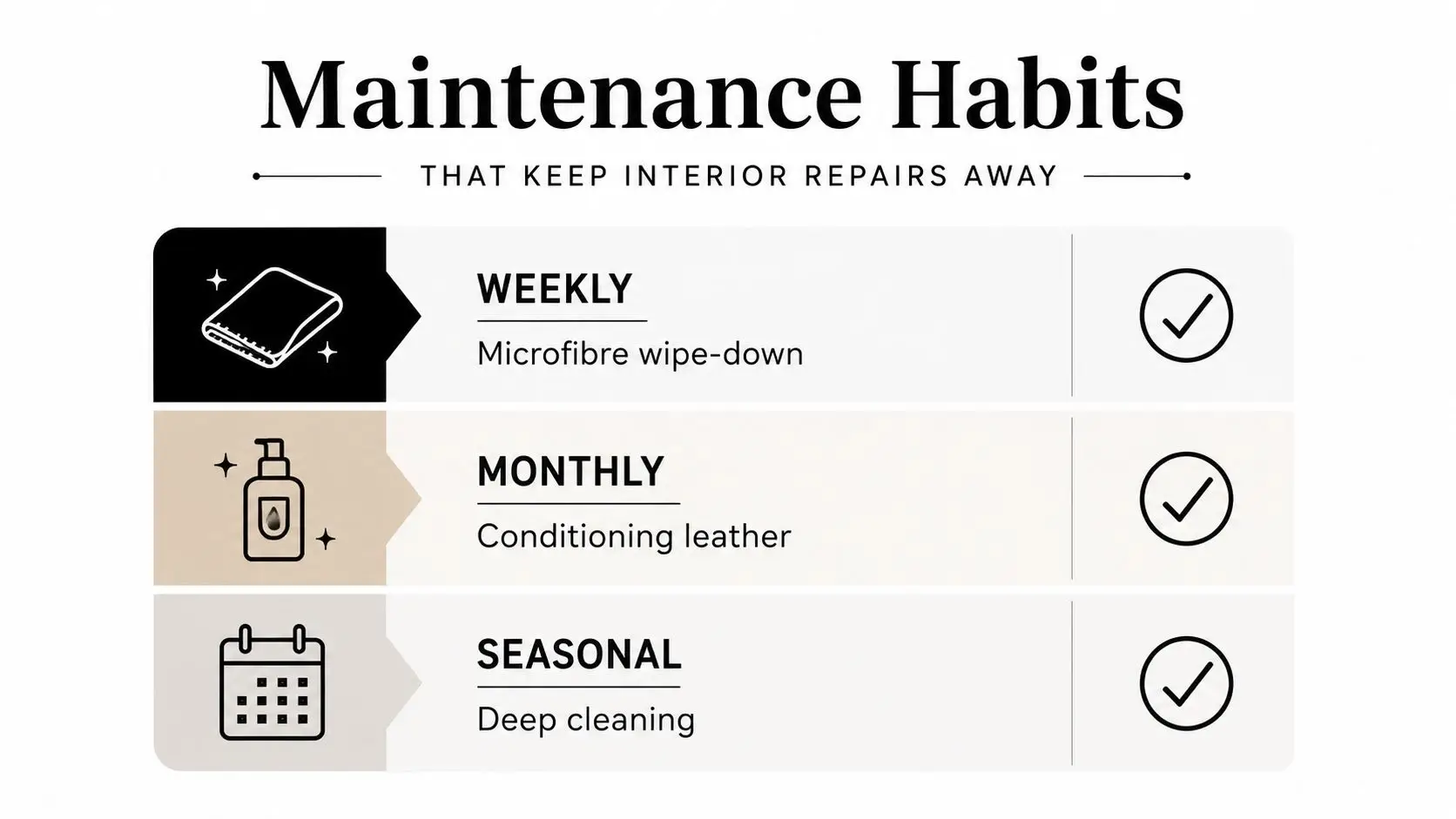
Maintenance Habits That Keep Interior Repairs Away
Ontario interiors need a routine that respects moisture, salt, friction, and sunlight. You don't need a cabinet full of detailing chemicals. You need the right product, used lightly, before contamination sits long enough to alter the material.
Weekly care
Use a clean microfibre cloth to remove dust from the dash, door tops, seat surfaces, and bolsters. Vacuum the seams and the gap between the seat cushion and backrest, where grit acts like sandpaper each time someone gets in.
Blot coffee, juice, and melted snow immediately. Don't scrub in circles. Press with a clean towel, work from the outside of the spill toward the centre, and stop before you spread the mark.
Monthly care
Vacuum under child seats and floor mats, then inspect high-contact areas by touch. Run your hand across the driver's bolster and armrest. If the material feels rough, sticky, brittle, or unusually shiny, deal with it before a small wear spot becomes a split.
Condition leather with a product intended for automotive leather and apply a light coat. Avoid soaking perforations, stitching, switches, and seat controls. Fabric seats need compatible spot treatment rather than leather conditioner.
Seasonal care
Winter demands salt removal from carpets, mats, seat rails, and lower door panels. Shake out mats, rinse or clean them with a suitable product, and dry them properly before reinstalling them. Salt left in seams and carpet backing can keep attracting moisture.
Summer calls for shade and sensible UV protection. Park under cover when possible, use a windshield sunshade, and avoid leaving leather or vinyl baking under direct glass for long periods. Don't use silicone-heavy dressings on seats or steering wheels. They can leave a slippery film where you need grip.
Avoid harsh all-purpose cleaners on leather and bleach-based stain removers on fabric. Both can change colour, dry surfaces, or weaken fibres. Test any cleaner on a hidden area first, and follow the material maker's instructions.
Questions Whitby owners ask
Does insurance cover upholstery repair? Usually not as ordinary wear or accidental deterioration. It may be considered under full coverage when the damage results from an insured event such as theft or vandalism. Ask your insurer before authorising work.
What warranty should I expect? Get the workmanship terms in writing. A reasonable shop should explain its coverage period, exclusions, and whether the material manufacturer provides a separate warranty.
Can technicians work around heated seats and airbags? Yes, but they must identify and protect the relevant wiring, sensors, heating elements, and airbag seams. Never accept a repair that disables a safety system to make the job easier.
Why can salt season delay a booking? Winter damage sends more vehicles to shops at the same time, especially after owners notice stains and dampness. Book early, provide photographs, and ask whether the shop needs the vehicle for inspection before promising a completion date.
Keep this short checklist in the garage:
- Wipe: Remove dust and spills before they settle.
- Vacuum: Clean seams, rails, mats, and under-seat areas.
- Inspect: Check bolsters, stitching, headliner edges, and armrests.
- Protect: Use shade in summer and remove salt in winter.
- Escalate: Book a professional assessment when material splits or foam changes shape.
Bringing Your Car to Carmedics Autowerks in Whitby
Book an inspection when the damage is still isolated. A small tear, single stain, or worn panel is the point where a technician can preserve most of the original interior. Once several panels have cracked, the foam has collapsed, or the seat no longer holds its shape, ask for both a panel-repair option and a complete reupholstery option.
Before you call, take clear photographs in daylight. Include one close-up, one image showing the full seat, and one showing the surrounding seam, bolster, or trim. Note whether the seat is heated, powered, perforated, or fitted with a side airbag. Those details help the shop prepare the right inspection.
Ask four direct questions
What is the turnaround time? Minor work may fit within the short timeline described at the start, while material sourcing, foam restoration, and complex seat removal take longer. Get the expected completion date in writing.
Will insurance apply? Give the insurer the incident details first if the damage came from theft, vandalism, or another potentially covered event. Routine wear usually requires private payment.
What does the warranty cover? Ask whether it applies to stitching, colour work, adhesive, foam, and replacement material, and ask what actions void it.
How will heated and airbag-equipped seats be handled? The shop should identify the relevant systems, preserve their operation, and explain any testing performed after reassembly.
For Whitby drivers, Carmedics Autowerks in Whitby is the place to start the conversation about the vehicle and the damage. Bring the facts, ask for a written estimate, and insist on material options rather than accepting the first cosmetic shortcut.
Small and isolated means repair. Widespread wear means panel or full reupholstery. Replacement is the last step, not the automatic answer.
Carmedics Autowerks Inc offers professional automotive repair, interior-related service, collision repair, fleet maintenance, window tinting, and paint protection solutions for Whitby drivers. Send photos of the damaged area or visit Carmedics Autowerks Inc to request an assessment and a written upholstery repair estimate with suitable material options.