


The van was loaded, the route was mapped, and the driver was already behind schedule when the dashboard light came on. By the time the vehicle rolled back to the shop, the day's deliveries were already scrambling, one customer was annoyed, and a small repair had turned into a much bigger interruption. That's the actual cost of running a fleet without a clear fleet maintenance schedule, and it usually shows up on the worst possible day.
For a small fleet, this isn't about corporate process or paperwork for its own sake. It's about keeping vehicles available, controlling repair spend, and making sure one breakdown doesn't ripple through the rest of the week. A proper schedule turns maintenance from a guessing game into a routine that protects cash flow, customers, and driver confidence.
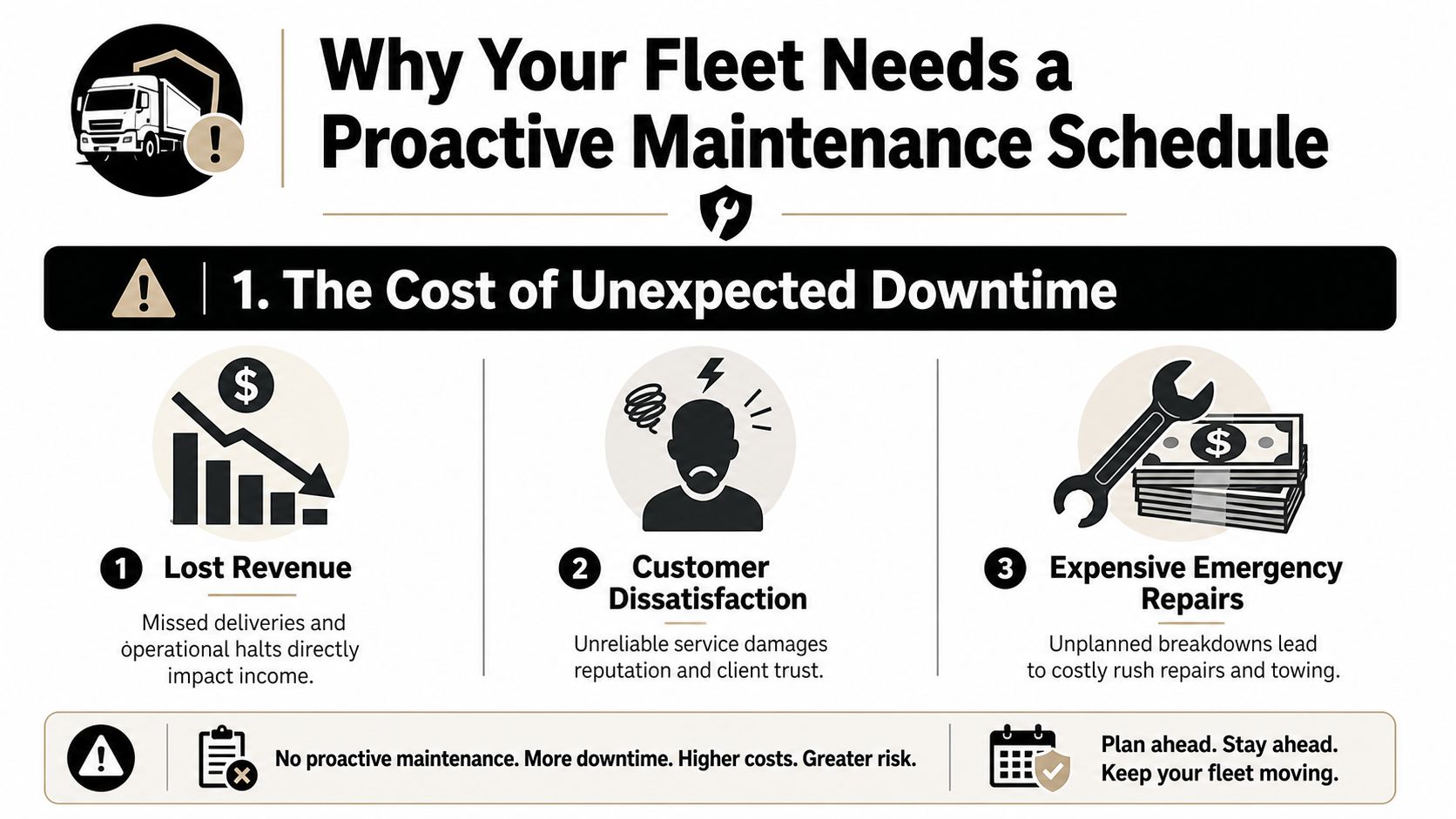
Why Your Fleet Needs a Proactive Maintenance Schedule
A breakdown on the road rarely stays a single problem. One van stops, the route gets delayed, the driver has to call for help, and the office starts juggling reassignments, callbacks, and apologies. If towing, emergency labour, and a rushed repair get involved, the bill climbs fast, and the more expensive hit is often the business lost while the vehicle sits useless.
That's why preventive maintenance beats reactive repair every time. Reactive maintenance waits for failure, then pays whatever it takes to get moving again. Preventive maintenance follows a plan, catches wear early, and lets you decide when the vehicle goes in, instead of letting a fault decide for you. The logic is simple, a scheduled service is usually far cheaper than a roadside rescue, and it keeps the rest of the fleet from being dragged into the same mess.
Practical rule: if a job can be planned in the shop, it's almost always cheaper and cleaner than handling it on the shoulder of a road.
The value isn't only in avoiding major failures. Scheduled servicing also helps keep smaller issues from stacking up, like uneven tyre wear, neglected fluid changes, weak batteries, or brake concerns that a driver learns to live with. Over time, those small misses shorten vehicle life and make each repair more disruptive because the vehicle hasn't been kept in steady condition.
For a small fleet, predictability is a major advantage. You can plan around service appointments, keep customer commitments realistic, and avoid the constant pressure of last-minute fixes. If you're building the habit from scratch, a solid starting point is a simple preventive programme such as the one outlined in this guide from Carmedics Autowerks on preventive maintenance.
Designing Your Maintenance Checklist and Intervals
A strong schedule starts with two decisions, what gets checked, and when it gets checked. If you only chase oil changes, you'll miss the systems that create downtime. If you overbuild the schedule with too many checkpoints, drivers stop taking it seriously and the shop gets flooded with unnecessary visits.
Set the interval around the vehicle's actual job
Mileage matters, but it isn't the whole picture. A highway van that spends most of its life cruising steadily wears differently from a utility truck that idles, stops, loads, and unloads all day. Engine hours and calendar time matter because some vehicles rack up wear without adding many kilometres, while others sit too long and develop age-related issues even if the odometer looks modest.
The best schedule starts with the manufacturer's guidance, then gets adjusted for how the vehicle is really used. A delivery route with hard city driving needs a different rhythm than a light-use backup vehicle. The same logic applies to vehicles that idle for long periods, because idling can build hours without the mileage that usually reminds people service is due. For a practical local example of how fleets are managed in a service-heavy environment, see this Whitby fleet maintenance page.
Build the checklist in layers
A good checklist doesn't try to do everything at once. It splits the work into a driver-level check, a regular shop-level inspection, and a larger service milestone. That makes the process easier to follow and harder to ignore.
- Daily pre-trip check: Lights, tyres, visible leaks, warning lamps, wipers, mirrors, and anything the driver can spot in a minute or two.
- Weekly walkaround: Fluid levels, brake feel, tyre condition, battery concerns, loose trim, and anything that changed over the week.
- Milestone service: Oil and filters, brake inspection, fluid condition, rotations, belts, hoses, suspension checks, and anything the shop finds during a proper lift inspection.
The point of layering is discipline. Drivers report what they can see. The shop handles what needs tools, lifts, and time. If you run a small fleet, that division keeps the process realistic instead of turning it into a wish list nobody follows.
Keep the checklist short enough that people actually use it, but detailed enough that the same faults don't keep slipping through.
Choosing Your Tools for Scheduling and Recordkeeping
The best recordkeeping system is the one your team will keep using when the day gets busy. A beautiful software demo doesn't help if nobody updates it after a roadside call or a late pickup. For a fleet of two to twenty vehicles, the right tool usually sits somewhere between simple and organised, not complex and expensive.

Pen and paper works, until it doesn't
A logbook and wall calendar are cheap, familiar, and easy to start. They're fine if you have a tiny fleet, one decision-maker, and a strong habit of writing things down immediately. The problem is that paper doesn't remind anyone on its own, and it becomes hard to search when you need to see patterns across several vehicles.
Spreadsheets give you control without much cost
Excel or Google Sheets is the sweet spot for many small fleets. You can track odometer readings, service dates, repair notes, and upcoming due items in one place, then use calendar alerts to avoid missing appointments. It's flexible, easy to share, and much easier to sort than a notebook.
The trade-off is that spreadsheets depend on discipline. If no one enters the data on time, the sheet becomes a pile of stale rows and missed service dates. Still, for owner-operators and small teams, a clean spreadsheet often beats overbuying software they'll barely touch.
Dedicated software helps once the fleet gets busy
Entry-level fleet maintenance software adds reminders, history tracking, cost records, and sometimes parts inventory. That becomes useful when several drivers, vehicles, and service dates are moving at once. It also reduces the risk of losing important details in email threads or text messages.
If the fleet is still manageable by one person, software may be more than you need. If vehicle use is growing and maintenance decisions are getting harder to track, it can save time and reduce mistakes. A good practical guide to keeping the records tidy is this maintenance log resource.
Tracking Performance with Key Fleet Maintenance KPIs
A schedule only matters if it changes practical outcomes. If vehicles still miss service, sit too long in the yard, or keep returning with the same faults, the process needs tightening. Three simple measures tell you whether the system is working without drowning you in administration.
Cost per kilometre
This one shows the true operating cost of each vehicle. Add the maintenance and repair spend for a vehicle over a period, then divide by the kilometres it covered in that same period. A vehicle with a higher figure than the rest of the fleet deserves attention, because it may be ageing poorly, being driven harder, or due for replacement sooner than the others.
You don't need to obsess over tiny differences. Look for vehicles that consistently drift above the pack and ask why. That's usually where hidden problems live.
Vehicle downtime
Downtime measures how long a vehicle is unavailable for work because of service or repair. The simplest way to track it is to log every time a vehicle leaves service and every time it returns, then total the lost days or hours. If a van keeps missing bookings because it's always waiting on parts or a follow-up repair, the cost isn't just the invoice, it's the work that never happened.
Preventive maintenance compliance
This KPI checks whether the schedule is being followed. Compare the services that were due with the services that were completed on time. If the number keeps slipping, the issue is usually process, not the vehicles themselves. Missed reminders, poor handovers, and vague responsibility are common causes.
A useful local management reference is this fleet maintenance manager resource, especially if one person is trying to coordinate all of this without support.
A schedule that isn't followed is just a list.
Partnering with a Local Shop for Reliable Service
Most small fleets don't have a full-time mechanic sitting in-house, and that changes how maintenance has to be managed. The shop becomes part of the operating system, not just the place you go when something breaks. If you choose well, a local service partner can keep vehicles moving with far less friction than juggling different providers for every job.

What to look for in a shop
Start with commercial experience. A shop that understands work vehicles will ask better questions, spot usage patterns faster, and know how to prioritise a fleet job without treating it like a one-off personal car repair. Transparency matters just as much. You want clear estimates, clear updates, and no mystery invoices after the vehicle is already back on the road.
Communication is the other deal-breaker. The shop should be willing to tell you what can wait, what shouldn't, and what they found while they were in there. That kind of conversation saves money because it helps you make informed decisions instead of authorising every line item out of panic.
Make the relationship operational
Give the shop each vehicle's history, known faults, typical routes, and any recurring complaints from drivers. That context helps a technician separate a real pattern from a one-off annoyance. It also makes it easier for the same shop to notice when the same issue keeps returning across the fleet.
A simple service agreement helps too. It doesn't need to be complicated, just clear on who approves work, how estimates are handled, where vehicles are dropped off, and how urgent breakdowns are prioritised. Sticking with one trusted provider also makes recordkeeping cleaner, because the history stays in one place instead of being scattered across invoices from different garages.
For businesses in Whitby that want a repair partner with fleet experience, this fleet vehicle repair page is a useful example of the kind of service structure to look for.
The best shop relationship feels less like outsourcing and more like extending your own operations into a bay that knows your vehicles.
Putting Your Fleet Maintenance Plan Into Action
The first version of the plan doesn't need to be perfect. It needs to exist, get used, and keep getting refined as the fleet changes. Start by listing every vehicle, then pull the manufacturer service recommendations, current odometer readings, and any recurring complaints from drivers. From there, set the intervals, choose the recordkeeping tool, and assign one person to own the follow-through.
If you're comparing how other operators structure fleet upkeep, the hgv maintenace resource from Woolpit Truck Repairs is a useful reference point for thinking about process and consistency in a service-driven environment.
The quickest win is to stop relying on memory. Build the schedule, write the next due dates down, and make every service traceable. Once that habit holds, the benefits show up in fewer surprises, steadier costs, and vehicles that stay useful for longer.
A CTA for Carmedics Autowerks Inc. If you're ready to stop chasing breakdowns and start running a cleaner, more dependable fleet maintenance routine, reach out to Carmedics Autowerks and set up a practical service plan for your vehicles today.