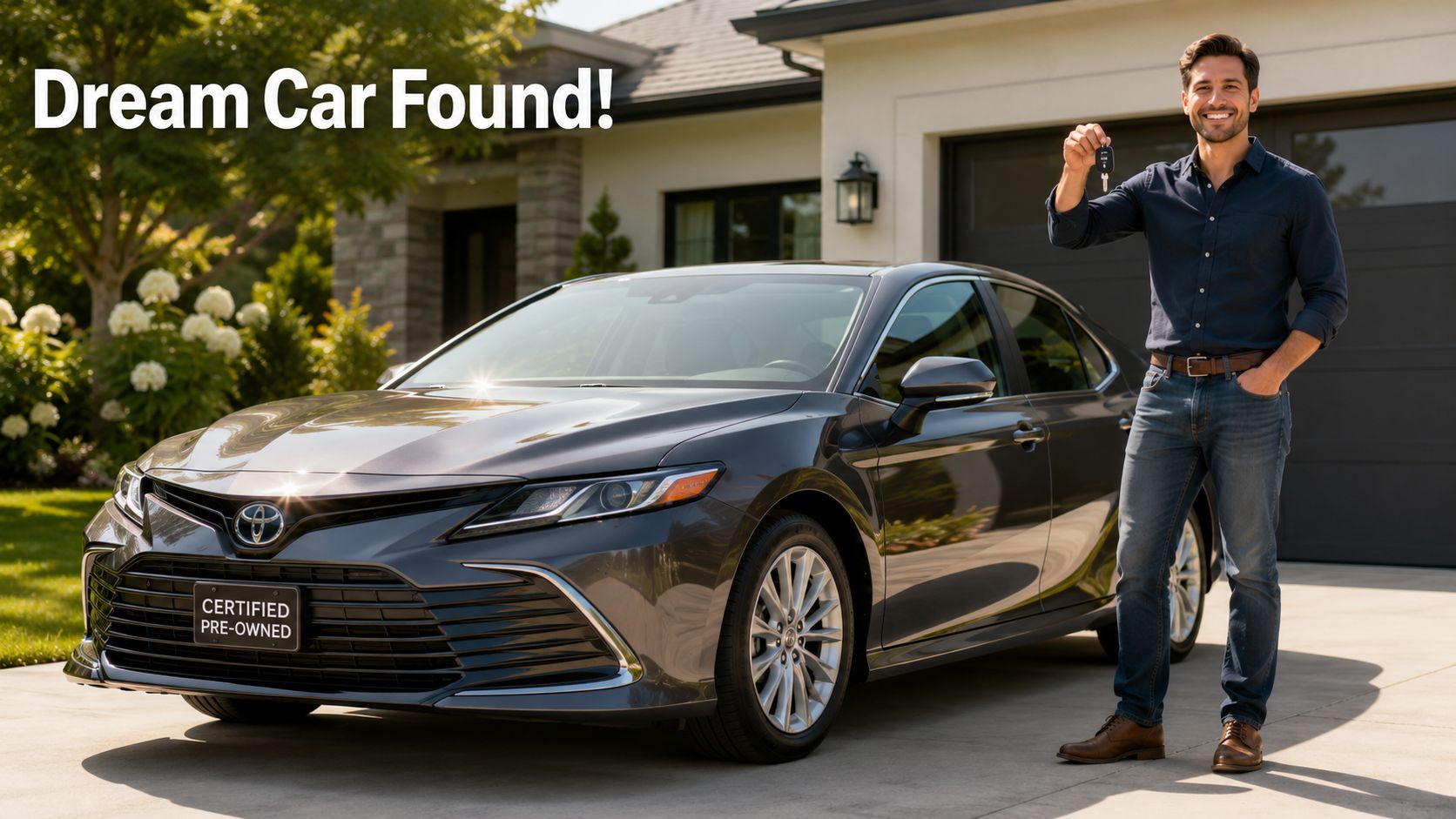
You've probably been there. You find a used car that looks right, drives well, and seems priced fairly. The seller is friendly, the paint shines, and during the test drive nothing obvious feels wrong. Then the doubt creeps in. What's hiding underneath?
That feeling is healthy. A clean interior and a smooth ten-minute drive don't tell you much about brake line corrosion, old collision repairs, or an engine problem that only shows up when the car is cold. In Ontario, that matters even more because winter, salt, and rough seasonal swings punish vehicles in ways buyers don't always see from the driveway.
Why That Perfect Used Car Needs a Second Opinion
You're in a driveway in Whitby. The car is clean, the body looks straight, the test drive is quiet, and the seller seems honest. Then the car goes on a hoist and the story changes. Rust has started along the brake lines, the rear subframe is scaling, and an old undercoating job is hiding more than it protects.
That's why a used car pre purchase inspection matters. It confirms the condition of the vehicle you can't judge from clean paint, a friendly seller, or a ten-minute drive around the block.
In Whitby and across the GTA, the biggest risk is often underneath the car. Ontario winters are hard on metal. Salt, slush, freeze-thaw cycles, and years of highway driving can eat away at frame rails, brake and fuel lines, rocker panels, exhaust hangers, and suspension mounting points. A glossy detail job does nothing to fix that. An inspection by a qualified car mechanic in Whitby can show whether you're buying a solid vehicle or inheriting expensive corrosion that a generic checklist might miss.
Why trust isn't enough
Some private sellers are straightforward. Some genuinely have no idea what is developing underneath their vehicle. Dealers may have done their own checks, but those checks are often aimed at getting the car sale-ready, not at showing you what may need attention over the next year.
That matters in Ontario because once you buy, your options can shrink fast. The Ontario Motor Vehicle Industry Council explains that there is no general cooling-off period for motor vehicle contracts in Ontario, which is why buyers need to do their checks before signing, as outlined on the OMVIC consumer protection page.
A pre-purchase inspection gives you a clearer answer to a simple question. Is this a good car, or does it only look like one today?
You're not paying for reassurance. You're paying to find out whether the deal is legitimate.
What a Comprehensive PPI Actually Covers
A real pre-purchase inspection is far more than a quick safety glance. It's a methodical check of the vehicle's present condition, past abuse, and likely near-term repair needs.
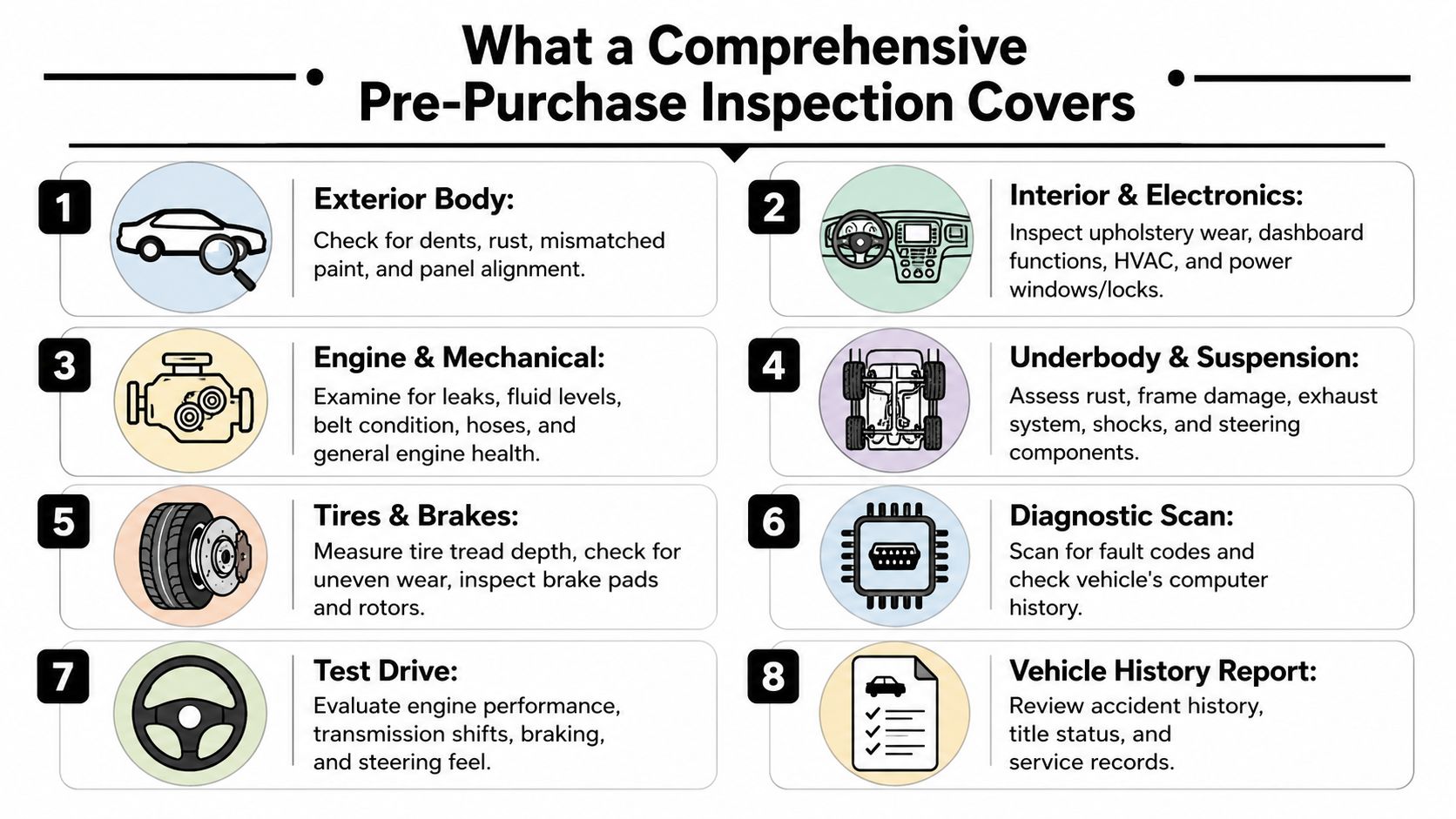
The goal of a PPI is simple. Find what the seller can't explain, what the dashboard isn't showing, and what the road test alone won't reveal.
The standards part and the real-world part
In Ontario, a certified used car pre-purchase inspection has to verify that the vehicle meets the ministry's Passenger/Light-Duty Vehicle Inspection Standard, including brake lining minimums, tire tread depth of at least 1.6 mm across the centre three-quarters, and frame integrity with no deep pitting, flaking, or holes in structural metal, as outlined in this breakdown of Ontario inspection requirements.
That's the baseline. A thorough PPI goes beyond that.
A proper inspection also looks at cold-start behaviour, hidden faults stored in modules, signs of poor body repair, fluid contamination, and the kind of underbody corrosion Ontario drivers know too well. It's the difference between “passes today” and “worth buying.”
What the technician checks
Here's what should be covered on a thorough used car pre purchase inspection.
| Inspection Area | Key Checks |
|---|---|
| Exterior body | Dents, rust bubbles, mismatched paint, overspray, panel gaps, glass condition |
| Interior and electronics | Warning lights, HVAC operation, infotainment, power accessories, seat wear, odours |
| Engine and mechanical | Leaks, belt and hose condition, idle quality, abnormal noise, service neglect |
| Fluids | Oil condition, coolant appearance, brake fluid condition, signs of contamination |
| Underbody and suspension | Frame rust, brake and fuel line corrosion, exhaust condition, bushings, shocks, steering play |
| Tires and brakes | Tread wear pattern, rotor condition, pad life, pull or pulsation under braking |
| Diagnostic scan | Stored and pending codes, readiness monitors, module communication faults |
| Road test | Shift quality, acceleration, steering feel, brake response, vibration, bearing or suspension noise |
What works and what doesn't
What works is a lift, proper lighting, a scan tool, and enough time to let the vehicle tell the truth.
What doesn't work is checking a used car in a parking lot with a flashlight and good intentions. A seller saying “my buddy looked at it” also doesn't help much. Neither does relying on body shine. A car can have excellent paint and a rough undercarriage.
The underbody inspection is especially important with vehicles that have spent years in Durham Region, Toronto, or anywhere roads get heavily salted. The same goes for collision checks. If the welds, undercoating, seam sealer, or panel fit look off, a technician needs to dig deeper. Buyers looking into prior body issues should also understand the basics of auto body repair and what quality repairs actually look like.
A few details buyers should ask about
Not every shop includes the same depth. Ask specifically whether the inspection includes:
- A cold-start check: Warm engines can hide noises, smoke, and idle issues.
- A full underbody lift inspection: This is mandatory in Ontario if you want a real rust assessment.
- An OBD-II and module scan: Not just checking if the engine light is off.
- A road test long enough to load the drivetrain: Highway speed can reveal issues city streets won't.
- Written notes: You need a report you can use for negotiation or for walking away.
A proper PPI is part diagnosis, part risk assessment, and part negotiation tool. If any one of those pieces is missing, it isn't complete.
Decoding the Inspection Report and Common Red Flags
A report only helps if you understand what it's saying. Buyers often get handed phrases that sound minor, then find out later they were anything but minor.
If a mechanic writes “oil seepage,” that might mean a small leak today and a repair tomorrow. If the note says “structural corrosion,” that's far more serious. If the scan shows a catalyst efficiency code, the issue may be the catalytic converter, but it could also point to an engine that isn't running clean. Context matters.
Terms that should make you stop and ask
A few report phrases deserve a second look right away:
- Weeping gasket: Usually a minor leak now, but it needs monitoring because heat and time tend to make it worse.
- Pitted or flaking frame metal: That's not cosmetic rust. On an Ontario car, this can move into safety territory quickly.
- Uneven tire wear: Often points to alignment trouble, bent suspension parts, poor prior repair, or worn components.
- Milky oil or coolant contamination: A major warning sign for internal engine trouble.
- Brake or fuel line corrosion: Common on winter-driven vehicles and not something to shrug off.
If the seller says, “It's just surface rust,” but the report mentions scaling, perforation, heavy flaking, or compromised structure, believe the report.
Ontario rust changes the whole conversation
Local knowledge matters. Generic used-car advice from warmer climates often understates what salt does to vehicles around Whitby and the GTA.
A 2025 Ontario Ministry of Transportation report found that 28% of used vehicles sold in Canada had unsafe frame rust that standard PPIs missed without specialized underbody lifts, and Ontario vehicles showed 30 to 40% higher undercarriage corrosion rates because of frequent salt exposure, according to Carfax Canada's discussion of why pre-purchase inspections matter.
A clean rocker panel on the outside doesn't guarantee a healthy structure underneath.
That's why a proper lift inspection matters so much here. Rust doesn't just attack visible panels. It gets into seams, brake line brackets, subframes, suspension mounts, and inside boxed sections where buyers rarely look.
VIN checks help, but they don't replace inspection
A VIN search is useful for history, trim confirmation, and checking what vehicle you're dealing with. If you want a straightforward explanation of how VIN numbers work and why they matter when buying used, carBoost o numerach VIN is a useful primer.
Still, a history report won't tell you everything. It may not show poor repair quality, hidden corrosion, or a code that was recently cleared. That's why scan data and hands-on inspection matter. A shop using proper vehicle computer diagnostics can often spot issues a paperwork trail misses.
Read the report in three buckets
When I explain reports to buyers, I sort findings into three practical groups:
Buyable with normal maintenance
Things like expected wear items, light seepage, or tires that are ageing but still serviceable.Negotiation items
Repairs that aren't fatal but have real cost attached, such as brakes due soon, suspension wear, or minor leaks.Walk-away issues
Structural rust, serious engine contamination, major transmission faults, unsafe repairs, or hidden collision damage.
That framework keeps you from overreacting to minor wear and underreacting to expensive trouble.
How Much a PPI Costs Versus How Much It Saves You
A used car can look sorted in the driveway, drive fine for 15 minutes, and still be a bad buy once it's on a lift. I see that a lot with Ontario vehicles, especially GTA cars that have done years of winter commuting. The body can clean up well. The undercarriage is where the money disappears.
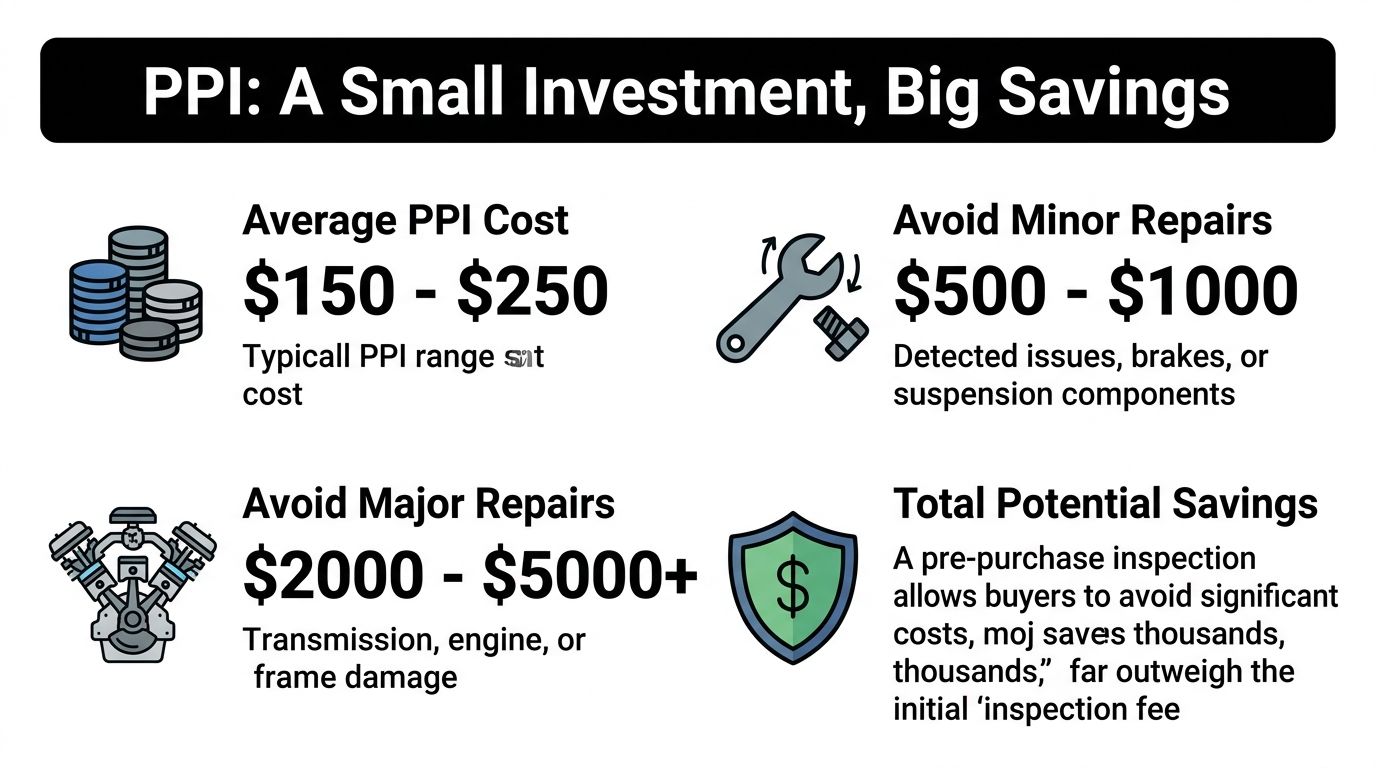
In Ontario, a detailed used car pre-purchase inspection often lands in the $150 to $300 range. That fee is small beside what a shop can uncover in one visit. Rusted brake lines, rotted subframe sections, seized suspension hardware, poor rustproofing after collision work, or tires and brakes that are all due at once can turn a decent-looking car into a very expensive one.
What you are really paying for
The fee buys clarity.
It tells you whether the asking price matches the car sitting in front of you, not the polished ad, not the seller's story, and not a clean set of exterior photos. Around Whitby and across the GTA, that matters even more because winter salt attacks parts many buyers never get a proper look at. A generic checklist might note “surface rust.” A good PPI should tell you whether that rust is cosmetic, whether it is spreading into mounts and lines, and whether you are about to inherit repairs that make the deal pointless.
Where the savings show up
A PPI usually saves money in three practical ways:
- It stops you from buying the wrong car: Walking away can be the cheapest outcome.
- It gives you real negotiating ground: Written findings are a lot stronger than a hunch from a test drive.
- It helps you budget for the first year: You know what needs attention now, what can wait, and what will likely cost you next.
That last part gets overlooked. Even if the car is worth buying, knowing the condition of brakes, tires, fluids, suspension, and the underside helps you avoid getting surprised a month later.
If you want a clearer sense of local pricing, this guide to auto inspection cost in Ontario explains what buyers are paying for when the inspection is done properly.
Paying a few hundred dollars for a second opinion is a lot cheaper than finding structural rust or deferred repairs after the bill of sale is signed.
The best report is not always the one that says “good car.” Sometimes it is the one that saves you from buying a clean-looking Ontario winter car with a rough underside.
Finding a Qualified Inspector in Whitby and the GTA
The value of a PPI depends on who does it. A rushed inspection by the wrong shop can miss the exact problems you were trying to avoid.
In the GTA, technicians commonly benchmark PPI pricing at $100 to $200, with premium inspections at $185+, and in Ontario private sales, sellers who refuse a PPI are 3.2x more likely to conceal severe mechanical defects, according to this GTA-focused guide on pre-purchase inspections. That refusal is a serious red flag.
What to look for in a shop
You don't need fancy branding. You need the right habits and the right equipment.
Use this checklist when choosing an inspector:
- A proper vehicle lift: In Ontario, this isn't optional if you want an honest rust assessment.
- Brand familiarity: A shop that sees your make regularly will catch model-specific weak points faster.
- A scan tool that reads more than basic codes: Many problems live outside the engine light.
- Clear written findings: You want notes you can understand and use.
- No connection to the seller: Independent means independent.
A seller should have no problem taking the vehicle to a reputable inspection facility. If they push back, limit the time, insist on their own mechanic, or say “it's already been checked,” that's useful information.
Questions worth asking before you book
Call the shop and ask direct questions.
- Do you inspect the underbody on a hoist?
- Do you road test the vehicle?
- Do you scan for stored and pending codes?
- Can you comment on rust severity versus normal Ontario wear?
- Will I get a written summary?
Those answers tell you more than the website does. If you're searching locally, this directory for vehicle inspection stations near me can help you compare options and find a suitable shop in the area.
What a good inspection appointment feels like
A strong inspector won't promise that a used car is perfect. That's a bad sign in itself. Instead, they'll tell you what they found, how urgent it is, and whether it affects value, safety, or long-term ownership.
The best shops are blunt in a useful way. They'll say things like:
This one has normal wear for Ontario. This one needs work soon. This one should stay on the seller's driveway.
That's what you want. Clarity, not reassurance.
Your Next Steps After the Inspection
Once you have the report, the decision usually falls into one of three lanes.
Buy it
If the car is structurally sound, mechanically healthy, and the remaining issues are normal wear, you can move ahead with confidence. You're not buying a fantasy. You're buying with your eyes open.
Negotiate it
If the report shows manageable issues, use it. A written inspection gives you something solid to bring back to the seller. You don't need to argue feelings. You can point to specific faults, explain what they mean, and ask for a fair adjustment or repair before the deal closes.
Walk away
Some reports save you by disappointing you.
If the car has serious corrosion, major contamination in fluids, ugly scan results, or signs of poor structural repair, let it go. There will always be another used car. There won't always be another chance to avoid a bad one before you own it.
The inspection puts you back in control. That's the point. Whether you buy, negotiate, or walk, you're making the call based on evidence instead of hope.
Frequently Asked Questions About Car Inspections
What's the difference between a PPI and a Safety Standards Certificate
A Safety Standards Certificate is a pass-or-fail check that confirms the vehicle met minimum standards on the day it was inspected. It's narrow. A pre-purchase inspection is broader and more useful to a buyer because it looks at overall condition, likely repair needs, hidden issues, and whether the vehicle makes sense to own.
Do I still need a PPI if I'm buying from a dealer
Yes. Dealer purchase protection is better than private-sale protection in Ontario, but it isn't the same as an independent mechanical opinion. Purchases from registered OMVIC dealers include disclosure of known defects and access to a compensation fund, while private sales only require a UVIP and don't offer formal recourse beyond small claims court, as noted in this summary of Ontario buyer protection differences.
Also, dealer-inspected doesn't always mean problem-free. An independent check gives you a second set of eyes with no stake in the sale.
Are hybrid and EV inspections different
Yes. The basics still apply, but battery health matters in a different way than it does on a gas vehicle. A generic scan isn't always enough. On a hybrid or EV, ask the shop what battery-specific testing they perform and whether they can assess battery condition beyond simple fault-code reading.
That question matters because not every shop is equipped for the same level of EV or hybrid diagnosis. If the answer sounds vague, keep looking.
If you're buying a used vehicle in Whitby or anywhere in the GTA, Carmedics Autowerks Inc can help you make the decision with real information instead of guesswork. Their team handles auto repair, inspections, collision work, paint protection, and vehicle care for local drivers who want a clear picture of what they're buying before they commit.