


A Canadian SUV can carry a maintenance burden that a simple oil-change estimate completely misses. The 2026 CFS Annual Report records preventative maintenance at $0.060 per kilometre for small crossover/SUVs and $0.063 per kilometre for medium crossover/SUVs over four years, rising to $0.066 and $0.070 per kilometre respectively over five years (National Joint Council CFS Annual Report). Those figures don't include every seasonal expense a Whitby owner faces, particularly winter tires, storage, swaps, and climate-related wear.
A useful SUV maintenance cost comparison has to account for size, drivetrain, kilometres, weather, and ownership horizon. A subcompact front-wheel-drive crossover isn't operating in the same cost bracket as a heavier mid-size AWD SUV, even if both receive the same oil-change advice. The cheapest-looking SUV on a service menu can also become the more expensive vehicle once tire wear, AWD servicing, brakes, and suspension enter the picture.
Understanding SUV Maintenance Costs in Canada
Canadian fleet data separates maintenance into preventative service, repairs, tires, miscellaneous costs, and maintenance sales tax. The National Joint Council's 2023 annual report puts overall maintenance at $0.110 per kilometre (National Joint Council 2023 annual report). That breakdown gives owners a better budgeting framework than one annual average because it shows which expenses are driving the total.
Mileage raises several costs at once. Tires wear, brakes handle more weight and heat, fluids reach their service intervals, and suspension components absorb impacts from heavier vehicles. Winter driving adds salt exposure and rough-road impacts. AWD brings extra driveline components and makes consistent tire circumference more important, since mismatched tires can increase system strain.
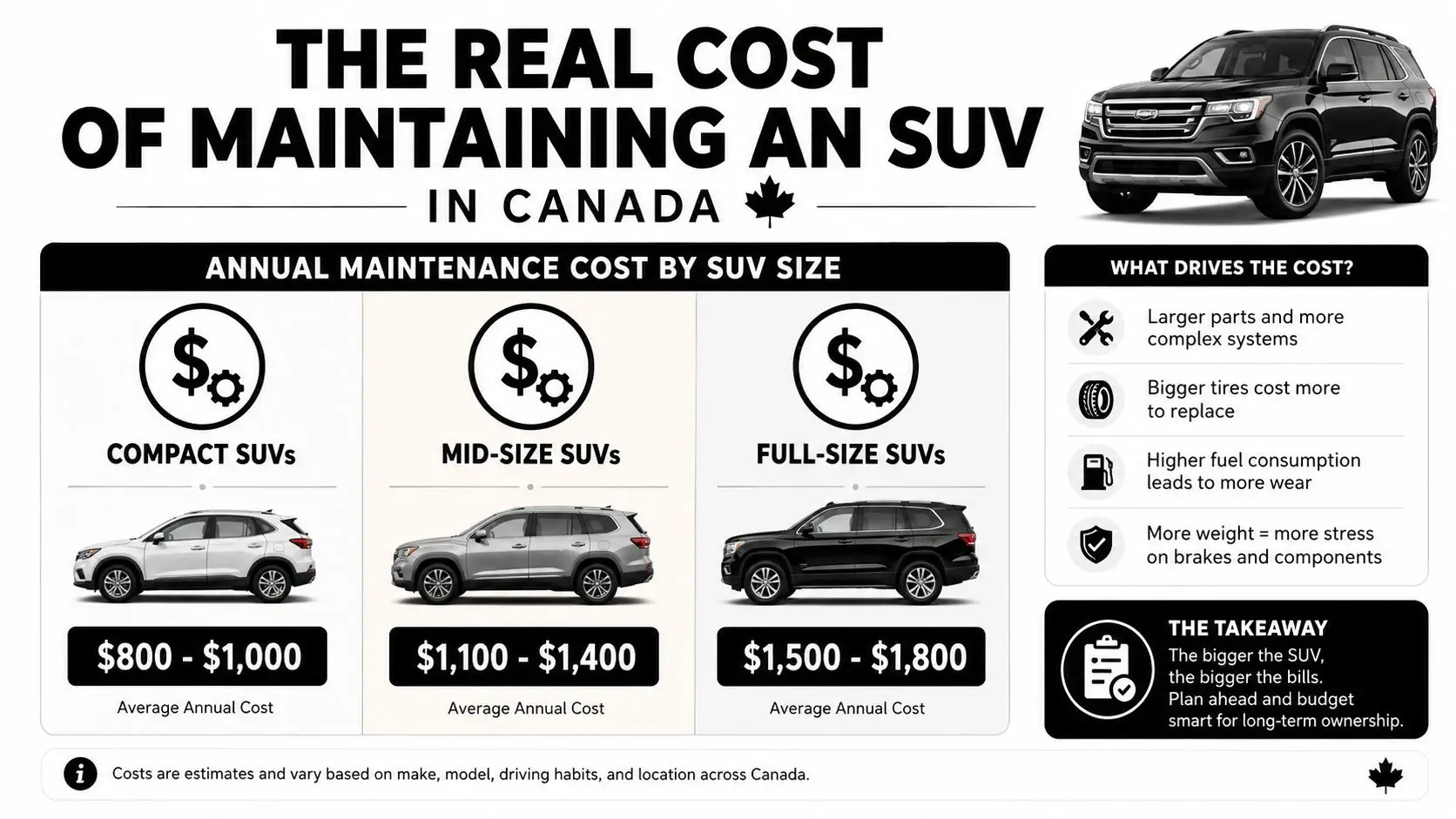
Why one SUV average misleads
AAA's 2023 Your Driving Costs comparison shows maintenance costs rising from subcompact SUVs to compact front-wheel-drive SUVs and medium four-wheel-drive SUVs (AAA 2023 Your Driving Costs). The published figures translate to approximately $1,367, $1,559, and $1,586 annually at 15,000 miles, respectively. These are category benchmarks, not Whitby repair invoices, but they show how vehicle size and drivetrain affect the baseline.
A heavier SUV places greater loads on brake friction material, tires, wheel bearings, and suspension joints. AWD can add fluid services and diagnostic work, while its tire-matching requirements may increase replacement costs if one tire becomes damaged.
Practical rule: Budget preventative maintenance separately from repairs. A vehicle can be fully current on scheduled service and still need brakes, tires, or a suspension component because those parts wear through use.
Ownership horizon changes the balance. During the warranty period, scheduled servicing may account for much of the budget. As the vehicle ages, repairs become more likely, particularly on SUVs with larger drivetrains, heavier wheels, or more complex suspension.
Corrosion also belongs in a long-term maintenance plan. Salt, moisture, and winter road conditions can affect the underbody before a mechanical failure appears. Reviewing rust-proofing costs helps owners treat corrosion prevention as planned ownership spending rather than an emergency repair decision.
Maintenance Costs by SUV Category and Drivetrain
SUV ownership costs separate most clearly by vehicle size and drivetrain. A subcompact usually puts less load on brakes, tires, wheel bearings, and suspension joints than a medium SUV. That difference grows when the larger vehicle carries heavier wheels, more passengers, or a trailer.
Canadian government fleet data shows a similar pattern. The 2026 CFS report lists four-year preventative maintenance at $0.060 per kilometre for small crossover/SUVs and $0.063 per kilometre for medium crossover/SUVs. At five years, the figures rise to $0.066 and $0.070 per kilometre respectively (National Joint Council CFS Annual Report). The gap is modest at first, but longer ownership gives wear items and repairs more time to separate the categories.
AAA's category figures in the earlier comparison provide a useful baseline, not a Whitby repair estimate. Use them to understand relative scale, then adjust for your SUV's mileage, condition, winter use, and service history.
FWD versus AWD in real ownership
FWD generally has fewer driveline components to service. AWD adds differentials, coupling units, and, on some designs, a transfer case. Fluid type and replacement intervals vary by brand and system, so the owner's maintenance schedule matters more than a generic mileage rule. Skipping those services can turn a relatively routine appointment into a driveline repair.
AWD also increases the importance of tire matching. Tread depth differences can place additional strain on the system, particularly when one tire is replaced after damage. Replacing a matched set may cost more upfront, but it can reduce driveline stress and prevent handling problems.
AWD remains useful for Whitby snow, slush, gravel, and changing road conditions. It does not eliminate the need for winter tires, careful alignment, or sensible speeds. Maintenance history, tire quality, road conditions, and driving style can outweigh the drivetrain badge.
Transmission design deserves the same attention. A CVT-equipped crossover may run smoothly, but its specified fluid and service procedure are different from a basic oil change. Follow the manufacturer's schedule, especially if the SUV is used for towing or repeated short trips. This guide to CVT gearbox service explains why correct fluid and procedure matter.
Ownership horizon changes the budget. A newer SUV may need mostly scheduled service, while an older, heavier, or more complex model is more likely to need brakes, suspension work, wheel bearings, or driveline diagnosis. Build those repair reserves separately from routine maintenance.
Hidden Seasonal Costs That Most Comparisons Ignore
A headline maintenance figure of $500 to $700 per year can look reasonable until an Ontario owner adds winter equipment and seasonal handling. That routine figure excludes winter tires, and Ontario-focused ownership estimates add $1,000 to $1,500 for winter tires, plus $100 to $200 annually for seasonal swaps and storage (BCAA vehicle ownership guidance).
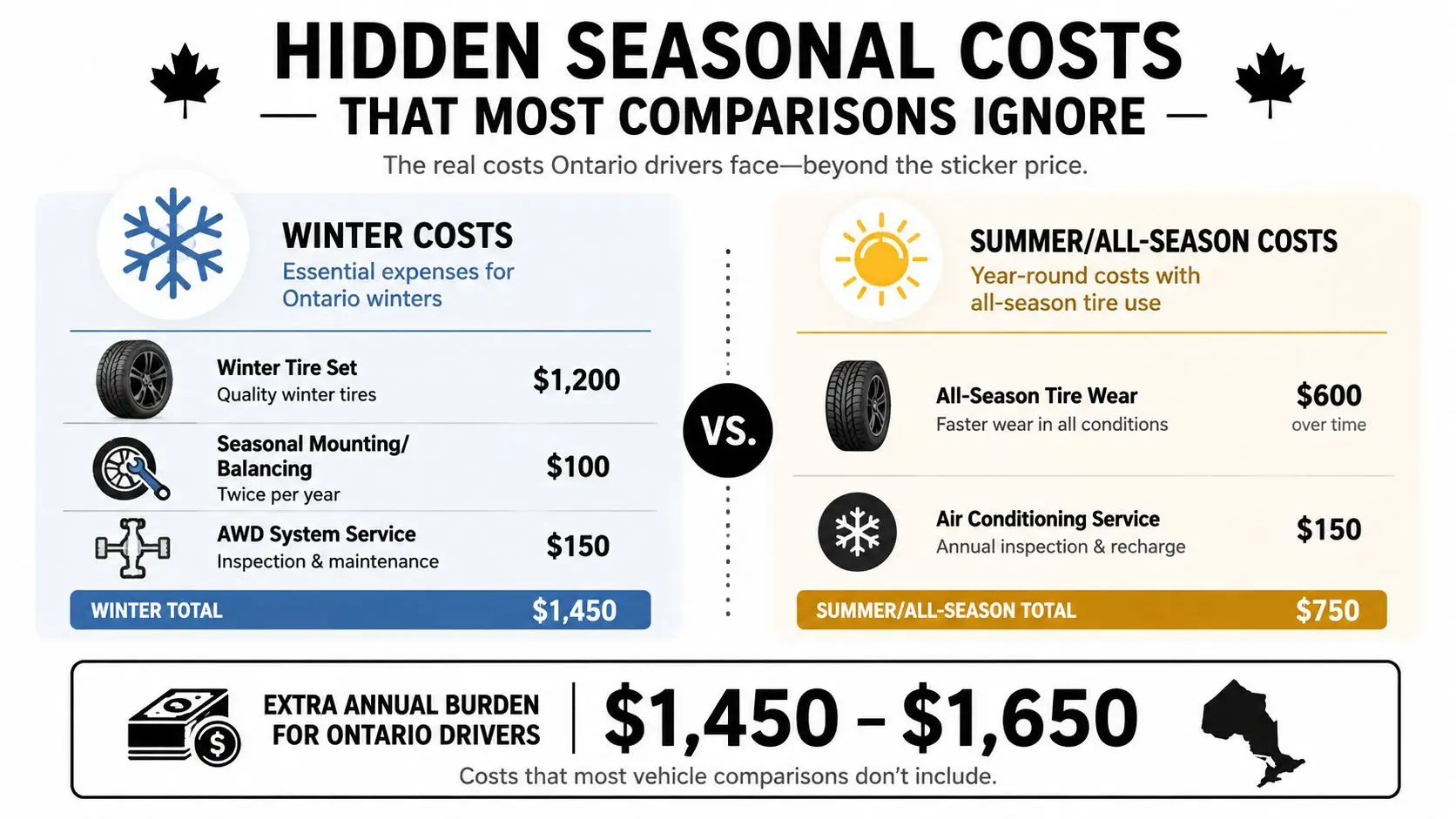
The tire purchase isn't a small accessory expense. An SUV needs four winter tires sized for its wheel package, and larger wheels can make replacement more expensive. Owners also need somewhere to store the off-season set, and repeated mounting can add handling costs if the tires aren't kept on a dedicated winter wheel set.
What winter adds to the service plan
Cold starts, salt, potholes, and freeze-thaw cycles affect different components in different ways. Salt accelerates corrosion on fasteners and brake hardware. Potholes can damage tires, bend wheels, disturb alignment, and expose weak suspension components. Frequent short trips can also make the engine and exhaust system work harder than steady highway driving.
AWD helps an SUV move through poor traction, but it doesn't shorten braking distances on ice. Winter tires remain the critical grip component, and the AWD system still needs correct fluid service and matched tires. A useful resource on car care for harsh winters covers preparation steps that reduce avoidable seasonal problems.
The right budget question is therefore not, “What does an oil change cost?” It is, “What does year-round operation require?” Add the documented winter tire investment, seasonal handling, tire wear, brake inspections, underbody checks, and AWD-specific service to the baseline. The all-in number will vary by vehicle and use, but it will be more honest than a maintenance figure that excludes the equipment Ontario driving demands.
A winter car maintenance checklist can keep those tasks organised before temperatures fall, when tire appointments and inspections become harder to schedule.
Wear Items and Common Repairs by Mileage Milestone
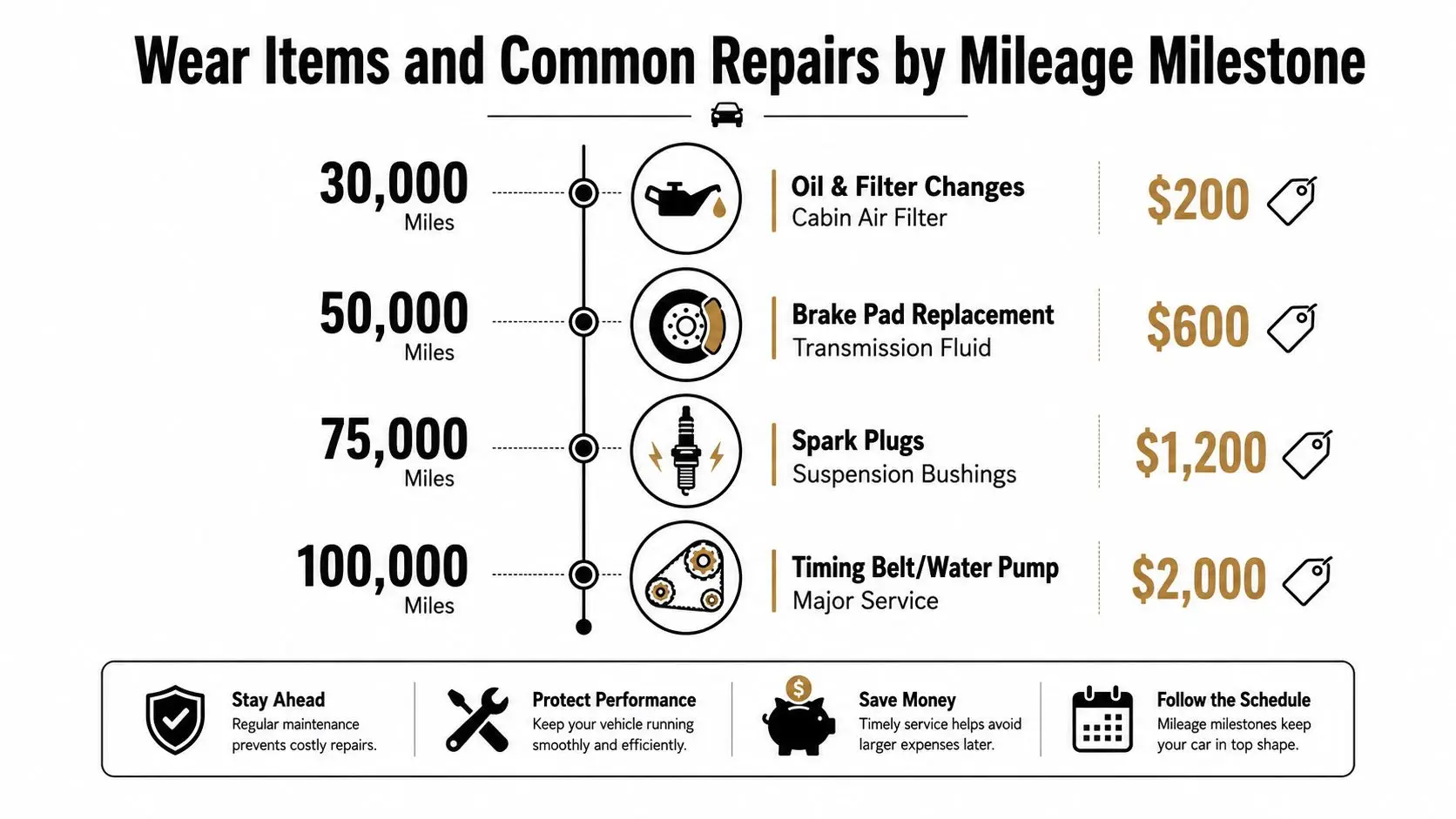
SUV expenses don't arrive evenly. Some services follow the maintenance schedule, while other costs appear when weight, road conditions, and mileage finally wear down a component. A good service history helps, but it can't prevent brake friction material, tires, bushings, and suspension joints from eventually reaching the end of their useful life.
Early ownership checks
At around 30,000 kilometres, many SUVs need routine fluid, filter, and inspection work, depending on the manufacturer's schedule. Cabin and engine air filters are straightforward, but a technician should still inspect the brakes, tires, steering, suspension, and underbody rather than treating the appointment as a fluid-only visit.
By 50,000 kilometres, tire condition and brake wear deserve closer attention. Urban driving, frequent stops, heavy wheels, and winter potholes can make the actual condition differ sharply from the service booklet's broad intervals. A brake inspection should measure remaining friction material and check rotor condition, not merely recommend replacement by habit.
Mid-life wear
Around 75,000 kilometres, owners often start seeing more suspension-related decisions. Stabiliser links, control-arm bushings, shocks, wheel bearings, and alignment concerns can show up as clunks, uneven tire wear, wandering, or vibration. These symptoms shouldn't be dismissed as normal SUV behaviour.
Transmission fluid service also becomes important when the maintenance schedule calls for it. The correct interval depends on the vehicle, transmission, operating conditions, and manufacturer instructions. Skipping scheduled fluid work can make later diagnosis more difficult, particularly on vehicles used for towing, heavy commuting, or repeated stop-and-go driving.
Higher-mileage planning
At 100,000 kilometres and beyond, the service history becomes more valuable than the odometer alone. Timing belt requirements, spark plugs, coolant, differential fluids, hoses, and major inspections vary widely by engine and model. A timing chain isn't automatically maintenance-free, and a timing belt replacement isn't automatically due on every SUV at the same distance.
By 160,000 kilometres, buyers and owners should expect a broader inspection rather than a single repair estimate. The technician needs to assess rust, oil leaks, steering play, suspension condition, drivetrain noise, brake lines, exhaust components, and the age of the tires. Proactive work makes sense for safety-critical or access-intensive components. Cosmetic items and nonessential convenience faults can wait when the budget is tight.
For owners evaluating brake noise, pulsation, or uneven wear, a detailed brake pad replacement cost guide can help distinguish routine wear from a problem requiring immediate inspection.
DIY Maintenance Versus Professional Service
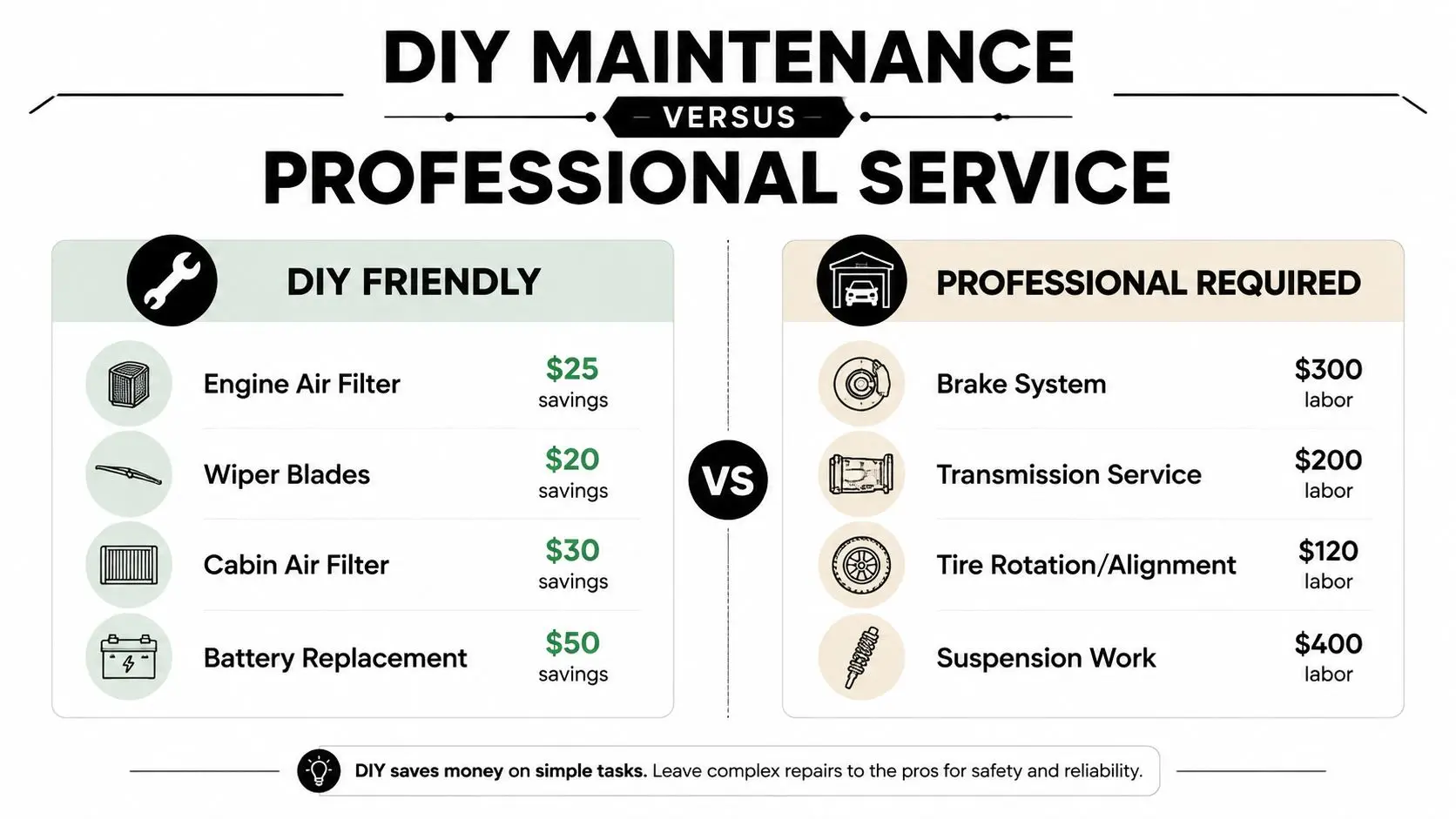
DIY maintenance works best when the task is simple, the procedure is documented, and a mistake won't compromise safety. Replacing a cabin air filter or wiper blade doesn't require a lift or scan tool. Brake hydraulic work, alignment, AWD diagnosis, and suspension repairs are different. They require correct equipment, torque procedures, inspection experience, and a safe workspace.
Sensible jobs for an owner
Start with tasks that have clear instructions and low downside:
- Cabin and engine air filters: Confirm the filter direction and housing seal before closing everything up.
- Wiper blades: Use the correct adapter and protect the glass while removing the old blade.
- Battery replacement: Match the battery specification, secure the hold-down, and follow the vehicle's battery-registration procedure when required.
- Tire pressure checks: Use the door-jamb pressure specification, not the maximum pressure moulded into the tire sidewall.
These jobs can save labour, but only if the parts are correct and the installation is clean. A poorly sealed air filter housing can allow dirt into the intake, while a loose battery can damage terminals and wiring.
Work best left to a shop
Brake fluid flushing, transmission service, suspension replacement, wheel alignment, and AWD diagnostics need professional attention in most home settings. A jack and basic socket set aren't substitutes for a lift, pressure bleeder, alignment rack, scan tool, or a technician who can identify whether a noise comes from a bearing, bushing, axle, or differential.
Condo and apartment owners also face practical limits. You may not have a level work area, permission to perform repairs, safe storage for fluids, or a way to dispose of contaminated oil. For owners looking after several vehicles, fleet interior and exterior care tips can complement mechanical maintenance by reducing neglect between service visits.
Safety boundary: Saving labour on a filter is sensible. Saving labour on a brake, steering, or suspension repair can create a much larger bill and a serious safety risk.
A control arm is a good example. It connects suspension geometry to the vehicle structure, and incorrect installation or tightening at the wrong ride height can affect alignment and tire wear. Professional guidance on control arm replacement is preferable before attempting that repair at home.
Money-Saving Strategies for SUV Owners in Whitby
The best savings come from preventing avoidable work, not from postponing necessary work. Follow the manufacturer's maintenance schedule, then ask the technician to separate required services from optional recommendations. A clean inspection report should explain what is worn, what is leaking, what is unsafe, and what can reasonably wait.
Parts selection also deserves a measured approach. Original-equipment parts can make sense for sensors, complex electronic components, seals, and model-specific drivetrain parts. Quality aftermarket options often work well for common wear items such as filters, brake components, and suspension parts, provided the brand and specification are suitable for the SUV.
Spend first on protection and prevention
Keep tires properly inflated, rotate them according to the vehicle's instructions, and repair alignment problems before uneven wear destroys a usable set. Check the underbody after winter and wash salt from areas where it collects. These habits won't eliminate repair bills, but they can prevent a small issue from becoming a larger one.
Protective services can also make sense for owners who plan to keep a newer SUV. Paint protection film helps shield vulnerable painted areas from stone chips, while quality window tint can reduce glare and interior heat. Those services don't replace mechanical maintenance, but they can reduce cosmetic deterioration and preserve the condition owners care about when selling or trading.
Small-business operators should treat multiple SUVs as a fleet, even if the fleet is modest. Centralised records, consistent inspection intervals, and planned tire changes make faults easier to spot before a vehicle is stranded or removed from service.
A local repair relationship has practical value, too. A shop that knows the vehicle's history can identify recurring wear, distinguish normal noise from developing failure, and plan larger jobs around the owner's cash flow. That continuity is usually more useful than chasing the lowest quote for every isolated oil change.
Building Your SUV Maintenance Budget
Build the budget from your SUV's actual configuration, not from an oil-change average. Start with the category benchmark discussed earlier, then add costs that generic comparisons often miss: winter tires, seasonal swaps, AWD service, fluids, inspections, and a repair reserve.
A practical Whitby budget has three layers:
- Routine service: oil and filter changes, inspections, scheduled fluids, and manufacturer-recommended work.
- Seasonal ownership: winter tires, storage or seasonal handling, wheel swaps, and post-winter checks.
- Unplanned repairs: brakes, suspension, cooling components, sensors, and drivetrain work as the SUV ages.
Use the SUV's size and drivetrain to set expectations. A subcompact FWD crossover usually needs the smallest reserve. A compact AWD SUV requires room for AWD fluid service and replacing tires as a matched set. A mid-size AWD SUV generally carries higher tire, brake, suspension, and driveline exposure, particularly when it is used for longer commutes, heavy cargo, or towing.
A yearly budget is a planning tool, not a guaranteed invoice. One year may contain only scheduled work. Another may bring a tire replacement, brake job, or suspension repair. Keep those costs in separate categories so a quiet service year does not create false confidence.
Set the reserve according to ownership stage. A new-SUV owner should fund seasonal costs from the first year, even while warranty coverage applies. A used-SUV buyer with incomplete records should pay for a thorough baseline inspection and keep extra money available for deferred maintenance. With a high-kilometre SUV, compare the next major repair with rust, drivetrain condition, tire age, and everyday usefulness before committing to the work.
Track invoices for twelve months by category, kilometres, and vehicle system. If seasonal costs repeatedly exceed routine service, adjust the reserve rather than treating them as surprises. That record will produce a more useful comparison for Whitby driving than a generic average.
Carmedics Autowerks Inc offers practical SUV maintenance, fleet service, winter inspections, drivetrain repairs, window tinting, paint protection film, and collision repair for Whitby drivers. Visit Carmedics Autowerks Inc to book an inspection and build a maintenance plan around your SUV's size, drivetrain, mileage, and seasonal needs.