

A collision leaves you staring at the obvious damage first. The crumpled bumper, the shifted headlight, the hood that no longer sits quite right. Then the harder question lands. Is the car still safe underneath?
That concern is justified. A vehicle can look repairable on the surface and still have structural damage that changes how it tracks, how panels fit, and how safety systems line up. For drivers in Whitby and across Durham Region, that matters just as much on the daily commute as it does on the motorway. Frame straightening isn't cosmetic work. It's the process of restoring the vehicle's structure so every other repair has a solid foundation.
After the Accident Understanding Your Cars Skeleton
The first conversation after a crash usually starts with visible damage. The more important one starts underneath the paint.
A car's frame or unibody structure is its skeleton. It supports the suspension, holds mounting points where major components sit, and helps manage crash forces the way the vehicle was designed to. When that structure bends, twists, or shifts, the problem doesn't stay in one area. It can show up in steering feel, tyre wear, panel gaps, and door fit.
Why the structure matters more than the dent
In the shop, two cars can arrive with similar front-end damage and need very different repairs. One might need straightforward panel replacement. The other may have movement in the rails or a shifted apron that changes the geometry of the whole front end.
That difference is why a proper post-collision assessment matters. Collision-repair guidance notes that frame straightening is used to restore a vehicle's frame back to manufacturer specifications after a crash, and the need for that kind of repair tracks with the extensive nature of collisions on the road. In California alone, the state recorded roughly 39,000 injury crashes in a recent year, with traffic safety summaries also reporting more than 4,000 deaths annually and tens of thousands of injuries. Those numbers show why structural restoration is such a core part of collision repair, not an optional extra, as outlined in this frame straightening overview from CAR-O-LINER.
A vehicle doesn't need to look destroyed to have structural damage. It only needs an impact strong enough to move the points that everything else depends on.
What a careful first inspection looks for
A proper assessment checks more than bent metal. It looks for:
- Shifted mounting points that can affect suspension and steering geometry
- Stress in the unibody that may not show as a dramatic bend
- Changes in panel alignment that suggest movement deeper in the structure
- Signs of secondary damage to wheels, tyres, and underbody components
If you're arranging repairs after a collision, it helps to start with a shop that understands both mechanical and structural issues. A broad auto repair service approach is valuable because post-collision problems rarely stay confined to one system.
What Exactly Is Frame Straightening
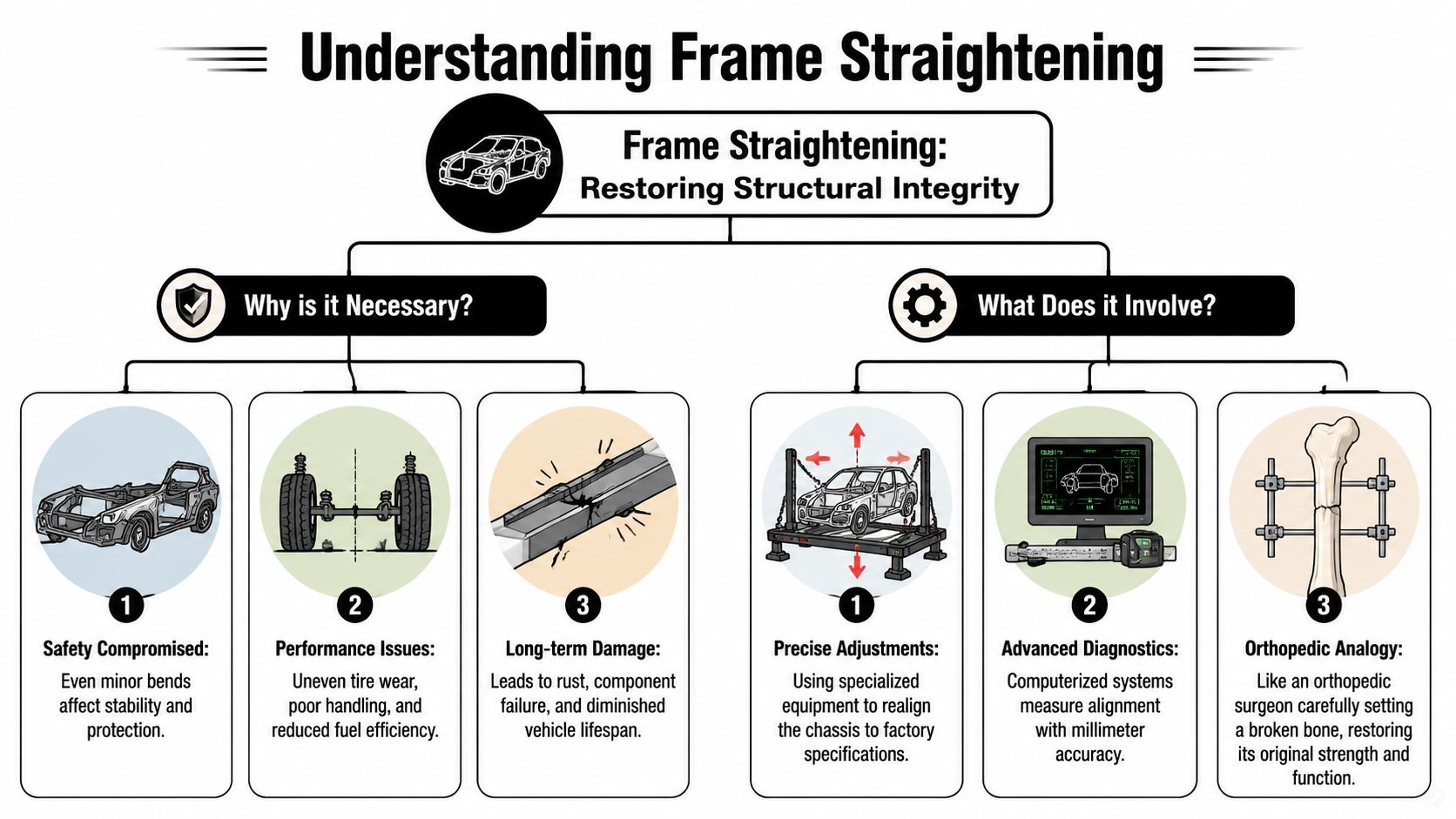
Frame straightening is controlled structural correction. It isn't a matter of hooking a chain to the car and pulling until it looks right.
A better comparison is orthopaedic work. When a bone is set properly, the goal isn't appearance alone. The goal is to restore correct position so the rest of the body can function normally. A vehicle needs the same kind of precision after a collision.
Unibody and body-on-frame are not the same repair
Most modern cars and many SUVs use unibody construction. In a unibody vehicle, the body and structural shell work together as one integrated assembly. Damage in one section can influence fit and alignment far from the impact area.
Trucks and some larger SUVs may use body-on-frame construction. In those vehicles, the body sits on a separate frame. Straightening work often focuses on that heavier underlying structure, though body mounting points still have to be checked carefully.
The repair strategy changes with the platform:
- Unibody vehicles often need highly precise measuring at multiple reference points because small dimensional changes can affect doors, bonnet fit, suspension geometry, and sensor alignment.
- Body-on-frame vehicles may tolerate different kinds of impact loads, but when the frame is out, downstream issues can still appear in ride height, driveline alignment, and body fit.
What the process is actually doing
A professional shop anchors the vehicle, measures known reference points, and applies controlled force in the right direction and sequence. The point is to guide the structure back toward factory dimensions without creating fresh stress somewhere else.
That means frame straightening is part measurement science and part repair strategy. Pull too aggressively and you can chase the damage around the vehicle. Pull without a measurement plan and you can end up with a car that looks fine but still isn't dimensionally correct.
Practical rule: If a shop talks only about "pulling it out" and not about measuring to specifications, keep looking.
The best results come from technicians who understand both the structure and the systems attached to it. If you're weighing repair options, this guide on how to find the best car repair shop near me is a useful starting point for the questions worth asking.
Telltale Signs of a Bent Car Frame
Some signs of frame damage are obvious. Many aren't. Owners often notice something feels off long before they can explain it clearly.
The key is to stop thinking only in terms of dents and paint. Structural damage often reveals itself through how the car drives, closes, and sits.
What to check in your driveway
Walk around the vehicle slowly and look for asymmetry.
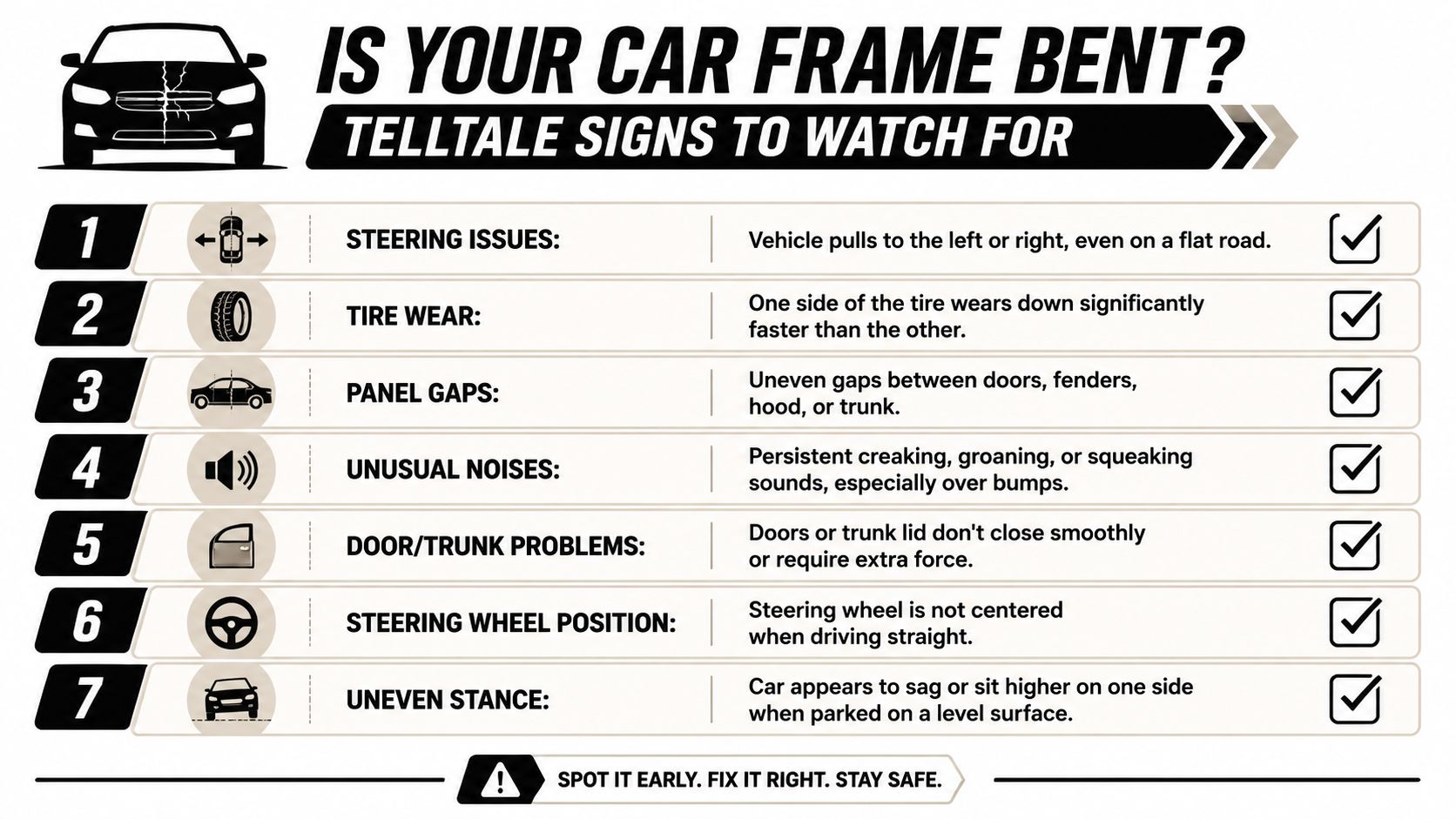
- Uneven panel gaps around the bonnet, boot, doors, or front wings can suggest movement in the structure beneath the panels.
- Doors or boot lids that need extra force may indicate openings that are no longer perfectly square.
- A vehicle that appears to sit unevenly on level ground can point to suspension damage, structural shift, or both.
Then pay attention on the road.
- Pulling to one side can come from alignment issues, but when it follows a collision, frame movement has to be ruled out.
- An off-centre steering wheel after an impact is another sign that geometry may have changed.
- Persistent creaks, groans, or rattles over bumps can come from stressed metal, shifted components, or mounting points no longer sitting where they should.
The signs owners often dismiss
Tyres tell the truth quickly. Uneven wear patterns can appear when the chassis and suspension pickup points are no longer where the manufacturer intended. If you're already dealing with suspicious wear after a collision, it's worth understanding both structural and wheel-related causes. A shop that also handles tyre and wheel service issues is often better positioned to connect the dots.
If the vehicle is imported or you're shopping used after a repair history, background matters too. Before buying, it can be smart to sprawdź historię pojazdu z USA so you can spot prior accident records, salvage history, or clues that explain current fit and alignment problems.
If the steering changed, the doors changed, and the tyre wear changed after the same impact, don't treat those as separate problems.
A quick owner checklist
| Symptom | Why it can matter |
|---|---|
| Door won't close smoothly | The opening may be slightly distorted |
| Steering wheel sits crooked | Suspension or structural reference points may have shifted |
| One tyre wears faster | Alignment may be compromised by deeper damage |
| Bonnet or boot gaps look uneven | Panels may be revealing movement underneath |
| New noises after the crash | Mounts, seams, or stressed metal may be under load |
The Professional Repair and Measurement Process
Work begins after the estimate, when the vehicle is measured properly. Here, professional frame straightening separates itself from guesswork.
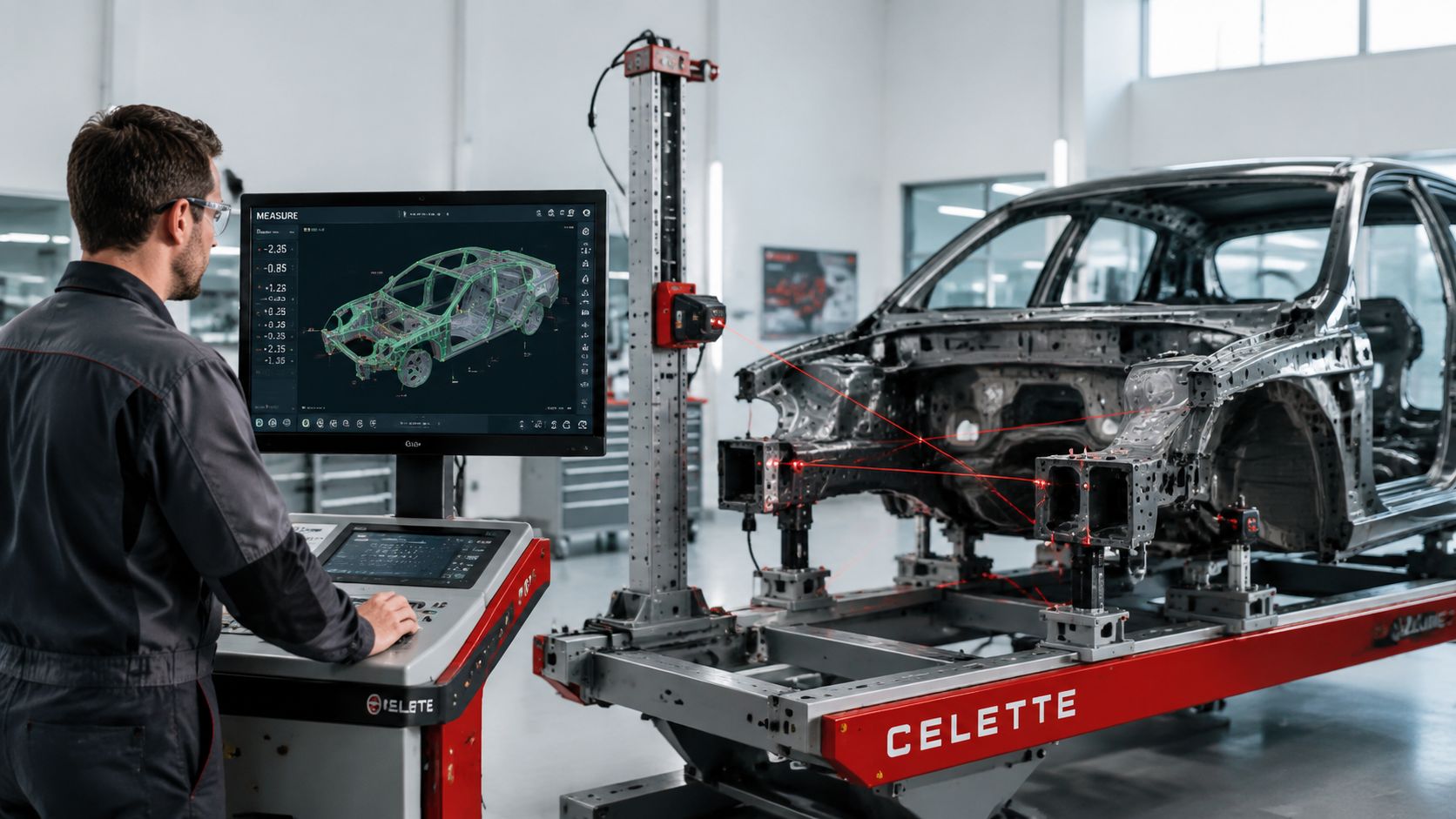
A modern structural repair starts with data. The technician identifies reference points on the chassis or unibody and compares the vehicle's current dimensions with factory specifications. That tells the shop not only where the structure moved, but how it moved.
Step one is measuring, not pulling
This part matters because visible damage can mislead. A front corner impact may not just affect the corner. It can push force diagonally through the structure and alter points farther back.
A proper process usually includes:
- Initial dimensional analysis to identify displaced points
- Vehicle anchoring on a frame rack or dedicated structural bench
- Targeted pulls using hydraulic equipment in a planned sequence
- Repeated measurement checks during the correction, not just after it
- Post-pull verification before mechanical and body reassembly continues
Why the equipment matters
For heavier-duty applications, frame straightening systems use sensors, cameras, and hydraulic pulleys to monitor angle and force while the frame is pulled back toward factory dimensions. That's important in Canada because alignment accuracy affects later repairs involving the suspension, drivetrain, and panel fitment. The repair isn't finished until final verification shows the chassis has returned as closely as possible to specified measurements, as explained in this detailed look at how a frame straightening rack works.
A good technician also knows when not to force a result. Some parts should be replaced rather than overworked. Some damaged areas need sectioning or component replacement after the main structural correction. Smart repair isn't about proving anything with a stronger pull. It's about restoring the vehicle properly.
Shop-floor reality: The straightening pull is only one phase. Suspension checks, driveline checks, and panel fit checks are what prove whether the structure is truly back where it belongs.
What gets checked after the pull
Once the structure is back in spec, the rest of the repair can be trusted. That usually means checking:
- Suspension geometry, because even small errors show up in how the vehicle tracks
- Panel fitment, since uneven gaps often reveal remaining distortion
- Steering and wheel alignment, especially after front or side impacts
- Related systems that depend on correct mounting locations
That final stage is where broad repair capability matters. Structural work and wheel alignment and balancing services often connect directly after a collision, because a straight structure still has to drive straight.
Costs Timelines and Insurance Considerations
Owners usually ask two questions first. How much will this cost, and how long will the car be away?
The honest answer is that frame straightening has a very wide range because the damage can vary from a modest correction at one point to a much more involved structural repair with extensive measuring, pulling, parts replacement, and follow-up work.
What drives the cost
Across the North American collision industry, car frame straightening costs can range from about $600 to over $10,000, depending on the extent of damage and the vehicle type, according to this car frame straightening guide from Caliber. The same guidance notes that the process uses specialised equipment such as hydraulic pulls and precise measurement systems, which is why severe damage on newer cars and SUVs can push repairs toward the upper end.
Several factors move the estimate up or down:
- Extent of structural movement. A slight correction is a different job from major displacement.
- Vehicle design. Newer vehicles often involve more complex materials, tighter tolerances, and more systems tied to exact mounting points.
- Access and teardown. Sometimes the shop can't fully measure or repair until panels and components come off.
- Related repairs. Suspension parts, subframes, wheels, and body panels may all need attention after the structure is corrected.
How long it takes
Timelines vary for the same reason. A small structural pull may move quickly if parts availability is good and no hidden damage appears. A more serious collision can take much longer because the vehicle needs measuring, structural correction, parts replacement, reassembly, wheel alignment, and safety-system checks.
Insurance also affects the clock. Approval steps, supplemental estimates, and decisions about replace-versus-repair can add time even when the shop is ready to proceed.
The fastest repair is not the best repair if the structure hasn't been measured properly and verified at the end.
What to expect from insurance
Most owners don't need to become claims experts, but they do need to know what to ask. Confirm whether the estimate includes structural measurement, post-repair checks, and any parts the technician expects may be uncovered after teardown. If the vehicle is newer, ask how parts choices could affect repair quality and later calibration work. This overview of OEM vs aftermarket parts helps frame that discussion.
How to Choose the Right Whitby Collision Centre
Not every shop that repairs body damage is equipped for serious structural correction on a modern vehicle. In Whitby and the wider Durham Region, that distinction matters because newer cars don't just need metal moved back into place. They need the whole safety ecosystem checked afterward.
The biggest miss in many repair conversations is ADAS, or Advanced Driver-Assistance Systems. Cameras, radar units, and sensors depend on exact placement. If frame damage shifts a mounting point, the vehicle can be structurally improved yet still unsafe if those systems aren't scanned, verified, and recalibrated where required.
Why ADAS changes the conversation
Independent repair guidance is clear on this point. Frame damage can shift camera and sensor mount points, so professional shops must perform pre-repair scans, document sensor positions, and complete post-repair verification and calibration. The question isn't just "can it be straightened?" but "is it safe and properly calibrated afterward?" That practical guidance comes from this review of frame straightening and ADAS calibration.
That matters for features owners use every day, including lane-keep assist, forward collision warning, and automatic emergency braking. If a shop doesn't talk about those systems after structural repair, the conversation is incomplete.
Questions worth asking before you authorise repairs
Use this short list when you're comparing collision centres.
| Question | Why It Matters |
|---|---|
| Do you perform structural measurements before and after the repair? | You need proof the vehicle returned to specification, not just a visual fix. |
| What equipment do you use for frame straightening? | Dedicated racks, measuring systems, and hydraulic pull equipment indicate proper capability. |
| Will you inspect suspension and steering after the structural repair? | A straightened frame still needs downstream systems checked. |
| Do you handle pre-repair and post-repair scans? | Electronic systems can store faults or reveal affected components after impact. |
| Can you complete ADAS calibration or coordinate it properly? | Modern safety features depend on accurate sensor alignment. |
| How do you decide between repair and replacement of damaged structural parts? | The answer shows whether the shop follows a methodical process or improvises. |
| Will you explain any insurance supplements before proceeding? | You want clarity if hidden damage changes the estimate. |
What separates a strong shop from an average one
Look for a shop that answers directly and explains the repair sequence in plain language. Good shops don't hide behind jargon. They can tell you what moved, how they'll measure it, what has to be checked afterward, and whether your car's driver-assistance systems need calibration.
A repair isn't finished when the paint shines. It's finished when the structure is back in spec, the vehicle drives properly, and the safety systems have been verified.
If your vehicle has been in a collision and you want a repair process that takes both structure and modern safety systems seriously, Carmedics Autowerks Inc in Whitby is worth speaking with. Their team handles collision repair alongside general automotive service, which matters when frame straightening leads into alignment, suspension, and post-repair safety checks. For Durham Region drivers who want clear communication and careful workmanship, it's a practical place to start.