


Your A/C quits on the first hot day, the cabin turns into a greenhouse, and the air from the vents starts feeling more like a hair dryer than a relief. That's usually the moment drivers realise air conditioning service isn't a comfort-only expense, it's a mechanical problem that affects visibility, cabin control, and how hard the rest of the system has to work.
A good technician doesn't guess at it. They read the symptoms, test airflow, inspect the circuit, check for leaks, and decide whether the fix is a small repair, a recharge done correctly, or a parts replacement that makes sense. That decision-making is where the value is, because the wrong shortcut can leave you paying twice.
Why Your Car Air Conditioning Matters More Than You Think
You don't appreciate cold air until the system stops blowing it. One minute you're cruising through a humid Whitby afternoon with the windows up and the cabin comfortable, the next minute the vents are pushing warm air, the glass starts fogging, and you're fiddling with controls while traffic stacks up around you.
That's the part most drivers miss. A healthy A/C system isn't only about comfort, it helps manage defogging, keeps the cabin usable in sticky weather, and takes some strain off the driver when the car sits in direct sun. If the system is weak, every trip starts feeling longer and more tiring.
A neglected system also tends to turn a small issue into a bigger one. Low refrigerant, a restricted filter, or a failing compressor doesn't usually stay polite. It creates heat, noise, poor airflow, and eventually a visit that costs more because more parts are involved.
Practical rule: the first bad symptom is the cheapest time to investigate, not the time to wait for complete failure.
Professional air conditioning service is really a decision tree. A technician has to separate a simple cabin air issue from a refrigerant issue, then decide whether the system can be corrected with cleaning, sealing, recharging, or component replacement. That's why a proper visit feels less like a quick top-up and more like a diagnosis.
How Auto Air Conditioning Systems Work
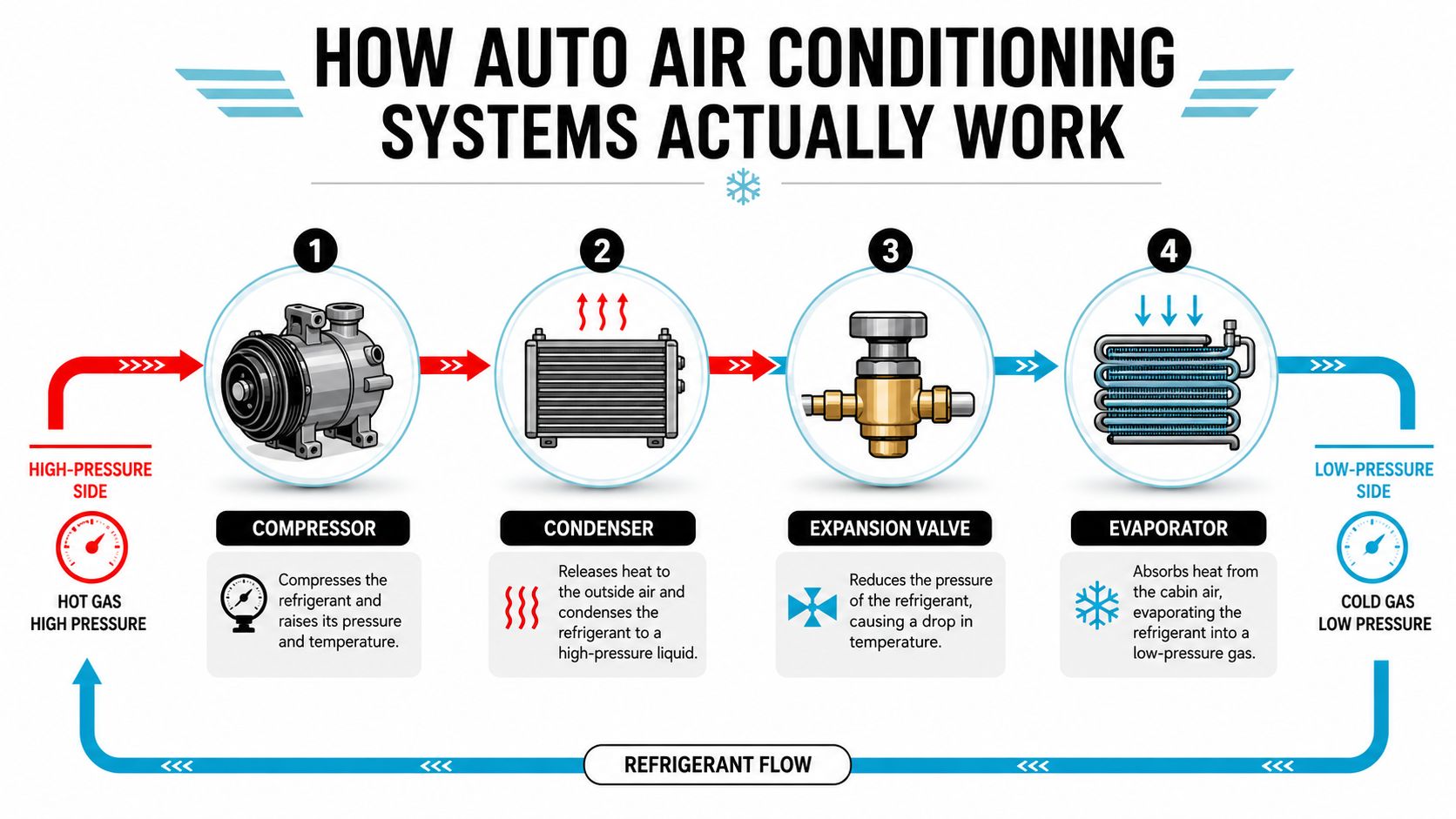
The refrigerant circuit is a heat-moving loop
An automotive A/C system does not create cold air from nothing. It pulls heat out of the cabin by moving refrigerant through a sealed loop, turning that refrigerant from liquid to gas and then back again. The whole system is controlled heat transfer.
The compressor is the pump in the middle of that process. It pressurises refrigerant and sends it through the high-pressure side, where the condenser releases heat to the outside air. From there, the refrigerant moves through the expansion valve, which lowers the pressure, and into the evaporator, where it absorbs heat from the cabin air before the cycle starts again.
That is why a single restriction can throw the system off. If the condenser is packed with debris or the evaporator cannot breathe properly, the refrigerant cannot exchange heat the way it should, and the system starts to feel weak. The cabin may still get some cooling, but the air at the vents will not feel right.
Airflow matters as much as refrigerant
A lot of drivers blame refrigerant first, but airflow is often the part that gets overlooked. The cabin air filter, blower motor, ducts, and vents all control how much cooled air reaches you. If the air path is restricted, the system can still be working and yet feel underpowered.
Before anyone adds refrigerant, the technician should know the airflow is correct. If airflow is off, charging the system can mask the underlying issue instead of fixing it.
That is why a proper air conditioning service has to look at the system as a whole, not just the gauge readings. Pressure, airflow, and cabin-side delivery all have to line up before the result feels cold at the vents.
For drivers who want a deeper shop-level view of repair options, this A/C repair resource for car owners is a useful companion read.
Common Symptoms That Signal A/C Problems

Weak airflow usually points to the delivery side
If the vent air is cool-ish but barely moving, the issue may not be the refrigerant circuit at all. A clogged cabin air filter, a tired blower motor, or a blocked inlet can make the system feel dead even when the compressor is still doing its job.
That's the kind of complaint a technician can use. “Weak airflow at all vents” tells them to look at the filter, fan speed control, and duct path before they go chasing pressure problems. If the airflow is uneven, the cabin side is where the diagnosis usually starts.
Warm air, strange odours, and noises each tell a different story
Warm air has a wide possible cause list. It can be low refrigerant, a failed compressor clutch, a pressure control issue, or a leak that has emptied the system over time. A system that used to cool and suddenly doesn't is different from one that cooled badly for months.
Odd smells are usually a separate clue. Musty or damp odours often point to moisture and contamination around the evaporator area, which means the cooling part of the system may still work while the cabin air path needs attention. Loud squeals, clicking, or grinding are useful too, because they help separate belt issues, compressor trouble, and blower motor noise.
- Weak airflow: think filter, blower, or duct restriction first.
- Warm air only: think refrigerant loss, compressor failure, or control problems.
- Bad smell: think moisture, contamination, or mould in the air path.
- Noise on A/C engagement: think belt slip, clutch wear, or compressor distress.
If you're describing the issue to a shop, be precise. A mechanic can work faster when you say the air is cold at first, then goes warm at idle, or the fan sounds normal but the vents barely move air. For a cleaner service intake conversation, this A/C mechanic guide is a helpful reference.
What Happens During a Professional Air Conditioning Service
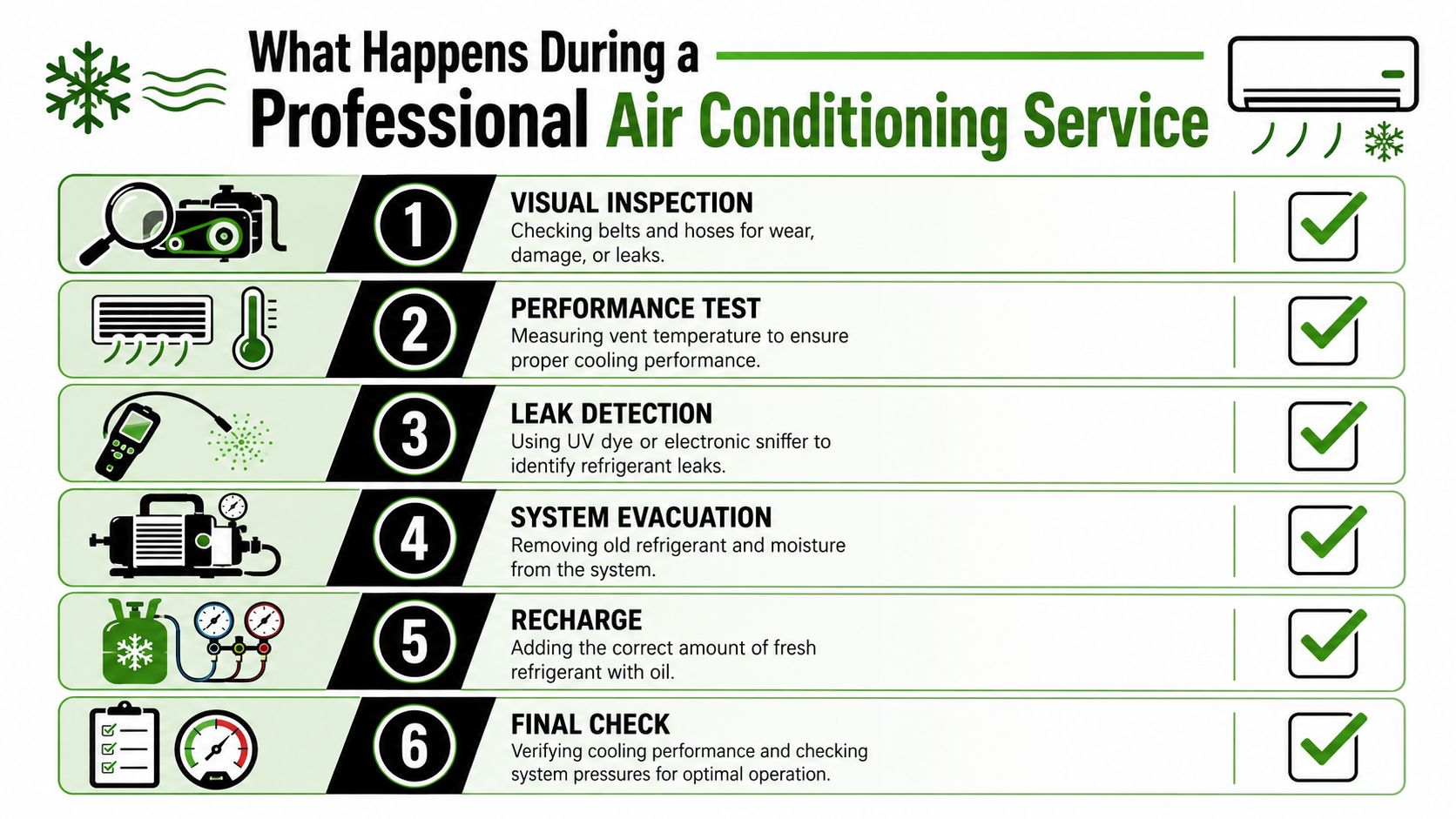
The shop should start with inspection and testing, not refilling
A proper service starts with the kind of inspection that tells you where the fault is likely hiding. I look at hoses, fittings, compressor drive components, condenser fins, and any oily residue before anything gets added to the system, because A/C leaks usually leave evidence before the charge is gone. After that, the technician checks vent performance and system pressures, then decides whether the problem points to airflow, refrigerant loss, or a component that is not doing its job.
That pressure reading only means something if the system is judged correctly. The BPI technical standards say airflow needs to be within design parameters before charging tests proceed, with measured heat-pump airflow at 375–450 CFM per ton, measured air-conditioner airflow at at least 350 CFM per ton unless the manufacturer specifies otherwise, and a minimum of 325 CFM per ton before charging tests should continue. If airflow is weak, adding refrigerant can make a bad system look normal for a short time, which sends the diagnosis in the wrong direction. BPI technical standards
Leak detection and recovery separate real service from a quick top-up
If the pressures are off, the next job is finding out why. That usually means leak detection with UV dye, an electronic sniffer, or both, then recovering the refrigerant, evacuating the system, and recharging it with the correct refrigerant and oil. The order matters. Evacuation removes moisture and non-condensables before the recharge, and that keeps the service from turning into a temporary fix.
A basic recharge is not the same as a diagnostic service. A recharge can bring cooling back for a while, but if the leak is still there, the system will drift back to the same complaint. Diagnostic work costs more because it includes the testing and decision-making that keep a shop from guessing.
If you want a professional air conditioning service walkthrough, that page ties the process to what happens in the bay. For drivers comparing shops in Whitby, this A/C repair cost overview helps explain why one quote may be straightforward and another may include more labour and testing.
Understanding Air Conditioning Service Costs and Timelines
The price gap in A/C work usually comes down to diagnosis, access, and what failed. A quick recheck and recharge is one thing, a compressor, condenser, or evaporator replacement is another, and the labour often matters as much as the part.
| Service Type | Typical Cost Range | Estimated Time |
|---|---|---|
| Basic inspection and performance test | Varies by shop | Same day |
| Leak detection and system diagnosis | Varies by fault complexity | Same day or second visit |
| Refrigerant recovery and recharge | Varies by refrigerant type and amount | Same day |
| Hose, valve, or seal repair | Varies by accessibility | Same day to short order |
| Compressor or major component replacement | Varies by vehicle and part availability | Often same day if stocked, otherwise longer |
What drives the bill up
Vehicle layout matters. Some systems are easy to access, others require more labour just to reach the faulty part. Refrigerant type matters too, because different systems need different handling and different service procedures.
A shop also has to consider whether the problem is isolated or part of a bigger failure. A simple leak repair is one thing. A compressor that shed debris into the system can turn into a more involved cleanup because the rest of the circuit has to be protected.
Why a good quote sounds specific
A proper estimate should tell you what's being tested, what's been ruled out, and what the shop expects to replace. If the answer is only “needs gas,” that's not a diagnosis, that's a guess.
In the broader HVAC market, labour costs are significant and technician supply remains tight, with U.S. heating, air-conditioning, and refrigeration mechanics and installers earning a median annual wage of $59,810 in May 2024, employment projected to grow 8% from 2024 to 2034, and about 40,100 openings per year on average, according to the BLS occupation profile. That kind of labour pressure helps explain why quality diagnosis is worth paying for.
Maintenance Tips to Keep Your A/C Running Strong
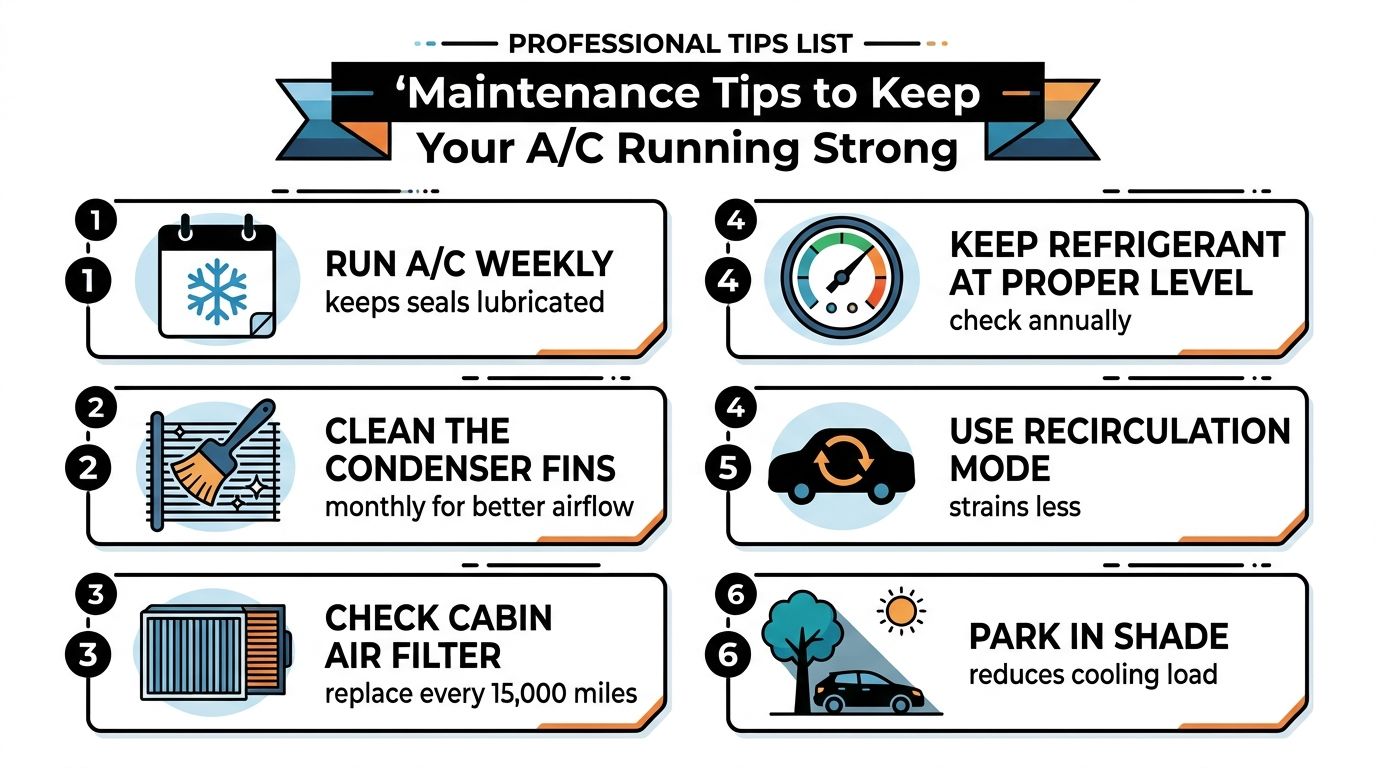
Small habits keep the system happier
Run the A/C regularly, even when you don't need full cooling. That helps keep seals moving and gives you an early warning if the clutch, fan, or controls aren't behaving properly. A system that only gets used in peak summer is more likely to surprise you at the worst time.
Keep the front of the car clean so air can move through the condenser fins. Road grime, insects, and debris reduce heat rejection, and once airflow through the front stack is compromised, the whole system works harder. A cleaner front end often does more than people expect.
Don't treat refrigerant like engine oil
Refrigerant shouldn't need casual top-ups every year. If it's low, there's usually a reason, and the reason should be found before more refrigerant goes in. Topping it up without a leak check is the mechanical equivalent of silencing an alarm without finding the fire.
Replace the cabin air filter before it's packed with dust and leaves. If you can smell dampness or hear the blower labouring, the filter and the air path deserve a look. A cheap part can cause expensive symptoms when it's neglected.
The A/C cleaning service page is worth checking if your vents smell stale or the airflow feels weaker than it should.
Park in shade when you can. It won't fix a failing system, but it does reduce how hard the system has to work when you start the car.
What Whitby Drivers Can Expect from Carmedics Autowerks
Whitby drivers usually want the same three things from an A/C visit, a clear diagnosis, a repair that solves the issue, and no mystery around what they're paying for. That's the standard Carmedics Autowerks is built around, with air conditioning service handled alongside general auto repair, fleet maintenance, and other vehicle care services in one shop.
The useful part is the workflow. You bring in the vehicle, the technician checks the complaint, confirms what the system is doing, and then explains whether the fault is in airflow, refrigerant loss, a control issue, or a component failure. That kind of explanation matters because it separates a quick service from a repair that needs proper parts and labour.
Carmedics Autowerks also works on domestic and import vehicles, which helps when the A/C layout isn't standard or the fix needs the right procedure the first time. If you want the job done once, and done with the right diagnosis behind it, that's the standard to ask for.
If your cabin air's gone weak, warm, or noisy, book a proper inspection before the heat gets worse. Carmedics Autowerks Inc offers A/C service alongside general repairs, fleet maintenance, window tinting, PPF, and collision work, so you can handle the cooling problem and the rest of the vehicle in one place.