


The first warm afternoon in Whitby usually starts the same way. You get in, crack the windows for a second, hit the A/C, and the vents answer with that stale, swampy smell that makes you wonder what’s been living in there since October.
Most drivers treat it like a minor annoyance. It isn’t. A musty car A/C usually means moisture sat in the system long enough for grime, bacteria, or mould to build up around the filter, ducts, or evaporator. In Durham Region, that problem gets pushed harder by humidity, spring pollen, summer dust, and the grime that lingers after winter road salt season.
If you care about your car, this matters for more than comfort. Bad A/C odour makes the cabin feel old fast, it can aggravate allergies, and it leaves the impression of a poorly kept vehicle even when the paint and interior look excellent. The good news is that a lot of air conditioning cleaning for car issues can be handled at home if the problem is still at the surface level. The bad news is that some jobs cross the line into professional territory quickly.
That First Blast of Stale Air
A typical Ontario pattern goes like this. The A/C barely runs through winter, the car sits through damp mornings and thaw cycles, and then the first real warm day arrives. You switch the fan on and get hit with a smell somewhere between wet towel, old basement, and dirty socks.
That smell usually isn’t coming from the vents themselves. It’s often deeper in the system, where condensation has been collecting. The evaporator lives in a dark, damp space, and that’s exactly the sort of place contamination likes.
Why it happens around Whitby
Whitby and the rest of Durham Region put car A/C systems through a rough mix. You get humid air off the lake, heavy pollen in season, dust from dry summer roads, then salt, slush, and freeze-thaw cycles in winter. All of that gets pulled into the ventilation system over time.
If the cabin filter is overdue, it stops trapping debris effectively. If the evaporator stays damp after shutdown, odours start building. If the drain starts restricting flow, moisture hangs around even longer.
Practical rule: If the smell is strongest in the first minute and fades a bit as the fan runs, contamination inside the HVAC box is a likely culprit.
Why this isn’t just about smell
There are three things drivers notice first.
- Comfort drops fast: Even a newer vehicle feels unpleasant when the cabin smells damp every time the fan starts.
- Health gets involved: Sensitive drivers often notice throat irritation, sneezing, or watery eyes during longer drives.
- Value perception changes: Buyers and detail-minded owners pick up on interior odours immediately.
There are also cases where the smell is warning you that cleaning alone won’t solve it. A blocked drain, saturated insulation, refrigerant issue, or deeper component problem can mimic a simple dirty system.
If your A/C also isn’t cooling properly, or the odour comes back right after a DIY treatment, it’s worth looking at a proper car air conditioning repair service instead of spraying more product into the vents and hoping for the best.
Two paths that actually work
For most drivers, the answer falls into one of two lanes:
- DIY cleaning if the issue is mild, cooling still works, airflow is decent, and you’re mainly dealing with odour or a dirty filter.
- Professional service if cooling performance is weak, the smell is severe, there’s visible moisture trouble, or the car has a more complex thermal system.
A lot of frustration comes from mixing those up. Surface cleaning can help a surface problem. It won’t fix a deeper one.
Telltale Signs Your Car AC Needs Cleaning
A bad smell is the obvious clue, but it’s not the only one. Drivers often miss the early signs because the system still blows cold enough to seem “fine.” It isn’t fine if airflow is dropping, the fan sounds wrong, or the cabin starts triggering allergy symptoms.
What the odour is telling you
Different smells point to different likely causes.
- Musty or mouldy smell: Usually points to moisture and microbial growth around the evaporator or in the ducting.
- Dirty sock smell: Common when the evaporator has collected film, dust, and damp organic debris.
- Stale, closed-up smell: Often starts with a neglected cabin filter or contamination in the air intake area.
- Sharp chemical smell: Don’t assume this is just dirt. That can suggest something outside normal cleaning territory.
The timing matters too. If the smell hits hardest right at startup, contamination inside the HVAC housing is more likely than a general interior odour.
Non-smell symptoms drivers overlook
A contaminated A/C system often gives itself away in other ways:
- Airflow gets weaker: The fan may still sound strong, but less air comes out because the filter or evaporator face is restricted.
- Vent air feels uneven: One side may seem fine while another stays weak or stale.
- The blower sounds busier than usual: Leaves, seeds, or debris can get into the intake or blower area.
- Windows stay damp longer: A dirty system can make cabin moisture control feel sluggish.
- Passengers complain before the driver does: You get nose-blind to your own vehicle.
If you have to keep turning the fan higher just to get the same cabin comfort, don’t ignore it. That’s often an airflow problem before it becomes a cooling complaint.
Why this hits harder in Durham Region
Local conditions are particularly relevant. Existing content often overlooks regional health risks. Data shows Durham Region experiences higher mould spore counts in spring and summer due to the humid Great Lakes climate, and a University of Toronto study on GTA air quality found 65% of sampled cars had detectable Aspergillus mould in AC evaporators, linked to a 15% increase in driver respiratory complaints among middle-aged men in urban fleets (regional car A/C contamination findings).
That lines up with what a lot of drivers notice in practice. During heavy pollen stretches, a dirty A/C system can make a short commute feel worse than walking outside for ten minutes.
If you drive with a dog, the issue gets amplified because pet hair and dander load the cabin faster. Keeping the interior cool and clean matters for them too, and if you’re sorting summer comfort beyond the vehicle, it also helps to find the best cool beds so your dog isn’t carrying extra heat and shedding stress back into the cabin.
A quick self-check
Run through this before buying any cleaner:
- Start the car and run A/C on fresh air first. Note the smell in the first minute.
- Switch to recirculation. If the smell changes, the intake side may be part of the problem.
- Cycle fan speeds. Weak airflow across all settings usually means restriction somewhere.
- Check for allergy flare-ups. Sneezing or coughing only in the car is a useful clue.
- Look at the cabin filter if it’s accessible. If it’s dark, damp, or full of debris, start there.
If the system smells bad but still cools and the rest checks out, DIY cleaning is reasonable. If cooling is weak as well, skip the guesswork and book a proper car AC diagnostic and repair check.
Your DIY Car AC Cleaning Toolkit
A decent result starts with the right kit. Most failed DIY jobs come from using the wrong spray, soaking the wrong part, or jamming a stiff brush into a delicate area. For air conditioning cleaning for car work, you don’t need a huge cart of tools, but you do need to separate light cleaning from deep cleaning.
What to buy before you start
The basic kit should include a few specific items:
- Nitrile gloves and a mask: If you’re disturbing mouldy dust or old filter debris, protect yourself first.
- Safety glasses: Spray cleaner and falling debris don’t belong in your eyes.
- Microfibre cloths: Good for vent surfaces, trim, and wiping up cleaner overspray.
- Soft detailing brushes: Use these on vents and trim only. Soft bristles matter.
- Shop vacuum with a narrow crevice tool: Helpful for the filter housing and intake area.
- Cabin air filter: If you’re cleaning the system, plan on replacing the filter at the same time.
- Dedicated HVAC disinfectant spray or evaporator foam cleaner: These are not interchangeable in every situation.
The cleaners and what they’re actually for
A lot of shelf products look similar. They aren’t.
| DIY Car AC Cleaner Comparison | |||
|---|---|---|---|
| Cleaner Type | Best For | Ease of Use | Notes |
| Vent disinfectant spray | Surface odours from vents and light duct contamination | Easy | Best for early-stage smell issues, not deep evaporator buildup |
| Evaporator foam cleaner with hose | Musty odours likely coming from the evaporator area | Moderate | Works better when applied through the correct access point |
| Coil-safe cleaner | Accessible HVAC surfaces where the label confirms automotive use | Moderate | Check compatibility carefully before use |
| Cabin filter housing cleaner | Cleaning the filter box and nearby plastic surfaces | Easy | Use lightly, don’t soak electrical parts |
What works and what doesn’t
Good DIY products do two things. They cling long enough to contact grime, and they’re meant for automotive HVAC materials. Cheap deodorising sprays only mask the smell for a few days.
What usually backfires:
- Household disinfectant sprays: They can leave residue, attack plastics, or create a stronger perfume problem than the original odour.
- Bleach mixtures: Too aggressive and completely wrong for this job.
- Hard bristle brushes: Fine for floor mats, terrible for vent fins and delicate trim.
- Random internet “hack” chemicals: If the label doesn’t clearly say it’s suitable for automotive A/C or evaporator use, leave it on the shelf.
A scented cabin doesn’t mean a clean A/C system. If the smell changes but returns after a few drives, the contamination is still there.
Add-ons that make the job cleaner
You don’t need all of these, but they help:
- Trim tool set: Useful if your filter cover or intake panel is clipped in tightly.
- Small inspection light: Lets you see into the filter housing properly.
- Catch towel or absorbent pad: Good under the passenger footwell or beneath the drain area.
- Owner’s manual or service information: Saves time when locating the cabin filter and any access panels.
For drivers who stay on top of maintenance, this kind of A/C cleaning fits naturally into a broader schedule of preventive vehicle care. It’s easier to manage odour early than fix a system that’s been ignored for multiple seasons.
Choose your approach before opening anything
There are really three DIY levels:
- Filter-only service for stale air and weak airflow with no major smell.
- Filter plus vent cleaning for light odour and dusty duct outlets.
- Filter plus evaporator foam treatment for stronger musty smell where cooling still works.
If you’re already hearing odd noises, seeing water where it shouldn’t be, or dealing with poor cooling, don’t keep adding products. That’s where a lot of home jobs go sideways.
A Practical Guide to Cleaning Your Car's AC System
The safest DIY method is to work from the easy, accessible parts toward the deeper ones. Start with the cabin filter. Then clean vents and intake areas. Only after that should you use an evaporator cleaner, and only if the product instructions match your vehicle layout.
Replace the cabin air filter first
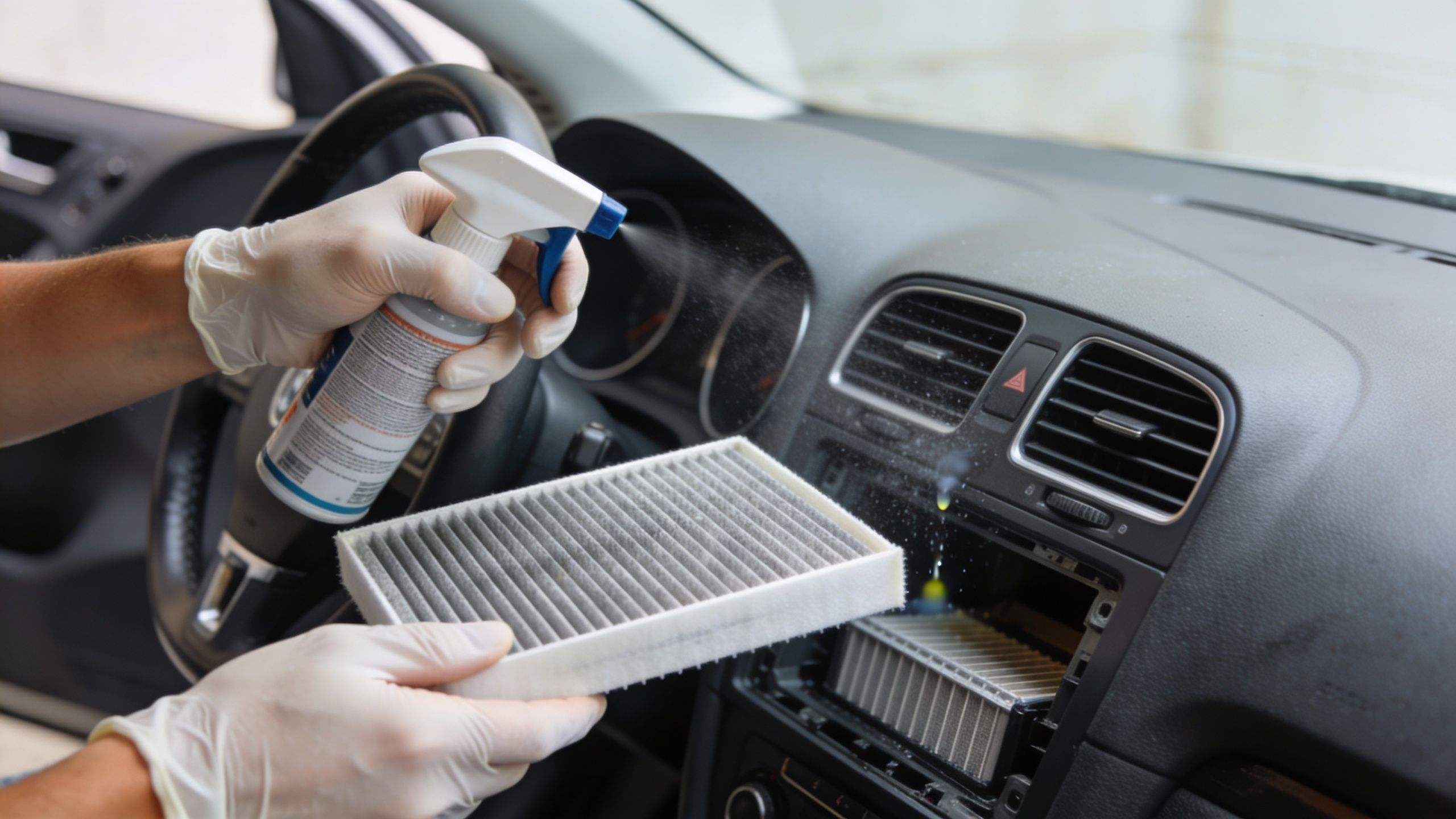
A surprising number of odour complaints improve right here. In many cars and SUVs, the cabin filter sits behind the glovebox. On some models it’s under the cowl near the windshield. If you drive a newer SUV, don’t force panels. Use the owner’s manual and remove trim gently.
Do this in order:
- Shut the vehicle off completely.
- Open the filter access panel.
- Slide the old filter out slowly. If it’s full of leaves and dust, keep it level so debris doesn’t spill into the housing.
- Vacuum the housing with a narrow nozzle.
- Wipe the plastic housing surfaces with a lightly damp microfibre.
- Install the new filter in the correct airflow direction.
If the old filter is damp, that’s a clue worth noting. A filter can get dirty from normal use, but moisture suggests the system may need more than a basic swap.
Clean vents and accessible ducts
This is the part commonly envisioned when thinking about air conditioning cleaning for car work, but it’s only one piece.
Use a soft brush and vacuum to remove dust from each vent. Don’t ram the brush inward. You’re loosening contamination near the outlet, not scrubbing the entire duct network by force.
Then use an automotive HVAC disinfectant spray exactly as directed on the label. Some products are meant to be sprayed lightly into the vents while the fan runs. Others are designed for the outside air intake area below the windshield.
For this stage:
- Set the fan as instructed by the product label
- Use fresh air or recirculation only if the cleaner specifically calls for it
- Protect nearby trim with a cloth
- Avoid soaking buttons, screens, and electrical controls
Less product is usually better than more. Oversaturating ducts doesn’t create a deeper clean. It just leaves residue and can push liquid where it shouldn’t go.
Treat the evaporator if the smell persists
If the system still smells musty after the filter and vents are handled, the evaporator is the likely source. In this scenario, a proper foam cleaner can help, but only if you apply it through the correct path.
Most DIY foam treatments go in through one of two access points:
- The evaporator drain area
- The fresh air intake path, if the product and vehicle design allow it
Read the product instructions fully before you start. Some kits include a long hose that feeds the foam into the HVAC box. The foam expands, contacts the contaminated area, then breaks down and drains out.
General method:
- Park on a level surface in a well-ventilated area.
- Wear gloves, eye protection, and a mask.
- Locate the specified access point.
- Insert the hose gently. Don’t force it.
- Dispense the cleaner as directed.
- Allow the dwell time listed by the manufacturer.
- Run the fan afterward as instructed to dry and clear the system.
If you can’t clearly identify the access point, stop. Guessing with a hose near drains, sensors, or trim panels is how simple cleaning turns into a repair bill.
Clean the intake area under the cowl
Leaves and organic debris around the base of the windshield often feed odours back into the system. Open the hood and inspect the cowl intake area if it’s visible and accessible. Remove loose debris by hand or vacuum. Don’t wash everything aggressively with water.
This part gets neglected on Ontario cars because spring cleanup often focuses on the body and undercarriage while the HVAC intake is ignored. If you park under trees, check this area regularly.
Run the system properly after cleaning
Once the cleaning product has done its job, dry-out matters.
- Run the fan for several minutes
- Use outside air if the cleaner instructions call for it
- Make sure the cabin isn’t sealed up immediately
- Check for any drips or unusual smells afterward
A clean air conditioner improves airflow and system efficiency, requiring the engine to work less to cool the vehicle. According to engineering guidelines from the Association of German Engineers, that lower workload can lead to noticeable decreases in fuel consumption, especially during Ontario summers (engineering guidance on clean automotive AC efficiency).
That’s one reason not to treat A/C cleaning like a cosmetic extra. It affects how hard the system has to work.
What I’d avoid on a newer vehicle
Modern cars pack a lot behind simple-looking trim. On newer vehicles, especially premium trims and SUVs, I’d be cautious with:
- Steam near screens or vent actuators
- Heavy liquid sprays into unknown openings
- Random recharge kits
- Pulling apart dash panels without trim tools
If you’re building better long-term habits around the whole vehicle, these broader vehicle upkeep strategies are a useful companion to A/C maintenance because they keep small seasonal issues from stacking up.
The result you should expect
A successful DIY cleaning should give you:
- cleaner startup air
- less musty smell
- steadier airflow
- less need to blast the fan immediately
What it won’t do is fix low refrigerant, a damaged compressor, a blocked condenser, or an electrical fault. If the system still underperforms after a careful clean, it’s time for a proper car air conditioning service appointment.
The Limits of DIY and When to Call the Professionals
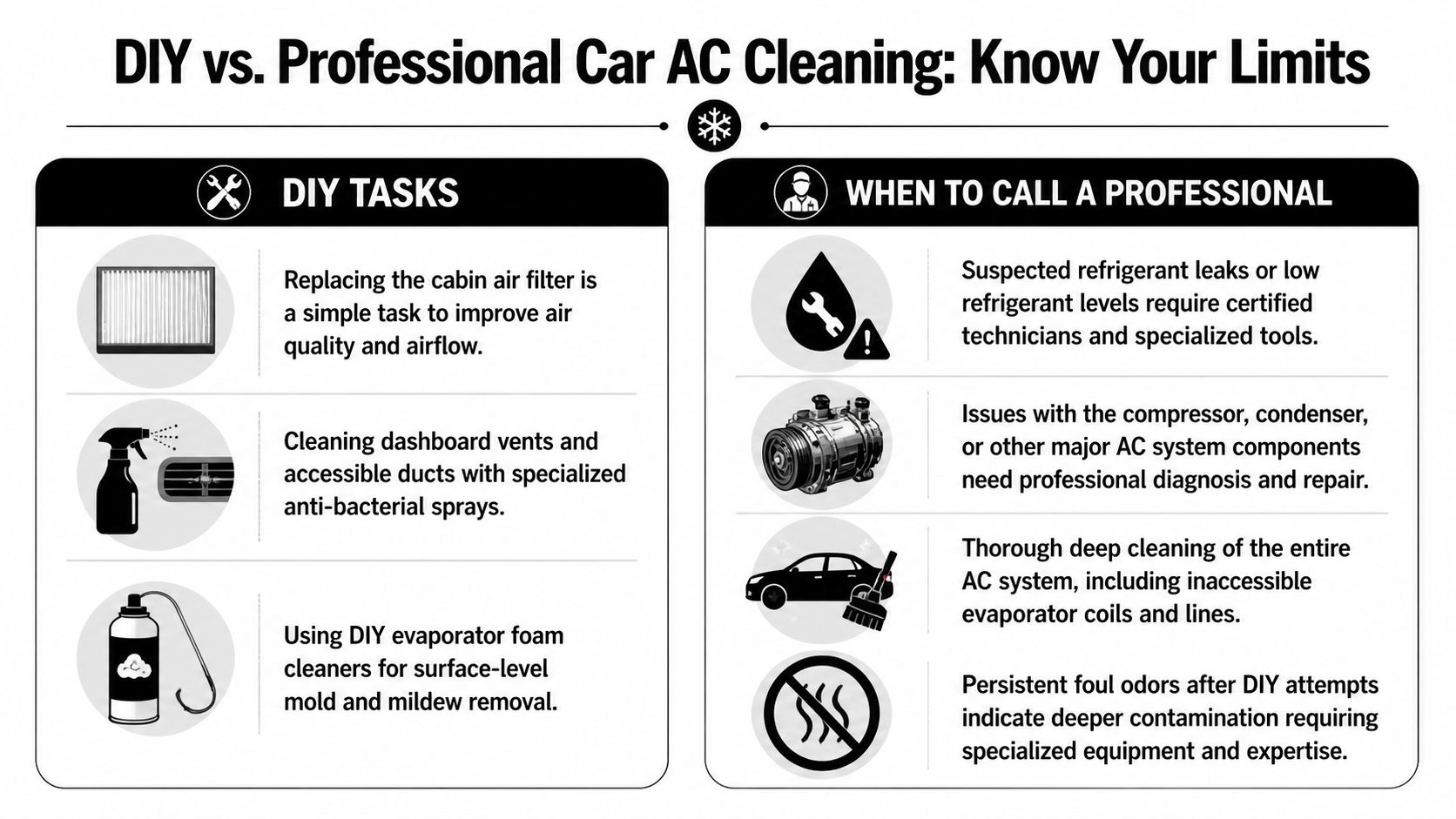
DIY cleaning works best when the problem is light contamination and easy access. Once you get into restricted airflow from deeper buildup, refrigerant concerns, or modern thermal management systems, home methods stop being the smart play.
Jobs that are still fair for DIY
You can usually handle these safely if you take your time:
- Cabin filter replacement: Straightforward on many vehicles.
- Vent cleaning: Safe if you use soft brushes and the right HVAC spray.
- Light evaporator foam treatment: Only when the access method is clear and product instructions fit the vehicle.
That’s where most home maintenance should end.
Jobs that need equipment and training
Professional service becomes the right choice when the system needs diagnosis, disassembly, or controlled refrigerant handling.
A full A/C flush is one example. Proper flushing requires contamination analysis first. Technicians use a gas analyser to check refrigerant for issues such as moisture or metal particles from a failing compressor. After refrigerant recovery and vacuum pulling, they use dedicated automotive flush kits with the correct hoses, tanks, and adapters, then purge components with nitrogen to remove moisture. The accumulator often needs replacement during this kind of service, and the system must be recharged with the manufacturer-specified refrigerant type and amount to avoid system degradation and compressor damage (professional automotive AC flushing process).
That’s not a driveway job. Not even close.
If there’s any chance the compressor has failed internally, stop trying to “freshen” the system. Debris contamination changes the job completely.
Condenser cleaning sounds simple until it isn’t
People often say, “I’ll just hose out the condenser.” Sometimes that’s fine for very light surface dirt. Sometimes it bends fins, pushes grime deeper, or gets water where it shouldn’t go.
Proper condenser cleaning starts with safe access, often including front-end trim removal, then soft-bristle cleaning and careful rinsing while protecting nearby wiring. Commercial coil cleaners must be diluted per instructions, and the rinse step matters just as much as the cleaner itself. Water around delicate engine wiring is a real concern, not a fussy warning (safe condenser cleaning method for automotive systems).
If access is poor or the front end is tightly packaged, professional handling makes more sense than improvising with a pressure nozzle.
EV owners need to be more careful, not less
This is the part most generic guides miss. With Ontario’s Green Plates program boosting EV registrations by 28% in Durham Region, EV A/C systems can accumulate 40% more condensate bacteria because of battery cooling integration, and that can cause musty odours twice as fast as in internal combustion vehicles (Ontario EV AC cleaning trend overview).
For EVs, the A/C system often isn’t just cooling the cabin in the traditional sense. It may be tied into a broader thermal management setup. That means more sealed components, tighter access, and more warranty risk if you start opening or treating areas blindly.
A musty smell in an EV doesn’t automatically mean the fix is harder, but it does mean the margin for DIY mistakes is smaller.
Clear signs to stop and book service
Use this as a practical cutoff list:
- Cooling is weak, not just smelly
- The odour returns immediately after DIY cleaning
- You hear grinding, squealing, or rattling from the HVAC system
- You suspect a refrigerant issue
- There’s evidence of compressor trouble
- Water is ending up inside the cabin
- The vehicle is an EV with difficult HVAC access
- You can’t identify the right evaporator access point with confidence
If you’re at that stage, it’s smarter to get accurate information on car AC repair costs and service factors before the problem gets bigger. Guesswork is cheap only until it damages something.
FAQs About Car Air Conditioning Cleaning
Can cleaning fix an A/C that isn’t blowing cold?
Not by itself. Cleaning helps airflow, odour, and contamination. It won’t fix low refrigerant, a failing compressor, bad sensors, or other mechanical faults.
How often should I clean my car A/C in Ontario?
At minimum, check the cabin filter yearly and pay attention to odours before summer. In Whitby and Durham Region, humidity, pollen, and winter grime make seasonal inspection a good habit. If the vehicle sits often, carries pets, or sees a lot of city driving, inspect it more closely.
Is replacing the cabin filter enough?
Sometimes, yes. If the smell is mild and airflow improves right away, the filter may have been the main issue. If the musty smell stays after a fresh filter, contamination deeper in the system is more likely.
Can I use household spray disinfectants in the vents?
I wouldn’t. Household products often leave residue, create overpowering perfume, or aren’t designed for automotive HVAC materials. Use products labelled for automotive vent or evaporator cleaning.
What’s the best way to keep the smell from coming back?
A few habits help more than people think:
- Replace the cabin filter on schedule
- Keep the cowl intake area free of leaves
- Run the A/C regularly instead of ignoring it for long stretches
- Let the fan run briefly before parking when conditions are damp
- Deal with weak airflow early instead of waiting for peak summer
Clean once, then maintain. Most repeat odour problems come from drivers fixing the smell but not the moisture cycle that caused it.
Is DIY cheaper than professional service?
For light odour and a routine filter change, yes. DIY can make sense. But if you buy multiple products, guess at the access points, and still end up with poor cooling or recurring smell, the cheap route gets expensive fast.
Does air conditioning cleaning for car systems help resale value?
It can help the cabin feel properly cared for, which matters. Buyers notice interior smell immediately. Even if they can’t identify the cause, stale vent air makes the whole vehicle feel older than it is.
What’s the smartest year-round approach?
Think in seasons:
- Spring: inspect filter, intake area, and startup odour
- Summer: monitor airflow and cooling performance
- Autumn: clear leaves from the cowl area
- Winter: don’t ignore damp-window behaviour or musty airflow when using defrost functions
A clean system stays clean longer when you catch small issues before they turn into a full contamination problem.
If your car still smells musty, airflow is weak, or you’d rather have the job handled properly the first time, Carmedics Autowerks Inc in Whitby can help with professional inspection, maintenance, and repair for cars and SUVs. It’s a practical next step when DIY cleaning has reached its limit or you want a cleaner, healthier cabin without the trial and error.