


A lot of people start looking into automotive window tint removal at the same moment. They walk up to a car they still like, catch the side glass in the light, and realise the tint has gone bad. It’s bubbling at the edges, turning patchy, or fading into that purple look that makes the whole vehicle feel older than it is.
That cosmetic issue is usually what gets your attention first. In Whitby and across Durham, the practical problem often shows up right after. You want cleaner glass, you may want to install a fresh legal film, and you don’t want the old adhesive or damaged layer ruining the next job. If you’re already comparing film options, it helps to understand how modern automotive window tint films differ from the cheap dyed products that tend to fail early.
Removing old tint sounds simple until you’re halfway through and the film tears into strips, glue smears across the glass, and the rear defroster starts looking a little too delicate. That’s where the DIY versus professional choice gets real. The right method can leave the glass clean and ready for a new install. The wrong one can leave scratches, haze, damaged trim, or a rear window that costs far more to fix than the tint ever did.
That Faded Purple Tint Has to Go
The usual story goes like this. The car still drives great, the paint still shines after a wash, but the windows give it away. The tint that once looked sharp now has a purple cast, tiny bubbles near the bottom edge, or peeling corners that catch your fingernail every time you roll the glass down.
That kind of failed film doesn’t just look rough. It changes visibility. At night, old tint can look blotchy and uneven. In the rain, you start noticing glare and distortion where the adhesive has aged badly or the film has separated.
What old tint usually looks like in the real world
A failing tint job rarely comes off cleanly. Older dyed film often dries out and cracks when you try to peel it. Some cheaper installs separate into layers, so the top film comes away but the adhesive stays stuck to the window like varnish.
The worst version is the rear glass. That’s where many DIY jobs go sideways because the film is large, curved, and sitting over delicate defroster lines.
Old tint isn’t one problem. It’s two problems stuck together: brittle film on top and stubborn adhesive underneath.
Why removal is the real first step
Replacement is often the first consideration. In practice, removal decides whether the next stage goes smoothly. If the glass still has residue, fine scratches, or damaged defroster lines, even a good replacement film won’t sit or look right.
Automotive window tint removal is really a surface-restoration job. The goal isn’t just to get the dark film off. The goal is to return the glass to a clean, clear, undamaged condition so you can drive it as-is or apply a fresh, compliant tint without fighting old glue and defects.
If the film is only lightly aged and on simple side windows, a careful DIY attempt can work. If it’s brittle, ceramic, rear-glass bonded, or already leaving haze, you need to be much more selective about method and tools.
Your Pre-Removal Safety and Tool Checklist
Before you touch a corner of film, figure out why you’re removing it and how clean the finish needs to be when you’re done. In Ontario, the legal side matters. Highway Traffic Act Regulation 611 requires front side windows to allow at least 70% visible light transmission, and non-compliance can lead to fines up to $485 for a first offence, with over 5,000 tint-related convictions annually in the GTA according to Kelley Blue Book’s summary of Ontario tint rules.
That means a sloppy removal isn’t harmless if it leaves haze, residue, or uneven clarity on the glass you still need to drive and inspect. Clean removal matters as much as actual removal.
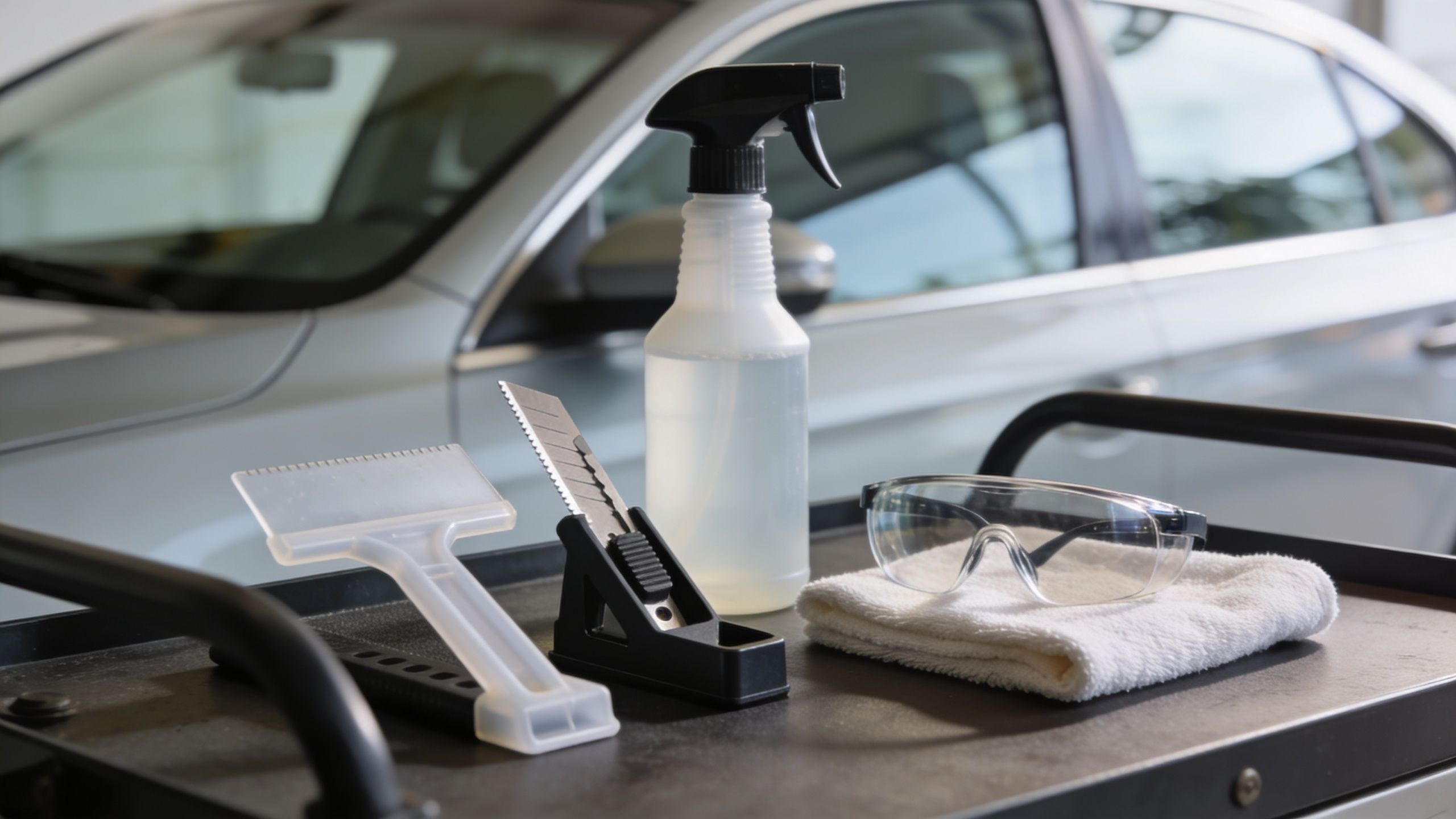
What to gather before you start
This job gets messy fast if you improvise. Set up first, then work.
- Heat source: A heat gun on a controlled setting or a fabric steamer. Heat guns work quickly on some older side-window film. Steam is gentler and easier to manage on rear glass.
- Spray bottles: Use one for soapy water and another for your adhesive remover if you’re using one.
- Plastic razor blades: These are safer for trim and useful on softened residue.
- Fresh metal razor blades: Only for suitable glass areas, with lubrication, and never with casual pressure.
- Microfibre towels: Have more than you think you need. Glue smears towels quickly.
- Protective covers: Old towels or plastic sheeting for door cards, speakers, rear parcel shelves, and seats.
- Gloves and eye protection: Especially if you’re working with chemicals or heating adhesive close to your face.
- Glass cleaner for final wipe-down: A proper finishing clean shows you what residue is left.
If you’re used to basic vehicle projects, some of the same preparation mindset applies as it does in an RV glass job. A good example is this DIY RV window replacement guide, which shows how much easier a glass-related project goes when protection, fit, and cleanup are planned before removal starts.
Protect the vehicle before you protect the glass
The biggest prep mistake isn’t tool choice. It’s skipping protection for the interior.
Cover the dash if you’re working near the windscreen edge. Protect rear decks and seat fabric before spraying anything. If the vehicle has leather door inserts, soft-touch trim, or exposed speaker grilles, don’t let chemical runoff sit on them while you work on one stubborn corner for ten minutes.
A few habits make a major difference:
- Test one small section first. You’ll learn quickly whether the tint wants to peel, shred, or delaminate.
- Work in a controlled space. Shade is better than direct sun unless you’re intentionally using a soak-and-sun method.
- Keep the glass wet when scraping residue. Dry scraping is where people start marking glass.
- Plan extra care for the rear window. Treat defroster lines as if they’re easy to damage, because they are.
Practical rule: If your first lifted corner comes off in tiny brittle flakes, don’t assume the rest of the window will somehow get easier.
A quick reality check before DIY starts
If the tint is very old, if the rear window is your main concern, or if you already know the film is a modern ceramic product, a home setup may not be enough. There’s a difference between having tools and having the right process. That’s why some drivers hand the job to a shop such as Carmedics Autowerks when the removal has to be clean enough for immediate re-tinting or legal inspection.
The Three Core Tint Removal Methods Explained
There are three DIY methods commonly considered. None of them is universally right. The best one depends on the age of the film, the type of adhesive, the shape of the glass, and your tolerance for risk.
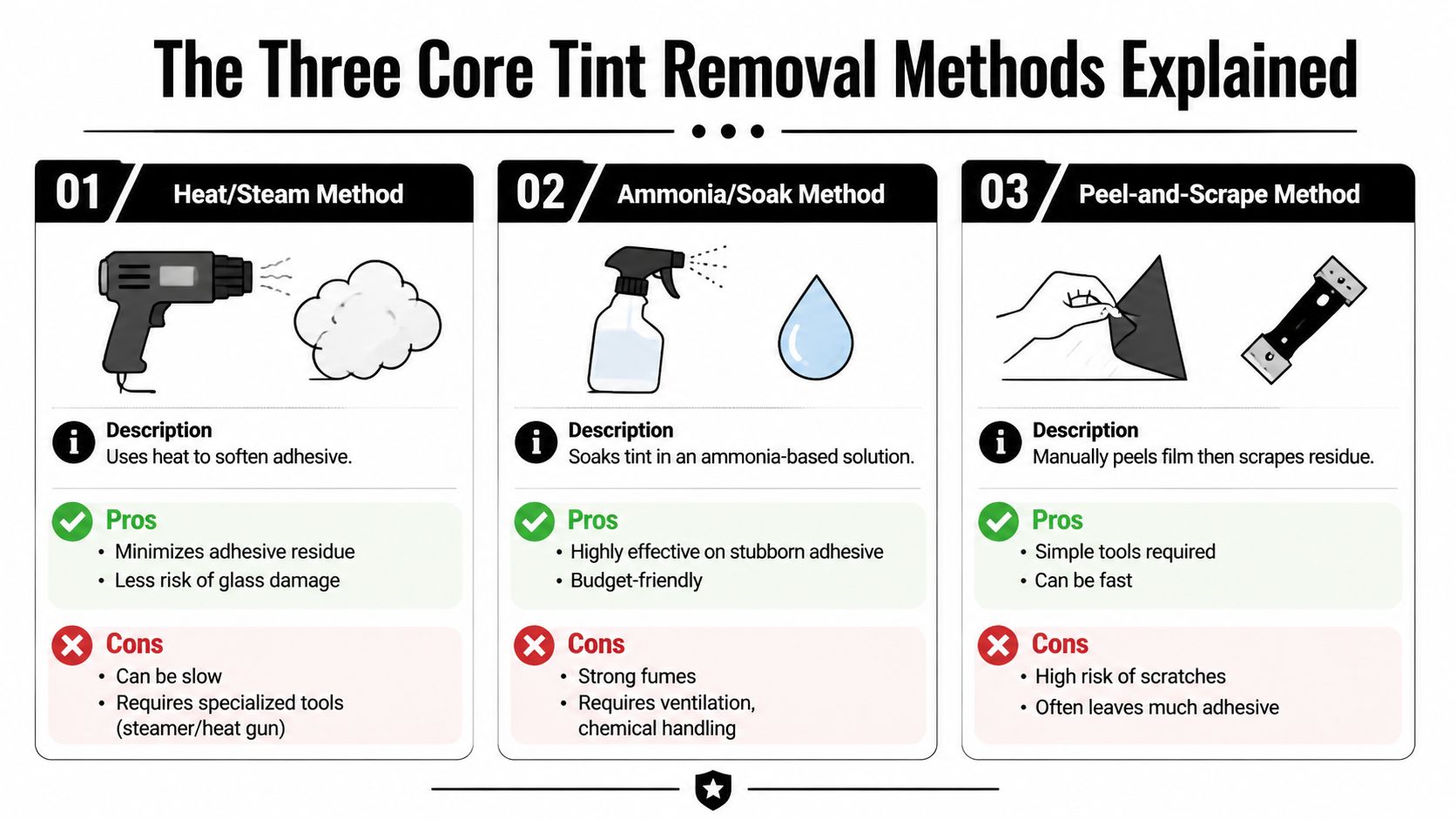
Heat and peel
This is a common method to try first, and for side windows it often makes sense. Warm the glass and film gradually, lift a corner with a fingernail or plastic blade, and peel while continuing to apply heat so the adhesive releases with the film instead of staying on the glass.
Done well, it’s tidy and fairly quick. Done poorly, it creates torn strips of film and patchy glue.
What works:
- Slow, even passes with the heat source
- Pulling the film low and flat instead of yanking straight back
- Reheating immediately when resistance increases
What doesn’t:
- Parking the heat gun on one spot
- Pulling too fast when the adhesive hasn’t softened
- Treating rear glass like side glass
Steam and scrape
For beginners, steam is usually easier to control. It softens the adhesive with moisture and heat at the same time, and that makes it especially useful on rear windows where defroster lines need gentler handling.
Steam also helps when the tint is old but not rock hard. You can work a section, peel what comes free, then wipe and repeat instead of forcing the entire sheet at once.
This is usually the method I’d lean toward if someone insists on doing rear glass at home. It’s slower than a perfect heat-peel job, but slower is often safer.
On rear windows, patience protects more money than speed ever saves.
Ammonia and sun
This one can be effective on badly baked tint, but it’s the method I’d put furthest down the list for casual DIY. The process usually involves spraying an ammonia-based solution, covering the glass to trap heat, and letting sunlight help soften the film and glue before peeling.
It can work. It can also create a strong fume problem, make interior protection more important, and turn into a sticky mess if the film starts separating in layers.
Use it only if you understand the handling risks and have proper ventilation. It’s not a good method for a closed garage and not something I’d use around delicate interior materials without thorough masking.
Why nano-ceramic tint changes the decision
Modern film has changed this job. According to Genesis Tint’s discussion of tint removal challenges, nano-ceramic tints saw a 35% sales increase in the GTA in 2025, and those films can have adhesives that resist basic removal. The same source notes that using a heat gun on these films can cause thermal stress cracks in 5% of DIY attempts, and that the silicone-based glue often needs pro-grade citrus solvents or removers such as Goo Gone Automotive to avoid micro-scratches.
That’s the part many generic guides miss. Newer film isn’t just “better tint.” It can be much less forgiving during removal. If you’re wondering whether your current film is worth replacing with a premium product after removal, this breakdown on whether ceramic tint is worth it helps clarify what you’re paying for.
DIY Tint Removal Method Comparison
| Method | Best For | Pros | Cons / Risks |
|---|---|---|---|
| Heat and peel | Older side-window tint that still has some flexibility | Fast when the film lifts cleanly, often leaves less residue | Easy to overheat, poor choice for fragile rear defrosters |
| Steam and scrape | Rear glass, cautious DIY work, older adhesive that needs softening | Gentle, controlled, useful around delicate areas | Slower, still requires cleanup afterwards |
| Ammonia and sun | Stubborn film when heat tools aren’t available | Can break down baked-on adhesive effectively | Strong fumes, messy workflow, higher risk to trim and interior materials |
| Peel and scrape only | Very limited spot repairs or already-lifted film | Simple tools, direct approach | Highest scratch risk, usually leaves the most adhesive behind |
Choosing the least bad option
If the tint lifts in one sheet under moderate heat, continue carefully. If it shreds into narrow strips, switch methods early. If the residue becomes gummy and smeared instead of releasing, you likely need a better solvent strategy rather than more force.
The wrong instinct is to double down on aggression. More heat, sharper scraping, and harder pulling don’t usually save the job. They usually create the second problem you didn’t have when you started.
Conquering Stubborn Adhesive and Final Cleanup
Most DIY tint removal jobs don’t fail during film removal. They fail after the film is off and the glue is still there.
That leftover adhesive can be light and tacky, or thick and smeared like softened rubber. The right approach depends on what you’re seeing on the glass. If the residue is thin, soapy water and a careful blade pass may be enough. If it’s gummy and resistant, a citrus-based adhesive remover usually works better than trying to bully it off with repeated dry scraping.
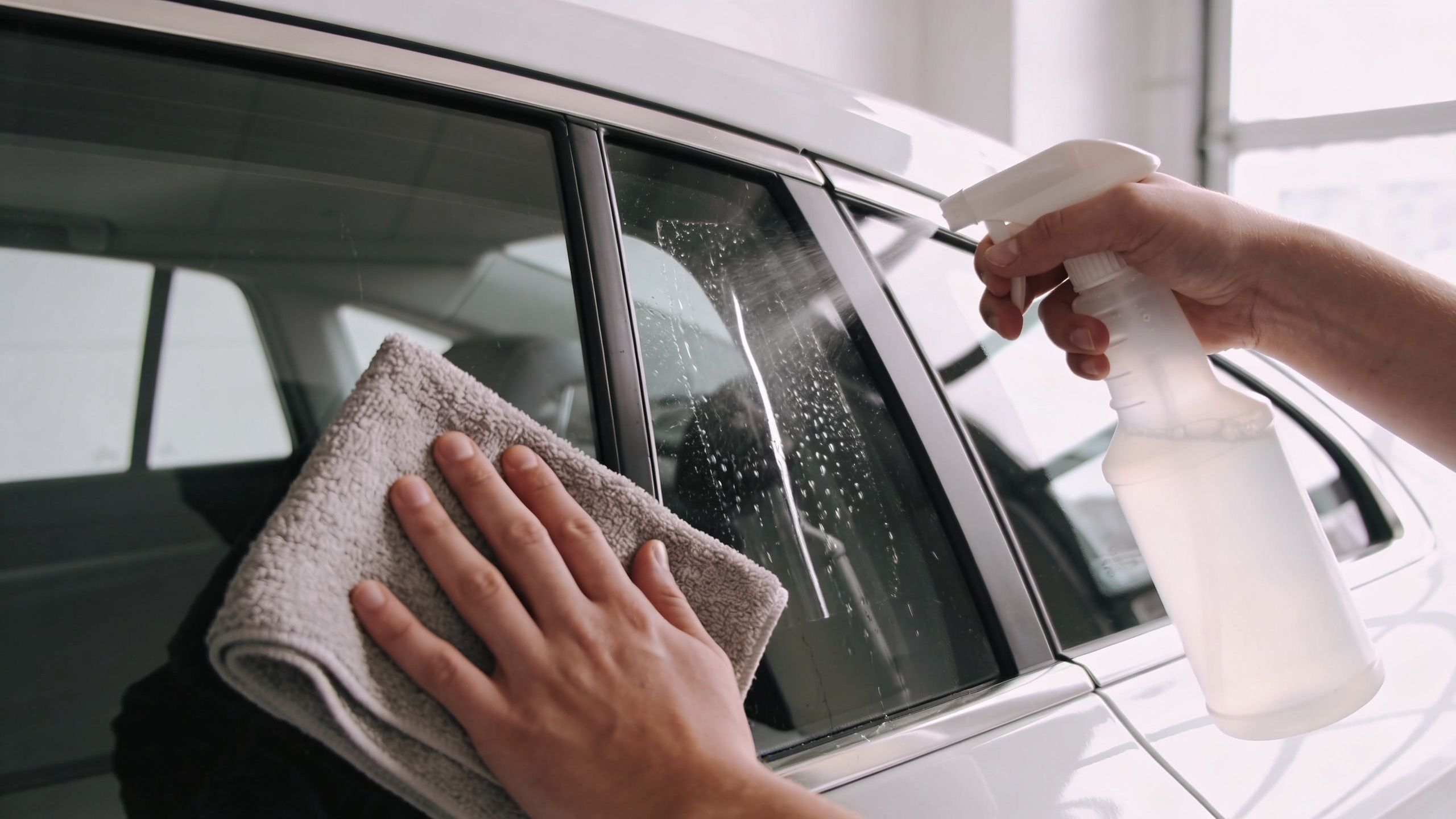
How to remove the glue without marking the glass
Start by re-wetting the area. That can be soapy water, an automotive-safe adhesive remover, or a citrus solvent depending on the residue. Let it dwell briefly, then test a small section.
Use a blade only at a shallow angle. Think of it as gliding under softened residue, not carving at the glass.
A safe sequence looks like this:
- Soften first: Spray and let the adhesive loosen.
- Wipe the easy material away: Don’t scrape what a towel can remove.
- Use a plastic blade where possible: Especially near trim and edges.
- Reserve metal blades for suitable flat glass sections: Keep the area lubricated the entire time.
- Finish with clean microfibre towels: Dirty towels redeposit glue.
Rear defroster lines need a different standard
Rear windows demand restraint. Don’t treat defroster lines like normal glass. If you scrape across them with a metal blade, you can cut or lift them. Once that happens, you’re no longer doing tint removal. You’re dealing with electrical repair or rear glass replacement.
For rear glass, steam and soft wiping are safer than aggressive scraping. If residue sits over the lines, use repeated softening cycles instead of pushing harder.
If you’re asking whether one more hard pass will finally clear the rear glass, that’s usually the moment to stop.
The final clean tells the truth
A window can look clean when it’s wet and still be full of residue. Do a proper final clean, then inspect it from different angles and in different light. You’re looking for streaks, haze, glue shadows, and scrape marks.
If you plan to re-tint the vehicle, the glass needs to be fully clean and stable. Any leftover contamination affects adhesion. If you’re still deciding what type of film to install next, this guide to the best window tint for cars gives a practical overview of what suits different vehicles and priorities.
A proper finish is boring to look at. That’s how you know it’s right. No haze, no drag marks, no sticky patches when you run a clean towel over the glass.
Common Pitfalls That Lead to Costly Damage
The expensive mistakes are predictable. They happen when someone mistakes force for technique, or assumes a side-window habit is safe on rear glass. In the shop, the usual signs are easy to spot. Long scrape arcs from a dry razor. Melted edge trim from concentrated heat. Defroster lines that no longer look continuous.
The legal side can still bite you after the film is gone. RVinyl’s page on tint removal cites 2025 Durham Regional Police data showing over 1,200 tint violation tickets in the Whitby-Oshawa corridor, with 40% involving botched DIY removals that caused haze or uneven clarity and led to failed MTO inspections. That’s the part many people don’t consider. Bad removal can still leave you with a non-compliant result.
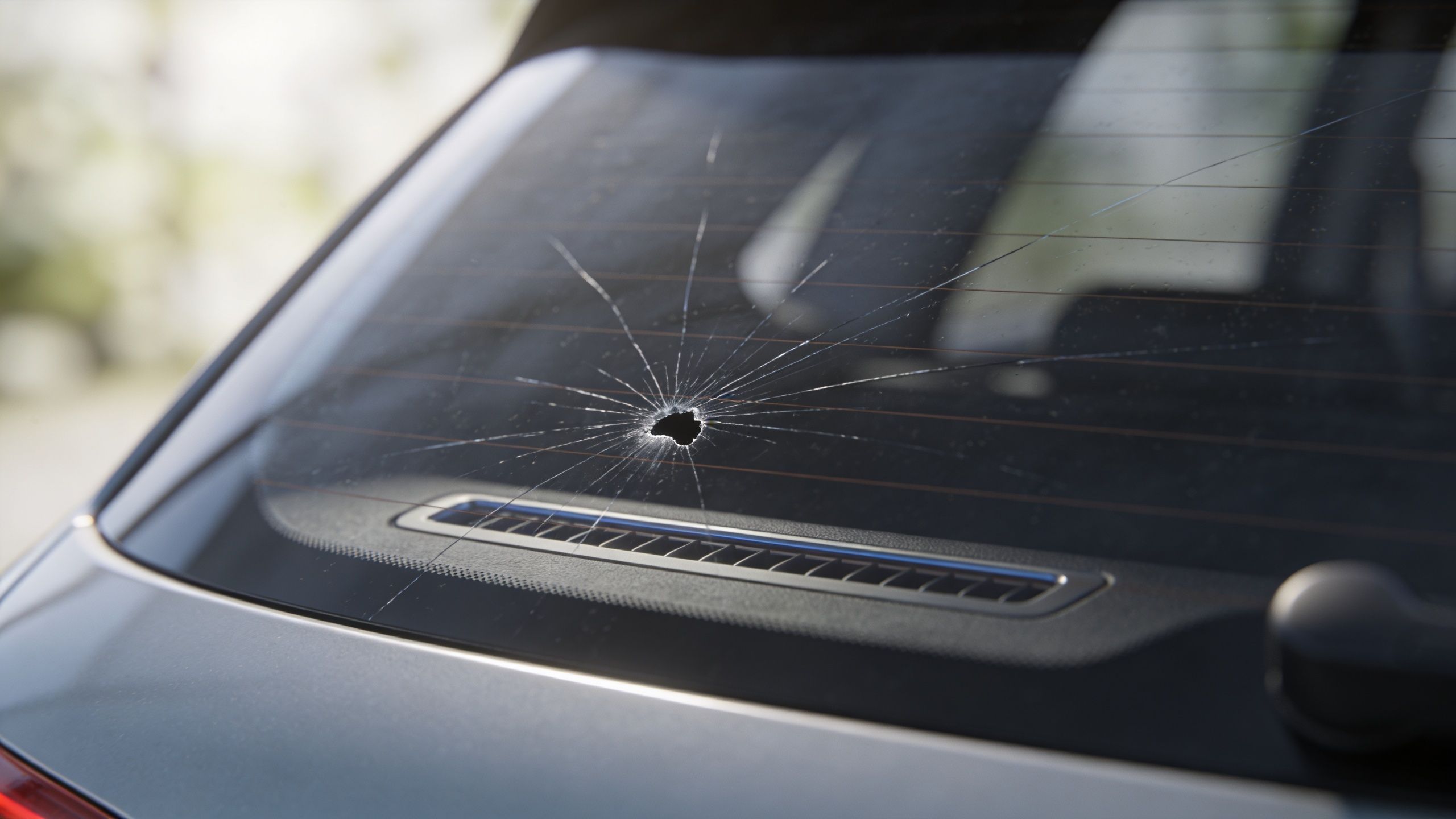
The mistakes that show up again and again
- Dry scraping: This is how good glass ends up with fine permanent marks. Lubrication isn’t optional.
- Too much heat in one spot: Glass and trim don’t like concentrated heat. Neither do older seals.
- Wrong blade near defrosters: Rear windows punish careless scraping fast.
- Poor chemical control: Runoff onto trim, fabric, switches, or speaker grilles creates a second cleanup problem.
- Rushing the peel: Fast pulls tear film and leave more glue behind.
Uneven clarity is still a visibility problem, even if the dark film itself is gone.
A compliance problem doesn’t always look dramatic
Some DIY failures are obvious. Others are subtle. A light haze across the front side glass, adhesive smearing in the lower corners, or faint scrape trails can be enough to make the job look unfinished and the window look wrong in sunlight.
That matters in Ontario because visibility and legal tint standards aren’t separate issues. If you want a plain-language overview of the local rules before deciding whether to remove and re-tint, this page on tinted windows legal requirements is worth reviewing.
The core lesson is simple. Most damage starts small. One overheated corner, one impatient scrape, one rear-window pass that felt harmless at the time.
When to Choose Professional Removal from Carmedics Autowerks
There’s a point where DIY stops being economical. It usually happens before people admit it. If the tint is modern ceramic, extremely brittle, bonded to rear glass with heavy residue, or already showing signs that it will come off in fragments, the job is no longer a casual weekend cleanup.
Professional removal makes more sense when the outcome matters more than the experiment. That’s especially true if the vehicle is newer, if you care about preserving rear defrosters, or if the glass needs to be clean enough for immediate replacement film.
The clearest signs to hand it off
Some situations are poor DIY candidates from the start:
- Rear window film with defroster lines underneath
- Nano-ceramic tint that resists basic heat and peel methods
- Old film that cracks into tiny pieces
- Vehicles with sensitive trim, electronics, or premium interiors
- Cases where you need a residue-free surface for a fresh tint install
That decision isn’t unique to automotive glass. The same logic shows up in other cleaning and finish-sensitive work. These window cleaning tips from Cultivate House Detailing make a similar point. Some jobs are technically DIY-able, but the risk, time, and finish quality change the calculation.
Why local experience matters
A shop that works with Ontario vehicles every day understands the practical target. The glass needs to be clear, damage-free, and ready for what comes next. If that next step is a fresh legal film, removal quality directly affects the installation result.
For Whitby drivers, car window tint service in Whitby is the relevant next step after proper removal. It keeps the job in one workflow instead of solving one problem and creating another.
Professional automotive window tint removal is less about convenience than predictability. You’re paying to avoid the common failure points. Scratched glass, damaged defrosters, adhesive haze, and uneven finish are all far more expensive than removing the tint correctly the first time.
If your tint is bubbling, faded, purple, or leaving you unsure about the next step, Carmedics Autowerks Inc in Whitby handles automotive window tint removal, re-tinting, and related vehicle protection work with the kind of process control this job requires. Reach out if you want the old film removed cleanly and the glass properly prepared for a legal, sharp-looking finish.