


The car dies in the worst possible place, a lane of fast traffic, a narrow shoulder, or a wet curb with cars flying past. Your first instinct is to worry about the tow truck, the battery, or the repair bill, but the first job is staying alive long enough to get help. That's where roadside assistance starts, not with the phone call, but with the choices you make before anyone arrives.
Your First Five Minutes After a Breakdown
A driver coming off the 401 feels the difference immediately. On a quiet Whitby side street, you've got room to think, room to step out, and usually enough space to make the car visible. On a high-speed road, the shoulder is not a safe workspace. It's a place to get out of the way, stay seen, and wait without creating a second hazard.

Move the car only if it's still possible
If the vehicle still rolls, get it fully out of traffic first. Turn on the hazard lights as soon as you realise something is wrong, then aim for the widest shoulder, a rest area, or any place with more room and better sight lines. If you can't move it safely, don't force it into a bad lane just to satisfy the urge to “get somewhere.”
Practical rule: A stopped car is dangerous. A stopped car in a travel lane is worse.
On a fast road, hazard lights alone don't protect you. AAA Foundation research shows roadside providers were fatally struck in situations concentrated on roads with speed limits of 55 mph or higher, and many incidents happened in darkness or with little weather interference, which is a reminder that visibility and exposure matter even when the road looks calm AAA Foundation research. That's why you want distance from traffic, not just flashing lights.
Stay inside or get out with a purpose
If you're on a busy road, stay in the vehicle with the seat belt on until it's safer to move. If you must exit, use the side away from traffic and keep your movements brief and deliberate. The goal is not to inspect every sound immediately, it's to remove yourself from the strike zone.
For a good example of quick, non-driving troubleshooting, quick golf cart ignition fixes can show how small, calm checks are handled on low-speed equipment. Cars on public roads are different, because the safety margin is much thinner. A breakdown on a side street can give you room to work through simple checks, while a freeway shoulder usually doesn't.
If the engine is overheating, leave the bonnet closed until you're sure you're away from traffic and safe to inspect it, then review the guidance on engine overheating causes. That issue can turn a roadside stop into a repair problem fast, so don't keep opening things in traffic just to satisfy curiosity.
Keep your phone in hand, keep your doors locked, and keep your attention on passing traffic until the scene is safe.
Diagnosing What Went Wrong
A clear description saves time when help is on the way. A dead battery sounds different from a fuel issue, and a flat tyre behaves differently from a deeper mechanical failure. You don't need to diagnose the fault completely, you just need enough information to send the right kind of help.
Read the symptoms, not your assumptions
If you turn the key and hear repeated clicking, battery trouble is a common possibility. If the engine cranks normally but never catches, that's a different conversation, and it often points away from a simple battery-only problem. If the car is dead with no lights, no response, and no dash activity, that's useful information too because it helps the dispatcher decide what equipment to send.
A flat tyre is usually easier to spot, but not every tyre issue is roadside-safe. Sidewall damage, shredded rubber, or a wheel sitting badly on the rim usually means the tyre isn't a quick patch job. For drivers who want a deeper reference on repair decisions, computer diagnostics for cars and electronic fault tracing are useful follow-up topics once the car is off the road.
Tell the dispatcher what you actually see
Use plain observations. Say whether the engine turns over, whether the lights are dim, whether there's a smell of fuel, or whether a tyre is visibly flat on one corner. If the vehicle drove normally until it suddenly lost power, mention that too.
- Dashboard warning lights: Name any warning light that stayed on before the breakdown.
- Unusual sounds: Clicking, grinding, or silence all point to different likely causes.
- Vehicle behaviour: Note whether the car stalled, hesitated, overheated, or vibrated before stopping.
- Location details: Give the road name, nearest landmark, exit number, or kilometre marker.
That kind of detail matters because roadside teams need to know whether to bring a jump pack, a spare wheel solution, fuel, or a tow setup. It also keeps you from overpromising on the phone. If the car won't move under its own power, say that clearly.
Requesting Roadside Assistance in Whitby
In Whitby, the best roadside call is short, calm, and specific. Start with where you are, then say what the car is doing, then say whether you're in immediate danger from traffic. That order helps the person on the line decide whether you need a standard dispatch, a tow, or a safer recovery plan.
If you want a local shop touchpoint, use the same level of clarity you'd use when looking for an automotive service centre near me. Good communication is the difference between a truck heading to the right place and a long, frustrating delay. Give the road, direction of travel, nearest intersection, and any landmark that would help a stranger find you without guessing.
Have the right details ready
Before you hang up, keep these items close.
- Exact location: Highway, exit, cross street, or nearest sign.
- Vehicle description: Colour, make, model, and whether it's blocking traffic.
- Problem summary: Dead battery, flat tyre, no fuel, overheating, or unknown.
- Proof of coverage: Membership, insurance card, or warranty details if you have them.
- Safe callback number: A phone that stays on and stays with you.
If you're using a local repair shop, ask how they handle dispatch and whether they can coordinate the next step after the vehicle is recovered. That matters when a roadside fix is only temporary and the car still needs shop time. It's also smart to ask what happens if the issue changes after the technician arrives, because some breakdowns reveal a second problem once the vehicle is inspected.
A roadside call should answer two questions, where are you, and what does the car need right now?
Coverage verification matters before you commit. Insurance add-ons, manufacturer programmes, and membership plans each handle roadside help differently, so don't assume the first phone number in your glovebox covers everything. If you're unsure, ask directly whether your call is covered now or whether you'll pay out of pocket and sort it out later.
Services That Get You Back on the Road
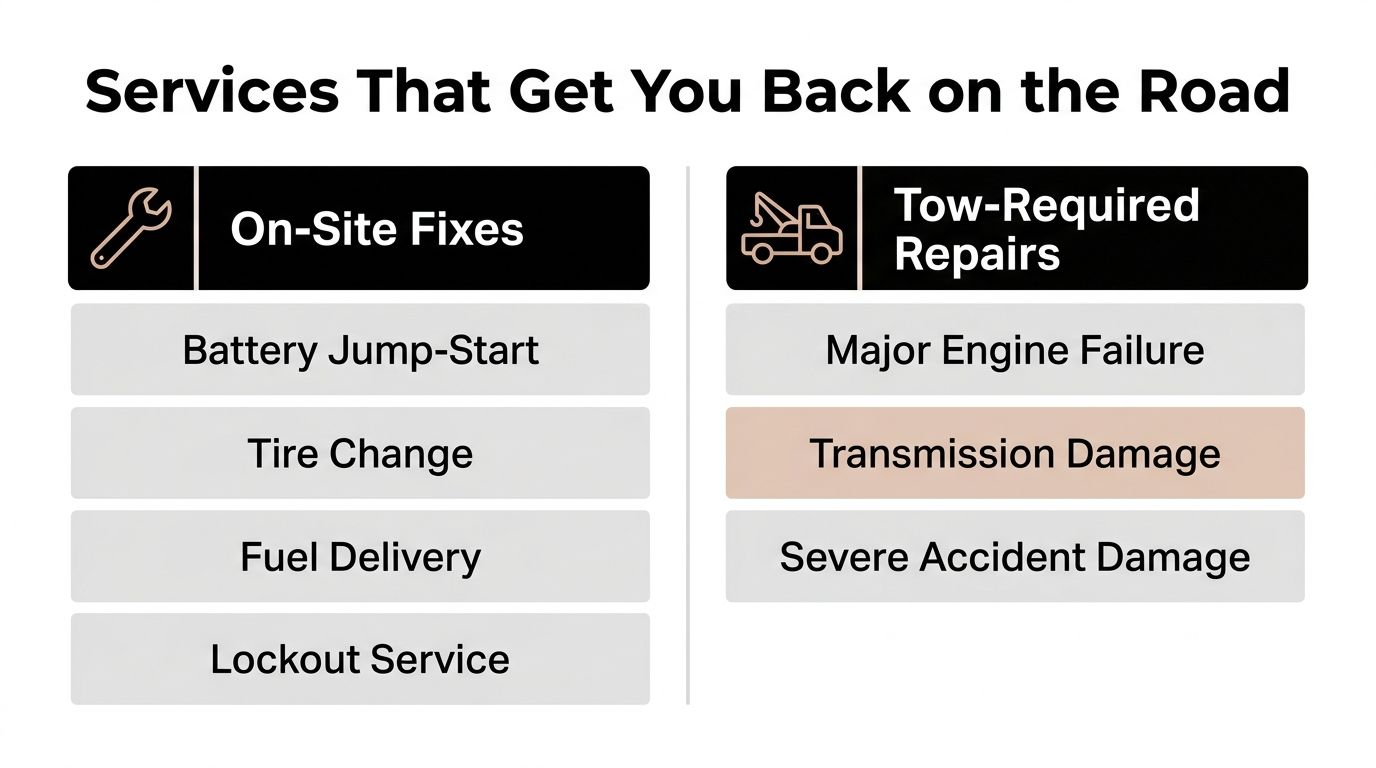
Not every breakdown needs a tow. Some jobs end with a battery boost, a spare wheel fitted, or enough fuel to reach a station. Other problems are shop-level failures, and trying to force a roadside repair just wastes time and can make the damage worse.
On-site fixes that solve common problems
A jump start makes sense when the battery is weak or discharged and the car otherwise looks healthy. A tyre change makes sense when the spare is usable and the damaged tyre hasn't been destroyed beyond safe replacement. Fuel delivery helps when the tank is empty, but it only gets you moving again if the real issue was running dry.
Lockouts also belong here, because a locked car can stop a trip without any mechanical failure at all. In a clean, simple case, on-site help is faster and less disruptive than towing. I've seen many drivers get back on the road with one quick repair, but I've also seen a jump start expose a failing charging system that needed proper shop diagnosis.
Problems that usually need a tow
Major engine failure, transmission damage, and serious collision damage don't belong in the roadside-fix category. For those, the right move is recovery to a workshop where the car can be inspected properly. If a jump start only brings the dash to life for a moment, or if the vehicle still won't move cleanly after the flat is addressed, you're usually past the point where roadside help can finish the job.
For tyre-specific damage, the difference between a repairable puncture and a replace-only tyre can be the deciding factor. A simple tread puncture may be one thing, but sidewall cuts and structural damage are different. If the issue is tyre-related and you're trying to understand what comes next, tire repair is a useful next stop after the roadside phase.
Carmedics Autowerks Inc can handle the shop-side follow-up once the vehicle is off the shoulder and ready for proper inspection. That's the point where the roadside service ends and the repair decision begins, which is exactly how it should be.
Understanding Coverage and Pricing
Roadside help is never just one product. Some drivers get it through an insurance add-on, others through a membership, and some pay per call when the breakdown happens. The right choice depends on how often you drive, how far you travel, and how much risk you want to carry on your own.
Compare the main coverage routes
| Coverage Source | Typical Cost | Towing Limit | Annual Calls |
|---|---|---|---|
| Insurance add-on | Varies by policy | Varies by policy | Varies by policy |
| Manufacturer programme | Included with some vehicles | Varies by programme | Varies by programme |
| Membership plan | Annual membership fee | Varies by plan | Varies by plan |
| Pay-per-use service | Pay when needed | Varies by job | No annual plan |
The point of the table isn't to chase a single price. It's to show that roadside help is built around different rules, and those rules can matter more than the brand name on the paperwork. A plan that looks cheap can still be frustrating if it has narrow towing terms or weak local coverage.
Check the parts people forget to read
Watch for towing distance limits, call caps, and exclusions. Some plans cover the obvious stuff and still leave gaps when the breakdown happens far from home or during a late-night recovery. If you drive mostly in town, a smaller plan may be enough. If you spend time on rural roads, highways, or in older vehicles, tighter limits can become a real problem when you need help most.
CAA's roadside assistance pages show how membership-style support is presented to drivers, but the practical question is whether the plan matches your actual trips, not whether it sounds convenient CAA roadside assistance. A calm look at the fine print beats a shocked reaction on the shoulder. That's especially true if you're comparing a pay-as-you-go call with a membership you may barely use.
Preventing Breakdowns Before They Happen
The cheapest roadside call is the one you never make. A few routine checks catch most of the issues that strand drivers, especially if you do a quick walk-around before a long trip. That's not obsessive, it's just smart maintenance.
Build a simple pre-trip habit
A monthly tyre pressure and tread check catches problems early, before a slow leak turns into a roadside flat. A glance at warning lights and a quick listen for new noises can reveal trouble long before the car quits completely. Service reminders matter too, because neglected fluid changes, worn belts, and tired batteries tend to fail at inconvenient times.
For a practical checklist from another shop perspective, the 10-part pre-trip vehicle safety check is a solid reference for drivers who like structured routines. Pair that kind of check with your own habits and you'll spot most small issues before they become shoulder-side problems. If you want a deeper preventive plan, the shop's preventive maintenance for vehicles page fits neatly into that mindset.
Treat warning signs early
A new squeal, a slow crank, a dashboard light that comes and goes, these aren't things to ignore until the car stops. They're the early warnings that something is wearing out, getting hot, or losing electrical strength. Addressing them in the shop is almost always easier than dealing with them on the roadside.
Seasonal attention matters too, especially before cold weather. Batteries get less forgiving, tyres lose pressure more easily, and small problems show up faster when temperatures change. If a car has already started acting differently, don't wait for the first hard failure to tell you what was already going wrong.
Common Questions About Roadside Assistance
Can you request help for someone else's car? Usually, yes, if the provider or membership allows it and you can give the correct location and vehicle details. What happens if you're outside your coverage area depends on the plan, so ask before you commit to service if you can still reach the provider.
How long will you wait? That depends on traffic, weather, and where you broke down, and the waiting game is often longer on busy roads or in harder-to-reach areas. Do roadside repairs come with a warranty? The only safe answer is to ask the provider before work starts, because repair terms and towing terms aren't always the same.
If you're stranded in Whitby or just want a shop that understands both the breakdown and the repair that follows, Carmedics Autowerks Inc can help with recovery-ready vehicle care, inspections, and repair work once the car is off the roadside. Visit before the next long drive, or reach out when you need calm, practical help getting the problem sorted properly.