

That stubborn smell in your car usually shows up after you've already tried the obvious fixes. You change the cabin filter, spray fragrance over the seats, crack the windows for a drive, and still catch the same sour, smoky, wet-dog, or musty note every time the interior warms up. At that point, the issue is rarely the air alone, it's usually something inside the cabin that's holding on to the contamination.
A proper odor removal service starts with that reality. In a large market like California, odor work often follows smoke, soot, and wildfire exposure, and even routine interior smells can trace back to soaked foam, HVAC contamination, or residue that a surface wipe won't touch (CAL FIRE's 2024 fire reporting, California population estimate). The same principle applies to cars anywhere, if the source stays in the material, the smell comes back.
When a Car Smell Will Not Go Away on Its Own
A driver usually notices the problem in the same frustrating way. The car smells fine right after a quick cleanup, then the odour returns when the heater runs, the cabin gets hot, or the windows stay shut for a day. That's the clue that you're not dealing with “air freshness”, you're dealing with a source embedded in the vehicle.
Why masking fails in real cars
Fresheners only change what your nose catches first. They don't remove smoke residue from trim, mildew in carpet backing, or food contamination under a seat rail. Once the smell has soaked into porous materials, a surface scent can hide it for a little while, but it won't stop the original contamination from releasing odour again.
That's why a skilled tech treats smell as a symptom, not the diagnosis. The car may need deep cleaning, source extraction, or chemistry matched to the contaminant, depending on whether the cause is smoke, biological waste, or dampness. For a good overview of how air-conditioning cleaning fits into this picture, see this air conditioning cleaning guide for car interiors.
Practical rule: if the smell changes with heat, humidity, or fan speed, assume there's still a source in the car, not just stale air.
This is also where good service firms separate themselves from good marketers. A shop that can triage incoming calls well, especially for high-volume repair businesses, usually handles the appointment more cleanly, and tools like the Guide on AI for auto repair show how intake systems can help shops capture the right details before the car even arrives. The point isn't the tech itself, it's getting the right information so the technician can decide whether the smell is surface-level or embedded.
If the odour is persistent, stop thinking in terms of “make it smell better”. Start thinking in terms of “what in the car is still holding the smell”.
Common Sources of Car Odors and How to Tell Them Apart
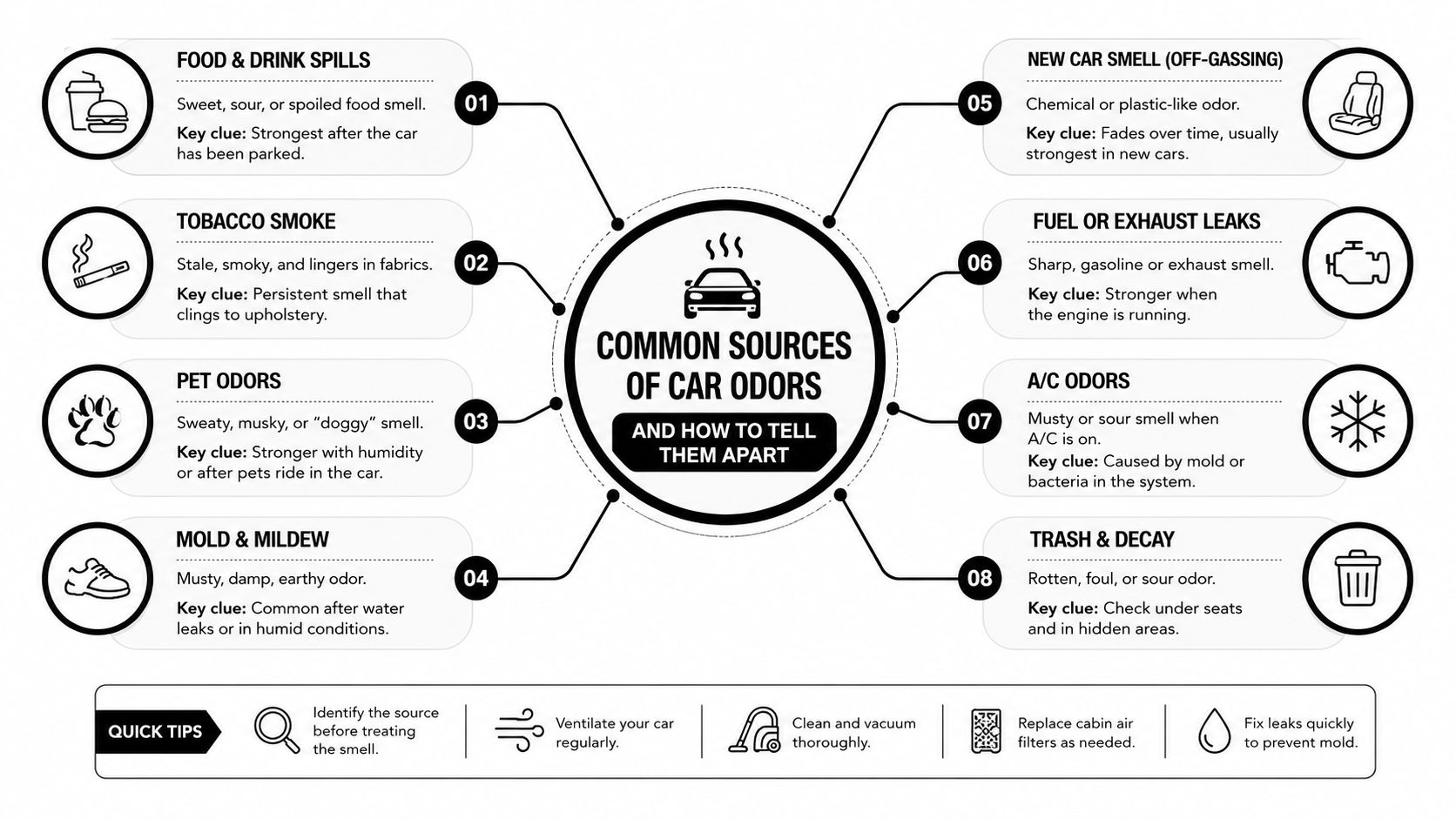
A tech usually starts by narrowing the odour class before touching the car. That's because smoke, pet accidents, mildew, and food residue don't behave the same way, and they don't respond to the same treatment. If you can identify the pattern yourself, you'll book a more relevant service and avoid paying for the wrong fix.
What the smell is trying to tell you
Smoke usually has a dry, ashy, sticky feel. It clings to headliners, plastics, seat foam, and sometimes the HVAC system, which is why it can come back when the fan runs. If the car was exposed to wildfire smoke or cigarette smoke, the problem often sits deeper than the visible surfaces.
Food and drink spills tend to smell sweeter, sourer, or fermented. The giveaway is usually a spill point under a seat, in a console, or along a seam where liquid could run down into padding. Coffee, milk, and sugar-based spills are notorious because they can sit hidden until heat wakes the smell up.
Pet accidents are usually sharper and more persistent than a simple “animal smell”. Urine can soak through carpet and into the underlay, which is why the top layer can look fine while the odour keeps returning. For background on why bacteria in the HVAC path can matter, this piece on hidden bacteria in air conditioning is a useful complement to what you see in the cabin.
Mildew or dampness usually follows water entry, a leak, a blocked sunroof drain, or wet carpets that dried too slowly. The smell is earthy and stale, and it often gets stronger after rain or when the defroster comes on.
Where contamination hides
The hardest jobs are the ones that reach foam, carpet backing, headliners, and vents. Surface residue is easier because a strong clean and neutralisation can handle it. Once a contaminant has soaked into materials, the odour source keeps releasing molecules back into the cabin until the source itself is removed or broken down.
For HVAC-related smells, a car air conditioning reference can help you understand why vents and evaporator areas matter so much. If the smell comes and goes with airflow, don't ignore that pattern, it's often the map to the source.
What Professional Odor Treatments Properly Do
A real odor removal service is chemistry, heat, and source control, not a perfume bomb. The right method depends on what is causing the odour, where it is hiding, and whether the material can be cleaned, penetrated, neutralised, or physically extracted. In restoration guidance, that is the difference between masking a smell and removing the molecules that create it.
| Method | Best For | How It Works | Main Limitation |
|---|---|---|---|
| Ozone treatment | Smoke, stale cabin odours, some biological smells | Oxidises odour molecules in the air and on exposed surfaces | Does not clean out the source in contaminated materials by itself |
| Steam extraction | Seats, carpets, mats, some spill residue | Uses heat and moisture to lift contamination out of fabric and fibres | Can push the problem deeper if the source is heavy or protein-based |
| Enzyme treatment | Urine, sewage, decomposition, protein residue | Breaks down the source at the substrate level with enzymes like protease, urease, and lipase | Needs correct dwell time and good source access |
| Thermal fogging | Smoke, porous interior contamination | Sends deodorising particles into tight spaces and porous substrates, with particle sizes described as roughly 0.5 to 15 microns in restoration guidance | Works best after the source has been identified and cleaned |
| Thermal oxidation, adsorption, biofiltration | Larger or persistent odour streams | Captures or destroys malodorous gas streams, with the supplied review reporting up to 99.9% purification in those engineered systems (NIH/PMC review) | More relevant to controlled gas streams than to a dirty cabin |
Matching the method to the smell
The important detail is not which treatment sounds strongest. It is whether the method fits the contaminant class. Protein-based contamination, like urine or decomposition, needs a different response from smoke residue, because the goal is to break down a source, not only deodorise air.
If the shop offers the same package for every smell, that is a warning sign.
For smoke-heavy jobs, fogging and oxidation can help, but only after source cleaning has been done. For pet or biological odours, enzyme chemistry matters because it reaches the residue rather than only the air around it. For seats, carpet, and trim, extraction still matters because you cannot neutralise what is buried if you never remove it from the material.
A good technician reads the smell, inspects the source, then selects the least aggressive method that still solves the problem. That trade-off matters because over-treating a car can be just as unhelpful as under-treating it. If you want a broader sense of how interior cleaning fits into this work, the car detailing page gives a useful point of comparison.
What Happens During a Professional Odor Removal Service
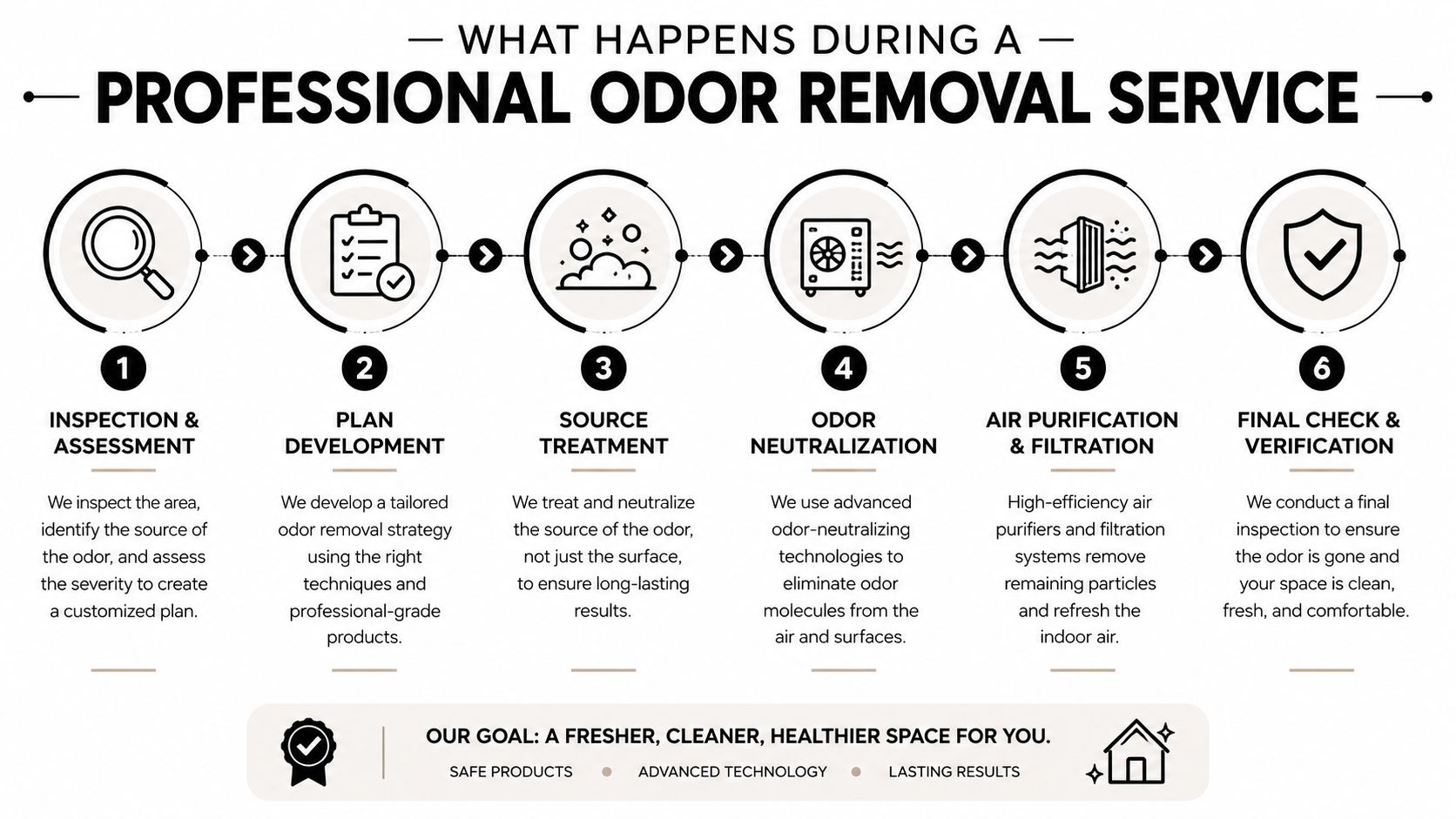
When the car arrives, the first job is inspection, not spraying. A tech checks where the odour is strongest, looks for staining, moisture, residue, and airflow patterns, and decides whether the cabin, trunk, HVAC, or a specific area is the likely source. That first read matters because it tells the shop whether the issue is a quick clean, a source removal job, or a deeper restoration-style treatment.
The workflow you should expect
The intake usually begins with a history of what happened, smoke exposure, spilled drink, pet accident, water leak, or a used-car smell that never quite left. After that, the shop should do a physical inspection and any relevant checks for moisture or contamination before choosing a treatment. If they skip straight to deodoriser, they're guessing.
The next step is source cleaning. That might mean vacuuming, shampooing, extraction, vent work, or treating a specific affected zone before any odour process begins. For a broader service overview, the car detailing page is a useful reference point for how interior cleaning fits alongside more specialised work.
Then comes the selected treatment, which may involve dwell time, heat, fogging, enzyme contact, or ventilation depending on the source. The best shops don't rush this part, because the chemistry needs time to work. A rushed treatment often smells “better” at pickup and then fails later.
Ask for a post-treatment odour recheck, not just a fresh scent at handoff.
A solid service ends with verification. That can mean a second smell test after ventilation, a check of the original source area, and confirmation that the problem hasn't just been covered. If the car needed a deeper intervention, the technician should explain what was found and what was removed. The customer should leave understanding why the smell should stay gone.
Typical Costs and How Many Visits to Expect
Pricing depends on the contamination class, the size of the affected area, and whether the source is visible or hidden. A light cabin deodorising job is not in the same category as a smoke-soaked interior or a urine-contaminated seat foam repair, so a flat quote before inspection is usually a weak sign. For a related repair-cost reference point, see this car air conditioner repair cost guide.
What tends to need one visit and what does not
A general deep deodorising job may be handled in a single appointment if the source is minor and accessible. A pet or urine treatment often takes more effort, because the contamination can live below the visible fabric. Mildew extraction may also need extra time if the car holds moisture or the source is tied to a leak. Cigarette or wildfire smoke remediation is often the most stubborn, because smoke residue can spread across multiple surfaces and into vents.
The visit count usually rises when the odour is tied to foam, underlay, or HVAC components. If a shop needs to pull trim, treat the evaporator path, or return for a recheck after drying, that's not a red flag. It's a sign they're working the source instead of hiding it.
Ask two simple questions before you book. First, what do they think the source is. Second, what proves the source has been removed or neutralised. If they can't answer both clearly, the quote is too early.
DIY Habits That Help and the Home Fixes That Usually Fail
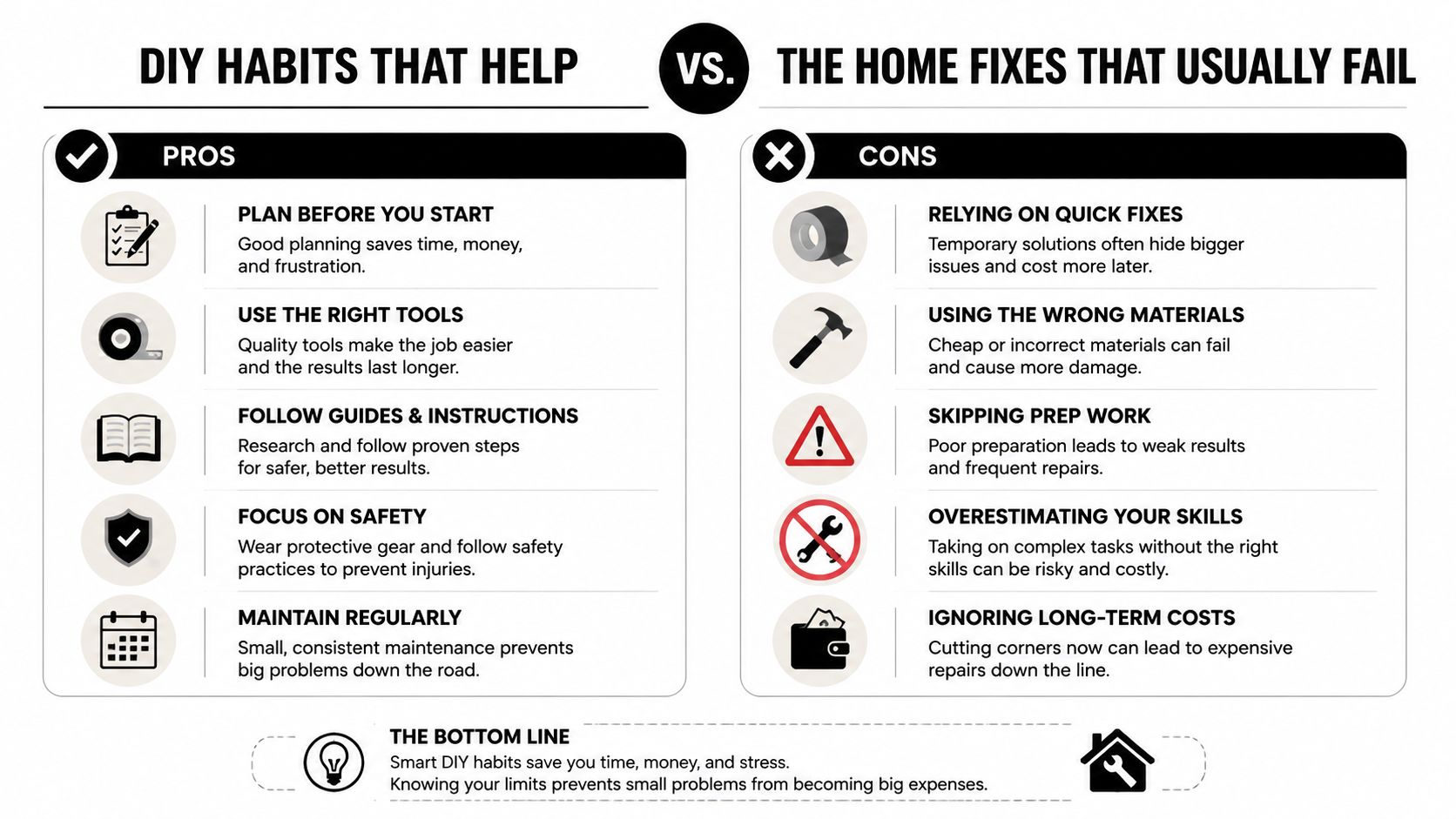
Good habits can stop a smell from becoming a major service job. Bad home fixes can waste a weekend and make the cabin harder to clean later. The difference comes down to speed, access, and whether you're removing contamination or only changing what you smell first.
The habits that actually protect the cabin
Dry wet carpets fast. If a floor mat, spill, or leak leaves moisture behind, get it out quickly and keep air moving. The longer water sits, the more chance odour has to settle into padding and underlay.
Clean spills before they migrate. A drink on the seat is annoying. A drink that soaks into foam becomes a repair job. Blot first, clean correctly, and don't push liquid deeper with aggressive scrubbing.
Change the cabin filter on schedule. If the filter is loaded with dirt or holds old contamination, airflow can carry stale smells back into the cabin. It's a small part, but it matters when the problem involves the HVAC path.
The shortcuts that usually fail
Baking soda, fragrance bombs, and scented clips can buy time, but they rarely solve a soaked-in smell. Steam alone also isn't a cure for protein contamination if you never break down the source, and steam on its own can spread the issue through soft materials if used poorly. A wet-vac pass over urine, for example, won't do much unless the chemistry reaches the residue below the surface.
The smell you can still detect after a “quick fix” is usually the smell that matters.
Smoke-soaked cabins are especially bad candidates for surface-only remedies. The odour source can live in fabric, plastics, and the HVAC path, so a few household tricks may make the car pleasant for a day and useless by the weekend. That's when a professional service stops being optional and starts saving you time.
Why Carmedics Autowerks Builds Its Odor Service Around Source Verification
A useful odor removal service should answer one question before anything else, did we remove the source or only improve the smell for now. That's the logic behind source verification, and it's the part most car owners should insist on. A shop that inspects first, matches treatment to the odour class, and checks the result afterwards is doing the work the right way.
Carmedics Autowerks in Whitby fits that approach because it's part of a broader auto-care operation, not a one-note deodoriser line. You can see how the shop presents its service footprint on the Carmedics Autowerks Whitby page, and that matters because odor jobs often sit next to cleaning, repair, and protection work. The better the inspection, the more likely the fix lasts.
The value is simple. A customer shouldn't have to guess whether a smell was buried, neutralised, or just covered up for pickup day. A source-first shop makes that visible through its process, not just its pitch.
Your Pre-Booking Checklist and Final Takeaways

Before you pay for any odor removal service, ask these questions.
- What do you believe the source is? If the answer is vague, the treatment probably will be too.
- What method matches that source? Smoke, urine, mildew, and food spills need different chemistry and access.
- Will you inspect the source area before treatment? Good shops don't guess from scent alone.
- How do you verify the smell is gone? Recheck, ventilation, and source-area confirmation matter more than a strong perfume at pickup.
- If it returns, what happens next? A serious shop can explain whether a follow-up is part of the plan.
The best sign of a good job is not that the cabin smells fresh for an hour. It's that the smell doesn't come back when the car heats up, cools down, or sits closed. If the source was handled properly, the result should hold.
For Whitby-area drivers who want an inspection-led approach, Carmedics Autowerks Inc offers a practical place to start with the same attention to diagnosis, repair, and finishing work that keeps an interior from slipping back into the same problem. Visit Carmedics Autowerks Inc to book a look at the source, get a method that fits the odour, and leave with a car that smells clean because it is clean.