


You notice it at the first long light on Dundas. The cabin feels sticky, the windows haze slightly at the corners, and the air coming from the centre vents is cool at best, not cold. By the time you’re crawling through summer traffic near Whitby or heading west into the GTA, a weak A/C system stops being a small annoyance and starts wearing you down.
That’s why so many people search for automotive a/c service near me right when the heat hits. In Ontario, A/C problems often build subtly. The system may sit through a long winter with very little use, then get asked to work hard in humid summer weather. Seals dry out, debris collects, filters load up, and a borderline issue from last year turns into poor cooling when you need the system most.
A proper diagnosis matters. Topping up refrigerant without checking pressures, temperatures, airflow, and leaks is how drivers end up paying twice for the same problem.
When Your Car's A/C Can't Beat the Whitby Heat
You feel it after ten minutes in August traffic on Highway 401. The fan is on high, the A/C light is on, and the cabin still feels warm and damp. In Whitby and across the GTA, that usually shows up on the first real humid stretch, especially after a long Ontario winter where the system saw little use.
Heat is only part of the problem here. Humidity loads the system harder, and that affects comfort, window clearing, and driver focus. An A/C system that is only "good enough" on a mild day can fall short fast in stop and go traffic, after a hot soak in a parking lot, or during a rainy summer commute.
I see the same pattern every year. A vehicle comes out of winter with a small leak, weak airflow, or a condenser packed with debris. Then the weather turns, the refrigerant charge is no longer where it should be, and the owner notices the cabin never really cools down.
Poor A/C performance also matters for visibility. Your defrost setting depends on the air conditioning system to pull moisture out of the cabin air, so weak cooling can mean slower clearing on humid mornings and wet days.
If your car takes too long to cool off, struggles in traffic, or never feels dry inside, it needs more than a quick top-up. Start with an automotive service centre near me in Whitby that checks pressures, vent temperature, airflow, and leak points so the actual fault gets fixed.
Telltale Signs Your Car A/C Needs Professional Service
The symptoms usually start small. Then one hot week turns them into a real problem.

Air isn't getting cold
This is the obvious one, but it matters how the problem shows up. If the air was cold last season and now it’s barely cool, that often points to low refrigerant, a leak, poor condenser performance, or a control issue. If it changes temperature on and off during one drive, the system may be cycling incorrectly or struggling with pressure control.
Airflow is weak even on a high fan setting
Cold air can’t help much if it isn’t moving through the cabin. Weak airflow often comes from a clogged cabin air filter, an issue in the blower circuit, or debris around the evaporator area. Many drivers assume weak airflow means low refrigerant. It often doesn’t.
You hear noises when the A/C switches on
Clicks, grinding, chirping, or a rough compressor sound should never be ignored. Some noises come from the compressor clutch area. Others point to internal compressor wear or a restriction that’s making the system work harder than it should.
The vents smell musty or stale
A musty smell is a lot like opening a damp basement after a humid week. Moisture can sit in the evaporator area, and that creates conditions for bacterial growth and unpleasant odours. It also tells you the system likely needs more than a simple recharge.
The system seems worse after winter
That’s common around Whitby. Long periods of low A/C use can let seals dry, corrosion start, and debris build up where airflow matters most.
Watch for these patterns:
- Warm at idle, better on the road: airflow through the condenser may be poor, or the fan system may not be doing its job.
- Cold on one side, warmer on the other: some vehicles have air distribution or blend door issues.
- Fogging with poor cooling: the system may not be removing cabin moisture properly.
A recharge fixes low refrigerant. It does not fix the reason refrigerant got low in the first place.
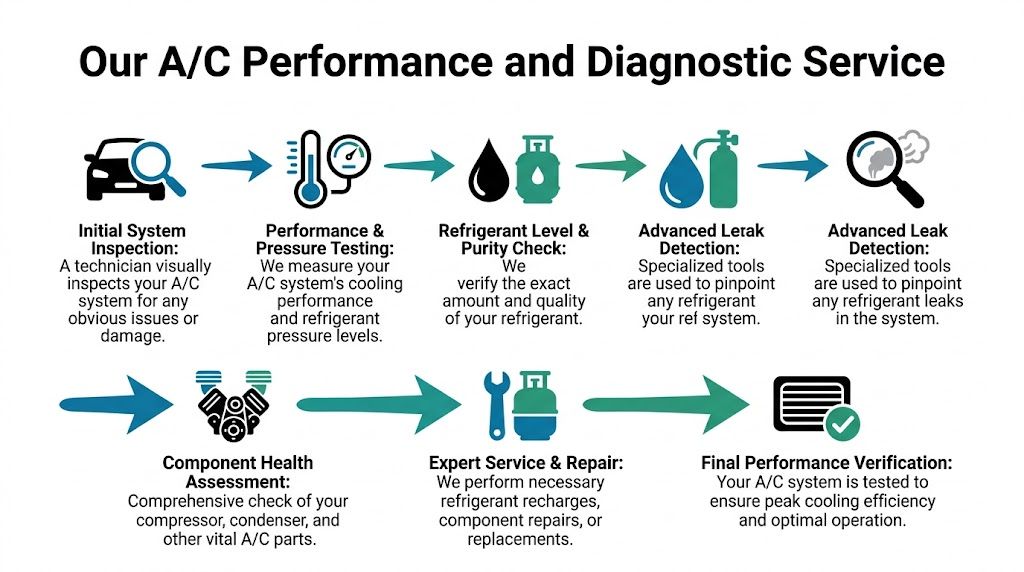
A Complete Look at Our A/C Performance and Diagnostic Service
A proper A/C appointment follows a clear process. In Whitby and across the GTA, that matters because summer humidity puts extra load on the system, and long winters leave plenty of cars coming in with corrosion, weak electrical connections, or leaks that did not show up last fall.
It starts with performance testing
We begin by checking how the system performs on the car in front of us. That means measuring vent temperature, confirming compressor operation, watching high-side and low-side pressures with the system running, and comparing those readings against factory specifications for that vehicle.
Operating conditions matter. A system that cools acceptably on a mild day can struggle in stop-and-go traffic on a hot, wet Ontario afternoon. That is why testing has to reflect real use, not just a quick glance under the hood.
Then we inspect the hardware
Numbers alone do not finish the job. We inspect the condenser for bent fins, salt corrosion, and debris packed into the front of the core. We check hoses, service ports, line joints, and the compressor area for oily residue that points to a leak.
Cooling fan operation gets checked here too. If airflow across the condenser is weak, pressures climb and vent temperatures suffer, especially at idle. Electrical faults also show up in A/C complaints, which is why related circuits may lead us into auto electrical repair in Whitby instead of a refrigerant repair alone.
A shop such as Carmedics Autowerks Inc also looks at supporting items like the cabin filter and control inputs, because poor cooling can start with airflow or control problems, not refrigerant charge.
Leak detection and refrigerant handling
If refrigerant is low, the next step is finding where it went. We use the leak detection method that fits the fault. That may include UV dye, an electronic leak detector, or close inspection of seals, O-rings, and common leak points around the condenser and service fittings.
Recharge work only makes sense after the system condition is understood. The refrigerant charge has to match the manufacturer specification, and the system has to be evacuated properly before refilling. Moisture left inside the system can hurt cooling performance and shorten component life, especially on vehicles that have sat through a damp Ontario winter with a small leak.
Final verification matters
After any service or repair, we run the system again and verify the result under stable conditions. We confirm vent output, pressure behavior, compressor operation, fan response, and cabin airflow.
That last check is what tells you whether the repair solved the fault or just made it feel better for a week.
How We Pinpoint and Fix Your Car's A/C Problems
Enthusiasts usually want to know the same thing. How do you tell whether the problem is a weak compressor, a restriction, overcharge, undercharge, or something electrical? The answer is that you don’t guess. You measure.
Temperature tells a story
Pressure gauges are only part of the picture. A/C diagnosis gets much sharper when you add line temperatures at the condenser, evaporator, and other points in the circuit. That’s how you catch restrictions and bad heat transfer instead of throwing parts at the car.
On Nissan systems and similar layouts, expert diagnostics use temperature differential benchmarks. An evaporator inlet-to-outlet increase of 4 to 14°F in expansion valve systems indicates correct superheat, while any component showing more than a 2°F drop points to a restriction, according to Nissan-focused A/C diagnostic guidance.
What that means in the bay
If a line or component shows an abnormal temperature drop, that part of the system is likely choking refrigerant flow. If the condenser temperature change is wrong, the system may not be rejecting heat properly. If the readings don’t match the pressure behaviour, the problem may be elsewhere, including the control side.
That’s also why electrical faults can’t be separated from A/C diagnosis. Pressure sensors, fan circuits, relays, clutch control, and module inputs all affect cooling performance. If your vehicle needs deeper circuit testing along with A/C diagnosis, an auto electrical repair specialist in Whitby is often part of the fix.
Good A/C work isn’t “add refrigerant and hope”. It’s matching pressures, temperatures, airflow, and electrical operation until the fault pattern makes sense.
What doesn't work
Blindly topping off refrigerant doesn’t work. Replacing a compressor before confirming a restriction doesn’t work. Swapping parts because a scan tool showed one fault code doesn’t work. The right repair starts when the readings line up with the complaint.
What to Expect for A/C Service Costs in Whitby
This is the part everyone asks about first. The honest answer is that A/C service cost depends on what failed, what refrigerant the vehicle uses, and whether the problem is a simple loss of charge or a component issue.
A basic inspection is very different from a leak repair. A leak repair is very different from replacing a compressor, condenser, or evaporator. Newer vehicles can also require more careful handling, especially if they use different refrigerants or have tighter service procedures.
Common A/C Service Costs at a Glance
| Service / Repair Type | Common Symptoms | Estimated Cost Range (CAD) |
|---|---|---|
| Inspection and diagnostic testing | Weak cooling, inconsistent vent temperature, odd smells, unusual compressor behaviour | Varies by vehicle and testing required |
| Refrigerant recovery and recharge | Air not cold, system low but otherwise functional | Varies by refrigerant type and charge quantity |
| Minor leak repair | Cooling fades over time, oily residue at fittings or hoses | Varies by leak location and parts needed |
| Cabin air filter and vent cleaning | Weak airflow, musty smell from vents | Varies by vehicle and filter access |
| Compressor, condenser, or evaporator repair | No cooling, loud noise, severe performance loss, repeat refrigerant loss | Can be one of the more expensive A/C repairs |
There isn’t one flat number that applies to every vehicle, and anyone giving one over the phone without testing is usually guessing. The better approach is to ask what the inspection includes, whether refrigerant is billed separately, and whether the quote covers leak detection.
If you want a clearer breakdown of what drives pricing, this guide to car air conditioning repair costs helps explain the usual cost factors.
The trade-off to keep in mind
Cheap A/C work often skips diagnosis. That can look affordable on day one and expensive a month later when the same problem comes back.
Proactive A/C Maintenance to Avoid Costly Future Repairs
A lot of expensive A/C jobs in Whitby start the same way. The air is still cool enough in May, the owner puts it off, then the first humid stretch hits in June and the system is forced to work flat out with a low charge, restricted airflow, or moisture already inside the lines.
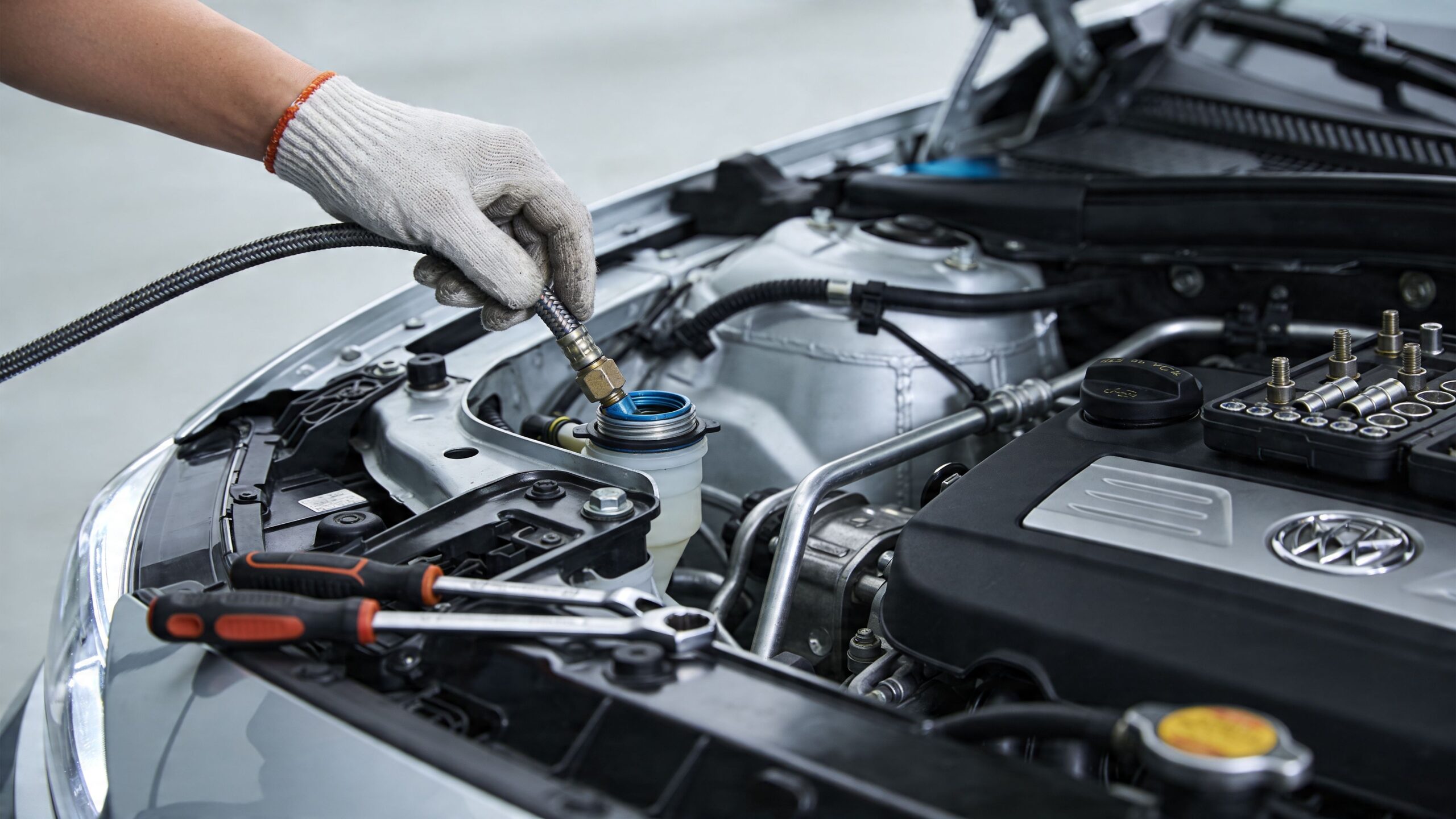
Ontario weather is hard on A/C systems for a simple reason. They sit through long winters with limited use, then switch to heavy summer duty in traffic, high humidity, and long idle times around the GTA. That pattern dries seals, exposes weak fan performance, and turns small refrigerant losses into noticeable cooling problems fast.
The best maintenance happens before the first heatwave.
A few habits make a real difference:
- Run the A/C for short periods during winter: this keeps oil moving through the system and helps seals stay conditioned.
- Test vent temperature and airflow in spring: weak cooling in April is easier to deal with than no cooling in July.
- Replace a dirty cabin air filter on time: low airflow is often blamed on the A/C system when the filter is the restriction.
- Address musty smells early: that usually points to moisture buildup around the evaporator or in the ventilation system.
- Pay attention after winter road salt exposure: corroded fittings, condenser damage, and tired electrical connectors are common in Ontario vehicles.
Annual inspection is less about chasing a number and more about catching wear before it spreads. A small leak, a weak condenser fan, or contaminated refrigerant can stay manageable if found early. Left alone through a Whitby summer, the compressor ends up working harder than it should, and that is where repair costs climb.
Newer vehicles are even less forgiving. Many systems need the correct refrigerant type, the exact charge amount, and clean, dry internals to cool properly and protect the compressor. If you want to stay ahead of seasonal wear, our guide to preventive maintenance for vehicles lays out the service intervals and checks that matter.
Service the A/C while it still mostly works. That is usually when the fix is simpler, cleaner, and cheaper.
Why Whitby Drivers Trust Carmedics Autowerks
Drivers in Whitby usually want the same things from an A/C shop. Accurate diagnosis. Clear communication. No guessing, no repeated recharges, and no surprise repairs that weren’t explained.
That’s why local reputation matters. You want technicians who understand how Ontario winters, summer humidity, salt exposure, and stop-and-go GTA driving affect real vehicles over time. You also want a shop that can handle the full picture, including airflow issues, leaks, electrical faults, and component testing.
If you’re looking into the shop itself, the Carmedics Autowerks Whitby location gives you a direct view of the business and its local service focus. For most owners, trust comes down to one thing. The car leaves blowing cold, and the explanation makes sense.
Frequently Asked Questions About Car A/C Service
Can you just top off refrigerant and send me on my way
Sometimes a recharge is part of the fix. It isn’t the full fix if the system has a leak, contamination, or a component problem. If refrigerant is low, the shop should be asking why.
Are DIY recharge kits worth it
Usually not for modern vehicles. They can hide a leak, lead to overcharge, and make diagnosis harder later. Proper A/C work depends on recovery equipment, gauges, vacuum procedures, exact charge amounts, and leak detection.
Why did my A/C get worse after winter
Ontario winters are hard on systems that sit unused for long stretches. Seals can dry, corrosion can start, and weak parts often show up only when the weather turns hot and humid.
How long does diagnosis usually take
Simple faults can be identified fairly quickly. More involved problems, especially intermittent leaks or electrical issues, take longer because the readings have to be verified instead of assumed.
Is weak airflow always an A/C problem
No. Sometimes the refrigerant circuit is fine and the issue is a clogged cabin filter, blower fault, or air distribution problem inside the dash.
If your vents are blowing warm, airflow is weak, or the system just can’t handle Whitby summer traffic, book an inspection with Carmedics Autowerks Inc. A proper A/C diagnosis is the fastest way to stop guessing and get your vehicle cooling the way it should.