

TL;DR: In Ontario, applying any film or coating that obstructs the driver's view through the front windshield is illegal under the Highway Traffic Act. The only practical exception is a small, non-reflective sun strip at the very top. If you're asking whether tinting front windshield legal in Ontario means you can run a light film across the whole glass, the safe answer is no.
You’ve just picked up a new car, or maybe finally decided to sort out the one you’ve cared about for years. First mods come to mind fast. Wheels, stance, trim, side glass tint, maybe a cleaner front-end look. Then the windshield question shows up.
A lot of enthusiasts ask it the same way. Can I tint the front windshield just a little? Not limo dark. Just enough to cut glare, help with heat, and finish the look.
That’s where bad advice starts. One friend says everybody does it. A forum says clear film is fine. Another shop says a strip is legal and somehow that turns into people thinking the whole windshield can be lightly tinted. It can’t, at least not if the film or coating obstructs the driver’s view through the main glass area in Ontario.
The Desire for a Sleek Look Meets a Legal Wall
The appeal is easy to understand. A windshield tint changes the face of the car. It can make a daily driver look more cohesive, especially when the side and rear glass are already done properly. On bright days, it also sounds like a smart comfort upgrade.
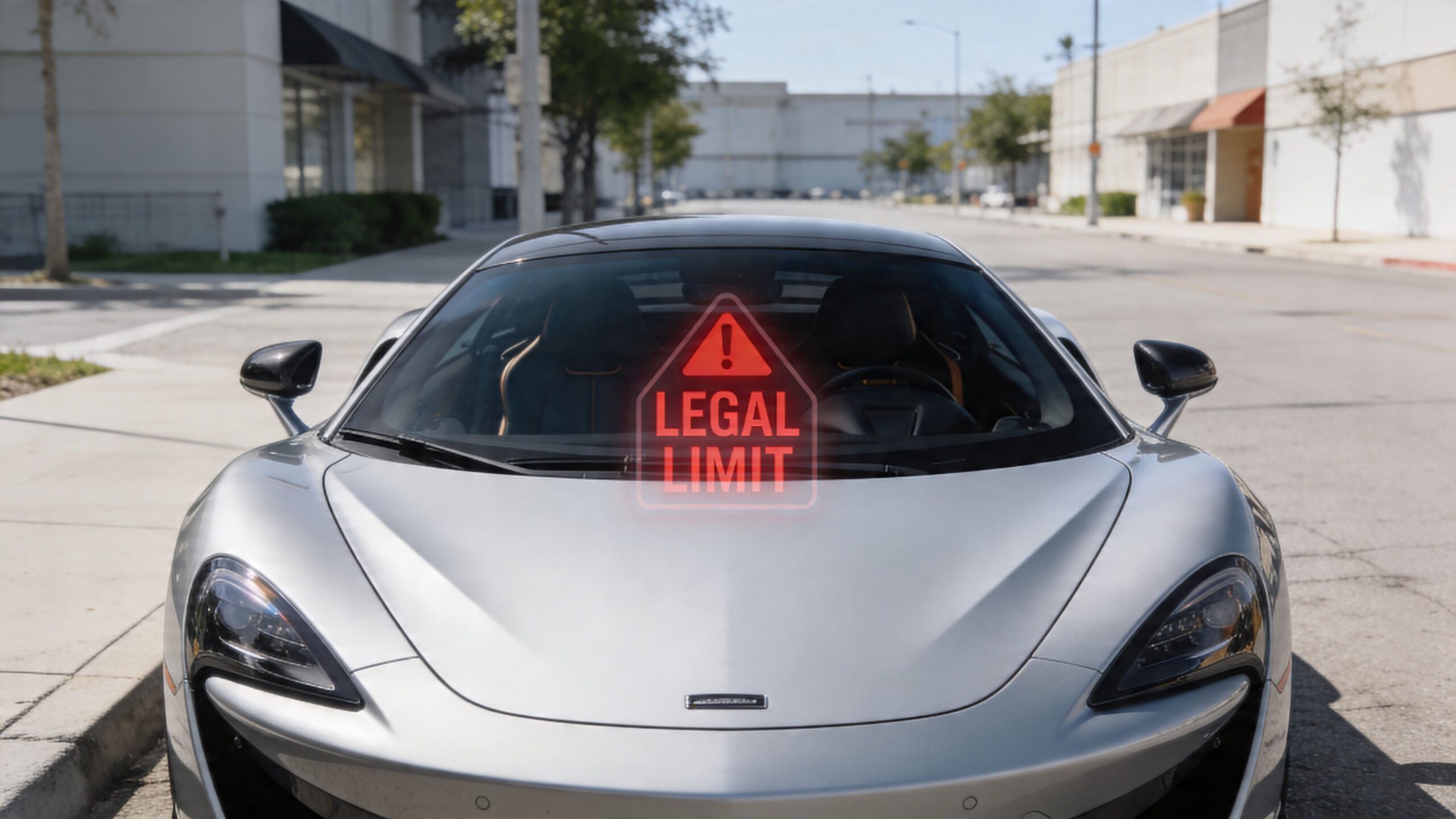
In Whitby and across Durham Region, that conversation usually starts after someone sees another vehicle with a dark top edge or a fully tinted windshield and assumes it passed because it must be legal. That’s the trap. People often confuse what they see on the road with what would survive a stop, a safety issue, or closer attention from police.
Why drivers want it
Windshield tint isn't typically requested for just one reason. It's usually a combination of:
- Style: The car looks sharper and more finished from the front.
- Glare control: Low sun and harsh overhead light get tiring fast.
- Cabin comfort: Drivers want less harshness coming through the largest piece of glass on the vehicle.
- Interior protection: Owners want to help the dash, screens, leather, and trim age better.
Those goals are valid. The problem is that the front windshield isn’t treated like the rest of the glass.
Shop-floor reality: The windshield is the one piece of glass where a mod that seems minor to the owner often matters most to enforcement and safety.
Where the confusion comes from
A lot of imported information online talks about percentages, legal shades, or medical exemptions from US states. That advice can sound precise, but it often has nothing to do with Ontario. Even among tint shops, some conversations blur the line between a legal brow and an illegal full windshield application.
That’s why this topic needs a straight answer from a practical standpoint. If you want the car to look right, drive well, and stay hassle-free, you need to separate what looks common from what’s defensible under Ontario rules.
Decoding Ontario's Front Windshield Law
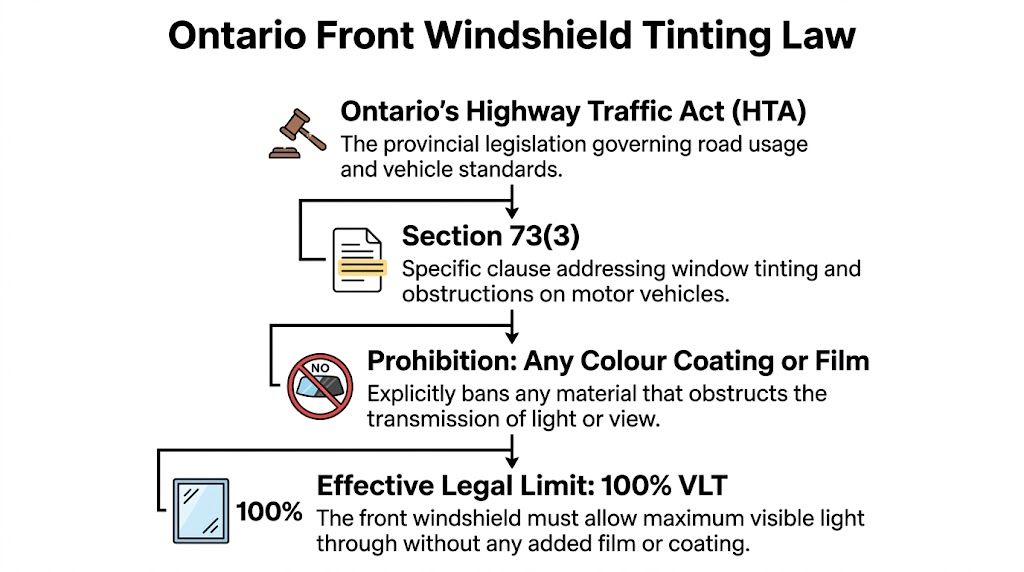
Ontario’s front windshield rule is much stricter than the percentage-based systems many drivers read about online. In plain English, if a film or colour coating obstructs the driver’s view through the windshield, it’s a problem under the Highway Traffic Act. That’s why the question “is tinting front windshield legal” gets a very short answer in Ontario compared with many US jurisdictions.
What Ontario effectively means in practice
Ontario doesn’t work like a state law chart where you look up a permitted darkness number for the whole windshield. For the main viewing area, the practical reading is simple. Keep it clear.
That’s why the only commonly accepted windshield option is a small, non-reflective sun strip at the very top. Once film drops into the driver’s primary field of view, you’ve moved out of the safe zone.
Why people get mixed up with US rules
California is a good contrast because it shows how different another jurisdiction can be. There, front windshield tint is regulated by specific dimensions and light transmission limits. California permits tint only on a strip no wider than 4 inches from the top of the windshield, and all other areas must maintain at least 70% Visible Light Transmission. Fines for non-compliance can reach $25-$197 for first offences, according to this California tint law summary.
Ontario doesn’t give you that kind of “run this percentage and you’re fine” framework for the windshield. That’s the key distinction. In California, the conversation is about measuring compliance. In Ontario, the conversation is about avoiding obstruction in the first place.
If you want a broader breakdown of legal tint limits on the windows where percentages matter, this guide on legal window tint percentage is useful.
The sun strip exception
A proper top strip exists for a reason. It helps with overhead glare without dropping film into the main viewing area. Done correctly, it’s the legal-looking and road-practical compromise most enthusiasts should stick to.
What doesn’t work is stretching that idea until the strip becomes half a windshield. Drivers often call it a “light shade” or “clear smoke,” but enforcement won’t care what the shop invoice called it if it interferes with visibility.
The windshield gets judged differently because it affects everything. Sightlines, weather driving, night driving, and what an officer sees from outside the car.
The simplest way to think about it
Use this mental test before agreeing to any install:
- If it covers the main viewing area: Treat it as illegal.
- If it’s a narrow non-reflective band at the top: It may be acceptable if it stays out of your line of sight.
- If a shop explains it using side-window percentages: They’re answering the wrong question.
That’s the practical legal wall. It isn’t glamorous, but it’s clear.
How Light Transmission Is Professionally Measured
Once you move away from the windshield and onto windows where tint is permitted, the job becomes technical. Visible Light Transmission, or VLT, then matters.
Think of VLT like sunglasses. The darker the lens, the less light gets through. Automotive glass works the same way, except you’re stacking film on top of factory glass, and the final result is what matters, not just the film rating printed on the box.
Why professionals measure instead of guessing
A driver looking at glass by eye can’t reliably tell whether a setup is compliant. Two vehicles with the same film can end up looking different because factory glass starts at different levels of darkness and colour. Angle, weather, interior colour, and lighting also fool people.
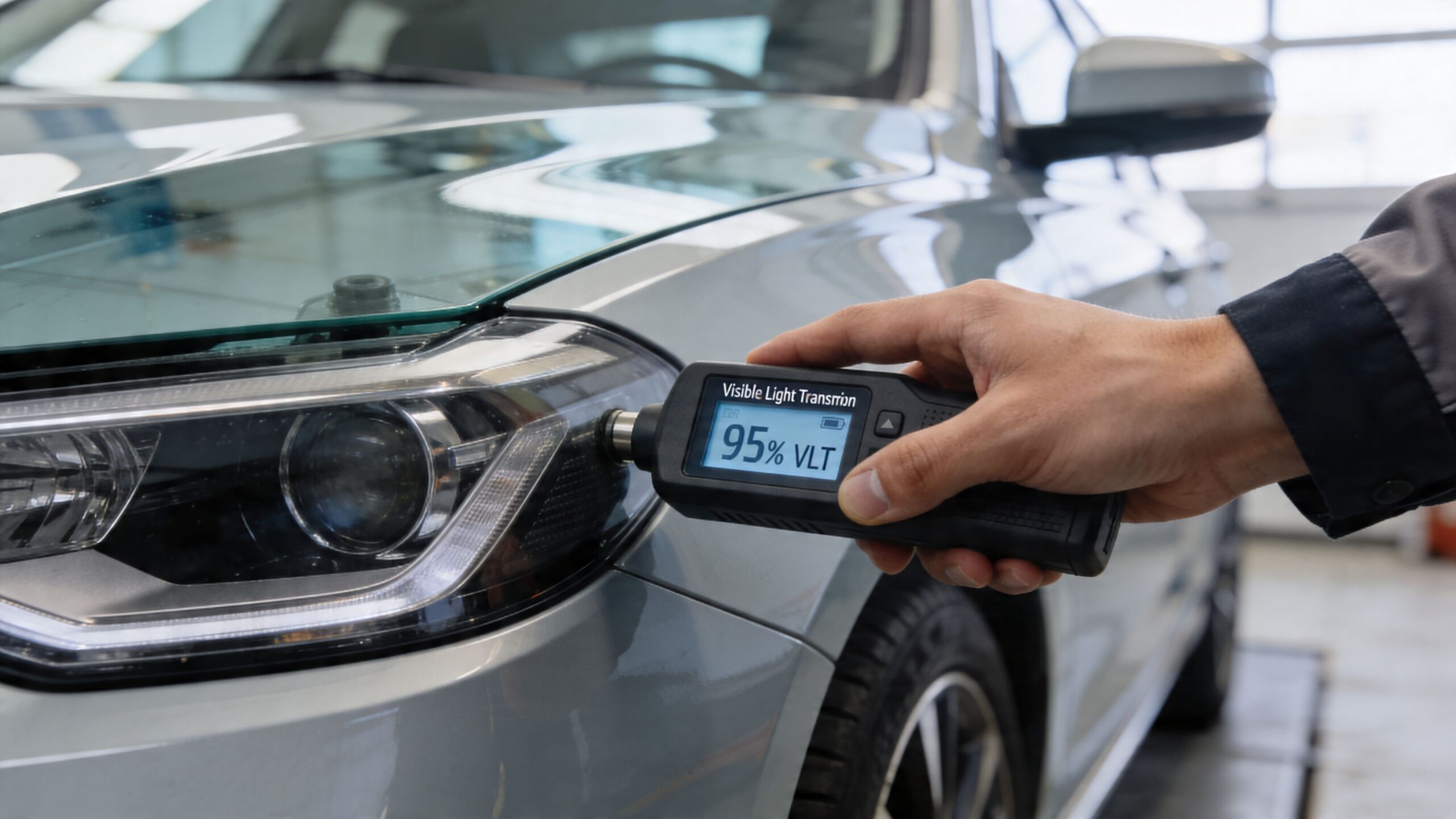
That’s why professional installers use a VLT meter. The meter sandwiches onto the glass and reads how much visible light passes through the full assembly. On side and rear windows, that’s the only honest way to know where the finished number lands.
Precision matters more than people think
In jurisdictions that use windshield percentage rules, the process gets even more exact. California is one example. Tinting below the manufacturer’s AS-1 line is illegal there, and during safety inspections, tint meters calibrated to ±3% accuracy are used to reject vehicles if any obstruction extends below that line, which can lead to fix-it tickets and reinspection fees, as described in this overview of AS-1 line enforcement and tint meter use.
Ontario doesn’t need that same percentage analysis for the main windshield area because the legal standard is stricter in practice. Still, that California example shows something important. Tint isn’t a “close enough” trade. The difference between legal and illegal can come down to precise measurement and placement.
For a practical breakdown of how these numbers work on automotive glass, this page on automotive window tint percentages is worth reviewing.
What shops should be checking
A proper tint consultation should include more than choosing a shade card. The installer should look at:
- Factory glass baseline: The original glass already affects the final reading.
- Film type: Dyed, carbon, and ceramic films don’t behave the same way visually.
- Placement: On windows with legal limits, even a well-chosen film can fail if installed improperly.
- Reflectivity: A film can look light but still create issues if it’s too reflective.
Practical rule: If a shop won’t meter the glass, explain the finished result, or discuss reflectivity, you’re buying appearance only and hoping legality follows.
What works and what doesn’t
What works is treating tint like a measured finish, not a cosmetic guess. That means selecting film based on the final result you need, then verifying it.
What doesn’t work is picking a percentage from social media and assuming your car will match. The same “35” can look completely different from one vehicle to another. That’s one reason legal installs on side and rear glass are best handled by people who work with meters, not just templates and sales talk.
The Real-World Consequences of Illegal Tint
Illegal windshield tint usually doesn’t create trouble all at once. It starts small. A stop for something unrelated. A closer look during poor weather. A complaint after a collision. Then the tint becomes the easy thing for an officer to act on.
In Durham Region, drivers sometimes assume enforcement is random. It isn’t that simple. Police don’t need to stop every tinted vehicle every day for the risk to be real. Windshield film stands out because it affects visibility and because it can change how clearly an officer sees into the vehicle during a stop.
The ticket is only the start
The fine itself is rarely the full story. The bigger headache is being told to correct the problem, book removal, and prove the car is back in compliance. That means losing time, paying twice, and dealing with a modification you already paid to have installed.
A non-compliant windshield can also create a bad paper trail around the vehicle. If there’s another charge attached to the stop, or if the officer thinks your overall driving conduct was part of the issue, the situation gets more serious. Different offences carry different consequences, and if you’re trying to understand how Ontario treats more severe driving allegations, this breakdown of demerit points for careless driving gives useful context on how quickly traffic matters can escalate.
The hidden costs drivers forget
Three problems come up again and again:
- Insurance friction: If a vehicle has an illegal modification, you’ve handed your insurer one more issue to examine after a claim.
- Repeat attention: Once the car is known to be non-compliant, future stops can become less pleasant.
- Removal quality: Cheap installs often turn into messy removals with glue, haze, and wasted labour.
For a broader look at what Ontario allows on the rest of the vehicle, this guide on tinted windows legal is a good reference point.
Why enthusiasts get caught by false logic
A lot of drivers think in terms of outcomes like these:
- “I can still see fine.” Your personal comfort doesn’t decide the legal standard.
- “It’s only a light film.” Light film on the windshield is still film on the windshield.
- “I’ve driven past police before.” A missed stop yesterday doesn’t make the install compliant today.
If you want a car that’s enjoyable to drive, the best mod is the one you never have to explain at the roadside.
That’s the trade-off. Full windshield tint may look good for a while, but it creates an ongoing risk that follows the car every time it goes out.
Legal and Effective Windshield Alternatives
Most drivers asking about windshield tint aren’t trying to break the law. They want less glare, less harsh sun, and a cleaner look. There are better ways to get close to that result without turning the windshield into a liability.
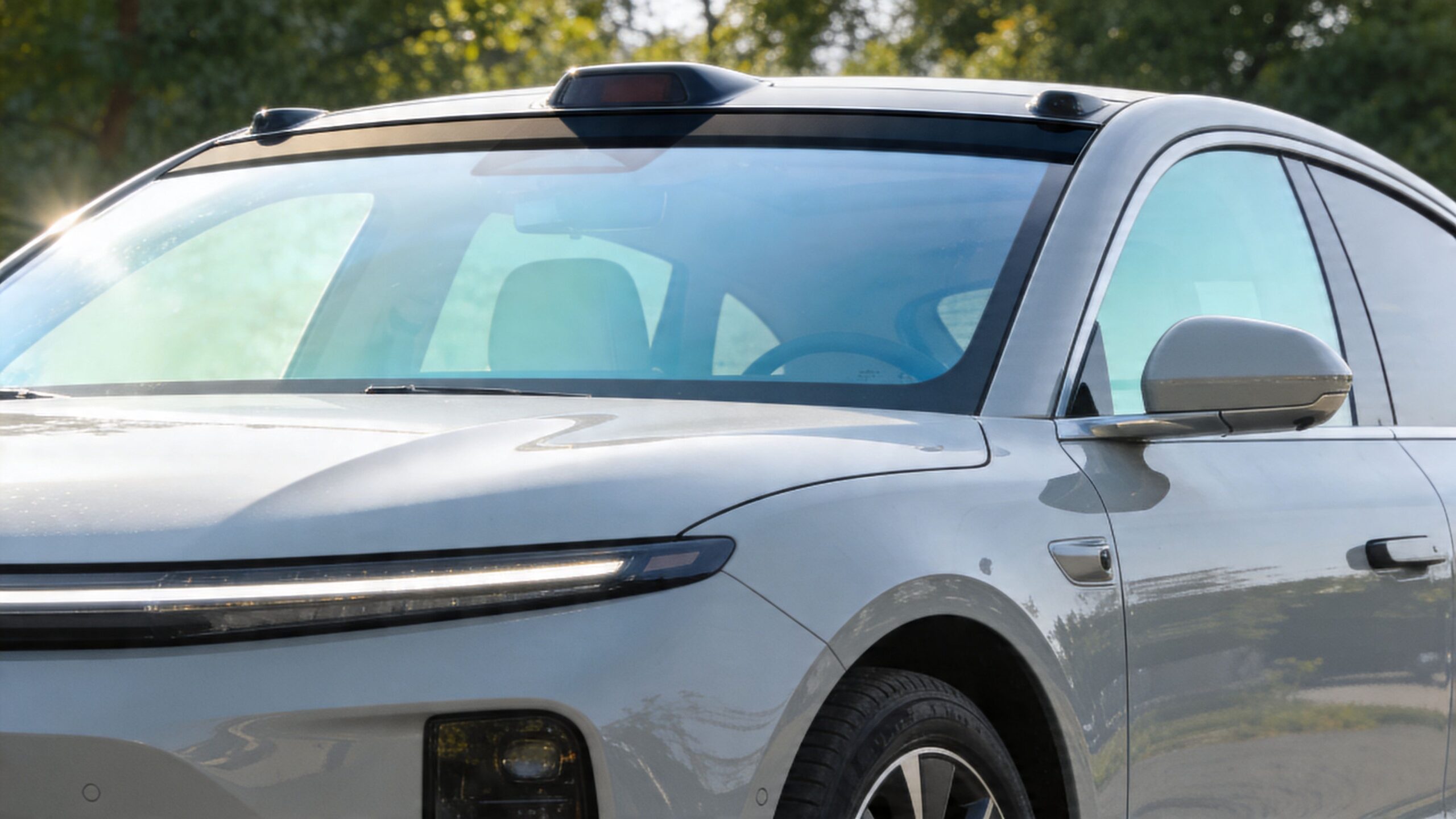
The options that make sense
The legal conversation gets much better when you stop thinking only about “windshield tint” and start looking at the whole cabin setup.
| Option | Primary Benefit | Legality in Ontario | Best For |
|---|---|---|---|
| Non-reflective sun strip at the top | Reduces overhead glare | Generally acceptable when kept small and out of the main viewing area | Drivers bothered by high sun angles |
| Clear windshield protection film | Helps protect the glass surface while keeping the appearance clear | Practical option when it does not obstruct the driver’s view | Highway drivers, commuters, new-car owners |
| Ceramic tint on side and rear windows | Improves cabin comfort and glare control without touching the windshield’s main viewing area | Common legal approach when matched to Ontario rules | Drivers who want comfort and a premium finish |
Sun strip versus full windshield film
A top strip is the simplest answer for most enthusiasts. It deals with the harsh light that enters from above without creating a constant legal issue in front of the driver. Done cleanly, it also looks factory-friendly instead of obviously aftermarket.
Full windshield film, even when sold as light or clear, is where people get into trouble. A useful outside perspective on the appeal and limitations of clear windshield tint helps explain why this topic confuses so many drivers. The product idea sounds harmless. The legal treatment often isn’t.
Clear protection instead of darkening
If your real concern is preserving the windshield and reducing daily wear, clear film protection is a stronger solution than trying to darken the glass. It keeps the windshield looking stock while addressing practical use. That matters on vehicles that spend a lot of time on the highway, where the glass takes constant abuse from debris.
For drivers considering that route, this page on windshield film protection shows how clear protective solutions differ from tint.
Why ceramic side and rear tint often solves the problem
A lot of the comfort benefit drivers want from a tinted windshield can be achieved by doing the rest of the vehicle properly. High-quality ceramic film on the side and rear glass changes the cabin environment without putting illegal material in the primary forward view.
Film choice matters here. Reflectivity matters too. California, for example, caps total reflectance on front windshields at 4%, and nano-ceramic films are noted as meeting low-reflectivity standards while offering strong heat rejection in this discussion of windshield reflectivity limits and nano-ceramic film. Even though Ontario’s windshield rule is different, the trade lesson still applies. Premium film should control comfort without creating mirror-like glare.
What works best for most Ontario drivers
For daily-driven cars, the best setup is usually a balanced one:
- Keep the main windshield clear: That avoids the legal and visibility problem.
- Add a proper top strip if glare is your issue: This is the most direct fix.
- Use ceramic film on the side and rear glass: That improves cabin comfort where tint belongs.
- Choose protection film if you want function from the windshield: It preserves clarity while adding practical benefit.
That combination gives you the mature version of the mod. It looks sorted, performs well, and won’t keep you wondering whether the next traffic stop turns into an avoidable hassle.
How to Identify and Remove Non-Compliant Tint
A lot of drivers don’t choose illegal windshield tint themselves. They buy a used car and inherit it. Sometimes the previous owner had a film installed years ago. Sometimes the glass has such a light shade that it only becomes obvious at night, in rain, or when viewed from the side.
The first step is figuring out whether you’re looking at factory glass characteristics or an added film. That isn’t always easy.
Signs there may be aftermarket film on the windshield
Look for clues around the edges before you assume the glass is factory:
- A visible film line near the border: Factory glass doesn’t usually present like a peelable layer.
- Tiny lifting or contamination at the corners: Dust specks and edge shrinkage often point to an aftermarket install.
- A different look from outside versus inside: Some films show a faint cast or sheen at an angle.
- Unusual top-strip depth: If the shaded section looks too deep, it deserves a closer inspection.
There’s another complication. The AS-1 line, a manufacturer’s glazing mark, is often obscured or absent on newer laminated windshields, which makes self-verification harder and contributes to over-tinting mistakes, as noted in this discussion of AS-1 line ambiguity on modern windshields.
Why DIY removal usually goes sideways
People think windshield film removal is just heat and peeling. Sometimes it is. More often, it turns into adhesive smearing, patchy residue, and hours of scraping.
The risk isn’t only cosmetic. Aggressive DIY removal can mark trim, damage surrounding surfaces, and leave distortion-causing glue behind if the glass isn’t cleaned properly. On other windows, amateur removal can also create bigger problems around delicate components.
If you want to understand the process before deciding, this guide on how to remove auto window film gives a useful overview.
A bad tint install is frustrating. A bad tint removal is worse, because now the car looks rough and still isn’t finished.
What professional removal looks like
Professional removal is controlled work. The film is softened carefully, lifted without gouging the glass, and followed by adhesive cleanup so the windshield returns to a clear, neutral finish.
That matters because “getting the film off” isn’t enough. If glue haze remains, night driving suffers. If edges are left dirty, the glass never looks right. On a windshield, clarity is the whole point.
If you’ve bought a used vehicle and something seems off, a proper assessment is worth doing before you spend money on new tint elsewhere on the car. It’s easier to build a clean legal setup when you know exactly what’s already on the glass.
Your Front Windshield Tinting Questions Answered
Can I legally tint the whole front windshield if the film is very light
No. In Ontario, the problem isn’t just darkness. It’s the presence of film or coating that obstructs the driver’s view through the windshield. That’s why “light enough to be okay” is the wrong test.
Is a clear UV film on the full windshield allowed
Treat that with caution. If it’s an added film on the main viewing area and it affects the driver’s view, you’re into risky territory. Drivers often hear the word “clear” and assume “legal,” but those two words aren’t the same thing.
What about a sun strip
A small, non-reflective strip at the very top is the usual legal-safe approach. The key is keeping it high and narrow enough that it doesn’t drop into your sightline. If it looks oversized from the driver’s seat, it probably is.
I bought a car with windshield tint already on it. Am I still responsible
Yes. Once you’re driving the vehicle, the condition of the glass becomes your issue to deal with. If the tint is non-compliant, it makes no difference that someone else installed it.
Can I get a medical exemption
Medical situations are the first thing people ask about when they want an exception. The practical answer is to verify directly with the current Ontario requirements before assuming one exists or applies to your case. This is one area where rumours travel much faster than reliable guidance, so don’t rely on shop talk or forum posts.
Does windshield tint affect newer cars with cameras and sensors
It can. Modern vehicles often rely on forward-facing cameras, rain sensors, lane systems, and other equipment mounted near the glass. Any film added in the wrong area can create complications with visibility, appearance, or system performance. That’s one more reason the windshield isn’t the place for guesswork.
Will police in Durham Region actually stop a car for it
They can. Not every vehicle gets stopped, but illegal windshield tint gives police an easy visual reason to pay attention. That’s especially true if something else about the vehicle or the driving already stands out.
Does it matter if the car is leased
Yes. Even legal-looking modifications can create issues when you return a lease if the lessor treats them as unauthorized or requires restoration. Check the lease terms before changing the glass, trim, wrap, or film setup. Windshield modifications are a poor place to assume flexibility.
What’s the best legal setup if I want comfort and a clean look
For most drivers, it’s a proper top strip, clear windshield protection if needed, and high-quality ceramic film on the side and rear windows. That gives you the visual improvement and comfort gain without making the windshield the weak point of the whole build.
What’s the biggest mistake people make
They ask whether they can get away with it instead of whether it’s compliant. Those are different questions. If you care about the car, the better standard is doing it once, doing it cleanly, and not creating a problem you’ll have to undo later.
If you want a clean, legal approach for your car in Whitby, Carmedics Autowerks Inc can help you sort out the right combination of window tint, windshield protection film, and appearance upgrades without turning your front glass into a liability.