

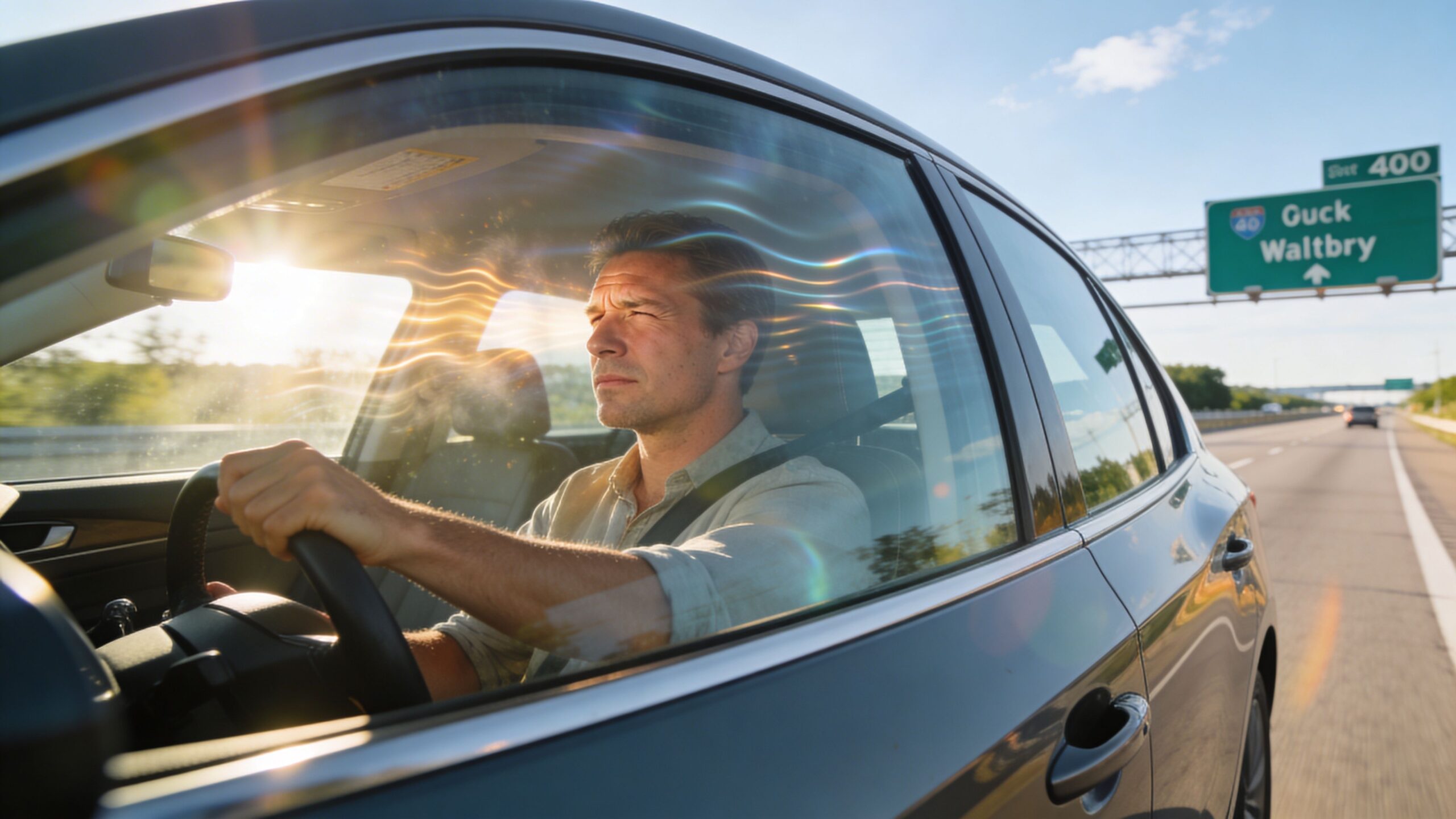
You pull out of a Whitby driveway on a bright winter morning, merge toward the 401, and the low sun starts bouncing off wet pavement, snowbanks, and every side mirror around you. Six months later, it’s July, the car has been sitting outside for an hour, and the cabin feels like an oven before you’ve even buckled in.
That’s a key reason serious owners start looking into the best window tint brands. It isn’t just about making a car look sharper. It’s about driving comfort, protecting the interior you paid for, reducing glare when conditions are rough, and choosing a film that won’t give up after a couple of Ontario seasons.
Whitby drivers don’t deal with one climate. They deal with all of them. Harsh winters, road salt, damp shoulder seasons, bright summer UV, and daily swings that punish cheap materials. A tint that looks fine in a warm, dry market can fall short here. The brand matters. The film type matters. The install matters even more.
Why Your New Car Deserves More Than Factory Glass
A new car always feels dialled in the day you bring it home. Paint is deep, trim is clean, the interior still has that new-car look, and every little detail feels worth protecting.
Then daily driving starts. Summer sun beats through the side glass while the car sits at work. Winter glare comes in low and hard when you’re heading east in the morning or west in the late afternoon. Factory glass doesn’t do enough to manage either problem well.
That’s why tint belongs in the same conversation as paint protection and interior preservation. It changes how the car feels every single day. If you’re already thinking about protecting the glass itself, a windshield film protector pairs naturally with quality tint on the side and rear glass.
More than looks
Good tint does improve the stance of a vehicle. No question. A clean, balanced shade makes an SUV or sedan look more finished.
But the bigger win is functional.
- Cabin comfort: Better films keep the interior from feeling brutal after parking in direct sun.
- Reduced glare: That matters on bright winter roads and on long highway drives.
- Interior preservation: Seats, dash materials, and trim take less UV punishment over time.
- Daily drivability: You notice good tint every time the sun is at the wrong angle.
Practical rule: If the only reason you’re buying tint is appearance, you’ll probably choose the wrong film.
Why factory glass isn’t enough
Modern vehicles come with good engineering, but factory glass is still a compromise. Manufacturers build for mass production, broad regulations, and cost control. They don’t build every vehicle around one owner’s comfort priorities or one region’s climate stress.
That’s where aftermarket film earns its place. The right product adds the heat management, UV filtering, and glare control factory glass usually leaves on the table.
For enthusiasts, that matters. If you care about your car, you shouldn’t treat the glass as an afterthought.
Understanding Window Tint Film Technology
A black interior, bright February sun off dirty snow, and a cabin that still feels harsh after ten minutes on the road. That is the moment many Whitby drivers realize shade alone is not the same as performance.
Window tint should be judged by construction first. The film type decides how it handles heat, UV, optical clarity, surface wear, and years of Ontario weather. Shade is only the visible part.
If you are comparing brands seriously, start with the film category, not the logo on the box. A guide to different automotive window tint films helps, but the ultimate decision is what the film is built to do, and what it gives up to get there.
Dyed film
Dyed film is the budget entry point. It darkens the glass by absorbing light, so it can improve privacy and clean up the look of the vehicle at a lower price.
The downside shows up fast in Canadian use. Dyed films are usually weaker on heat rejection, and lower-grade versions tend to age poorly under repeated summer UV exposure. Add freeze-thaw cycles, winter scraping around glass edges, and routine salt-season cleaning, and cheap dyed film often starts looking tired well before the owner expected.
It works for appearance-first installs. It is rarely the right pick for a newer vehicle you plan to keep.
Metalized film
Metalized film uses fine metallic content to reflect solar energy. Years ago, that made it a common step up from dyed tint.
Modern vehicles changed the equation. Signal-sensitive systems, embedded antennas, GPS, Bluetooth, cellular connectivity, and keyless entry do not pair well with older metallic film designs. Even when the interference is minor, it is an unnecessary compromise on a current car.
The visual finish can also look less natural than better carbon or ceramic films, especially on premium paint and glass.
Carbon film
Carbon film fills the middle of the market. It generally holds its colour better than basic dyed film, avoids the electronics issues tied to metalized products, and gives a more refined, low-sheen appearance.
For some owners, that balance is enough. Carbon can make sense if the main goal is a cleaner look, moderate solar control, and a price that stays below top-tier ceramic. In Whitby, the limitation usually appears in peak summer heat and long-term comfort. Once you compare premium carbon beside a strong ceramic film in the same vehicle class, ceramic usually justifies the extra spend.
Ceramic film
Ceramic film is the category serious buyers should look at first.
The reason is simple. It is built for performance without using metal, which means strong heat control, UV protection, and stable clarity without creating the electronics issues that pushed many owners away from older film types. The International Window Film Association explains that automotive window film can reduce heat, cut glare, and block more than 99 percent of UV rays, which is one of the main reasons premium films protect interiors as well as comfort levels on the road (IWFA automotive film overview).
That matters more in Whitby than many generic guides admit. Summer UV is strong enough to punish dashboards, leather, and trim. Winter brings repeated expansion and contraction around the glass. Road salt residue and frequent wiping also expose weak topcoats and poor adhesive systems. Ceramic film tends to hold up better under those combined stresses, especially when the product line is from a proven premium brand.
Why ceramic fits modern vehicles better
Ceramic film does not need metallic particles to perform. That gives it a cleaner fit with modern cars packed with connected tech.
For a newer vehicle, that is the result most owners want.
Here is the practical breakdown:
- For commuting in mixed Ontario seasons: Ceramic does a better job managing the heat you feel in July while still reducing harsh glare off snow and wet roads in winter.
- For vehicles with premium interiors: Better UV blocking helps slow fading, drying, and surface wear on leather, plastics, and trim.
- For long-term ownership: Premium ceramic is less likely to leave you dealing with early fading, odd colour shift, signal problems, or disappointing heat control a year or two later.
What struggles in Ontario conditions
Ontario exposes weak tint quickly. Adhesives deal with repeated cold-to-warm swings. Film surfaces deal with salt residue, interior moisture, and more aggressive cleaning than cars in milder climates usually see. Summer sun then adds another layer of stress.
That is why cheap film can look acceptable at install and disappointing a year later. If performance, longevity, and finish matter, choose film by construction first, then the specific product line, then the installer.
Top Window Tint Brands Compared for 2026
A Whitby car parked outside in February sees frost on the glass, road salt mist on the doors, and a heater pushing cabin moisture into every seam. The same car can be baking in July traffic on the 401 with full sun hammering the dash and side glass. That cycle matters when you compare tint brands, because a film that looks good on day one is not always the film that still looks clean after two Ontario winters and a few hard summers.
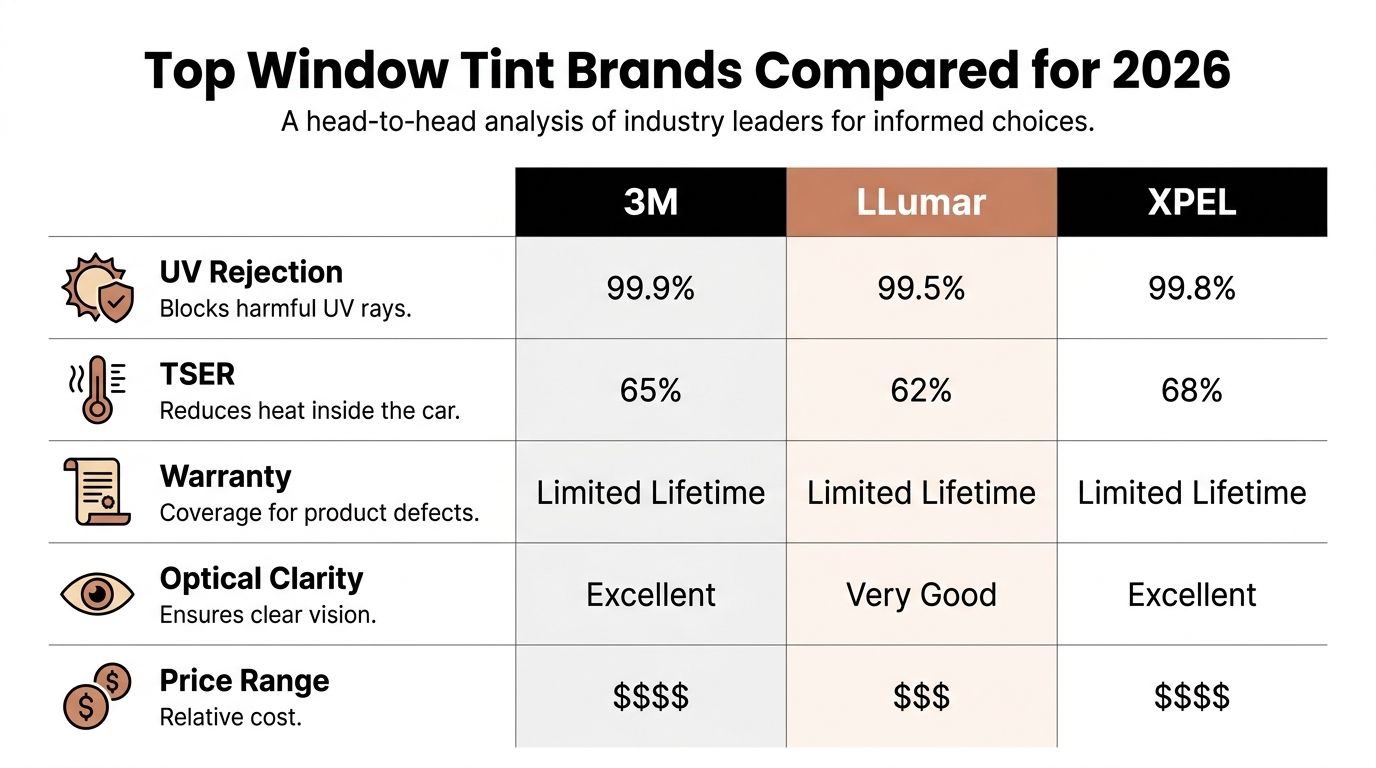
For that reason, the short list stays tight. 3M, LLumar, and XPEL all offer premium ceramic lines that make sense for newer vehicles in Durham Region. The differences are not marketing fluff. They show up in cabin comfort, visual clarity at night, how the film surface handles repeated cleaning, and how well the install keeps its finish through freeze thaw stress.
Here’s the practical snapshot.
| Brand | Flagship film focus | Best fit | Notable strengths | Main trade-off |
|---|---|---|---|---|
| 3M | Crystalline | Owners who want strong overall performance with a lighter, refined look | Excellent clarity, strong UV protection, long track record | Usually not the value pick |
| LLumar | IRX | Drivers who care about clean optics and a subtle factory-style finish | Neutral appearance, clear sightlines, balanced heat control | Less brand recognition with casual buyers |
| XPEL | Prime XR Plus | Owners chasing stronger heat rejection and a tougher premium feel | High heat rejection, strong surface durability, popular on luxury vehicles | Premium pricing is common |
3M Crystalline
3M stays near the top because it solves a problem a lot of owners have. They want heat and UV control without making the car look overly dark or reflective.
3M describes Crystalline as a multi-layer optical film built for high heat rejection with a clear appearance, and the company states that the line rejects up to 99.9% of UV rays and substantial solar energy without relying on a dark shade, according to the 3M Automotive Window Film product information. In practice, that lighter, cleaner look works well on newer German cars, higher-trim SUVs, and anything where owners want the glass to stay elegant instead of obviously tinted.
In Whitby conditions, 3M’s appeal is not only summer comfort. It is consistency. Cars here deal with salt film on the exterior glass, more frequent washing, and winter condensation inside the cabin. A premium film with good optical quality tends to keep its look longer under that kind of use.
Where 3M makes the most sense
- Owners who want a lighter, high-end appearance
- Vehicles with premium interiors that spend time outdoors
- Drivers who care as much about visibility as heat control
- Buyers willing to pay more for a proven name
LLumar IRX
LLumar IRX is the brand I point to when an enthusiast says, “I want it to look factory, not flashy.” That usually means neutral colour, low reflectivity, and clean visibility in rain, slush spray, and dark early winter afternoons.
Eastman, LLumar’s parent company, positions IRX as a nano-ceramic film designed for strong infrared and UV rejection with low interior reflectance and a charcoal finish, as shown on the LLumar IRX automotive tint product page. Those traits matter in Ontario because ugly-weather visibility is not a small detail. If a film has distortion, haze, or too much interior reflectivity, you notice it fast on night drives in November.
LLumar also tends to appeal to owners who want performance without turning the car into a rolling advertisement for the tint itself. The finish is understated. On many vehicles, that is exactly the right choice.
Why LLumar earns respect
- Very clean outward visibility
- Subtle, low-glare finish
- Strong ceramic performance without a flashy look
- Good fit for daily drivers and highway commuters
If you are still comparing package levels and budgets, this guide to car window tinting cost in Ontario helps put premium film pricing into context before you choose a brand.
XPEL Prime XR Plus
XPEL Prime XR Plus is usually the conversation for owners who complain about cabin heat first and style second. That does not mean it looks aggressive. It means the performance pitch is more direct.
XPEL states that PRIME XR PLUS uses nano-ceramic construction for high infrared rejection, UV protection, and signal-friendly performance, according to the XPEL PRIME XR PLUS window film page. That profile makes sense on vehicles with large glass areas, black interiors, panoramic roofs, or cabins that get hot fast when parked in open sun.
There is also a practical durability angle. XPEL has a strong reputation among owners who already know the brand from paint protection film, and that matters because those buyers usually expect the tint to match the rest of the protection package in finish and feel. On luxury vehicles and Teslas around Whitby, that pairing is common.
Where XPEL stands out
- Drivers who prioritize stronger heat control
- Cars with large cabins or lots of glass
- Owners building a full protection package around one brand
- Buyers comfortable with premium-tier pricing
Real trade-offs between the three
No premium brand wins every category.
3M is often the safest broad recommendation for Whitby drivers who want a refined look, proven UV performance, and a film that does not need a very dark shade to feel worthwhile.
LLumar is the cleanest fit for drivers who are picky about optics. If night driving, wet roads, and a low-reflection appearance matter most, LLumar usually makes a strong case.
XPEL is the brand many owners choose when cabin heat is the daily annoyance they want to reduce first. It is also a natural fit for high-end vehicles already getting PPF or ceramic coating from the same ecosystem.
The right answer depends on the car and the owner. A black SUV parked outside all summer has different needs than a garage-kept sport sedan driven mostly at night. In Ontario, climate stress narrows the margin for error. Brand matters, but the specific film line and the quality of installation matter just as much.
Comparison snapshot
| Priority | Best brand fit |
|---|---|
| Best all-round premium choice for Whitby conditions | 3M Crystalline |
| Best for drivers who care most about clean optics | LLumar IRX |
| Best for stronger heat-focused performance | XPEL Prime XR Plus |
The best window tint brands separate themselves over time. After freeze thaw cycles, salt exposure, summer UV, and repeated glass cleaning, the weaker films start to show their compromises. The better ones still look sharp, still perform, and still suit the car they were chosen for.
Key Decision Factors Beyond the Brand Name
A Whitby car that sits outside through February slush and July sun needs more than a recognizable logo on the box. The film has to stay stable through cold glass, heater blasts, repeated defroster use, road salt residue, and the kind of UV exposure that cooks dashboards by mid-summer.
IRR versus TSER
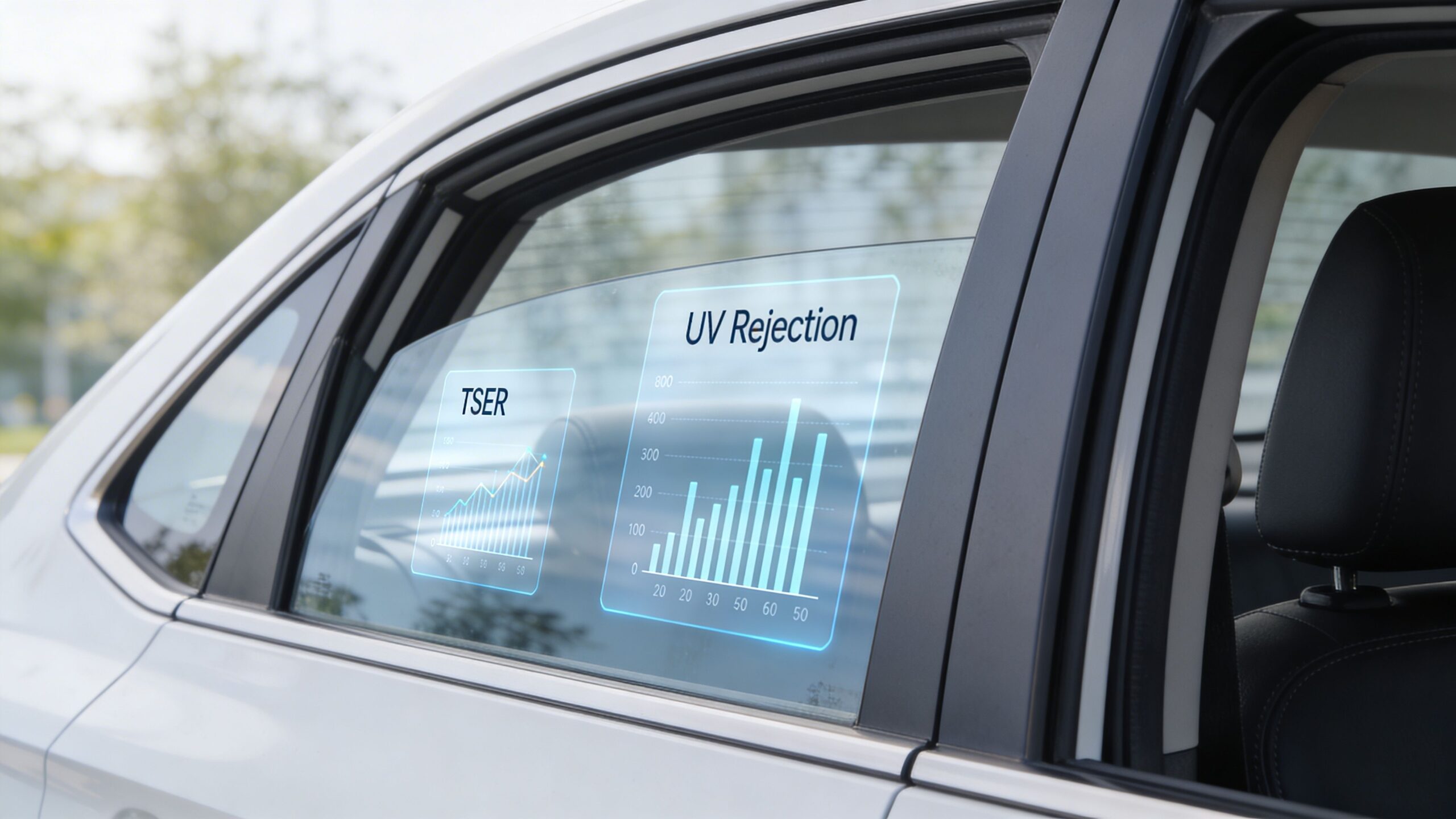
Two specs get mixed up all the time. IRR refers to infrared rejection. TSER refers to total solar energy rejection.
IRR matters because infrared is a big part of what makes the cabin feel hot. TSER matters because the sun is not just infrared. It includes visible light and other solar energy that still loads heat into the interior. A film can post a strong IRR number and still deliver less real-world comfort than expected if its total heat rejection is only average.
That difference shows up fast in Ontario summer driving. On paper, two films can look close. In a black interior parked at the GO station lot for hours, the one with stronger overall solar rejection usually feels better on the first touch of the wheel, the seat, and the shifter.
For a clear explanation of how total solar energy rejection is measured across the full solar spectrum, the International Window Film Association TSER resource is a better reference point than marketing copy.
What to prioritize on a spec sheet
Read the film data in this order:
Overall heat management
Start with TSER or the closest whole-cabin heat metric the manufacturer provides. That gives a better sense of daily comfort than a single headline number.UV rejection
Good film helps protect skin, leather, trim, screens, and adhesive-backed interior materials. In Whitby, cars often go from weak winter sun to hard summer exposure with no break, so interior wear shows up sooner than many owners expect.Film construction
Ceramic and other non-metallic films are usually the safer fit for newer vehicles. They avoid the signal issues that metallic films can cause with phones, GPS, radio, and onboard electronics.Optical clarity
This matters more than buyers think. A film that looks fine at noon can become tiring on a wet November night if the clarity is poor.Shade or VLT
Darkness changes the look and privacy level. It does not automatically tell you how well the film controls heat.
Durability in Whitby conditions
This is the part generic brand roundups usually miss.
Freeze-thaw cycles put stress on both film and installation quality. A cheap dyed film may look acceptable on day one, then start showing edge lift, haze, or color shift after a couple of Ontario winters. Salt also matters. The salt itself is outside the glass, but salty runoff, dirty mitts, and frequent cold-weather cleaning create extra wear around edges and lower seals. Better films and cleaner installs hold up longer under that routine.
Summer creates a different test. Strong UV and high cabin temperatures expose weak adhesives and lower-grade top coats. That is when purple fade, surface scratching, and a dull finish start separating budget film from premium ceramic lines.
UV protection and interior preservation
Good tint is not just for heat. It slows interior aging.
Seats dry out. Piano black trim hazes up. Rubber seals harden. Screens and glossy surfaces show wear faster in cars that spend long hours outside. On a newer vehicle, tint helps preserve the cabin you paid for, not just the exterior look.
For owners comparing products and planning the job properly, this breakdown of car window tinting cost for different film types and vehicles gives useful context beyond the sticker price alone.
Buyer check: If the shop can only talk about darkness and brand reputation, ask for the film line, heat rejection data, UV performance, warranty terms, and whether the film is dyed, hybrid, or ceramic.
VLT and legal practicality
Visible Light Transmission, or VLT, controls how dark the film looks. It also affects outward visibility in rain, snow, and long winter nights.
A clean-looking setup on a summer afternoon can become annoying fast on Highway 401 in freezing rain. That is why I usually treat VLT as a driving-use decision first and a style choice second. A daily-driven SUV, a garage-kept weekend car, and a night-driven commuter should not all be tinted the same way.
The best spec sheet is the one that matches the car, the owner, and the conditions it sees. In Whitby, that means choosing film for year-round use, not just for how it looks leaving the shop.
Navigating Window Tint Laws in Whitby and Ontario
You pick up a fresh tint job in July, love the look in full sun, then January hits Whitby. Snowbanks get taller, roads turn grey with salt, and dark front glass that felt fine in summer starts to work against you on early evening drives. Ontario tint law is not just about avoiding tickets. It affects winter visibility, roadside interactions, and how usable the car feels for the other eight months of the year.
The main rule is simple. Front side windows cannot be so dark that they block a clear view into the vehicle, and anything added to the windshield needs extra caution. Ontario also gives police the authority to inspect tint if visibility looks compromised. For the legal wording, use the Ontario Highway Traffic Act e-Laws page on safety glass.
The practical rule
For Whitby drivers, the safest setup is usually a lighter front side film and a rear shade that matches the vehicle’s use. That matters more here than in warmer markets because long winter nights, wet roads, blowing slush, and dirty glass all make dark tint harder to live with.
A legal-looking film on the sample board can still be a bad real-world choice if the car sees Highway 401 commuting in snow and freezing rain. I would rather see a clean, slightly lighter front setup that stays comfortable year-round than a darker spec that looks good for one season and becomes annoying every time the weather turns.
If you want a clearer breakdown of legal window tint percentage in Ontario, review it before you choose the final shade package.
Common questions
What about the front windshield
Be careful here. A full windshield film or an overly aggressive strip can create legal and visibility problems fast, especially once salt haze, low winter sun, and oncoming headlight glare enter the picture.
Can I go darker in the rear
Rear glass usually gives you more flexibility, but darker is not automatically better. If the vehicle has small mirrors, carries passengers often, or gets backed into tight spots after dark, very dark rear film can become a daily irritation.
Does legality depend on the brand
No. Ontario cares about the finished result on the glass. Brand quality still matters for clarity, colour stability, and long-term adhesion through freeze-thaw cycles, but a premium film does not get a pass if the tint level itself is too aggressive.
The best approach is to choose a film line that holds up to Whitby conditions, then set the shade around visibility first and style second. That produces a car that still looks right in summer and still works properly in February.
Installation and Maintenance for Lasting Performance
A premium film can still fail if the install is poor. That’s not theory. It happens all the time. Contamination under the film, rough edges, fingers lifting near the corners, or shrinking problems on curved glass can ruin a good product fast.
In Ontario, installation quality matters even more because the climate stresses the film year-round.
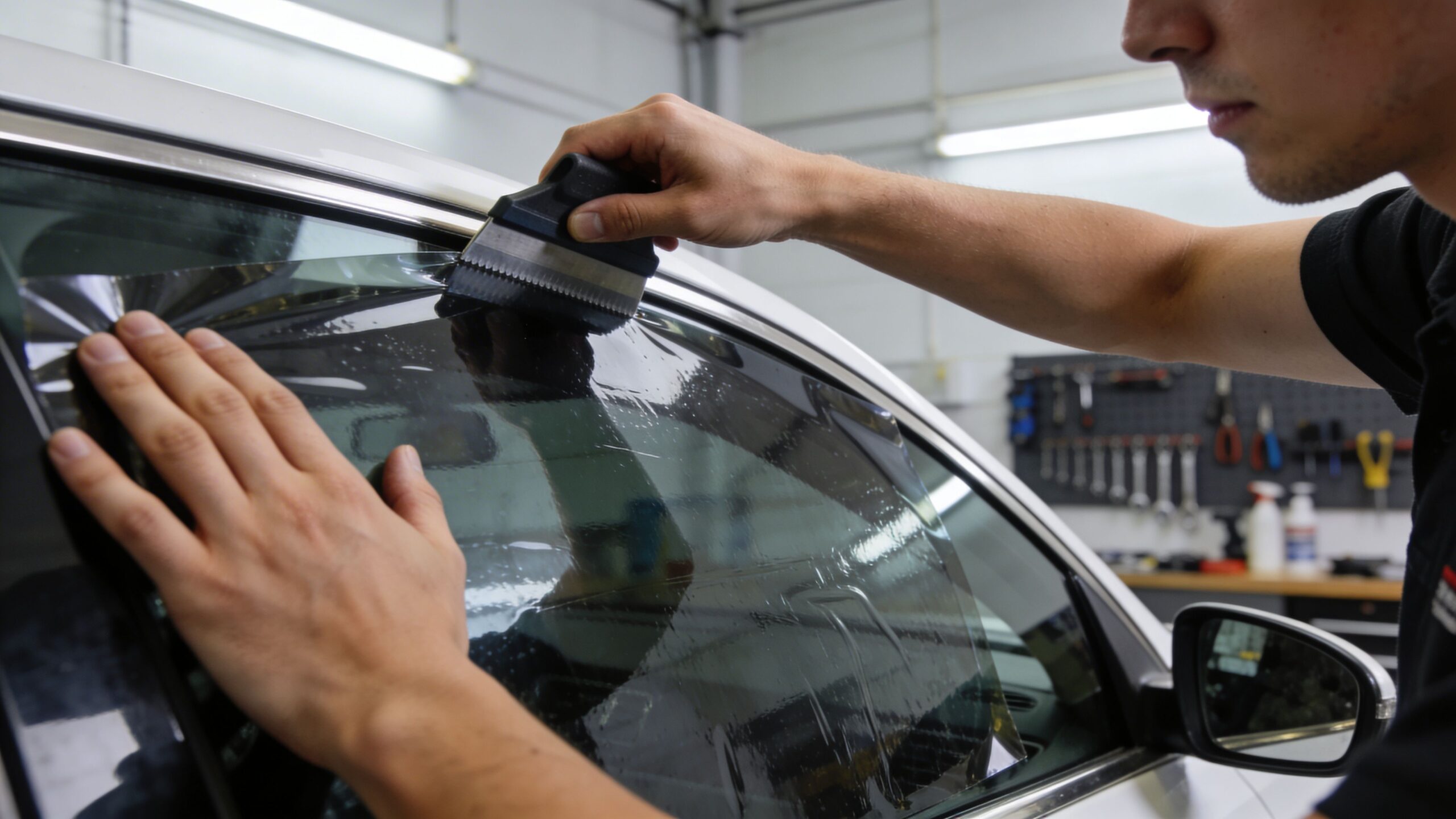
According to GSWF’s discussion of tint brand performance and installer skill, the installer skill variance between ceramic, carbon, and carbon-ceramic films directly affects durability in cold climates like Ontario. The same source notes that premium ceramic films, when properly applied, maintain optical clarity and adhesion after repeated freeze-thaw cycles, while cheaper films or poor installation can lead to higher failure rates.
What a proper install looks like
You should expect:
- Clean edges: The film should sit neatly and consistently.
- No visible contamination: Dirt, lint, and trapped debris have no place under premium film.
- Stable adhesion: Corners and edges shouldn’t look stressed.
- A refined finish on curved glass: Rear windows reveal installer skill quickly.
A sloppy install usually tells on itself within a short period. Bubbling, lifting, haze, and contamination don’t improve with time.
Good film installed badly is still a bad tint job.
Maintenance that helps the film last
The first stage is curing. Don’t rush it. Let the film settle properly before treating the windows like normal.
After that, maintenance is mostly common sense:
- Use gentle cleaning methods: Avoid harsh tools and rough scrubbing on the inside surface.
- Be careful in winter: Salt, grime, and aggressive cleaning habits can do damage if you’re careless.
- Watch the edges: The edges are where poor technique usually shows up first.
- Don’t attack old film blindly: If a vehicle already has failing tint, read up on how to remove auto window film before trying to peel it off yourself.
Why installer choice matters as much as brand choice
A quality installer controls the environment, the prep, the cutting accuracy, the shrinking process, and the final finish. That’s what turns a premium roll of film into a premium result.
For Ontario drivers, that isn’t optional. Freeze-thaw cycles, humidity swings, and winter contamination expose weak workmanship fast. If you’re paying for one of the best window tint brands, make sure the install quality matches it.
The Carmedics Autowerks Recommendation for Whitby Drivers
A Whitby driver leaves work in January, brushes salt off the side glass, then sits in the same vehicle in July with the sun pounding through the windows at a stoplight on Dundas. That swing matters. The right tint for this area has to stay clear through dark winter afternoons, hold up at the edges after repeated freeze-thaw cycles, and keep cabin heat under control when summer UV is at its worst.
For that reason, I would not give every owner the same answer. Brand matters, but the better question is which film matches the vehicle, how it is used, and how much abuse it will see from Ontario weather.
If you drive a new family SUV and want comfort first
Go with LLumar IRX.
It is one of the better fits for daily-driven SUVs because it balances heat rejection, clean optics, and a finish that does not look overly flashy. In Whitby, that matters more than spec-sheet bragging. Family vehicles do a lot of short trips, school runs, parking-lot time, and winter idling. A film that stays easy to see through in rain, slush, and early sunset conditions is usually the smarter pick than chasing the darkest or most aggressive look.
LLumar also has a long-standing reputation in the trade for consistency. That helps on vehicles you plan to keep.
If you own a performance car and care about optical precision
Choose 3M Crystalline.
Some drivers notice every shift in tone, every bit of low-angle haze, and every slight softness looking through curved side or rear glass. Performance car owners tend to be in that group. Crystalline makes sense when visual sharpness is high on the priority list and you want a premium film from a brand with broad market trust.
It is also a sensible choice for cars that see mixed use in Ontario. Bright summer sun, cold clear mornings, wet shoulder-season roads, and long night drives all put different demands on the film. If the car gets driven, not just parked at meets, that optical quality pays off every day.
If you’ve bought a luxury vehicle and want the hardest-working premium ceramic
Choose XPEL Prime XR Plus.
This is the pick for owners who care most about strong heat rejection and a premium ceramic feel. Luxury vehicles with large glass areas get hot fast in summer, and that extra cabin heat gets old quickly if the car sits outside at work, at the GO station, or in an open driveway. XR Plus is a strong match for that use case.
It also suits owners who are hard on their cars in real life. Salt spray, frequent washing, and seasonal temperature swings expose weak materials and weak installs. A high-end ceramic film from a proven brand gives you a better shot at long-term satisfaction.
The practical final call
If you want the shortest version, here it is:
- Pick 3M if top-tier optical clarity is your first priority.
- Pick LLumar if you want an excellent daily-driver balance of comfort, appearance, and visibility.
- Pick XPEL if maximum heat control and a premium ceramic build matter most.
All three are legitimate premium options. The wrong move is choosing by logo alone or buying a film built for a milder climate and expecting it to age well in Whitby.
For local drivers, my recommendation is simple. Match the film to Ontario use, not generic US advice. The winters are harder, the salt exposure is real, and the summer UV is strong enough to punish cheap tint fast.
If you want expert help choosing the right film for your vehicle, Carmedics Autowerks Inc in Whitby offers professional window tinting backed by real-world experience with Ontario driving conditions. Whether you want a clean daily-driver setup, premium ceramic performance for a new SUV, or a refined tint package for a performance car, their team can help you choose a film that fits your priorities and install it properly.