


You know the moment. The first sticky Whitby afternoon hits, you start the car, tap the AC button, turn the fan up, and get a blast of warm air that smells like an old gym bag. The windows fog slightly from humidity, traffic slows, and the drive that should feel easy turns miserable fast.
Around here, a car air conditioner doesn’t just make the cabin comfortable. It helps you stay focused, keeps the windscreen clearer in damp weather, and makes summer driving tolerable when the air feels heavy. Ontario drivers also deal with something many generic online guides barely mention. Our AC systems have to survive both humid summers and winter salt.
That combination changes how these systems fail, how they should be maintained, and what a smart repair looks like.
That First Hot Day When Your AC Fails
A lot of AC problems show up after months of seeming fine. The car worked through autumn. It sat through winter. Spring felt cool enough that you barely used the system. Then the first real hot day arrives, and the vents blow stale, weak, or flat-out warm air.
In Whitby, that failure feels worse because humidity adds another layer of discomfort. Even a short trip becomes annoying when the air inside the cabin won’t dry out. If you’ve got kids in the back, a dark interior, or leather seats that have been baking in the sun, it gets old quickly.
Why it always seems to happen at the worst time
AC systems don’t usually fail dramatically all at once. More often, seals dry, debris builds up, moisture lingers where it shouldn’t, or a small leak grows into a performance problem you only notice once the weather demands full cooling.
That’s why drivers often say the same thing. “It worked last year.”
Sometimes that’s true. Sometimes it only seemed true because the system wasn’t under real load.
A car air conditioner can be weak long before it’s completely dead. The first heatwave is what exposes it.
Car air conditioning has been moving from luxury to basic expectation for a long time. Packard introduced the first factory-installed car air conditioner in 1940, and by 1969, 54% of all new U.S. domestic automobiles were equipped with AC (AAA automotive air conditioning history). That shift matters because drivers now judge a vehicle very differently. If the AC doesn’t work, the whole car feels neglected.
What this guide should help you do
A good car enthusiast doesn’t need to become an HVAC engineer to understand vehicle AC. You just need to know:
- What the system is doing when it cools properly
- What symptoms matter and what they usually point to
- What you can check yourself before booking service
- What not to guess at, especially with refrigerant and pressure
If you’re also thinking about where to take the vehicle, it helps to start with a shop relationship you trust. This guide on finding a car mechanic you can trust in Whitby is worth reading before you commit to any AC repair.
How Your Car Air Conditioner Actually Works
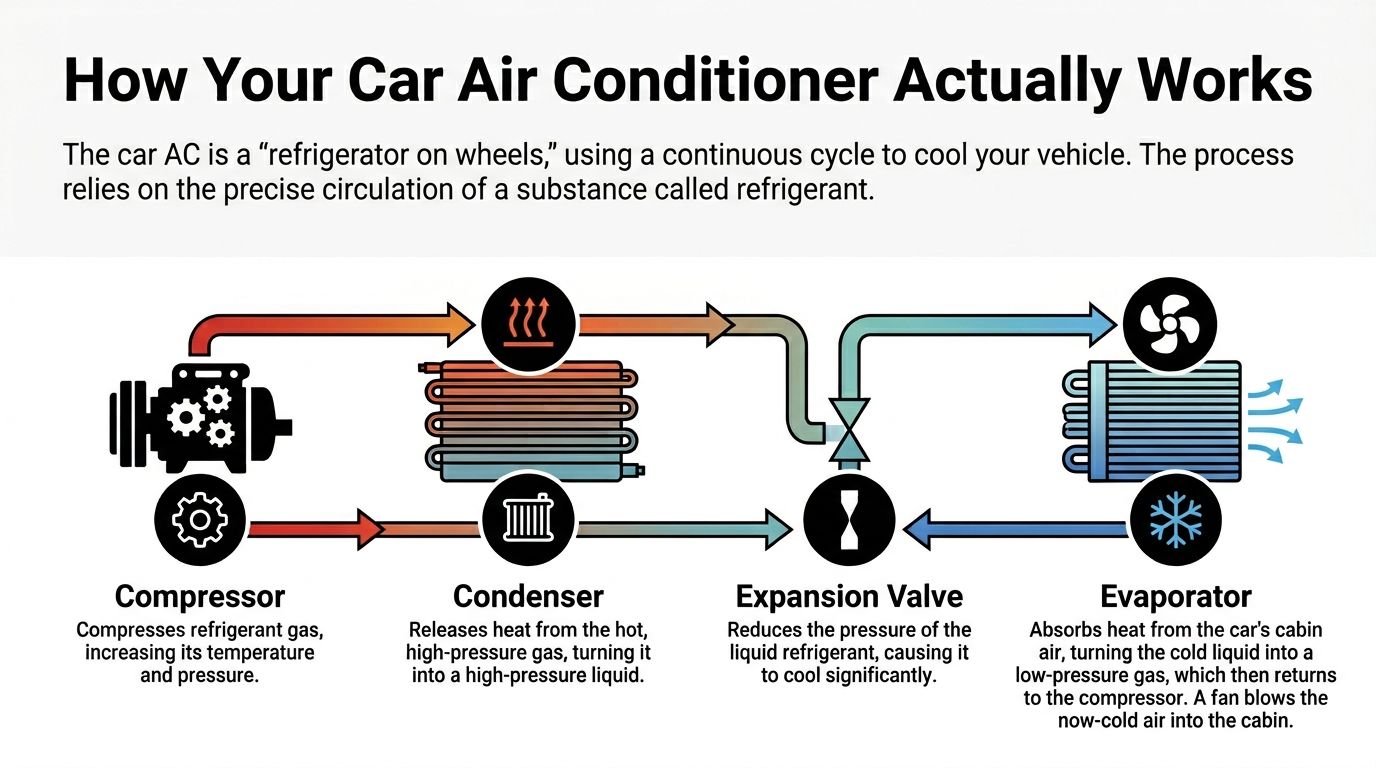
A car air conditioner is basically a refrigerator on wheels. It doesn’t create cold from nothing. It moves heat out of the cabin and releases that heat outside the vehicle.
That simple idea makes the whole system easier to understand.
The four-part cooling loop
The refrigerant keeps circulating through a closed loop. As it moves, it changes pressure and temperature. That’s what makes cabin cooling possible.
Compressor
The compressor is the pump. It takes low-pressure refrigerant gas and compresses it into a hot, high-pressure gas. Without this step, the system can’t move heat effectively.Condenser
The condenser sits where outside airflow can pull heat away. It cools that hot refrigerant and turns it into a high-pressure liquid. Think of it as the point where cabin heat gets dumped outside.Expansion valve or orifice device
This is the restriction point. The liquid refrigerant passes through and its pressure drops sharply. When pressure drops, temperature drops with it.Evaporator
The evaporator lives inside the HVAC box in the dash area. Cabin air blows across it. The cold refrigerant inside the evaporator absorbs heat from that cabin air, then returns to the compressor as a low-pressure gas to start the cycle again.
What each part feels like in real life
When one part falls behind, the symptoms change in predictable ways.
- Weak cooling at idle can point toward condenser airflow issues, fan problems, or compressor performance trouble.
- Cold air that comes and goes often suggests pressure irregularities, sensor trouble, or a compressor control issue.
- Good airflow but warm air can mean the blower is fine while the refrigeration side is not.
That’s why “my fan works” doesn’t mean “my AC works.” Those are related systems, but they aren’t the same thing.
Practical rule: If the blower pushes hard but the air never gets cold, stop thinking about the fan first and start thinking about refrigerant flow, pressure, and compressor operation.
Why modern systems behave differently
Many newer vehicles don’t use the old on-off compressor style that enthusiasts remember from older cars. Modern vehicles in Ontario often use variable displacement compressors that can adjust refrigerant flow, cutting compressor power draw by up to 22% compared to older fixed-compressor designs (modern car AC compressor overview).
That matters because these systems are smoother and more efficient, but diagnosis can be less obvious. You may not hear the dramatic clutch cycling you’d expect on an older vehicle. A newer car can have a control issue, sensor issue, or performance issue without the classic old-school symptoms.
The parts enthusiasts usually overlook
The major components get all the attention, but smaller support parts matter too:
- Receiver-dryer or accumulator keeps moisture and contaminants out of the system.
- Seals and O-rings prevent refrigerant loss.
- Pressure sensors and switches protect the compressor and help the module decide how hard the system should work.
- Cabin filter and blower path affect how much cooled air reaches you.
If you want a practical next step after understanding the system, a proper air conditioning repair for car page should explain diagnosis, leak detection, and repair workflow clearly. If it only talks about “recharge specials,” that’s a sign to ask harder questions.
Common Symptoms of a Failing AC System
Most failing AC systems don’t leave much mystery once you know how to read the symptoms. The trick is separating an airflow problem from a cooling problem, and separating a minor service issue from a sign of real component wear.

Warm air from the vents
This is the complaint most drivers notice first. The system turns on, the fan runs, but cabin temperature doesn’t drop.
Common causes include:
- Low refrigerant charge from a leak somewhere in the sealed system
- Compressor problems such as weak pumping ability or clutch/control failure
- Condenser airflow issues from debris, bent fins, or a cooling fan problem
- Electrical or sensor faults that stop the system from commanding proper operation
Warm air doesn’t automatically mean “just needs a recharge.” If refrigerant is low, something usually caused it.
Weak airflow even when the AC is on
This feels different from warm air. You may have cooling somewhere in the system, but not enough air volume reaching the cabin.
The likely causes usually sit on the air delivery side:
- Cabin air filter restriction
- Blower motor or blower resistor trouble
- Evaporator contamination
- Moisture-related buildup in the HVAC case
In Whitby’s summer conditions, moisture is a major factor. Humidity can exceed 70%, and evaporator coils can become clogged with condensed moisture and mould, reducing airflow by up to 40%. Regional service data also shows about 25% of AC repairs in Ontario garages involve condensate issues (Ontario AC condensate issues and airflow loss).
That’s why weak airflow and musty smell often show up together.
Musty or sour odours
A bad smell when the AC first turns on usually points to moisture sitting where it shouldn’t. The evaporator gets cold, cabin humidity condenses on it, and if drainage is poor or organic debris stays in the case, mould and bacteria can develop.
Signs that fit this pattern:
- Smell is strongest at start-up
- Odour gets worse in damp weather
- Airflow has also dropped
- Defrost performance feels weaker than usual
This isn’t just annoying. It often tells you the HVAC case needs cleaning and the drain path should be checked.
If the cabin smells damp every time the AC starts, don’t mask it with vent clips. Fix the moisture problem.
Clicking, grinding, or rattling noises
Noise changes are useful clues.
- Clicking can come from compressor clutch engagement problems or electrical control cycling.
- Grinding raises concern for internal compressor wear or bearing failure.
- Rattling at the dash may be blend door or actuator related rather than the refrigerant circuit itself.
The timing matters. If the noise only appears with AC on, that narrows the list.
Water where it shouldn’t be
A small puddle under the car after running AC is often normal condensate. Water inside the cabin is not.
Look closer if you notice:
- Wet front carpets
- Damp passenger footwell
- Recurring window fogging
- Mildew smell after parking
That usually points to a blocked evaporator drain or poor drainage from the HVAC case.
Intermittent cooling
This one frustrates enthusiasts because it can seem random. The car cools well one day and badly the next.
Intermittent behaviour can involve:
- Pressure sensors
- Variable compressor control issues
- Wiring faults
- Temperature sensors
- Control head faults
When a system is inconsistent, pressure testing and scan tool data matter more than guesswork. That’s where professional diagnosis earns its keep.
Diagnosing and Maintaining Your Car AC
The best AC repair starts with not guessing. Drivers can do a few useful checks themselves, but once refrigerant pressure, leak detection, or internal component performance enters the picture, proper equipment matters.
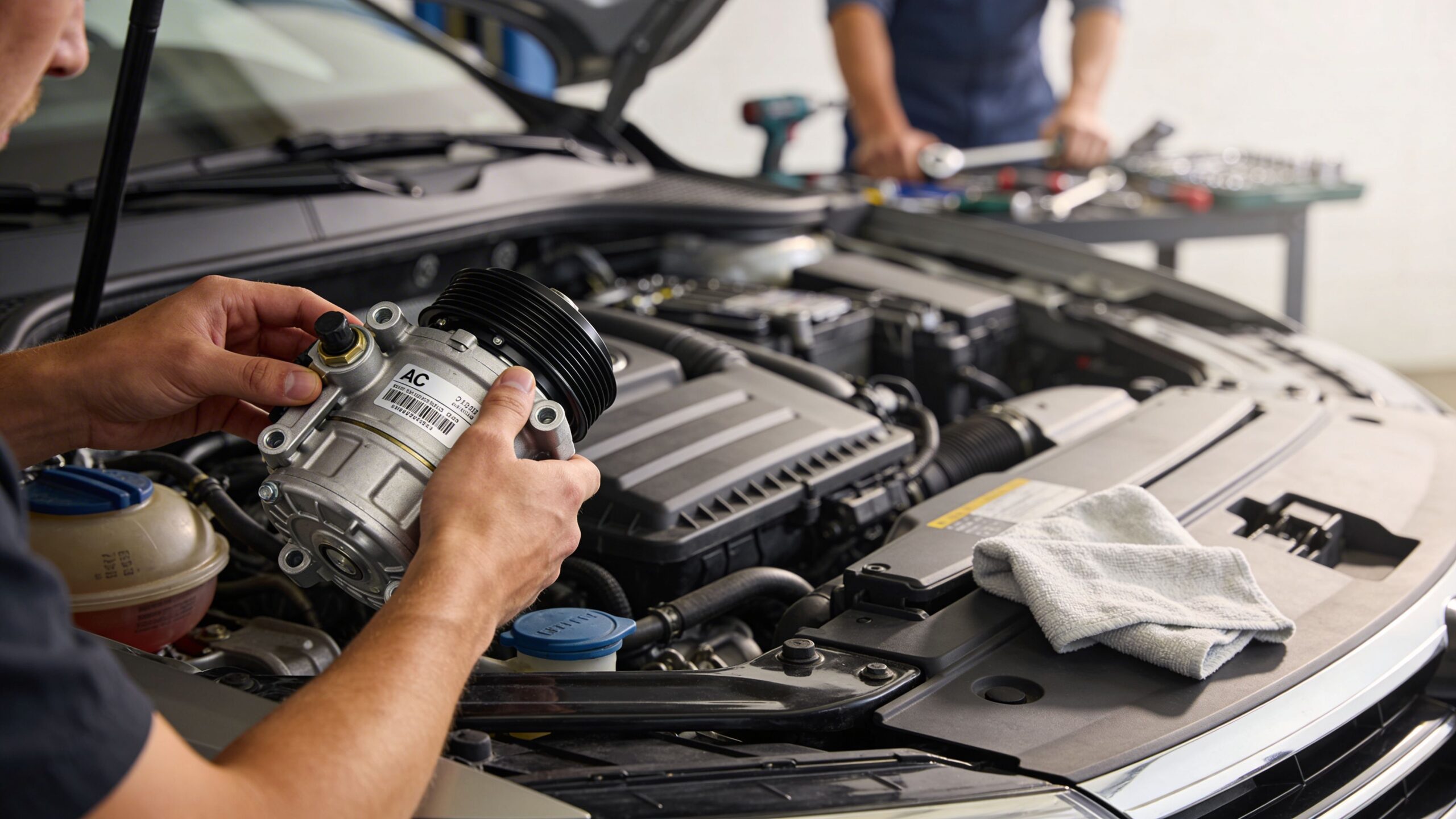
What you can safely check at home
Before booking service, do the basics.
- Check the cabin air filter. If it’s clogged, airflow suffers and the AC feels weaker than it really is.
- Look at the condenser through the grille. Leaves, dirt, and road debris can block airflow.
- Listen when AC is commanded on. Changes in engine note, fan operation, or compressor engagement can offer clues.
- Notice the pattern. Is the issue worst at idle, only after a long drive, or only on humid days?
These observations help a technician narrow the problem faster.
What needs shop equipment
A proper AC diagnosis usually involves more than adding refrigerant. Good shops use a structured process:
- Pressure readings to see whether the system is operating in a believable range
- Leak detection, often with UV dye or electronic tools
- Visual inspection for oily residue around lines, fittings, and major components
- Control checks to see whether switches, sensors, and modules are commanding the system correctly
- Recovery and recharge equipment to handle refrigerant accurately and safely
This is also where a service provider such as air conditioning service auto should be able to explain what’s included before any work starts.
Why Ontario winters matter so much
A lot of online advice treats AC as a summer-only system. In Ontario, that misses the complete picture. Winter is hard on AC hardware.
A 2025 Ontario Ministry of Transportation report on vehicles in Durham Region found a 25% higher AC compressor failure rate compared to national averages, largely due to corrosion from winter road salt (Durham Region AC compressor corrosion issue).
Salt, slush, freeze-thaw cycles, and packed debris take a toll on condensers, lines, connectors, and compressor fronts. A system can survive summer just fine, then lose reliability after one hard winter.
Road salt doesn’t care whether your car is old or new. If the front of the vehicle sees enough winter grime, the AC system pays for it later.
Smart maintenance that actually helps
The most useful maintenance habits are simple:
- Run the defrost setting in winter. Most vehicles use the AC during defrost operation, which helps circulate refrigerant oil and keep seals from sitting dry.
- Rinse winter salt off the front end and underbody. Pay attention to the lower condenser area.
- Change the cabin filter on schedule. It protects airflow and helps the evaporator stay cleaner.
- Address small odours early. A mild musty smell is easier to solve than a heavily contaminated evaporator case.
- Don’t ignore weak cooling. Catching a leak or pressure issue early is usually easier on the rest of the system.
One mention is enough here. A shop such as Carmedics Autowerks Inc can handle AC diagnosis, leak repair, evacuation, and recharge when the issue has moved beyond what a driveway check can tell you.
AC Repair and Recharge Options Costs and Timelines
Once an AC problem is confirmed, most drivers want the same three answers. What needs to be done, how long will it take, and is a recharge the fix.
The honest answer is that “recharge” is a service, not a diagnosis. Sometimes it’s appropriate. Sometimes it only hides a leak for a short time.
When a recharge makes sense
A recharge is suitable when a technician has verified the system is low, identified why it’s low, and confirmed the rest of the hardware is capable of working properly once charge level is restored.
A recharge is not a solid plan when:
- the leak source hasn’t been identified
- the compressor is noisy or failing
- the condenser is damaged
- the evaporator drain or airflow side is the actual problem
If a shop offers refrigerant without a diagnosis, be careful. A sealed system doesn’t normally “use up” refrigerant like engine oil.
Common repair paths compared
The page on car air conditioning repair costs is useful if you want a more service-focused look at typical repair categories. The table below gives a practical way to think about the jobs themselves.
| Service / Repair | Estimated Cost (CAD) | Estimated Time |
|---|---|---|
| AC system inspection and performance test | Varies by vehicle and shop | Often completed within part of a day |
| Refrigerant recovery, evacuation, and recharge | Varies by refrigerant type and whether leaks are present | Often completed same day if no other faults are found |
| UV dye leak test and leak tracing | Varies by system complexity and access | Same day in many cases, sometimes longer if leak confirmation takes time |
| Cabin air filter replacement and vent performance check | Lower-cost maintenance item relative to major component repair | Usually quick |
| Evaporator cleaning and drain service | Varies depending on access and contamination level | Often same day |
| Condenser replacement | Moderate to major repair depending on vehicle layout | Often same day to next day |
| Compressor replacement with system service | Major repair because the system must be opened, cleaned, and recharged properly | Commonly a longer appointment |
| Receiver-dryer or accumulator replacement | Often paired with other refrigerant circuit work | Timing depends on associated repairs |
| Expansion valve or orifice-related repair | Varies by component location and labour access | Can range from moderate to longer jobs |
| Evaporator replacement | One of the more labour-heavy AC repairs on many vehicles | Often longer due to dash or HVAC case access |
What usually changes the final bill
The biggest cost factors are usually not the refrigerant itself. They’re labour, access, and whether contamination has spread through the system.
A few examples:
- Simple leak at an accessible fitting is usually more straightforward than a hidden evaporator leak.
- Compressor failure with debris in the system often means more than just replacing the compressor.
- Newer refrigerant systems can involve different service procedures and equipment.
- Luxury or tightly packaged SUVs often need more labour to reach key parts.
What works and what doesn’t
What works is fixing the root cause, then restoring charge accurately.
What doesn’t work is treating every weak AC system like it only needs a top-up. That approach can waste money, stress a tired compressor, and turn a manageable repair into a larger one later.
If you’re budgeting, ask for the diagnosis first. Then ask what repair is necessary now, what can wait, and whether the shop has confirmed the leak or failure point.
Why Whitby Drivers Trust Carmedics Autowerks for AC Service
Whitby drivers ask more from an AC system than many articles account for. Summer humidity pushes the system hard. Winter salt attacks it from the outside. Spring and autumn add damp conditions that expose drainage and odour issues.
That combination is exactly why local experience matters.
The local problem is different
A generic repair guide might tell you low refrigerant causes warm air. True enough. But local service has to look further.
Around Durham Region, you also need to think about:
- Salt corrosion on condensers, lines, and compressor-related hardware
- Moisture and mould buildup from humid summer operation
- Seasonal inactivity followed by sudden high-demand use
- Front-end damage effects after minor collisions
A technician who sees these patterns every season is less likely to chase the wrong fix.
What a practical AC service relationship looks like
For enthusiasts and owners of newer vehicles, trust usually comes down to a few things:
- Clear diagnosis before parts replacement
- Comfort with both older and newer refrigerant system designs
- Willingness to explain whether the problem is airflow, pressure, control, or mechanical
- Attention to surrounding issues, not just the compressor
That broader view matters because AC systems don’t live in isolation. Collision damage, fan problems, clogged condensers, and even deferred maintenance elsewhere can change how the system behaves.
Good AC repair isn’t just about making cold air today. It’s about understanding why the system failed in this climate and reducing the chance of a repeat problem.
Why the shop’s wider capabilities matter
If you drive a newer SUV or care about keeping your vehicle sorted properly, it helps when the same facility can support more than one need. AC concerns often overlap with other work.
Front-end impact repairs can affect condensers and cooling airflow. Fleet vehicles need downtime managed properly. Owners who already care about protection may also be looking at appearance and preservation work.
If you want to learn more about the shop itself, Carmedics Autowerks in Whitby outlines the broader services available, including general repair, fleet maintenance, collision repair, and vehicle protection services.
Frequently Asked Questions About Car AC Systems
Are DIY recharge kits worth using
Usually not, at least not if you want a reliable answer.
The problem with many DIY kits is that they encourage adding refrigerant before confirming the actual fault. If the system has a leak, a pressure-control issue, or a failing compressor, more refrigerant won’t solve the root problem. It can also make diagnosis harder later.
DIY kits also don’t tell you much about system health. They won’t inspect for contamination, confirm proper recovery procedures, or explain why performance dropped in the first place.
What’s the difference between R-134a and R-1234yf
They are different refrigerants used in different generations of vehicles. The important practical point for owners is simple. Your vehicle must be serviced with the correct refrigerant and the correct equipment.
This isn’t a place for improvisation. If the under-bonnet label specifies one refrigerant, that’s what the system requires. Mixing, guessing, or using the wrong service process can create poor performance and expensive mistakes.
Why does my AC smell bad even when it still gets cold
Because cooling performance and air quality are not the same thing.
A system can still produce cold evaporator temperatures while moisture, mould, or debris build up in the HVAC case. That often causes a musty smell at start-up, especially after humid weather or short trips where the system never fully dries out.
In that case, the fix usually involves cleaning and drainage attention, not just refrigerant service.
Should I run my AC in winter
Yes. In Ontario, that’s one of the simplest habits that helps.
Using defrost mode regularly helps circulate the system and supports seal lubrication. It also helps with window clearing in damp weather. Even though you aren’t trying to chill the cabin in January, the AC side of the climate system still does useful work.
Why does AC performance drop at idle
Several reasons can cause that.
The system may have marginal refrigerant charge, weak condenser airflow, a cooling fan issue, or a compressor control problem. Variable displacement systems can also mask problems differently from older clutch-cycling systems. If the vehicle cools fine on the move but not in traffic, the diagnosis should focus on airflow and pressure behaviour under low road-speed conditions.
Does using AC hurt fuel economy
It can. The compressor adds load to the engine, so there is always some trade-off between comfort and efficiency.
How much you feel that trade-off depends on the vehicle, outside temperature, system design, and how hard the AC has to work. Newer systems manage this more smoothly than older ones, but there is still an energy cost to cooling.
How much does AC affect EV range in Ontario
This is a real concern for local EV owners. In Ontario’s climate, using AC in an electric vehicle can reduce range by up to 40% in summer heat above 30°C, according to Natural Resources Canada trials (EV AC use and summer range impact in Ontario).
That matters even more around Whitby because humid air can make the cooling load feel heavier than the temperature alone suggests. If you drive an EV, pre-conditioning the cabin before departure and keeping the system properly calibrated can make a noticeable difference in day-to-day usability.
If my new vehicle has poor cooling, is it definitely a leak
No.
A new vehicle can still have airflow restrictions, sensor issues, software-related control behaviour, drainage problems, or damage from debris at the condenser. Leaks are common, but they aren’t the only explanation. That’s why diagnosis should come before assumptions.
If your car air conditioner is blowing warm, smells musty, or just isn’t keeping up with Whitby weather, book a proper inspection with Carmedics Autowerks Inc. The right repair starts with finding the root cause, especially in Ontario where summer humidity and winter salt put AC systems through more than most drivers realise.