

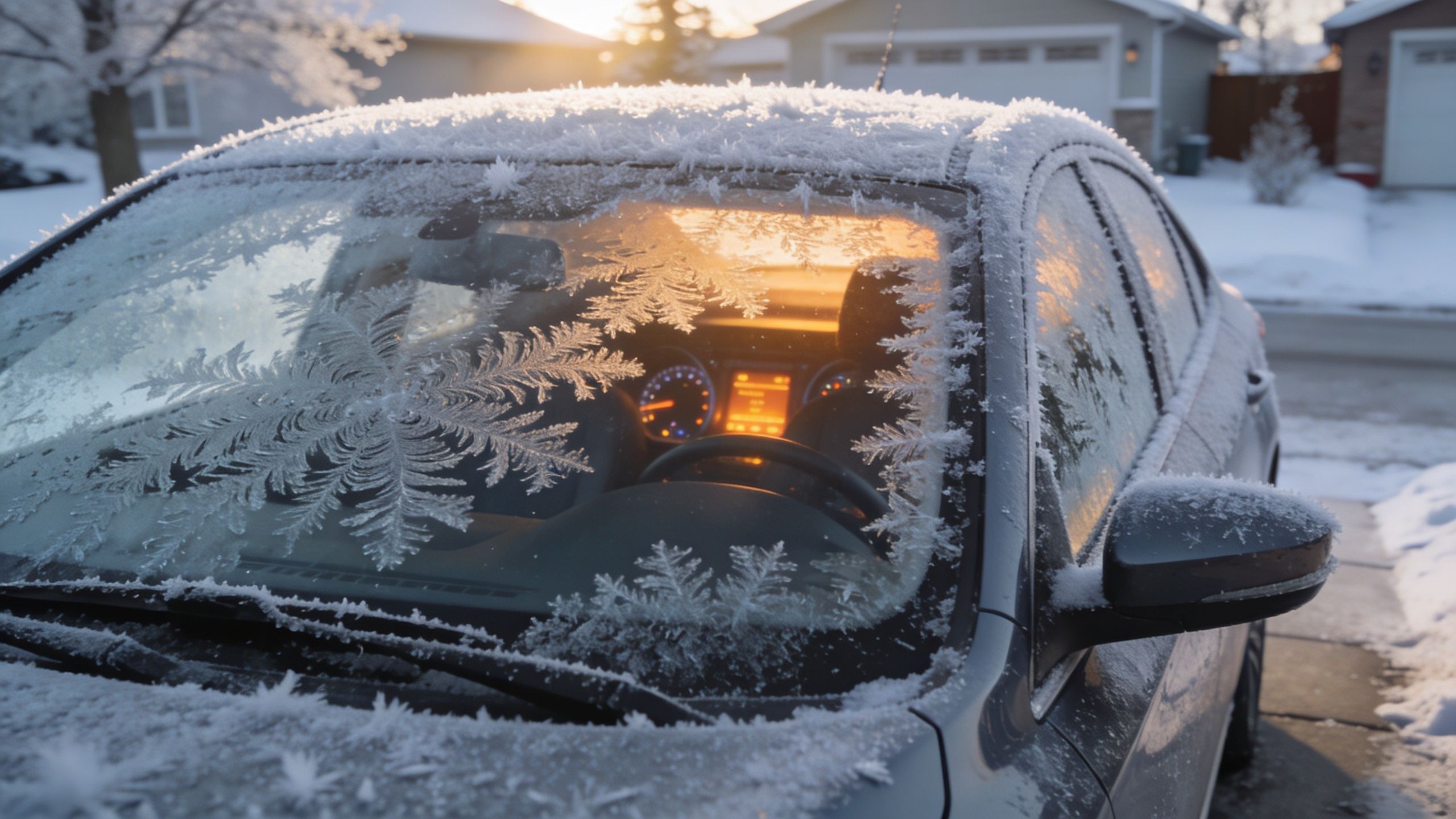
A Whitby winter morning usually makes the decision for you. The car is outside, the glass is iced over, the cabin feels like a freezer, and the first ten minutes of the drive are spent waiting for heat instead of paying attention to the road.
That's why remote starters installation isn't a vanity upgrade around here. It's a practical electrical integration job that gives you a warm cabin, a clearer windscreen, and a more civilised start to the day. On newer vehicles, though, the difference between a clean install and a problem install comes down to wiring discipline, module programming, and understanding how the vehicle's network works.
Beat the Cold Your Guide to Remote Starters
At 6:45 on a Whitby January morning, the difference is obvious. One car is idling long enough to start clearing the windshield and take the bite out of the cabin. The other still needs scraping, cold fingers, and a few distracted minutes before the drive even feels normal.
For Whitby drivers, remote starters solve a daily winter-use problem. The benefit is straightforward. You get heat working sooner, frost starts loosening before you open the door, and the vehicle is more usable when overnight temperatures drop hard. Around here, that has real value for commuters, parents doing school runs, and anyone parking outside.
At Carmedics, we also see remote start as part of a broader winter-ready setup, not a stand-alone gadget. Drivers who care about cold-weather convenience often care about preserving the vehicle too. That can mean pairing a clean electronic install with practical protection choices such as tint, paint protection film, and seasonal service planning like knowing when to change tires for winter in Whitby.
Why it matters in Whitby
The biggest gain is consistency.
- Less cold-soaked cabin time: Seats, steering wheel, and interior surfaces have a head start before you get in.
- Better windshield prep: Defrost can begin working while you finish getting ready.
- A smoother winter routine: The car is more prepared for the trip instead of forcing all the work into the first few minutes of the drive.
There is also a practical distinction many drivers miss. Remote starting is not the same as fixing a starting problem. If a vehicle has battery, charging, or starter-motor issues, those need proper diagnosis first. For that kind of mechanical or electrical fault, a shop handling Haltom City starter repair is dealing with a different problem than integrating a remote start system into a healthy vehicle.
Installation quality matters more than the feature list. Older vehicles gave installers more room for error, but newer vehicles do not. A proper remote starter must work with factory security, door lock logic, brake shutdown inputs, hood safety switches, and the vehicle's electronics without creating warning lights, battery drain, or intermittent no-start complaints. That is why the true value is not just pressing a button from indoors. It is getting a system that behaves properly through a Whitby winter and still acts like factory equipment months later.
Understanding Remote Starter Systems
A remote starter is best thought of as a vehicle command module paired with a transmitter. The transmitter might be a key fob or a phone. The module sits inside the car and handles the actual conversation with the ignition, security system, and required safety inputs.
On modern vehicles, it isn't just “send power and crank.” A proper install has to account for the ignition harness, ECU and immobilizer logic, plus shutdown and safety signals. A practical technical overview of remote starter wiring and system integration notes that if those signals are misread, the vehicle may crank but fail to run, or be blocked by the factory anti-theft system.
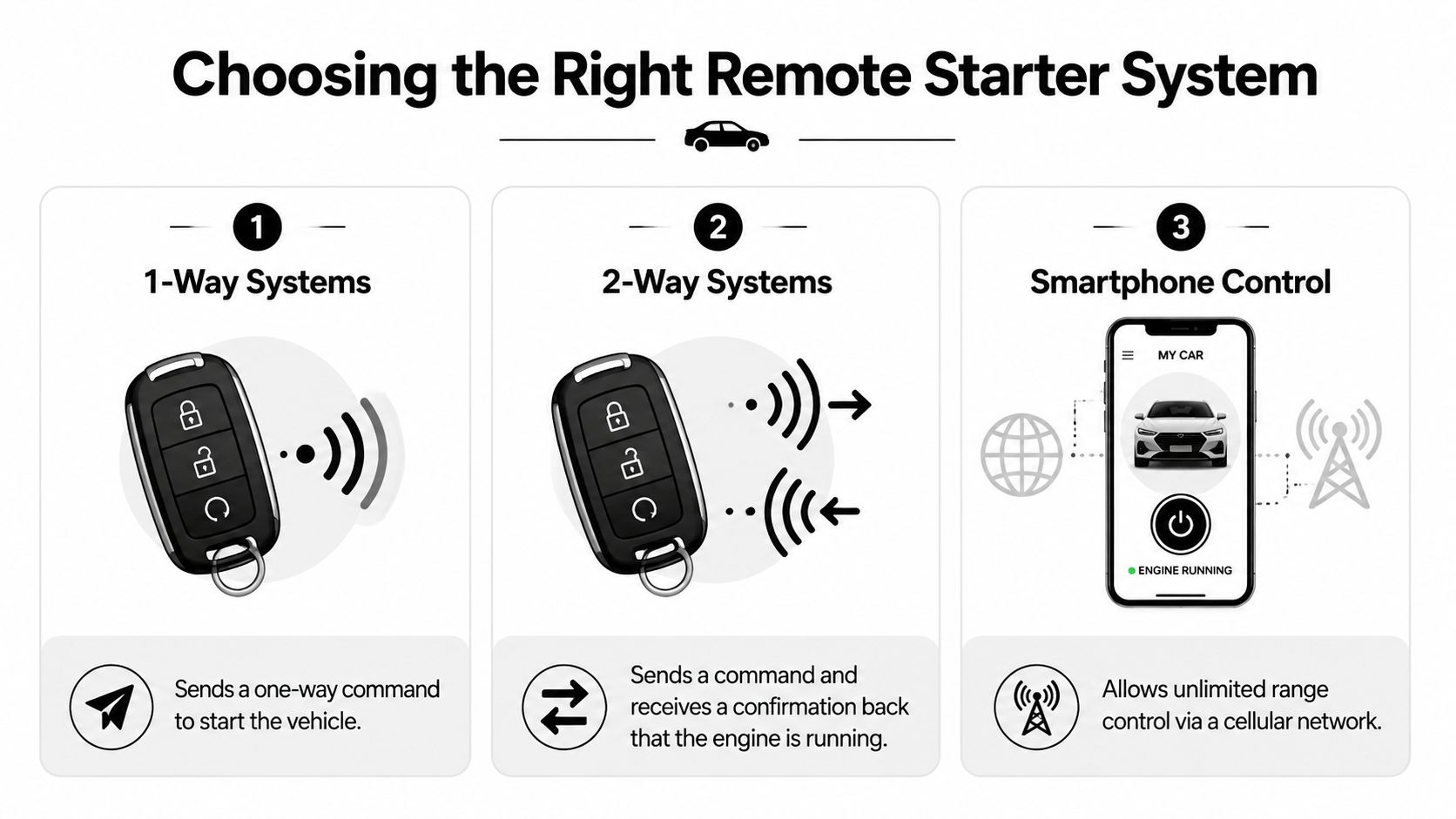
The three common system types
The format you choose changes the day-to-day experience more than most buyers expect.
| System type | What it does well | Best fit |
|---|---|---|
| 1-way remote | Sends a start command simply and directly | Drivers who park close and can usually see the vehicle |
| 2-way remote | Sends the command and reports back | Drivers who want confirmation the car actually started |
| Smartphone-controlled system | Adds app-based control through a connected platform | Drivers who value convenience and more flexible control |
A 1-way system is the simplest setup. You press the button and trust the command went through. If the car is in your driveway and visible from the kitchen window, that may be enough.
A 2-way system adds confidence. The remote confirms whether the vehicle received the command and responded. That's useful when the car is parked farther away, behind another building, or in a lot where you can't visually verify anything.
What the module is really doing
The control module has to do more than start the engine. It has to behave in a way the vehicle considers valid and safe. That usually means correct input handling, proper authorisation through the factory security architecture, and clean shutdown behaviour when a brake or takeover event occurs.
A remote starter that “mostly works” isn't installed properly. It should start, idle, hand over, and shut down exactly as intended.
If you're diagnosing a no-start issue rather than adding a new system, a general mechanical reference such as Haltom City starter repair can help explain the difference between a failing starter motor problem and an aftermarket remote-start integration problem. They're not the same fault path, and mixing them up wastes time.
Choosing the Right System for Your Car and Lifestyle
The right setup depends on two things: How your vehicle is built and how you use it. Buyers often focus on brand first, but the better approach is to start with parking habits, signal distance, transmission type, and whether the vehicle has push-to-start or other factory security layers.
One hard specification does matter early. Typical remote starter range is about 500 feet to 5,000 feet, depending on the model, as outlined in Carmedics' guide to remote start range and installation considerations. That range changes which system makes sense for a driveway, a workplace lot, or an apartment building.
Match the system to where you park
A lot of disappointment comes from buying for features instead of real use.
- Driveway or short distance parking: A basic 1-way system can work well if the car is consistently nearby.
- Office lot or condo parking: A 2-way remote gives you confirmation instead of guesswork.
- Mixed routines across town: App-based control makes more sense when your parking distance changes day to day.
If your car sits one wall away in a garage or right outside the house, you may never use the extra capability of a more advanced remote. If the vehicle is regularly parked far from where you are, a cheap short-range setup becomes annoying fast.
Vehicle compatibility matters more than the brochure
Newer vehicles often require vehicle-specific modules and programming. Push-to-start cars, diesel applications, manual transmissions, and CAN-bus vehicles need the installer to confirm compatibility before anyone books the work.
That's similar to the decision process behind OEM vs aftermarket parts. The right choice isn't about slogans. It's about fit, integration, and how the component behaves once it's inside a modern system.
Here's a practical comparison:
| Buyer situation | Better fit | Reason |
|---|---|---|
| Sees the car from home | 1-way | Simple use case, fewer extra features needed |
| Parks out of sight | 2-way | Confirmation matters |
| Wants flexible control | Smartphone | Best for changing routines and broader convenience |
| Drives a manual or diesel | Vehicle-specific solution | Safety and compatibility come first |
What works and what doesn't
What works is choosing for routine. What doesn't work is buying on the assumption that every remote starter behaves the same across every vehicle.
For example, manual-transmission vehicles need specific safety handling. Push-to-start cars usually need integration logic that's more involved than older keyed ignition vehicles. Diesel vehicles can also need a setup that respects how that vehicle starts and runs.
Buy for the car you own and the places you park. Don't buy for an idealised feature list.
For Whitby drivers who care about the finish of the vehicle as much as the function, this is also where the bigger ownership picture matters. If you're already investing in window tint or PPF to protect and refine the car, it makes sense to treat remote start the same way. It's another upgrade where clean installation quality matters more than flashy packaging.
A Look Inside the Professional Installation Process
The work starts before a panel comes off. The first step is confirming the vehicle profile, then selecting the correct interface pieces and install method for that exact make, model, year, ignition style, and transmission type.
What happens before the wiring is tied in
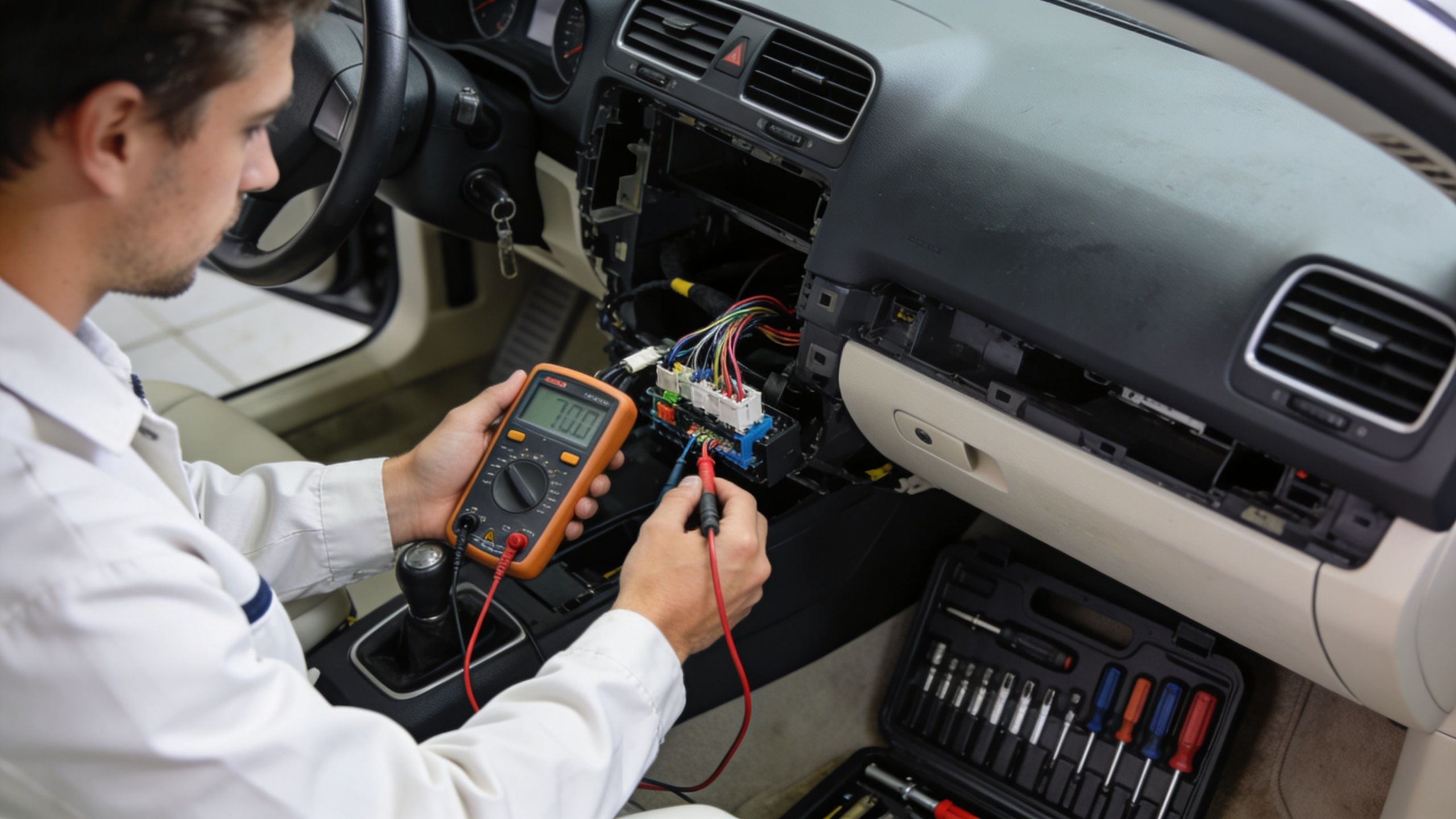
A clean technician workflow usually includes bench preparation. Some systems need the module loaded with the correct vehicle profile before installation. Fortin's installation documentation for module setup and initialisation behaviour shows why sequence matters. Ignition state, service mode, and the expected flash or horn confirmation pattern all tell the installer whether the module has initialized correctly.
That matters because modern systems are state-dependent. If the module powers up in the wrong condition, troubleshooting after the dash is reassembled becomes slower and less precise.
The actual integration work
Once the setup is confirmed, the installer ties the system into the vehicle properly. That means identifying and verifying the required circuits, not guessing at wire colour alone. The process typically involves the ignition harness, immobilizer logic, brake input, and related safety interlocks.
A proper auto electrical shop follows the same discipline used in broader vehicle electrical diagnostics in Whitby. Verify the circuit. Confirm the signal. Integrate cleanly. Test under real operating conditions.
Final checks decide whether the job is done
The test phase is where bad installs reveal themselves. The car should remote start consistently, maintain normal function, hand over cleanly to the driver, and show no warning lights or accessory problems.
A technician should also check shutdown logic, brake response, lock status where applicable, and whether any retained accessory behaviour is abnormal after the install. If the vehicle starts but behaves oddly, the job isn't complete.
Why Professional Installation is a Non-Negotiable
A Whitby cold snap is when bad remote starter work shows up fast. The customer presses the button from the kitchen, the car fires once, shuts down, throws a warning light, or drains the battery by the next morning. In this climate, remote start has to work every time, and it has to leave the rest of the vehicle operating exactly as intended.
DIY kits and bargain installs miss the part that matters most. Modern vehicles rely on networked electronics, factory security logic, and vehicle-specific programming. The job is not just connecting wires. It is making the remote starter communicate properly with the car, then proving every safety and shutdown function still works under real conditions.
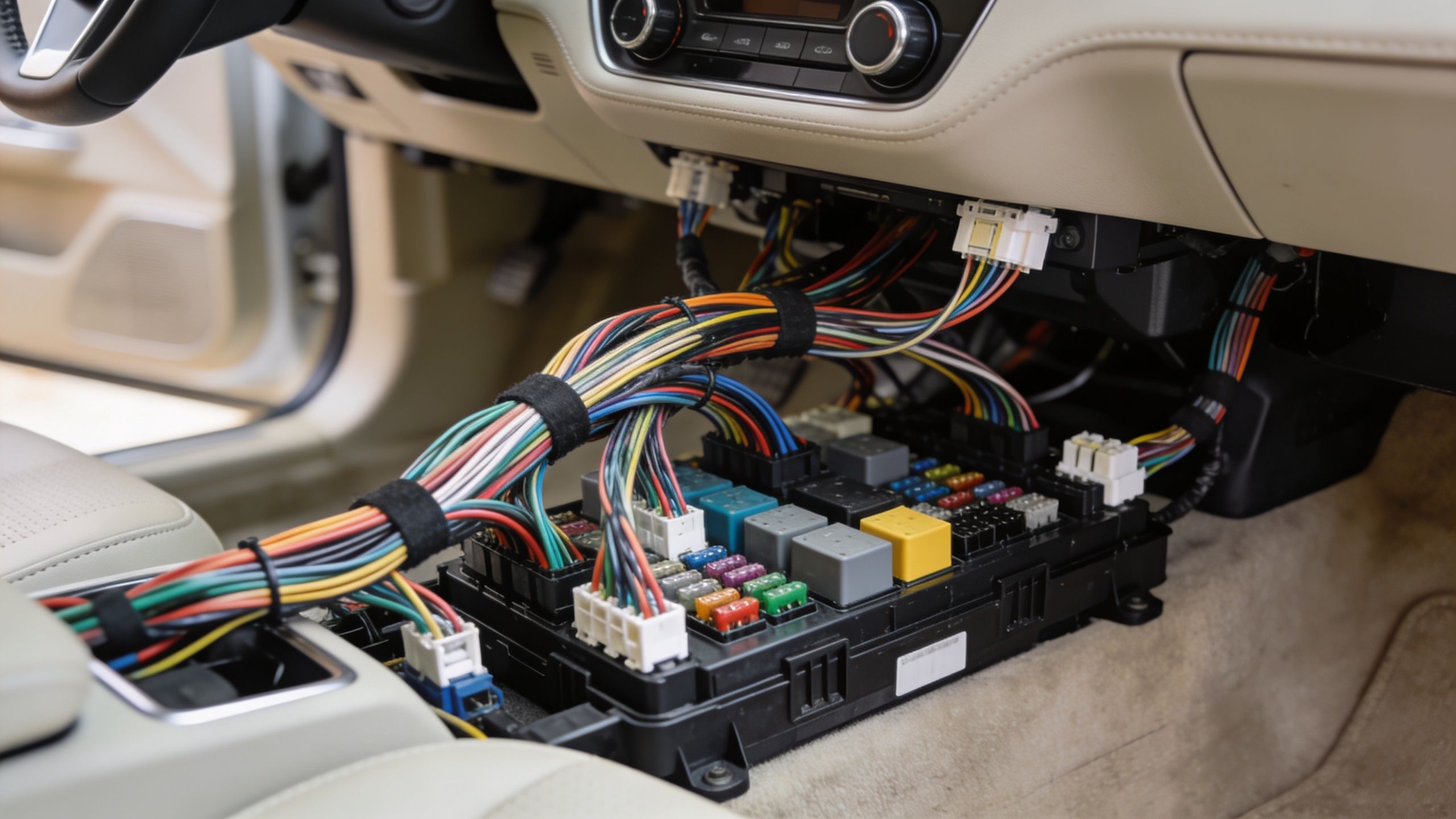
The hidden risks are expensive
Poor installation can create faults that do not look related to the starter at first. Intermittent no-starts, battery drain, disabled factory security features, accessory glitches, and warning lights are common patterns. On push-to-start, CAN-bus, diesel, and manual-transmission vehicles, the margin for error is smaller.
Stereo West makes the same point in its article on remote starter myths and installation risk. A weak install can create battery, security, and vehicle-computer problems that cost far more to diagnose than the original savings.
Cheap installation usually shifts the cost to diagnosis and repair.
What professional work changes
A proper installer lowers risk in ways the customer can feel after the job is done:
- Correct vehicle data: The technician uses the right wiring information, firmware, and integration method for that exact year, trim, and ignition system.
- Clean electrical work: Connections are made for long-term reliability, not just to get the vehicle started once in the bay.
- Full-function testing: Remote start, shutdown, brake input, takeover, door lock behaviour, and factory security response are checked before delivery.
- Real troubleshooting ability: If the car behaves oddly, the installer can isolate whether the cause is programming, a module issue, or a vehicle-side electrical fault.
That is why remote start belongs in a certified auto repair shop in Whitby, not as a side job in a driveway or parking lot. Newer vehicles are too sensitive, and the cost of getting it wrong is too high.
Quality should match the rest of the vehicle
Owners who protect their cars with tint, paint protection film, or proper collision repair already understand the point. Quality work preserves the vehicle. Electrical accessories should be held to the same standard, especially in Whitby where winter use puts more demand on batteries, starters, door locks, and defrost settings.
Carmedics Autowerks Inc is one local option that handles both protective cosmetic work and remote starter integration. That matters for drivers who want one shop that understands the whole vehicle, including the finish you want protected and the electronics you need working properly in January.
Your Next Steps and Common Questions Answered
The smart next move is simple. Match the system to the car, then have the integration scoped before anyone orders parts. That avoids buying the wrong remote, the wrong module, or a setup that doesn't suit how you park and drive in Whitby.
If you're comparing pricing, don't look at the hardware line alone. Look at compatibility checking, programming, integration quality, and final testing. A starting point for that conversation is this breakdown of remote starter installation cost factors.
Common questions from Whitby drivers
Will a remote starter void my vehicle warranty?
A blanket “yes” isn't accurate. The issue is whether the installation caused the failure being claimed. That's one reason documented, professional work matters.
Can a manual-transmission car get remote start?
Yes, but only with the correct safety strategy and the right system for that application. This isn't a casual DIY category.
What about push-to-start vehicles?
Many are compatible, but they often need the correct integration module and programming path to communicate with factory immobilizer logic.
Are newer vehicles low-risk if I buy a bargain install?
That's exactly where caution matters most. As discussed in the earlier risk section, compatibility and installation quality matter more on CAN-bus, diesel, manual-transmission, and warranty-sensitive vehicles than most buyers realise.
If the installer can't explain how the system will integrate with your specific vehicle, you don't have a quote yet. You have a gamble.
If you want a remote starter that works properly through a Whitby winter, talk to Carmedics Autowerks Inc about your exact vehicle, parking routine, and feature priorities. A proper recommendation should cover compatibility, control range, programming requirements, and clean installation quality before any parts are booked.