


For anyone driving in Toronto, a dash camera isn't just another gadget—it's practically essential. Think of it as your silent co-pilot, a reliable witness that gives you peace of mind whether you're navigating the city's chaotic streets or leaving your car parked overnight.
Why a Dash Cam is a Must-Have for Toronto Drivers
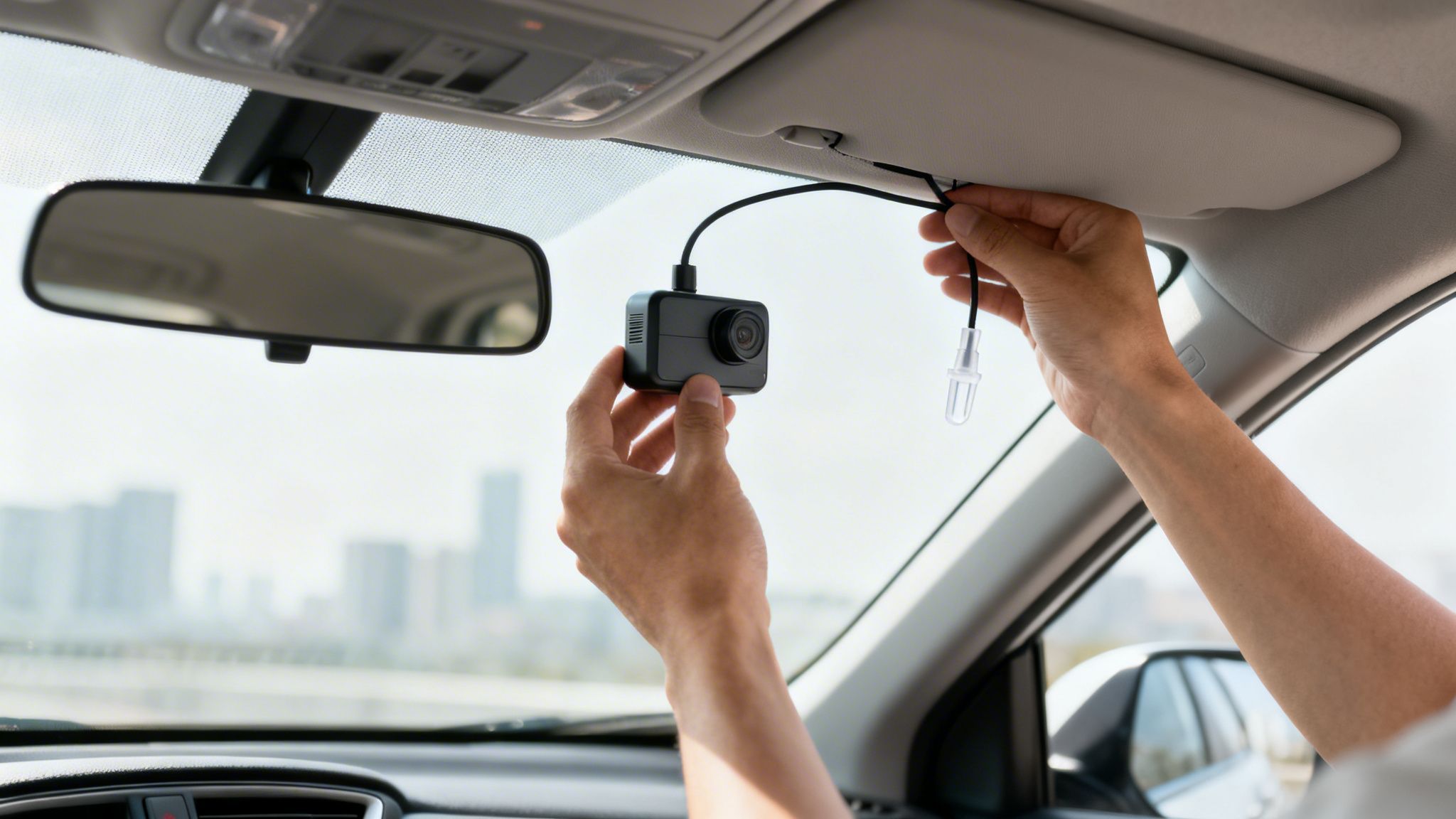
Let's be real—driving in Toronto has its own unique flavour of chaos. From navigating the Gardiner during rush hour to squeezing into a tight downtown condo parking spot, your vehicle is always exposed to potential trouble. A dash cam is your best defence, quietly recording every moment.
This small piece of tech offers undeniable proof that can:
- End accident disputes instantly by providing a clear record of what actually happened.
- Guard you against insurance fraud, like those infamous "crash-for-cash" scams.
- Deter theft and vandalism, especially with a camera that has a proper parking mode setup.
- Potentially lower your insurance premiums, as many providers now recognize the value of video evidence.
The Reality on Toronto's Roads
If you’ve ever been stuck on the 401, you know that close calls are just part of the daily grind. It's no surprise that dash cam installations have become so common across the Greater Toronto Area. With over 118,838 motor vehicle accident injuries reported nationally back in 2023, the argument for having a reliable witness on your side is stronger than ever.
A good dash cam captures all the things you wish you had on video—someone running a red light on University Avenue, a careless door ding in a Yorkville parking lot, or a questionable lane change on the DVP. This isn't just for personal vehicles, either; the technology is vital for commercial operators. We see it every day with local businesses that rely on our fleet services in Toronto to protect their assets.
DIY vs. Professional Installation: A Critical Choice
Once you've picked out a dash cam, the next big decision is how to get it into your car. You could try installing it yourself, but that's a path filled with potential headaches. A botched wiring job can drain your battery, blow a fuse, or even mess with crucial safety systems like your airbags.
A professional installation is about more than just tucking wires out of sight. It's about safely integrating the device into your car's electrical system for flawless, reliable operation when it matters most.
Hiring an expert ensures the job is done right the first time. You protect your vehicle's warranty and get the most out of your dash cam’s advanced features, like parking mode, without any of the risks.
Here's a quick breakdown to help you decide which path is right for you.
Quick Comparison: DIY vs. Professional Installation
| Aspect | DIY Installation | Professional Installation (e.g., Carmedics Autowerks) |
|---|---|---|
| Cost | Lower upfront cost (just the price of the dash cam) | Higher initial cost (labour fees + device) |
| Time & Effort | Can take several hours; requires research and patience | Quick and efficient (usually 1-3 hours) |
| Appearance | Wires may be visible; less clean-looking finish | Completely seamless and hidden wiring |
| Reliability | Risk of power issues, drained battery, or improper function | Guaranteed to work correctly; professionally tested |
| Safety | Risk of interfering with airbags or blowing fuses | No risk to vehicle safety systems; warranty-safe |
| Features | Parking mode may be difficult or impossible to set up correctly | Full setup of all features, including motion-activated parking mode |
While a DIY approach can save a few dollars upfront, the peace of mind and guaranteed performance from a professional installation are invaluable for most drivers.
A Realistic Guide To DIY Dash Cam Installation
So, you're thinking about installing your own dash cam? It’s a great weekend project for anyone who likes to get their hands dirty. But there’s a big difference between just getting it working and getting it right. A truly clean, reliable setup goes way beyond plugging a cord into the 12V socket. Let's get into what it really takes to achieve a near-professional finish.
First things first: placement is everything. Your goal is to give the camera the best possible view of the road without creating a new blind spot for yourself. The sweet spot, nine times out of ten, is right behind your rearview mirror. You want it tucked up high and as close to the centre of the windshield as you can get. This keeps the camera out of your direct line of sight while capturing a balanced, wide view of what’s ahead.
Before you peel the backing off that adhesive mount, do a dry run. Power up the dash cam and use its built-in screen or the live view on your phone to check the angle. You’re looking for any obstructions—the mirror housing itself or the tinted sun strip at the top of the windshield. Once you’ve found the perfect spot, give the glass a thorough wipe with an alcohol prep pad. This is a small step that makes a huge difference in getting a strong, lasting bond.
This infographic really captures why so many Toronto drivers are making this upgrade. The daily grind on our roads often leads straight to the decision to protect yourself with a dash cam.
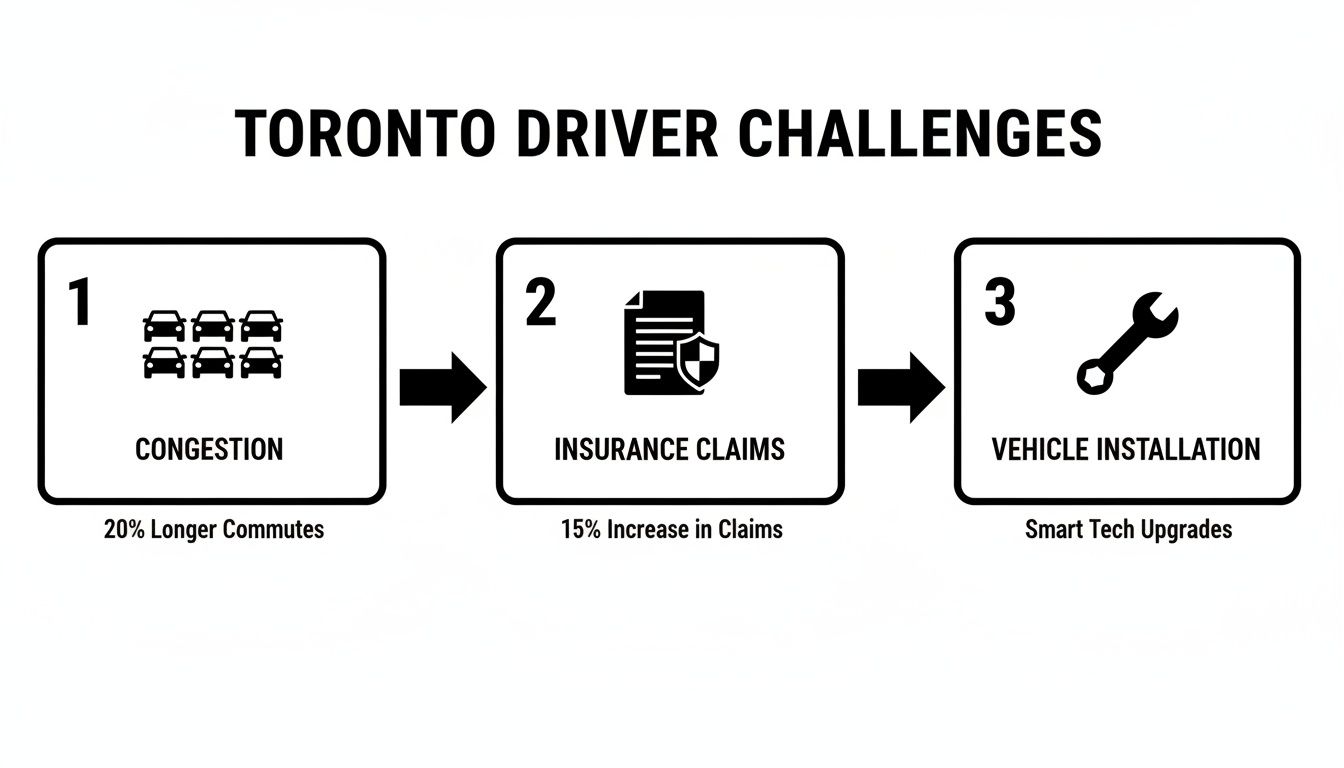
As you can see, the city’s unique traffic challenges are a major driver. A proper installation ensures your camera is ready to provide that crucial evidence when you need it most.
Routing Wires for a Clean Look
The real secret to a pro-level installation is making the wires vanish. This part of the job calls for patience and a gentle touch as you tuck the power cable neatly into your vehicle’s trim panels.
Start at the dash cam and work your way up. Gently push the cable into the headliner—the fabric-covered ceiling of your car. You can usually create enough of a gap with a plastic trim tool or even just your fingertips to hide the wire between the headliner and the windshield.
From there, you'll run the wire down the A-pillar, which is the post between your windshield and the side door.
- Pry with Care: You can often avoid removing the whole pillar trim. Gently pull back the rubber weatherstripping along the door frame. This usually creates enough space to tuck the wire behind the plastic trim.
- Airbag Awareness: This is critical. Never run the cable in front of or across the A-pillar airbag. If that airbag ever deploys, the wire can become a dangerous projectile. Always route the wire behind the airbag assembly, securing it to existing factory wiring with a few small zip ties.
- Final Stretch: Once you're past the A-pillar, the rest is easier. Just run the wire under the dash toward your chosen power source, whether that’s the fuse box or a 12V outlet.
A rattling wire is one of the most common—and annoying—signs of a rushed job. Take an extra minute to use zip ties and secure any loose sections of the cable. The silence on a bumpy road will be worth it.
Common DIY Mistakes to Avoid
Even with the best of intentions, a few common slip-ups can turn your satisfying project into a real headache. Knowing the pitfalls ahead of time is half the battle. The skills you learn here are also surprisingly useful for other projects; for example, a guide on how to install a backup camera covers similar techniques for routing cables through a vehicle's bodywork.
A successful dash camera installation in Toronto traffic means the camera works perfectly every single time. Steer clear of these mistakes:
- Blocking the View: Mounting the camera too low on the windshield doesn't just look bad—it creates a dangerous blind spot and could get you in trouble with Ontario's Highway Traffic Act.
- Improper Power Taps: Grabbing power from the wrong fuse can drain your battery or, in a worst-case scenario, cause electrical damage. This is a huge risk, especially when you're wiring for parking mode.
- Visible Wires: A wire dangling by the pedals isn't just ugly; it's a genuine safety hazard if it gets tangled around your feet or the steering column.
Getting this process right gives you a real appreciation for the precision involved. If you’re getting hooked on vehicle upgrades, you might find our guide on remote starter installations interesting, as it dives into similar principles of clean wiring and integrating systems with your car.
Choosing The Right Power Source For Your Dash Cam
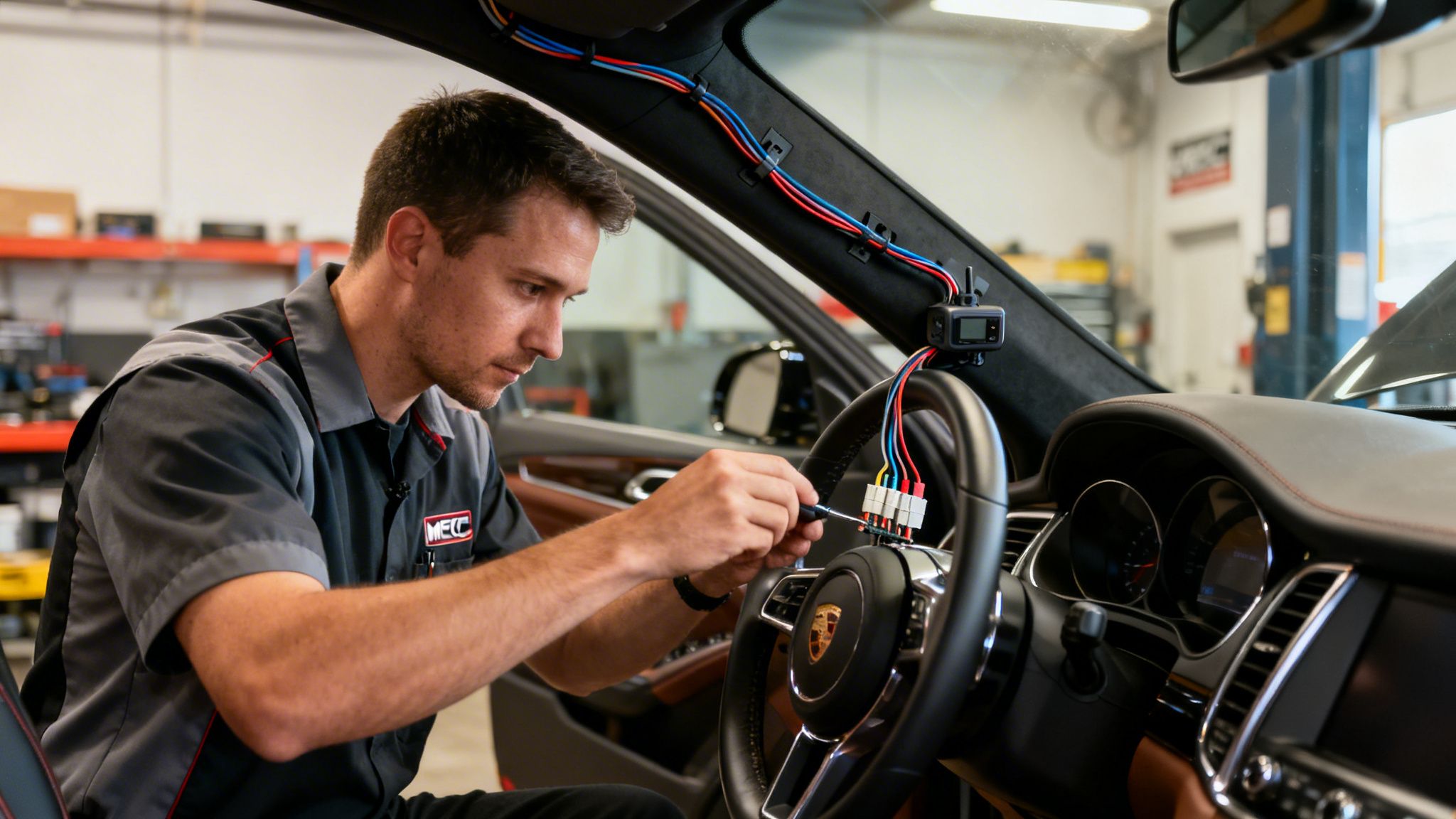
How you get power to your dash cam is just as important as the model you choose. This decision directly affects how well it works, which features you can actually use, and whether your car’s interior looks clean or cluttered with cables. You really have two main roads to go down: the quick-and-easy plug-in method or a professional, fully integrated hardwired setup.
The simplest approach is plugging into your car's 12V socket—what we used to call the cigarette lighter. It’s the definition of plug-and-play. You just plug in the adapter, run the wire, and you're good to go. This is great for a temporary install, if you're using a rental, or just want to try a camera out before committing.
But that convenience comes at a cost. You’ll have a wire dangling down your dash, and one of your few power outlets is now permanently taken. The biggest drawback, though, is that the camera will almost certainly turn off with the car, leaving you with zero protection when you’re parked.
The Superior Choice: Hardwiring To The Fuse Box
For a truly clean and capable setup, hardwiring is the only way to go. This means connecting the dash cam directly into your vehicle’s fuse box. The result is an installation that’s completely hidden and unlocks your camera’s most powerful features.
A hardwired installation is the key to enabling parking mode—an absolute must-have feature for any driver in a busy city like Toronto. This is the function that wakes the camera up to record if it detects a bump or motion while your car is off, giving you the evidence you need after a hit-and-run or act of vandalism.
To make this happen, a professional installer taps into two different circuits in your fuse box:
- Constant Power: This circuit is always live, even when the car is off. It’s what keeps your dash cam’s parking mode on standby.
- Ignition-Switched Power: This one only gets power when you start the car. It signals the camera to begin normal, continuous recording for your drive.
A proper hardwiring kit also includes a voltage cutoff feature. This is a critical safety net that monitors your battery's health. If the voltage drops too low, it automatically shuts the dash cam off to make sure you never come back to a dead battery.
Protecting a new vehicle from the unexpected is a huge priority for car enthusiasts. With insurance fraud costing Canadians a staggering $1.6 billion each year, it makes sense that 35% of dash cam owners install them for peace of mind and protection. In the GTA, where professional installation is common, technicians can hide every wire for a finish that looks like it came from the factory. You can get more details about dash cam installation in Toronto to see local service options and pricing.
The Risks Of A Botched Hardwiring Job
This is where a weekend DIY project can turn into a real headache. Tapping into the wrong fuse isn't just about the camera not working—it can cause serious electrical gremlins. A bad connection could drain your battery flat overnight, blow a fuse for a critical system like your airbags, or even fry sensitive electronic modules.
Modern cars are packed with complex electrical systems, and guessing your way through a fuse box is a big gamble. One small mistake can easily lead to a very expensive diagnostic bill at the dealership. If you’ve attempted an install and are now facing weird electrical problems, it's best to stop and call a professional. Our team specializes in vehicle electrical repair and can trace and fix these issues properly.
Frankly, this risk is the number one reason why so many drivers decide to trust a professional for their dash camera installation in Toronto from the start.
The Professional Difference: Why Carmedics Autowerks is the Right Choice
When it comes to your vehicle, "good enough" just doesn't cut it. A dash cam is an investment in your safety and peace of mind, and how it’s installed makes all the difference. At Carmedics Autowerks, we’ve seen the problems that a sloppy install can cause, which is why we approach every job with the precision of a true enthusiast.
It all comes down to experience. Our technicians are MECP-certified, meaning they have a deep understanding of modern vehicle electronics—from your daily commuter to complex European luxury cars. We don't just find a random power source. We carefully test and select the right circuits, ensuring your dash cam integrates seamlessly without ever risking your car’s battery health or voiding a manufacturer's warranty.
That attention to detail is what sets a Carmedics installation apart.
The Art of the Invisible Install
The goal of any professional installation is simple: to make the dash cam look like it came from the factory. When we're finished, the only thing you should see is the camera itself.
- Clean and Concealed Wiring: We meticulously route all cables through the vehicle's headliner and A-pillar trim. No dangling wires, ever.
- Safety is Non-Negotiable: Wires are carefully run well away from any airbag deployment zones. This is a critical safety step that amateurs often overlook.
- Zero Rattles, Guaranteed: We use Tesa tape and high-quality fasteners to secure every inch of wiring, so you'll never have to deal with those annoying buzzing or rattling sounds down the road.
This isn't just about aesthetics; it's about building a reliable and safe system that will last for years.
The real mark of a professional job is what you can't see. It’s the secure connections, the protected wiring, and the flawless integration that ensures your dash cam is ready to perform the second you start the car.
Unlocking Your Dash Cam’s Full Potential
Many of the best dash cam features, especially parking mode, only work if the unit is hardwired correctly. This is where professional installation truly shines. We establish a dedicated, fused connection to your car's electrical system that gives the camera constant power for surveillance while protecting your battery from draining.
With the Canadian dash cam market projected to grow by 9% annually and become a $258 million USD industry by 2030, a proper setup is more important than ever. In a busy area like the GTA, you need absolute reliability. Whether you're in Etobicoke or right here in Whitby, our wiring ensures your investment is ready for anything. You can watch this video to learn more about the growing dash cam trend and see why a professional touch is becoming the standard.
Beyond Dash Cams: Your Vehicle Protection Headquarters
At Carmedics Autowerks, we see dash cam installation as just one piece of a complete vehicle protection plan. Our clients trust us not just for electronics, but for a full suite of services designed to keep their cars looking and running their best.
This expertise perfectly complements our other premium offerings, including:
- Paint Protection Film (PPF): The best defence against rock chips, road debris, and scratches.
- Ceramic Window Tinting: For enhanced privacy, UV protection, and heat rejection.
- Full-Service Auto Repair: All the maintenance and repairs needed to keep your vehicle running as good as it looks.
By offering these specialized services under one roof, we provide a level of quality and convenience that’s hard to find. If you demand the best for your vehicle, learn more about our services at Carmedics Autowerks Whitby and discover why we’re the trusted choice for discerning owners.
Your Guide to Toronto’s Dash Cam Rules
A lot of drivers we talk to wonder if dash cams are even legal in Toronto. The short answer? Yes, they absolutely are. But there's a right way and a wrong way to go about it.
Knowing the specific rules around placement and privacy is crucial for avoiding any headaches down the road. Think of it as the final, critical step in a professional dash camera installation in Toronto—getting the details right so you're fully protected.
Where You Mount It Matters
The single biggest rule you need to follow comes from Ontario’s Highway Traffic Act: nothing can obstruct the driver's view of the road. This is non-negotiable.
That’s exactly why a professional installer will always tuck the dash cam neatly behind your rearview mirror. It keeps the lens clear but the device itself completely out of your line of sight. A camera slapped in the middle of the windshield is more than just a distraction; it's a reason for police to pull you over and hand you a fine.
Video vs. Audio: Understanding Privacy
When it comes to what you can record, the law makes a clear distinction between video and audio.
Out on the street, there’s no expectation of privacy. Your camera can legally film other cars, pedestrians, and public property. This video footage is your impartial witness, ready to be used for an insurance claim or a police report.
Recording audio inside your own car, however, is a completely different ball game.
- The Law on Audio: Canadian law is strict on this. You can’t record private conversations without the consent of at least one of the people involved. If you’re a rideshare driver or often have passengers, you are legally required to tell them they’re being recorded.
- The Simple Solution: Honestly, for most drivers, the easiest move is to just disable the audio recording feature. It lets you sidestep any legal grey areas while still capturing the vital video evidence you need.
We always tell our clients the simplest way to stay compliant is to just turn the mic off. The video footage of what's happening on the road is what truly protects you, and disabling audio removes any and all privacy concerns with passengers.
Parking in Toronto: Why Parking Mode is a Must-Have
Anyone who lives or works in this city knows the daily struggle of parking. This is where a properly installed parking mode isn't a luxury—it's a necessity.
Think about these all-too-common Toronto scenarios:
- Condo Parking Garages: These are notorious hotspots for hit-and-runs. A motion-activated camera is your best bet for catching the person who scraped your bumper and silently drove away.
- Crowded Street Parking: From Leslieville to the Annex, squeezing into a tight parallel parking spot is a recipe for accidental bumps and dings. Your dash cam can act as your eyes and ears when you’re not there to see it happen.
For parking mode to work, a hardwired installation is the only way to go. It gives the camera the power it needs to stay vigilant without any risk of draining your car's battery. This is the kind of local knowledge that makes all the difference.
Your Dash Cam Installation Questions Answered
Even after doing your homework, it’s completely normal to have a few last-minute questions before going ahead with a professional dash cam installation. We get these questions all the time from drivers here in Toronto, and getting them answered is the key to feeling confident about your decision.
Let's dive into some of the most common ones we hear at the shop.
A big one is always about the Wi-Fi. How does it actually work? It’s a common misconception that the dash cam connects to your home or office internet. In reality, the dash cam creates its own little Wi-Fi bubble inside your car. You connect your phone directly to that network, which lets you download footage or tweak settings, but you need to be within a few metres of the vehicle.
This is fantastic for grabbing a video file without fumbling with a tiny SD card. But it also means you can't check in on your car from your desk on the 30th floor—for that, you'd need a specific cloud-enabled model with its own dedicated LTE connection.
How Long Does The Installation Take?
This is probably the most practical question we get. You've got a busy schedule, and you need your car. The good news is that a professional installation is faster than most people think.
- Front-Only Camera: You can expect this to take about one to two hours. It's a straightforward process for an experienced technician.
- Front and Rear Camera System: This is a bit more involved. Plan for two to three hours, as we need to carefully route the rear camera's cable through your vehicle's trim for a clean, factory-finish look.
We always work by appointment, so you can drop off your vehicle and we'll have it back to you in just a few hours. No need to clear your whole day.
Our philosophy is simple: be meticulous, not just fast. We take the time needed to hide every wire, secure every connection, and put your car's interior back together flawlessly. It's about respecting your vehicle as much as you do.
Other Common Concerns
"Will this void my car's warranty?" is another big one. When done by a professional, the answer is a firm no. We use high-quality fuse taps that plug directly into your fuse box. This method doesn't cut or splice a single factory wire, making the entire installation completely reversible and perfectly safe for your warranty.
What about trickier vehicles, like an SUV with a pop-out rear window? Great question. We would never mount a camera directly onto a moving piece of glass. Instead, our technicians will find a secure, stationary spot on the interior trim of the hatch. Sometimes we'll even fabricate a small, custom bracket to get the perfect angle, ensuring a stable view without risking damage. You can find more details about dash cams near you and see how we tackle unique vehicle-specific challenges.
Asking these questions means you're a smart car owner who wants the job done right.
Ready to protect your vehicle with a flawless, professional dash cam installation? Trust the certified experts at Carmedics Autowerks. Book your appointment online today!