


When you punch "brake check near me" into your phone, you're not just looking for a quick once-over. You're searching for peace of mind. A proper, professional brake inspection is a complete health screening for your vehicle's single most important safety feature, giving you the confidence that it will work perfectly when you need it most.
Why Search for a Brake Check Near Me
That quick search is the first step in being a responsible car owner. Let's be honest, your brakes are more than just a pedal and some pads. They're a complex hydraulic system tasked with stopping several thousand pounds of moving metal, often in a heartbeat. Ignoring a potential issue isn't just a risk—it's a massive gamble with your safety and the safety of everyone else on the road.
A professional brake check sees what you can’t. While you might spot that your tires are getting low on tread, a trained technician digs deep into the entire braking assembly. Think of it this way: a quick look yourself is like noticing you have a cough. A professional inspection is the doctor listening with a stethoscope, running the right tests, and giving you a full, accurate diagnosis.
From Subtle Signs to Serious Symptoms
Most of the time, your car will give you a heads-up when it's time to see a local expert. These aren't gentle suggestions; they're direct warnings that something needs attention right away.
To help you know what to look (and listen) for, we’ve put together a quick guide on the most common symptoms that mean your brakes are calling for help.
Quick Guide: Symptoms That Demand a Brake Check
| Symptom | What It Could Mean | Recommended Action |
|---|---|---|
| Spongy or Soft Pedal | Your brake pedal feels mushy or sinks toward the floor. This often points to air or moisture in the brake lines, which drastically reduces stopping power. | Immediate professional inspection. Driving is not recommended. |
| Strange Noises | A high-pitched squeal usually means your brake pads are worn thin. A grinding noise signals dangerous metal-on-metal contact. | Get a brake check as soon as possible. Grinding requires immediate attention. |
| Vibrations or Pulsing | You feel a shudder or pulse through the steering wheel or brake pedal when you stop. This is a classic sign of warped brake rotors. | Schedule an inspection to prevent further damage and ensure smooth braking. |
| Car Pulls to One Side | Your vehicle veers left or right when you apply the brakes. This could be a stuck caliper, a collapsed brake hose, or uneven hydraulic pressure. | This is a safety hazard. Get it checked out promptly. |
Ignoring these tell-tale signs allows small, easily fixed problems to snowball into major, costly repairs—or worse, total brake failure. You can learn more about what a comprehensive vehicle check involves by seeing what to look for in a top-tier automotive service centre near me.
The difference between a simple visual check and a thorough diagnostic service is the difference between hoping your brakes are fine and knowing they are. A professional inspection gives you the data-driven confidence you need to drive safely.
The Importance of Proactive Care
Healthy brakes are non-negotiable for any vehicle, but their importance skyrockets under specific conditions. For example, anyone who tows a trailer or boat knows that the extra weight puts immense strain on the braking system. This is where good braking tips for safer towing become invaluable, but the core principle is universal: your brakes must be in top form.
Ultimately, that simple search for a “brake check near me” is your best first move toward preventing trouble and keeping your vehicle safe for every trip.
What Your Brakes Are Trying to Tell You
Your car has its own way of talking to you, and when it comes to your brakes, it's crucial to listen. Those strange noises and weird feelings aren't random—they're direct messages about the health of your most important safety system. Learning to pick up on these cues means you can get a brake check before a small problem turns into a dangerous and expensive failure.
Think of it like this: a high-pitched squeal when you brake is often the first warning sign. It’s annoying, for sure, but it’s usually not just a random noise. It's often a built-in safety feature doing its job.
Most brake pads come with a tiny piece of metal called a wear indicator. As your brake pads get thin, this little tab starts to skim against the brake rotor, creating that ear-splitting squeal. It’s your car’s way of saying, "Hey, my brake pads are getting low!" It's a heads-up to get them checked soon.
From a Squeal to a Grind
If that initial squealing goes ignored, the sound will change into something you can't miss: a harsh, metallic grinding noise. This is no longer a polite warning; it's a serious alarm. Grinding means the friction material on your brake pads has worn away completely.
That awful sound is the metal backing plate of the pad scraping directly against the metal brake rotor. This metal-on-metal contact creates a ton of heat, quickly ruins the rotors, and dramatically reduces your ability to stop the car.
A grinding sound is an emergency. It means your brakes are actively destroying themselves and your stopping power is severely compromised. Pull over safely and call a tow truck—driving any further is a risk to you and everyone else on the road.
Problems You Can Feel, Not Just Hear
Sometimes, the warnings aren't sounds at all. You can often feel brake problems through the pedal or even the steering wheel.
Does your car or steering wheel shudder and vibrate when you hit the brakes? That’s a telltale sign of warped brake rotors. Brake rotors need to be perfectly flat. When they overheat, they can warp, and you'll feel that uneven surface pulsating through the car as the pads try to grip it.
A different kind of feeling—a soft, spongy brake pedal that sinks towards the floor—usually signals a problem with your brake fluid or hydraulic system. This often means air has gotten into the brake lines, which is dangerous because air compresses. The system can't build the solid pressure it needs to clamp the brakes effectively.
Understanding these symptoms is the first step, and if you're experiencing any of them, you can learn more about how we address them in our guide to professional brake repair in Whitby.
The critical role of brakes is no secret. Even at the commercial level, safety blitzes by regulatory bodies consistently find that brake system problems are a top reason for ordering trucks off the road. It’s a powerful reminder that whether you’re driving a small car or a big rig, healthy brakes are non-negotiable.
What Happens During a Professional Brake Inspection
So, what really happens when you leave your car with us for a brake check? It’s much more than just a quick look-see. A professional inspection is a deep dive into every single part of the system that brings you to a safe stop, and it’s all about finding small problems before they become big, dangerous ones.
Our process often starts with a road test, especially if you've mentioned a specific issue like a weird noise or a pull to one side. This lets our technician feel and hear exactly what you're experiencing. Then, we get your vehicle up on a lift and take the wheels off, which gives us unrestricted access to the brakes at all four corners.
The sounds and feelings you notice while driving are your car's early warning system.
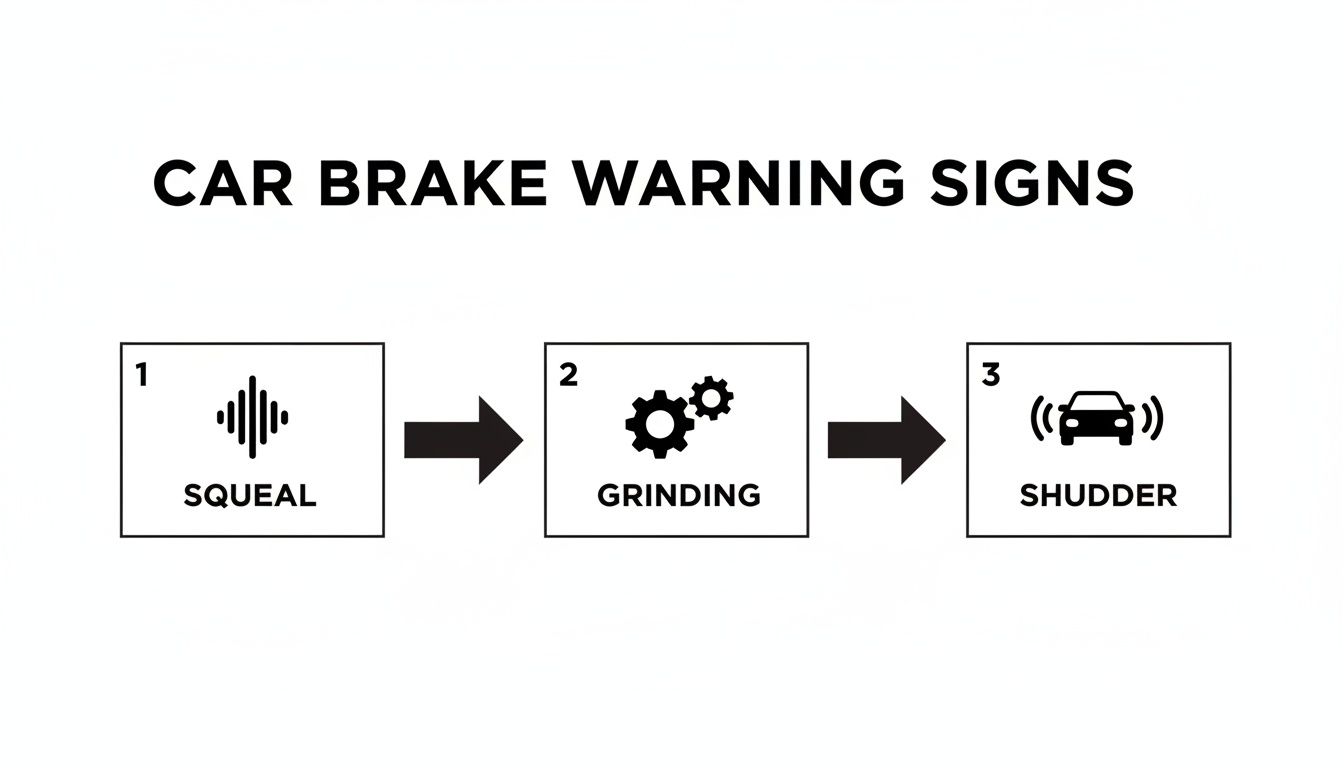
From a high-pitched squeal to a gut-wrenching grind, these are clear signs that parts are wearing out and need an expert's attention.
The Component-by-Component Breakdown
With the wheels removed, the real hands-on work begins. Our technicians use a detailed checklist to make sure absolutely nothing gets missed, focusing on the key components that work in harmony to slow your car.
Brake Pads and Rotors: Using a special gauge, we measure the thickness of your brake pads down to the millimetre. We’re looking for wear that’s getting close to the minimum safe thickness, which is generally around 3-4 millimetres. At the same time, we'll run a hand over the brake rotors, checking for any grooves, warping, or blue spots from overheating that could compromise your stopping power.
Calipers and Hardware: The calipers are the hydraulic clamps that squeeze the pads against the rotors. We check them to make sure they move freely. A seized caliper is a common culprit for premature wear and overheating. We also inspect all the little parts—the pins, clips, and slides—for rust and ensure they're properly lubricated to do their job.
Brake Lines and Hoses: We trace every centimetre of the brake lines and flexible rubber hoses. We’re on the hunt for any cracks, bulges, brittleness, or leaks that could cause a sudden and complete loss of braking ability.
This isn't just about spotting what's worn out today. It's about predicting what might fail tomorrow. A tiny crack in a hose or a sticky caliper pin are the kinds of time bombs a thorough, professional inspection is designed to find.
Checking the Hydraulic System
The mechanical parts are only half the story. The hydraulic system, which uses fluid to transfer pressure, is equally vital to your safety. Think of brake fluid as the lifeblood of the system; it’s what turns the pressure from your foot into real stopping force at the wheels.
A technician will test the brake fluid for two things: its level and its condition. Low fluid might indicate a leak, while dark, murky fluid is a sign of contamination from moisture and copper, which can boil under heavy braking and cause the pedal to feel spongy or go to the floor.
You can dive deeper into why this fluid is so important in our complete guide on brake fluid service. By testing the fluid’s condition, a technician can recommend a flush before it starts to degrade your braking performance. This is the real value of getting a professional brake check near me—it replaces uncertainty with the confidence of knowing you’re safe on the road.
Brake Check Costs and Timelines in Whitby
When you realize your brakes need a look, two questions pop up almost immediately: "How much is this going to cost?" and "How long will my car be in the shop?" Let's break down what you can realistically expect here in Whitby, so you can plan your budget and your day without any guesswork.
Here at Carmedics Autowerks, we separate the inspection from any potential repairs. The brake inspection itself is a straightforward, affordable service. You're paying for a technician's dedicated time and expertise to give you a complete picture of your brake system's health.
What Factors Into the Final Cost?
It’s important to understand that the initial inspection fee is different from the cost of any work that might be needed. The total bill depends entirely on what we find when we get your wheels off.
- Your Vehicle: There’s a big difference in parts pricing between a family SUV and a high-performance German import. The make, model, and year of your car are the biggest factors.
- The Level of Wear: Catching worn-out brake pads early is always the most affordable fix. But if you've been hearing grinding, that often means the rotors have been damaged, and the repair becomes more involved.
- What Parts Are Needed: A simple job might just require a new set of brake pads. A more complex one could involve replacing the pads, rotors, and sometimes even the calipers.
An honest shop will never surprise you with a bill. We’ll give you the price for the inspection first. Then, if we find anything, we'll provide a detailed, itemized quote for the repairs. You see everything upfront and get to approve the work before we even pick up a wrench.
How Long Does a Brake Check Take?
What about your schedule? We respect your time. A proper, thorough brake inspection isn't a long process for our experienced technicians. You should plan for the inspection itself to take between 30 to 60 minutes.
That gives us the time we need to do it right: we'll road-test the vehicle, get it up on the hoist, pull the wheels off, and carefully examine every single part of your brake system.
If we find everything is in great shape, you’ll be on your way in about an hour with total peace of mind. If your car does need work, a standard brake pad and rotor replacement usually takes an additional one to two hours. You can get a much deeper look into how those repair costs are calculated in our guide to brake pad replacement costs.
You might see news about large-scale commercial truck inspections, like those tracked by industry sites like Overdriveonline.com. It's good to remember that the standards and timelines for a 20-ton transport truck have little in common with your personal car. Our focus is squarely on giving you accurate, specific information for your vehicle, right here in our Whitby shop.
Choosing the Right Shop for Your Whitby Brake Check
When you type "brake check near me" into a search bar, you’re going to get a long list of options. How do you sort through them to find a shop you can actually trust with your vehicle’s most important safety system? It really comes down to looking past the basic service and finding true expertise, quality parts, and a team that has your back.
At Carmedics Autowerks, we see a brake check as a serious commitment to your safety on the road. It’s not just another job on the list. Our technicians aren’t simply general mechanics; they are specialists with years of hands-on experience working on everything from the family SUV to high-performance European models.
The Value of Quality Parts
A brake job is only as reliable as the parts that go into it. We make it a policy to only use high-quality brake pads, rotors, and fluids that either meet or exceed the Original Equipment Manufacturer (OEM) standards. This isn't about a bigger bill; it's about giving you predictable, reliable stopping power and genuine peace of mind.
Putting premium parts in your vehicle means you get:
- Quieter Operation: You can say goodbye to those frustrating squeals and vibrations that often come with cheaper alternatives.
- Consistent Stopping Power: Your brakes will feel and perform the same way every single time you press the pedal. No surprises.
- Longer Lifespan: Better materials are simply more durable and resist wear, which actually saves you money over time.
This focus on quality is a core part of our philosophy, and it extends to every single service we perform. You can learn more about the skilled professionals you’ll be trusting with your vehicle by reading about our dedicated car mechanic team.
Choosing a shop is a lot like choosing a doctor for your car. You want a team that is meticulous, uses the best tools, and communicates clearly, ensuring your vehicle receives the care it deserves for a long and healthy life on the road.
Finding a True Partner in Vehicle Care
It’s crucial to find a service centre that really gets the needs of everyday drivers here in Whitby. Your online search might pull up articles on large-scale commercial trucking initiatives, but our focus is squarely on your personal car or SUV. We stick to giving clear, practical advice you can actually use. You can see how different the focus is by reading about these large-scale brake safety weeks.
Our shop is conveniently located right here in Whitby, making it easy to get the expert care you need without the runaround. We've built our reputation on two things: honesty and skill. That means you get straightforward explanations and transparent quotes for every job we do. We want you to feel completely confident and informed from start to finish.
Ready to see what makes Carmedics Autowerks different? Getting your brake check scheduled is easy. Give us a call or book your appointment online today, and let us give you the confidence that comes from knowing your brakes are in perfect shape.
We get a lot of questions about brakes here at the shop. And honestly, when it comes to the most critical safety system on your vehicle, there are no bad questions.
Getting straight, honest answers is the best way to feel confident about your car's health and know when it’s time to get things checked out. Let's tackle some of the most common things we hear from drivers every day.
How Often Should I Get My Brakes Checked?
As a baseline, we recommend a professional brake inspection at least once a year or every 20,000 kilometres. But that's just a starting point. Your personal driving style makes a huge difference—if you spend a lot of time in stop-and-go city traffic, you'll be harder on your brakes than a highway commuter.
A fantastic habit to get into is having your brakes inspected during your seasonal tire changeovers. It’s the perfect opportunity, since the wheels are already off, for a technician to get a clear look. This simple step ensures a professional set of eyes on them twice a year, which is the best way to catch wear early and avoid bigger problems down the road.
Can I Replace Just the Brake Pads and Not the Rotors?
Technically, yes, you can—but it's almost always a bad idea. In the past, rotors were thick and could be resurfaced multiple times. Today's rotors are much lighter and are designed to wear down almost at the same rate as the pads.
Think of it this way: slapping new, perfectly flat brake pads onto old, grooved, or warped rotors is a recipe for trouble. You’ll likely get annoying squeals, vibrations when you brake, and you'll burn through those new pads in no time. We always measure the rotor’s thickness and check for any warping to give you a recommendation that’s based on safety, not guesswork.
My Electric Vehicle Has Regenerative Braking Do I Still Need Brake Checks?
Yes, you absolutely do. This is a crucial point for EV owners. While the regenerative braking system handles most of the slowing down, your traditional hydraulic brakes are still what you rely on for an emergency stop.
The catch is, because these friction brakes get used so much less, their parts are actually more likely to seize up from rust and inactivity. Regular inspections are vital to make sure the calipers and pins are lubricated, moving freely, and ready to work perfectly the instant you slam on the pedal.
What Is the Difference Between OEM and Aftermarket Brakes?
OEM (Original Equipment Manufacturer) parts are the exact same components your vehicle had when it rolled off the assembly line. Aftermarket parts are made by different companies to fit your vehicle.
Now, "aftermarket" can have a bad reputation, and it's true there are some low-quality options out there. However, we only source premium aftermarket parts from brands that meet or even exceed the factory standards, sometimes offering better performance or durability. We'll always walk you through the options that make the most sense for your car and your budget.
If you've ever felt a "spongy" brake pedal, you might be curious about the hydraulic side of the system. While it's on a different type of vehicle, this article on understanding brake bleeding gives a good overview of what's involved in maintaining a firm, responsive pedal.
Your safety on the road is what matters most to us. At Carmedics Autowerks, we deliver expert brake service with the transparency and skill you deserve. When you're ready for peace of mind, book your appointment and let our pros take a look.