

For most Ontario drivers, the best choice is ceramic window tint paired with a 30% VLT shade on the front side windows. That combination gives the strongest mix of legal compliance, heat and UV performance, and long-term durability for daily driving in Whitby and across the GTA.
If you're reading this, there's a good chance you're tired of the same problems every summer. You park for an hour, come back, and the cabin feels baked. You head east or west on the 401 and the glare off the glass and dash starts wearing on your eyes before the drive is half over. You also want the car to look right, not like it got the cheapest film the shop had on the shelf.
That's where most generic tint guides miss the mark. They talk about darkness like that's the whole story. It isn't. Best car window tinting in Ontario comes down to three things working together: the right film technology, the right legal shade, and an installer who cuts and fits it properly.
Ontario drivers also deal with conditions that cheap film doesn't handle well. Summer UV exposure can punish low-grade material, and winter salt, freezing weather, and repeated defrost cycles expose bad adhesive and sloppy installation fast. If you want tint that still looks clean years from now, material quality matters just as much as the shade itself.
Your Ultimate Guide to the Best Car Window Tinting
The right tint should solve real driving problems. It should cut harsh glare, take the edge off cabin heat, protect the interior, and add privacy without creating legal trouble or making the car harder to see out of at night.
For most vehicles on Ontario roads, ceramic film is the clear top-tier option. It performs better where drivers feel the difference, especially on long summer drives, stop-and-go commuting, and vehicles that sit outside all day. It also suits newer cars better because it doesn't bring the same signal issues associated with older metallic-style films.
Practical rule: If your main goal is long-term comfort and clean looks, choose film technology first, then choose shade second.
A good buying decision usually comes down to a few practical questions:
- How much heat do you want to cut: Not every film handles hot cabin temperatures the same way.
- How important is legal compliance: In Ontario, guessing wrong on front window shade can cost you.
- How long are you keeping the vehicle: Cheap film can look acceptable on day one and disappointing later.
- How picky are you about finish quality: Enthusiasts notice edge gaps, contamination, and film distortion immediately.
The smart approach is simple. Start with the laws that apply in Ontario. Then choose the best film you can afford within those limits. After that, judge the shop by the quality of its installation, not just the sales pitch.
Decoding the Different Types of Window Tint Film
Not all tint is built the same. Two cars can have a similar shade from the outside and perform very differently once the sun hits them. That's why film type matters more than most buyers realise.
Think of window films like different levels of sunglasses. Some mainly darken light. Some reflect. Some manage heat better while staying clear. The best car window tinting choice depends on what the film is doing, not just how dark it looks.
Dyed film
Dyed film is the basic entry point. It darkens the glass, cuts some glare, and gives the vehicle a cleaner, more private look. For drivers focused mainly on appearance, it can be an option.
The downside is long-term value. Dyed film is usually where you see more fading, less heat control, and a shorter useful life compared with more advanced products. On a vehicle that sees Ontario summers and winters back to back, that matters.
Metallized film
Metallized film works more like a reflective barrier. It helps push heat away rather than only darkening the glass. In theory, that sounds like an upgrade, and in some ways it is.
In practice, a lot of enthusiasts avoid it on modern vehicles. Reflection isn't always the look people want, and metallic content can create issues with electronics and signals. If you rely on in-car tech every day, that trade-off usually isn't worth it.
Carbon film
Carbon film sits in the middle for many buyers. It has a more refined appearance than dyed film and avoids the shinier look that some metallized products create. It also tends to hold colour better over time.
For someone who wants a more serious film than dyed but isn't ready to stretch to ceramic, carbon can make sense. It gives a cleaner finish and a more premium feel without going all the way to the top of the category.
Ceramic film
Ceramic is where performance separates itself. According to Ceramic Pro's guide to automotive window tint, ceramic film blocks up to 50% of solar heat and 99.9% of UV exposure without reducing visibility, while also offering shatter resistance and lifetime warranty coverage against peeling, fading, or bubbling.
That's why ceramic is the film I'd point most Whitby drivers toward first. You get the performance benefits people care about, without relying on extreme darkness to feel a difference. On legal front windows, that matters a lot.
Ceramic is the film that proves a lighter legal shade can still perform like a premium product.
If you want a deeper look at available materials and product options, this overview of automotive window tint films is a helpful starting point.
Window Tint Film Comparison
| Film Type | Heat Rejection | UV Protection | Glare Reduction | Signal Interference | Cost |
|---|---|---|---|---|---|
| Dyed | Low | Basic | Good | None | Low |
| Metallized | Moderate | Moderate | Good | Possible | Moderate |
| Carbon | Better than dyed | Strong | Good | None | Mid-range |
| Ceramic | Highest-performing option | Excellent | Strong without relying on darkness alone | None | Premium |
What works and what doesn't
Here's the blunt version.
- Works well for budget appearance upgrades: Dyed film.
- Works for buyers who want a step up without going premium: Carbon film.
- Works best for heat, UV, clarity, and modern vehicles: Ceramic film.
- Usually doesn't age as well in enthusiast eyes: Cheap film chosen only by price.
- Usually doesn't suit newer tech-heavy vehicles: Metallic-style products that risk interference.
If your standard is “looks good from ten feet away,” almost any film can sell itself. If your standard is “still looks right and performs properly after real Ontario use,” the hierarchy becomes much clearer.
Understanding Tint Performance and VLT Ratings
Once you know the film types, the next step is reading the spec sheet without getting fooled by marketing. Most buyers fixate on darkness. That's only one piece of the decision.
What VLT actually means
VLT stands for Visible Light Transmission. In plain language, it tells you how much visible light passes through the glass and film together. Lower VLT means a darker result. Higher VLT means a lighter result.
That's why you can't shop by asking for “the darkest legal tint” and assume every film behaves the same. One product may look sleek but do less for comfort. Another may stay within legal limits and still feel far better in direct sun because the film technology is stronger.
If you want a practical primer on how common shade ratings are described, this guide to automotive window tint percentages breaks down how drivers usually compare them.
Darkness is not the same as performance
Many people waste money by purchasing a darker low-end film expecting more heat protection, only to discover the cabin still gets hot and the film starts looking tired early.
A better way to judge tint is to ask what the film does beyond appearance:
- UV protection: Helps protect the cabin and the people inside it from daily exposure.
- Glare reduction: Makes bright daytime driving easier on the eyes.
- Heat control: The primary comfort factor when the car has been parked in the sun.
- Clarity: Good film shouldn't make the view outward feel muddy or distorted.
How to think about real-world performance
When I look at a film recommendation for an Ontario driver, I think less about “How dark do you want it?” and more about “What problem are you trying to solve?”
A quality tint should feel better in the driver's seat, not just look darker from the parking lot.
If your goal is a more comfortable commuter, legal ceramic at the right shade usually beats a darker bargain film. If your goal is strictly appearance, you still need to account for legal limits, night visibility, and how the film will age through winter.
The right question isn't “What shade looks coolest?” It's “What film still makes sense after a few years of sun, road salt, glass cleaning, and daily use?”
Navigating Ontario Window Tinting Laws in 2026
Ontario law is where a lot of window tint mistakes begin. Drivers hear “35%” in conversation, see it advertised online, and assume it's close enough. It isn't.
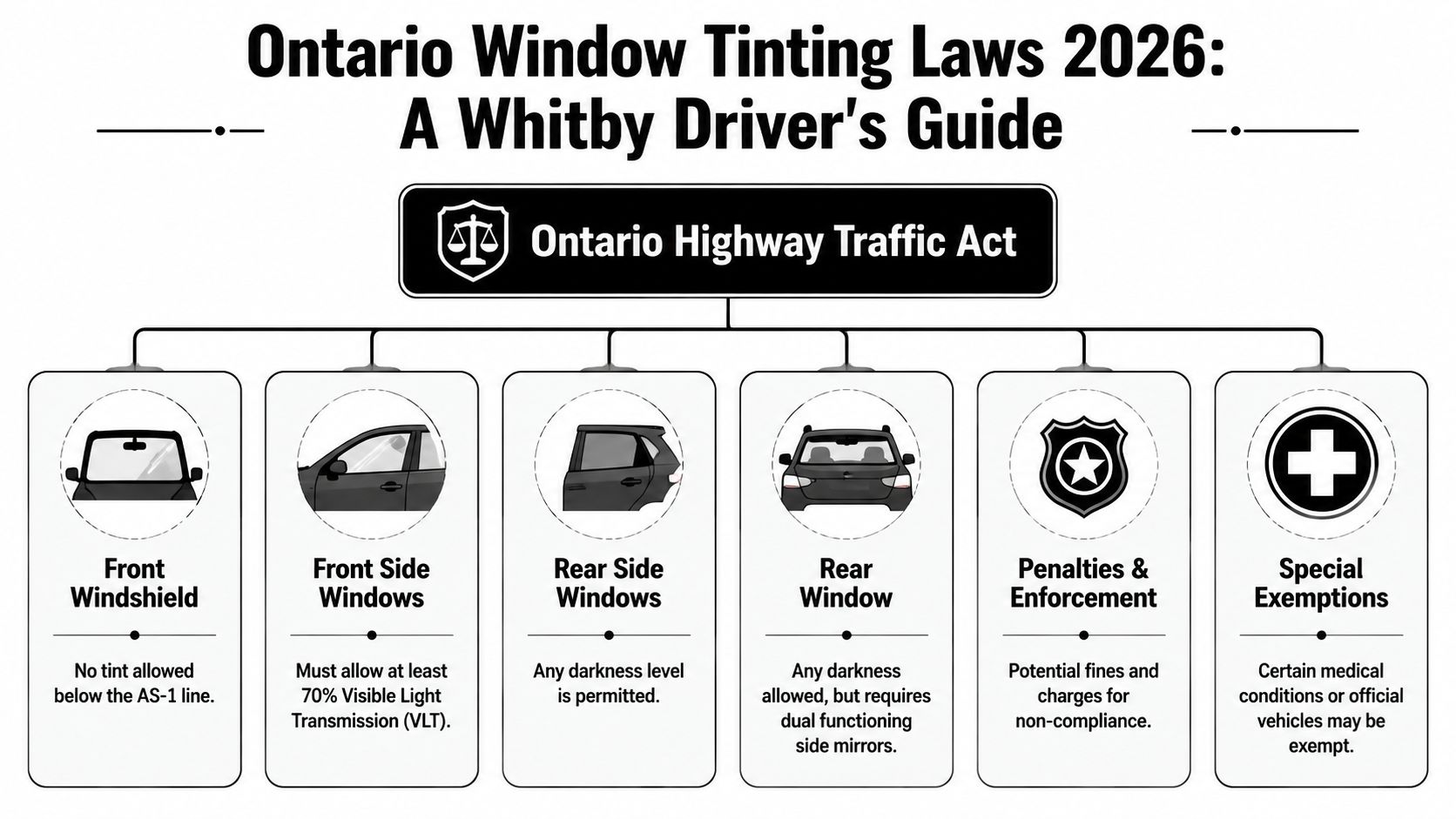
Under Section 73(3) of the Ontario Highway Traffic Act, front side windows must allow at least 70% of visible light to pass through, which means the practical legal limit is 30% VLT, and aftermarket tint on the windshield is prohibited. The same Ontario rules also allow unrestricted darkness on rear side windows and the rear windshield if the vehicle has functional side mirrors, and non-compliance can bring fines from $85 to $500 per ticket according to Ontario window tinting law guidance summarising the HTA requirement.
The mistake drivers keep making
The biggest misunderstanding is treating a film labelled “35%” as if it's safely legal for Ontario front windows. It's not. A 35% tint allows only 35% of visible light through, which falls below the legal requirement for front side glass in Ontario as covered in the law reference above.
That misunderstanding catches a lot of people because the industry often talks in shade language, while the law is written around light transmission. Those are related, but they're not interchangeable if you're trying to stay compliant.
What's allowed where
A simple breakdown helps:
- Front windshield: Aftermarket tint isn't allowed.
- Front side windows: Glass must still allow at least 70% visible light transmission under Ontario rules.
- Rear side windows: Drivers have much more freedom on shade.
- Rear windshield: Darker tint is allowed if the vehicle has functioning side mirrors.
For local drivers who want a plain-English overview, this page on Ontario window tint laws is useful when comparing legal versus illegal setups.
If a shop tries to sell you a front side shade that sounds aggressive but gets vague about legality, stop there.
What this means for Ontario enthusiasts
The law doesn't stop you from building a clean-looking car. It just means the front half of the vehicle needs discipline. That's one reason 30% VLT has become the go-to legal target for many Ontario drivers. It gives a tasteful look and keeps you out of the common mistake zone.
Rear glass gives you more freedom, especially on SUVs and sportier builds where owners want stronger privacy. The smart setup is usually a legal front, a purpose-driven rear, and film quality that makes the whole vehicle feel consistent instead of patched together.
What to Expect for Tinting Costs and Warranty
Tint pricing varies a lot because the materials vary a lot. A low quote can mean a bargain, or it can mean thinner film, weaker adhesive, less stable colour, and a job that won't age well.
The cleanest way to think about cost is by category. Dyed film sits at the lower end. Carbon lands in the middle. Ceramic costs more up front because the material itself performs better and is usually the product chosen by drivers who plan to keep the vehicle looking sharp long-term.
What you're actually paying for
With premium tint, you're not just buying darkness. You're paying for better film construction, cleaner optical clarity, stronger heat management, and more consistent longevity.
That last point matters in Ontario. Seasonal expansion and contraction, rear defrost use, repeated window movement, and harsh winter conditions expose poor film quickly. Cheap tint often looks like a deal only until the edges lift, the colour shifts, or the surface starts showing defects.
What a strong warranty should cover
A reputable tint warranty should clearly address film failure, not hide behind vague language. Good coverage often focuses on these issues:
- Peeling: The film shouldn't release at the edges under normal use.
- Bubbling: Adhesive failure or poor film quality should be covered.
- Fading: Colour stability matters if you want the car to keep a uniform look.
- Manufacturer-backed defects: You want clarity on who stands behind the product.
Ontario buyers often choose legal 30% VLT because it balances privacy, glare reduction, and compliance, and premium ceramic tints at that shade often include lifetime warranties against peeling, fading, or bubbling according to Privacy Tint's discussion of legal window tint shades and types in Ontario.
If you're comparing quotes, this breakdown of car window tinting cost helps frame what influences price beyond just vehicle size.
Cheap tint usually costs more later
The worst tint jobs are rarely the most expensive. They're the ones that need to be removed and redone.
If the car is new, performance-oriented, or something you care about visually, it makes more sense to buy once and buy properly. Good ceramic film with a real warranty usually delivers better value than a lower quote followed by removal, replacement, and frustration.
How to Spot a Flawless Professional Installation
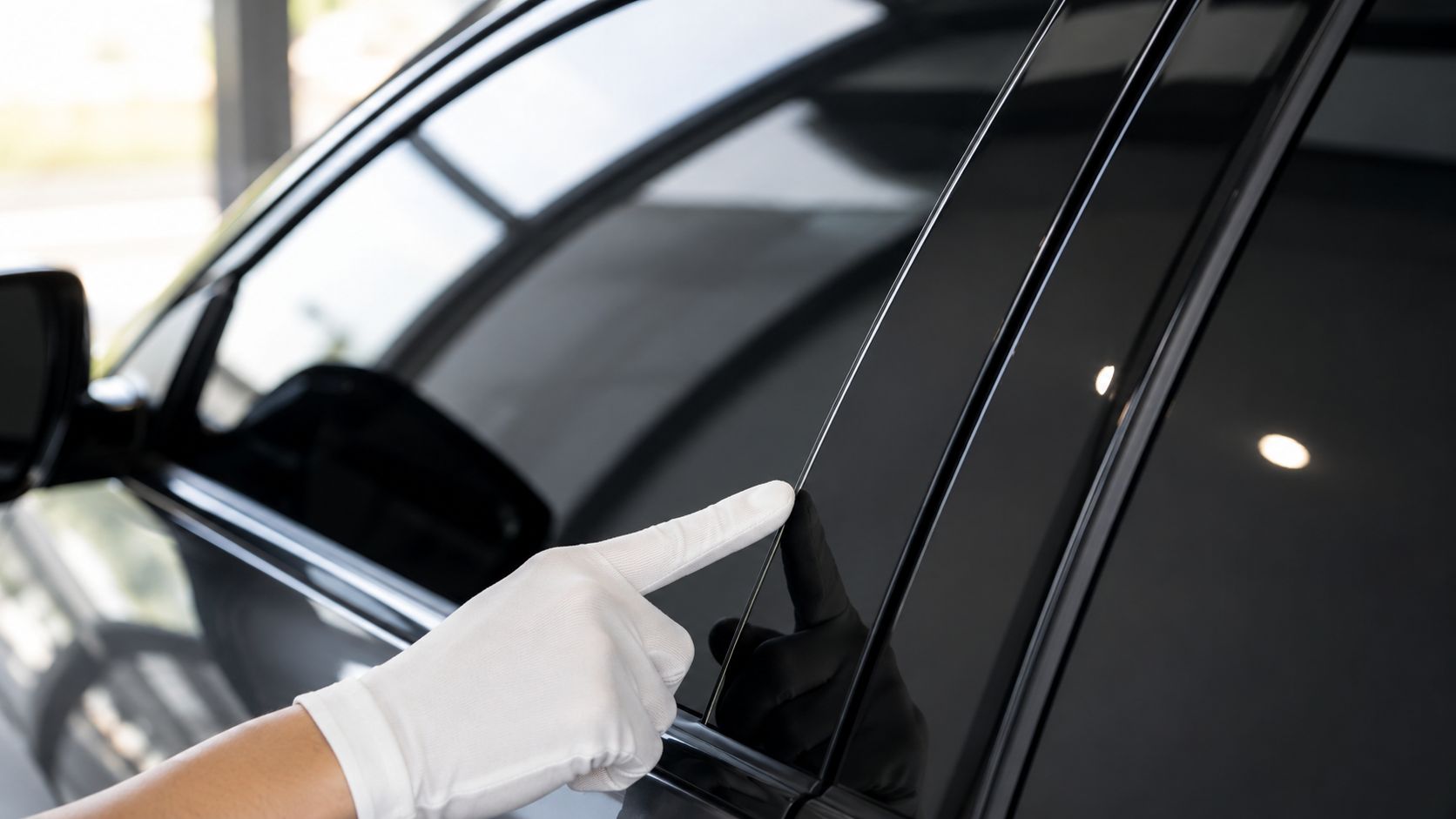
A proper tint job looks subtle because the installer handled the details. A poor one announces itself fast. You'll see gaps, contamination, fingers, lifted corners, or film that never quite looks settled.
Before you judge the shade, judge the workmanship.
Green flags you want to see
A quality installer leaves behind a finish that looks factory, not aftermarket. Check for these signs:
- Tight edge work: The film should sit close to the edge of the glass on roll-down windows, with only a minimal gap needed for function.
- Clean interior surface: You shouldn't see trapped hair, dust, lint, or specks scattered through the film.
- Smooth finish: Minor haze right after installation can happen during curing, but the film shouldn't show large pockets, creases, or distortions.
- Even appearance across windows: The shade and finish should look consistent from panel to panel.
Red flags that signal a shortcut job
Bad tint usually gives itself away at the corners and edges first. Watch for these problems:
- Large light gaps: Big uncovered borders make the job look cheap immediately.
- Peeling corners: This often points to poor prep or poor handling.
- Visible contamination: Dirt under film means the installer didn't control the work area properly.
- Scratches or knife marks: Sloppy cutting can damage glass trim or defroster areas.
- Obvious distortion: Looking through the film shouldn't feel wavy or warped.
A good tint job doesn't draw attention to the installation. It makes the glass look like it came that way.
Use Ontario's common legal shade as a reference point
Because 30% VLT is the most popular legally compliant shade in Ontario, it also gives you a familiar benchmark when you're inspecting completed vehicles. On a quality install, that shade should look clean, balanced, and refined rather than overly dark or patchy. As noted earlier, premium ceramic films at this shade often come with lifetime warranty coverage for peeling, fading, or bubbling, which is another sign you're dealing with a better product standard.
The final inspection should happen in good light. Look from inside and outside the car. Roll your eyes along the top edges. Check the rear window carefully around defroster lines. If something looks off on delivery day, it usually won't improve by pretending not to notice it.
Why Whitby Drivers Choose Carmedics Autowerks
For local drivers, the decision usually comes down to trust in three areas. The shop needs to understand Ontario law, offer film that makes sense for local weather, and install it cleanly enough that the result still looks right long after the first wash.
That combination matters more in Whitby than many people think. A daily-driven car here sees bright summer sun, winter grime, repeated glass cleaning, and plenty of stop-and-go use. Film that's chosen only for price tends to show its weaknesses early.
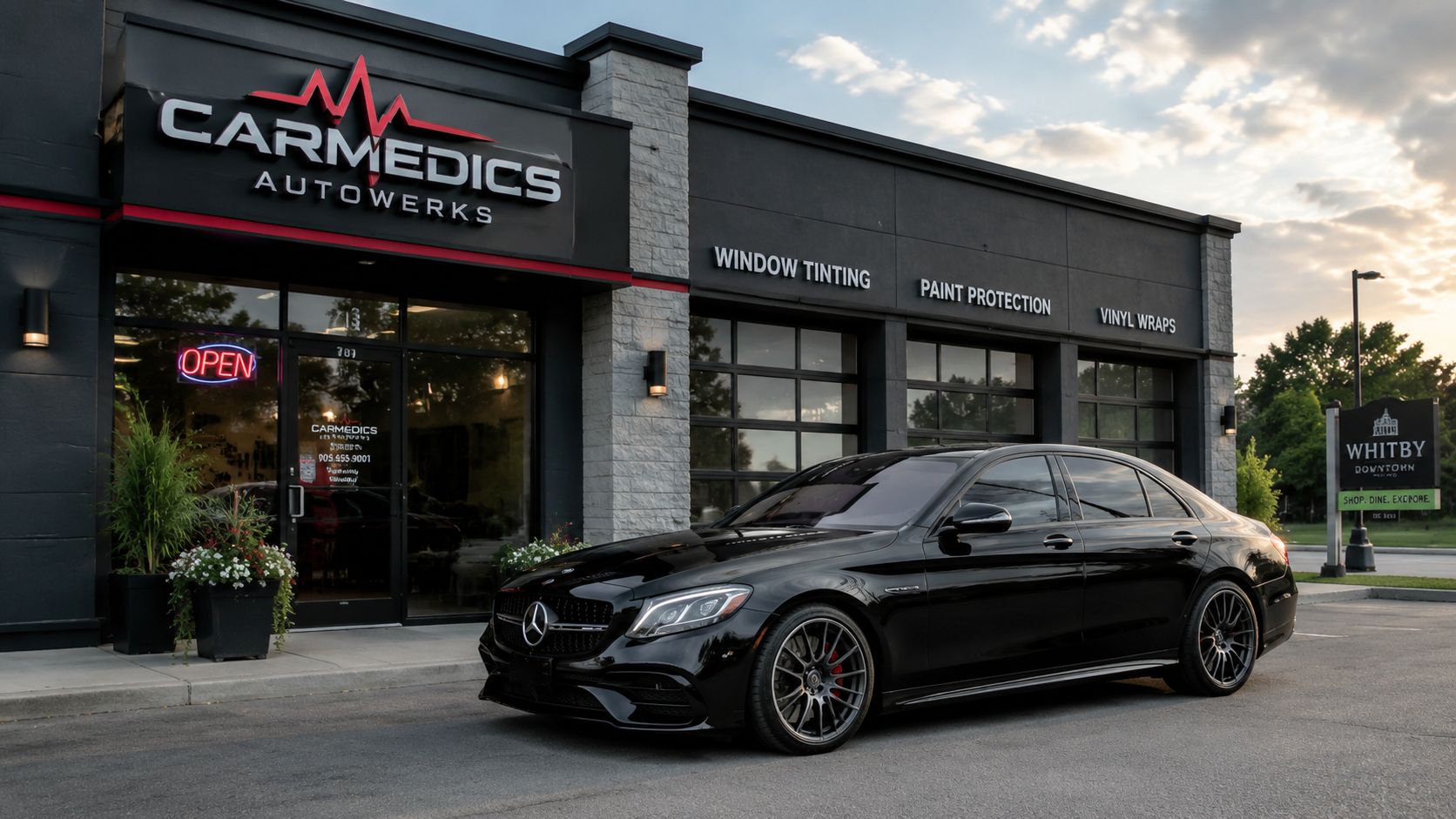
If you're comparing local options for best car window tinting, car window tinting services in Whitby should be evaluated on the same criteria outlined above. Film type, legal front-window choices, warranty clarity, and installation finish tell you far more than a generic sales promise.
The practical advantage of working with a local shop is that your vehicle setup can be matched to how you drive. Some owners want a clean legal commuter. Others want a more private rear setup for an SUV. Others care most about preserving the look of a newer car with premium ceramic film. The right recommendation comes from matching the material and shade to the vehicle, not forcing everyone into the same package.
Frequently Asked Questions About Car Window Tinting
How long should I wait before rolling the windows down
Wait until the installer says the film has settled enough for normal use. Tint needs time to cure properly, and rolling windows down too early can stress the film at the top edge. If you've just had the car tinted, patience is part of protecting the finish.
What should I use to clean tinted windows
Use a soft microfiber cloth and a cleaner that's safe for tinted film. Avoid harsh chemicals and abrasive pads. The goal is simple. Clean the glass without scratching the film or weakening the surface over time.
Can I still use the rear defroster
Yes, but treat the rear glass with care. A proper installation is designed to work with normal vehicle use, including defrosting. The key is avoiding aggressive scraping or rough cleaning on the inside surface.
Are small imperfections normal right after installation
Some minor haze or a slightly unsettled appearance can happen while the film cures. What you don't want are large bubbles, contamination, lifting corners, or obvious distortion. Those are workmanship concerns, not normal settling.
Is darker always better
No. Darker doesn't automatically mean cooler, higher quality, or more comfortable. Film technology matters more than commonly expected, which is why legal ceramic often outperforms darker bargain films in day-to-day driving.
If you want a clean, legal, well-finished tint setup for your car or SUV, Carmedics Autowerks Inc offers window tinting as part of its vehicle protection services in Whitby. It's worth booking a consultation and comparing film options based on your vehicle, your driving habits, and the finish standard you expect.