
A professional annual oil spray in Ontario usually runs about $150 to $250 for a car, while a permanent undercoating lands closer to $400 to $850+. SUVs cost more than cars because they need more coverage.
That's the starting point for the cost to rust proof car question. The number changes fast once you move past the first invoice and look at how long you plan to keep the vehicle, how much maintenance you'll do, and how much rust repair you're trying to avoid.
What Rust Proofing Costs in Ontario
If you want the blunt answer, a car in Ontario usually falls into two buckets. An annual oil spray is typically about $150 to $250 for a car, while a permanent undercoating sits closer to $400 to $850+. SUVs generally cost more than cars because shops have more underbody area and more cavities to cover, so they use more material and more labour.
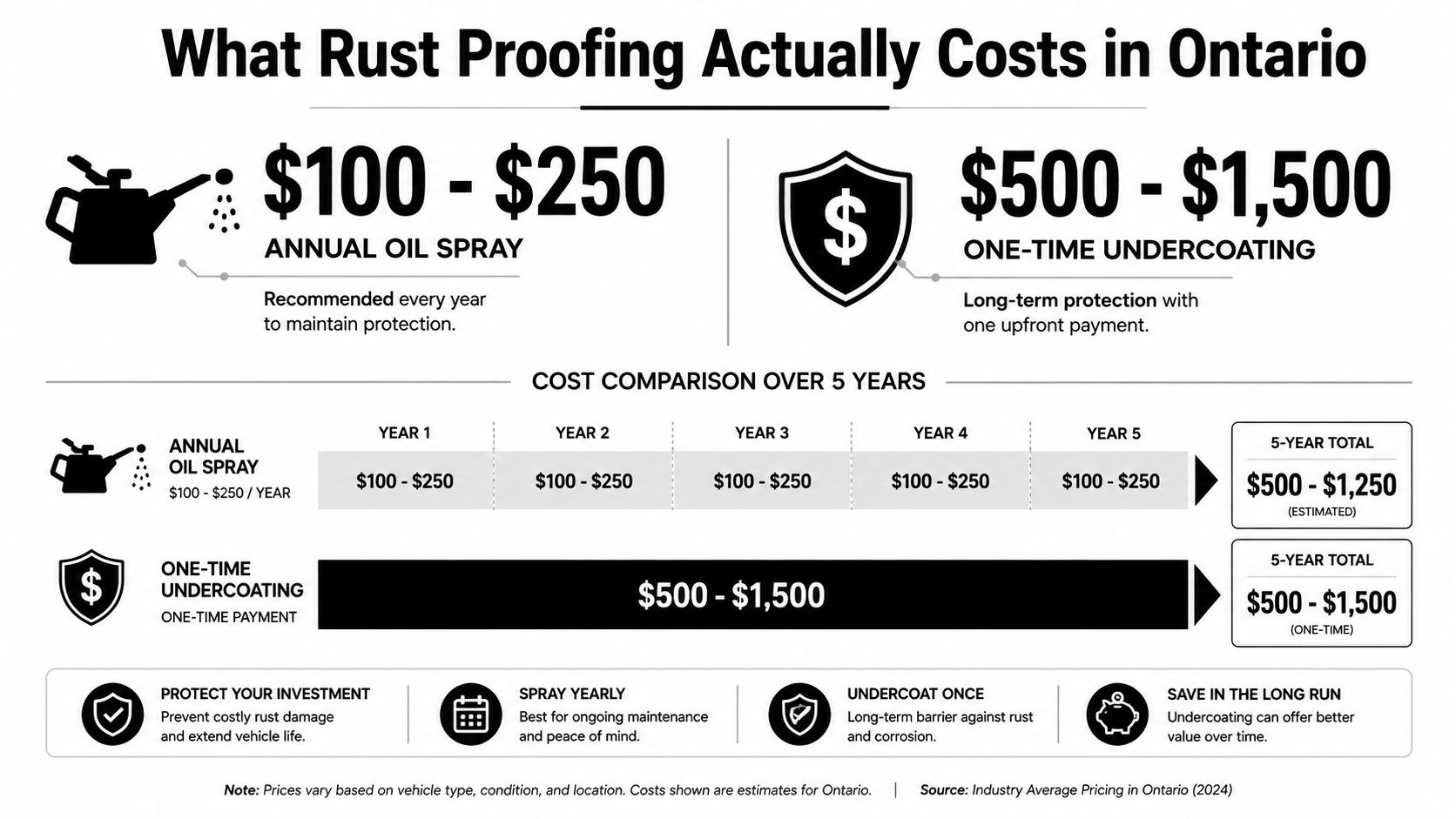
The useful part is not the sticker price by itself. The cost to rust proof car changes once you separate first-year spend from long-term ownership, because some products need to be renewed every year and others ask for a bigger upfront payment with less frequent follow-up. Two quotes can look very different and still be fair.
Practical rule: if you plan to keep the vehicle through multiple winters, compare the first-year invoice against the long-run bill, not just the headline number.
For shoppers who want a local reference point, a Whitby driver comparing packages can use the Ontario baseline above and then check the service details against auto undercoating pricing. That matters because one quote may cover undercarriage spray only, while another includes cavity protection, prep work, and later touch-ups.
A compact car usually starts near the low hundreds if the scope is basic. A larger SUV can move into the mid-hundreds fast once the package includes more coverage. That is normal, not a rip-off.
What to budget for at the start
- Annual oil spray: cheaper to begin with, but it comes back every year.
- Permanent undercoating: higher upfront cost, better if you hate recurring appointments.
- SUVs and light trucks: expect the quote to climb because coverage grows with size.
- Package scope: undercarriage only is cheaper than full cavity protection.
Comparing the Main Rust Proofing Methods
Shops throw a lot of words at buyers, but the choices are simpler than the marketing makes them sound. You're usually deciding between a renewable oil treatment, a thicker coating, a niche electronic add-on, or a panel-protection product that helps in a different way. If a shop can't explain which problem each method solves, walk away.
| Method | Typical Cost (CAD) | Lifespan | Best For |
|---|---|---|---|
| Annual oil spray | About $150 to $250 for a car in Ontario | Renewed yearly | Daily drivers, winter commuters, owners who want lower first-year cost |
| Drip-and-drill oil treatment | Usually sits in the same general annual maintenance mindset | Renewed yearly | Older vehicles and hard-to-reach cavities |
| Wax or paraffin undercoating | Not priced in the verified data, but generally positioned as a coating option | Longer than a seasonal spray, shorter than a true permanent system | Drivers who want added barrier coverage |
| Polyurethane or rubberized permanent undercoating | About $400 to $850+ in Ontario | Multi-year, but still needs inspection | Owners who want fewer repeat visits |
| Electronic or cathodic module | No verified price data available here | Depends on the system, but it does not replace a coating | People tempted by gadget sales, not a primary rust solution |
| PPF-style panel protection | Not a rust-proofing substitute, but useful for exposed paint and high-impact areas | Long-term panel protection, not underbody protection | New vehicles and owners pairing paint defence with underbody care |
The best fit depends on how you drive. An annual oil spray is the sensible default for a winter car because it's cheap to renew and easy to understand. A permanent undercoating makes more sense if you want one bigger payment and less annual attention, but you still need to inspect it.
A coating protects metal. A module does not clean road salt off your underbody.
That's why I wouldn't treat an electronic rust device as a substitute for physical protection. If you want a deeper breakdown of the product categories people try to sell, the best rust prevention for cars guide is a useful sanity check before you sign anything.
PPF belongs in the conversation only as a complement. It helps protect painted panels from chips and abrasion, but it doesn't replace underbody rust protection. If a dealer bundles it into a rust pitch, ask them to separate the two jobs clearly.
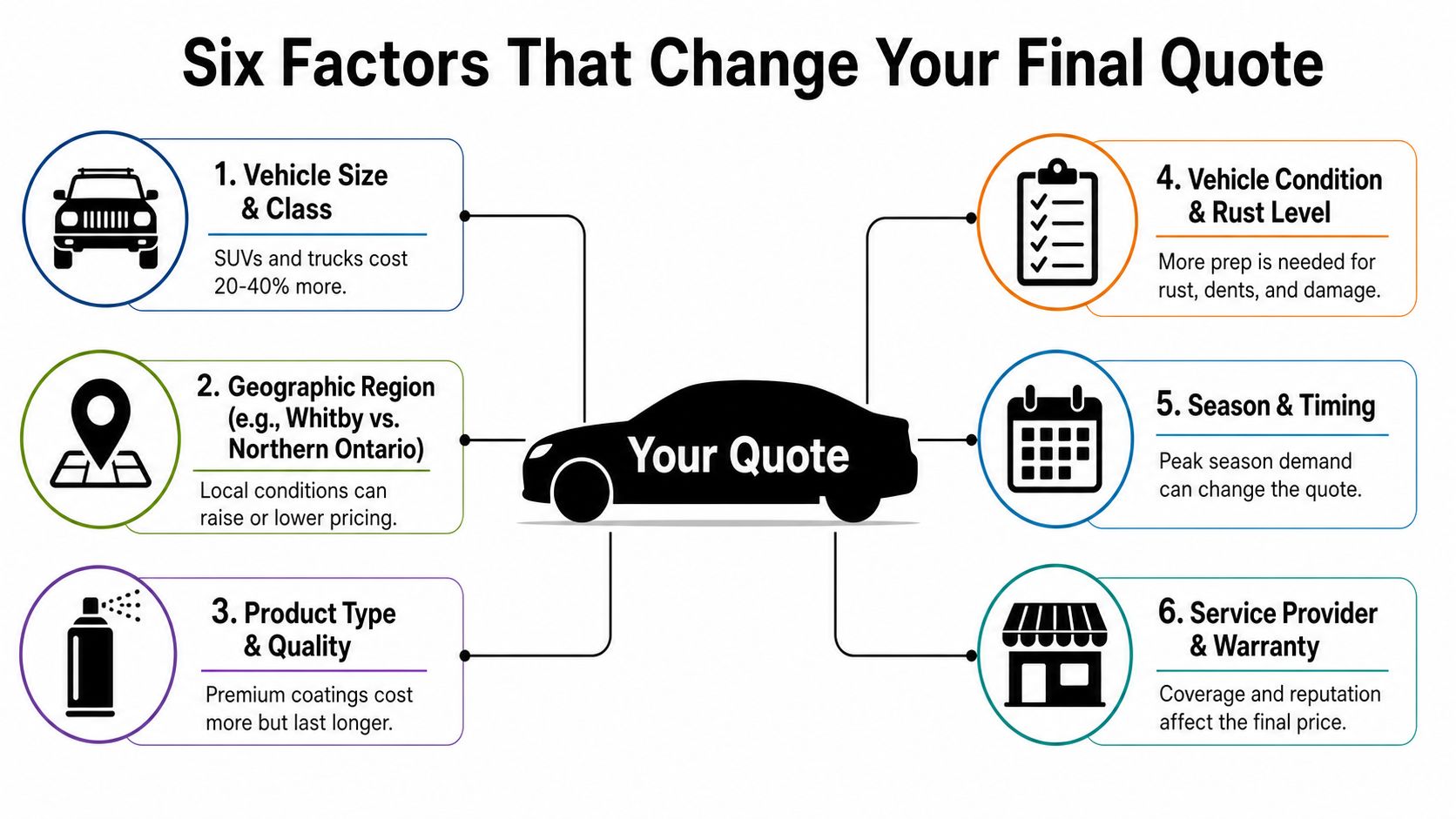
Six Factors That Change Your Final Quote
Two vehicles in the same driveway can still land on different rust proofing quotes. Shop time, vehicle size, and how much prep the underbody needs all change the final bill. A clean new car is cheaper to treat than a dirty truck with early corrosion, and that gap shows up fast once the technician starts working.
Vehicle size and class
Smaller cars cost less because they take less material and less labour. SUVs and light-duty pickups need more spray coverage, so the quote rises with the vehicle class. That pattern shows up in Ontario pricing, where cars sit lower than larger vehicles.
Current rust condition and prep work
A clean vehicle is the easiest one to protect. If the underbody already has surface rust or flaking spots, the shop has to spend extra time cleaning and prepping before any coating goes on. Once corrosion has started, the job is no longer a quick spray, and the quote should reflect that extra work.
Coverage level
Undercarriage-only service is cheaper than a package that also treats cavities and door-shield areas. In plain English, you pay more when the shop is asked to hit more hidden metal. That's why a quote for full-body coverage should always be higher than a basic underbody treatment.
Labour rates and region
Durham Region and the Greater Toronto Area usually run a bit higher than smaller markets because labour costs more. That does not automatically mean the shop is overcharging. It means you should compare exactly what is included, not just the price on the bottom line.
Warranty length and coverage
A longer warranty sounds good until you read the fine print. Some warranties leave out follow-up inspection, and some exclude existing rust, so the promise on paper is weaker than it looks. Ask what is covered, what is excluded, and whether reinspection is part of the deal.
Seasonal demand
Rust proofing is a winter business, so timing changes your options. Shops get busier before cold weather hits, and once the first snowfall arrives, booking choices shrink fast. If you want better scheduling and less hassle, book before the rush.
If you want a practical checklist for comparing quotes, the how to prevent rust on a car guide is a useful place to check what a shop should be covering before you agree to the work.
Rule of thumb: if a quote comes in far below the local norm, find out exactly what the shop left out.
One-Time Undercoating Versus Annual Oil Spray Over 10 Years
The cheap option is rarely the smart one. Ask what you will spend over ten winters, and ask what rust repair you are trying to avoid. That is where the difference shows up.
Annual oil spray in Canada is commonly priced around $130 to $200 per year. If you keep it up, the 10-year total lands around $1,500 to $2,000. Some Canadian guidance from RustCheck puts annual treatment at $150, which works out to about $1,500 over 10 years when it is repeated consistently. Canadian rust-proofing value guide
One-time dealer undercoating looks cheaper on day one because you pay once, often in the $500 to $1,500 range. The long-term problem is that the protection is weaker, and even the Automobile Protection Association still shows retouching later at $120 to $150 after three years. If you want a full view of how long-term body protection affects the budget, the paint protection film cost page is useful because it separates cosmetic protection from rust prevention.
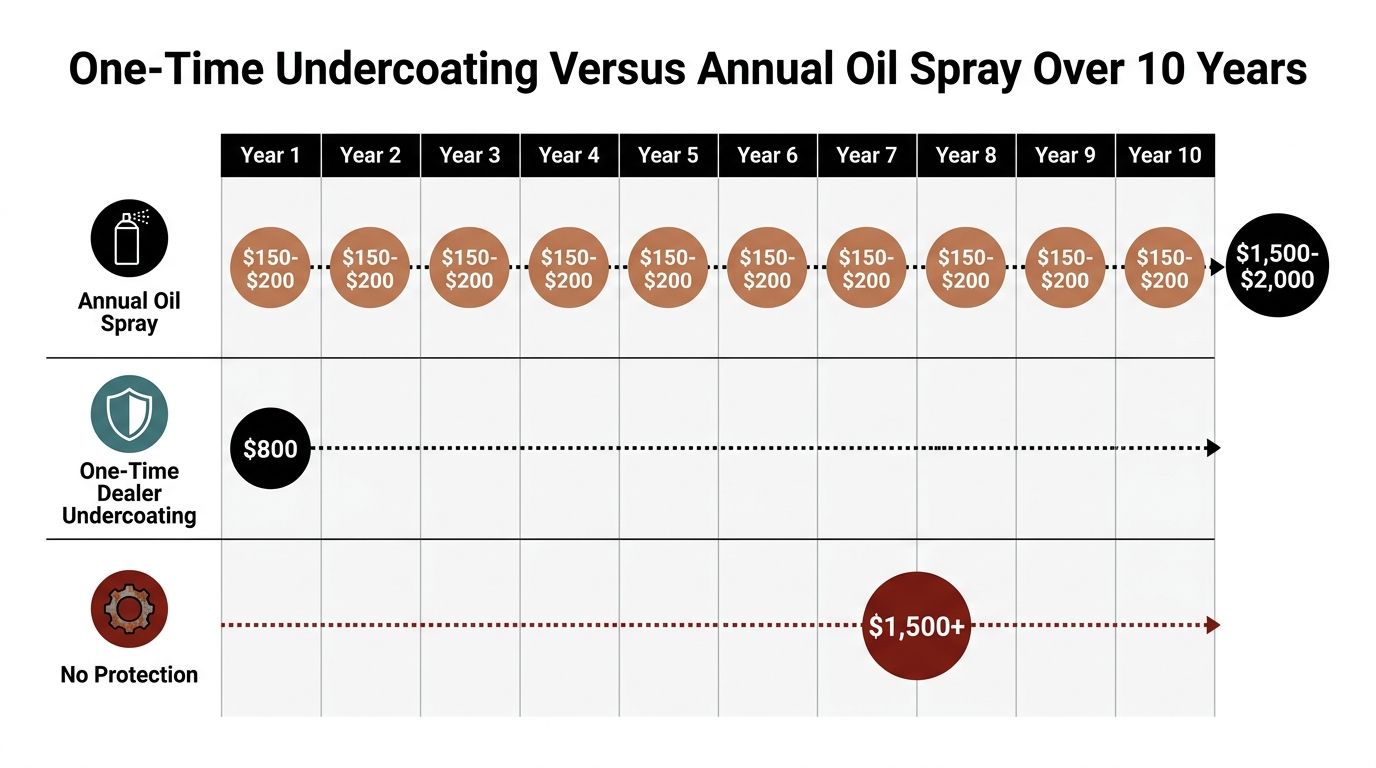
The repair bill you are trying to avoid
Corrosion repair can start around $500 for minor surface treatment and climb to $5,000+ for severe structural damage. That is the part most drivers ignore, because rust does not stay cosmetic for long. Canadian rust-proofing value guide
How to think about the options
- Annual oil spray: best if you want a predictable maintenance routine and steady coverage.
- One-time undercoating: best if you want one larger first-year payment and fewer return visits.
- DIY kit: workable for handy owners, but the value depends on your patience and how well you clean and prep first.
DIY is the only option where your own time becomes part of the price. Materials may cost a few hundred dollars, but you still have to clean, prep, and check the coating every season. Skip prep and you waste the product.
Common Misconceptions About Rust Protection
The biggest myth is that a new car does not need rust protection. Factory galvanising helps, but Ontario roads still throw salt, slush, moisture, and grit at the underside all winter. If you plan to keep the car for years, protection is still a smart move.
Another myth is that electronic rust modules can replace coatings. They cannot. A device on its own is not washing salt out of seams, shielding the underbody, or leaving a physical barrier on exposed metal. Drivers buy into the pitch because it sounds high-tech, not because it solves the core problem.
“Lifetime” undercoating is another phrase that gets oversold. Serious protection still needs inspection and touch-up, because road salt, winter washing, and normal abrasion keep working on the coating. The Automobile Protection Association's structure, with a complete treatment at C$450 to C$750, a base undercarriage-only treatment at C$275, and retouching at C$120 to C$150 after three years, makes that clear.
A shop that refuses to talk about future inspection usually wants to sell you confidence, not protection.
I trust physical systems more than promises with no follow-up plan. An honest rust-proofing conversation covers what gets treated, how often it should be checked, and what the warranty leaves out.
If a salesperson says the treatment is permanent, ask what happens after road salt, winter washing, and normal wear. If they cannot answer clearly, they are selling a story, not a service. The better shops talk about renewal because they know vehicles live in the world.
Choosing a Rust Proofing Shop in Whitby and Durham Region
In Whitby and across Durham Region, I'd look for one thing above all else, a shop that puts the quote in writing and breaks it down. You want to see what part of the vehicle gets treated, whether cavities are included, and whether the price includes prep or just application. If the quote is vague, the service will be vague too.
Ask to see the undercarriage before and after the job. A good shop won't act offended by that request. They should also explain the warranty in plain English, especially what it covers and what it doesn't.
What a decent local quote should answer
- Coverage: undercarriage only, or full cavity treatment too.
- Condition: whether any existing rust needs attention first.
- Warranty: how long it lasts and whether it requires inspection.
- Products used: oil spray, wax, rubberised coating, or another system.
- Timing: when you should book before winter.
The GTA usually sits a touch above lower-cost markets because labour is more expensive. That means a Whitby quote can be slightly higher than the broad national chatter you'll see online, and that's not automatically a problem. The issue is whether the shop explains the difference.
For local drivers, Whitby safe auto repair is a useful starting point if you want a place that already thinks in terms of winter exposure, underbody care, and long-term vehicle health. Carmedics Autowerks in Whitby also fits naturally into that conversation because it handles protection work alongside broader services like undercoating, fleet maintenance, and paint protection film.
Best move: choose the shop that shows you the vehicle, not the one that just sells you a package.
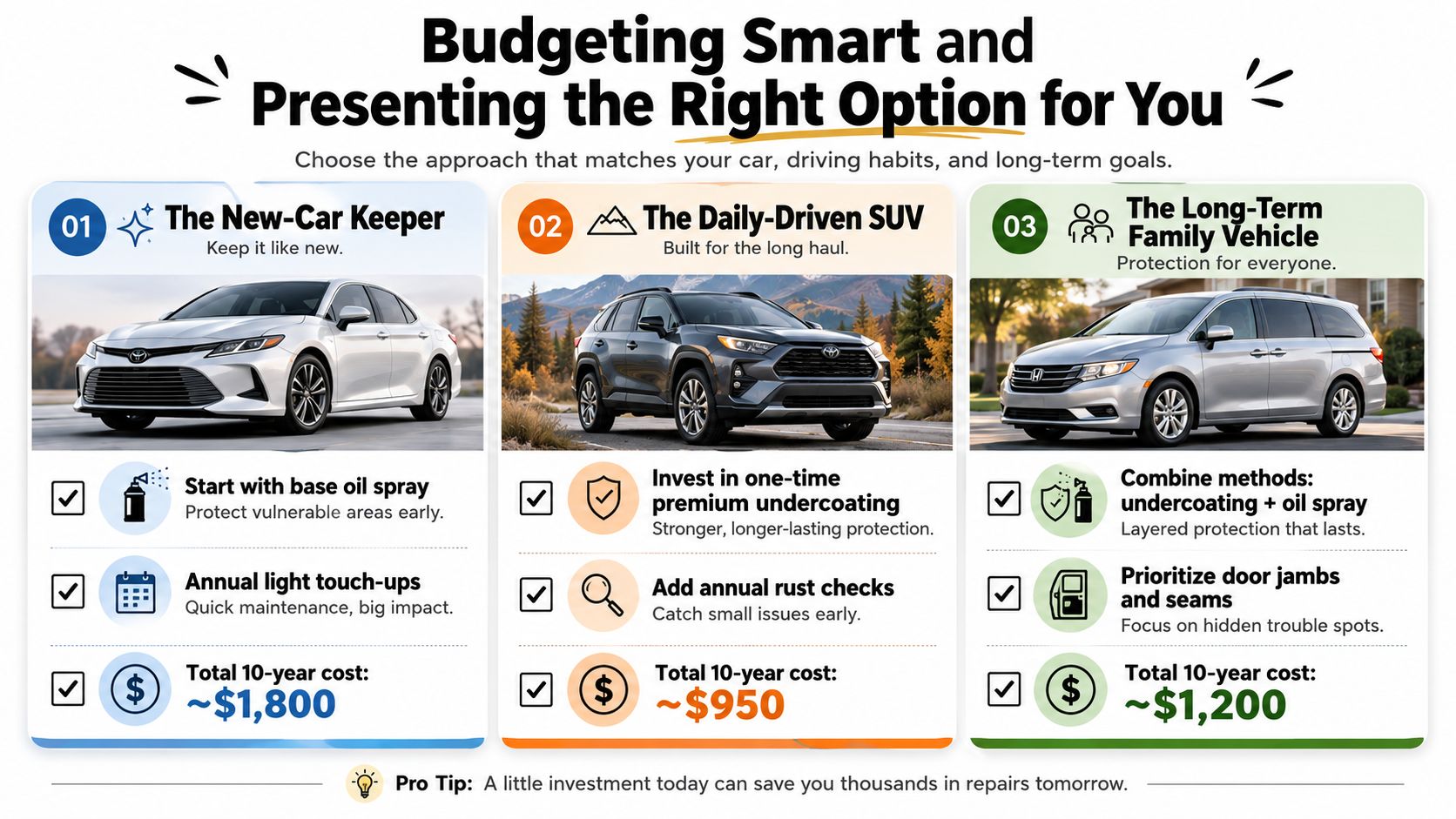
Budgeting Smart and Picking the Right Option for You
If the car is new and you plan to keep it, start with a base undercoating or a serious oil spray and keep up with light annual touch-ups. That usually gives you the best balance between early protection and manageable spending. The mistake to avoid is paying for a giant package before you know how long you'll own the car.
A daily-driven SUV in Whitby needs a tougher plan. I'd budget for annual oil spray plus cavity treatment, because bigger vehicles take more spray time and more exposed surface. The mistake here is waiting until the first visible rust shows up, because then you're paying to manage damage, not prevent it.
A budget-conscious DIYer can use a garage-applied product every fall, but only if the prep is serious. Clean metal and good access matter more than the can label. The mistake to avoid is applying over dirt, salt, or damp underbody grime and calling it protection.
If you want one smart timing rule, use late October for a pre-winter inspection. That gives you a chance to catch rust early, sort out prep work, and get ahead of freeze-thaw before it does more damage. It's the cheapest place to intervene.
For more context on paint and film protection as part of a broader car-care budget, read PPF costs and benefits explained. It helps separate cosmetic protection from corrosion protection, which is exactly the distinction most owners need.
If you want straight answers on rust protection, book with Carmedics Autowerks Inc and get a quote that matches your vehicle, your winters, and your budget. They can walk you through undercoating, protection options, and what your car needs before the salt season starts.