You've found the right used car. The price feels fair, the test drive went well, and now the paperwork starts. That's usually the moment the stress kicks in. You start hearing terms like safety certificate, inspection station, fit, unfit, reinspection, and suddenly a simple vehicle purchase feels a lot more complicated than it should.
The same thing happens when someone in Whitby brings in a vehicle from another province, or hands a car down to a son or daughter and needs to transfer ownership properly. Most drivers aren't worried about the inspection itself. They're worried about what they don't know. Will the car pass? What gets checked? Is this going to turn into a long list of repairs?
A good inspection process shouldn't feel like a trap. It should feel like a straightforward check-up that tells you whether the vehicle meets the required safety standard right now. If there are problems, you should get a clear explanation and a practical plan to fix them.
That's why regular upkeep matters before inspection day even arrives. If you stay on top of basics like brakes, tires, fluids, and seasonal service, the process is usually far less stressful. A simple preventive maintenance routine for your vehicle can save you from the common last-minute surprises that catch many drivers off guard.
That Time of Year Your Vehicle Needs a Check-Up
In a shop, you start to notice the same pattern. A driver comes in excited about a recent purchase, then the conversation shifts. “I just need to know what this thing needs to pass.” That question usually has less to do with mechanics and more to do with peace of mind.
For Whitby drivers, inspection season often shows up during a life event, not on a maintenance calendar. A used vehicle changes hands. A student comes home with a car from another province. A family decides to keep an older vehicle on the road instead of replacing it. Those moments are practical, but they also put the vehicle under a different level of scrutiny.
Why inspections feel bigger than they are
Many drivers hear “inspection” and assume the worst. They picture a long failure sheet and a repair bill they weren't ready for. Sometimes repairs are needed, but very often, the primary issue is uncertainty. Drivers don't know what the shop is looking for, what's minor, what's serious, and what can wait versus what must be fixed before the vehicle can be certified.
That's where a proper auto inspection station helps. It doesn't just check the car. It gives you an objective answer about roadworthiness under the applicable standard.
A clean inspection experience starts with clarity. When the process is explained properly, most of the anxiety disappears.
The local reality in Whitby
Whitby drivers deal with the same day-to-day wear as the rest of Durham Region. Potholes, stop-and-go traffic, winter salt, frozen wiper blades, and curb impacts all add up. You might not notice gradual wear in a control arm bushing or uneven tire wear when you're driving the vehicle every day, but an inspection brings those issues into focus quickly.
The good news is that none of this needs to be mysterious. Once you know what an auto inspection station does, what Ontario requires, and how to prepare, the whole process becomes much easier to manage.
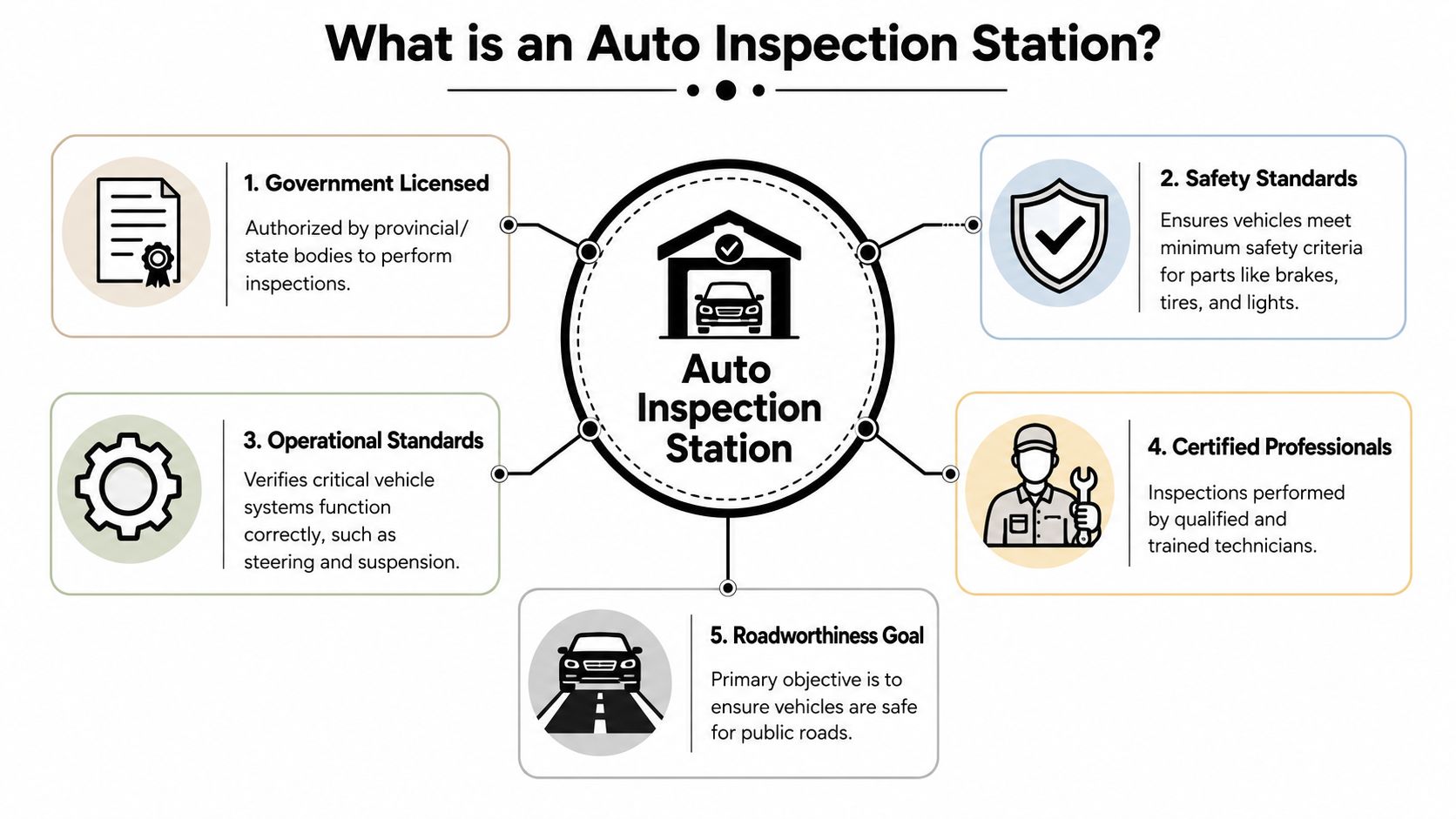
What Exactly Is an Auto Inspection Station
An auto inspection station is not just any repair garage with a hoist and a licensed mechanic. For inspection work tied to government standards, the facility has to be properly authorized to perform that type of inspection. In Ontario, that matters because the certificate issued by the station has legal significance for registration and ownership-related transactions.
If you're looking for a shop that handles inspections along with general repair work, it helps to start with a local automotive service centre near you that can both inspect the vehicle and deal with any issues found during the visit.
What the station is actually there to do
The job of an inspection station is simple in principle. It checks whether the vehicle meets the required minimum safety standard at the time of inspection. That means the focus is not cosmetic condition, resale value, or whether the car feels “pretty good for its age.”
Inspectors look at systems that affect safe operation, such as:
- Braking performance so the vehicle can stop safely and predictably
- Steering and suspension condition so the vehicle remains stable and controllable
- Lighting and signalling equipment so other drivers can see your intentions
- Tires and wheels so the car has proper contact with the road
- Structural and mechanical condition where damage or wear affects safety
Two inspections drivers often confuse
For most passenger vehicle owners, the main document they care about is the Safety Standard Certificate, often shortened to SSC. That's the certificate tied to many ownership transfers and registration situations involving used vehicles.
There are also annual inspection requirements that apply to certain commercial vehicles and buses. Those inspections serve a different purpose and follow a different schedule. That distinction matters because many drivers hear “annual safety” and assume their personal vehicle needs the same thing every year. In most everyday passenger-car situations, that isn't the case.
What does not work
Drivers often make the process harder by asking for the wrong thing. They book “a safety” when what they really need is a diagnosis first, because the vehicle already has warning signs like pulling, grinding brakes, or a lit dashboard lamp.
Practical rule: If the vehicle is already showing a problem, deal with the problem before expecting the inspection to go smoothly.
An inspection is not a tune-up, and it isn't a substitute for proper fault diagnosis. The smoother path is to arrive with a vehicle that's already in decent operating condition.
Ontario and Whitby Specific Inspection Requirements
For Ontario drivers, the key document is the Safety Standard Certificate. It's required in specific situations, not every time you renew your plates or bring the vehicle in for normal service. If you're in Whitby and dealing with a purchase, transfer, or out-of-province registration, this is usually the document that comes up.
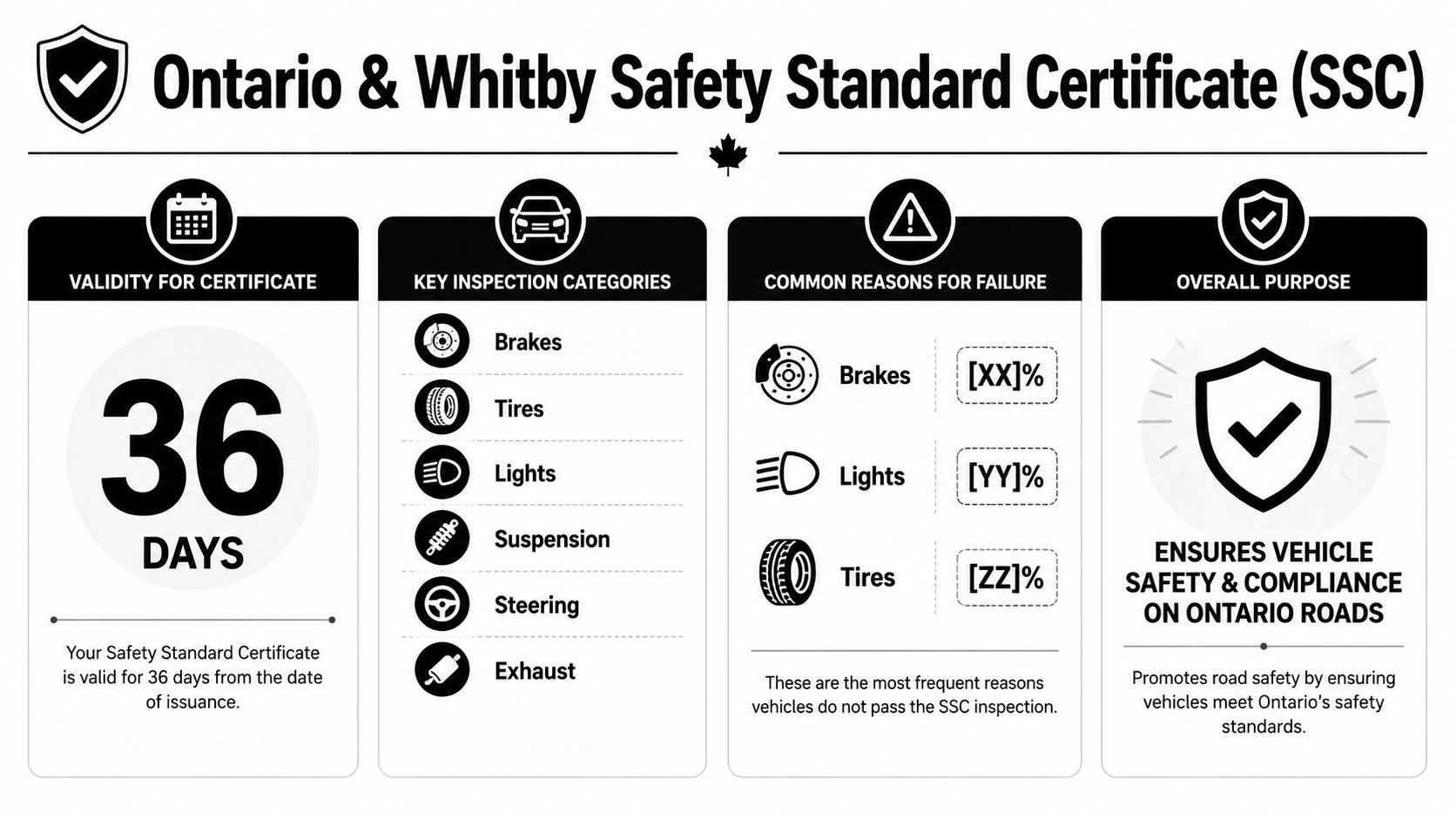
If you want a local breakdown of the paperwork and inspection flow, this guide to the annual safety inspection sticker in Ontario is a useful companion read.
When you typically need an SSC
In practical terms, Whitby drivers most often need a safety certificate in these situations:
- Used vehicle ownership transfer when a vehicle is being registered by a new owner
- Out-of-province registration when a vehicle is coming into Ontario and needs to be registered here
- Status change from unfit to fit when a vehicle's registration status needs to be updated
Those are the moments when an auto inspection station becomes part of the process, not as an optional service, but as a legal requirement tied to putting the vehicle on the road properly.
The timing matters
An SSC does not stay valid indefinitely. The certificate is valid for 36 days in Ontario, which means you have a limited window to use it for the intended registration step. In practice, that means timing your inspection properly matters. Don't do it too early if paperwork, financing, transport, or final sale details are still in the air.
That timing issue catches people all the time. A seller gets the inspection done too soon. A buyer delays the transfer. Then everyone's back at the shop repeating work that could have been scheduled more sensibly.
What Whitby drivers should expect from the process
The inspection is there to confirm the vehicle meets the standard on that day. It does not certify that the vehicle will remain problem-free after that, and it doesn't act as a warranty. That's an important distinction, especially with older used vehicles that may pass the inspection but still need maintenance in the near future.
Here's the practical side of it:
| Situation | What it usually means for you |
|---|---|
| Buying a used vehicle privately | You may need an SSC to complete registration as fit |
| Bringing a car from another province | You'll usually need an inspection before Ontario registration |
| Selling a car as-is | The buyer may take responsibility for obtaining the SSC |
| Registering later than planned | Certificate timing can become the issue, not the car itself |
If you're buying a used vehicle, don't treat the certificate as the whole story. It confirms minimum safety compliance, not overall mechanical perfection.
As for inspection pricing in Whitby and the wider Durham Region, shops vary. The final cost depends on the vehicle, the inspection type, and whether the car needs follow-up work or a reinspection. The smart move is to ask the station what's included before you book, especially if you're comparing one shop with another.
How to Prepare Your Vehicle for Its Inspection
The easiest inspection is the one you've already helped along before you arrive. A lot of vehicles don't run into trouble because of major failures. They run into trouble because nobody checked the obvious things first.
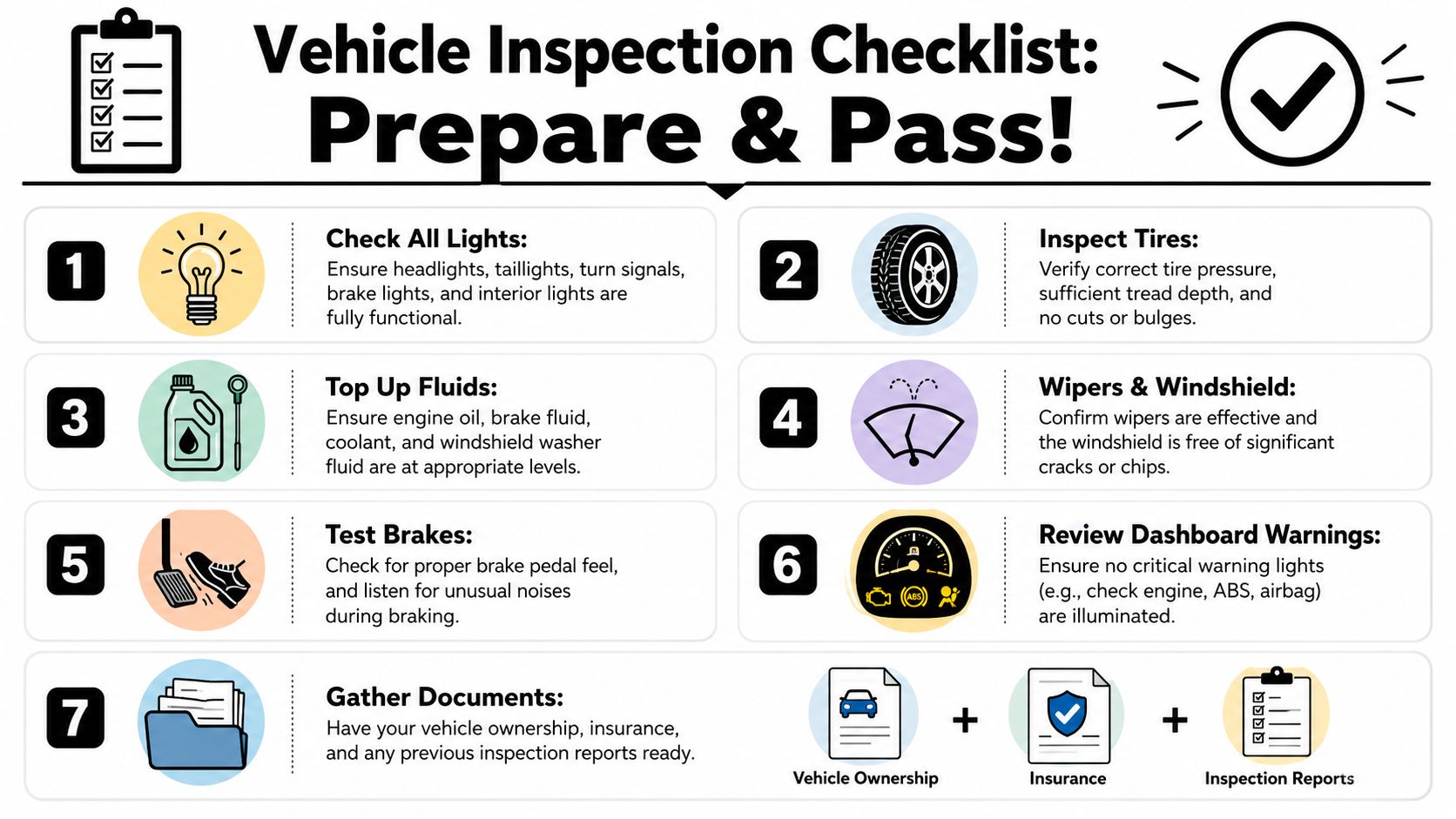
If your wiper blades smear, chatter, or leave dead spots on the glass, deal with that before inspection day. A quick wiper replacement service is one of those small jobs that can remove an avoidable problem immediately.
Start with what you can see and hear
Walk around the vehicle with the lights on. Check low beams, high beams, tail lights, brake lights, turn signals, reverse lights, and plate lights. Don't guess. Ask someone to stand behind the car while you press the brake pedal.
Then sit in the driver's seat and test the basics:
- Horn operation because it should work immediately and consistently
- Wiper function so the blades clear the windshield properly
- Washer spray because dry or blocked nozzles are easy to overlook
- Dashboard warning lights especially anything related to ABS, airbags, or other safety systems
If something looks inconsistent, fix it now. A burnt-out bulb is much cheaper to deal with before the inspection than after a failed visit.
Give the tires an honest look
Tires tell a story. If one edge is worn more than the other, there may be an alignment or suspension issue. If the sidewall has a bulge, that tire needs attention. If the tread is low, don't try to squeeze one more season out of it and hope the inspection goes your way.
A simple at-home check helps:
- Use the toonie test as a quick tread check
- Look for cuts or exposed cords because visible damage is never something to ignore
- Set proper pressure when the tires are cold
- Check all four tires and not just the front pair
Fluids and glass matter more than people think
Low washer fluid won't usually surprise a technician, but it does tell them the vehicle hasn't been prepared. Low brake fluid is more serious and may point to pad wear or a leak. Engine oil, coolant, and power steering fluid also deserve a quick look.
Check the windshield carefully too. Small chips aren't always the issue. The bigger concern is damage that affects the driver's view or suggests the glass isn't in sound condition.
Bring the vehicle in clean enough to inspect properly. If the wheels, lights, or windshield are covered in grime, the inspection slows down for all the wrong reasons.
A simple pre-inspection checklist
Before your appointment, run through this short list:
- Confirm all exterior lights work
- Check tire condition and pressure
- Top up washer fluid and inspect other fluid levels
- Make sure wipers clear properly
- Test the horn
- Look for warning lamps on the dash
- Bring ownership and any needed paperwork
What not to do
Don't clear warning lights right before the appointment and assume the issue is solved. Don't ignore brake noise because “it still stops.” Don't install the cheapest part you can find the night before if the rest of the system is already worn.
Preparation works when it's honest. If the vehicle has a genuine issue, identifying it early gives you options.
What Inspectors Look For and Potential Outcomes
Once the vehicle is in the bay, the inspection gets much more systematic than most drivers realise. A proper safety inspection isn't based on whether the technician likes the vehicle or thinks it has been maintained well enough for its age. It's based on whether specific systems meet the standard at the time of inspection.
The big picture in the shop
An inspector is not trying to “find something wrong” to create work. A good inspector is trying to determine whether the vehicle is safe to certify. That means looking at the car as a collection of systems, each of which has to do its job properly.
Some problems are obvious right away. Others only show up when the vehicle is raised, measured, tested, or examined under load.
Official Ontario Safety Standard Inspection Checklist
| Vehicle System | Key Components Checked | Common Failure Points |
|---|---|---|
| Powertrain | Engine mounting, transmission mounting, driveline condition, exhaust condition | Fluid leaks affecting safety, insecure mounts, damaged exhaust components, exhaust leaks |
| Brakes | Pads, rotors, drums, calipers, lines, hoses, parking brake function | Worn friction material, seized calipers, corroded brake lines, weak parking brake, pulsation or imbalance |
| Steering | Steering wheel free play, linkage, rack or box, tie rods, power assist operation | Loose tie rods, excessive play, leaking steering components, damaged linkage |
| Suspension | Shocks, struts, springs, control arms, bushings, ball joints | Broken springs, leaking struts, worn bushings, loose ball joints, unstable ride condition |
| Tires and Wheels | Tread condition, sidewalls, wheel integrity, fitment | Low tread, sidewall damage, uneven wear, exposed cords, mismatched or unsafe wheel setup |
| Lamps and Electrical | Headlights, brake lights, signals, hazards, reflectors, wiring | Burnt bulbs, inoperative signals, damaged lenses, wiring faults, poor electrical connections |
| Instruments and Controls | Horn, warning indicators, driver controls | Non-functioning horn, critical warning indicators, inoperative controls affecting safe operation |
| Windshield and Wipers | Glass condition, wiper blades, washer operation | Cracks affecting driver view, ineffective blades, washer system not working |
| Body and Structure | Body condition, floor integrity, bumper attachment, visible structural issues | Sharp edges, insecure components, corrosion affecting structural areas, damage affecting safety |
| Fuel and Exhaust | Fuel lines, tank area, exhaust routing and integrity | Leaks, insecure components, noisy or leaking exhaust, damaged hangers |
The issues that catch people most often
In everyday shop life, the common trouble spots are predictable. Tires that looked “fine from a distance” are worn unevenly. Brakes still work but are too worn or too rusty to certify. Lights fail because of one dead bulb or a wiring issue the driver didn't know about. Suspension parts develop looseness gradually, so the owner adapts to the feel and stops noticing it.
That's why a pre-purchase inspection and a safety inspection are not the same thing. A vehicle may drive acceptably and still fail in one of these areas.
Some of the most expensive inspection days start with the sentence, “It was driving perfectly.” Safe enough to drive and certifiable under the standard are not always the same thing.
If the vehicle passes
If the vehicle meets the standard, the process is straightforward. The certificate can be issued, and you can move ahead with the registration or ownership step that required it. That's the outcome everyone wants, but it's best when the pass comes from an honestly sound vehicle, not from luck.
If the vehicle fails
A failed inspection is not the end of the road. It means the vehicle did not meet the required standard in its current condition. The next step is to review the deficiencies carefully and decide how to repair them.
Good communication is of key importance. You should be told:
- What failed
- Why it failed
- What must be repaired before reinspection
- Whether related wear should also be addressed while the vehicle is apart
The wrong approach is chasing the cheapest immediate pass. That often leads to repeat visits, duplicated labour, or fixing one worn part while leaving the matching component on the other side near the same condition.
Repairs and reinspection
Once the required repairs are completed, the vehicle can be reinspected for the failed items. The smoother this goes, the more organised the shop is and the clearer the original findings were. Confusion at this stage usually means the initial communication was poor.
For drivers, the most practical mindset is this: the inspection identifies the gap between your vehicle's current condition and the legal safety standard. The repair plan closes that gap. Done properly, the process is direct and manageable.
The Carmedics Autowerks Difference for Whitby Drivers
Drivers usually don't mind hearing that a vehicle needs work. What they mind is bouncing between shops, repeating the story, and trying to figure out which recommendation is legitimate and which one is padding the bill.
That's why the shop you choose matters almost as much as the inspection itself. A licensed inspection facility that can also carry out the required repairs keeps the process cleaner. You get one diagnosis, one conversation, and one repair path instead of a handoff that can create delays or mixed messages.
For Whitby drivers looking into local service options, Carmedics Autowerks in Whitby is one example of a shop that can inspect a vehicle and handle related repair work in the same place.
What works better for the customer
When inspection and repair happen under one roof, a few things usually improve right away:
- Less downtime because the vehicle doesn't need to be moved elsewhere
- Clearer estimates since the inspecting technician's findings carry straight into the repair discussion
- Fewer misunderstandings because you're not asking a second shop to interpret a first shop's notes
- Better repair planning when the technician can see the full picture while the vehicle is already in the bay
What experienced drivers usually want
Car enthusiasts, daily commuters, and families all tend to want the same thing from an auto inspection station. They want an honest answer. If the car passes, great. If it doesn't, they want to know exactly what needs to be fixed first and what can be handled later as maintenance.
That's the difference between a stressful visit and a productive one. The inspection shouldn't feel like a dead end. It should feel like useful information, followed by practical next steps.
The best inspection shops don't just hand you a failure list. They explain the repair path in plain language and make it easy to move forward.
For Whitby drivers, convenience matters too. Between work schedules, family commitments, and the normal headache of vehicle paperwork, there's real value in dealing with one local team that understands both the inspection standard and the repair side of the job.
Frequently Asked Questions About Ontario Vehicle Inspections
Do I need a safety inspection for a brand-new car
Usually, no. A brand-new vehicle sold through the normal dealer process does not typically require the same safety certificate process as a used vehicle transfer. The paperwork for a new vehicle is handled differently.
What was Drive Clean, and do I still need it
Ontario's old Drive Clean program was the province's separate emissions testing program for passenger vehicles. That program was phased out, so passenger vehicle owners no longer book a separate emissions test the way they used to. Safety inspections can still involve checking components related to safe vehicle operation, but that is different from the old standalone emissions-testing system.
Can I sell a car as-is without a safety certificate in Ontario
Yes, you can sell a vehicle as-is. The key is being clear about it in the sale documents and in your communication with the buyer. In that case, the buyer usually takes responsibility for getting the vehicle inspected and certified before registering it as fit.
Does a safety certificate mean the car is perfect
No. It means the vehicle met the required safety standard at the time of inspection. It does not guarantee future reliability, and it is not a warranty against wear, breakdowns, or maintenance needs that show up later.
Should I inspect first or repair first
If the vehicle already has obvious problems, repair-first usually makes more sense. If you're unsure of the vehicle's condition and need an official determination, the inspection gives you the starting point. The right choice depends on whether the issues are already known or still uncertain.
If you need a straight answer about your vehicle's condition, Carmedics Autowerks Inc can help with inspection-related service, repairs, and practical next steps for Whitby drivers who want the process handled clearly and professionally.