


You're probably looking at one of three things right now. Tint that's gone purple and hazy. A rear window with bubbling film that catches your eye every time you check the mirror. Or a car you just bought, where the previous owner's tint job looked acceptable online and terrible in daylight.
Window tint removal sounds simple until you're halfway through it with sticky glue on your hands, bits of film coming off like confetti, and a rear defroster grid that suddenly feels much more important than it did ten minutes ago. That's the real decision point. This job isn't only about whether tint can come off. It's about whether it should come off in your driveway, with your tools, on your glass.
I've seen plenty of DIY removals go fine on side glass. I've also seen rear windows ruined by impatience, the wrong scraper, or one hard pull on old film. If you want to do this yourself, you can. But you should make that call with open eyes, especially if the rear glass has defroster lines or the tint is old enough to crumble instead of peel.
Assembling Your Tint Removal Toolkit
Before you touch a corner of film, get your setup right. Most failed window tint removal jobs don't fail because the owner lacked effort. They fail because the tools were wrong, the work area wasn't protected, or the person started peeling before they had a plan.
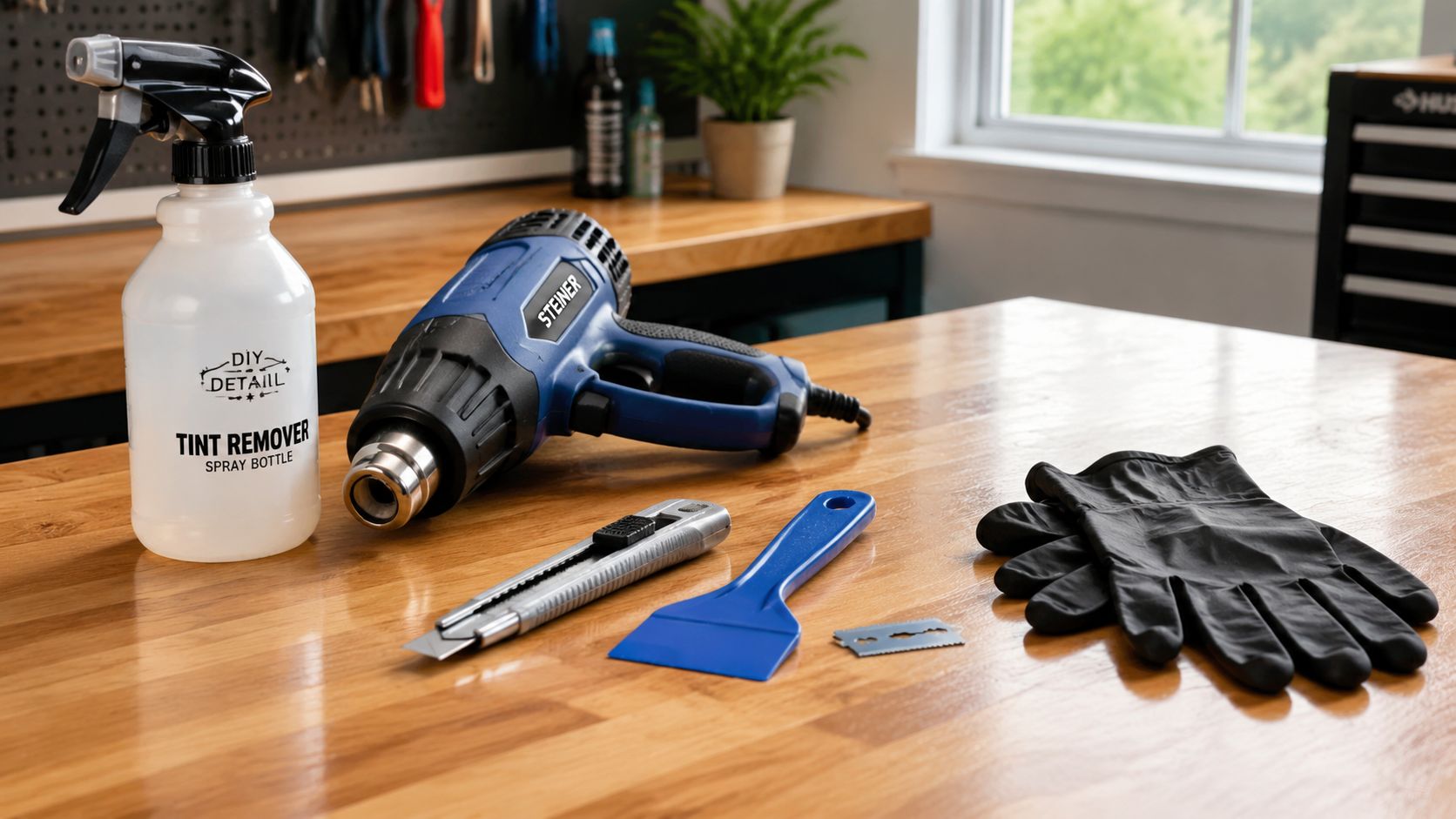
If you want a broad overview of what the process can involve, Carmedics also has a practical guide on removing tinted window film from a car. For the hands-on part, your kit matters more than commonly realised.
Tools that actually earn their place
Start with the basics:
- Heat gun or garment steamer: Heat softens adhesive and gives you a chance to peel film in larger sections instead of tiny fragments.
- Plastic scraper or plastic razor blades: These are safer on glass and around trim than aggressive metal scraping.
- Spray bottles: One for soapy water, one for your chosen cleaner or adhesive remover.
- Microfibre towels: Use more than you think you need. One for loosening residue, one for wipe-down, one dry towel for the final pass.
- Razor blade or thin lifting tool: Useful for starting an edge on side glass. This is the one tool that demands restraint.
A metal blade has a place on plain side glass in experienced hands. It's not my first recommendation for most owners, and it's the wrong move on rear glass with defroster lines. Plastic is slower, but slower is often cheaper.
Safety gear and prep you shouldn't skip
If you're using heat, chemicals, or both, work like it matters.
- Nitrile gloves: Adhesive remover, old glue, and grime are miserable without them.
- Eye protection: Film can snap back when it tears, and spray can drift.
- Respiratory caution and ventilation: Chemical methods need airflow. Open doors, work outside when possible, and don't trap fumes in the cabin.
- Drop cloths or old towels: Lay them over door cards, rear deck trim, speakers, and seats.
- Garbage bags for solar-style removal: Dark bags work best because they absorb heat and help hold moisture or chemicals against the film.
Practical rule: Protect the interior before you start. Adhesive remover on trim and upholstery creates a second problem you didn't have when you began.
The supplies that save time later
People focus on film removal and forget that glue cleanup is usually the part that drags.
Keep these on hand:
| Item | Why it matters |
|---|---|
| Soapy water | Helps with lubrication during peeling and cleanup |
| Glass cleaner | Removes final haze and fingerprints |
| Isopropyl alcohol | Useful for final residue and degreasing glass |
| Adhesive remover | Helps when glue stays behind in patches or sheets |
| Microfibre stack | Prevents smearing old glue back across the glass |
If you stop the job to run out for more towels or a stronger cleaner, you lose momentum and usually make rougher choices when you return. Set up everything first. That alone improves your odds.
Choosing Your DIY Removal Method
Not every window should be attacked the same way. Newer film on a front side window behaves very differently from sun-baked tint on a rear hatch. Your choice of method should depend on the film's condition, the glass you're working on, and your tolerance for cleanup.
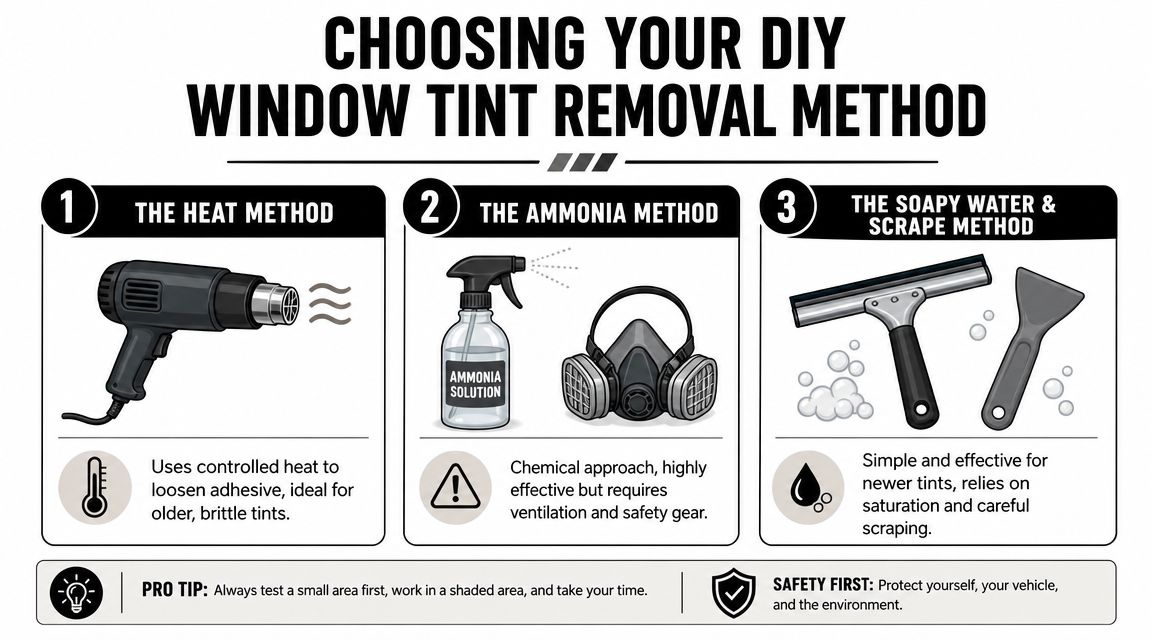
If you're still deciding whether you even want tint back on the car after removal, it helps to understand the different automotive window tint films available now. That decision can influence how carefully you prep the glass for what comes next.
The heat method
This is usually the cleanest DIY approach when the film still has some integrity. A practical heat-and-peel workflow is to warm one section at a time with a heat gun or steamer, lift a corner with a razor or thin tool, then peel slowly while re-applying heat to resistant areas. Guides describing this method recommend keeping the heat source about 1 to 4 inches from the glass and using soapy water or a microfibre wipe to prevent re-adhesion during peeling, as noted in this step-by-step tint removal guide.
What I like about heat is control. You can work a small area, feel how the adhesive reacts, and stop before you force anything. What I don't like is what happens when people rush. Too much heat in one spot, especially near trim or a fragile edge, creates its own mess.
Best for: Side windows, moderate adhesive, film that still peels in sheets.
Least suited for: Owners who get impatient and start yanking once one corner lifts.
The ammonia and sun method
This old-school method uses chemistry and heat together. You spray the film, cover it with a dark plastic bag, let the sun do the heavy lifting, then peel and clean.
Its strength is softening ancient adhesive without constant manual heating. Its weakness is the work environment. You need ventilation, interior protection, and a calm hand around trim. Chemical drift onto panels, seals, or fabrics can turn a tint job into a detailing correction job.
This method also depends on weather. If you don't have warmth and sun, it loses much of its advantage.
The ammonia method can be effective, but it's the one most likely to punish sloppy prep.
Best for: Stubborn, older tint when the weather helps you.
Least suited for: Indoor work, cold days, or anyone working in a tight garage.
The soapy water and scrape method
This is the blunt instrument of window tint removal. Saturate the film, peel what you can, then scrape and clean the rest.
It works. It's simple. It also has the highest chance of becoming a glue-removal marathon if the film separates from the adhesive layer. On side windows, that may be manageable. On rear glass, that can become risky very quickly.
Use this method when the tint is already partly failed and nothing else is moving it cleanly. Don't treat it as your default just because the tools are cheap.
A side-by-side risk view
| Method | Reward | Main risk | Where it makes sense |
|---|---|---|---|
| Heat and peel | Cleaner removal, less glue left behind | Overheating areas or tearing film with fast pulls | Most side glass |
| Ammonia and sun | Good on stubborn adhesive | Fumes, interior exposure, messy prep | Old tint in warm sunlight |
| Soapy water and scrape | Accessible and straightforward | Scratching, glue smearing, over-scraping | Last resort on plain glass |
My practical decision rule
Use heat first if the film looks like it still has structure. Use chemical softening when the adhesive feels baked on and the weather is on your side. Use scraping as backup, not as your opening move.
If the rear window is the main problem, that changes the calculation immediately. That glass asks for patience, not force.
Conquering the Leftover Adhesive
Film removal gets all the attention. Glue removal decides whether the job looks finished.
A window with old adhesive haze is worse than most owners expect. In direct sun it looks greasy. At night it catches glare. If you're planning to re-tint, leftover glue also ruins the surface prep.
Clean in stages, not in one heroic pass
Start by misting the glass with soapy water or your chosen adhesive remover. Let it sit long enough to soften the residue, then work small areas instead of trying to clean the whole pane at once.
Use a plastic scraper first. Keep the surface wet. Dry scraping is where people start chasing residue and end up making a bigger mess.
- Soften first: Don't attack dry glue. Wet adhesive releases more predictably.
- Work the edges inward: Glue often hangs on hardest at film edges and around dot-matrix borders.
- Wipe between passes: A dirty towel just redistributes softened adhesive.
Know when solvents help and when they complicate things
Some residue lifts with nothing more than soap and patience. Some doesn't. For the stubborn patches, isopropyl alcohol or a dedicated adhesive remover can help break the film of glue without endless rubbing.
Acetone is one of those products people reach for quickly, and it can be useful on glass if handled with care. If you want a grounded explanation of the trade-offs, this guide on applying acetone to clean windows is worth reading before you soak a towel and start wiping near trim.
Use the mildest product that gets results. Stronger chemicals don't make sloppy technique safer.
The final wipe that separates clean from almost clean
Once the residue appears gone, clean the glass again with glass cleaner and a fresh microfibre towel. Then inspect it from different angles. Straight on isn't enough. Move your head, use side light, and look for smeared spots near the top edge and corners.
A good final pass usually goes like this:
- Cleaner on the glass or towel
- Crosshatch wipe pattern
- Dry towel follow-up
- Second inspection from outside and inside
If you're seeing haze only at certain angles, there's still glue there. Don't install new film over “close enough”.
Sidestepping Common Tint Removal Disasters
The biggest mistake in window tint removal isn't picking the wrong method. It's misjudging what kind of glass you're working on and how much force it can tolerate.
Rear windows are where DIY confidence usually runs into reality. The defroster lines are part of the job whether you respect them or not.
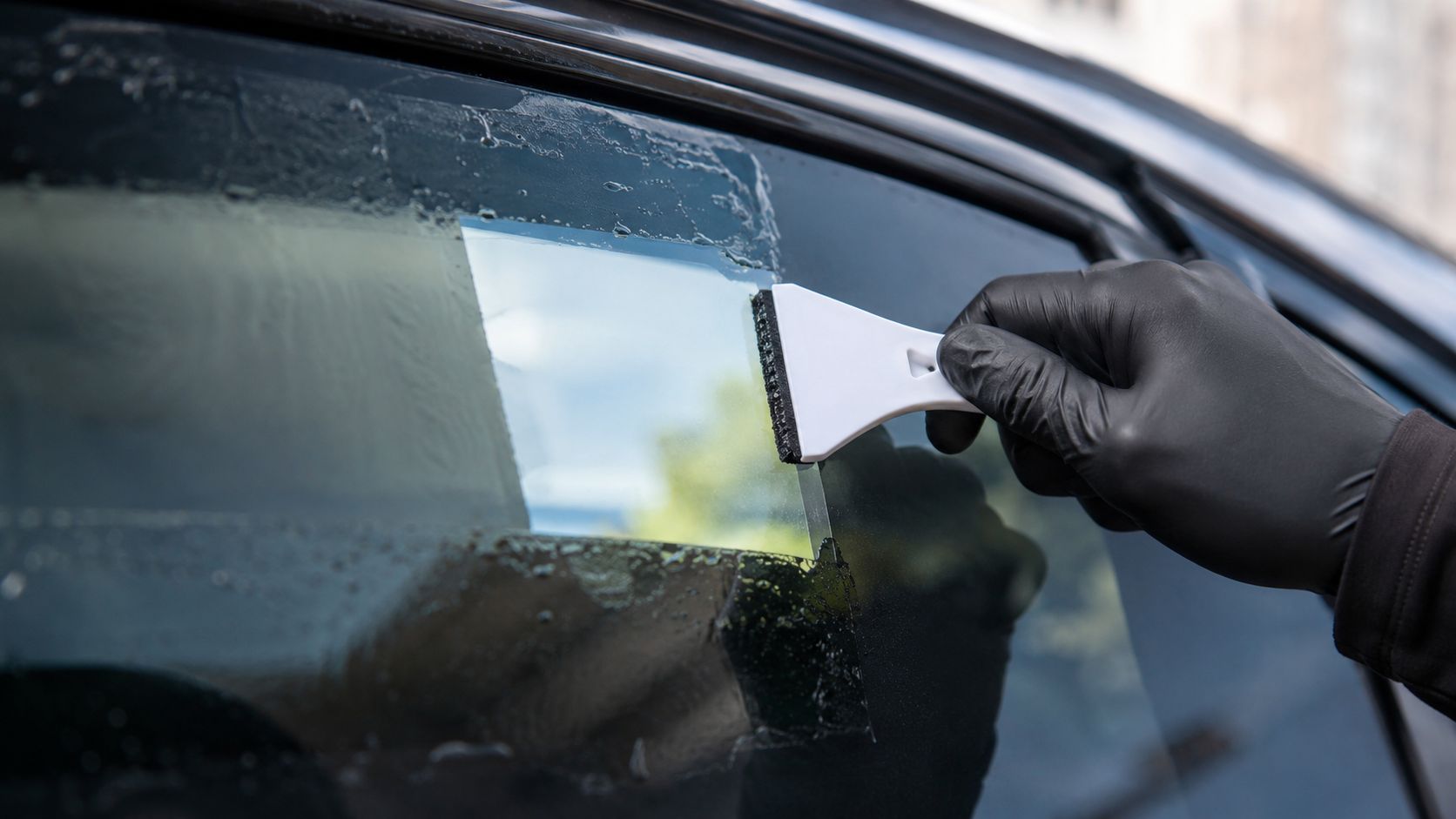
If you're also thinking about compliance after removal and replacement, it helps to review the legal side of tinted windows before choosing what goes back on.
Why rear defroster lines are the danger zone
A frequently underserved angle in tint removal is rear-window defroster damage, because many guides focus on peeling film but rarely quantify the risk of pulling up heating elements. Independent how-to content explicitly warns to work slowly around defroster lines and recommends steam plus careful cleanup, which suggests this is a real failure point rather than a minor edge case, as shown in this rear tint removal video discussion.
That warning lines up with what many detailers and tint installers encounter regularly. Old tint bonds itself to those delicate lines. If you pull hard and the adhesive wins, the line can come with it.
What causes the expensive mistakes
Most tint removal damage happens for ordinary reasons:
- Aggressive peeling: The film starts moving, then hits a bonded patch, and the person keeps pulling.
- Wrong scraper: Metal blades feel efficient until they cross a defroster line or gouge a seal.
- Too little lubrication: Dry glue grabs tools and drags.
- Poor interior protection: Chemicals drip onto door cards, rear decks, and speaker grilles.
The rear window is especially unforgiving because all of these mistakes can happen within a few inches of one another.
Safer habits that actually matter
When you're on rear glass, switch from “remove the film” thinking to “preserve the glass” thinking.
- Use steam or gentle heat: Softening adhesive reduces the temptation to pull.
- Peel slowly and evenly: Short movements tell you when the film is about to tear or take residue with it.
- Avoid cross-line scraping: If you must clean adhesive near defroster elements, keep the motion careful and controlled.
- Stop when resistance spikes: Resistance is information. Don't answer it with more force.
If the rear tint comes off in one clean sheet, you got lucky and worked well. If it starts breaking into strips, slow down immediately.
Other failures people don't expect
Not all damage is dramatic. Some of it shows up later.
A nicked rubber seal can whistle at speed. A soaked rear parcel shelf can stain. A window may look clean until evening sun reveals glue trails you missed around the edges. These aren't catastrophic, but they're the kind of finish problems that make a DIY job feel half done.
That's why risk versus reward matters more than the internet usually admits. Side glass gives you room for trial and error. Rear glass often doesn't.
When to Call a Pro like Carmedics Autowerks
Sometimes the smartest tool in the garage is restraint. If the job in front of you has “high chance of going sideways” written all over it, professional removal isn't giving up. It's choosing a lower-risk path.
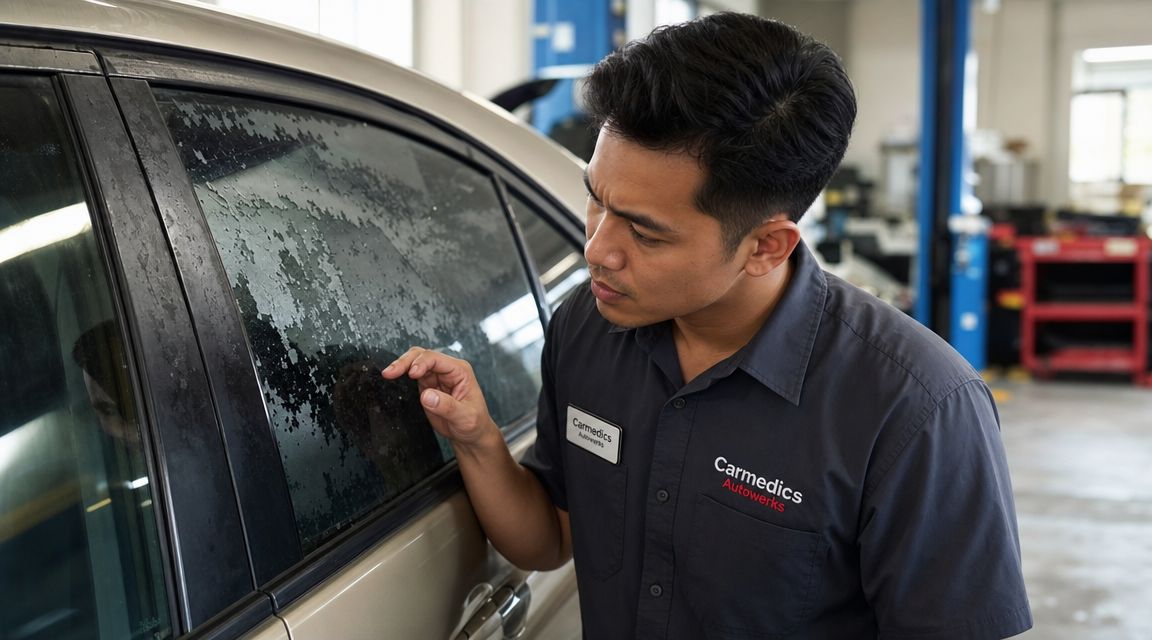
Here's the cleanest reason many owners remove old film in the first place. In California, the legal baseline for passenger-vehicle window tint sets the front side windows at more than 70% visible light transmission, and the state also requires a certificate label from the film manufacturer when the tint is applied. Tint that's too dark, damaged, or missing certification can create compliance issues, which is one reason drivers remove and replace it, according to this overview of California window tint removal and compliance. Even if you're not in California, that example shows how fast tint moves from cosmetic issue to practical problem.
The cars that usually need professional help
A few situations should make you pause before you start:
- The rear window is the main problem: Defroster lines raise the stakes.
- The film is flaking into tiny pieces: Old, brittle tint rarely rewards DIY effort.
- Someone already started the job: Half-peeled film and patchy glue are worse than untouched tint.
- You want new tint immediately after: Surface prep has to be exact.
If you're in Whitby and want the removal handled as a service rather than a weekend project, car window tinting in Whitby is one route to have the glass inspected, cleaned, and prepared properly.
What the professional route actually buys you
The value isn't only labour. It's judgement.
A trained tech knows when heat is helping and when it's baking glue into soup. They know when a rear window should be steamed, when a side pane can be lifted and peeled, and when a customer is better off removing and re-tinting instead of chasing a cosmetic patch.
It also saves you from the side problems. After old film comes off, some vehicles reveal mineral marks, water spotting, or baked-on residue around the edges. If you run into that kind of contamination, these pro tips for stubborn water spots are useful for understanding what normal glass cleaning won't fix.
The real decision
DIY makes sense when all of these are true:
| DIY probably makes sense | Call a pro instead |
|---|---|
| You're working on side glass | The rear defroster is involved |
| The tint still peels with heat | The film shreds and leaves heavy glue |
| You have time and patience | You need the car done properly in one go |
| You're comfortable with cleanup | You want re-tinting right after removal |
There's nothing wrong with handling a straightforward front side window yourself. There's also nothing clever about turning a fragile rear glass into an avoidable repair because the first few inches came off easily and the rest didn't.
That's the line I'd use. If the job feels routine, DIY can be reasonable. If the glass, film, or consequences feel delicate, hand it over.
Aftercare and Your Next Steps
Once the old tint is off, the job still needs a proper finish. Give the glass one last inspection from inside and outside. Check the top edge, the corners, and any area that looked clean only when it was still wet.
If you're driving untinted for a while, keep the inside glass cleaning simple for the next few days. Use a clean microfibre towel and a standard glass cleaner. Avoid overloading the edges with liquid if the seals and trim are already damp from removal work.
If you're planning to re-tint, don't rush the prep standard. New film wants perfectly clean glass, not “good enough” glass. Any missed adhesive, lint, or haze will show up once the new tint is on.
A useful next step is to compare the likely scope of the job against car window tinting cost so you can decide whether removal only or removal plus fresh film makes more sense for your car.
The short version is simple. Side windows often offer decent DIY reward for manageable risk. Rear windows don't. If you're unsure, that uncertainty is part of the answer. It usually means the job deserves a more careful approach than a quick peel in the driveway.
If your tint is bubbling, purple, peeling, or just no longer worth saving, Carmedics Autowerks Inc offers window tinting and related vehicle care services in Whitby. If you'd rather avoid the risk on rear glass or want the windows properly prepared for new film, it's a practical next call.