

"How much does a transmission fluid change cost?" It’s a fair question, and one we hear all the time. The straightforward answer is that you can expect to pay anywhere from $150 to over $400 here in Ontario.
Why such a big gap? Think of it like ordering a coffee: a simple black coffee has a set price, but a large, extra-shot latte with specialty milk is going to cost more. The same logic applies to servicing your vehicle's transmission.
Your 2026 Transmission Fluid Change Cost Guide
The price you're quoted depends entirely on the type of service your vehicle needs. A simple fluid swap is on the lower end, while a more thorough flush with new parts will be at the higher end of that range.

To help you get a clearer picture of what to budget for in 2026, we’ve put together this quick-reference table.
Estimated Transmission Service Costs in Ontario (2026)
This table provides a quick overview of estimated costs for different types of transmission fluid services, helping you budget accordingly.
| Service Type | Average Cost Range | Best For |
|---|---|---|
| Drain-and-Fill Service | $150 – $250 | Routine maintenance on well-kept vehicles. |
| Transmission Flush Service | $250 – $450+ | Vehicles that are overdue for service or show signs of dirty fluid. |
| Filter & Gasket Replacement | Adds $75 – $150 to service cost | Recommended with most services for complete maintenance. |
These estimates give you a solid baseline for what to expect when you call for a quote.
Understanding the Price Differences
Those numbers aren't pulled out of thin air. They reflect a combination of labour, parts, and the specific needs of your car. National data from sources like Kelley Blue Book shows this same spread, with some estimates for a basic fluid change hovering around $150 to $175, while a full flush can climb from $165 to $290 or more, depending on the shop and vehicle model.
Putting off service often makes things worse, potentially turning what should be a simple maintenance task into a more complex and expensive job. The final bill is always tied to your vehicle's condition and the service it requires. For a different perspective on how vehicle service costs can be broken down, you can find RV awning repair costs to see a similar analysis.
Before you book any service, it helps to be informed. A great first step is learning how to check transmission fluid on your own.
What Transmission Fluid Actually Does for Your Car
To get a handle on why a transmission fluid change costs what it does, you first need to appreciate what the fluid is actually doing in there. It’s easy to think of it as just another oil, but it’s so much more. Think of it as the lifeblood of your transmission—a hard-working, multi-talented fluid that keeps your car on the road.
While engine oil tends to get all the glory, transmission fluid is the unsung hero working behind the scenes. It’s juggling several critical jobs at once, all of which are essential for smooth, reliable driving.
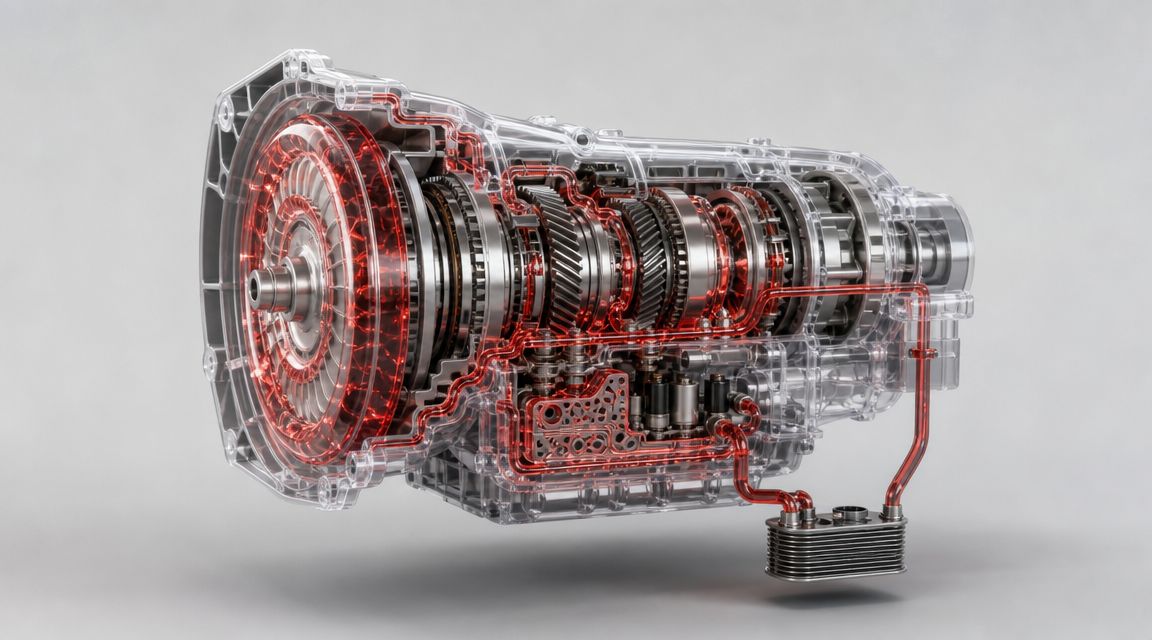
Its most obvious job is lubrication. Your transmission is a metal labyrinth of gears, clutches, and bearings spinning at incredible speeds. The fluid coats every single component in a thin, slippery film that prevents direct metal-on-metal contact. Without it, the intense friction would generate enough heat to literally weld parts together, causing a catastrophic and very expensive failure.
This leads directly to its second crucial role: cooling. Transmissions generate a surprising amount of heat, especially in the stop-and-go traffic we see around Whitby or when you’re towing a trailer. The fluid constantly circulates, absorbing this heat and carrying it away to a cooler. This vital process keeps the transmission from overheating, which can warp metal components and destroy delicate seals.
The Hidden Jobs of Transmission Fluid
But lubrication and cooling are just the beginning. Your transmission fluid is also performing a few other key tasks that directly affect how your car feels to drive and how long its gearbox will last.
In an automatic, the fluid also serves as a hydraulic medium. This is a fancy way of saying it uses pressure to get things done. It’s the fluid that transfers power from the engine to the wheels and provides the hydraulic muscle needed to engage clutch packs and shift gears. That seamless shift you feel when you accelerate? You can thank your clean Automatic Transmission Fluid (ATF) for that.
Another key function is simply keeping things clean. Modern transmission fluids are packed with special detergents that are designed to capture and hold onto tiny metal particles and bits of clutch material that wear off over time. This keeps the debris suspended in the fluid, preventing it from clogging the very narrow passages inside the transmission's nerve centre, the valve body.
Of course, not all transmissions are the same, and they definitely don't use the same fluid:
- Automatic Transmission Fluid (ATF): Engineered specifically for the high heat and hydraulic pressure demands of an automatic.
- Manual Transmission Fluid: This is a thicker gear oil formulated for the meshing gears of a manual gearbox.
- Continuously Variable Transmission (CVT) Fluid: A highly specialized fluid designed for the unique belt-and-pulley system found in a CVT.
Using the wrong fluid is a guaranteed recipe for trouble. Once you understand all the roles this fluid plays, it’s clear that a fluid change isn't just another maintenance cost—it’s an investment in your vehicle’s health. Skipping it is like deciding never to change your engine oil; you might save a little now, but you're risking a potential five-figure repair bill down the road.
Ever wondered why your friend's transmission service cost less than half of the quote you just got? You're not alone. The price for this crucial maintenance isn't pulled out of a hat—it’s based on a handful of specific factors that can make the final bill vary wildly from one car to the next.
Think of it this way: you wouldn't expect to pay the same price to paint a small bungalow as you would a three-storey mansion. A bigger, more complex transmission is no different; it simply requires more fluid, more time, and often, more specialized know-how.
This is why we see such a wide range in prices. Across Ontario, repair guides show the average for a standard transmission fluid change hovering between $232 and $290. Out of that, labour usually accounts for about $125 to $183. But those are just averages. A simple service on a Honda CR-V might be around $135 to $167, while a heavy-duty Ford F-150 could easily push past $294. Let's break down exactly what's behind those numbers.
Your Vehicle's Make and Model
First and foremost, the car you drive is the single biggest factor. The transmission's physical size and how it's mounted in the vehicle directly affect both the parts and labour costs.
- Fluid Capacity: A small sedan might only need 5 to 7 litres of fluid for a basic drain-and-fill. In contrast, a big truck or SUV can guzzle 12 litres or more, especially for a complete flush. That can easily double your cost for materials right there.
- Accessibility: On some cars, the drain and fill plugs are easy to get to. On others, a technician might have to remove protective shields, braces, or other parts just to reach them. That extra time on the hoist translates to a higher labour charge.
Your Transmission Technology
The type of transmission in your car is another major piece of the puzzle, mostly because of the fluid it requires. Modern transmissions are marvels of engineering, and they need equally advanced fluids to work properly.
An older, conventional automatic might use a standard, relatively inexpensive ATF. But many newer cars have technology that demands a specific—and much pricier—type of fluid.
- Continuously Variable Transmissions (CVT): These need a special CVT fluid with very specific friction modifiers. Pouring in regular ATF is a fast way to cause catastrophic damage.
- Dual-Clutch Transmissions (DCT): Essentially automated manual gearboxes, DCTs generate a lot of heat and rely on a unique fluid for lightning-fast hydraulic shifts.
Using the wrong fluid isn’t a cost-saving shortcut; it’s a gamble that almost always leads to serious damage. Think of the higher price for these specialized fluids as non-negotiable insurance for one of your car’s most expensive components. You can read more about why the right fluids and parts matter in our guide on OEM vs. aftermarket parts.
The Service Centre You Choose
Finally, where you take your vehicle for service plays a big role. Labour rates and business overheads differ from shop to shop, and that's reflected in your final invoice.
- Dealerships: They typically have the highest labour rates but also have brand-specific training and exclusively use original equipment manufacturer (OEM) parts.
- Independent Specialists: A shop like Carmedics Autowerks strikes a great balance, offering expert-level knowledge (often on par with or exceeding a dealership) at more competitive prices.
- Quick-Lube Chains: While they often seem like the cheapest option, they may not have the right equipment or in-depth training to properly service more complex, modern transmissions.
When your mechanic mentions a "transmission service," you'll often hear two terms thrown around: a fluid change and a fluid flush. They might sound similar, but they're completely different procedures with very different price tags. Knowing the difference is crucial when figuring out how much a transmission fluid change will cost you.
Fluid Change vs. Fluid Flush: What's the Difference?
Let's break down what actually happens with each service.
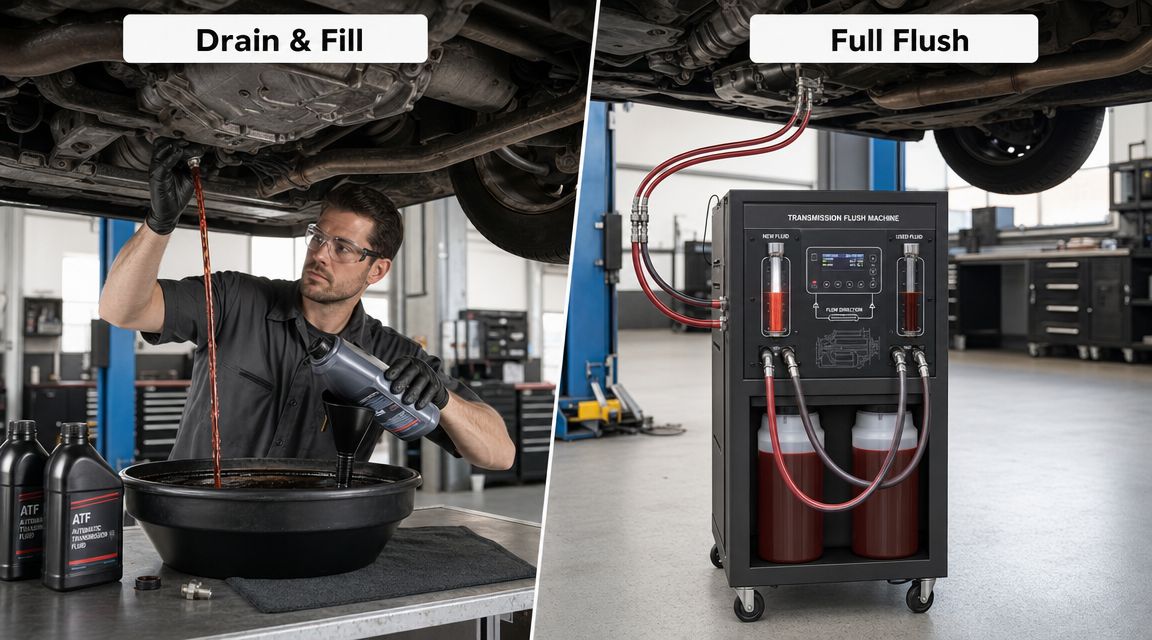
A standard fluid change, which we in the business often call a "drain and fill," is the most basic option. Think of it like this: you drain the oil from a frying pan, wipe it out, and add fresh oil. You got most of the old stuff out, but some residue is still there. In your car, a mechanic drains the fluid from the transmission pan, which only gets rid of about 50% to 60% of the old fluid. The rest stays behind in the torque converter and cooler lines.
A transmission flush, on the other hand, is a complete overhaul. This is a much more involved process where a specialized machine connects to your transmission's cooler lines. It uses the pressure from the new fluid to push out all the old, contaminated stuff, replacing virtually 100% of it. It’s a total reset for your transmission's lifeblood.
Here is a quick comparison of the two main transmission service options. This table will give you a side-by-side look at a fluid change versus a full transmission flush to help you decide which service is right for your vehicle.
Comparison of Transmission Service Options
| Feature | Transmission Fluid Change (Drain & Fill) | Transmission Flush |
|---|---|---|
| Fluid Replaced | 50-60% of total fluid | ~100% of total fluid |
| Procedure | Drains fluid from the pan and refills | Uses a machine to push out old fluid with new fluid |
| Cost | Less expensive | More expensive (often double the cost) |
| Best For | Routine, preventative maintenance | Overdue services, very dirty fluid, or addressing specific issues |
| Time Required | Quicker service | Longer, more complex service |
As you can see, the right choice really depends on your vehicle's condition and maintenance history.
Why Is a Flush So Much More Expensive?
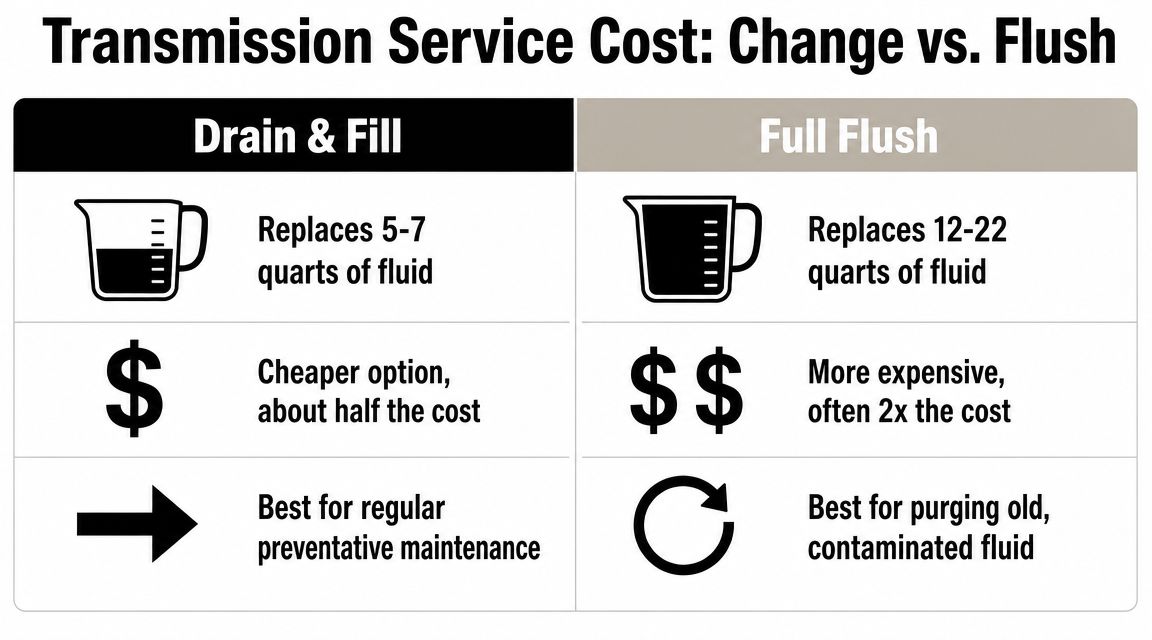
The price difference really comes down to labour and materials. A flush is more complex and requires a special machine, but the biggest factor is the sheer amount of fluid needed.
A simple drain and fill might only use 5 to 7 litres of transmission fluid. A full flush, however, can require anywhere from 12 to 22 litres to completely purge the old fluid and fill the system with fresh stuff. That extra fluid, plus the specialized labour, is why a flush can easily cost double what a basic change does—often running between $125 and $250, or even more depending on the vehicle.
Which Service Is Right for Your Vehicle?
So, how do you choose?
If you’re good with regular maintenance, a drain and fill is your best bet. It’s a cost-effective way to keep your fluid fresh and its protective additives working as they should. Sticking to a consistent schedule is key, and you can learn more by reading our guide on how often you should service your car.
A flush becomes necessary when things have been neglected. If the fluid is dark, burnt-smelling, or you're way behind on service, a flush is the only way to get all the sludge and contaminants out.
But a word of caution: a flush isn't always the answer. On some older, high-mileage vehicles that haven't had regular service, the high pressure from a flush machine can dislodge debris that was harmlessly settled, causing it to clog narrow passages and create new problems. Always talk to a trusted mechanic first. They can inspect your fluid and recommend the right service for your car's age, mileage, and condition.
Warning Signs That Your Transmission Needs Service
Most of us don’t think twice about our car's transmission—it just works. But when it starts to struggle, it has a way of making its problems known. Catching these early warning signs can be the difference between a routine fluid change and a repair bill that takes your breath away.
The first clues often show up in how your car feels. Do you notice a hesitation or a long pause when you shift from Park into Drive? Maybe the gear changes feel rough and jerky instead of smooth, or the engine seems to race before slamming into the next gear. That's a classic sign that your transmission fluid is old, low, or has lost its ability to do its job properly.
Decoding Sounds and Smells
Beyond what you feel, pay close attention to what you hear and smell. New noises are your vehicle's alarm system.
A whining, clunking, or grinding sound that seems to change pitch as the car shifts is a big red flag. These are often the sounds of internal parts struggling for proper lubrication because the fluid is either low or completely worn out.
Even more urgent is a distinct burning smell, often compared to burnt toast. This means your transmission is overheating, and the fluid is cooking. Driving with overheating fluid can cause catastrophic damage in a surprisingly short amount of time.
Key Takeaway: Healthy transmission fluid should be bright red with a slightly sweet smell. If you check the fluid and it's dark brown or black with a burnt odour, it's screaming for a change. That fluid has broken down and is no longer protecting your transmission's delicate internal components.
The most undeniable sign, of course, is a puddle of reddish or brown fluid on your driveway. A leak is never something to ignore. Even a small one can drain enough fluid to cause overheating and serious shifting problems.
If any of this sounds familiar, don't wait for it to get worse. A small issue with fluid can quickly snowball into a major mechanical failure. To get a better idea of what might be going on, you can learn more about different types of transmission repair and what's involved.
Your Expert Partner for Transmission Service in Whitby
You now have a solid grasp of what a transmission service involves and why it’s so important. The final piece of the puzzle is finding the right people to do the job. When it comes to something as intricate and vital as your transmission, you don’t just need a mechanic—you need a trusted partner.
Here at Carmedics Autowerks, that’s exactly how we see ourselves. We're not in the business of one-size-fits-all solutions or pressuring you into services you don't need. Our job is to give you honest, expert advice tailored to your specific car and how you drive it, whether it's a daily commuter or a high-performance machine.
This all starts with doing things the right way. We use modern diagnostic tools to get an accurate picture of your transmission's health and stick strictly to manufacturer-approved fluids. Using the wrong fluid is one of the easiest ways to cause expensive damage, and it’s a corner we will never cut.
We think of ourselves as your vehicle's long-term health advisors. Our goal is to build a relationship based on total transparency, so you can feel confident and informed every single time you turn the key.
The Carmedics Difference
So, what really sets our Whitby shop apart? It’s our personalized approach. We don’t work from a script. We start by listening to you, thoroughly inspecting your vehicle, and then recommending a solution that actually makes sense for your situation and your budget.
Our team has deep expertise across a huge range of vehicles, from domestic trucks to European sedans. We’re fully equipped to handle the unique demands of today’s complex transmissions—CVTs, dual-clutches, you name it. We understand the subtle differences between these systems, which eliminates the guesswork that can lead to costly mistakes down the road.
Ultimately, choosing the right shop is just as critical as the service itself. If you're looking for a straightforward conversation and a transparent quote, we invite you to visit us at our Whitby location or just give us a call. Let us show you what a difference dedicated, expert care can make.
Answering Your Top Transmission Service Questions
Even after going over the basics, you probably still have a few questions. That's perfectly normal—in fact, it's a good sign you're taking your vehicle's health seriously. To help you out, we’ve put together answers to the most common questions we hear from drivers right here in our Whitby shop.
How Often Should I Really Change My Fluid?
We get this question all the time. The honest answer is, it depends. While a general guideline is every 50,000 to 100,000 kilometres, your car's specific needs are what truly matter.
Your owner's manual is the best place to start, but you should seriously consider changing it more often if you push your vehicle harder than average. This includes things like:
- Regularly towing a trailer or hauling heavy loads in the bed.
- Spending most of your time in stop-and-go city traffic.
- Driving a vehicle with a CVT or a high-performance transmission, which are tougher on fluids.
Can I Save Money Doing This Myself?
Technically, yes, but this is one of those jobs where the risk might not be worth the reward. A DIY transmission fluid change isn't like a simple oil change—it’s far more complex and much less forgiving.
Many modern cars now have sealed transmissions without a dipstick, making it nearly impossible to check or fill the fluid accurately without specialized equipment. The two biggest dangers are using the wrong type of fluid (there are dozens!) or getting the level wrong. Even a slight underfill or overfill can starve crucial components or cause seals to burst, leading to catastrophic failure and thousands of dollars in repairs.
For most people, the peace of mind that comes from having a professional do it right is worth every penny.
A fluid change is preventative maintenance; it is not a "mechanic in a bottle." If your transmission is already slipping, shuddering, or making grinding noises, old fluid is rarely the root cause. A fluid change will not fix a worn-out or damaged component. It’s crucial to get a proper diagnosis from a professional technician to understand if you need a simple service or a more involved repair.
Is a New Filter Included in the Price?
This is a great question to ask upfront. Whether a new filter is included really depends on the type of service. A basic "drain-and-fill" might just swap out the fluid, but a more complete service absolutely should include a new filter and gasket.
Think of the filter as the transmission's kidney—it traps metal shavings and other gunk. Replacing it is a critical part of the job. Always confirm with your service advisor that a filter change is part of the quote before you agree to any work.
At Carmedics Autowerks Inc, we believe in transparent, honest service. If you have questions about your transmission or want a clear, no-pressure quote, our team is here to help. Contact us or visit our shop in Whitby for expert care you can trust. Learn more at https://www.carmedicsautowerks.com.com.