

You hand over your keys, sign the work order, and hope the phone call later says the problem is fixed. Most drivers still think of repair safety in old terms: no leaks, no warning lights, no strange noises. That still matters. It's just no longer the whole job.
On a modern vehicle, a repair can look perfect and still be incomplete. A bumper can be straight while a radar sensor sits out of position. A windshield can be new while a forward camera hasn't been calibrated. A battery issue can be “solved” by clearing codes instead of proving the root cause. Safe auto repair now means the mechanical repair, the electronic verification, and the paperwork all line up.
For owners in Whitby, that changes how you choose a shop. You're not only looking for someone who can install parts. You're looking for a process, a diagnostic standard, and a shop culture that treats safety as part of the repair itself. If you're comparing local options, it helps to look at a certified auto repair shop in Whitby through that lens.
Beyond the Wrench What Safe Auto Repair Means in 2026
You pick up your vehicle after a repair, the panel gap looks right, the warning lights are off, and the invoice says the job is complete. Then the lane-keep camera is a few degrees off, the parking sensor reacts late, or a battery-related fault comes back two days later. That is the gap between a repair that looks finished and one that is safe.
Safe auto repair in 2026 covers more than parts replacement. It means the shop controls the work environment, follows a repeatable process, tests the repair under real conditions, and verifies any electronic systems affected by the job. Ontario repair facilities still work under the Occupational Health and Safety Act, and the province continues active enforcement in workplaces that handle lifts, chemicals, heavy components, and energized systems. Shops that treat safety rules seriously usually bring that same discipline to diagnosis, installation, torque procedures, and final checks.
Owners can see that culture. A clean bay matters. Proper PPE matters. Fluid storage, battery handling, scan tools on chargers, and organized workstations matter too. None of that guarantees a good repair, but in my experience it often separates a process-driven shop from one that improvises. Improvising is expensive once radar sensors, steering angle data, and software-dependent systems are part of the repair.
The old definition misses half the job
For years, many drivers judged a repair by simple results: no leak, no noise, no pull, no light on the dash. Those checks still count. They just do not cover the whole vehicle anymore.
A modern safe repair has to restore the mechanical side and confirm the digital side. If a windshield is replaced, the forward camera may need calibration. If the front end takes an impact, radar alignment may need to be checked even if the bumper cover fits well. If a battery, module, or charging component is replaced, the work may need coding, initialization, or a relearn procedure before the vehicle is fully back to normal.
Some safety items are still basic, and they still deserve attention. Poor nighttime visibility causes its own problems, which is why practical upkeep such as improving car safety with headlight restoration belongs in the same conversation as scan data and calibrations.
What a safe repair looks like now
The standard is straightforward. The complaint gets confirmed. The cause gets tested, not guessed. The repair gets performed to spec. The affected systems get verified before the keys go back to the owner.
That last step is where modern vehicles changed the trade. A brake job can involve electronic parking brake service mode. A wheel alignment can affect ADAS aiming. Disconnecting power can trigger module faults or reset learned values. Shops that understand current vehicles plan for those steps instead of treating them as extras.
If you are comparing options locally, look at a certified auto repair shop in Whitby with that standard in mind. The question is not only whether the shop can install the part. The question is whether it can prove the vehicle is safe after the repair.
Your Pre-Repair Checklist Vetting a Shop Before You Commit
The strongest repair decisions happen before the vehicle enters the bay. Most bad experiences leave clues early. The shop is vague on process. The estimate is casual. Nobody asks detailed questions about the symptom, the conditions, or the vehicle history. Those are warning signs.
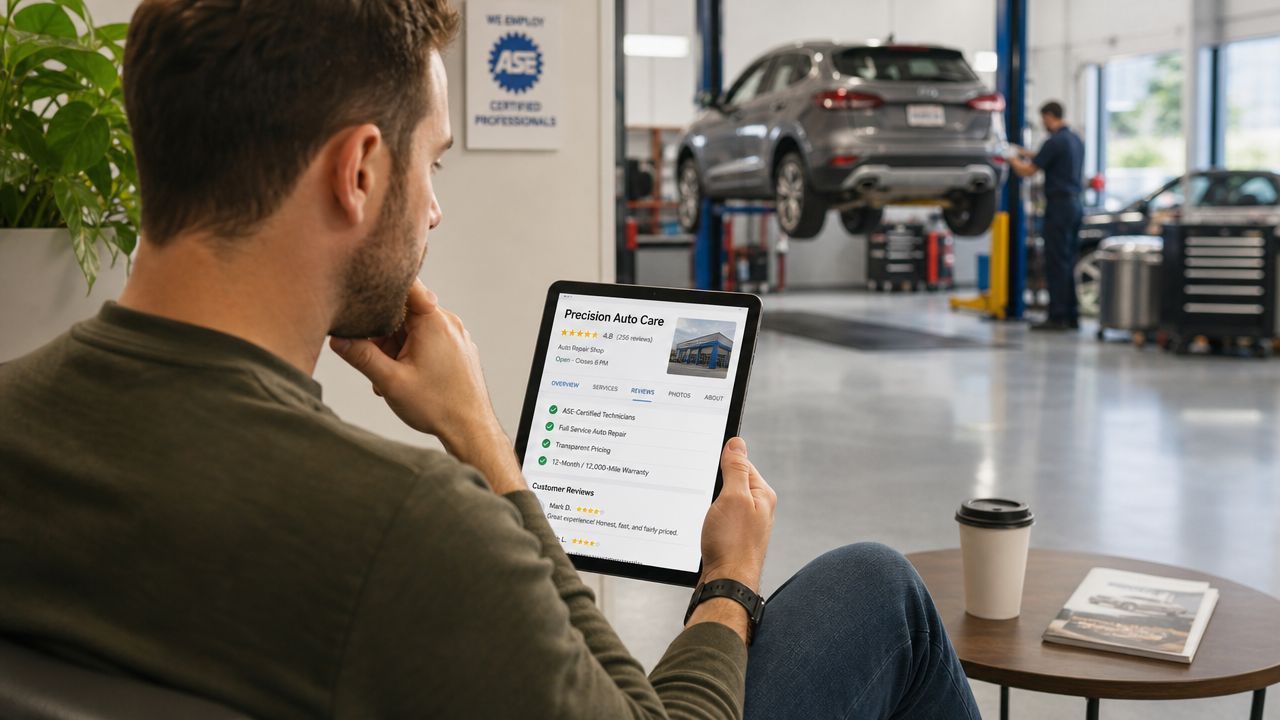
Start with how the business presents itself online and how it handles first contact. A trustworthy shop doesn't need polished marketing language as much as it needs a clear process and consistent communication.
Read reviews for patterns, not praise
A five-star average tells you very little by itself. Read the middle reviews, not just the best and worst ones.
Look for repeat themes:
- Diagnostic honesty: Do people mention that the shop explained the problem before replacing parts?
- Communication quality: Do updates happen when promised, or only after customers chase the shop?
- Comeback handling: If something needed follow-up, did the shop deal with it professionally?
- Vehicle type familiarity: Reviews from owners with similar makes and models are more useful than generic praise.
A good shop often sounds boring in the reviews. That's a compliment. Boring means organised, consistent, and predictable.
Judge the first phone call
When you call, pay attention to the questions you get asked. A capable service advisor usually wants the basics first: what the car is doing, when it happens, whether warning lights are on, and whether any work was done recently. That tells you they're building a path to diagnosis.
If the answer is immediate and absolute before anyone has seen the vehicle, be careful. Complex faults don't respect guesswork.
Practical rule: If a shop jumps straight to “it's probably this part” without discussing testing, keep shopping.
Ask for documentation before authorising anything
For consumers, the paperwork matters as much as the wrenching. The FTC advises drivers to get a written estimate, compare labour and warranty terms, and require a completed repair order that lists the work done, parts supplied, parts and labour costs, and odometer readings at intake and completion. It also advises asking to see replaced parts and checking the shop's experience with your make and model (FTC auto repair basics).
That guidance is practical because documentation protects you in two directions. It helps prevent surprise charges, and it gives you a record if the repair has to be reviewed later.
A local search should also end with checking whether the shop clearly offers the type of work you need. If you're narrowing down options, a page for an experienced car mechanic in Whitby should make it easier to see whether the shop handles diagnostics, routine service, and more involved repair work in-house.
Quick screen before you book
Use this short filter:
- Do they explain how they diagnose faults?
- Do they provide written estimates?
- Do they discuss warranty terms clearly?
- Do they sound familiar with your exact vehicle type?
- Do they treat your questions like part of the job, not an annoyance?
If you can't get clear answers before the appointment, things usually won't get clearer after the keys are handed over.
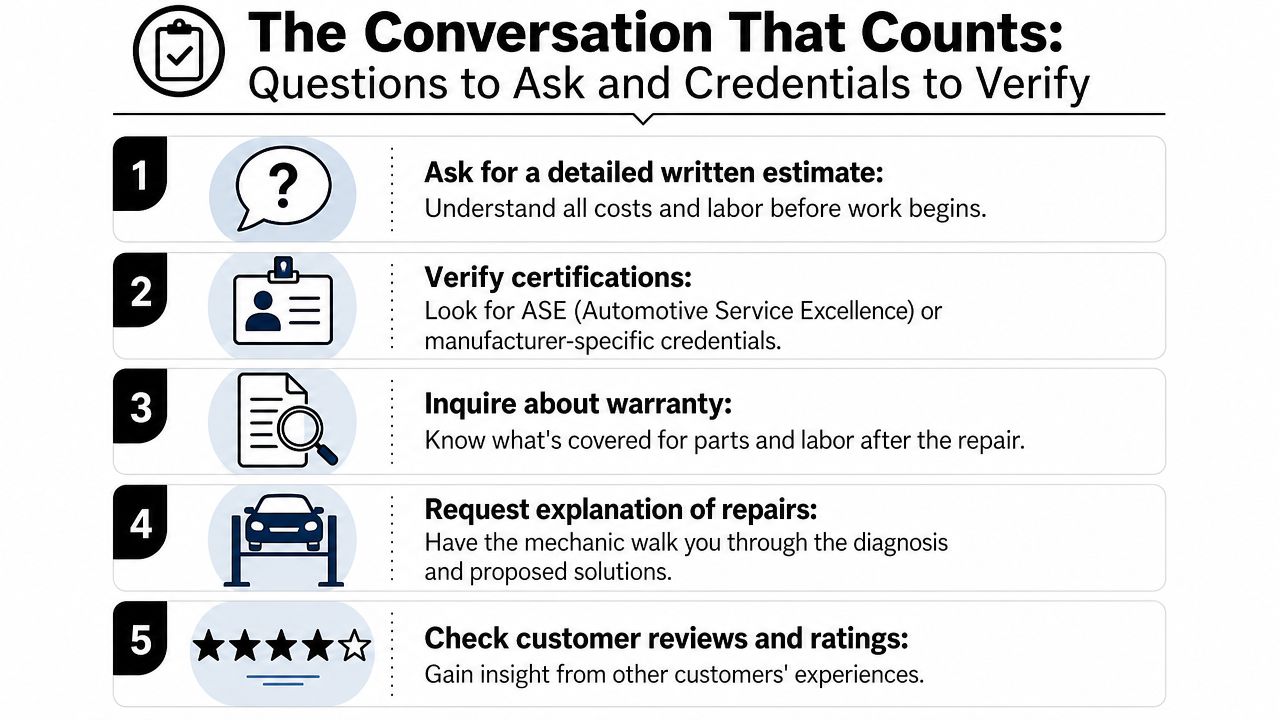
The Conversation That Counts Questions to Ask and Credentials to Verify
You call a shop about a warning light, a steering pull, or an electrical fault. The answer in the first two minutes tells you a lot. A careful shop asks follow-up questions, explains what it can confirm now versus what needs testing, and avoids promising a fix before the vehicle is inspected.
That matters because a safe repair is tied to process, training, and shop discipline. In Ontario, repair facilities and workers operate under workplace safety rules that cover hazards, training, equipment use, and procedures, not just customer service. You can review the province's Ontario OHSA requirements for workplaces if you want the legal framework. In day-to-day terms, the takeaway is simple. A shop that is loose about procedure in the bay is often loose about diagnosis, documentation, and final verification too.
Ask about decision-making
A useful conversation is not about sounding informed. It is about finding out how the shop reaches conclusions.
| Area of Inquiry | Question to Ask | Why It Matters |
|---|---|---|
| Diagnosis | What tests will you run before recommending parts? | It shows whether the shop confirms faults or starts swapping components. |
| Scan data and electronics | Will you scan all relevant modules, or only read the engine code? | Modern faults often involve networked systems, not one isolated part. Shops that handle electrical repair and diagnostic work should be able to explain that clearly. |
| Parts choice | Are you recommending OEM or aftermarket, and what is the trade-off on this job? | Price, fit, software compatibility, and calibration needs can change with the part selected. It helps to understand OEM vs aftermarket parts before you approve the repair. |
| Labour scope | Does your quote include setup, testing, programming, or calibration if needed? | On newer vehicles, the repair may involve more than removing and replacing hardware. |
| Experience | Have you seen this issue on this make, model, or platform before? | Brand-specific patterns matter, especially with late-model vehicles. |
| Completion check | How do you verify the repair before releasing the car? | A proper closeout should include more than clearing a code and taking a short drive. |
One answer I listen for is restraint. A good advisor will say, “We need to test it first,” especially on intermittent faults, warning lights, battery drains, and anything involving steering, braking, or driver-assistance features. That is not a dodge. It is how competent shops avoid charging you for parts that do not fix the problem.
Credentials that carry weight
Certificates matter when they tie back to current skills. In Canada, Red Seal certification shows that a technician has met an established trade standard. On late-model vehicles, that alone is not enough. Manufacturer training, access to current service information, and experience with software-driven systems matter just as much.
Ask plain questions. Is the technician licensed for the work being done? Does the shop have brand-level scan capability or a quality aftermarket platform that can perform coding and guided tests? If a repair could affect cameras, radar, steering angle, battery management, or module communication, can the shop handle the procedure in-house or does it sublet that part?
Those details used to matter mainly for dealerships and collision work. They now matter for routine mechanical jobs too.
What a solid answer sounds like
Good shops usually sound measured and specific.
They explain what they know, what they need to verify, and what could change once testing starts. They can tell you whether the quoted job includes diagnostics only, repair only, or both. They can also explain why one part choice is cheaper but may carry a higher risk of fitment issues, shorter service life, or software problems on a newer vehicle.
That last point is easy to miss. On an older car, an aftermarket part may be a sensible value choice. On a newer car with sensor-rich systems and tightly integrated electronics, the cheapest part can create extra labour, warning lights, or calibration headaches. Safe repair now includes choosing parts that the vehicle will accept and operate with properly.
Red flags during the call or at the counter
Pay attention if you hear any of these:
- Immediate certainty on a fault that normally requires testing
- No clear explanation of diagnostic charges
- Vague language about who performs the work
- No answer on warranty coverage for parts and labour
- Dismissive responses when you ask about programming, calibration, or part brands
- “We'll know more once we start” used as a substitute for a process, not as an honest limit
Clear answers do not have to be fancy. They have to be consistent, specific, and grounded in how modern vehicles are repaired.
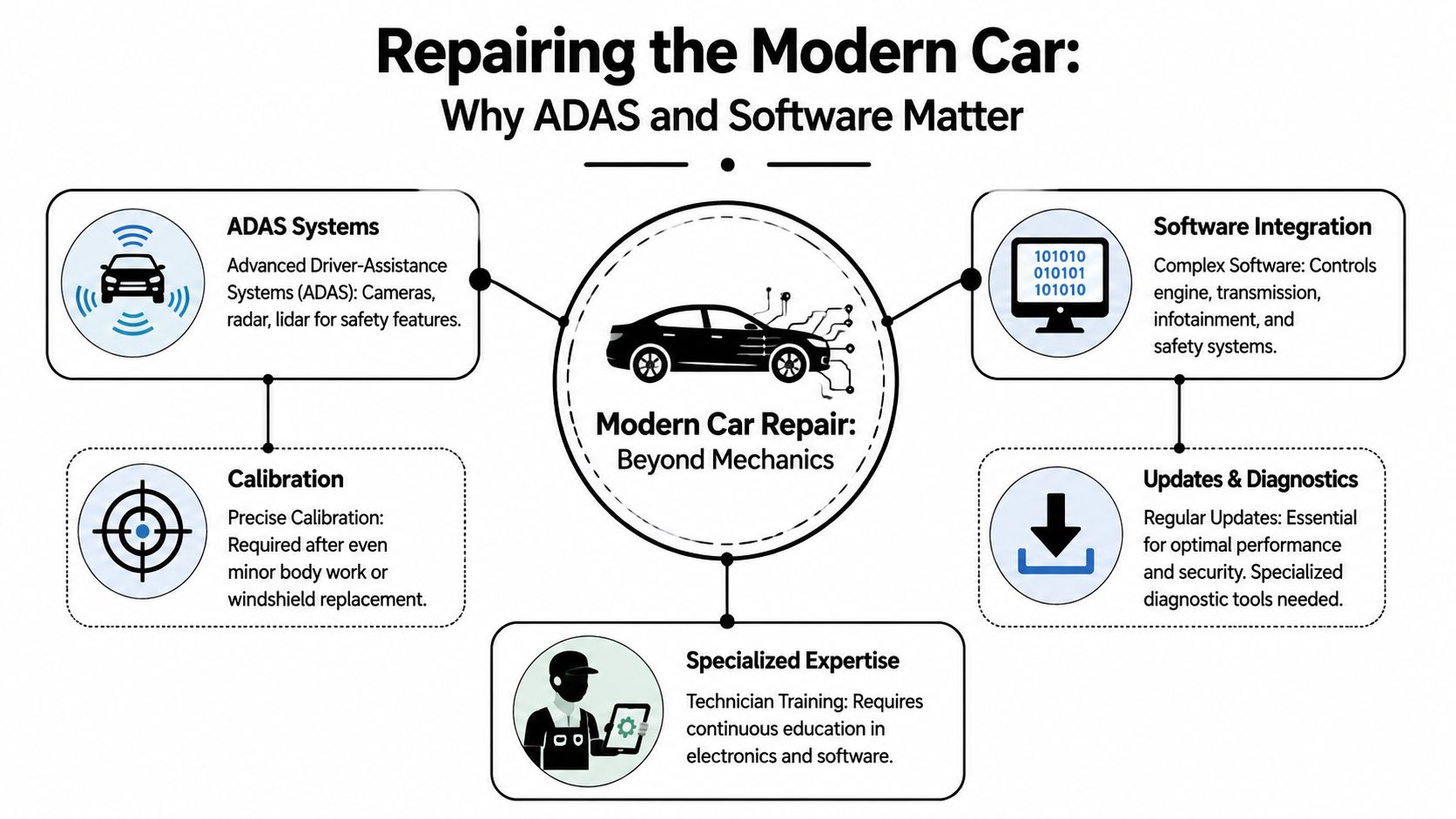
Repairing the Modern Car Why ADAS and Software Matter
A lot of repair advice online still assumes the vehicle is mostly mechanical. That's outdated. Newer cars are rolling networks of modules, sensors, cameras, coded components, and software-controlled systems. A safe repair has to account for that reality.
That's where many owners get caught. The car may come back looking right and driving “fine,” but critical systems can still be outside spec. The biggest blind spot is often ADAS, short for Advanced Driver-Assistance Systems.
A safe repair now includes calibration
Consumer-facing repair content often skips a key point: post-repair calibration for ADAS is critical after many common repairs such as windshield replacement or suspension work. A repair isn't fully safe if it restores drivability but fails to restore crash-avoidance systems to pre-loss function, and not every shop can provide the OEM procedures and documentation needed for that work (ADAS calibration guidance).
That changes how you should think about ordinary jobs. A windshield replacement isn't always just glass. Front suspension work isn't always just hardware. Steering-angle sensors, ride height, camera aim, radar alignment, and software procedures can all be part of the repair path.
If the vehicle has lane-keeping, automatic emergency braking, adaptive cruise, or parking cameras, ask whether the repair affects calibration. Don't assume the shop will volunteer it.
Software access is now part of repair safety
There's also a bigger industry issue behind the counter. Modern repair quality depends on access to manufacturer data. The right-to-repair debate matters because independent shops need proper information and tool access to repair newer vehicles accurately. Public support for that access has been strong, with Massachusetts voters supporting a right-to-repair ballot measure by 75% in 2020 and Maine by 84% in 2023, according to the Auto Care Association's summary of vehicle data access issues.
For vehicle owners, the takeaway is simple. Safe repair on a modern car depends on whether the shop can get the procedures, calibrations, and diagnostic data required for your exact model.
Parts choice affects more than cost
On older vehicles, part selection was often about budget, durability, and fit. It still is. But on newer vehicles, the choice can also affect sensor performance, mount geometry, and calibration success. If you want a solid primer before you approve parts, it helps to understand OEM vs aftermarket parts in the context of modern vehicle systems, not just price.
Electrical and networked faults add another layer. A shop that regularly handles module communication issues, battery management faults, wiring damage, and sensor-related diagnostics is usually better positioned for late-model vehicles. If your problem points in that direction, look for a shop that openly deals with vehicle electrical repair rather than treating electronics as an afterthought.
What still doesn't work
Old habits fail on new cars.
- Swapping parts to see what happens wastes time and can create new variables.
- Clearing codes without root-cause testing only hides the fault for a while.
- Visual inspection alone misses software and calibration issues.
- Treating ADAS like an optional extra is not compatible with safe auto repair.
The modern standard is narrower and stricter. Test, document, calibrate, verify.
The Final Check Your Post-Repair Inspection Guide
The call comes in. Your vehicle is ready. It's often when many owners relax too early.
A proper pickup isn't confrontational. It's a final verification. Good shops expect it, and strong technicians usually appreciate customers who want the job closed out properly.
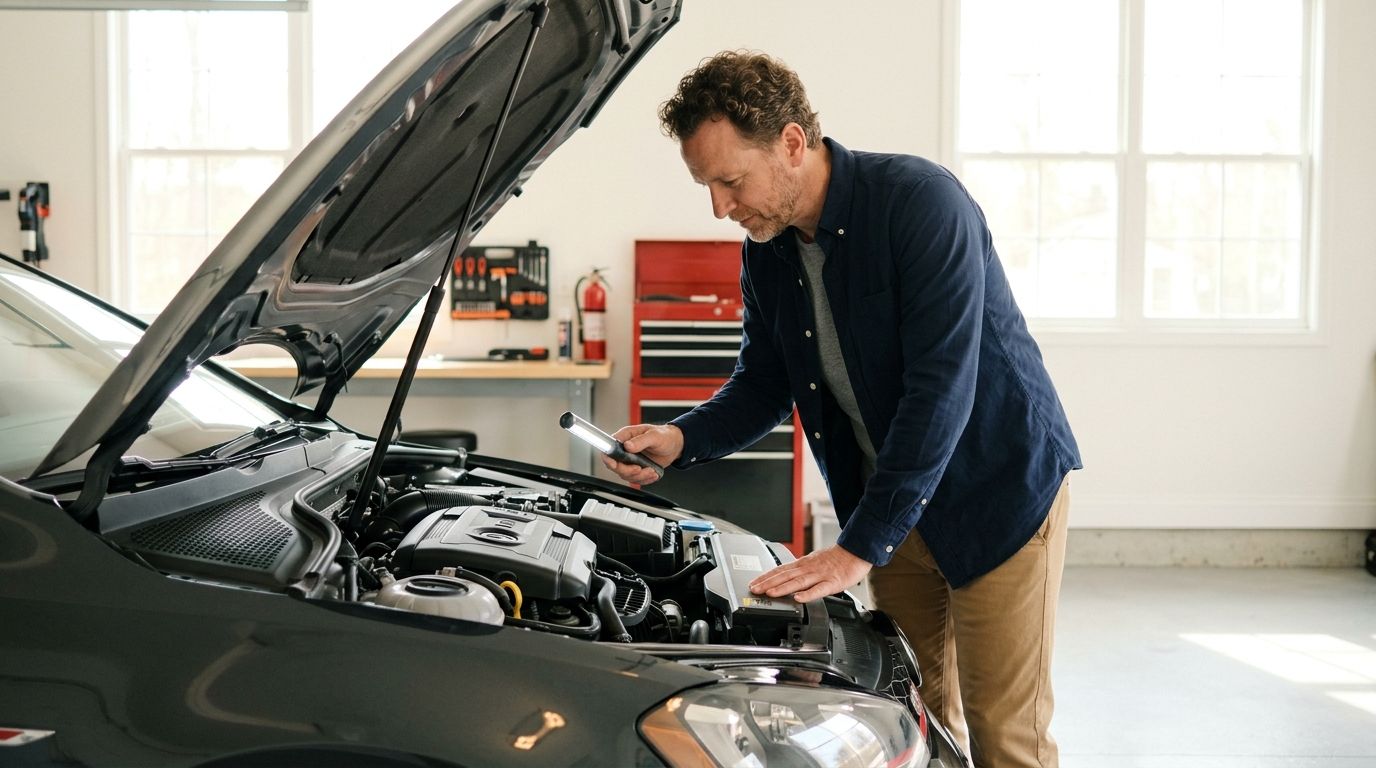
Match the invoice to the approved work
Start with the paperwork before you drive away. Compare the final invoice to the estimate or approved repair authorisation.
Check these items:
- The complaint listed correctly: The paperwork should reflect the issue you brought in.
- The repair described clearly: You should be able to understand what was done.
- The parts identified: You don't want mystery components on a safety-related repair.
- Labour and materials aligned with the conversation: If something changed, the reason should be clear.
If the job involved inspection-related concerns or roadworthiness, it's also smart to understand how that fits with the broader annual safety inspection process in Ontario, especially if you're already dealing with brakes, steering, suspension, or lighting.
Inspect the work with your own eyes
You don't need to be a technician to catch obvious misses.
Look for:
- Loose trim or clips
- Uneven panel fit
- Warning lights that were not present before
- Fluid smells or visible drips
- Dirty fingerprints or disturbed areas that suggest rushed reassembly
Ask to see replaced parts if that was part of the agreement. On many repairs, that simple request keeps everyone aligned.
A clean-looking repair isn't the same as a verified repair. Cosmetic neatness matters, but function matters more.
Road test the original complaint
The best final check is to drive the vehicle under the same conditions that triggered the issue. If the noise happened cold, test it cold. If the vibration appeared at highway speed, test at highway speed where safe and legal. If the brake concern happened in stop-and-go traffic, don't judge the job from a one-minute drive around the block.
For a strong diagnostic workflow, the benchmark is confirm first, test and measure before replacing parts, and finish with a final verification drive cycle to ensure the original concern is fixed and no new codes appear (practical repair procedure guide). That standard is worth asking about even if the shop doesn't explain it that way.
Know when to go back immediately
Return promptly if:
- The original symptom is still present
- A new warning light appears
- The steering wheel is off-centre after steering or suspension work
- The brakes, transmission, or engine behaviour feel different in a bad way
- An ADAS feature now acts oddly or gives inconsistent alerts
Good shops want that feedback quickly. The longer you wait, the harder it becomes to isolate whether the issue is related to the original repair.
The Carmedics Standard Safe Auto Repair in Whitby
The gap between a basic repair and a safe repair usually comes down to process. Does the shop document concerns properly? Does it test before replacing? Can it handle modern electronics and software-dependent systems? Does it verify the result before handing the vehicle back?
That's the standard drivers should use in Whitby, especially if they own newer cars, SUVs, or enthusiast vehicles where fit, finish, and system function all matter. It's also why broad capability matters. General service, diagnostics, collision-related repair considerations, and appearance protection don't live in separate worlds anymore. A driver who cares about long-term ownership often needs one shop that understands the vehicle as a whole.
Carmedics Autowerks fits that modern profile in practical ways. The shop handles auto repair services for cars and SUVs, along with fleet maintenance, collision-related work, window tinting, and paint protection film. That combination matters because owners of newer vehicles often want both mechanical reliability and proper vehicle care under one roof. For local drivers comparing options, the Carmedics Autowerks Whitby location is one example of a shop setup built around that broader ownership view.
What the right standard looks like in practice
A trustworthy shop should give you these basics without friction:
- Clear estimates before work begins
- Plain-language explanations of the diagnosis
- Transparency on parts selection
- Comfort with newer vehicle systems
- A final verification mindset, not a rush-to-close mindset
That last point matters most. Shops don't earn trust by sounding confident. They earn it by proving the fix.
The owner's side of the job
Drivers have a role too. Bring clear symptom details. Mention recent repairs. Ask direct questions. Read the paperwork. Test the vehicle after pickup. Safe auto repair is a shared process between the customer who notices the problem and the technician who solves it correctly.
The best repair relationships are built on two things: accurate information going in, and documented verification coming out.
If you use that standard, you'll avoid most of the trouble people run into. You'll also spot the difference between a shop that changes parts and a shop that repairs vehicles.
If you want a shop conversation that starts with the symptom, the estimate, and the repair process instead of guesswork, contact Carmedics Autowerks Inc. For Whitby drivers with newer cars, SUVs, fleet vehicles, or vehicles that need both repair and protective care, that kind of documented, modern approach is what safe auto repair should look like.