

Most advice around paint protection film spray is too neat. It treats every spray-applied product as if it delivers the same kind of protection as a proper polyurethane film. In Ontario, that shortcut causes expensive misunderstandings.
A spray that adds slickness is not the same as a film that takes abuse from road grit, salt, and highway debris. An unblemished appearance also isn't the whole story. What matters is what happens after a hard winter, repeated wash cycles, and daily use on local roads around Whitby.
What Is Paint Protection Film Spray
The term paint protection film spray sounds simple, but it isn't one single product category. People use it to describe several very different things: maintenance sprays used on top of existing PPF, sprayable coatings marketed as protection, and in some cases professional liquid-applied film systems.
That confusion isn't surprising. Vehicle protection has become a serious part of the aftermarket, not a fringe add-on. The U.S. paint protection film market was valued at USD 105.04 million in 2023 and is projected to reach USD 158.21 million by 2030, with a 6.2% CAGR from 2024 to 2030 according to Grand View Research's U.S. paint protection film market report. Buyers are clearly spending on protection, but online language still blurs very different products together.
A dealership might care about presentation because clean, protected vehicles help boost vehicle sales with showroom hygiene. An owner, though, needs a more practical answer. If you're trying to preserve paint through Ontario weather, the right question isn't "Is there a spray PPF?" It's "Which spray product am I looking at, and what does it really protect against?"
Why the term causes problems
Some products improve water behaviour, gloss, and washability. Others aim to create a temporary sacrificial layer. A true film installation is different again because the protective layer has to handle physical impact, not just contamination.
That distinction matters more than the label on the bottle.
Practical rule: If a product is sold as a quick spray you can wipe on in minutes, assume it's there to improve surface behaviour first, not to replace real impact protection.
For owners comparing options for a new car, it helps to start with the fundamentals of paint protection film services in Whitby before getting pulled into marketing terms that make everything sound equivalent.
Three Products Often Called PPF Spray
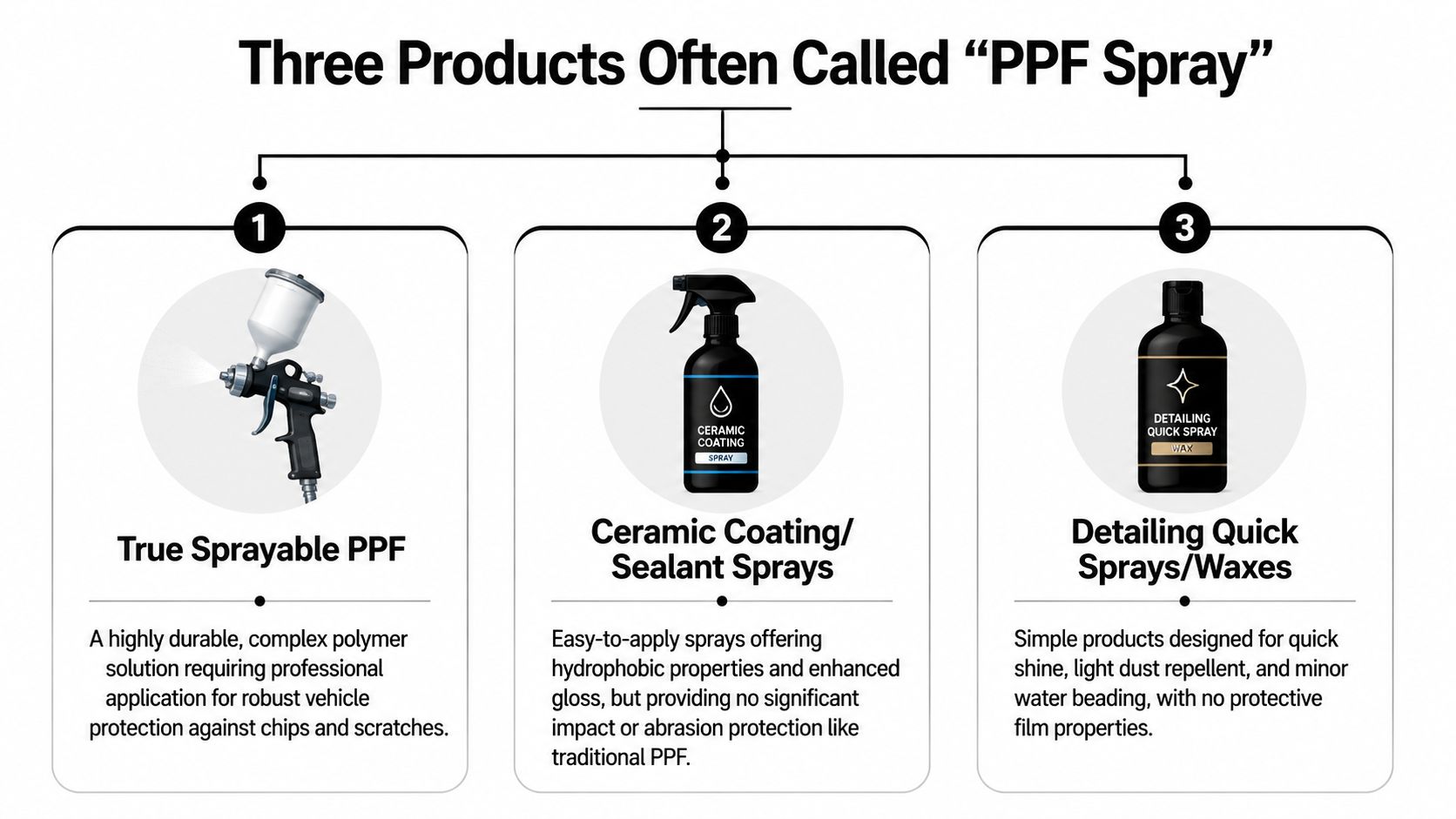
Most of the confusion disappears once you split the term into three buckets. The problem is that those buckets get marketed with similar language, even though they solve different problems.
PPF topper sprays
These are the easiest products to mistake for "spray PPF." They aren't a replacement for film. They're maintenance products used over film or paint to improve slickness, hydrophobic behaviour, and cleaning.
3M is very clear on this point. Their Scotchgard PPF Pro Series is a 0.203 mm self-healing polyurethane film, and 3M says a hydrophobic topcoat like Ceramic Boost Spray can be applied to improve easy-clean and stain resistance rather than serving as the main barrier itself, as shown in the 3M Scotchgard PPF Pro Series brochure.
The film is comparable to a jacket. The spray is like the water-repellent treatment you apply to the jacket's surface.
A topper can make maintenance nicer. It can't turn bare paint into a stone-chip shield.
Spray coatings sold as protection
Some products sit in the middle. They're sold as a protective spray, often with language around flexibility, gloss, or self-healing-style behaviour. They may leave a more substantial layer than a quick detailer, but that still doesn't automatically put them in the same class as traditional PPF film.
Buyers need to read carefully here. If the product description talks mostly about shine, slickness, water beading, and easier washing, it's telling you what it really does.
A useful comparison is in this guide on car paint protection options. It helps separate products that protect against contamination from products meant to absorb physical wear.
Quick sprays and detailers
Then there are products that never should've been grouped under PPF in the first place. Quick detail sprays, spray waxes, and some consumer sealants are for freshening the finish between washes. They can make paint feel smoother and look sharper.
They don't create a meaningful chip barrier. They don't replace film. They don't rescue a front bumper from sandblasting on winter highways.
Here's the practical shorthand I use:
- Topper spray over real PPF: Useful for maintenance and easier cleaning.
- Spray coating marketed as protection: May improve surface behaviour, but needs scrutiny before you treat it like impact protection.
- Quick detail spray or wax: Good for appearance. Not a substitute for any real protective film.
A lot of disappointment comes from buying a maintenance product and expecting a structural one.
True sprayable film systems
There is also a professional end of the category. Some liquid-applied systems are intended to form a removable or durable film-like layer. These aren't casual DIY products. They depend on controlled prep, application technique, curing, and realistic expectations about what happens when the vehicle sees hard use.
This is why "paint protection film spray" isn't a yes-or-no topic. It covers products with very different jobs, costs, and failure points.
How Spray-On Protection Compares to Traditional PPF
For a Whitby driver, the real question isn't which option sounds more modern. It's which one handles actual use better.
Spray-on systems appeal to people who want fewer seams and a more uniform look. Traditional PPF film has a longer track record in the high-impact zones that take the most punishment. That matters once winter roads start throwing grit, moisture, and salt at the front end.
Moisture and temperature swings are part of the durability conversation in Canada. The issue isn't just appearance. As noted in this piece on sharp edges, curves, and moisture-related failure points in PPF work, edge design and trapped moisture can affect long-term performance, and cold-region stress makes those details more important than marketing often admits.
Side-by-side trade-offs
| Feature | Spray-On PPF | Traditional PPF Film |
|---|---|---|
| Finish | Usually favoured for a seamless appearance | Can have edges, depending on pattern and wrap |
| Impact protection | Depends heavily on the system and application quality | Established choice for chip-prone areas |
| Repair approach | Often less straightforward if one section is damaged | A damaged panel section can often be replaced |
| Edge visibility | Reduced or eliminated as a selling point | Visible edges are possible if not wrapped or trimmed well |
| Winter durability questions | More open questions around long-term real-world ownership | More familiar maintenance and longevity expectations |
| Best fit | Owners prioritising seamless aesthetics | Owners prioritising proven front-end protection |
What works in Ontario conditions
For exposed areas like the bumper, leading hood edge, mirror caps, and front fenders, traditional PPF film still makes the most practical sense when the priority is resisting chips and abrasion over the long haul.
Spray-on protection can make sense for someone who values the look of no visible edges and understands the trade-offs. It can also suit lower-risk use cases, garage-kept vehicles, or owners who aren't asking the car to absorb the worst of winter commuting.
For broader reading, Uptown Rent A Car's 2026 PPF guide is a useful outside perspective on how owners weigh film protection choices across different vehicle types.
The overlooked issue is repairability
A lot of buyers focus on day-one appearance. They should focus more on year-three ownership.
If a traditional film section gets damaged, the repair path is usually easier to understand. With spray-applied systems, the repair process can be less obvious. Matching the finish, blending the area, and deciding whether to redo a section can become the main issue.
For owners who care about long-term planning, this matters as much as lifespan. That's why I usually tell people to look beyond the showroom finish and read about how long PPF lasts under real use before choosing a protection strategy.
Where Do Ceramic Coatings Fit In
Ceramic coatings get pulled into the same conversation because they also promise protection. They do protect, but not in the same way as PPF.
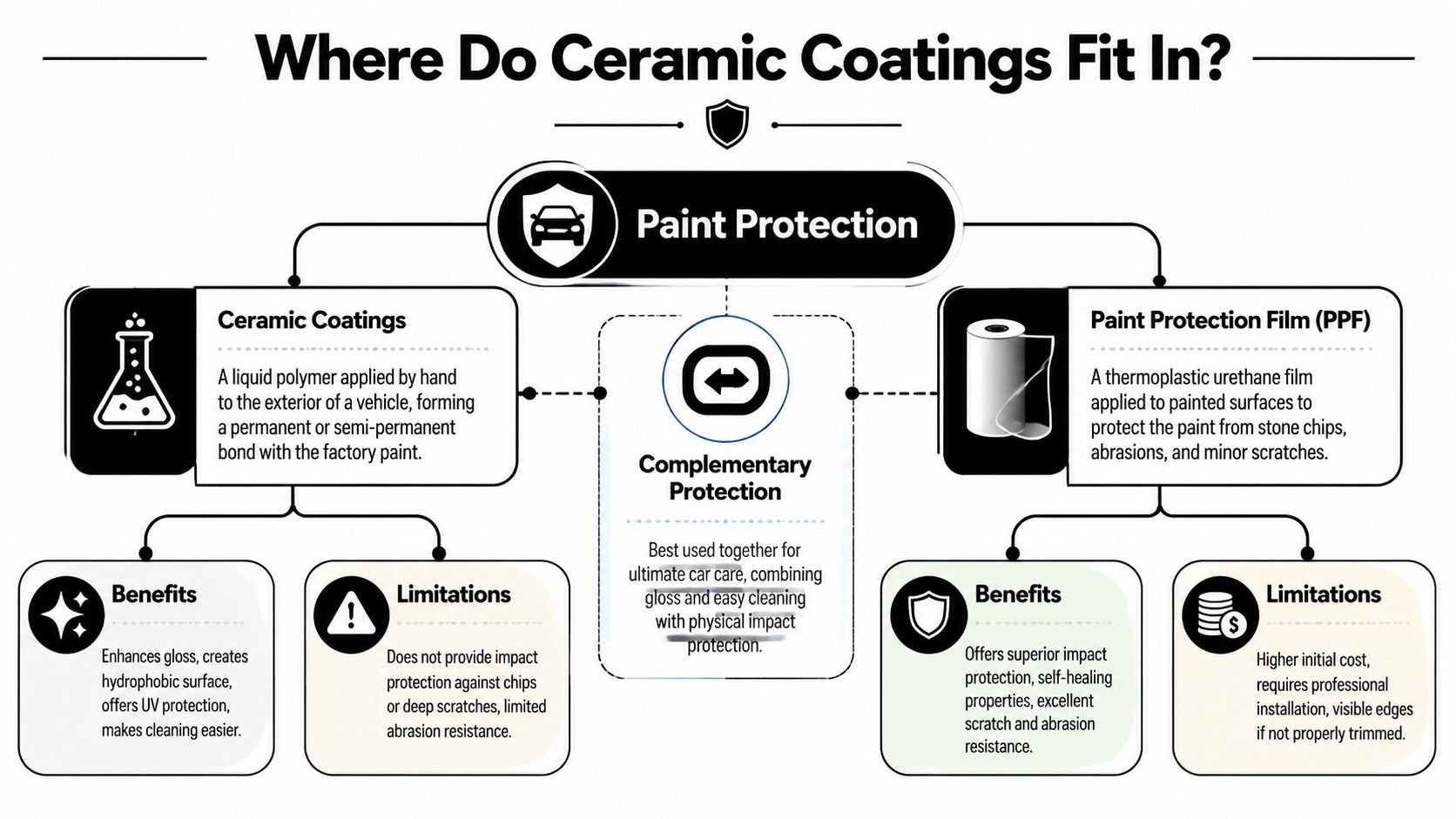
A simple analogy helps. PPF is the screen protector. Ceramic coating is the slick outer layer that helps keep the surface cleaner. One is for impact and abrasion. The other is for easier washing, chemical resistance, gloss, and surface behaviour.
What ceramic coatings do well
Ceramic coatings make ownership easier. Dirt releases more easily. Water behaviour improves. Drying is simpler. The car often stays cleaner-looking between washes.
That matters in Ontario because grime builds fast in shoulder seasons and winter. A coated surface usually takes less effort to maintain properly.
What they don't do
Ceramic coatings don't replace film on impact zones. They won't stop a sharp stone from chipping paint the way a proper urethane barrier is meant to.
That's why owners get in trouble when installers or product pages blur the categories. A ceramic coating is not a thinner, cheaper form of PPF. It's a different tool for a different job.
If your biggest worry is chips on the front bumper, choose film first. If your biggest annoyance is stubborn dirt and water spotting, ceramic becomes more relevant.
Why the two products often work better together
The strongest setup for many drivers is layered by purpose. Put film where the vehicle gets hit. Add a coating where you want easier maintenance and a cleaner finish.
If you're sorting through that decision, this comparison of ceramic coating versus PPF for vehicle paint protection lays out the division clearly. The key is not choosing one product to do everything when each has a specific role.
Proper Application and Long-Term Care
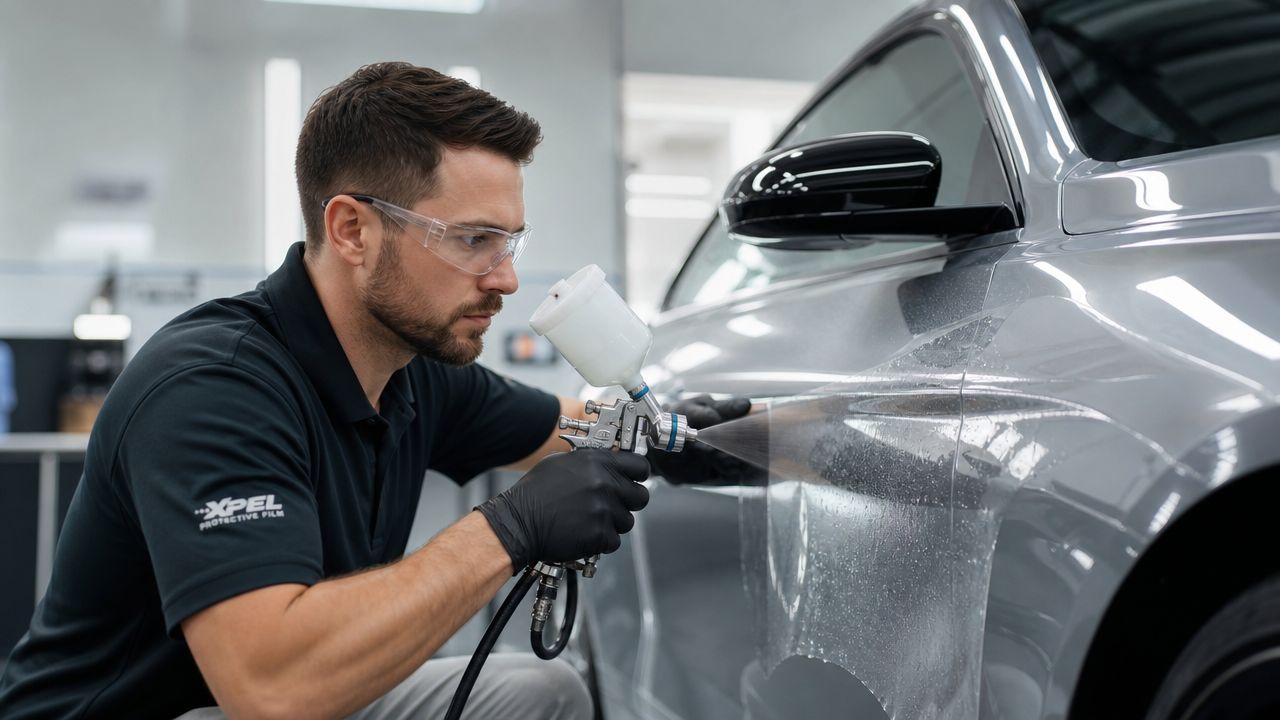
The biggest mistake owners make after installation is treating all protected surfaces the same. They aren't. A true sprayable film system needs proper prep and controlled application. Traditional PPF also lives or dies by prep, edge work, and aftercare.
Application reality
Consumer sprays can be DIY. Professional sprayable film systems are not the same thing. Surface decontamination, polishing where needed, environmental control, and product-specific curing all affect the final result.
Traditional film installation is also technical, but at least the category has well-understood standards around panel fitment, edge handling, and wash care. That's one reason it remains the safer recommendation for hard-driven daily vehicles.
Washing matters more than most owners think
For any film-based protection, bad wash technique shortens its useful life. 3M's installation guidance is specific: use a minimum 40-degree spray pattern, keep pressure to a maximum of 80 bar, use water no hotter than 60°C, hold the nozzle at least 30 cm away, and avoid directing water at 0° to 60° toward a film edge because that raises the risk of edge lifting, according to 3M's official PPF installation guideline.
That isn't just installer trivia. It's ownership advice.
Safe long-term care habits
Use these habits if you want film or spray-applied protection to last as intended:
- Rinse grit first: Never grind winter grit across the surface with a dry mitt.
- Keep the pressure washer back: Respect the minimum distance and don't aim at edges aggressively.
- Watch your angle: Straight-on is safer than attacking an edge from the side.
- Use sensible water temperature: Hotter isn't better if you're stressing adhesive areas.
- Dry with clean towels: Dirty drying towels add avoidable marring.
Shop-floor advice: Most film failures owners blame on the product actually start with poor washing, contaminated prep, or repeated abuse at the edges.
Aftercare separates good value from bad value
A protection product only pays off if you maintain it correctly. If you want a flawless-looking solution but wash it carelessly every week, you'll erase the aesthetic advantage quickly.
For local owners, a straightforward installer is crucial. Carmedics Autowerks Inc provides PPF installation in Whitby, and the useful part isn't just getting film applied. It's getting realistic maintenance guidance based on how Ontario vehicles are washed and driven.
Choosing Your Protection Strategy in Whitby
The right answer depends on how you use the car, not on what sounds newest.
If you commute year-round, drive the 401 regularly, or put serious highway mileage on a newer vehicle, I'd lean toward traditional PPF on high-impact areas. That's still the more dependable choice when the job is to absorb abuse from road debris and preserve the paint underneath.
Good fits for different owners
- Daily driver: Choose film on the front end first. That's where real damage starts.
- Weekend or show car: A spray-applied system may appeal more if a flawless look is the top priority and exposure is lighter.
- Lease or short-term ownership: Focus on the areas most likely to show wear at return time.
- Luxury or enthusiast vehicle: Combine physical protection on impact zones with surface-focused protection for easier care.
What to ask before you commit
Don't just ask how it looks fresh. Ask:
- How is damage repaired
- What does winter maintenance look like
- What happens if one section fails
- How should the vehicle be washed
- Is the product meant to prevent chips or just improve surface behaviour
If you want a local place to compare those options in person, auto paint protection services near Whitby are worth reviewing with your actual driving habits in mind. The best protection strategy is the one that matches your roads, your wash routine, and how long you plan to keep the vehicle.
Your PPF Spray Questions Answered
Can I apply paint protection film spray myself
If you're talking about a topper spray or quick spray sealant, yes. If you're talking about a true sprayable film system, that usually isn't a realistic DIY project. Prep, application conditions, and finish consistency matter too much.
Is spray-on protection better than regular PPF
Not as a blanket rule. Spray-on systems may look cleaner because they reduce visible seams, but that doesn't automatically make them tougher where stones and abrasion are concerned. For Ontario daily drivers, traditional film still has the clearer use case on high-risk panels.
What happens if a spray-applied layer gets damaged
Ownership questions become more challenging. A critical issue with spray-on PPF is the total cost of ownership, because repairability, reapplication after damage, and lifespan in Canadian winter conditions are less documented than the 10+ year warranties attached to premium films, as discussed in Ceramic Pro's article on the realities of PPF and spray-applied alternatives.
Should I choose a spray product because it's seamless
Only if you've already accepted the trade-offs. Integrated looks great. It doesn't guarantee simpler repairs or stronger long-term defence.
What's the most honest recommendation
Use the product that matches the risk. For front-end chip defence on a vehicle that sees Ontario roads, real film remains the safer answer. Use sprays and coatings where they make sense, mostly as maintenance aids or appearance-focused layers, not as magic substitutes for impact protection.
If you want a practical recommendation for your vehicle, Carmedics Autowerks Inc can inspect the car, discuss how you drive in Whitby and surrounding areas, and help you choose between targeted PPF coverage, complementary coating options, or a simpler maintenance-first approach.