

You merge onto the 401, settle into the lane, and within minutes you hear it. That sharp ping off the front end. If you drive in Whitby, Oshawa, Ajax, or anywhere across Durham Region, you already know the sound. It usually comes from a transport, a dump truck, loose winter grit, or the car ahead kicking something up at just the wrong angle.
For a lot of drivers, that moment sticks. You wash the car later and start hunting for the mark on the hood, bumper, mirror cap, or fender edge. New car owners feel it the most. Enthusiasts feel it every single time. Once the first chip lands, the paint rarely gets a break on local roads.
That's why the benefits of paint protection film matter so much here. In Whitby, this isn't about being fussy. It's about keeping factory paint intact through salt, debris, slush, and constant highway use.
That Heart-Sinking Sound A Whitby Driver Knows Too Well
A lot of local damage starts the same way. A driver picks up a new SUV or sports sedan, keeps a careful gap on the 401, and still takes a stone to the front clip before the first oil change. Then winter shows up, the roads get coated, plows scrape everything loose, and the lower panels start taking abuse from salt and grit every day.
Whitby drivers don't deal with one type of paint threat. They deal with several at once. Highway debris on the 401 and 407. Construction dust and gravel on busy connectors. Slush packed with salt. Dirty snowbanks rubbing against rocker panels and lower doors. Even a careful owner can't drive around all of it.
High-quality paint protection film exists for exactly this kind of environment. In Ontario conditions where road salt is heavily used, PPF made from thermoplastic polyurethane provides strong chemical resistance against corrosive de-icing agents. Technical studies on TPU films show that high-quality PPF maintains over 95% adhesion integrity after 1,000 hours of salt spray exposure, while untreated paint shows pitting and oxidation within 200 hours, according to Solar Gard's discussion of paint protection film benefits.
Why local driving changes the conversation
If your vehicle rarely leaves a garage and only sees fair-weather drives, bare paint has an easier life. That's not how most vehicles in Durham Region are used. They commute. They sit outside. They run errands through salted lots and sloppy side streets. They get blasted by whatever the vehicle ahead throws back.
Practical rule: If you care about your paint and you drive the 401 regularly, protection on the front end isn't a luxury item. It's preventative maintenance.
Drivers looking into auto paint protection near Whitby usually start after a chip appears. The smarter move is earlier, before the bumper, hood edge, headlights, and rocker panels start collecting damage that can't be undone without refinishing.
What Exactly Is Paint Protection Film
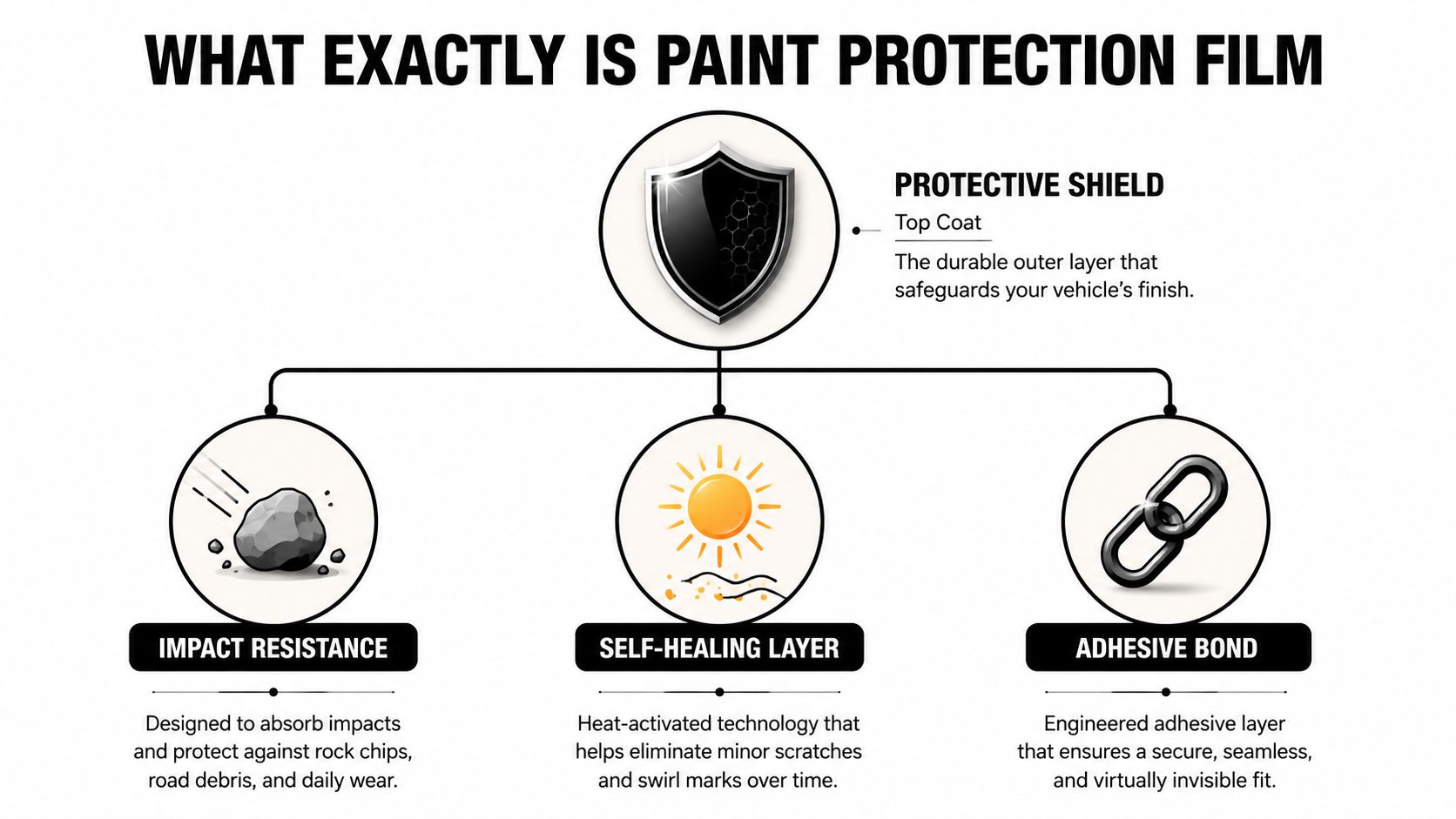
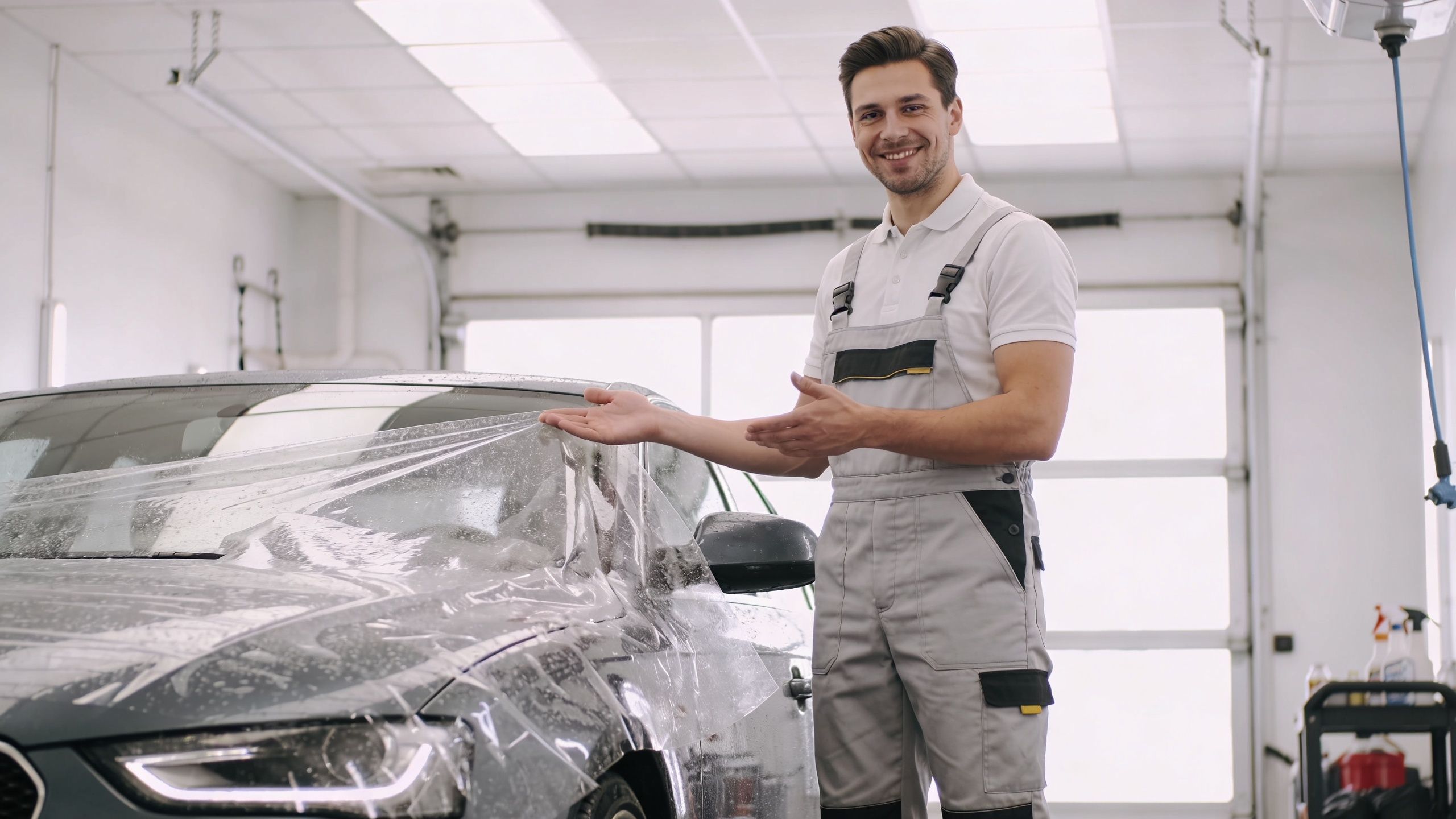
Paint Protection Film, usually called PPF, is a clear urethane layer installed over painted surfaces to take abuse so your factory finish doesn't have to. The simplest way to understand it is this: it's a high-tech screen protector for your car, except far tougher and built to deal with impact, weather, washing, and contamination.
It isn't wax. It isn't a polish. It isn't just a shine product. Good film is a physical barrier.
The material matters
Most quality PPF is made from thermoplastic polyurethane, often shortened to TPU. That matters because TPU has the flexibility and toughness needed to absorb minor impacts without cracking like a brittle coating would.
In plain terms, the film bends, stretches slightly, and takes the hit first. That sacrificial behaviour is the whole point. The paint underneath stays isolated from a lot of the damage that would otherwise mark the clearcoat or chip right through it.
How the layers work
A good way to think about PPF is as a system with three jobs happening at once:
- Top surface protection keeps the finish clear and helps resist staining, light marring, and day-to-day contamination.
- Impact absorption happens in the film body, where the material takes the force from small road debris.
- Adhesive bonding holds the film tightly to the panel so it stays nearly invisible when installed properly.
That layered design is why PPF feels different from other paint care products. It doesn't just sit on the surface to make water bead. It creates a real buffer between your paint and the road.
What self-healing actually means
A lot of people hear “self-healing” and assume it means the film fixes deep cuts or major gouges. It doesn't. That's the wrong expectation.
What it does mean is that light surface marks in the top layer can relax and become less visible when exposed to heat. On quality film, this helps the surface recover from the kind of light wash marring or fine swirls that would otherwise leave the front end looking tired.
Self-healing is useful, but it's not magic. It helps with minor surface blemishes. It won't erase a hard impact that physically cut through the film.
That distinction matters because one of the biggest mistakes buyers make is expecting any protection product to make damage impossible. PPF reduces risk and absorbs abuse. It doesn't make your car invincible.
The Core Protective Benefits for Your Vehicle's Finish
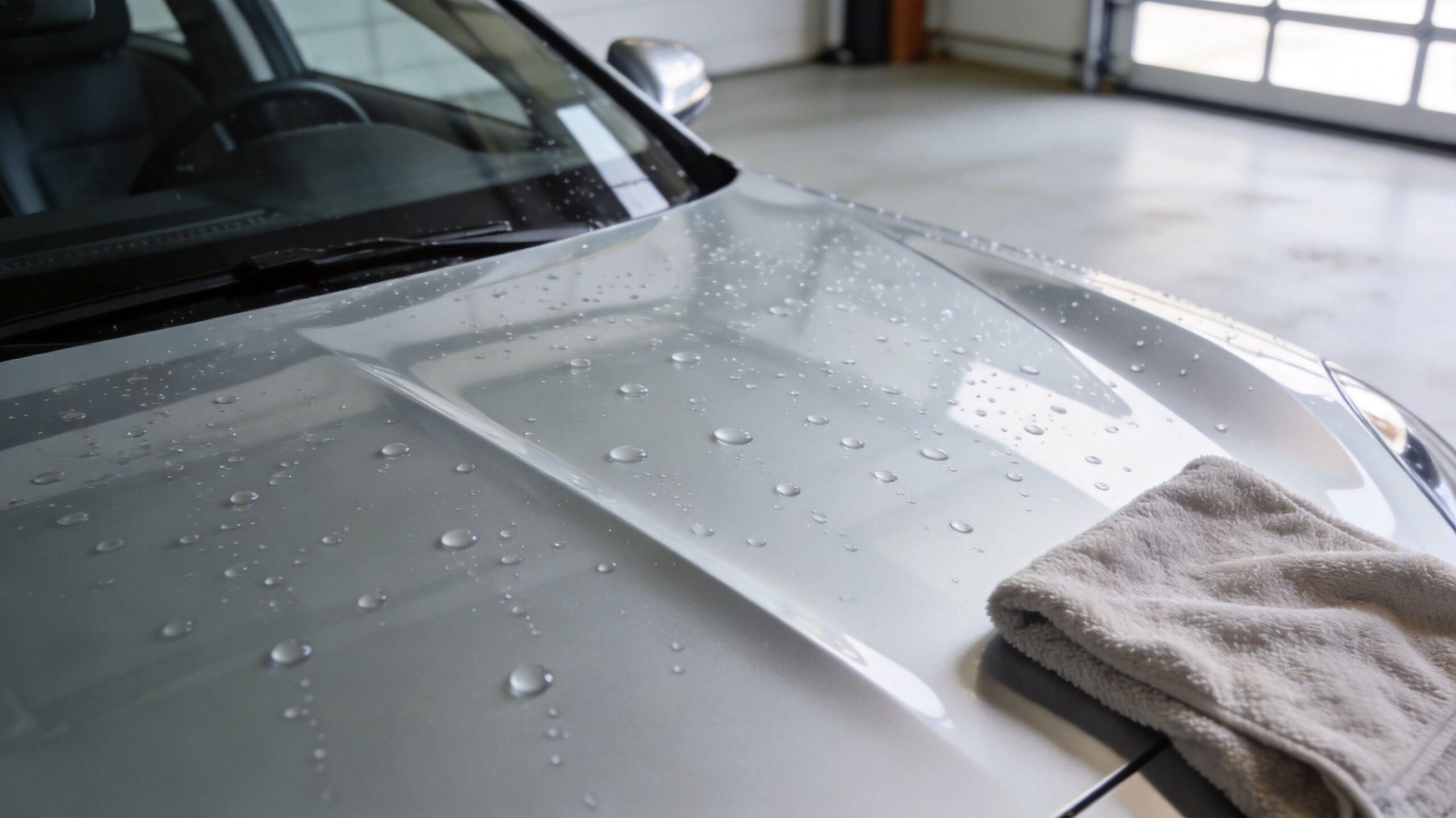
The value of PPF shows up in the kind of damage Whitby drivers deal with every week. The front bumper gets sandblasted by winter grit. The hood edge gets tagged on the 401. The lower doors collect grime and salt spray. A good film package puts a sacrificial layer over the areas that take that punishment first.
Impact protection where Ontario cars need it most
For local driving, the biggest practical benefit is simple. PPF takes hits that would otherwise reach the paint.
That matters because rock chips aren't a rare edge case in Ontario. They affect 60% of highway-driven vehicles in Ontario, and high-quality PPF is particularly effective against them. The same source notes that quality film also blocks over 99% of UV rays, prevents 70-80% of fading, and preserves gloss at 95% after 5 years, versus 70% for unprotected paint in Ontario's variable climate, as outlined in this overview of PPF protection in Ontario conditions.
For a Whitby commuter, that translates into specific zones worth protecting:
- Front bumper: First point of contact for grit, stones, and road spray.
- Leading hood edge: One of the most common chip zones on any highway-driven vehicle.
- Mirror caps: Constantly exposed to passing debris.
- Rocker panels: A magnet for dirty slush and kicked-up gravel.
- Behind wheel arches: Often ignored until the paint starts looking sandblasted.
Chemical resistance in winter
A chip is obvious. Chemical wear is slower, and that's why many owners underestimate it.
Ontario winter roads coat your vehicle in a mix of salt, brine, grime, and dirty moisture. That mess sits on the lower panels, creeps into edges, and attacks any weak spot in the finish. PPF gives those high-risk areas a barrier that's easier to wash and less vulnerable than exposed paint.
If you're also thinking about long-term underbody protection, it helps to pair exterior film with a broader rust prevention approach for Ontario vehicles. They do different jobs. Rust protection handles what happens underneath and inside cavities. PPF protects visible painted surfaces from impact and surface contamination.
Environmental shielding beyond winter
Not every threat comes from a truck on the highway. UV exposure, bug remains, bird droppings, tree sap, and hard-water spotting all wear down paint over time. Film won't stop every stain forever, but it gives you time. That extra margin matters when life gets busy and the car doesn't get washed the same day.
Good PPF protects best when it's treated like a shield, not a neglect pass. The film can take abuse, but prompt washing still matters.
That's one of the less flashy benefits of paint protection film. It gives owners more room for error without sacrificing the finish right away.
PPF vs Ceramic Coating Which Is Right for You
Many buyers get tripped up. They ask for ceramic coating when what they really want is chip protection. Or they ask for PPF when what they care most about is easier washing and extra slickness.
The right answer depends on what kind of risk bothers you most.
The short version
If you want protection from physical impact, choose PPF.
If you want easier cleaning, stronger water behaviour, and a surface that's simpler to maintain, ceramic coating makes sense.
If you want both, combine them.
Paint Protection Film vs. Ceramic Coating at a Glance
| Feature | Paint Protection Film (PPF) | Ceramic Coating |
|---|---|---|
| Primary job | Physical barrier over paint | Surface protection and easier maintenance |
| Rock chip resistance | Strong | Minimal |
| Scratch resistance | Helps with light surface damage and absorbs minor impacts | Helps with minor wash marring, but not impact damage |
| Self-healing | Available on many premium films | Not the same kind of self-healing barrier |
| Appearance | Clear, glossy, and can also be done in satin or matte depending on product | Adds gloss and slickness |
| Cleaning | Easier than bare paint, especially with quality topcoats | Very easy to wash and dry |
| Best use case | Highway driving, winter exposure, front-end abuse | Daily drivers wanting easier upkeep and strong water behaviour |
What works and what doesn't
Ceramic coating is excellent for maintenance. Dirt doesn't stick as stubbornly, washing is easier, and the vehicle tends to stay cleaner between washes. But ceramic coating doesn't give you meaningful defence against a stone launched off a truck tire.
PPF does. That's the dividing line.
Where drivers get disappointed is when they choose ceramic alone for a vehicle that spends most of its life on the 401. The finish may bead water beautifully and still end up chipped. On the other hand, a full film package on a vehicle that almost never sees highway use can be more protection than some owners need.
The strongest combination
For many owners, the smartest approach is selective. Protect the high-impact zones with film, then add coating over the film and the rest of the vehicle for easier maintenance and a more uniform finish.
“If chips are your main worry, start with film. If wash ease is your main worry, start with coating.”
That's why many people compare options through a guide like best car paint protection for Ontario driving. The right package usually comes down to how often you drive highways, where the vehicle is parked, and how obsessive you are about keeping factory paint untouched.
The Long-Term Value and Financial Return of PPF
A lot of owners look at PPF and focus only on the upfront bill. That's understandable. Film isn't a throwaway add-on. But the more useful question is different. What does unprotected paint usually cost over the time you own the vehicle?
That cost doesn't always show up as one big repair. Often it arrives in layers. A chip repair here. Paint correction there. A bumper respray after enough damage accumulates. Lower resale offers because the front end looks older than the odometer suggests.
What value retention looks like in Ontario
In Ontario, this matters because winter damage is not cosmetic in a trivial sense. Road salt contributes to paint corrosion, and Transport Canada says it causes up to 80% of vehicle paint corrosion in Ontario. The CAA notes that PPF-protected vehicles retain 10-15% higher market value after 3 years, which equates to a CAD 2,000-5,000 premium on a mid-range SUV, according to this summary of Ontario PPF resale and corrosion data.
That's the argument many enthusiasts already understand instinctively. Buyers pay more for vehicles that still look original. Factory paint in clean condition carries trust. Repainted panels invite questions, even when the work was done properly.
Where the return actually comes from
PPF creates value in a few different ways:
- Fewer cosmetic repairs: The film takes minor abuse first, which can reduce the need for paint touch-ups and refinishing.
- Better presentation at trade-in or sale: A clean front end photographs better and inspects better.
- Preserved factory finish: Original paint usually carries more buyer confidence than repaired panels.
- Lower stress during ownership: You spend less time reacting to every chip, stain, or scuff.
For someone comparing package options, a paint protection film cost breakdown helps frame the decision properly. The actual comparison isn't “PPF versus spending nothing.” It's “PPF versus years of cumulative paint wear and the money lost when the vehicle stops looking well kept.”
Who sees the strongest return
Not every owner gets the same payoff.
Drivers who usually benefit most are the ones who:
- commute on the 401 or 407 often,
- buy new vehicles and plan to keep them in clean condition,
- own darker paint colours that show every mark,
- lease or trade on a regular cycle,
- or care strongly about maintaining factory appearance.
For those owners, PPF behaves less like a cosmetic add-on and more like asset protection.
Caring For Your PPF to Maximize Its Lifespan
One reason some drivers hesitate is they assume film will be fussy. It isn't. Good PPF is straightforward to maintain if you stick to sensible wash habits and don't attack it with the wrong tools.
The biggest mistake is treating it like raw paint and scrubbing aggressively the moment the car gets dirty. Film is durable, but technique still matters.
What to do after installation
Right after installation, let the film settle and cure based on your installer's guidance. During that period, avoid rushing into hard washing routines, picking at edges, or trying to press down every small moisture mark you notice. Fresh installs can show temporary visual quirks while the film sets.
Once cured, normal maintenance is simple:
- Use a pH-neutral wash soap: It cleans without being unnecessarily harsh on the film surface.
- Wash with clean microfibre tools: Dirty mitts create needless surface marring.
- Rinse off salt and grime promptly: Winter buildup is easier to remove before it cakes on.
- Dry gently: A clean microfibre drying towel or touch-safe drying method works well.
What to avoid
A few habits shorten the life and appearance of film faster than people realise:
- Abrasive brushes: They can dull the surface and leave marks.
- Harsh chemicals: Strong solvents and aggressive cleaners can compromise the finish.
- Picking at edges: If an edge lifts, have it inspected instead of trying to “fix” it yourself.
- Neglecting contamination: Bug remains, bird droppings, and heavy grime should be removed in a reasonable timeframe.
Clean film lasts longer and looks better. Most problems blamed on PPF are really maintenance problems or poor installation.
If you want a clearer idea of expected longevity, this guide on how long PPF lasts on a daily-driven vehicle helps set realistic expectations. The short version is simple. Quality film plus proper care usually holds up very well. Cheap film and rough maintenance usually don't.
Your Top PPF Questions Answered by Whitby Experts
A lot of hesitation around PPF comes from a few practical questions. The answers are usually simpler than people expect.
Can PPF go on an older vehicle
Yes, if the paint is in suitable condition.
Film doesn't hide bad paint. If the surface is heavily chipped, peeling, or unstable, the right move is to correct the paint first or be selective about where film goes. On a well-kept older car with solid original paint, PPF can still make a lot of sense, especially on high-impact areas.
Will PPF damage paint when it's removed
Quality film removed properly from sound factory paint typically shouldn't damage the finish. Problems usually come from one of three places. Damaged paint underneath, a poor-quality product, or improper removal technique.
That's why installation quality matters just as much as film quality. A good product put on badly can still become a problem later.
Do I need to wrap the whole car
Not always.
A full front package often makes the most sense for Whitby and Durham drivers because that's where highway abuse shows up first. For some owners, that's enough. Others choose rocker panels, rear arch impact zones, A-pillars, roof edge, and other exposed areas depending on how they drive and what vehicle they own.
Is PPF worth it for a daily driver
For many local owners, yes. Especially if the vehicle sees winter, highway use, or both.
The strongest candidates are daily drivers that people want to keep looking sharp for years, not just weekend cars. That includes trucks, SUVs, performance cars, and family vehicles that spend plenty of time on busy Ontario roads.
Carmedics Autowerks offers PPF installation in Whitby for cars and SUVs, along with related appearance and repair services that help owners protect high-impact areas before visible damage sets in.
If you want a practical recommendation for your vehicle, contact Carmedics Autowerks Inc for a quote and a panel-by-panel discussion of what actually needs protection based on how and where you drive in Whitby and Durham Region.