

If you're driving through Whitby on a bright afternoon, you already know the routine. The steering wheel is hot, the seat bolsters have stored heat like a radiator, and the sun coming through the side glass keeps finding your face no matter how you shift in the seat. Add stop-and-go traffic, a black interior, or a long Highway 401 commute, and the cabin starts feeling like a greenhouse.
That's usually when drivers start looking into auto window tinting services. Not just because tinted glass looks cleaner, but because the car becomes easier to live with. Less glare. More privacy. Better protection for leather, trim, screens, and everything else that fades when it sits in direct sun day after day.
The trade has also changed. A lot of people still think of window tint as the old dark film that turns purple or messes with signal reception. That's outdated. The industry itself has remained stable, reaching $624.7 million in 2024 according to IBISWorld's window tinting services industry data, and that maturity shows up in the products now available. Modern films are built around heat control, UV protection, optical clarity, and legal compliance, not just darkness.
Your Guide to a Cooler and More Private Drive in Whitby
A typical Whitby driver usually wants three things from tint. First, a cabin that doesn't roast in summer. Second, some privacy when the vehicle is parked at the gym, office, or GO station. Third, a finish that looks factory, not aftermarket.
That's where a proper film choice matters. The right tint can make a new truck, SUV, sports coupe, or daily commuter feel more controlled in every season. You notice it when the sun is low over the road, when your interior doesn't feel baked after a parking lot stop, and when passengers aren't sitting in full glare.
What drivers usually want, and what actually solves it
Some owners come in focused on appearance. They want a sharper profile and more contrast against the paint. Others care more about the practical side, especially if they've got a black dashboard, leather seats, a child seat in the back, or a lot of time behind the wheel.
The best result usually comes from treating tint as a comfort and preservation upgrade, not a cosmetic extra.
- Cabin comfort: Film helps cut the harsh feeling of direct sun through the glass.
- Interior protection: Good tint helps shield dashboards, seats, trims, and touch surfaces from daily UV exposure.
- Privacy on the road: You don't feel as exposed in traffic or when the vehicle is parked.
- A cleaner exterior look: A well-matched shade can make the whole vehicle look more finished.
Practical rule: If your main complaint is heat, don't choose film by darkness alone. A lighter high-performance film can outperform a darker low-grade one.
In Whitby and across Durham Region, climate and legality matter just as much as appearance. A film that looks good in a photo but ignores Ontario rules or real summer heat won't age well as a decision. The goal is a tint package that suits the vehicle, the driver, and the way the car is used.
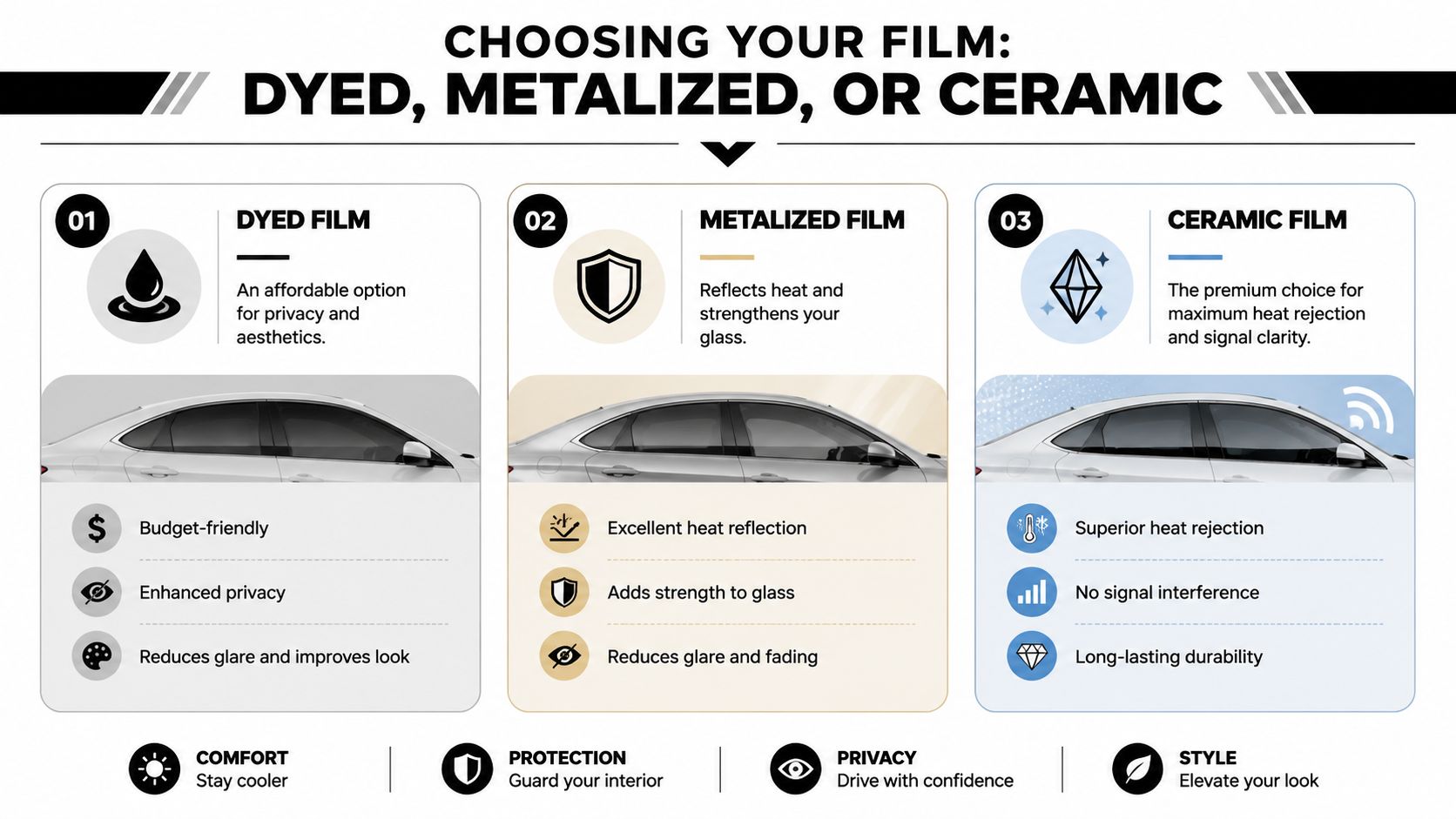
Choosing Your Film Dyed Metalized or Ceramic
The easiest way to look at window film is good, better, best. Dyed film gets you the look. Metalized film adds more heat management, but with trade-offs. Ceramic film is where modern performance really starts to separate itself.
Dyed film
Dyed film is usually the entry-level option. It works for drivers who mainly want a darker appearance and added privacy without spending for premium heat rejection.
The issue is longevity and performance. Dyed products tend to deliver the look first and the heat control second. In real driving, that means the car may still feel hot even though the windows look dark from the outside.
It can make sense on older vehicles or for owners with a tight budget. It makes less sense on a newer car where the driver expects a more refined result.
Metalized film
Metalized film sits in the middle. It reflects heat more effectively than dyed film and can add a slightly tougher feel to the glass. For some owners, that sounds like the ideal compromise.
The problem is the metal content. On modern vehicles packed with GPS, cellular connectivity, keyless entry systems, and wireless devices, signal interference is a real concern. That trade-off matters more now than it did years ago.
If you drive a newer luxury vehicle, EV, or anything with lots of onboard tech, metalized film usually isn't the first recommendation.
Ceramic film
Ceramic film is the premium choice because it focuses on the things drivers notice every day. Better heat control. Stable colour. Clear visibility. No metal signal issues.
According to SunTek automotive film specifications, advanced ceramic films achieve up to 63% Infrared Energy Rejection, can reject 80% more solar heat than traditional dyed films, and can reduce cabin surface temperatures from 65°C to 45°C in summer conditions. That's the difference between a car that feels punishing after parking and one that recovers far faster.
Darker isn't automatically better. A well-made ceramic film can stay comfortable and clear without relying on an overly aggressive shade.
Side-by-side trade-offs
| Film type | Best for | Main strength | Main drawback |
|---|---|---|---|
| Dyed | Budget-conscious drivers | Privacy and appearance | Limited heat performance and shorter-term satisfaction |
| Metalized | Drivers who want more reflection | Better heat management than dyed film | Can interfere with electronics |
| Ceramic | New vehicles, tech-heavy cars, long-term owners | Heat rejection, UV protection, clarity, signal-friendly performance | Higher upfront cost |
For most Whitby drivers who plan to keep the vehicle and want a result that still looks right years later, ceramic is usually the film worth serious attention. If you're weighing options in more detail, this guide on the best window tint for cars is a useful next read.
The Real-World Benefits of Professional Window Tinting
Specs matter, but the day-to-day payoff matters more. Drivers don't buy tint because they want to discuss film construction in a parking lot. They buy it because they want the car to feel better every time they open the door.
What you notice first
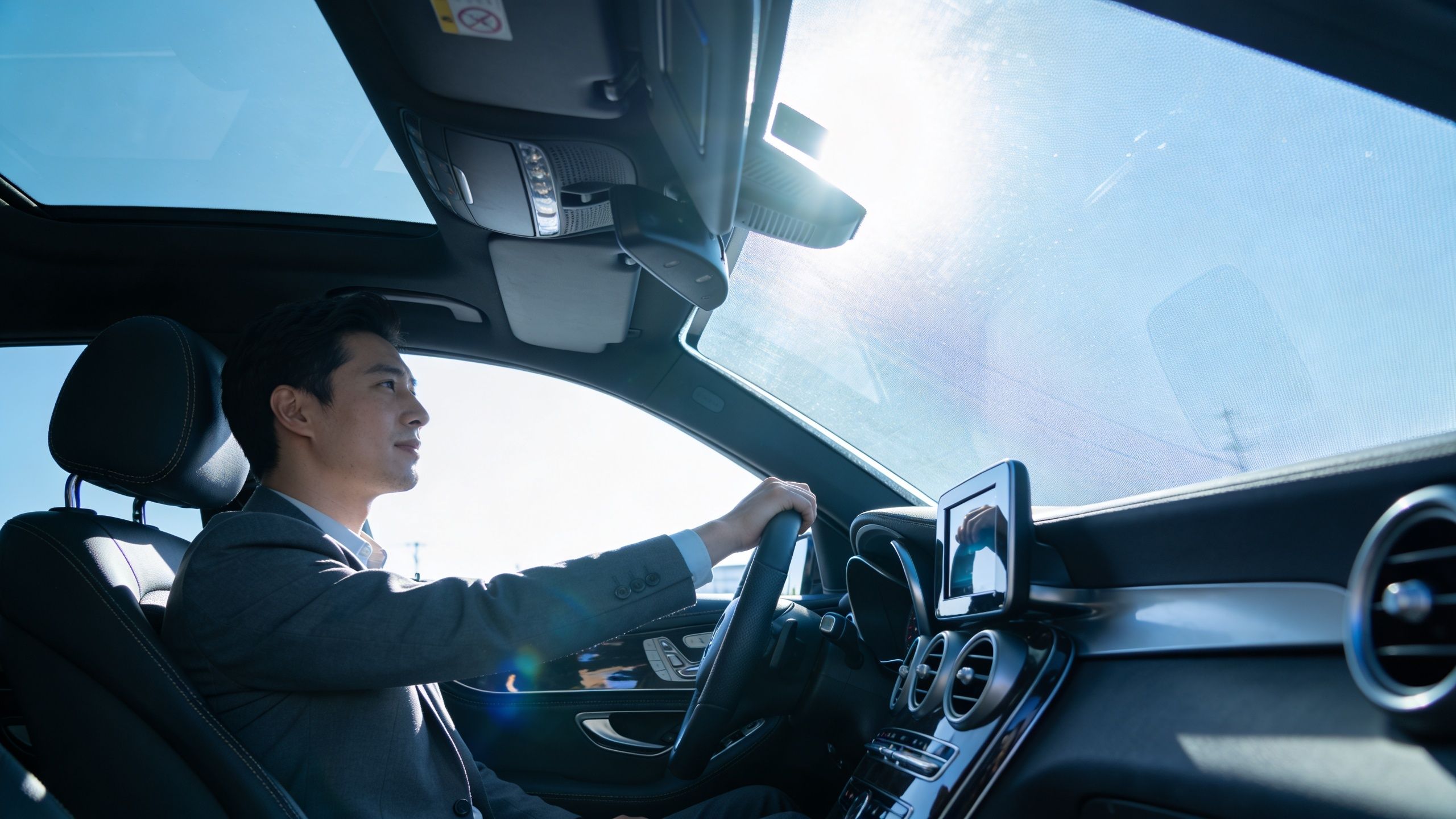
The first benefit is usually heat reduction. The cabin feels less oppressive, especially on dark interiors and vehicles with large side glass. That doesn't just help comfort. It also means you're not blasting the A/C as hard every time you start the car on a hot day.
The second is glare control. Afternoon sun, reflective pavement, and low-angle light can wear you down on longer drives. Good film takes the edge off without making the cabin feel closed in.
Then there's privacy. Not blackout privacy. Useful privacy. People passing by can't easily scan the interior, which helps when bags, tools, child gear, or electronics are in the vehicle.
Protection that goes beyond appearance
High-quality film also helps protect the parts of the car that get expensive fast. Dashboards dry out. Leather loses colour. Trim fades unevenly. Screens and glossy surfaces show wear earlier when they live under direct sun.
There's a safety angle too. Film adds a layer that can help hold shattered glass together rather than letting it scatter freely if a side window breaks.
- For daily commuters: Less heat soak and less eye strain in traffic.
- For enthusiasts: A more finished look without sacrificing visibility.
- For family vehicles: Better comfort for rear passengers and less direct sun exposure.
- For newer cars: More protection for interiors you paid good money for.
Why EV owners notice the difference quickly
EV owners in Durham Region tend to feel the benefit sooner because cabin heat directly affects energy use. According to ICCT research cited for Ontario EV drivers, nano-ceramic films can boost vehicle range by 5-8% by rejecting over 60% of solar heat, which reduces the load on the air conditioning system during Whitby's hot summers and cold winters.
That matters if you drive a Tesla, Hyundai Ioniq 5, Ford Mustang Mach-E, or any EV where efficiency is part of ownership. The less your climate system has to fight solar gain, the more stable the cabin feels and the less energy the car spends correcting it.
Navigating Ontario's Window Tinting Laws in 2026
A lot of tint content online is written for U.S. readers. That's where Ontario drivers get into trouble. They see advice built around very dark front windows, assume it applies here, and end up with a car that attracts attention for the wrong reasons.
What Ontario drivers need to know
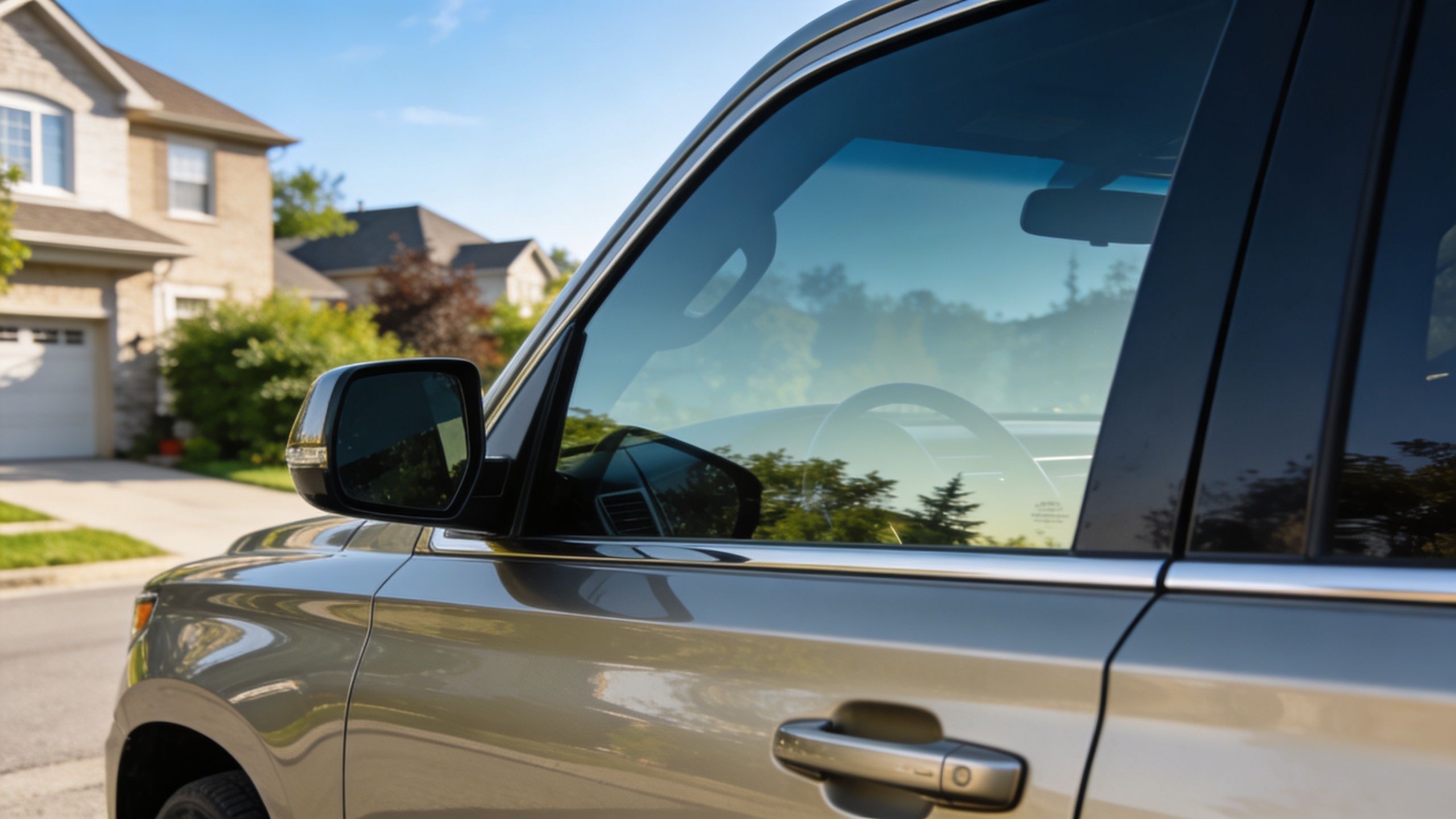
In Ontario, the front side windows need to remain within legal limits for visible light transmission. The windshield is even more restrictive, apart from the allowed upper strip. Rear side windows and the back glass give you more freedom, which is why a legal setup often uses a lighter, compliant film up front and a darker finish in the rear.
A lot of drivers miss one important detail. Film rating is not the same as final glass rating. Your vehicle already has factory glass with its own light transmission. Once film is applied, the combined result is what matters.
That's why guessing by appearance is a mistake. A film that sounds compliant on paper can still become non-compliant once it's installed over factory glass.
The enforcement side is real
This isn't theoretical. According to CAA's Ontario vehicle standards advocacy page, 25% of inspected vehicles in the GTA, including Whitby, fail tint compliance checks, leading to $110 fines and mandatory removal orders. The same source notes a 15% rise in tint-related violations in Durham Region after recent heatwaves.
If a tint package is sold on looks alone and nobody measures the final result, the driver takes the risk, not the installer.
That's why legal planning should happen before film touches the glass. A proper shop accounts for the vehicle's existing glass, the target finish, and what will pass.
A practical way to choose legal tint
Use this checklist before approving any install:
- Ask for the front-window target in plain language. You should know whether the finished setup is intended to remain Ontario compliant.
- Discuss factory glass, not just film shade. The combined result is what counts.
- Treat the windshield separately. The upper strip rule is different from side-glass rules.
- Consider who drives the car. If the vehicle is used by a new driver, parent, spouse, or employee, avoid anything that creates extra roadside attention.
For younger drivers in the household, it also helps to understand the broader legal responsibilities that come with early licensing. This guide on what G1 drivers need to know is useful context if you're setting up a family vehicle.
If you want a more detailed breakdown of Ontario compliance before choosing a shade, this article on navigating Ontario's legal window tint percentage covers the legal side in more depth.
The Professional Tint Installation Process Step by Step
A clean result doesn't happen because someone sprayed soapy water on a window and worked fast. Good tint work is controlled, patient, and heavily dependent on prep. Most failures start before the film is even applied.
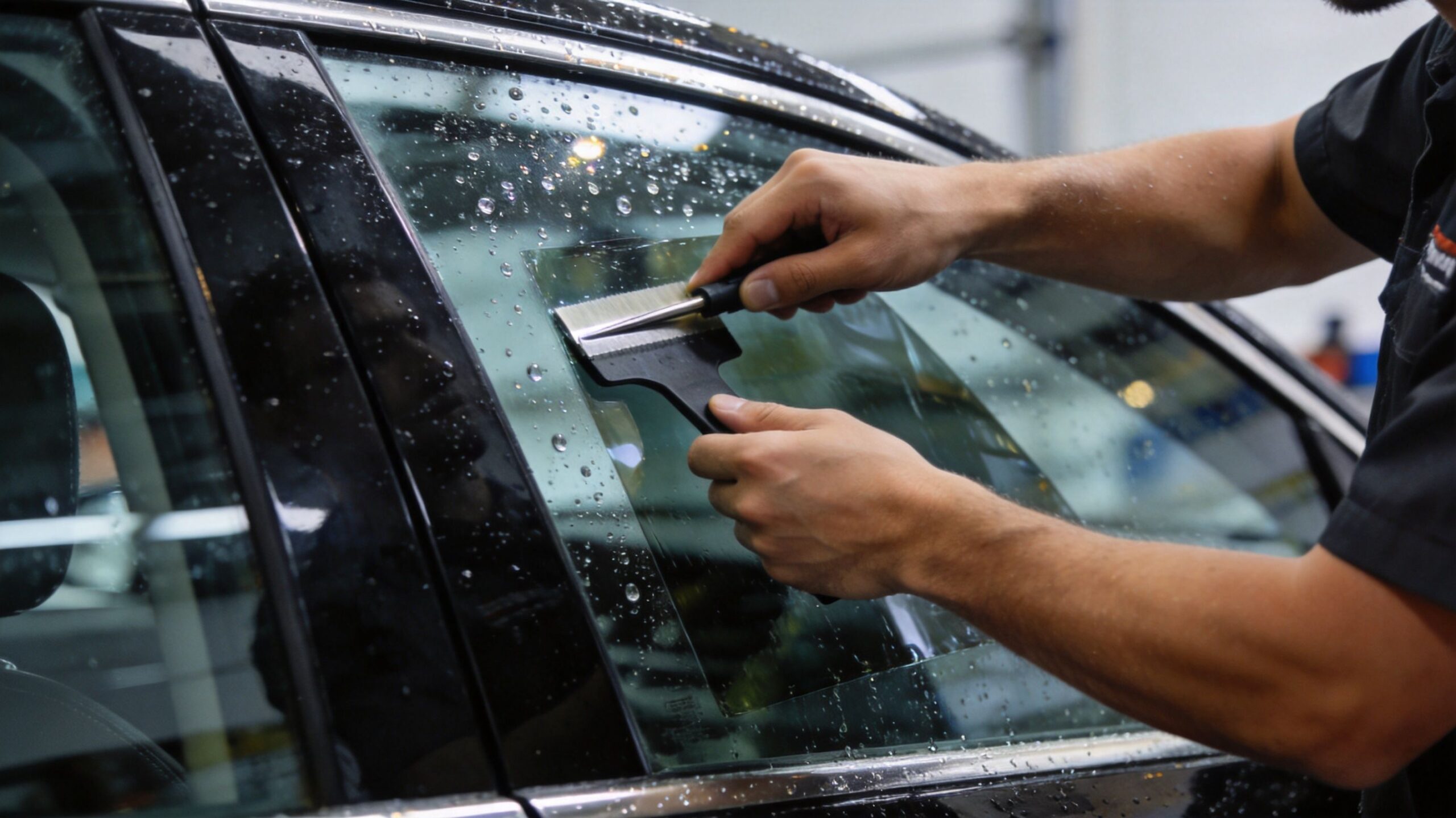
What a proper install looks like
The first step is inspection. The glass, seals, and interior trim all need a close look because old adhesive, contamination, and damaged weatherstripping can affect the finish.
Then comes cleaning. Not a quick wipe. A proper cleaning process removes dust, residue, oils, and anything else that can show up later as debris trapped under the film.
After that, the film is cut and shaped for the vehicle. According to AAA's car window tinting guide, expert installers use plotter-cut film patterns designed for specific vehicle models in Ontario. That avoids knife-on-glass cutting, prevents gaps or overlaps that can affect VLT, and is one reason certified services achieve a 99% pass rate on Ministry inspections, compared with a 15% rejection rate for non-compliant tints.
The step most DIY jobs get wrong
Curved rear windows separate serious installers from rushed work. The film needs to be heat-shaped to match the glass properly before final placement. If that shaping is off, you'll often see fingers, tension lines, edge lift, or distortion later.
A professional install usually follows this sequence:
- Glass prep: Deep cleaning of the inside glass and attention to lower window channels.
- Pattern accuracy: Computer-cut or plotter-cut film matched to the vehicle.
- Heat shrinking: Careful shaping on curved glass so the film lies flat.
- Application: Slip solution, controlled placement, and even pressure with the squeegee.
- Final inspection: Edge check, moisture check, and review under proper lighting.
A fresh install can look slightly hazy at first. That's normal while the remaining moisture cures out.
The cure period matters. Keep the windows up, don't scrub the inside glass immediately, and give the film time to settle. If you're comparing shops, it's worth looking at providers that explain their process clearly. One local reference point is this page on best car tinting near me, which outlines what professional service should include. Carmedics Autowerks also offers vehicle tinting as part of its wider protection and repair work in Whitby.
Understanding Pricing Packages and Long-Term Care
Pricing for auto window tinting services depends less on one simple menu and more on three decisions. Film type, vehicle shape, and coverage. A compact sedan with straightforward side glass is one job. A larger SUV, coupe with tight frameless glass, or a vehicle with a difficult rear window is another.
What changes the price
Ceramic usually costs more because the film itself costs more and the customer is paying for performance, not just shade. Larger vehicles need more material and more labour. Full-vehicle packages cost more than partial packages, but they usually deliver a more balanced result because the entire greenhouse is being treated as one system.
When you compare quotes, ask what the package includes:
- Film tier: Is it entry-level, mid-range, or ceramic?
- Window coverage: Front pair only, rear half, full vehicle, or windshield strip.
- Removal work: Old film removal and adhesive cleanup can add labour.
- Warranty terms: Look for written coverage on bubbling, peeling, cracking, or fading.
If you want a breakdown of the usual factors involved, this page on car window tinting cost is a practical place to start.
How to keep tint looking right
Once the film is cured, maintenance is simple if you avoid the usual mistakes. Use a soft microfibre cloth, light pressure, and a cleaner that's safe for tinted film. Harsh chemicals and abrasive pads shorten the life of the finish and can mark the surface.
If a window does get damaged, scratched, or marked during ownership, it helps to know what can and can't be corrected. This guide to restoring scratched tinted glass gives useful context before you try to fix it yourself.
The long-term rule is straightforward. Gentle cleaning and sensible care keep good film looking good. Neglect, aggressive cleaners, and cheap installs usually show up later as edge failure, haze, or peeling.
Your Tinting Questions Answered and Next Steps in Whitby
A few questions come up in almost every tint consultation, and they're worth answering directly.
Common questions from Whitby drivers
How long does installation take?
It depends on the vehicle, the glass layout, and whether old film needs removal. A straightforward vehicle can often be completed in the same day, while more complex jobs take longer.
Will tint damage rear defroster lines?
Not when the film is installed and, if needed later, removed properly. Problems usually come from poor removal methods, especially aggressive scraping on rear glass.
Can old tint be removed?
Yes. Old film can be removed, but the difficulty depends on its age, the condition of the adhesive, and whether the rear window has delicate defroster lines.
Will darker tint always block more heat?
No. Film technology matters more than darkness alone. That's why high-performance ceramic products often make more sense than choosing a darker shade.
Is legal tint still worth doing in Ontario?
Absolutely. A compliant setup can still improve comfort, glare control, privacy, and interior protection without creating legal headaches.
What to do before booking
Come in with priorities, not just a shade number. If your main concern is heat, say that. If you want a legal front end with a darker rear for privacy, say that. If the vehicle is a new EV, a leased daily driver, or a weekend car you want to preserve, that changes the recommendation.
A good tint decision balances four things at once:
- How the car is used
- What Ontario law allows
- How much heat rejection you want
- How long you plan to keep the vehicle
If you're ready to discuss film options, legal fit, or removal and replacement, the simplest next step is to contact the team and get a vehicle-specific recommendation.
If you want auto window tinting services that account for Whitby heat, Ontario law, and the way modern vehicles are built, Carmedics Autowerks Inc can help you choose a film package that fits your car and your daily driving.