


You feel it first through the steering wheel. You're slowing for a light, the front end starts to shudder, and your brain immediately runs through the usual suspects. Pads? Rotors? Suspension? Then maybe the next morning there's a rough scraping sound backing out of the driveway, and now you're not guessing for curiosity. You're guessing because you want to know whether the car is safe to drive and whether this is going to turn into a simple brake service or a more expensive repair.
That's usually when drivers start searching for when to replace brake rotors, and most of the advice they find is too shallow to be useful. A symptom list doesn't help much if you're trying to decide whether the rotors can be machined, whether replacement is mandatory, or whether Ontario winter conditions have already pushed a borderline rotor past the point where resurfacing makes sense.
Your Guide to Brake Rotor Replacement
Brake rotor decisions usually start with a complaint that sounds simple and turns out not to be. A driver notices a pulse in the brake pedal on the way into Whitby traffic. Another hears grinding after putting off pad service a bit too long. Someone else pulls the wheel off for a seasonal swap and sees grooves and rust ridges on the rotor face. All three situations feel different, but they lead to the same question. Is this rotor still serviceable, or is it done?
The answer depends on more than noise alone. It comes down to how the rotor feels, what it looks like, and what it measures. That last part matters most, because brake rotors aren't replaced on instinct or appearance alone. They're replaced when wear, heat damage, cracking, runout, or thickness puts them outside safe limits.
A good brake decision also isn't just about safety in the abstract. It's about using the right repair for the condition in front of you. Sometimes a rotor with light surface issues may still be a candidate for machining. Sometimes resurfacing is a false economy, especially when salt, moisture, and temperature swings have already started attacking the metal.
Practical rule: If the brake system is giving you a strong warning through sound, vibration, or pedal feel, treat that as the start of diagnosis, not the diagnosis itself.
That's how an experienced mechanic approaches it. Start with what the car is telling you. Then inspect. Then measure. Then decide.
Audible and Tactile Warning Signs from Your Brakes
A brake problem usually announces itself before anyone puts a measuring tool on the rotor. The trick is knowing what the warning means.
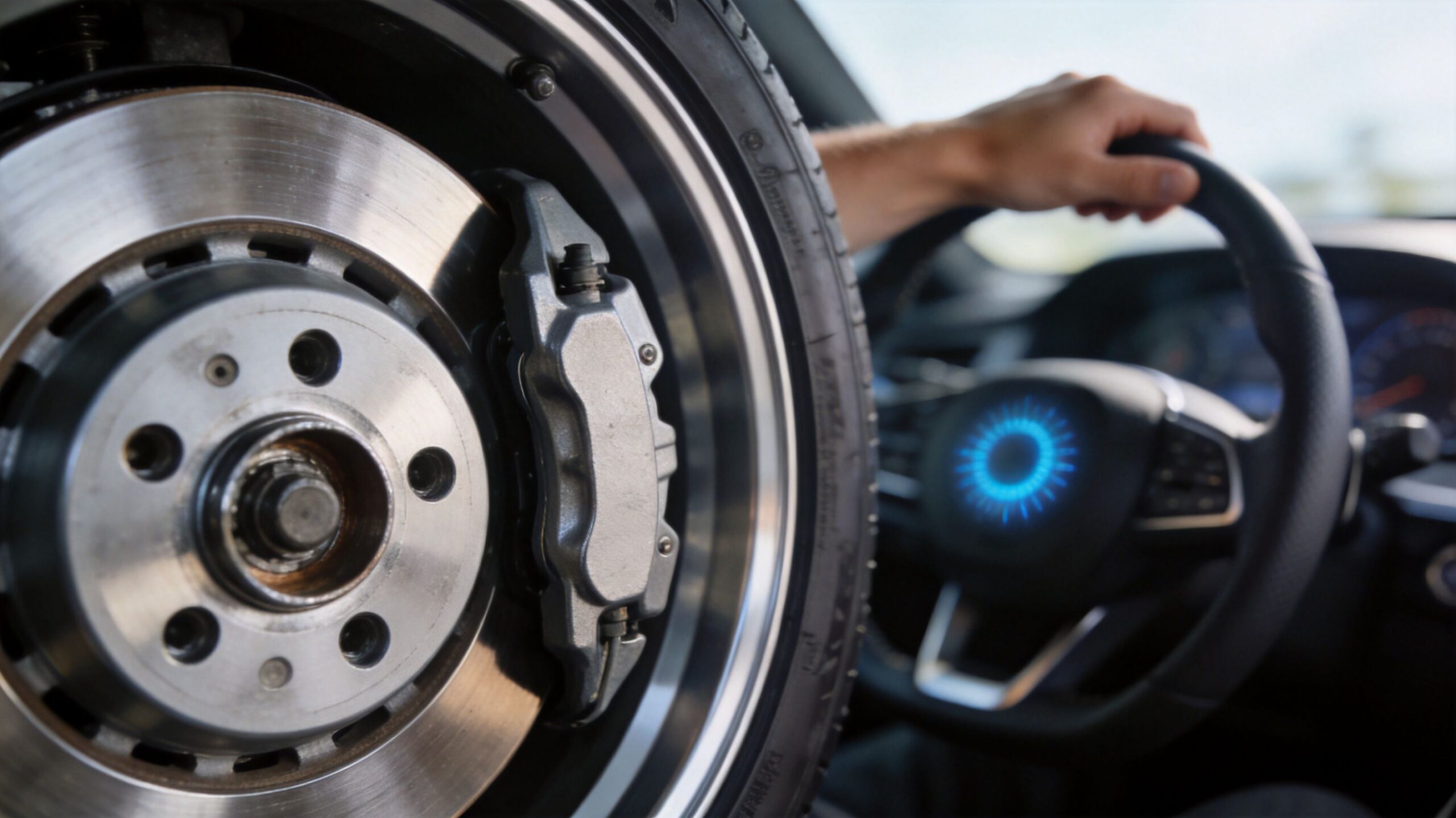
Listen for the type of noise
Not every brake sound points straight to the rotor.
- High-pitched squeal: This often points to pad wear first. It can also happen when debris gets between the pad and rotor or when the friction surface isn't wearing evenly. If you're sorting out noise complaints, this guide on how to fix squeaky brakes helps separate harmless squeal from something that needs immediate attention.
- Low, rough grinding: This is the one that should make you stop guessing. Grinding usually means hard contact between surfaces that shouldn't be rubbing that way. Once the system gets to that point, the rotor often ends up damaged enough that replacement becomes more likely.
- Scraping only at certain times: If the sound changes with wheel speed or appears after the vehicle has been parked in damp weather, surface corrosion may be part of the story. That still needs inspection, because corrosion can move from cosmetic to structural.
Feel what happens under your foot and in the wheel
Noise gets attention, but vibration tells you more.
If the brake pedal pulses during a stop, or the steering wheel shakes as braking pressure builds, the rotor surface may no longer be running true. Drivers often describe this as “warped rotors,” and that shorthand is common in the trade because it matches the sensation they feel. What matters in practice is simple. The rotor isn't presenting a consistent braking surface anymore, so the system applies force unevenly.
Here's how that usually shows up:
- Light braking at city speed feels normal, but harder braking makes the wheel shake.
- The pedal rises and falls slightly under your foot.
- The car feels unsettled near the end of a stop, even on a smooth road.
A healthy brake system should feel boring. Smooth pedal, straight stop, no soundtrack.
Pay attention to pedal feel
Pedal feel is often the most overlooked clue. A firm, predictable pedal suggests the braking surfaces are working together properly. A pedal that feels rough, inconsistent, or accompanied by chatter often points to rotor surface issues or uneven contact.
The key is not to diagnose from one symptom in isolation. Squeal can be pads. Grinding can mean rotor damage. Pulsation usually pushes rotor inspection higher on the list. The car gives you clues through your hands, feet, and ears long before the rotor comes off.
Measuring Rotor Wear and Visual Inspection
Brake work stops being guesswork once the rotor is on the measuring bench. In practice, a technician is checking three things at the same time. Thickness, surface condition, and whether the rotor is still worth machining once Ontario corrosion is part of the equation.
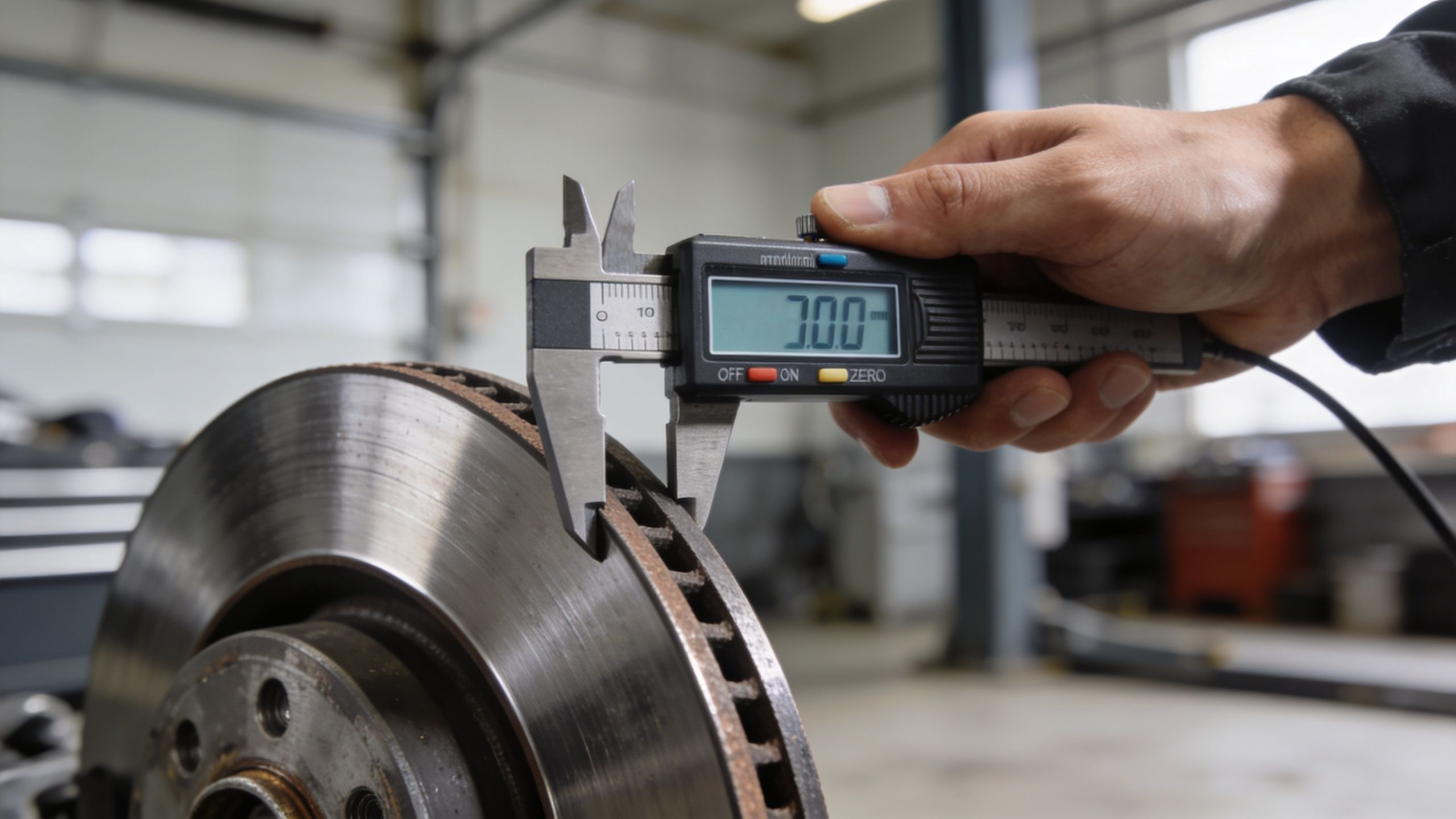
The number that decides everything
Brake rotors must be replaced when worn past their inscribed minimum thickness specification. That limit is cast or stamped onto the rotor hat by the manufacturer. Once measurements fall below it, the rotor is done.
Thickness has to be measured with a brake micrometer across the friction surface, not judged from the outer lip or one clean patch. The AAA guidance on rotor minimum thickness and variation also notes that very small thickness differences across the rotor can lead to pedal pulsation, steering wheel shake, and uneven pad contact.
That matters for owners trying to stretch service intervals. A rotor can still have visible material left and still be a poor candidate for another pad set.
What you can inspect visually
A careful visual check still has value, especially if the wheel is off for seasonal tire service. Look for wear that changes the resurfacing-versus-replacement decision before the micrometer even comes out.
- Deep scoring: Light grooves are common. Sharp, pronounced scoring usually means abrasive debris, pad transfer problems, or metal-to-metal contact.
- Visible cracks: Any crack on the braking surface is a problem. If it runs outward toward the edge, replacement is the safe call.
- Blue or dark heat spotting: Discolouration points to overheating, and repeated heat cycling can leave hard spots that machine poorly and come back with a vibration complaint.
- Heavy rust on the swept area or outer edge: Ontario rotors often fail here before they wear out by thickness alone. Salt and moisture can leave enough pitting and edge scaling that machining no longer makes financial sense.
For drivers timing rotor inspection with routine brake work, our guide on how often to change brake pads helps connect pad wear patterns to what the rotor surface has been dealing with.
Workshop thresholds that change the decision
A visual inspection only gets you partway there. Shops also check for runout, thickness variation, and heat damage because those are the measurements that decide whether the rotor can stay in service. As outlined in the brake rotor inspection guidance from NAPA, replacement is usually the better choice when the rotor is below minimum thickness, cracked, badly heat-checked, heavily scored, or too corroded to machine cleanly.
| Condition | What it means |
|---|---|
| Below the minimum thickness stamped on the rotor | The rotor has reached its service limit and must be replaced |
| Excessive runout or thickness variation | The rotor will not apply braking force evenly and often causes pulsation |
| Deep scoring or severe surface pitting | Machining may remove too much material or leave a poor braking surface |
| Cracks or major heat damage | The rotor has a structural or metallurgical problem and should not be reused |
| Heavy rust scaling from salt exposure | Corrosion has reduced the rotor's usable surface and often makes replacement the better value |
Shop rule: One hard failure point is enough to stop the discussion about reusing the rotor.
That is where Ontario ownership changes the math. In a dry climate, a rotor that is thick enough may still be worth resurfacing. Around Whitby, a rotor that is barely in spec but already pitted, rust-lipped, or heat-spotted often costs more to machine than it is worth, especially if the goal is to get a full, trouble-free pad cycle out of the next brake job.
Understanding Brake Rotor Lifespan and Causes of Wear
A rotor can look acceptable at one brake service and become a poor value by the next, especially after an Ontario winter. Lifespan depends less on calendar age than on how much heat the rotor sees, how often it gets soaked in salt and slush, and how much material it had to begin with.
Mileage estimates only work as rough context. The Brake & Front End service guide on rotor replacement intervals notes that rotor life varies widely with vehicle use, brake design, and driving conditions. In the shop, that tracks with what we see. Highway-driven vehicles often keep rotors in decent shape longer, while city-driven vehicles wear them faster through repeated heat cycles and heavier low-speed braking.
Heat is the main wear accelerator. Every hard stop pushes more energy into the rotor face, and repeated heat cycles can change how the rotor wears even before it reaches a discard thickness. A driver who brakes late, tows, or spends a lot of time in traffic usually gets less rotor life than a driver covering the same distance at steady highway speeds.
Ontario adds a second problem. Corrosion.
Salt, moisture, and freeze-thaw exposure attack the rotor hat, outer edge, cooling vanes, and braking surface. That corrosion does more than make the rotor look rough. It can reduce usable contact area, create rust ridges that affect pad contact, and turn a rotor with acceptable thickness into a weak candidate for another full pad cycle. That is why local climate changes the cost-benefit decision so much. A marginal rotor in Whitby is often a replacement call, not because it failed one measurement, but because salt exposure cuts into the value of trying to save it.
Rotor quality also affects lifespan. Material grade, casting quality, and corrosion resistance all influence how well a rotor handles heat and winter exposure. If you are comparing replacement options, the differences between OEM and aftermarket brake parts matter more in Ontario than they do in a dry climate.
Inspection timing matters because rotor wear is cumulative and often uneven. The AAA brake inspection guidance recommends having brakes checked at regular service intervals and whenever performance changes. That is the right approach. Waiting for noise means you may miss the point where resurfacing was still reasonable and replacement was still optional.
Enthusiasts often focus on pad compound or rotor style first. In real service life, the bigger factors are heat load, traffic pattern, winter corrosion, and the quality of the rotor itself.
The Big Decision Resurfacing vs Replacing Your Rotors
At this stage, most brake maintenance becomes more complex. The rotor might not appear completely ruined, yet it often fails to look perfectly functional. The choice between resurfacing or replacement becomes critical during these moments.
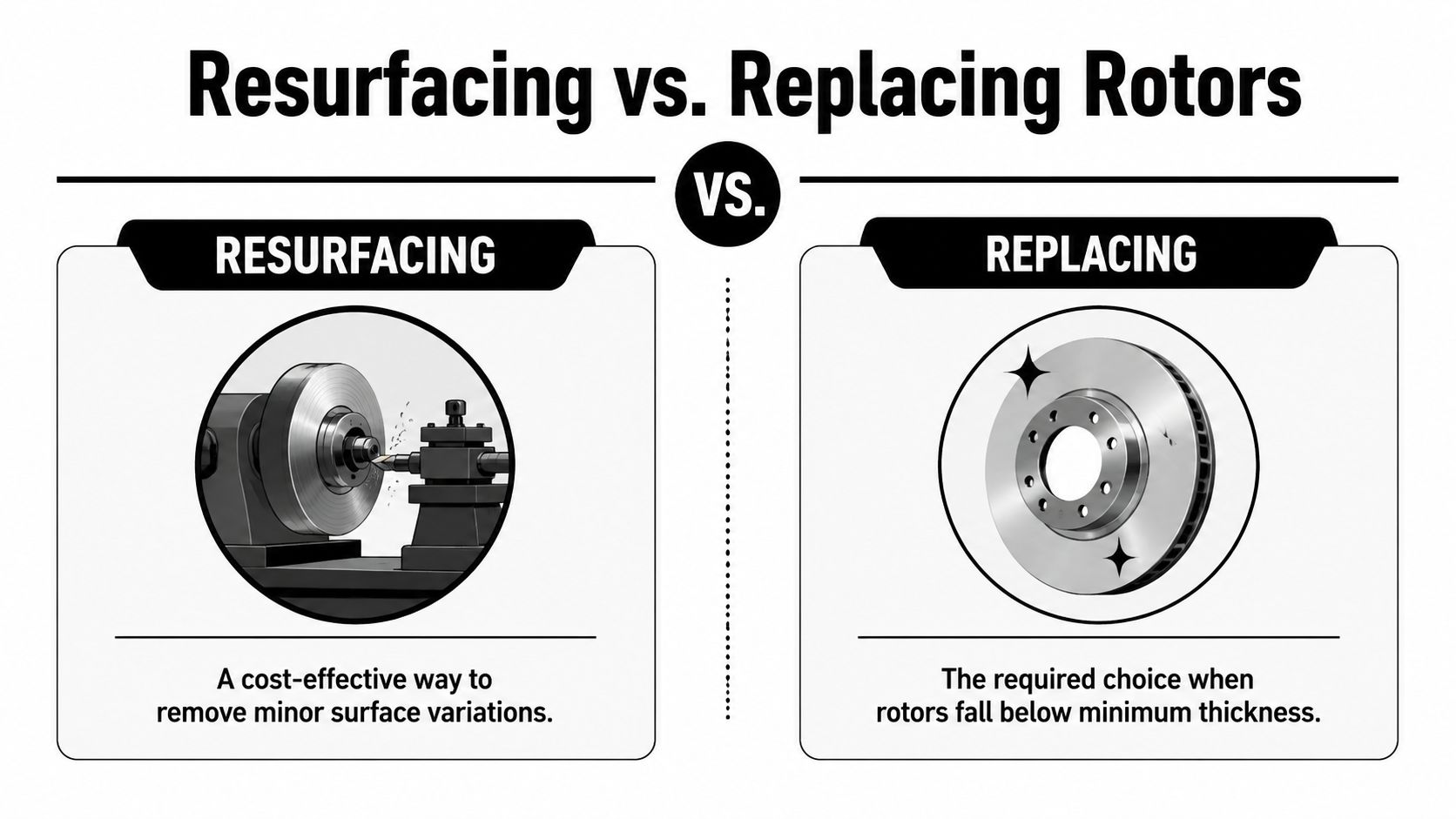
When resurfacing is actually on the table
Resurfacing only makes sense when the rotor has enough material left to remain safely above minimum thickness after machining. The key benchmark is this. Rotors can be resurfaced if they have at least .050" thickness more than the discard level, according to the AutoZone resurfacing guidance.
That sounds simple, but in the shop it narrows the field fast. A rotor with scoring, heat marks, or uneven wear may technically have enough material, yet still not be a smart candidate if machining leaves it thin and more vulnerable.
Side-by-side trade-offs
| Option | Usually makes sense when | Main downside |
|---|---|---|
| Resurfacing | Minor surface variation, enough remaining thickness, no cracking or major heat damage | You keep a thinner rotor with less reserve against future heat and corrosion |
| Replacement | Rotor is below spec, close to spec, cracked, deeply scored, overheated, or not worth machining | Higher upfront parts cost |
What works in Ontario and what often doesn't
For Ontario drivers, the climate changes the economics. A newly machined rotor starts its next service life thinner than before. In a region where salt and moisture already speed up corrosion, that thinner rotor has less margin to absorb wear, heat, and rust.
That's why resurfacing can be the wrong kind of savings. Labour still goes into machining, setup, and reinstalling the parts. If the price gap between machining and a new rotor is narrow, replacement often gives the better long-term result because you're buying back thickness and service life instead of trimming away what little reserve remains.
A practical decision framework looks like this:
- Measure first. If the rotor won't stay above the stamped minimum after machining, the discussion is over.
- Inspect the surface carefully. Cracks, deep grooves, and overheating push the answer toward replacement.
- Consider climate and use. Daily driving through Ontario winters makes thin, freshly machined rotors a tougher bet.
- Compare labour to parts cost. If machining saves little and leaves a compromised rotor, replacement is usually the cleaner repair.
- Match parts quality to the vehicle. If you're comparing new components, this guide on OEM vs aftermarket parts is worth reading because rotor choice affects noise, feel, corrosion resistance, and long-term value.
Resurfacing is a precision repair, not an automatic step in every brake job.
One local option for measurement and brake inspection is Carmedics Autowerks Inc, which provides rotor thickness checks and condition assessment as part of brake service. That matters because this decision shouldn't be made from symptoms alone. It should be made from actual measurements, actual surface condition, and the way the vehicle is used.
Your Trusted Partner for Brake Service in Whitby
A rotor decision looks simple from the driver's seat and much less simple on the hoist. You can hear grinding. You can feel vibration. You can sometimes see grooves or rust through the wheel. What you can't do by eye is confirm whether the rotor still sits safely above minimum thickness, whether machining would leave enough material, or whether heat damage has already turned the rotor into a replacement-only part.
That's why a proper brake inspection matters. The car owner can catch the warning signs early. The technician confirms the cause with measurement tools, surface inspection, and a clear repair recommendation.
If your brakes are pulsing, scraping, or just not feeling right, booking a proper brake repair service in Whitby is the sensible next move. Good brake work isn't about selling the biggest job. It's about making the right call for the condition of the rotor, the way the vehicle is driven, and the truth of Ontario roads.
A knowledgeable enthusiast usually wants the same thing a good mechanic wants. Safe braking, predictable pedal feel, and a repair that won't need to be redone sooner than necessary.
Frequently Asked Questions About Brake Rotors
Should you replace pads and rotors together
Not always, but the two parts should be evaluated together. New pads need a good rotor surface to bed in properly. If the rotor is too worn, too rough, or too close to its limit, installing pads alone can compromise the result.
Do all four rotors need to be replaced at once
No. Rotor replacement is based on condition, not a blanket rule. Many vehicles wear the front brakes differently from the rear, so it's common to service one axle without replacing all four rotors.
Can you keep driving with vibrating rotors
You shouldn't ignore it. Vibration under braking means something in the braking surface or rotor condition needs inspection. Even if the vehicle still stops, the issue can worsen and can affect pad wear and braking smoothness.
Are drilled or slotted rotors better
That depends on the vehicle and how it's used. For most daily drivers, the right rotor is the one that matches the car properly, handles heat well, and offers consistent braking. Design matters, but correct fit and condition matter more.
How do you plan for brake costs
Plan around inspection, not surprise. If you're trying to budget upcoming service, this breakdown of brake pad replacement cost gives useful context because pad wear and rotor service often show up in the same visit.
If your vehicle is showing brake vibration, grinding, or visible rotor wear, book an inspection with Carmedics Autowerks Inc. A proper measurement and surface check will tell you whether resurfacing is still viable or whether replacement is the safer, smarter repair for your car.