

You know the feeling. You wash your car on Saturday, stand back, and for a moment it looks perfect. By Tuesday, the paint has picked up dust, water spots, and that gritty film you get after a run through Mississauga, the 401, or a slushy side street in February.
If you’ve bought a new car, or you’ve finally got your current one looking right after paint correction, that feeling gets stronger. You don’t just want shine. You want that finish to stay sharp through road salt, bug splatter, sun, tree sap, and the daily abuse that comes with GTA driving.
That’s where a lot of people start searching for ceramic pro mississauga. Not because they want a trendy detailing add-on, but because they want a practical way to protect the vehicle they care about. The confusion starts right after that search. Is Ceramic Pro the same as wax? Is it the same as PPF? Do you need tint too? And what makes sense for your car, your budget, and how you drive?
The Ultimate Shield for Your Car in Mississauga
A clean black SUV leaving the dealership looks amazing. Then common road conditions start working against it. Highway grit taps the front bumper. Winter brine dries on the doors. A quick wipe at a gas station leaves light wash marks that suddenly show up under the sun.
That’s why many owners stop thinking about detailing as “cosmetic” and start treating it like protection. Ceramic Pro fits into that shift. It’s less about making a car shiny for a weekend and more about helping the finish survive daily use while staying easier to maintain.

Why this matters more in Ontario
Ontario winters are rough on paint. Ceramic Pro notes that Canadian vehicles face 30 to 50% higher corrosion rates from road salt in Ontario winters, and the brand expanded to over 5,000 certified installers across 70+ countries by 2019 after a 500% global presence increase in 2016 (Ceramic Pro global growth and Canadian winter context). Those numbers matter because they connect the product to a real problem local drivers deal with every year.
A ceramic coating won’t stop every form of damage. It won’t make your car invincible. What it can do is create a more durable, slick, contamination-resistant surface that helps your paint handle the mess of everyday driving with less wear and less fuss.
If you’re also comparing impact protection options, it helps to understand where paint protection film for high-impact panels fits into the bigger picture.
Practical rule: If your main worry is keeping the finish looking newer for longer, start by learning what each protection layer actually does before you buy anything.
What Exactly Is a Ceramic Pro Coating
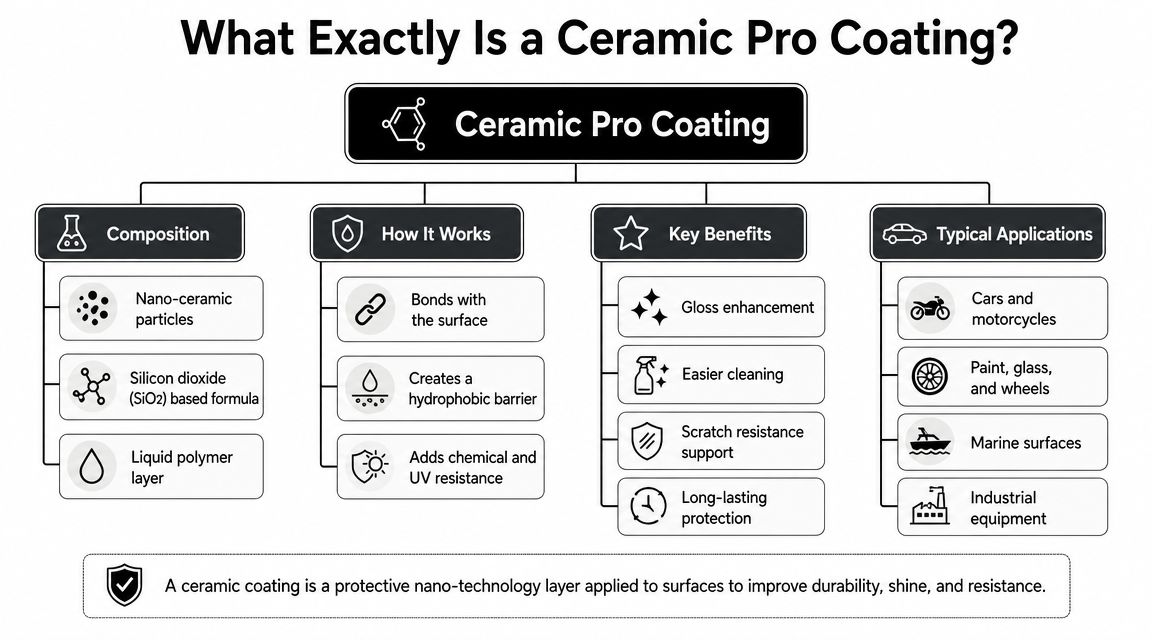
Wax is a familiar concept. You apply it, it looks good, water beads for a while, then it fades and you do it again. Ceramic Pro is different because it’s designed to bond to the surface rather than sit there like a temporary oily layer.
The easiest way to think about it is this. Wax is like a rain jacket. Ceramic Pro is like a high-tech outer shell bonded to the car’s skin. Both help with water, but one is much more integrated into the surface and built for longer-term exposure.
What the coating is doing
Ceramic Pro coatings use SiO2 nano-ceramic formulas. In plain language, that means very small particles form a hard, slick protective layer over painted surfaces and other exterior materials. The result is a finish that sheds water more easily, holds gloss well, and doesn’t let grime cling as aggressively as bare paint does.
That “nano” part confuses people, so here’s the simple version. You’re not adding a thick plastic sheet. You’re laying down a thin, engineered barrier that changes how the paint surface behaves.
Think of a kitchen pan with a good non-stick finish. Food still lands on it, but it doesn’t grip the same way. A ceramic-coated car works similarly. Dirt, water, and road film still hit the vehicle, but they release more easily during washing.
Why people notice the difference so quickly
Owners usually describe the change in three ways:
- The gloss looks sharper because the surface reflects light more cleanly.
- Washing gets easier because grime doesn’t bond as stubbornly.
- The car stays cleaner longer because water and contamination slide off more readily.
That doesn’t mean no maintenance. It means less fighting with the paint every time you clean it.
A ceramic coating changes the behaviour of the surface. That’s why the benefit feels practical, not just visual.
Where people get tripped up
A lot of marketing makes ceramic coatings sound like armour plating. They aren’t. Ceramic Pro helps with environmental fallout, wash marring resistance, water behaviour, and long-term surface preservation. It is not a substitute for impact protection where stones and debris hit hardest.
That distinction matters. If you understand that Ceramic Pro is a surface shield, not a thick impact barrier, your expectations stay realistic and your buying decision gets much better.
Real-World Benefits for Mississauga Drivers
The best way to judge a coating is to stop thinking about chemistry and start thinking about your weekly routine. You drive to work, park outside, hit wet roads, maybe sit in traffic on the 403, then notice how dirty the car looks by the weekend. Ceramic Pro earns its value in those moments.
Protection that makes sense in local driving
Mississauga drivers deal with road film, salt residue, bird droppings, pollen, bug remains, and harsh seasonal swings. A ceramic coating helps because it creates a slicker outer layer between those contaminants and your paint.
That matters after a slushy winter drive. Instead of salt and grime clinging tightly to the surface, they release more easily at the wash bay. The benefit isn’t just a cleaner look. It’s less time grinding contamination across the paint during washing.
The finish looks richer
A proper coating tends to make colour look deeper and reflections look tighter. On black, it looks wetter. On white, it looks crisper. On metallic paint, flakes pop more cleanly in direct light.
This is one reason enthusiasts care so much about prep work. If the paint is corrected first, the coating locks in that cleaner, sharper appearance.
Maintenance gets simpler
You still wash the car. You just don’t have to fight it as much.
Here’s what owners usually appreciate most:
- Drying becomes easier because water doesn’t sit flat on the paint the same way.
- Routine washes feel safer because loose grime comes away with less effort.
- Stains are less stressful because contaminants are easier to remove before they etch.
For drivers who want a practical local benchmark for vehicle protection services, Carmedics Autowerks in Whitby is one example of a shop that works in this broader protection space.
It changes how you use the car
A lot of people buy a nice vehicle and then become nervous about using it normally. They avoid certain parking spots, delay washes, or feel frustrated every time the finish loses that freshly detailed look.
A coating doesn’t remove all of that anxiety, but it does reduce the daily punishment your paint takes from normal ownership. This is its key value. Not perfection. Less damage, easier upkeep, and more enjoyment.
If you drive often and care how your car looks, the biggest benefit usually isn’t the first-day gloss. It’s how much better the paint still looks months later.
Ceramic Pro vs PPF and Window Tinting
Most buyers often get mixed up. They hear about ceramic coating, PPF, and tinting in the same conversation and assume they’re competing products. They’re not. Each one has a different job.
Think of them as three separate layers of protection
PPF is the armour. It’s built to absorb physical abuse on vulnerable areas like the front bumper, hood edge, fenders, mirrors, and rocker panels.
Ceramic Pro coating is the surface shield. It helps with contamination, wash ease, gloss, and keeping the finish from getting hammered by daily grime.
Window tinting protects the cabin side of the ownership experience. It helps with heat, glare, interior comfort, UV exposure, and privacy.
If you use one product to solve the wrong problem, you’ll be disappointed. If you match the product to the problem, the system makes perfect sense.
Where PPF stands apart
KAVACA Clear Bra PPF from Ceramic Pro installers uses 8 to 10 mil thick aliphatic polyurethane film, offers gloss retention of over 95% after 5 years in accelerated weathering tests, and can reduce swirl marks by 85% compared to standard vinyls (KAVACA PPF specifications and performance details). That tells you exactly why PPF is different. It is a physical film with enough body to absorb impacts that a coating cannot.
If you drive the 401 or 403 often, that matters. The front end takes abuse. PPF is the right answer there.
Window tinting solves a different problem
Tint has almost nothing to do with protecting the paint. It improves the driving environment. If you want more cabin comfort, less glare, and more privacy, tint belongs in the conversation. If your dashboard and seats bake in the sun while your paint still looks fine, tint may be the next smartest upgrade.
Protection Showdown Ceramic Pro vs PPF vs Wax
| Feature | Traditional Wax | Ceramic Pro Coating | Paint Protection Film (PPF) |
|---|---|---|---|
| Primary job | Short-term shine and water beading | Long-term surface protection and easier maintenance | Impact protection against chips and road rash |
| Best against | Light contamination for a limited time | Dirt, road film, bird droppings, water spotting risk, routine exposure | Rock chips, abrasion, bug impact, physical road debris |
| Surface feel | Slick at first, then fades | Slick and easier to clean | Smooth film surface with physical thickness |
| Durability profile | Temporary | Longer-term professional protection | Long-term physical barrier on high-impact areas |
| Ideal placement | Whole car if you enjoy frequent reapplication | Whole car, wheels, trim, sometimes glass | Front end, full body, or custom high-impact zones |
| Who it suits | Hands-on hobbyists who don’t mind frequent upkeep | Owners who want easier maintenance and preserved appearance | Drivers who want the strongest defence where paint gets hit |
For a practical overview of how these protection choices compare on real vehicles, this guide to car paint protection options can help frame the trade-offs.
The smartest setup isn’t always one product. On many daily drivers, the sweet spot is PPF on impact zones, ceramic coating on exposed surfaces, and tint for cabin comfort.
The Professional Application Process From Start to Finish
People often look at a ceramic coating invoice and wonder why it costs more than a bottle off the shelf. The answer sits in the labour, skill, and environment required to do it properly. The coating itself matters, but the process determines whether the result looks crisp or disappointing.

Step one is prep
This is the part many owners underestimate. Before any coating touches the paint, the vehicle needs a thorough wash and decontamination. That means removing embedded grime, traffic film, and bonded contamination that normal washing leaves behind.
Then comes paint correction if needed. Swirls, haze, and fine scratches don’t disappear under a ceramic coating. They get sealed in and highlighted. A good installer fixes the finish first, then protects it.
Step two is careful application
The actual coating stage is methodical. The installer works panel by panel, watching how the product flashes and levelling it properly so you don’t end up with high spots, streaks, or uneven gloss.
A clean, controlled workspace matters. Dust, poor lighting, and rushed technique all show up in the final result.
Step three is curing
Once applied, the coating needs time to cure and harden. Some shops use controlled curing methods to stabilise the finish before the car goes back outside. Even after pickup, the owner still needs to follow aftercare instructions so the coating can fully settle in.
A simple way to think about it is paint plus surgery-level prep. If the surface isn’t clean and corrected, even the best coating can’t perform the way it should.
- Inspection first so the installer knows what defects need correction.
- Decontamination next because trapped grime interferes with bonding.
- Correction before coating because clarity has to come before protection.
- Controlled application so every panel cures evenly.
- Owner aftercare because the first days matter.
Durability Maintenance and Cost Expectations
Many people seek straight answers to common questions. How long does it last? Do you still need to wash it? Is the price justified? The honest answer is that a professional ceramic coating is durable, but it isn’t magic, and the value depends on how much you care about finish preservation.
What durability really means
In Ontario conditions, durability is less about one dramatic event and more about repeated exposure. Salt, freeze-thaw cycles, road grime, and improper washing slowly wear down unprotected paint.
Ceramic Pro 9H is described as having 9H pencil hardness, while standard automotive clear coats are listed at 2 to 4H. It also has thermal stability up to 1200°C, its hydrophobic layer can reduce contaminant adhesion by 90%, and it may extend clear coat life 3x compared to unprotected paint (Ceramic Pro 9H performance in Ontario conditions). Those figures matter because they explain why owners see the coating as long-term preservation rather than a temporary shine product.
Maintenance is still required
A coated car still gets dirty. You still need to wash it. The difference is that maintenance becomes more straightforward and usually safer for the finish.
Good habits matter more than fancy products:
- Use proper wash methods so you’re not dragging grit across the paint.
- Remove bird droppings and bug remains quickly because time is never your friend with contamination.
- Avoid dirty tunnel wash brushes if your goal is preserving gloss.
- Book periodic inspections or maintenance details if you want the finish to stay at its best.
A broader guide to preventive vehicle maintenance habits helps put coating care into the same mindset as mechanical care. Small consistent habits prevent bigger problems later.
How to think about cost
Price depends on vehicle size, paint condition, prep requirements, and the package selected. If the paint needs correction, the labour goes up because the shop is restoring the finish before protecting it.
The better way to judge the cost is to ask what you’re buying:
- Less effort every wash
- Better resistance to contamination
- A stronger chance of keeping the paint looking newer
- Reduced need for heavy correction work later
If you keep cars for years, that can make sense. If you lease, drive lightly, or don’t care much about appearance, a simpler protection strategy may be enough.
Owner mindset: The coating pays off most for someone who notices paint condition every week, not just once a year.
Finding a Certified Ceramic Pro Installer in Mississauga
The installer matters as much as the product. Ceramic coating is one of those services where poor prep, weak lighting, or sloppy technique can ruin the result even if the bottle itself is premium.
A good shop should be able to walk you through its process in plain language. If a business can’t explain washing, correction, application, and aftercare clearly, that’s a warning sign.

What to check before booking
Use a simple checklist:
- Look at the facility. Clean floors, proper lighting, and organised bays usually reflect disciplined work.
- Ask about prep. Paint correction and decontamination should be part of the conversation.
- Review real vehicles. You want to see close-up finish quality, not just glossy social media shots.
- Discuss aftercare. A serious installer tells you how to maintain the coating properly.
- Confirm certification. If you’re specifically seeking Ceramic Pro, certification matters for product access and process consistency.
As a concrete benchmark, Ceramic Pro Mississauga is located at 1400 Aimco Blvd Unit 7, Mississauga, ON, operates Monday to Friday from 8:00 AM to 5:00 PM, and is part of a network of over 5,000 certified installers (Ceramic Pro Mississauga certified installer details). That gives local drivers a real reference point for what an official installer looks like.
If you’re comparing certified shops and broader service standards, it also helps to know what a certified auto repair facility should communicate about process, workmanship, and accountability.
The right shop won’t pressure you into a package. It will ask how you drive, where you park, how long you keep vehicles, and what bothers you most about ownership.
Frequently Asked Questions About Ceramic Pro
Can I apply Ceramic Pro myself
Consumer-grade coatings exist, but professional application is different because the outcome depends heavily on prep, correction, controlled application, and curing. If your paint has defects or you apply the coating unevenly, you can lock in problems instead of solving them.
Does Ceramic Pro make my car scratch-proof
No. That’s one of the biggest misconceptions. A ceramic coating adds resistance and helps with minor marring, contamination, and easier cleaning, but it doesn’t make paint immune to scratches, stone chips, or careless washing.
How should I wash a coated car
Wash it gently and consistently. Use clean wash media, avoid harsh friction, and remove contamination early. The coating makes cleaning easier, but good technique still protects the finish.
Should I choose coating or PPF first
If your main concern is rock chips and front-end abuse, start with PPF. If your main concern is easier maintenance, gloss, and environmental protection across the whole vehicle, ceramic coating may be the first move. Many enthusiasts combine both.
If you’re weighing coating, tint, or PPF and want practical guidance instead of a sales pitch, Carmedics Autowerks Inc offers services that fit into the same vehicle protection ecosystem, including window tinting and paint protection film for Ontario drivers who want to protect both appearance and daily usability.